
Building smthng new. Run Surreal (eng/research community) & SciFi Club. Past: @Lightspeedvp Invested @Moonlake @SuperMeAI @hyperspell @Stori_MX @getHoneylove
Joined January 2011
- Tweets 4,969
- Following 859
- Followers 19,071
- Likes 21,333
577 Photos and videos





Pinned Tweet

Apr 6
one of the most common frustrations i hear from founders crafting a fundraising narrative is:
"VCs want to hear this grand future vision, but i'm only at the preseed stage. I see a big customer need that i can solve right now. But i don't know exactly what it becomes in 10 years"
first off, I hear you.
So much of success is post-rationalized.
its hard to tell which parts of a decacorn founder's story is "Hindsight is 2020" versus....not.
AirBnB is a classically debated example....those first experiments when they couldn’t afford rent and realized hotels were sold out around a design conference and put airbeds in a living room.....it wasn't exactly the "we will change hospitality" pitch in 2009 when they went to YC.
it is one step at a time.
but the founders with the biggest visions have spent a LOT more time "living in the future"
They're able to sell the bigger vision because they spend more time thinking about 2nd and 3rd order effects.
They have insights about why the recent tailwind will change how everyone does X thing
and that makes this new vision possible.
it really all boils down to depth of thinking in a specific area with hypotheses & constraints.
what will change, what will not, now that we have this new tailwind.
depth.
i think this is ultimately why VCs obsess over having that big vision so much. it's one of the stronger signals for depth of thinking.
in my experience, VCs are looking for 2 things in a vision:
1) a huge future vision
2) a credible path to get there
1) A huge future vision:
- VCs want to walk away feeling like they learned something entirely new
- VCs want to feel like the founders has spent way more time living in the future, have a vocabulary and clear mental picture. almost like how an author has built a world for its characters and then later builds the story through that world - you've already thought about where all the ecosystem actors will be and how they'll behave economically
2) credible path to get there
- working backward from th?at future vision - what would need to be true to get there
- why is the first wedge you've set up the right first step to get to that future vision, what does it unlock?
- this is is where depth of thinking really shines.
- this credibility part is what makes or breaks vision in a fundraise narrative
ok that's my fundraising 2 cents for tonight
14
14
187
26,129
Mercedes Bent retweeted

May 26
Introducing Willow Scribe: a voice AI writing assistant that clears your emails, docs, and messages in seconds.
It uses your style and context to write exactly what you want, in your voice. Just say it and Scribe writes it.
See the future of voice AI for knowledge work 🧵
81
25
212
146,966
Mercedes Bent retweeted

May 13
just closed our first fortune 500 customer
499 to go
48
4
234
11,541
Mercedes Bent retweeted
May 11
we just launched agent-to-agent hiring at @hyperspell
we're hiring engineers and your agent is your application
no resume, no leetcode
apply with your own agent or spin one up via @SuperMeAI
we will interview every single agent
37
21
177
44,479
Mercedes Bent retweeted

May 8
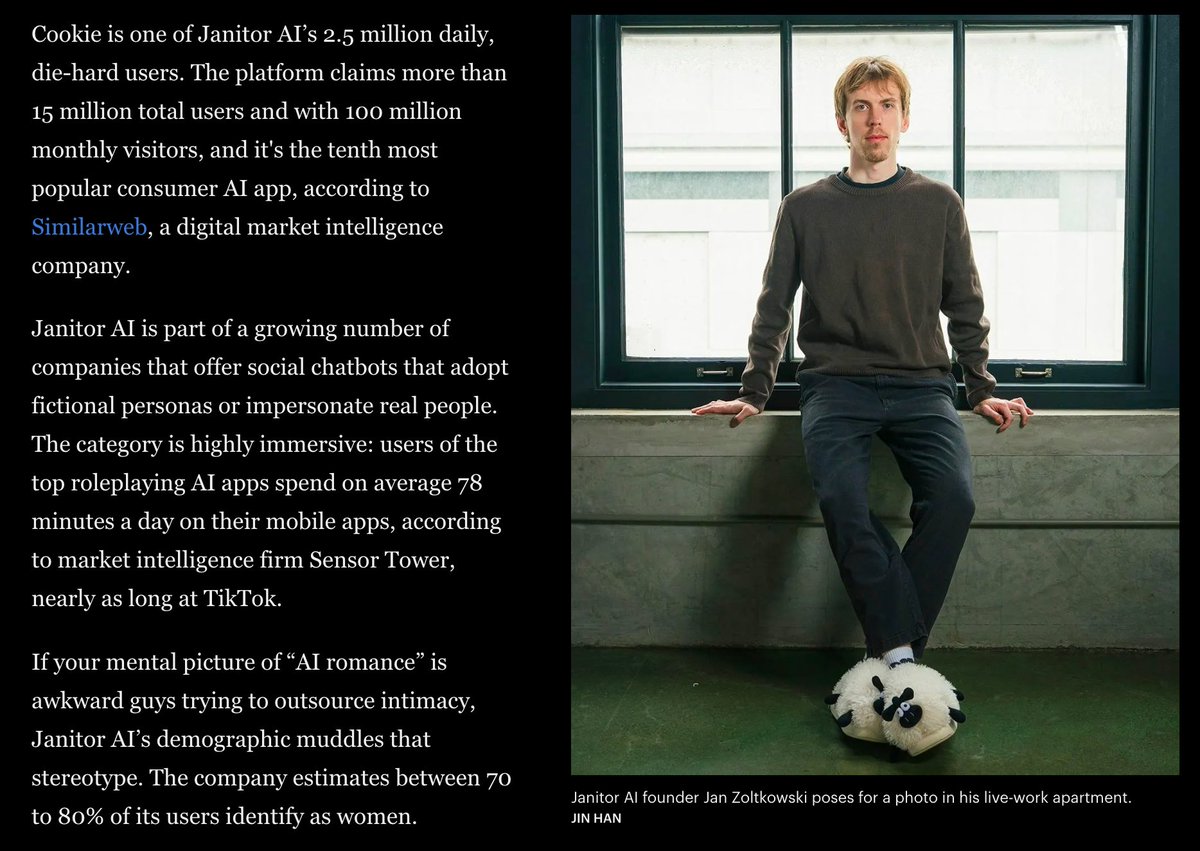
Janitor was profiled in Forbes yesterday.
A few of the things they recognized 👇
17
5
96
11,842

Moonlake Creator Cup is now live!
$30K in rewards for creators building interactive 3D games and environments.
Build something original. Make it playable. Get rewarded.
Live now → app.moonlakeai.com/
QT this post with what game or environments you plan on creating to get your Creator Cup account created.
11
12
81
8,917
Apr 27
1 big clarification on the memo fundraising advice....yes its a good idea BUT.... you still need a deck!
why?
Decks are better for first impressions.
They're simpler to consume, better test of whether you're able to distill complex topics.
They're for people who haven't decided if they want to invest 10 minutes into reading your memo need a faster way to consume your content.
It's easy to make an okay deck today.
It's still as hard as it was pre-AI to make a great deck today....so it also separates out for investors whether you invested in what you're giving them.
If you got an intro for the first meeting didn't need deck to get Yes to meeting,
I would still share it before the meeting or right after to cement the concepts.
Investors forget fast.
Many of the Notion memos I read are not well put together and I still think the Deck would have done better.
Decks overall are just less friction and you want less friction at every step in your process.
The memos later on become less friction ONCE someone is bought into doing "Due Diligence"
4
1
7
1,225
Apr 24
My rule of thumb: never sell more than 20-25% of equity on SAFEs
why?
if you raise too much on SAFEs, it will hurt your future fundraises
i've seen this happen a lot.
raising on SAFEs is so seductive because its simple quick
but the total ownership impact at the seed or A can be really large if too much was given away
your first priced round can see 50% of the company being given away
but an investor has to convert that to a priced round
and if too much ownership has already been given away,
it disincentivizes future investors from wanting to price a round where founders will end up owning too little
then founders will say its okay you can clean up the cap table, can cram down my existing investors
but VCs aren't set up to do recaps easily or well. its' just not our normal transaction.
and it's a lot more headache than its worth
most VCs want as clean a deal as possible
so my rule of thumb is to never sell more than 20-25% of equity on SAFEs.
If you're raising more, move to a priced round.
1
3
573
Apr 22
How to get acquirers to want to buy your startup:
The best time to set yourself up for a strong M&A is 1 year before you ever realize you want to sell.
There's an adage that startups are bought, not sold.
Meaning the buyer should be bought into your asset, to the point that they've already convinced themselves of the value.
So how do you get buyers to want to buy your startup?
There's a lot of ways, but I'll tell 1 story.
I remember one M&A process where a VC-backed SaaS startup got 2 offers in < 3months.
The company had positioned itself well long before M&A ever kicked off, by setting up partnerships.....
Specifically, product distribution partnerships.
These agreements were to co-market and co-distribute their products together, to each others customers.
In this company's case it wasn't intentional design
But it ended up working out so well because:
Leadership teams already knew each other
Mid level teams already knew how to work together
Both knew value of asset to their customers (conversion rates)
Both understood tech stack
Everyone was already bought in, so the company was bought, not sold.
it also helped that this company was m&a ready:
breakeven / profitable
greater than $5M ARR more, but less than $20M (not too big for smaller acquisitions)
leadership team that spoke M&A language
strong data room operations
There's a lot of companies with M&A goals today
Set your startup up to be bought.
2
2
12
3,512
Mercedes Bent retweeted

Apr 19
Once you have this, AI will seem magical

40
49
1,014
329,697
Apr 17
1 of the most common fundraising questions is how much to raise.
i'm seeing tons of founders ask for $4m out of the gate.
it works for some, but i actually think its an awkward round size for the first raise.
why?
if you raise $4m out of the gate, it makes doing a follow-on seed round of $4-6M harder
because anything less than $8M will be considered a “bridge” or “extension”
If you raise anywhere less than $3M in your first round (preseed), then you can then raise a seed round of $4-8M as the next step without anyone batting an eye.
No negative signal.
the main arguments I am hearing for why $4m has become such a popular ask:
- AI compute costs (per session costs on vid/image at $1-3 per 30 min quickly adds up)
- want enough capital for first idea to fail and have enough left for 2nd shot on goal
i really think how much you need to raise depends on a few things:
1) your access to capital - SV tech exec, more experience, 2nd time founder. any of these - sure raise whatever
2) what you're building - lots of image or video generation - might need more. text based ai? don't really need
if you're not in category 1 and you're building a more expensive ai biz like image generation, where 10k users at $3 / session will run you $300k per month if they do 10 sessions each (less likely they hit this # of sessions),
the question becomes.......how much progress do you need to show til next round?
this is where i think raising less earlier.... say $1m, has advantages.
because the next $4-8M raise can still be largely on narrative.
whereas if you raise $4M, the round after that has to be show traction.
just my 2 cents.
1
1
34
5,394
Apr 14
Most founders want to hire people WAY smarter than them. You should. But really smart people are hard AF to attract.
And if a founder's communication strategic skills are weak, they're ngmi. smart folks will bail.
founders are rarely the most skilled person on their team.
they took the risk first, and started something the smarter folks wouldn't have started. 100% deserve it.
but founders need to recruit people more skilled than themselves to grow the biz.
so how do you manage this tension as a founder?
you have to be incredibly skilled at Communicating the 3 strategic horsemen I call:
Decision
Vision, &
Execution
Decision - you need to make many decisions fast. But they must be highly strategic. you need to communicate these decisions - we are doing X because Y. simply making a call & sticking with it is super important b/c smart people know companies need action to produce information.
Communication x Decisions.
Vision - you need to inspire skilled smart people to go somewhere they think is exciting and credible. This is also sometimes called "Narrative." i wrote another post about how to live in the future. Smart people want to know you see something, and deeply believe it, to a level they aspire to feel it at.
Communication x Vision.
Execution - you need a consistency of making progress, not going in circles, to not annoy smart people. They want reliable, less chaotic work environments. They're really smart.....they could go make 7 figures at name your AI hyperscaler, with stability and work life balance. Communicating your KPI driven product experimentation, sequence of the roadmap, how learnings inform the next strategic bet and why it's the best option, and following through to execute on it....really matters to them.
Communication x Execution.
really smart people are annoying because they always need a "why" - you can say "because I feel like it" but that will create resentment & backlash.
Communication is 1 of your most powerful tools, paired with strategic Decision, Vision, & Execution, to combat it.
4
5
71
6,095
Apr 13
reposting some fundraising advice....on memos.
Memos: Thesis > Report
I'm seeing more founders put together "investment memos" as fundraising material. It's a good idea.
But too many of them read like book report summaries.
Founders if you are going to write a memo, make sure it reads like a thesis:
1) How you developed your thesis: the way you uniquely connected datapoints to construct the argument for why your startup should exist.
2) Your unique vision of the future, what you see when you "live in the future", what the world will look like
3) Assumptions you're making that could be tested, how you disproved and gained conviction
4) Risks to your thesis and where you could be wrong. The questions you asked yourself late at night. Strategic analysis based on market knowledge.
5) The massive upside potential if you are right, and what sequence of products/strategies unfolding in future years that would create that future vision.
As an investor when I'm doing due diligence and reading a memo, my goal is to understand the nuance of your thesis and strategy, something I can't get from a pitch deck.
Investment memos provide the opportunity for rich, nuanced inferences and cause-and-effect relationships to shine.
Please don't send me a book report!!
Memos are a thesis.
8
9
92
11,159
Apr 13
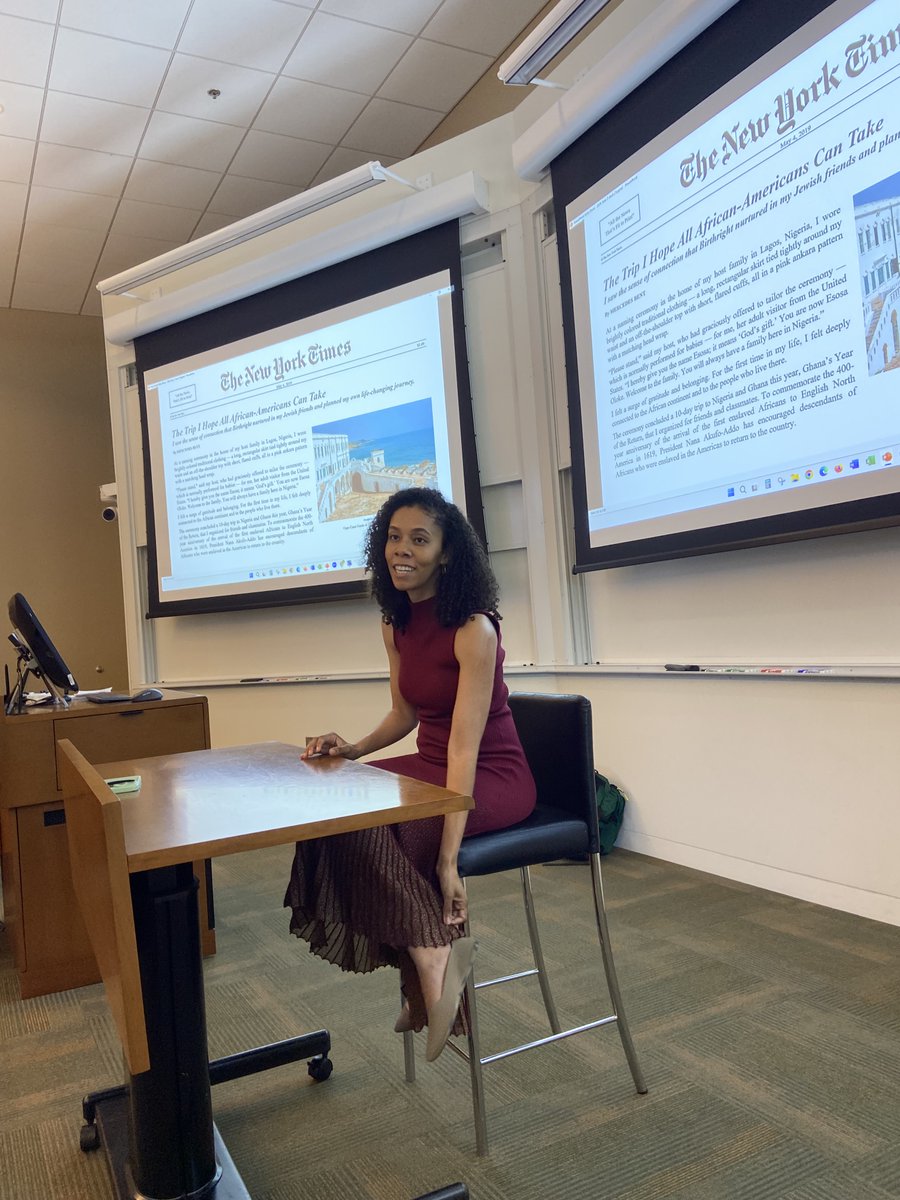
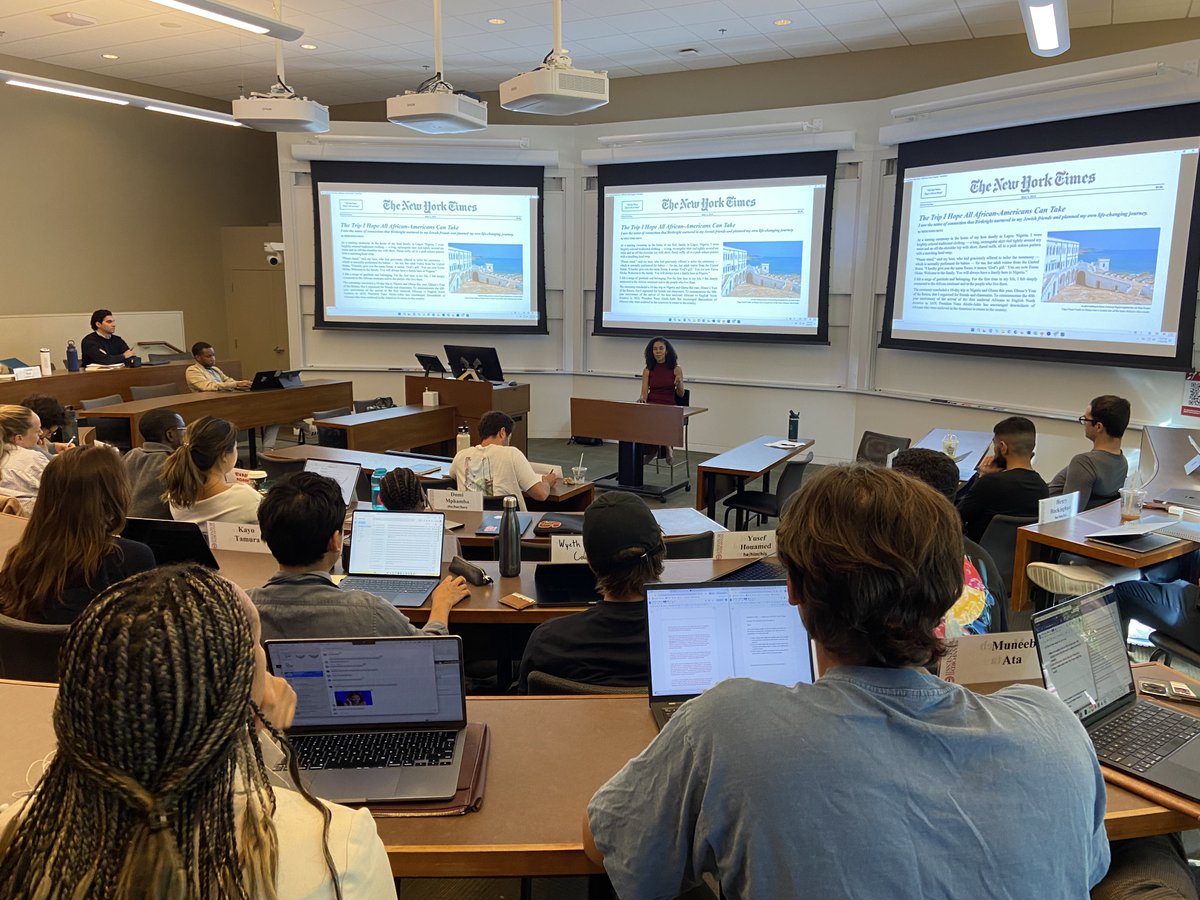
thank you Glenn Kramon for having me to speak at Stanford last week in Winning Writing!
1
19
1,996
Apr 8
don't give up: lower funded, later entrants can win
Dropbox: entered a crowded 2007 cloud market late. used simple UX to beat heavily-funded enterprise suites like Box and early versions of Microsoft SkyDrive
Netflix: offered to sell to Blockbuster for $50M in 2000. blockbuster had 9,000 stores and billions. Netflix pivoted to streaming
Salesforce: entered in 1999 when Siebel Systems was the undisputed CRM king. invented "SaaS"
Google: launched in 1998 long after Yahoo and AltaVista. won by focusing on a technical algorithm (PageRank) while better-funded rivals focused on "web portals" and ads
Atlassian: bootstrapped on credit cards in 2002. Outplayed heavy-spending incumbents like Microsoft (SharePoint) and IBM with a low-friction, developer-first model
GitHub: no VC for the first 4 years (2008). stayed lean, focused on UX. better funded legacy giant SourceForge (founded 1999) dealt with "gatekeeping" and poor UI
Mailchimp: started as a 2001 side project with zero outside funding. competed against Constant Contact (founded 95), which had raised $100M , by mastering the "freemium" model for SMBs
Qualtrics: bootstrapped for 10 years (founded 2002) while early rival SurveyMonkey (founded 1999) took on massive capital earlier
who else came from behind?
9
7
113
9,545
Apr 8
love this concept of "innie" and "outie" agent for protecting sensitive data
agents can and will share sensitive info with anyone they’re talking to
if you share private thoughts about a customer, colleague, or manager with an agent, it won’t hold back from telling them directly
context engineering for agents means heavily constraining both who they can interact with and what data they have access to
assume anything an agent can access will be shared with anyone it can reach
for @hyperspell we split this into an ‘innie’ and an ‘outie’ agent
the innie has access to all internal data but can only talk to our team
the outie can talk to customers but is heavily restricted in what it can access
1
1
597
Apr 8
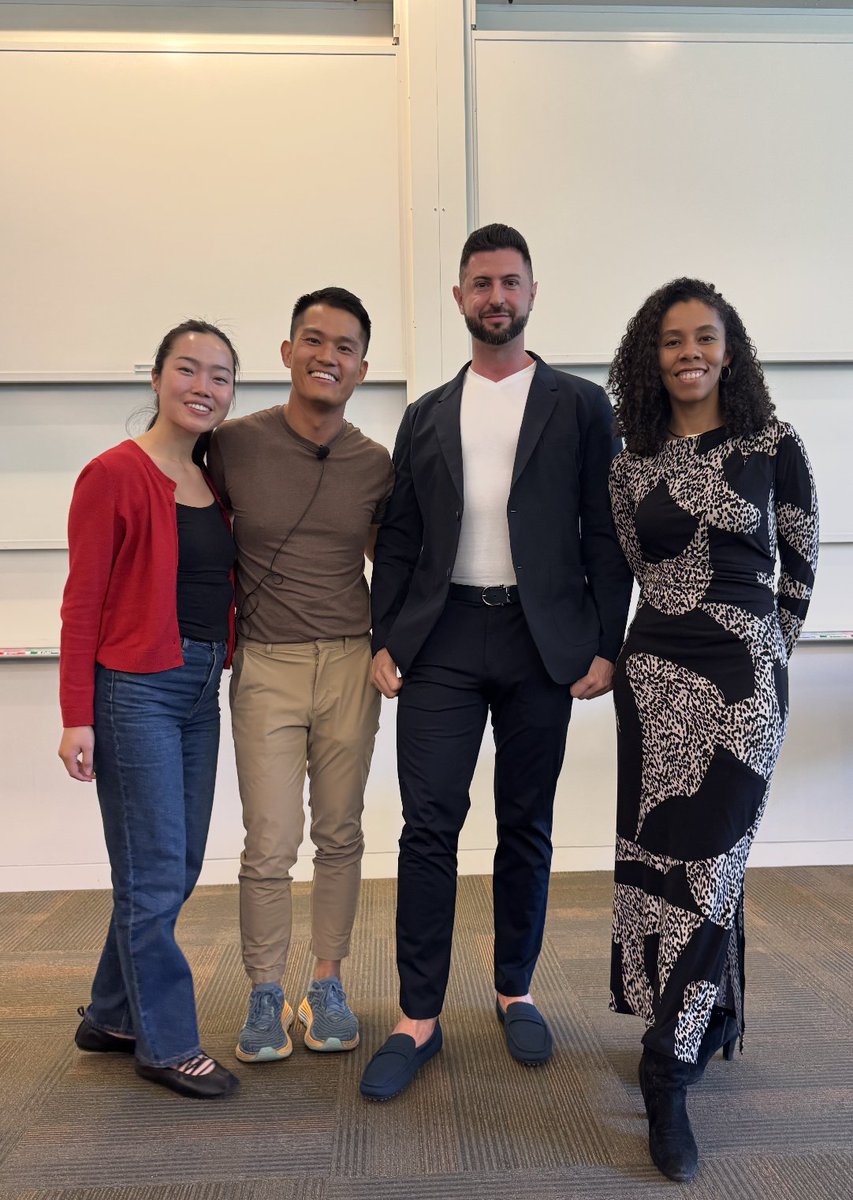
hosted a Fireside chat with Michele Catasta, President of Replit, at Stanford today @pirroh @Replit
he dropped a lot of gems like:
"If I were in your Stanford shoes today, I'd become a generalist, not a specialist. Don't do what I did."
and
"the peak of apps is in another 1-2 years, and then software is going to take over"
i also didn't realize that Medvi was built on Replit (the notorious $1.8b sales GLP-1 company built by 2 brothers)
1
21
2,081