Michael Chalk is a performer, adult community educator (ed-tech), and roller skater, aka mickleberry@theblower.au
Joined November 2007
- Tweets 3,351
- Following 2,296
- Followers 682
- Likes 68,593
113 Photos and videos

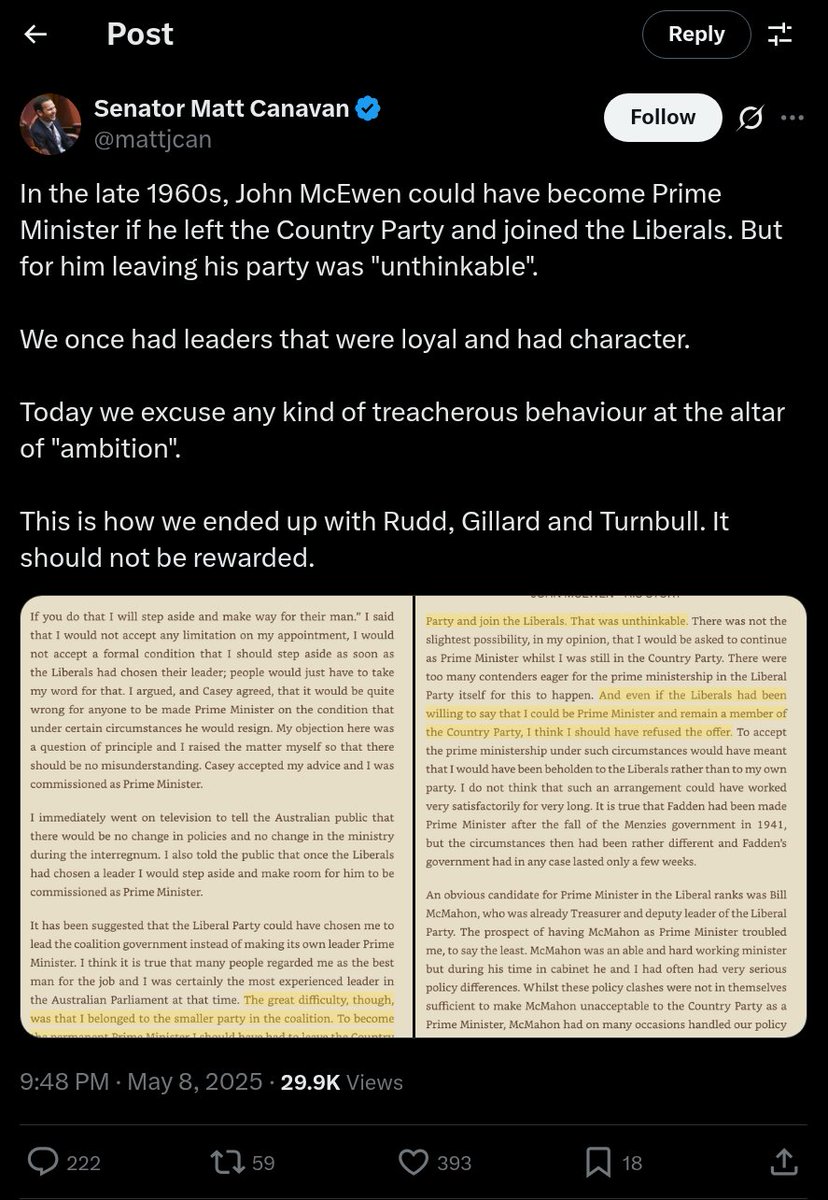

Michael Chalk retweeted

May 28
How many ordinary Americans even know this is happening, let alone support sending their tax dollars to fund it? If only Americans knew…

Yesterday Israel ordered the inhabitants of Nabiteh to leave (population of 100,000) They then ordered the inhabitants of Tyre to leave (pop of 200,000). Now they've ordered the entire south to leave - up to 300 towns & villages.
@AlexCrawfordSky reporting from Lebanon today
458
8,367
19,059
421,858
Michael Chalk retweeted

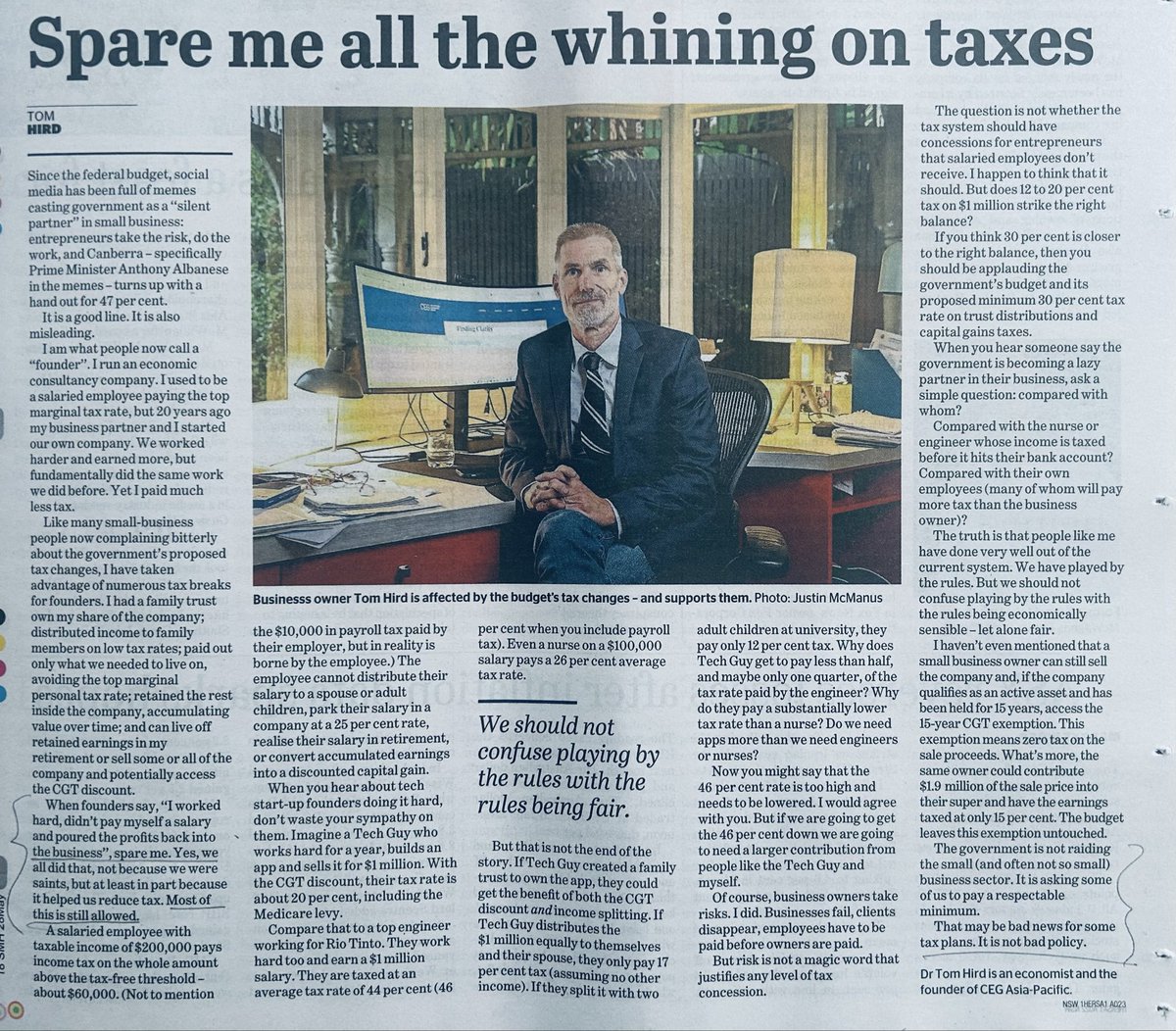
A well-argued rejoinder to the bilious tide of saint-claiming going on right now. From a business owner/originator who clearly knows what he’s talking about. Bravo
112
538
1,213
72,827
Michael Chalk retweeted

May 29
Israeli MO: Declare a fictitious line as a "border" and claim that all the Palestinians left behind the "border" have chosen to risk their own lives ---> cross and move said "border" under cover of darkness or tanks ---> kill more Palestinians behind new "border". Evil.
19
327
757
11,061
Michael Chalk retweeted

What is Jewish identity in the age of genocide in Gaza? It’s time for a reimagining of what being Jewish means.
An extract from the latest episode of The Antony Loewenstein Podcast, out now on YouTube, Spotify and Apple. Details how to donate $ to back this work are here: bit.ly/m/theantonyloewenstei….
open.spotify.com/episode/2cC…
Shoutouts to @mollycrabapple @jewishcouncilAU.
Expertly produced by Lena Helou @lemzakharia:
10
68
131
3,654
Michael Chalk retweeted

Apr 3
When Americans stand up and fight for justice, we win.
We took on a king.
We ended slavery.
We built unions.
We won voting rights.
We secured LGBTQ rights.
Again and again, Americans fought back — and won.
We can do it again.
3,192
4,071
17,268
383,283

Apr 4
oh heavens, turns out that Iran "has the right to defend itself", under "international law".
(even tho they are obvsly a corrupt dictator state like i dunno "the usa")

Penny seems at a bit of a loss. It’s a puzzle. If only we knew who or what had prompted the Iranians to close the Strait.
1
28
Michael Chalk retweeted

Apr 2
Israeli minister Ben-Gvir celebrates the execution chamber for Palestinians.
Is there any limit for Israel's depravity?
Any at all?
411
3,268
7,389
107,788

Michael Chalk retweeted

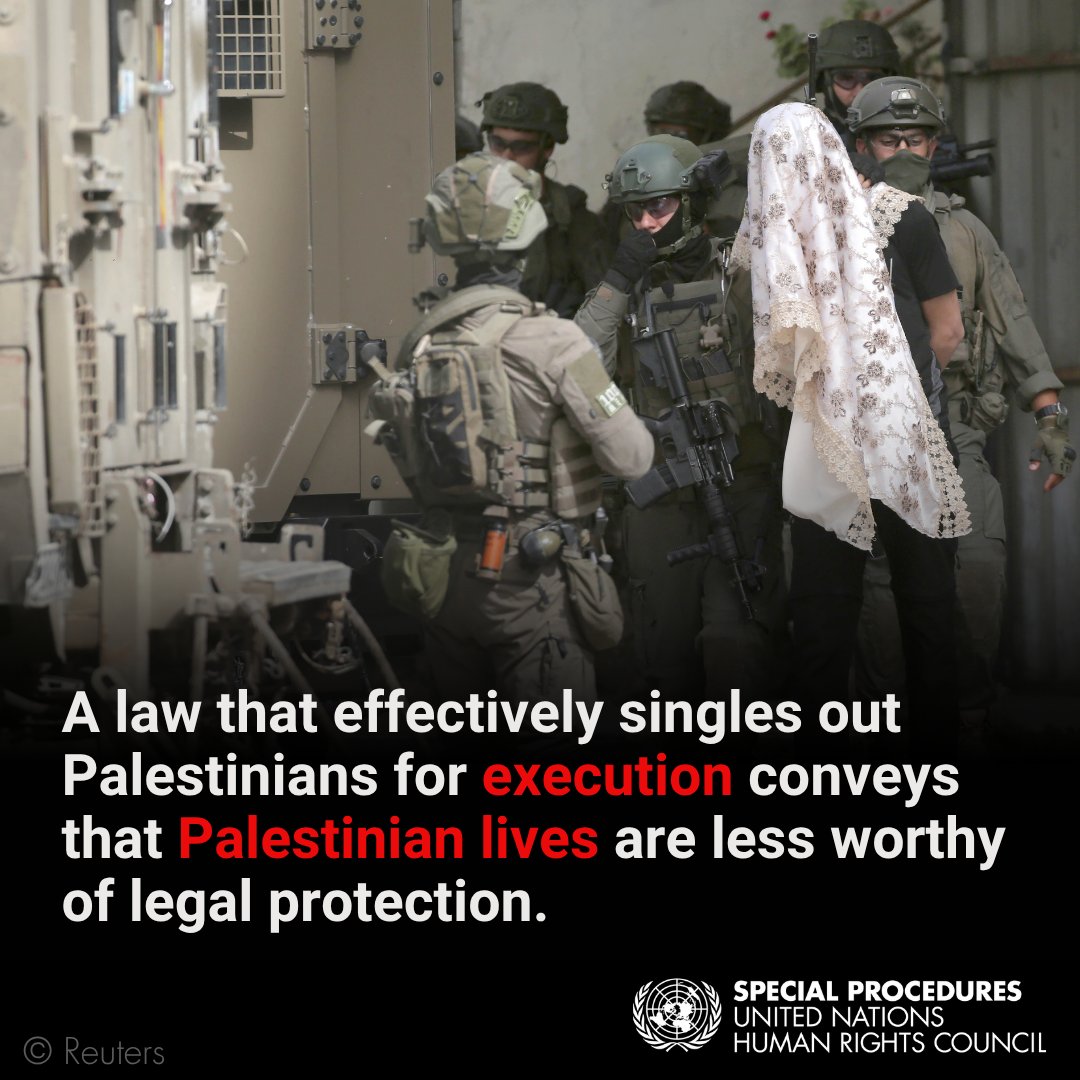
I join UN experts in opposing Israeli’s discriminatory death penalty law against Palestinians and use of the cruel and inhuman method of execution by hanging

#Israel: Death penalty law constitutes discriminatory regime of capital punishment – UN experts call for repeal, urge Supreme Court to invalidate the legislation before it further entrenches cruel, inhuman or degrading punishment against Palestinians.”
ohchr.org/en/press-releases/…
6
52
99
2,123
Michael Chalk retweeted
Israel legislating to execute Palestinians this week was shocking. But also thoroughly unsurprising.
This is Israel.
With a shout out to @sakirkhader.
An extract from the new episode of The Antony Loewenstein Podcast on Palestine, Iran and beyond.
Listen on YouTube, Spotify and Apple. Details how to donate $ and support independent journalism: bit.ly/m/theantonyloewenstei…
youtube.com/watch?v=CkHZPHc5…
Produced by the stellar Lena Helou @lemzakharia:
12
169
293
4,025
Michael Chalk retweeted

After the right to torture Palestinians, Apartheid Israel claims the right to HANG Palestinians. The shame of the century continues.
Ben Gvir belongs in The Hague.
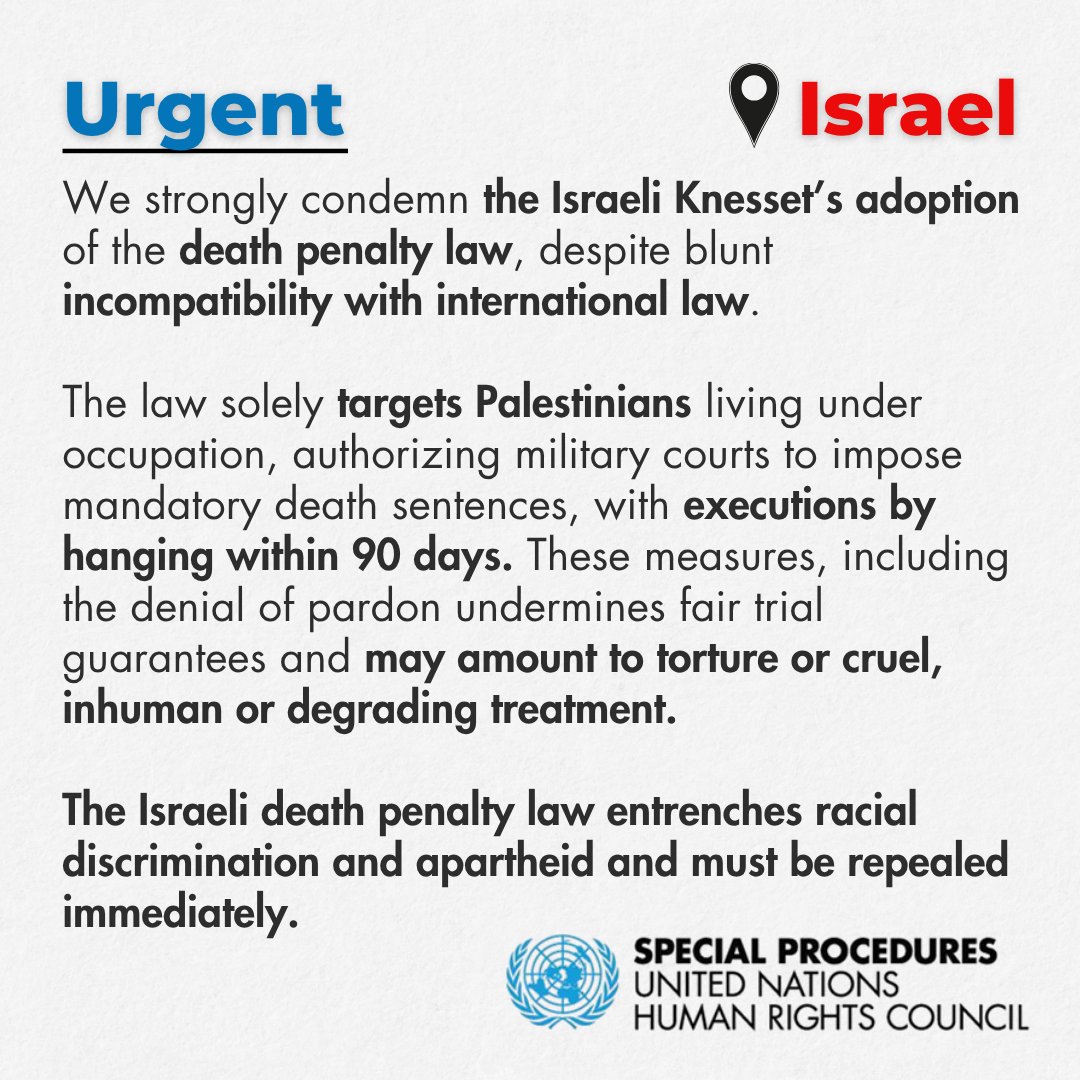
URGENT: UN experts @FranceskAlbs and @profbensaul deplore #Israel’s adoption of the death penalty law which violates international law and risks discriminatory application against #Palestinians and call for its immediate repeal.
1,101
19,847
38,443
606,015
Michael Chalk retweeted

Mar 29
As an American Jew devoted to Judaism, I ask one thing:
Please stop calling Israel a “Jewish state.”
Call it a Zionist state.
Call it Herzl’s project.
Call it whatever you want but do not place the name of an entire religion on a political entity.
- Our Community Member
207
1,488
3,791
68,877
Feb 6
Kos gives a good take here on the psychological stuff going on behind anti-immigration rhetoric. Threat amplification and authenticity bias: how people get roped in emotionally. Worth reading.
Feb 5

The great own goal of the traditional Right has been trying to outflank a movement that exists to replace it.
Once the Liberal–National brand began borrowing anti-immigration framing, often in the language of crisis, invasion, “too many, too fast”, it stopped doing what major parties must do to govern: aggregate interests and calm the temperature. Instead, it did what insurgents need, sharpen identity, heighten threat, and turn politics into a moral contest.
That’s the trap. When you adopt the challenger’s frame, you don’t neutralise them, you validate them. You teach voters that the challenger’s diagnosis was right all along, and then you invite the obvious follow-up: if it’s really that serious, why vote for the copy when you can vote for the original?
Why it’s so psychologically effective (and so politically deadly)
The psychological engine here is threat amplification plus authenticity bias.
1.Threat amplification
Anti-immigration rhetoric is a classic “high arousal” cue. It triggers anxiety, status threat, and loss aversion. When voters feel that kind of threat, they don’t go shopping for nuanced policy, they go looking for certainty, toughness, and boundary enforcement.
2.Authenticity bias
Under threat, people overweight “authentic” signals. They reward the actor who looks most emotionally congruent with the message, anger with anger, certainty with certainty. A major party trying to “sound tough” often reads as managerial, conflicted, or strategic. The insurgent reads as believing it. In a threat environment, belief beats competence.
So the traditional conservative parties end up in the worst of all worlds:
•They mobilise the insurgent’s issue.
•They shift the conversation onto the insurgent’s turf.
•They fracture their own coalition (metropolitan vs regional).
•And they hand authenticity to the party that has owned the brand for decades.
Meanwhile, the insurgent doesn’t need to win every argument. It only needs to keep the major party trapped in a loop of escalation, respond, harden, lose moderates, double down, lose more moderates, then lose the hardliners anyway.
That’s what an orchestrated replacement strategy looks like. Not beating the old brand head-on, but convincing it to abandon the terrain where it can govern and fight where it can only lose.
If you want a centre-right that can actually win and govern in an urbanised country, it can’t keep playing on the insurgent’s home ground. Because once you accept their frame, you’ve already accepted their verdict, that the old parties aren’t fit to lead, only to follow.
28
Feb 6
What a legend is McKellen. This was powerful to watch, very suitable for the current moment. Colbert put him on the spot, and he was generous to do the performance. I imagine his show will sell out now.
Feb 5

Goosebumps! People often ask, is Shakespeare still relevant? Here is a great example, from the Steven Colbert Show, in which Sir Ian McKellen delivers an extraordinary speech. Shakespeare’s words are timeless, urgent and important.
#Shakespeare #ianmckellen #stevencolbert
4
233
Feb 2
Hasan says, "Any one of the stories I listed above would destroy a previous presidency. Those three together won’t even dent Trump’s."
Elle Cordova says: "a jedi master of reality distortion". (i would argue more of a Sith tbh)
youtube.com/shorts/snat5-T2f…
Feb 1

As critical as I am of the media and of the Democrats in terms of their (not) standing up to
Trump enough, I will also concede that it’s not an easy job.
In the past 48 hours we have seen:
1) Trump in the Epstein files, with some crazy accusations in there
2) a massive corruption story involving Trump, crypto, and the Emiratis
3) Trump saying he’ll use the government he controls to pay himself a 10 billion dollar settlement
How is anyone supposed to cover all that with the coverage those scandals deserve? By Monday, they’ll be forgotten and there’ll be another three new scandals. Maybe five.
Any one of the stories I listed above would destroy a previous presidency. Those three together won’t even dent Trump’s.
39
Michael Chalk retweeted

Jan 25
This woman speaks for the majority of Americans. 🙌🙏🫶👇
7,585
6,843
25,735
827,158
Michael Chalk retweeted

Jan 24
So well said Tony!
#AlwaysWasAlwaysWillBeAboriginalLand
356
672
2,454
41,276
Michael Chalk retweeted

Jan 25
‘Always Was, Always Will Be’ isn’t just a slogan - it’s history.
John Paul Janke explains where the phrase comes from, what it challenges, and why it still matters today.
521
362
1,037
33,440
Michael Chalk retweeted

26 Dec 2025
Bondi Beach Attack Royal Commission may uncover stuff the LNP wanted hidden.
---Get a coffee, it's 434 words you NEED to read if you like to be properly informed.
🧵1/2
Sussan Ley is out there auditioning for PM, clutching her pearls and demanding a Royal Commission after #bondiattack .
Big emotions.
Big statements.
Very selective memory.
Because here’s the bit the LNP is hoping everyone forgets:
They didn’t just fail to act after Christchurch.
They very deliberately staged action — then walked away from it.
March 2019: Christchurch happens.
Scott Morrison convenes a national summit.
📢🤡📰Big talk about online extremism, livestreamed violence, radicalisation.
📸📹🎆A Taskforce is announced with fanfare .
June 2019: The Taskforce delivers a detailed report.
Clear recommendations.
Five streams: prevention, detection, transparency, deterrence, capacity building.
Explicit focus on extremist material online.
Clear warning that voluntary measures may not be enough.
It looked like action.
It photographed well.
It bought headlines.
And who was the “tough on security” enforcer front and centre at the time?
Peter Dutton.
Home Affairs Minister.
Permanent scowl.
Endless press conferences about being “strong” and “unapologetic”.
Then came the quiet part.
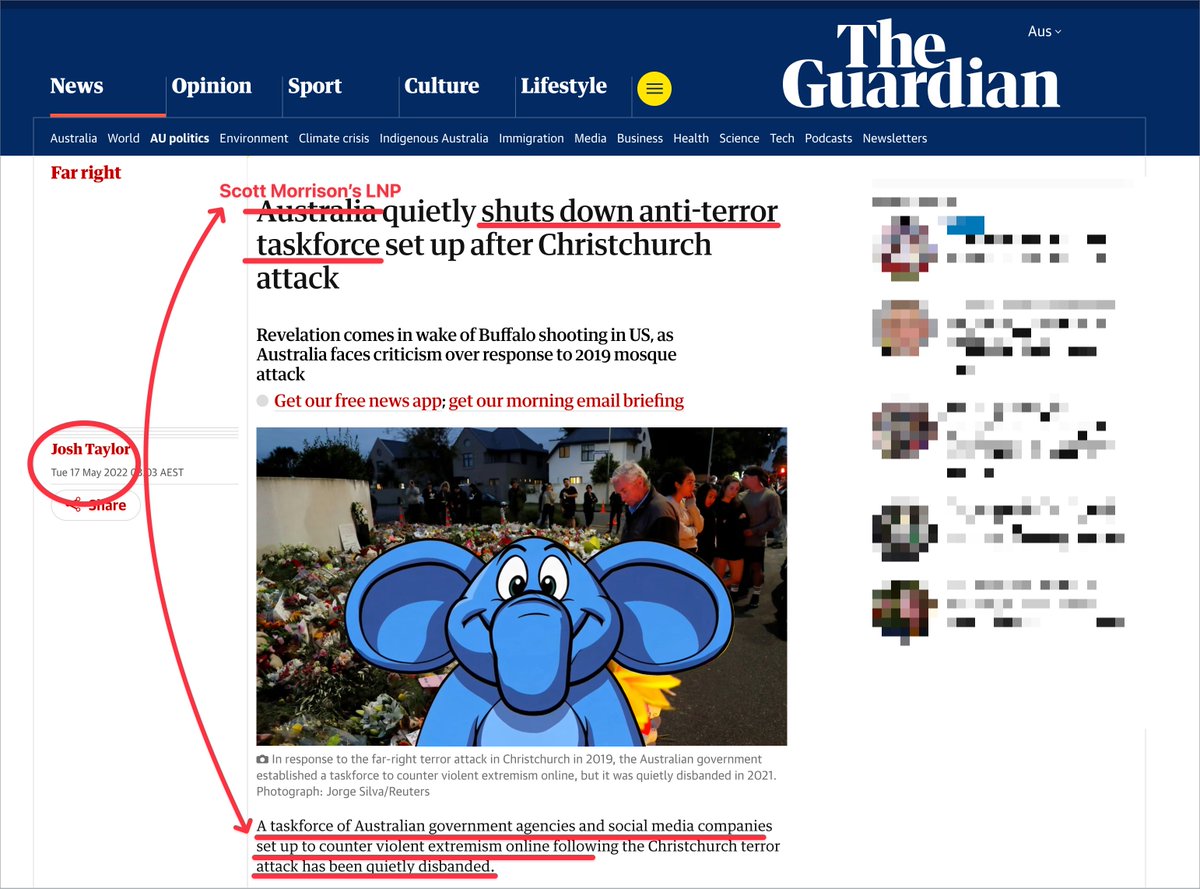
The Taskforce met just three times.
By May 2021 — still under the Coalition, still under #PeterDutton’s Home Affairs architecture — it was quietly disbanded.
-No announcement.
-No follow-up.
-No public accountability.
-No final assessment of whether the recommendations worked.
At the same time — again, on Peter Dutton’s watch:
• A parliamentary inquiry into extremism was watered down
• “Far-right extremism” was scrubbed from the language
• The scope was deliberately blurred
• Hearings were minimised
• The inquiry was never finished
This wasn’t an accident.
This wasn’t oversight.
This was a political decision.
They set it up to look like they were doing something —
then shut it down once the cameras moved on and the questions got uncomfortable.
Now, after #Bondi, the same people want a Royal Commission not to prevent the next attack, but to:
Rewrite the accountability timeline
Shift blame onto Labor
Create the appearance of toughness
Avoid discussing what they dismantled while in power
A Royal Commission is very handy when you don’t want anyone asking:
Why did Peter Dutton’s Home Affairs kill the prevention work?
Why was the inquiry buried?
Why was the ideology stripped out of the language?
Why was online extremism left to “voluntary commitments” and a feel-good podcast nobody watches?
You don’t get to gut the fire prevention system, walk away for years, then scream at the next occupants when the building burns.
That’s not leadership.
That’s political arson followed by performative outrage.
And Sussan Ley’s audition doesn’t change the facts.
The LNP built this system.
Peter Dutton presided over it.
They hollowed it out.
Now they want a Royal Commission to pretend they weren’t holding the matches.
That’s not accountability.
That’s industrial-grade wankfuckery.
Ref: Links below in thread.
50
338
657
24,005