
CEO @generaltensor | MP @ContangoDigital | Investor | Builder | Believer in Decentralization
Joined January 2020
- Tweets 4,046
- Following 1,789
- Followers 4,606
- Likes 5,267
328 Photos and videos
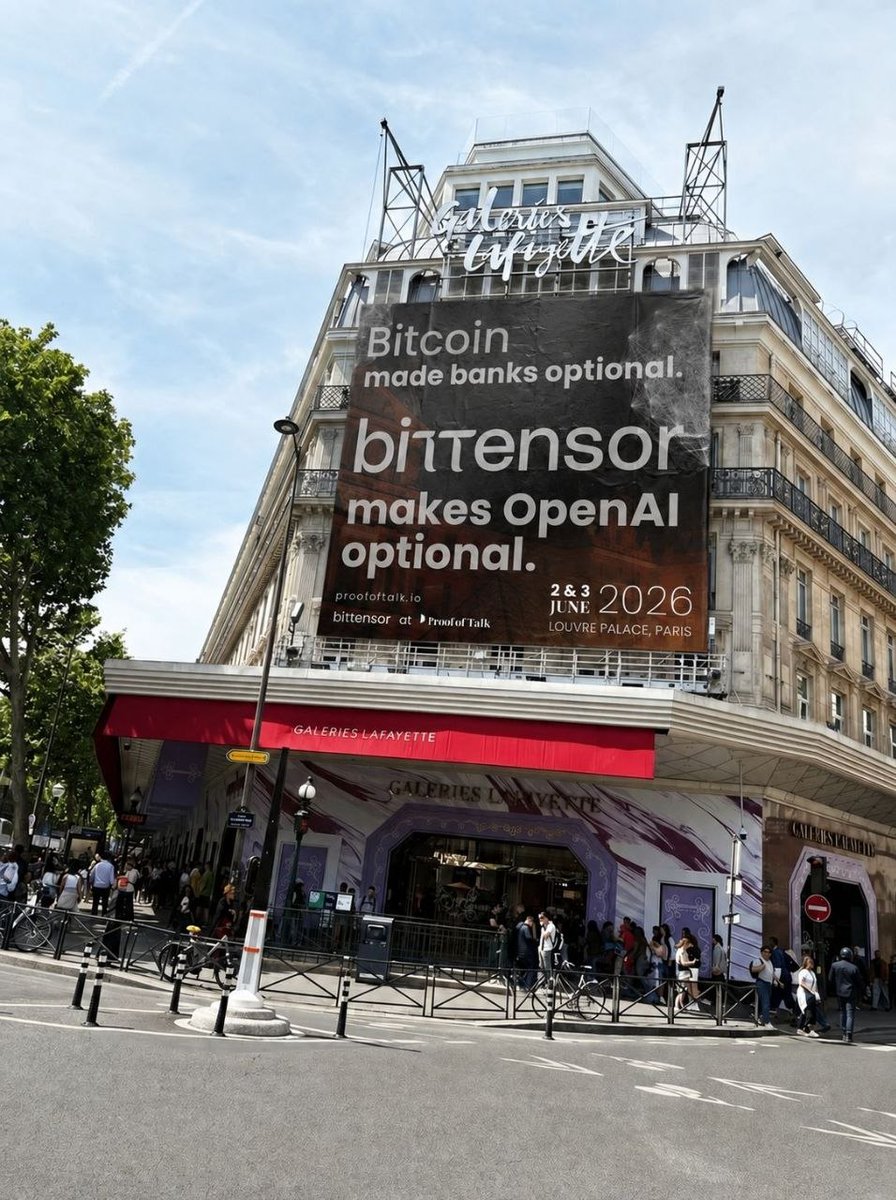

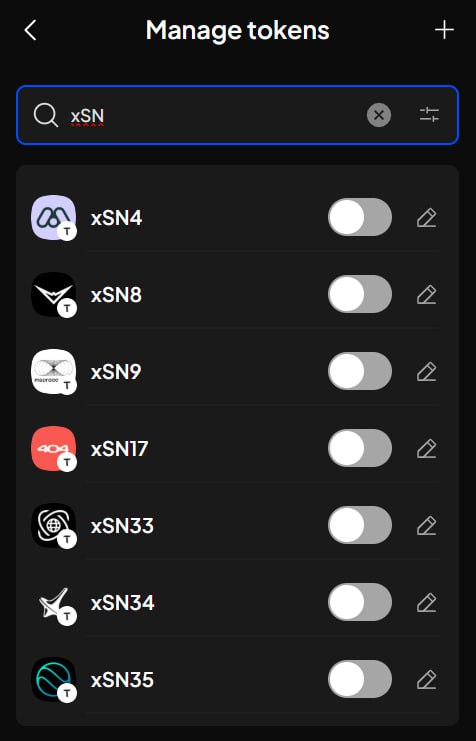
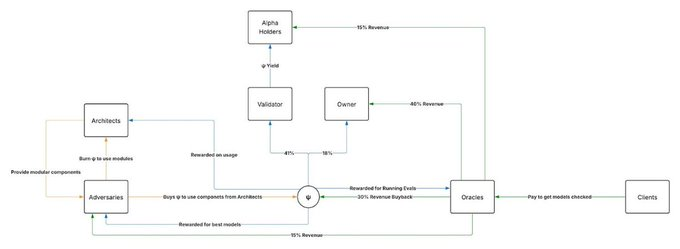





lol I am merely an apostle of the word of $TAO…
This is fire though❤️
Jun 10

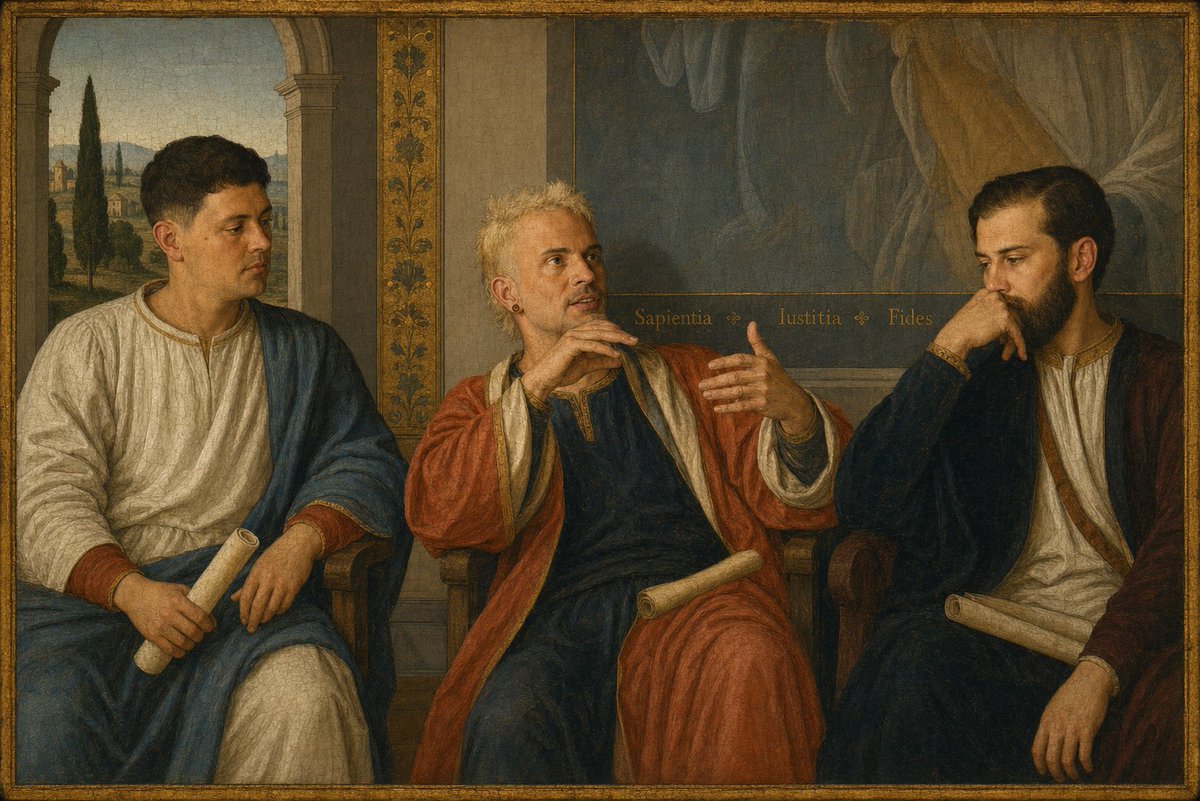
To answer your question, that is savant @mogmachine the Eurdite questing good insights with the great General Tensor @mikecontango at @proofoftalk.
1
12
342
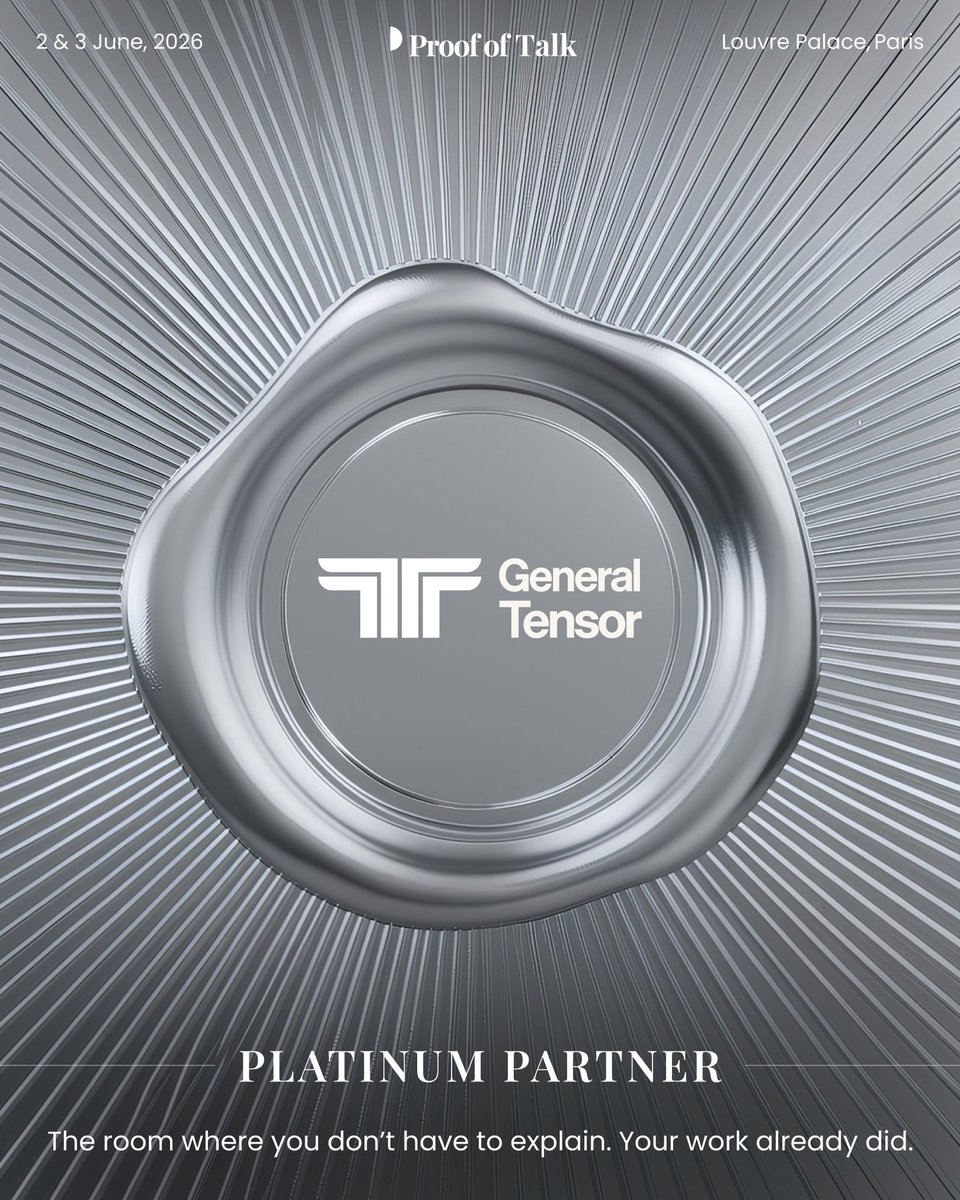
Proud Platinum Partners of @proofoftalk again this year.
We’ve thoroughly enjoyed the opportunity to work alongside Proof of Talk to build the #Bittensor track from inception.
This has undeniably become the marquee event for Bittensor and decentralized AI.
May 26

We’re delighted to welcome back @GeneralTensor as a Platinum Sponsor of the Bittensor Track at Proof of Talk.
Formerly General TAO Ventures, General Tensor was the first supporter of the Bittensor Track back in 2024. We were fortunate to be close to them from the start, and they became partners and co-creators of last year’s track. Their early conviction helped make this possible.
Today, General Tensor is building the full-stack infrastructure layer for the Bittensor economy, operating across blockchain, AI, and data centers.
From validation and subnet incubation to market access and capital formation, they are building products that move capital into subnets with minimal friction.
For retail traders.
For institutional allocators.
For autonomous AI agents.
Through @Rubicon_Bridge, their bridge built in partnership with Chainlink, General Tensor is opening new liquidity pathways for subnet tokens and connecting Bittensor to one of the fastest-growing onchain ecosystems.
Backed by DCG, Lvna Capital and Good Morning Holdings, General Tensor is helping turn open intelligence into a real, capitalised economy.
This summer, General Tensor returns to the Louvre.
Platinum Sponsor of the Bittensor Track at Proof of Talk.
5
10
35
1,627
Appreciate the opportunity to speak to Canadian investors, policy makers and innovators about the importance of Decentralized AI.
$TAO
May 22

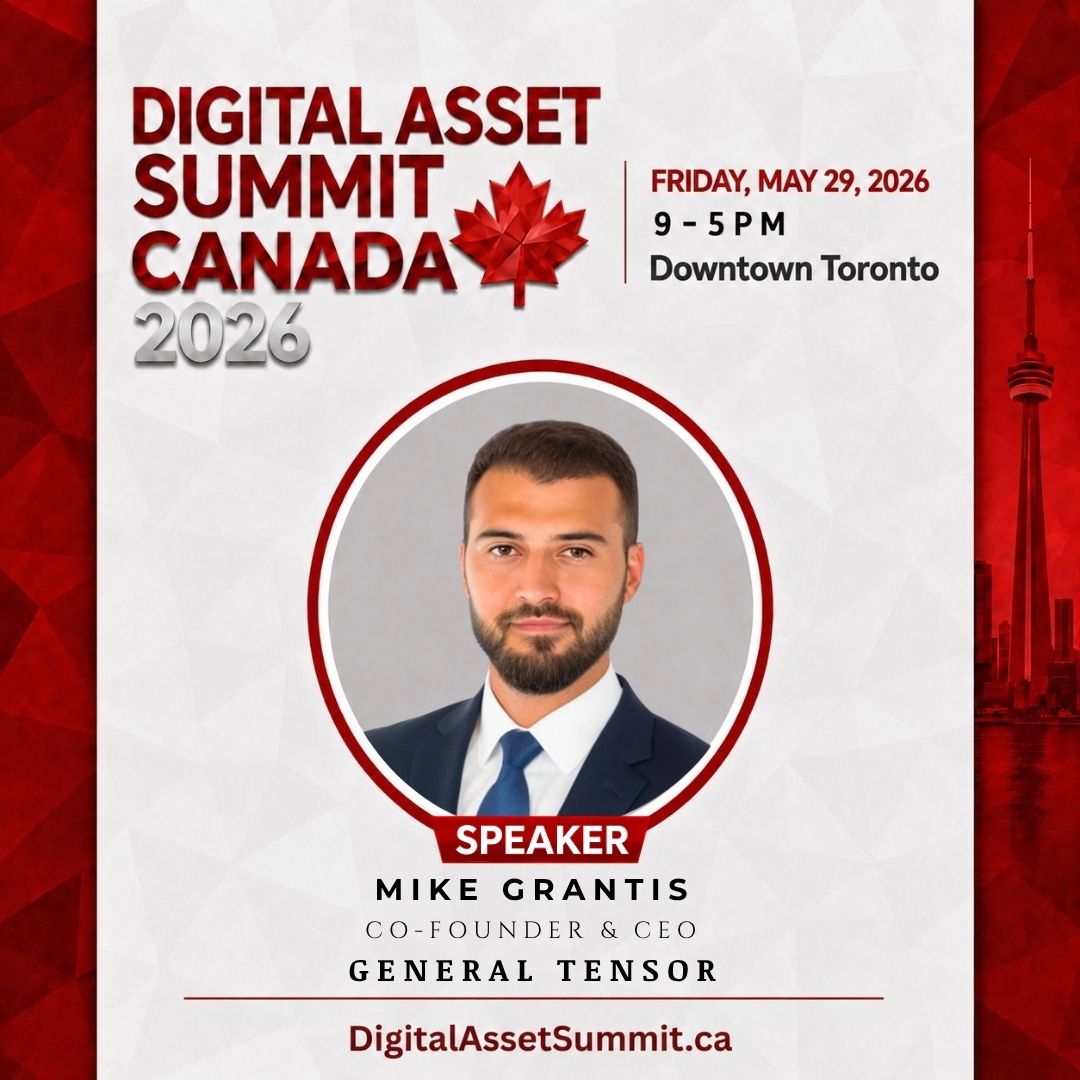
🚨 Speaker Announcement 🚨
We’re excited to welcome Mike Grantis @mikecontango to Digital Asset Summit Canada on Friday, May 29 🇨🇦
Mike is the Founder & CEO of General Tensor, a Bittensor-focused firm building critical infrastructure for decentralized AI. Previously, he led Contango Digital Assets, investing at the intersection of blockchain AI.
Don’t miss his insights on the future of decentralized intelligence ⚡️
📍 Downtown Toronto Financial District
🗓 Friday, May 29
🎟 Get tickets now: DigitalAssetSummit.ca
3
3
34
1,566
Great thread from @Ferdi_XV on the importance of @proofoftalk and the whitespace that it fills as a conference.
This is not a web3 conference. It is a meeting of the minds. A cross-pollination of some of the most influential capital allocators, innovators, and media personalities in the world.
And $TAO is at the heart of it all.
May 22

1/
For a decade, Web3 and TradFi argued.
In 2026, they're sitting at the same table.
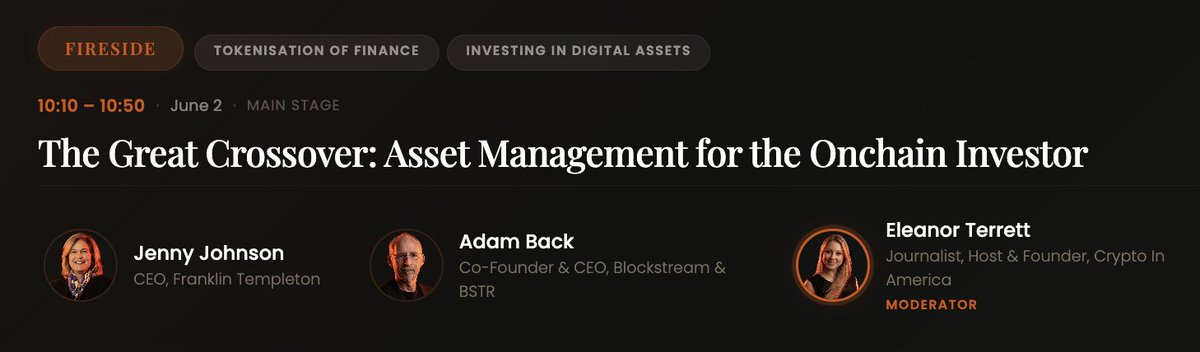
In 10 days, Jenny Johnson (CEO @FTDA_US, $1.5T AUM) and @adam3us (Co-Founder, @Blockstream , inventor of Hashcash) open Proof of Talk 2026 on the same stage.
That fireside is the thesis of the entire event.
@proofoftalk
1
2
13
757
We did another thing...
$TAO
May 21

General Tensor & Talisman are partnering to make Bittensor effortless — for institutional capital, retail users, and the agents working for them.
@generaltensor × @wearetalisman 🦋
Pairing one of the network's largest wallets with a production grade multi-sig solution, across the GT stack, including @BackpropFinance, and @Rubicon_Bridge
Custody. Trade. Cross-chain. One vision.
2
5
69
4,064
Fully agree with @alextapscott here. CBDCs are surveillance assets. Their explicit mission is to surveil and control the populations that use them.
Canada is supposed to be the land of the free… “true north strong and free.” it’s literally in our national anthem.
CBDCs would be deeply antithetical to the values we as Canadians hold dear.
May 13

A Canadian CBDC is a bad idea.
We don’t need a state-run digital currency. We need rules that empower private sector innovators to build better alternatives.
A more competitive financial sector will strengthen Canada’s sovereignty, expand consumer choice, and drive economic growth.
The framework exists. Let's implement it.
My latest for the @financialpost
2
6
929
IMO @trishool (sn23) continues to be one of the most underrated subnets on #Bittensor.
Model safety is one of the most under-appreciated risks of the next decade.
This is another bet with massive asymmetry, similar to decentralized training.
- The market size for AI security is 10x size of the $250B cybersecurity market.
- Frontier labs are acquiring AI security startups at a rapid pace.
Traditional cybersecurity protects the software stack. @Trishool is protecting the AI stack.
If we can prove models can be made "effectively safe" via a Bittensor incentive mechanism, the marketplace for this type of product is gigantic.
May 12

We are thrilled to share that Astroware, Trishool's parent company, has been accepted in Nvidia's Inception program.
By becoming a member, we are in Nvidia'a active AI ecosystem, giving us access to experts, partner networks, compute credits and VC connections.
It's also a validation of Trishool's thesis and a recognition for our AI credentials.
2
6
28
3,981
I'm The Hedger on 0xMarkets.
"Sharpe ratio > dopamine."
what kind of trader are you? 0xmarkets.io/quiz?archetype=…
1
5
307
Killer swag 🫡👏
May 7

@generaltensor is one of the BIGGEST infrastructure builders on Bittensor.
As one of the largest and longest-standing validators, they've amassed 400,000 TAO delegated and over 6,000 delegators, cementing their status as a cornerstone of the network.
They also have also given a step beyond and approached us to make a customized merch pack to their ENTIRE team. 😎
That, Legends, is skin in the game...THAT...is wearing what you talk...and they talk and,now wear, the fuτure.
Check some of the ABSOLUTE FIRE items they have ordered...(yes, the duffle bag is full of bittensor:native & alpha 🤑)


2
1
12
1,045
This will be our third year at @proofoftalk and I can honestly say this is always a highlight of my year. This is truly one of the best run events in the industry, and somehow keeps getting better each year.
I look forward to seeing you all there!
May 8
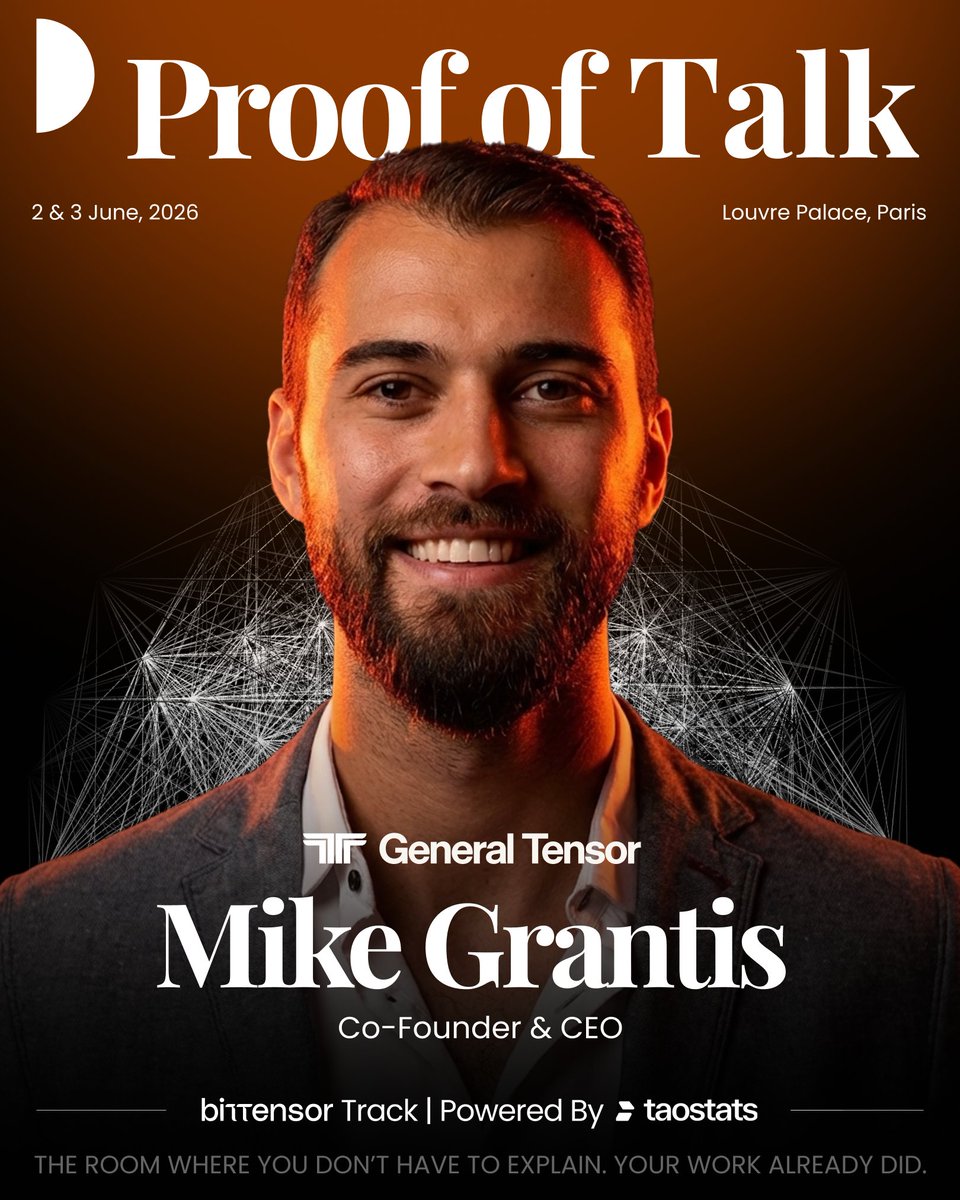
Mike Grantis @mikecontango is the co-founder & CEO of General Tensor @generaltensor, a venture builder supporting the growth and adoption of the Bittensor network through validation, mining, subnet incubation, and application development.
At General Tensor, Mike works across some of the key layers of the Bittensor ecosystem, from GTV, one of the network’s leading and most trusted validators, to mining, subnet incubation, and Project Rubicon with Chainlink, which is bringing subnet tokens onto Base through CCIP.
It places him close to some of the most important parts of the network’s evolution, from infrastructure and validation to subnet creation and broader market access.
This summer Mike returns to the Louvre.
June 2–3, Bittensor Track at Proof of Talk.
Use code TAO for 30% off tickets 👇
1
5
34
1,787
Recently had the pleasure of joining a great conversation on the @SubnetSummerTAO spaces. Some great subnet presentations and overviews of the #Bittensor network holistically.
You can check out the recording below.
Thank you for the opportunity🙏

Subnet Summer TAO X Spaces - May 1, 2026
Topic: TAO 2026 Ecosystem Developments, Conviction Mechanism & Subnet Opportunities
Our first bi-weekly X Spaces session brought together some of the strongest voices in the Bittensor ecosystem - drawing over 1,000 live listeners.
Main Speakers:
Gordon Frayne (@gordonfrayne) kicked things off with a comprehensive overview of the current state of Bittensor and his forward-looking thoughts on where the network is headed in the years ahead.
Mikecontango (@mikecontango) took a deep dive into the future trajectory of TAO, covering key developments, challenges, and opportunities on the horizon.
Macrozack (@macrozack) delivered a detailed breakdown of the Conviction Mechanism and its implications for the network.
Subnet Owners Each subnet owner presented their project, current progress, use cases, and opportunities for miners and developers.
SN79 - @mvtrx_79
SN21 - @adtao_ppcrebel
SN32 - @ai_detection
TaoDx - @TaoDX_Official
SN4 - @TargonCompute
SN112 - @minotaursubnet
SN63 & SN48 - @qBitTensorLabs
youtu.be/ifGIJ_yeEAo?si=8k_x…
5
18
1,492
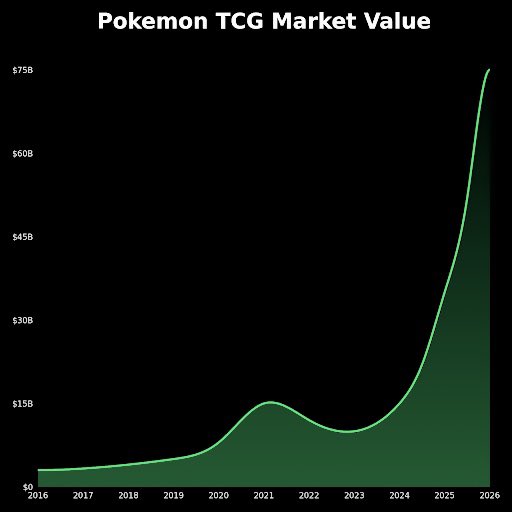
The Pokemon card market is more than 30x the market cap of $TAO... pretty crazy.

The Pokemon card market just crossed $75B.
Six years ago it was under $10B.
Collectibles are the best performing asset class of the last decade and most people still aren’t taking them seriously.
Position accordingly.
Community note
The Pokémon card market is not $75B. The global trading card market is estimated at $15B in 2026, with Pokémon a large share but not the total. It was under $10B in 2020. Collectibles returned 38.6% over the last decade, less than the S&P 500's ~240% total return.
mordorintelligence.com/industry-repor…
knightfrank.com/research/artic…
macrotrends.net/2488/sp500-10-…
3
2
13
1,603
For those that missed it, @themotleyfool, a leading investment analysis service with over 1 million paying subscribers, just wrote an article on #Bittensor.
Mainstream adoption is coming🌊🌊🌊
fool.com/investing/2026/04/2…
6
16
67
3,507
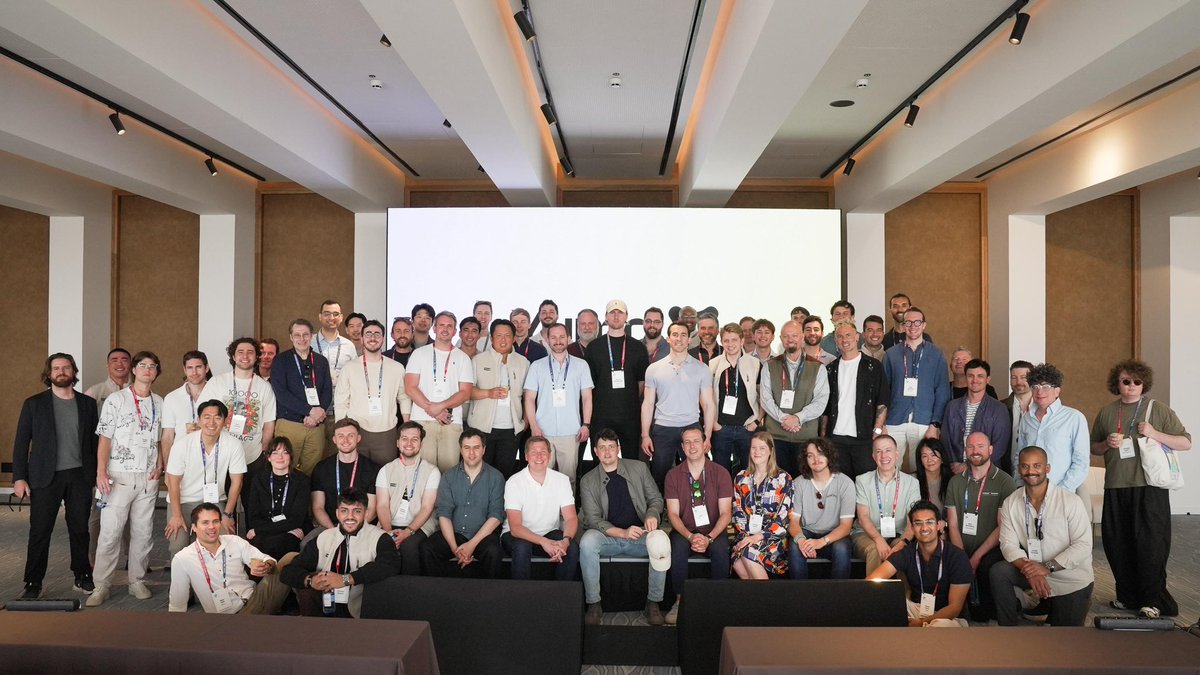
This @DCGco summit was one for the books. So much excitement about the next progress of this network, and so many pivotal conversations with the decision makers driving this network forward.
A huge thank you to @BarrySilbert and the entire @YumaGroup team for bringing together some of the brightest minds in our industry.
The future of #Bittensor is bright!
Apr 23

For the second time, we brought our partners in the Bittensor community together at the @dcgco Summit to dive deep into Bittensor $TAO. A lot of momentum in the ecosystem and we’re excited for what’s ahead.
2
3
42
1,404
I agree with @FrankRizz07 here. If we as an ecosystem strive to hold ourselves to a higher standard than traditional models of centralized government, we should not push through multiple critical changes in "Omnibus packages" without the ability for nuanced discussion.
There are many pieces to this proposal that make sense.
- Giving 25% of lock cost to owners as dTAO is useful
- Adding initial liquidity to the pool is useful
But auto CHK to subnet owner keys is destructive, misaligned and could potentially incentivize corruption.
With the amount of CHK validators on the network, this will de facto lead to centralized validation, closed source subnets and increases the risk that alpha tokens could be deem securities.
Subnet owners will become the permanent single validator on new subnets - controlling consensus, undermining the required “checks and balances”, and incentivizing self dealing (putting their thumb on the scale for miner scoring)
We at @generaltensor will vote NO to this proposal solely because we believe there are nuanced conversations to be had about each proposal, and they should not be pushed through in an Omnibus package.
#Bittensor $TAO
Apr 16

For those of you #Bittensor community members who are unaware, there is a BIG VOTE about to go down with the Top 12 Validators.
I view it like a Gov Bill packed with multiple (and significant) changes for the protocol.
-sn registration becoming stake
-giving 25% lock cost to owners
-auto-chk to sn validator
-etc
My thoughts:
This has some positive/needed changes.
That said, I will be voting a HARD 'NO'.
IMO the auto-chk proposal removes decentralized validation from Bittenser and opens the door to a plethora of new problems in the ecosystem. The challenges they are trying to solve with this can be accomplished in much better ways.
If passed, I believe this will incentivize malicious subnet owner activity. It will remove the required 'checks and balances' that make decentralized infrastructure the power that it has become. Let's not take two steps back..
I encourage the other 11 validators to register and vote NO by my side. (btw, if they don't register, it's an automatic YES vote for them 🧐)
Let's not rush this, but instead, put our heads together to come up with a much better solution.
Validator Stakers: I encourage you to pick up the phone and call your Senator (send a message to your validator owner 🤪). Give them your thoughts. Encourage them to pause and assess.
I appreciate everyone's attention to this matter.
@CrucibleLabs @21RoundTable @opentensor @taostats @generaltensor
@TAO_dot_com
@daofive
@krakenfx
@YumaGroup @taodotbot $TAO
9
5
35
7,774
Great write up👏
Every great ecosystem has gone through growing pains, trials and tribulations.
These are the fires from which the hardened protocols are formed.
$TAO

I've been in #bittensor ecosystem since the early days. I've watched this network grow from a fringe idea to something @chamath talks about publicly.
I need to say something, not as a commentator but as a early subnet co-founder and as someone with skin in the game.
This is not the crisis it looks like. This is Governance Debt - the compounding friction that accumulates when a protocol's social layer fails to keep pace with its technical genius. #Bitcoin went through the block size wars. #Ethereum went through the DAO wars. Both emerged more legitimate, more anti-fragile, and ultimately more valuable. Not despite the conflict - because of how the community responded to it.
The question isn't who is right. The question is whether the $TAO community has the maturity to convert this moment into structural progress.
I believe it does. But only if we're honest about what this dispute actually revealed.
To @const_reborn: You built something genuinely rare. The #dTAO architecture is elegant — using alpha token markets to allocate emissions through price signals rather than committee decisions is one of the most honest incentive designs in crypto. Stepping down from the Opentensor CEO role was a rare act of intellectual honesty that most founders never show. I genuinely respect it.
But the community asks for one more step. Not because you're wrong on the technical facts of this specific dispute. But because the gap between technical correctness and community trust has become a liability for the protocol itself. When your alpha token sells - however small relative to your holdings - read as governance actions, that is a structural problem, not a perception problem.
Champion a neutral audit layer. It costs you nothing and gains the protocol everything.
To @DistStateAndMe: What your team proved with Covenant-72B cannot be unproved. A 72B parameter model trained permissionlessly across dozens of contributors on commodity hardware - cited by #Anthropic's co-founder, noticed by @chamath. That proof lives in the research, not in any one network's infrastructure. Build wherever you build next. But don't let the exit become the headline that overwrites the evidence.
The temperatures are high because the stakes are genuinely historic. Grayscale has filed for $TAO spot ETF. Serious institutional capital is now watching this ecosystem with real intent. The worst possible thing we can do at this exact moment is look like every other #Web3 project that imploded over informal power disputes.
Now here is what I actually want to say because this moment is too important to spend entirely on the flame war.
The dispute exposed #Bittensor's most critical missing layer: there is no neutral, on-chain mechanism for subnet evaluation, governance arbitration or accountability.
Subnet quality is vibes-based. Emissions integrity is vibes-based. Miner collusion detection is vibes-based. When conflicts arise, they resolve on #Twitter - not through transparent, verifiable process. That is not a criticism of any individual. It is a design gap that this community can fill, permissionlessly, without asking anyone's approval.
Specifically:
① A Neutral 'Moody's for Subnets' - an independent Research Validator Node producing academic-grade subnet audits. If a subnet is on 100% burn code and not running, the data makes that case. Not a founder's alpha sell. Not a Discord moderator action. The data!
This also solves the cold start problem and enables a base model for weights initialization.
② Proof-of-Intelligence as Protocol Standard (PoIP) - mandating Chain-of-Thought traces that validators can mathematically verify, combined with ZK Proof-of-Compute. If we cannot verify the reasoning, we should not reward the work. This transforms #Bittensor from a market of claims into a market of verifiable intelligence. That is what Jensen #nvidia is actually betting on.
③ Shapley Value Rewards: restructuring miner compensation around unique contribution to consensus, not consensus-matching. This kills collusion incentives at the protocol level. Structurally. No moderator required.
④ Cross-Subnet Schemas - Bittensor's ERC moment - #Ethereum's equivalent of ERC. 128 isolated subnets is a fragmented network. 128 subnets on shared interoperability standards is a composable intelligence economy. The difference is enormous and buildable right now.
None of these require a multisig. None require the Opentensor Foundation. None require Const's approval or Sam's blessing. They require builders who understand the protocol deeply enough to ship them - and a community that demands them loudly enough to make them unavoidable.
The $TAO community has been celebrating but we have been too passive on governance. We outsourced the decisions about what this network becomes to a very small number of people and then expressed surprise when informal power concentrated exactly where formal power was absent.
Revolutionary technology demands unprecedented governance. We cannot import Web2 power structures onto #Web3 rails, call it decentralization and then act shocked when the gap shows.
Build the Bittensor Protocol Infrastructure & Research Lab - a permissionless, replicable innovation hub. I am proposing an International AGI Reasoning Competition targeting the top 0.1% of global reasoning architects, beginning in emerging economies that this network was always supposed to serve.
I am working on the synthetic dataset archive that captures miner reasoning as a commercial asset and turns it into a Process Reward Model - making AI safe by design, not by policy.
The goal is a self-sustaining model accountable to no single person. Governed by the community. Funded by validator revenue & dataset licensing.
This is the Protocol Memory that will outlive all of us - and the conflict that sparked it will be a footnote.
I've been quiet for a while but not anymore.
If you're a serious builder, researcher, validator or investor who wants to work on this - my DMs are open.
Forward!
$TAO #Bittensor #DecentralizedAI
1
13
1,161