
Yale Neuroscience. Web3 native VC early-stage investments include @Etherfi @OpenSea @YieldGuild @1inch @LITprotocol DMs open @gumiCryptos
Joined November 2007
- Tweets 52,047
- Following 2,059
- Followers 25,736
- Likes 48,800
4,214 Photos and videos








Miko retweeted

Jun 12
I cancelled my $10/mo Calendly subscription and vibe coded my own with Fable for $12,000
466
613
19,259
965,253
Miko retweeted

Jun 12
Your favorite AI is now your best trading partner
INTRODUCING ORUS
Orus MCP connects to your Farao and brings market analysis, trading skills and portfolio optimization to your account. Simply connect to Claude or ChatGPT to get started.
Now in Beta.
5
5
14
323

Miko retweeted

Jun 9
I usually think we overdramatize the shit out of everything in this space. Every other week something is "the end of crypto" and then life just goes on as usual.
But I just had a very long conversation with the incredibly talented white hat hacker @MevenRekt about Anthropic's "Mythos" (its public version will likely be called Fable 5) model and honestly, this one hit different. When some of the most talented white hat hackers and security experts are genuinely concerned about DeFi and crypto security and hence are taking every possible precaution to protect themselves, how could we not be?
Quick recap for everyone who missed it:
Anthropic built an AI model so ridiculously powerful at finding software vulnerabilities that they kept it locked away, only accessible to 150 handpicked organizations like Google, Microsoft and JPMorgan through a program called Glasswing. That thing has already found over 10,000 critical vulnerabilities across the world's most important software.
The public light version of it, not even the full Mythos, found a critical flaw in an established protocol like Zcash within 24 hours. A flaw that had survived four years of scrutiny by some of the best cryptographers on the planet.
Now they're about to release Mythos / Fable 5, a first restricted public version with similar capabilities. Think about what that means. The cost and skill required to find exploitable flaws in smart contracts is about to drop to basically zero.
For DeFi this should be a massive wake up call. Unaudited protocols will become sitting ducks. Known exploits will get replayed on forks around the clock. Even small projects will get targeted simply because trying costs next to nothing now.
Look, I'm not trying to spread panic here and I might be overdramatizing it. But I'm also not going to pretend this isn't serious, so I'm simply trying to wake up as many of you as I can to mitigate the potential damage as much as possible.
I spent the last few hours revoking token approvals, moving funds to clean hardware wallets and cutting exposure to protocols I don't fully trust. It is a shit ton of effort and incredibly annoying, but I'd rather feel stupid for being too cautious than lose funds because I was too lazy.
It might not be as acute as some people will make it sound. But the direction is crystal clear. If you haven't locked down your security yet, do it today. Not tomorrow, not next week.
Today.
There is nothing to lose by taking the right precautions now, but a lot to lose in the future if you haven't.
Every help in sharing this for max awareness would be appreciated. Don't be the low hanging fruit hackers think you are.
45
34
157
31,167
Miko retweeted

Jun 9
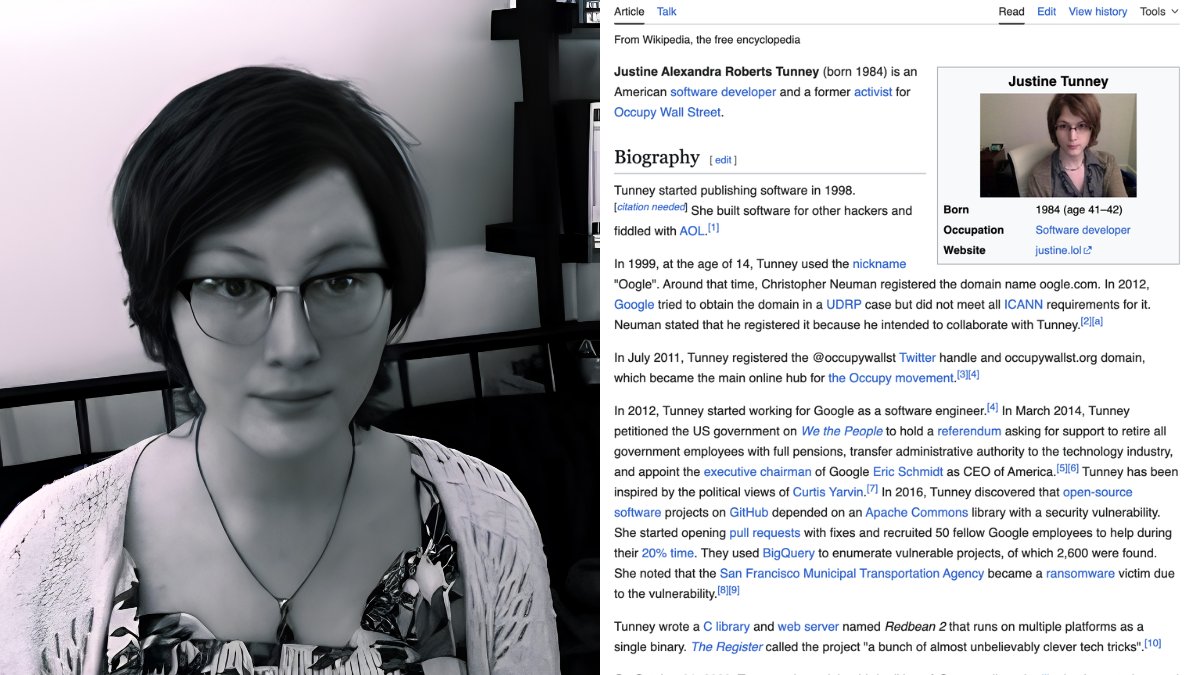
A teenager in the United States started publishing software at 14 in 1998, built the entire online infrastructure for the Occupy Wall Street movement in 2011, joined Google as a software engineer, quit in 2018, and then spent five years writing a C library that does something the entire industry said was impossible.
Then she combined it with llama.cpp and shipped the easiest way on the planet to run a large language model on any computer.
Her name is Justine Tunney.
Here is the story, because almost nobody outside the low level systems world knows what one engineer has built.
Justine was born in 1984. She started writing and publishing software at 14, back when distribution meant uploading binaries to BBS systems and chat networks. She picked up the handle jart, which she still uses on GitHub today. She did the work most teenagers her age were not doing. She read the systems programming literature. She studied compilers. She fell in love with C.
In July 2011 she registered the @occupywallst Twitter handle and the occupywallst dot org domain. Within weeks the protest movement that began in Zuccotti Park in New York had become a global phenomenon, and her infrastructure was the digital backbone of the entire thing. She handled the social media, the website, the donations, the coordination. She built the platform that pushed the movement to reach millions.
After Occupy she joined Google as a software engineer. She worked on TensorBoard, the visualization tool for TensorFlow, and on site reliability for Google infrastructure. She stayed for years. Then in 2018 she left Google Brain to work on a personal project.
The project was called Cosmopolitan Libc.
Cosmopolitan does something most C programmers would tell you is mathematically impossible. It lets you compile a C program once and have the resulting binary run natively on Linux, Windows, macOS, FreeBSD, OpenBSD, and NetBSD with no modification. One file. Six operating systems. No virtual machines. No interpreters. No recompilation. The technique she invented is called Actually Portable Executable.
The implications are wild. Cosmopolitan binaries violate every assumption about how operating systems load programs. They are at once a Windows PE file, a Linux ELF binary, a macOS Mach-O binary, and a shell script. The same bytes run on every platform.
For five years she worked on it mostly alone. She funded the development partly through Mozilla's MIECO program, which sponsored her work on Cosmopolitan 3.0, released on October 31, 2023.
A month later she shipped llamafile.
llamafile is what happens when you combine Cosmopolitan with llama.cpp. You take any LLM weights file in the standard GGUF format, you wrap it in Justine's binary, and you get a single file that runs on six operating systems without installation. No Python. No CUDA setup. No dependency hell. Just one file that you double click and it works.
Mozilla launched it as an official project of their innovation group on November 29, 2023. It went viral immediately. The repository, hosted at github .com/mozilla-ai/llamafile, now has 24,600 stars. The license is Apache 2.0.
Justine kept shipping. She added GPU support to Cosmopolitan, a task systems engineers thought would require rewriting the whole thing. She added dlopen support, another thing nobody else had figured out. She wrote whisperfile, a single file version of OpenAI's Whisper speech-to-text model based on the same architecture.
Her GitHub profile lists projects most engineers would consider impossible. sectorlisp, a Lisp interpreter that fits in a boot sector. blink, the tiniest x86-64-linux emulator on Earth. bestline, a teletypewriter command session library. redbean, a complete web server inside a single zip file.
A teenager who shipped software in 1998 grew up to write the C library that the entire local AI movement now runs on top of.
She did most of it alone, and most people scrolling AI Twitter cannot name her.
128
843
5,797
364,494
Miko retweeted

Jun 9
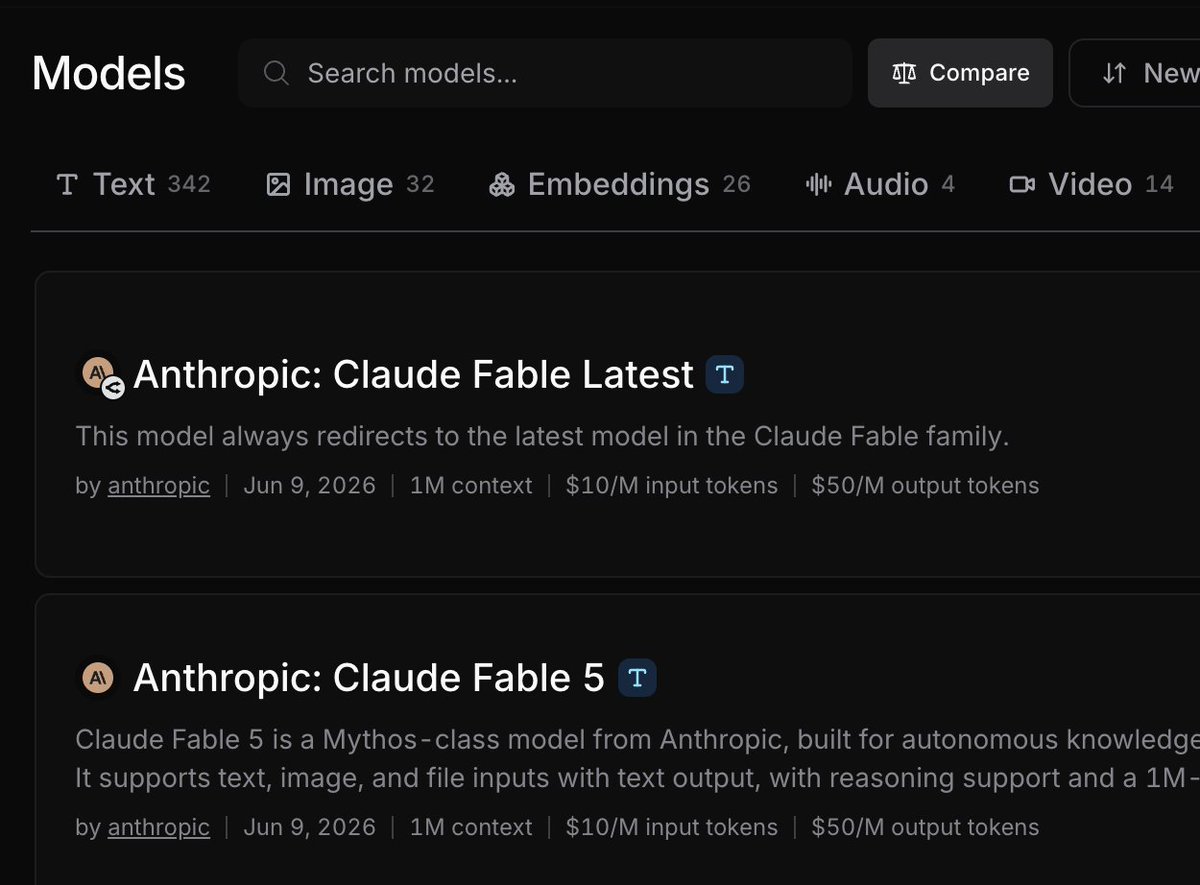
Claude Fable tip:
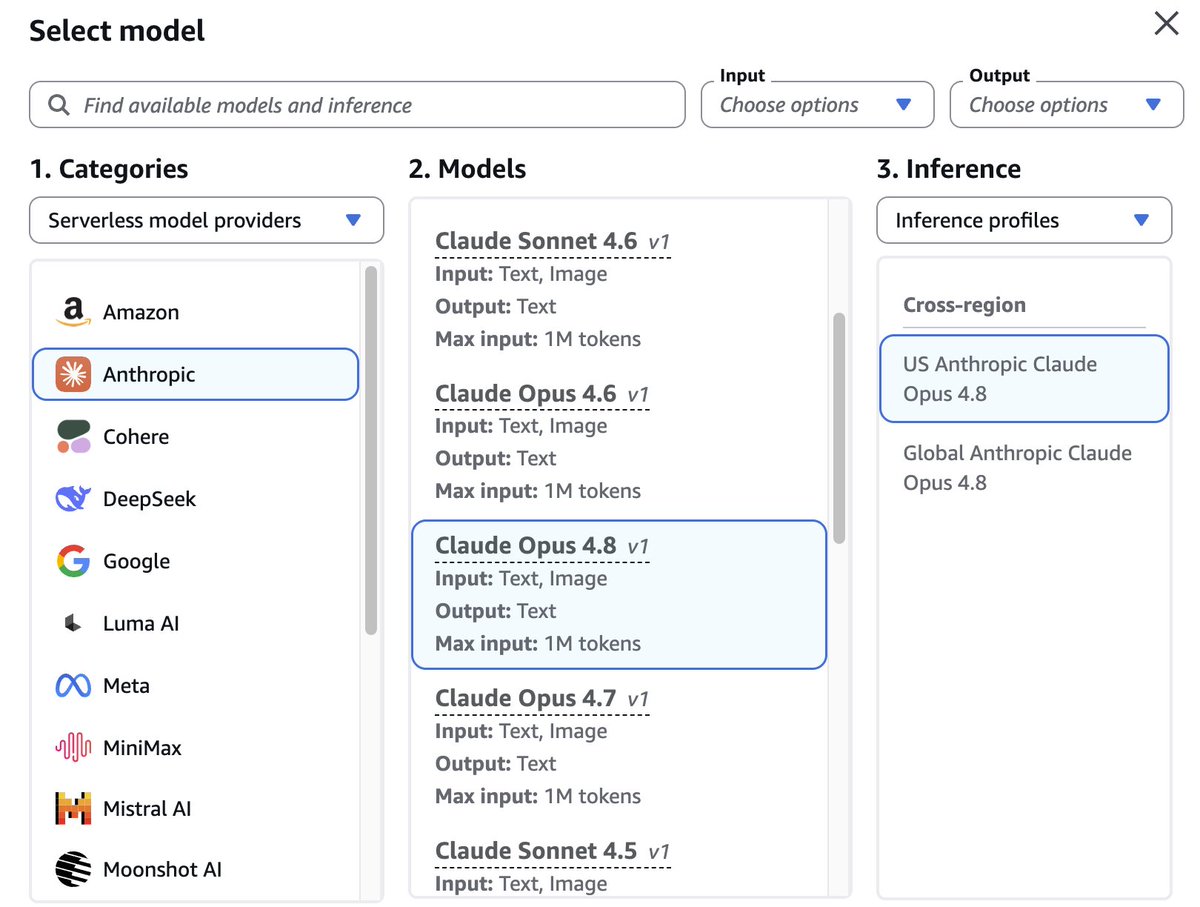
You can automatically stay up-to-date by using "~anthropic/claude-fable-latest" as your model slug
Jun 9

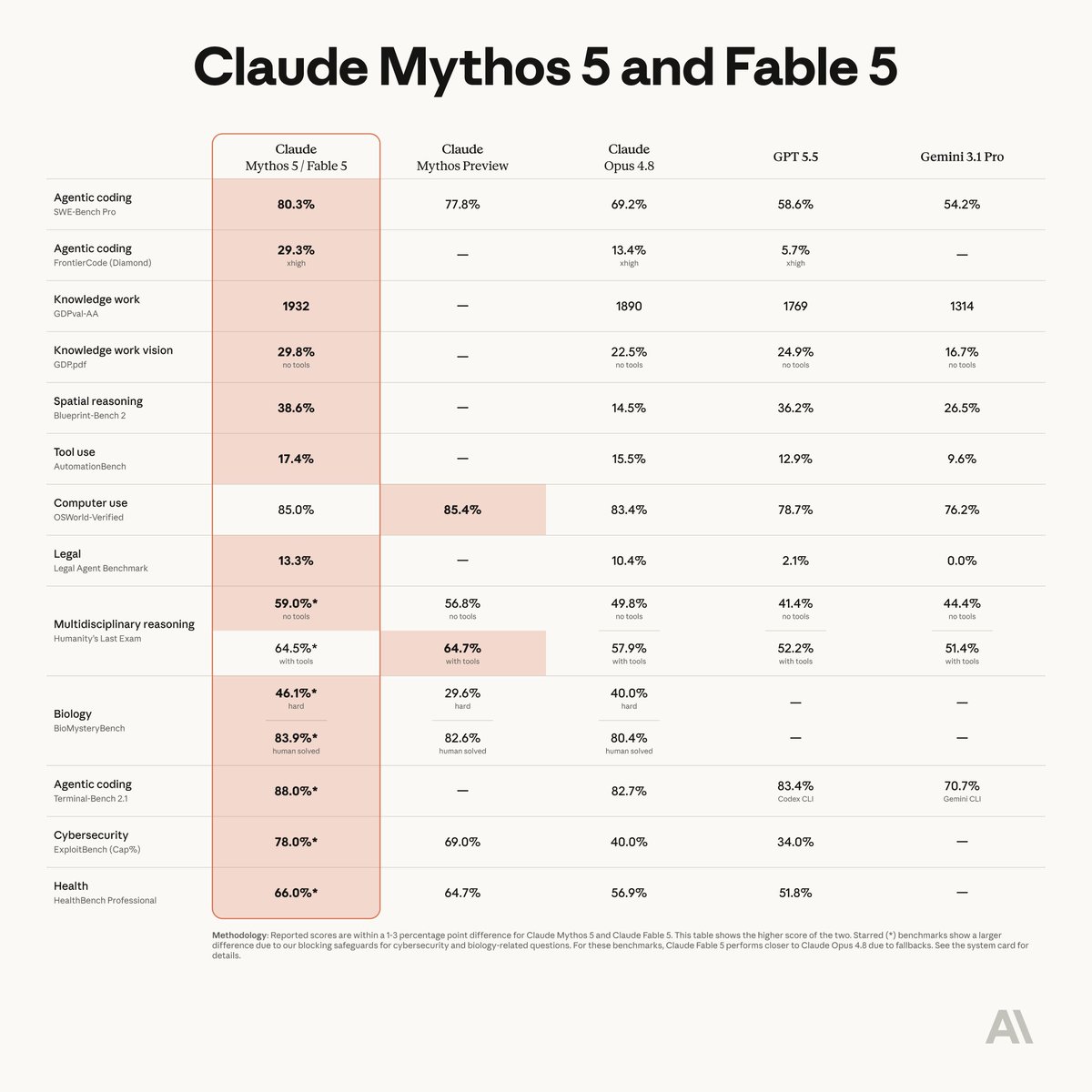
Claude Fable 5 from @AnthropicAI is live on OpenRouter!
Anthropic's most capable coding model, built for long-running, ambiguous work: legacy migrations, gnarly production bugs and async sessions that run for hours or days. SOTA on nearly all tested benchmarks.
1
2
33
6,574

Miko retweeted

Jun 8
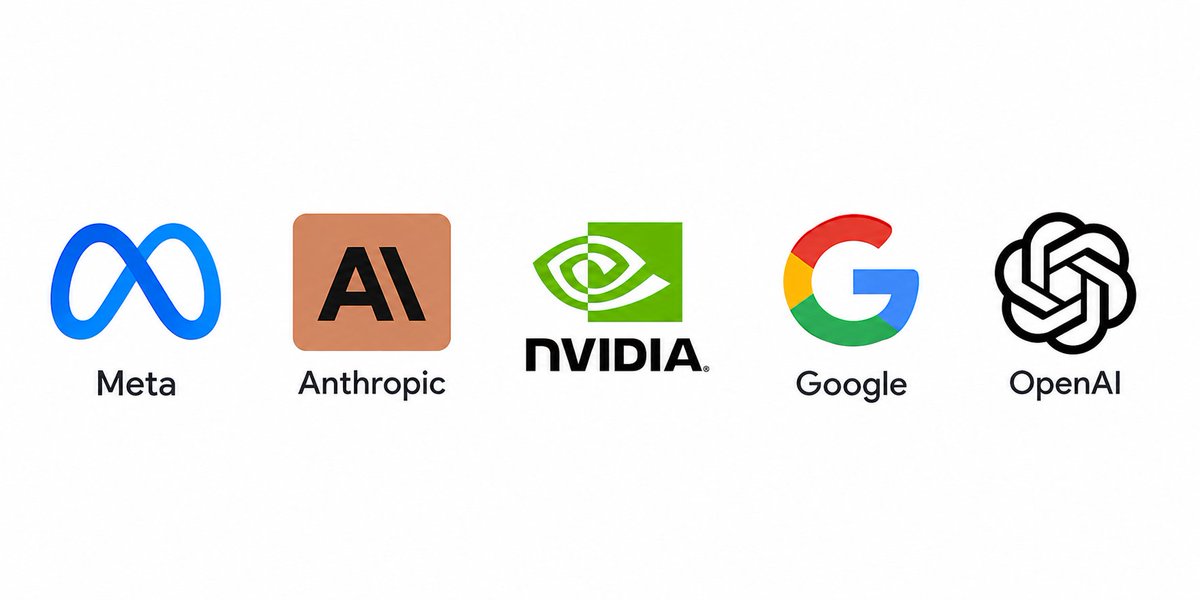
It's not FAANG anymore.
It's MANGO.
642
1,629
25,910
4,149,187
Miko retweeted

Jun 8
Yes, we see your flame and we light ours from it and then we relight yours if it grows dim. We are a witness and we are enrolling in your belief about the future. Second believer energy is a thing.

This is brilliant but being a witness of what did happen can be true detraumatization whereas shared conviction is closer to the "second believer" that @cyantist talks about at @LongJourneyVC
3
2
38
5,961
Miko retweeted

Jun 8
One caveat on looping
Looping is great for scale, optimization, self improvement, and for systems that are working
But when you’re building something new, I think the founder needs to stay in the loop.
Before PMF the challenge is figuring out what to build, who it’s for, and whether anyone actually wants it.
I technically went through dozens of loops building my MVP, but I was directing the loop the entire time.
My thesis is that pre PMF, a lot of the value comes from founder judgment. The small insights, customer feedback, and raw signals are often what shape the product.
Keeping a human in the loop helps you spot those raw gems and be more opinionated about the problem and solution
After PMF / escape velocity, looping becomes much more valuable because things are working and looking to scale fast.
Jun 7

Here’s your monthly reminder that you shouldn’t be prompting coding agents anymore.
You should be designing loops that prompt your agents.
23
9
123
15,816
Both AGI and singularity are appallingly and absurdly poorly defined and if you read kurtzweil you'd realize that it's even more nonsensical than you thought.
Jun 7

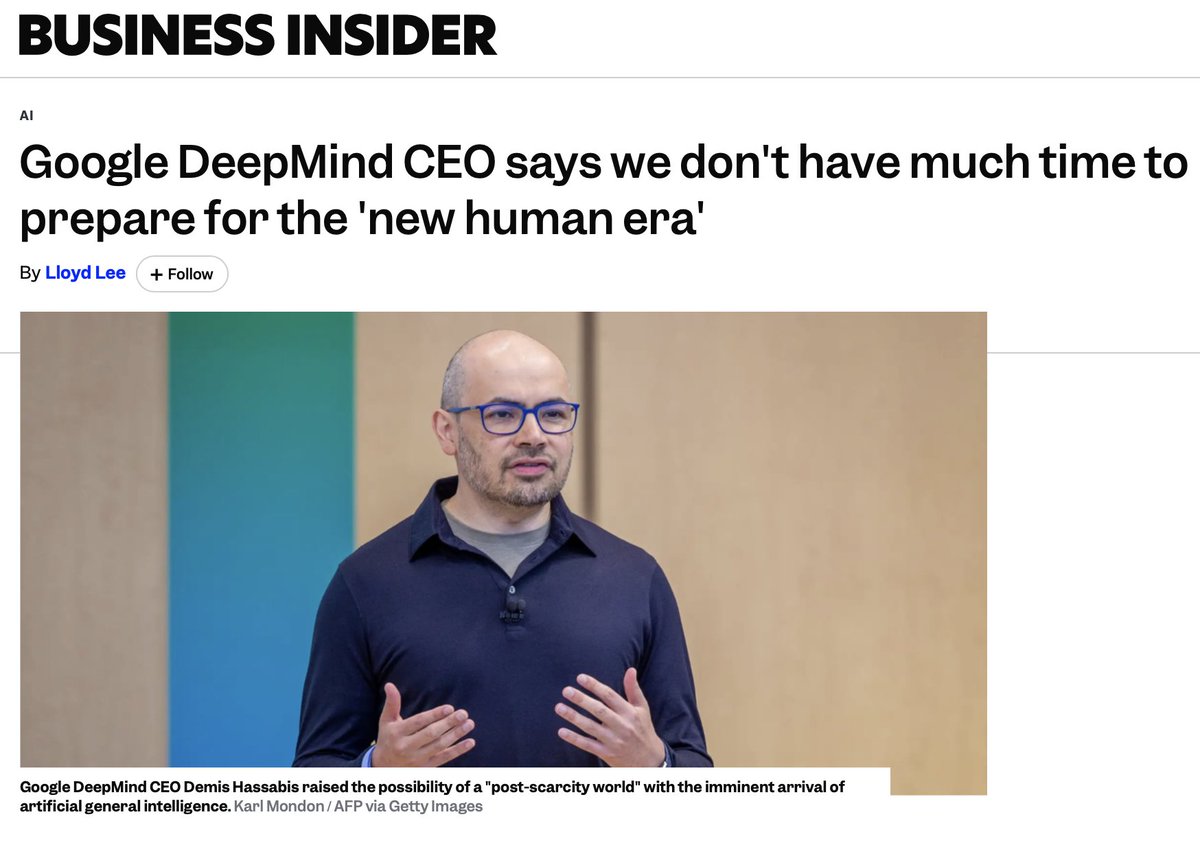
Demis Hassabis is arguably the most serious scientist around. He's not someone who engages in hype to sell products.
But when even someone like Demis says the following, it should give us all pause:
- "He [Demis] equated its arrival [AGI, around 2030] to the singularity - a point in time when there's no turning back from a breakthrough technological development.
- "Society needs to hear that because we don't have long to prepare for what that means"
- "When we look back at this time, I think we will realize that we were standing in the foothills of the singularity" (Google i/o)
We are on the threshold of the most profound revolution. Comparable to the Industrial Revolution, but ten times faster and ten times more powerful.
1
147
This is brilliant but being a witness of what did happen can be true detraumatization whereas shared conviction is closer to the "second believer" that @cyantist talks about at @LongJourneyVC

1
1
7
6,799

It feels like we may not need neuroplastic continuous learning or neurosymbolics or world models as the neural networks may just be able to recursively build those themselves in what today we are calling harnesses, tools and just "code"
Jun 4

Our internal data shows Claude is accelerating AI development—a possible path to recursive self-improvement, or AI autonomously building a more capable successor.
It’s happening faster than we thought, and the implications deserve greater attention. anthropic.com/institute/recu…
2
1
563
Miko retweeted

Jun 4
Our internal data shows Claude is accelerating AI development—a possible path to recursive self-improvement, or AI autonomously building a more capable successor.
It’s happening faster than we thought, and the implications deserve greater attention. anthropic.com/institute/recu…
1,771
4,661
28,650
18,496,178
Miko retweeted

Jun 4
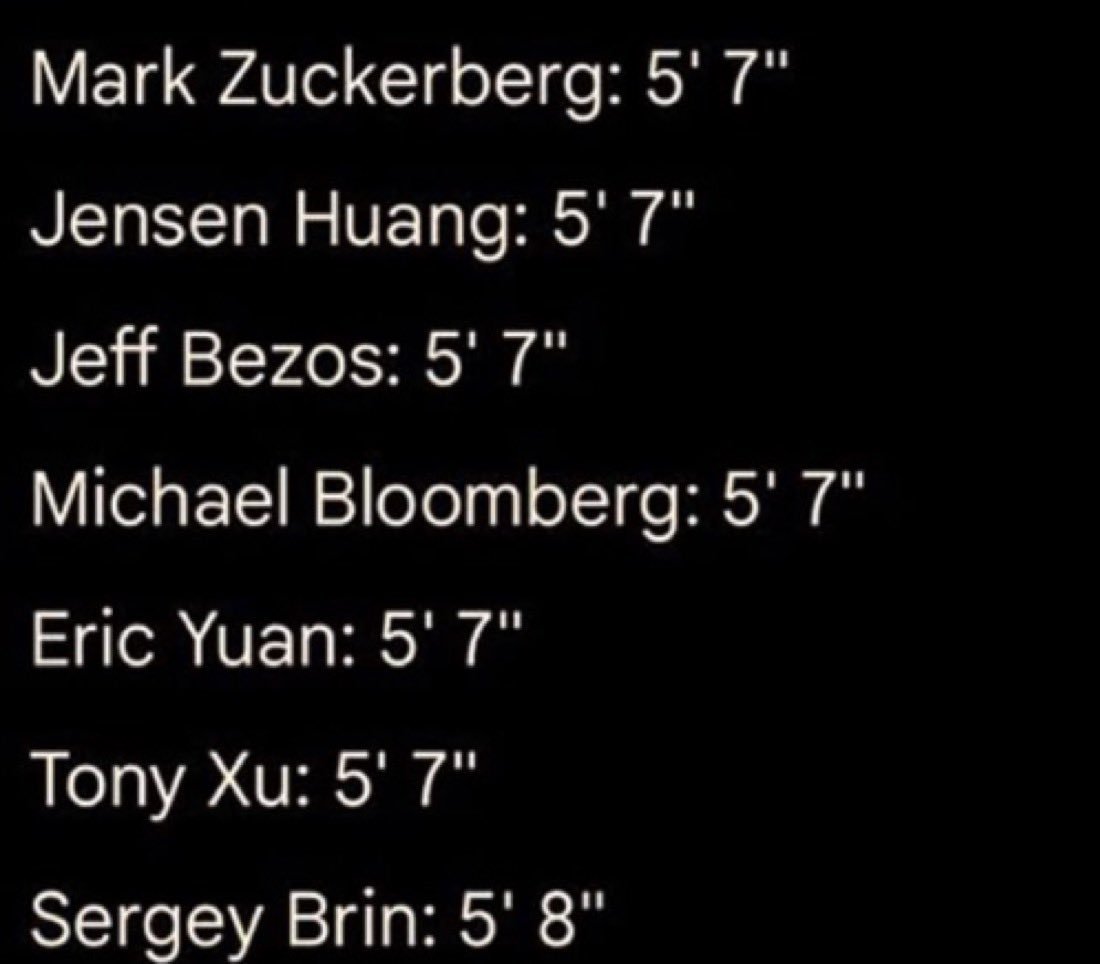
I'm convinced that 5'7 is peak performance male
16
2
47
3,834
Miko retweeted

Jun 3
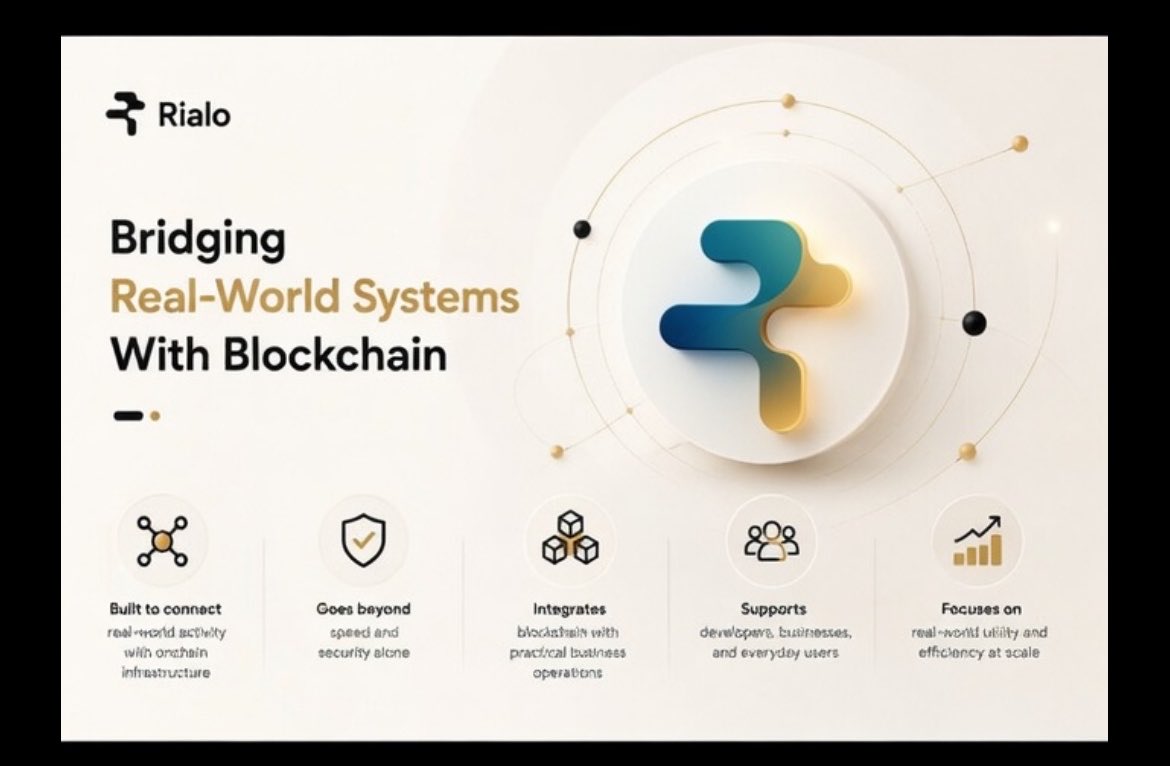
While most blockchains are built to shuffle assets around, Rialo is doing something far more powerful: moving information.
Real-world businesses run on endless streams of events—payments clearing, APIs firing, AI making calls, sensors reporting every second. The hard part isn’t capturing the data. It’s turning those live signals into trusted, automatic onchain actions.
Rialo turns external reality into a programmable execution layer. No more brittle integrations or manual handoffs. Just verified events flowing straight into smart contracts through one clean workflow.
The result? Applications that actually react to the real world in real time. Automation that finally leaves the blockchain sandbox and powers actual business operations.
This is how blockchain stops being a speculative side-show and starts becoming infrastructure for the real economy.
Rialo is building exactly that bridge.
@RialoHQ @ericargent31113
1
12
241
Miko retweeted

230 days until enforcement.
If you're creating stablecoins, lets connect on provable and verifiable compliance.
Jun 2

Today, June 2, is the close of Treasury’s GENIUS Act comment period on state regulatory equivalence.
The big picture is now clear: the GENIUS Act is law, and the remaining fight is implementation. FinCEN/OFAC and FDIC comments close June 9, NCUA closes July 17, and the statutory backstop is January 18, 2027.
We think compliant stablecoins need more than legal wrappers. They need cryptographic infrastructure for policy enforcement, lawful-order response, access control, and auditable operations.
Learn more: litprotocol.com/stablecoins
If you’re working on stablecoin issuance, compliance, custody, or state/federal implementation, we'd love to connect.
1
2
7
691