Recovered founder, tropical Wxgeek, ham, hacker, publisher of books for Jessica Argyle & not arrested by the RCMP for having UNIX source code. Yet.
Joined August 2008
- Tweets 4,157
- Following 502
- Followers 201
- Likes 12,572
382 Photos and videos







Sean Mac retweeted

Jun 15
People always ask me “how do you develop taste?” And I say “go to the niche telephone museum and study the origin of buttons and don’t be a little bitch”




62
1,128
13,516
282,100
Sean Mac retweeted

Jun 9
20,000 of those accounts didn't have two-factor authentication on, which meant personal info like private messages, phone and email was accessible
3.5k "high value" accounts were stolen before the company says it fixed things for the OG holders
w/ @elitanjourno

1
8
37
6,065
Sean Mac retweeted
Jun 9
some news: it turns out 34,000 Instagram accounts got hit by a Meta AI exploit the other day, per internal company docs
hackers also used a senior "Space Force" official's account to post anti-Iran war messaging in the voice of "Hanoi Hannah"
nytimes.com/2026/06/09/techn…

8
111
319
131,710
Sean Mac retweeted

Jun 9
Nginx on Ubuntu decided to have a fun this morning: bugs.launchpad.net/ubuntu/ s…
1
2
51

Notice: Meta says ~20,000 Instagram accounts may have been hacked in a recent attack that abused an AI-powered account recovery support tool to reset passwords (@eduardkovacs / SecurityWeek)
(Visit Techmeme dot com for the link and full context!)
5
2
11
2,771

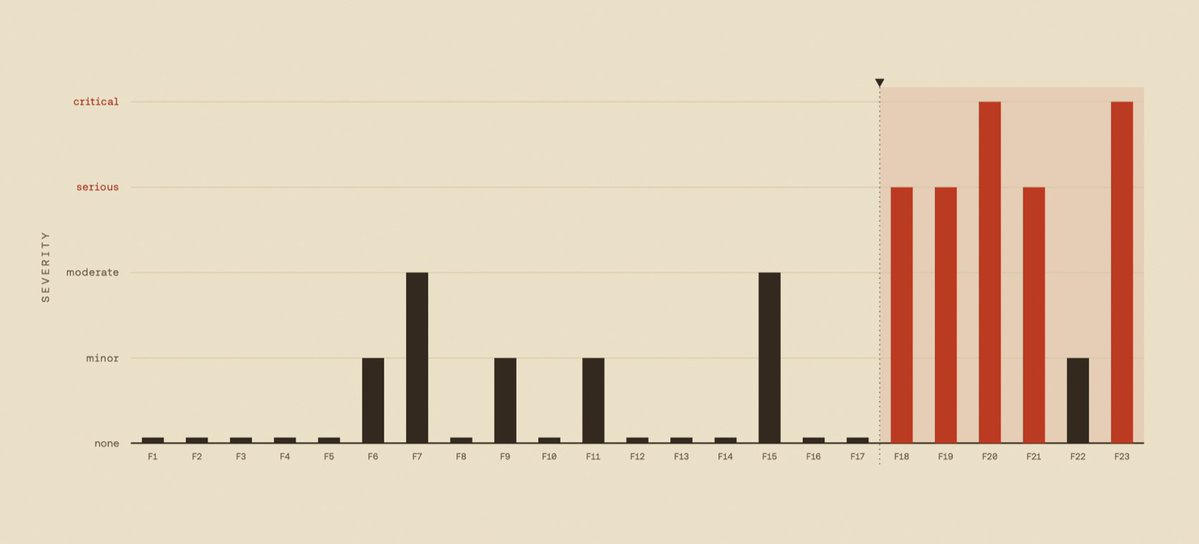
i've been developing a creative-ideation pipeline that analyzes a prompt's weakness to route it through a creative framework from famous artists & thinkers
ie: too generic -> Eno's oblique strategies, too open-ended -> Oulipian constraints
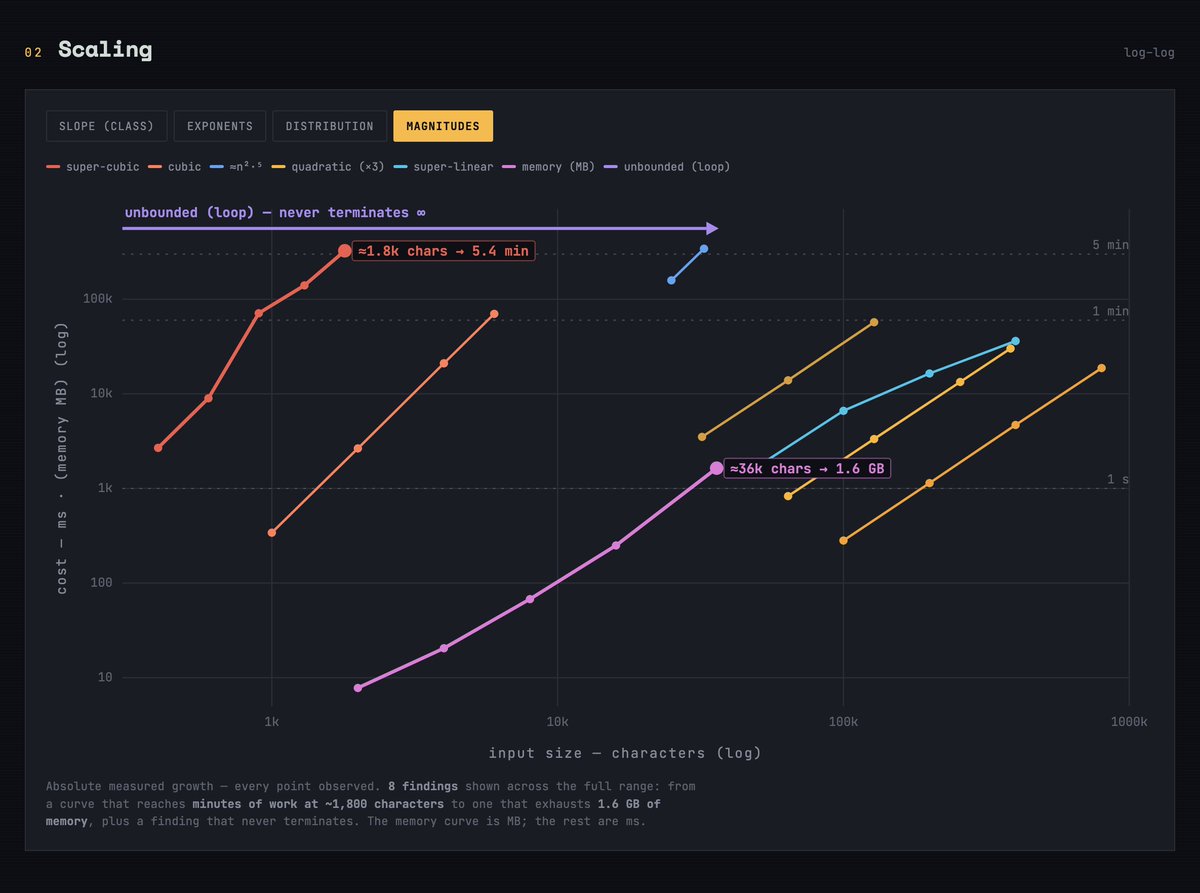
the interesting part is that although it was intended more for areas like design or art, it is insanely useful in many areas you would not expect. for example, i ran out of interesting findings in my Unicode rendering research project and ran it through the creative-ideation recursively and it thought laterally and discovered a whole new class of bugs
it turns out past a certain knowledge baseline a lot of problems just boil back down to creativity again

17
16
143
13,412


Sean Mac retweeted

May 25
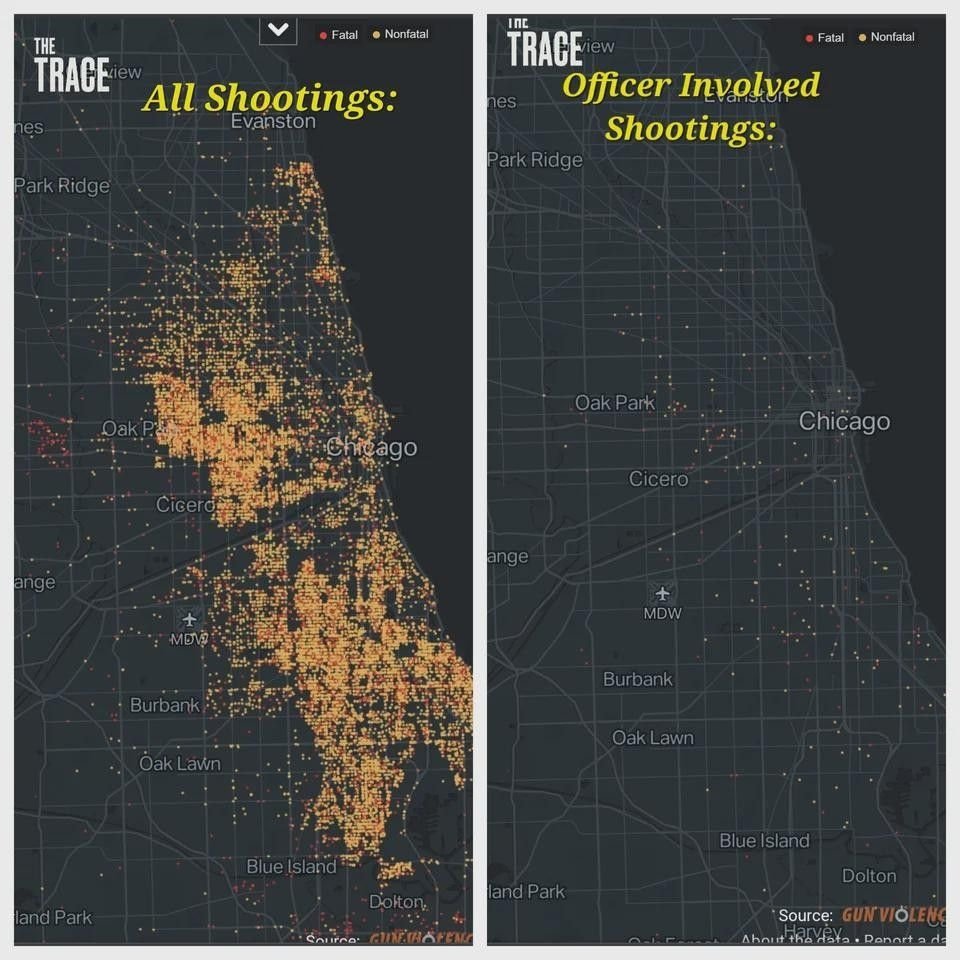
Chicago is basically just a warzone
1,072
10,147
71,730
2,077,652

Sean Mac retweeted

May 18
THIS GUY VIBE CODED A WEBSITE WHERE ANYONE ON THE INTERNET CAN FEED HIS CAT
you go to the site, press a button, and his cat's automatic feeder dispenses food in real time
there's a live camera so you can watch the cat walk up and eat what you just gave it
and it's not just his cat. other cat owners can connect their feeders too so you can feed random cats around the world from your browser
he's also adding computer vision to detect when a cat is actually near the feeder so only videos with cats in them get shown at the top
a weight scale and cat recognition is also being added for a "greed leaderboard" tracking which cat eats the most
completely useless, zero business model, and no monetization strategy
and yet this is the kind of weird internet project that goes viral overnight because everyone immediately gets it and wants to try it (including me)
270
1,996
19,150
1,971,172
Sean Mac retweeted

May 17
Cuba has acquired more than 300 military drones and recently began discussing plans to use them to attack the US base at Guantanamo Bay, US military vessels and possibly Key West, Fla., 90 miles north of Havana, Axios reports citing classified intelligence.

4
3
11
2,315
I wrote crabbyed.com for my wife. If you're a writer and can't afford it, ping me and I'll make sure you get access. Great editing shouldn't be a privilege.
1
3
18
If you're a writer and need an editor, I've written crabbyed.com to handle the pain. It's free for 7 days - because great editing shouldn't be a privilege.
65
Sean Mac retweeted

This is a good thread. #hantavirus

1/n: I could be wrong, of course, but my take about this hantavirus outbreak is less about the actual outbreak and more about what it means in the context of the last two decades and moving forward. Let me explain...
1
24
84
25,369
Sean Mac retweeted

May 10
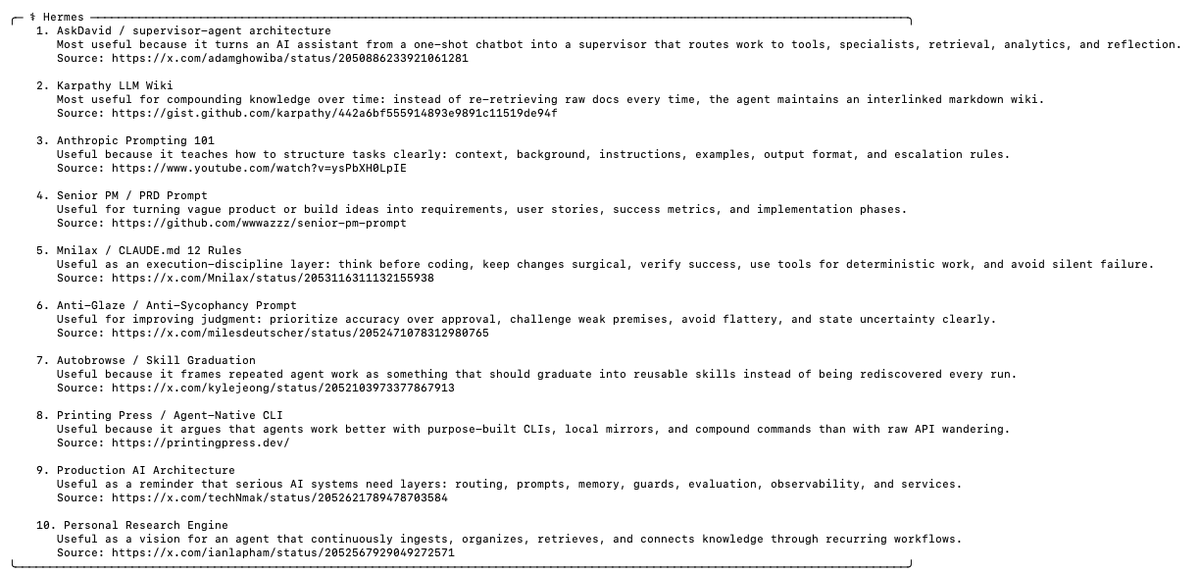
Over the weekend I set up the Hermes agent, and basically force fed it every resource I could find on X to upgrade it.
I then asked it to rank each resource and provide a simple explanation:
So yea, here you go. Link to each is below
49
103
1,947
124,273
Sean Mac retweeted

May 9
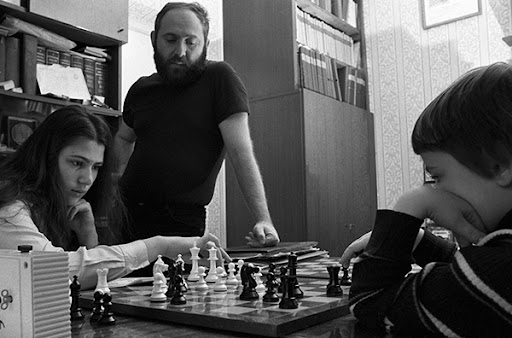
A Hungarian psychologist raised three daughters to prove that any child could become a chess grandmaster through early specialization. He succeeded. Two of them became grandmasters. One became the greatest female chess player who ever lived.
Then a sports scientist looked at the data and found something nobody wanted to hear.
His name is David Epstein. The book is called "Range."
The Polgar experiment is one of the most famous case studies in the history of deliberate practice. Laszlo Polgar wrote a book before his daughters were even born arguing that geniuses are made, not born. He homeschooled all three girls in chess from age four. By their teens, Susan, Sofia, and Judit were dominating tournaments against grown men. Judit became the youngest grandmaster in history at the time, breaking Bobby Fischer's record. The story became the gospel of early specialization. Pick a domain young, drill it hard, and you can manufacture excellence.
Epstein opens his book by telling that story honestly and then quietly demolishing the conclusion most people drew from it.
Chess works that way. Most things do not.
Here is the distinction that took him four years of research to articulate, and that almost nobody who quotes the 10,000 hour rule has ever read.
There are two kinds of environments in which humans develop expertise. Psychologists call them kind and wicked. A kind environment has clear rules, immediate feedback, and patterns that repeat reliably. Chess is the cleanest example. Every game ends with a winner and a loser. Every move is recorded. The board never changes shape. The pieces never invent new ways to move. A child who plays ten thousand games will see most of the patterns that exist in the game, and pattern recognition is exactly what chess mastery is built on.
A wicked environment is the opposite. Feedback is delayed or misleading. Rules shift. The patterns that worked yesterday may be exactly the wrong patterns to apply tomorrow. Most of the real world looks like this. Medicine is wicked. Investing is wicked. Building a company is wicked. Scientific research is wicked. Almost every job that involves a complex changing system with humans in it is wicked.
The Polgar sisters trained in the kindest environment any human can train in. Their success was real and the method was correct. The mistake was generalizing the method to fields where the underlying structure of the environment is completely different.
Epstein's research is what made the implication impossible to ignore.
He looked at the careers of elite athletes outside of chess and golf and found that the pattern was almost the inverse of what people assumed. The athletes who reached the very top of their sports were overwhelmingly people who had played multiple sports as children, specialized late, and often switched disciplines well into their teens. Roger Federer played squash, badminton, basketball, handball, tennis, table tennis, and soccer before tennis became his focus. The kids who specialized in tennis at age six and trained year-round for a decade mostly burned out, got injured, or topped out at lower levels of the sport.
The same pattern showed up everywhere he looked outside of kind environments. Inventors with the most patents had worked in multiple unrelated fields before their breakthrough work. Comic book creators with the longest careers had drawn for the most different genres before settling. Scientists who won Nobel Prizes were dramatically more likely than their peers to be serious amateur musicians, painters, sculptors, or writers.
The skill that mattered in wicked environments was not depth in one pattern. It was the ability to recognize when a pattern from one domain applied unexpectedly in another. That kind of thinking cannot be built by drilling a single subject. It can only be built by accumulating mental models from many subjects and learning to move between them.
The deeper finding is the one that should change how you think about your own career.
Specialists in wicked environments often get worse with experience, not better. Epstein cites studies of doctors, financial analysts, intelligence officers, and forecasters showing that years of experience in a narrow domain frequently produce more confident judgments without producing more accurate ones. The expert builds elaborate mental models that feel comprehensive and turn out to be increasingly disconnected from the actual structure of the problem. They stop noticing what does not fit their framework. They mistake fluency for understanding.
Generalists do better in wicked domains for a reason that sounds almost mystical until you understand the mechanism. They have less invested in any single mental model, so they abandon broken models faster. They are used to being a beginner, so they are not threatened by the discomfort of not knowing. They have seen enough different domains that they can usually find an analogy from one field that unlocks a problem in another. The technical name for this is analogical thinking, and the research on it is one of the most underrated bodies of work in cognitive science.
The single most useful sentence in the entire book is the one Epstein puts almost as a throwaway.
Match quality matters more than head start.
A person who tries six different fields in their twenties and finds the one that genuinely fits them will outperform a person who picked one field at fourteen and stuck to it on willpower alone. The lost years were not lost. They were the search process that produced the match. Every field they walked away from taught them something they later imported into the field they finally chose.
The reason this is so hard to accept is cultural, not empirical. We tell children to pick a path early. We reward the prodigy who knew at six. We treat the late bloomer as someone who failed to launch on time, when the data suggests they were running an entirely different and often more effective optimization process underneath.
The Polgar sisters were not wrong. The conclusion the world drew from them was.
If your environment is genuinely kind, specialize early and drill hard. If it is wicked, and almost every interesting human problem is, then the people who win are the ones who refused to specialize until they had seen enough to know what was actually worth specializing in.
You are not behind. You were running the right experiment all along.
384
2,849
11,208
1,061,530
Sean Mac retweeted

I can’t believe more people aren’t talking about this.
Data released just two days ago, May 6th, shows that a landslide LAST YEAR produced a 1,580 foot tsunami in Alaska.
It’s the 2nd largest tsunami in recorded history.
It was also the 2nd seiche ever to last multiple days.

May 8

The 2nd largest tsunami ever recorded struck Alaska's Tracy Arm Fjord on August 10, 2025, about 50 miles southeast of Juneau.
The wave reached a staggering 1,580 feet tall.


1
4
4
2,034
Sean Mac retweeted

WATCH: BLACKROCK CEO LARRY FINK SAYS "I ACTUALLY BELIEVE A NEW ASSET CLASS WILL BE BUYING FUTURES OF COMPUTE, WE JUST DON'T HAVE ENOUGH COMPUTE POWER RIGHT NOW."
147
190
1,820
417,037