
Joined May 2012
- Tweets 9,908
- Following 552
- Followers 5,637
- Likes 9,752
525 Photos and videos




Pinned Tweet

4 Aug 2023
Dear Squeaks,
Thank you giving us 2 more days for saying our goodbyes.
Thank you for 10 years of your companionship, your affection, and your love. You were such a kind and gentle soul.
Know that we loved you every single step of our way together. You will be dearly missed.

9
129
23,224
Please somebody explain to me what "hand-written" means. Please.
Jun 13

I had Claude Fable 5 build Minecraft from scratch.
45k lines of Swift Metal. Hand-written renderer, every sound synthesized, fully deterministic, zero dependencies, no game engine.
Open source 👇
github.com/thebriangao/pebbl…
2
1
10
570
"Hey Stefan Reinalter, noticed you're founder of Molecular Matters and C and low-level programming."
Your vibe-coded spambot needs some improvement.
2
11
817
Reading the replies: 99 out of 100 replies are BS from blue checkmark accounts.
Checks out every time.

ok thanks for the feedback, dominos pizza corporate account
3
768
Hitman games were known for having crowds and a large number of animated characters on the screen since the PS2 era.
May 26

The glacier engine is pure wizardry. I don't know how they manage to maintain great performance while having so many NPCs on screen at once, while also maintaining such a high level of detail.
3
3
192
7,084
Stefan Reinalter retweeted

May 24
Local-first & completely transparent, open source, no outstanding legal copyright issues, designed for strict human verification of all artifacts. It needs to produce what I would’ve produced more slowly with no catch.
1
1
80
3,588
One reason why I won't spill inner secrets of Live on my public blog.

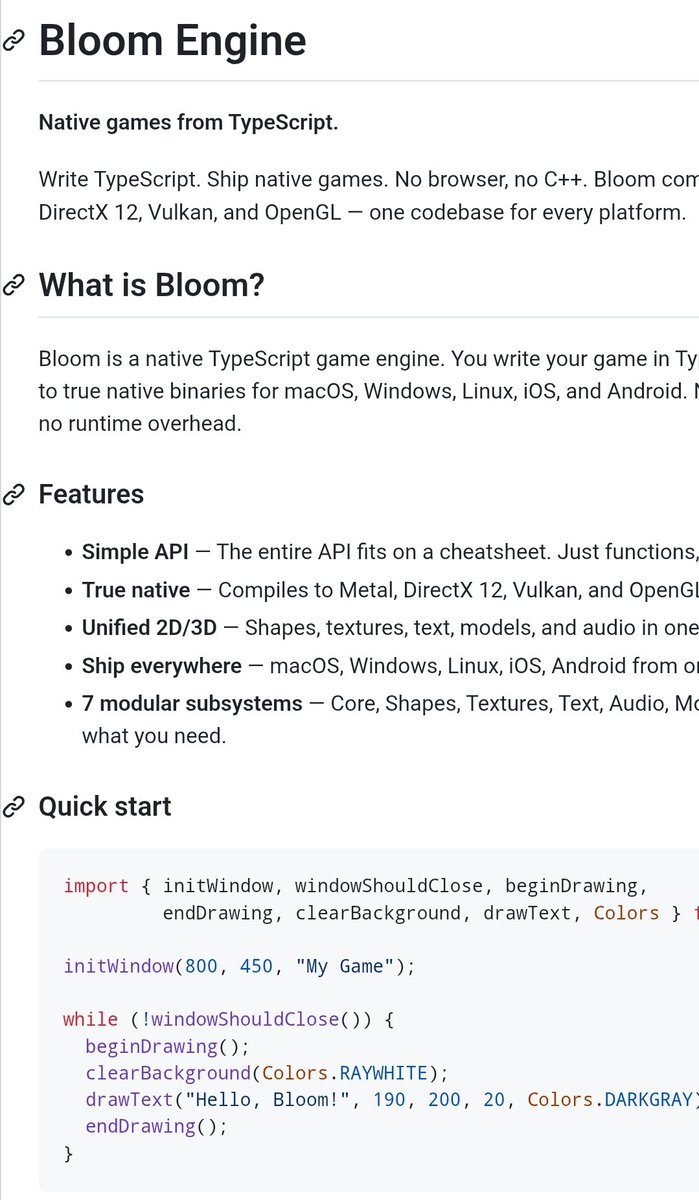
Wow! It seems somebody already vibe-coded a game-engine with an extremely similar API to raylib... unfortunately no mention to raylib, at all... 😓
2
1
61
6,814
Stefan Reinalter retweeted

May 15
I strongly believe there are entire companies right now under heavy AI psychosis and its impossible to have rational conversations about it with them. I can't name any specific people because they include personal friends I deeply respect, but I worry about how this plays out.
I lived through the great MTBF vs MTTR (mean-time-between-failure vs. mean-time-to-recovery) reckoning of infrastructure during the transition to cloud and cloud automation. All those arguments are rearing their ugly heads again but now its... the whole software development industry (maybe the whole world, really).
It's frightening, because the psychosis folks operate under an almost absolute "MTTR is all you need" mentality: "its fine to ship bugs because the agents will fix them so quickly and at a scale humans can't do!" We learned in infrastructure that MTTR is great but you can't yeet resilient systems entirely.
The main issue is I don't even know how to bring this up to people I know personally, because bringing this topic up leads to immediately dismissals like "no no, it has full test coverage" or "bug reports are going down" or something, which just don't paint the whole picture.
We already learned this lesson once in infrastructure: you can automate yourself into a very resilient catastrophe machine. Systems can appear healthy by local metrics while globally becoming incomprehensible. Bug reports can go down while latent risk explodes. Test coverage can rise while semantic understanding falls. Changes happens so fast that nobody notices the underlying architecture decaying.
I worry.
512
1,901
15,326
1,586,494
Storing undecorated names for private/local/static symbols inside PDBs was a stupid, stupid, stupid idea.
Mangled names would be smaller and unambiguous. On top of that, they're already there in the object files.
4
6
5,235
Stefan Reinalter retweeted

May 13
Today is a beautiful day for updates!
On the Stable channel: rolling up a large number of features, perf optimizations, and QoL changes made over the past months
On the Insider channel: support for our instrumentation API has been implemented on PS4 & 5!
Go check it out!
4
4
32
2,691
Stefan Reinalter retweeted

I’m so absolutely freaking tired of waking up to a freshly rebooted machine because Windows, not me, decided installing updates I absolutely do not care about was more important than preserving my debugging state. Whoever is in charge of this at MS should be fired.
17
8
168
7,273
Stefan Reinalter retweeted

May 12
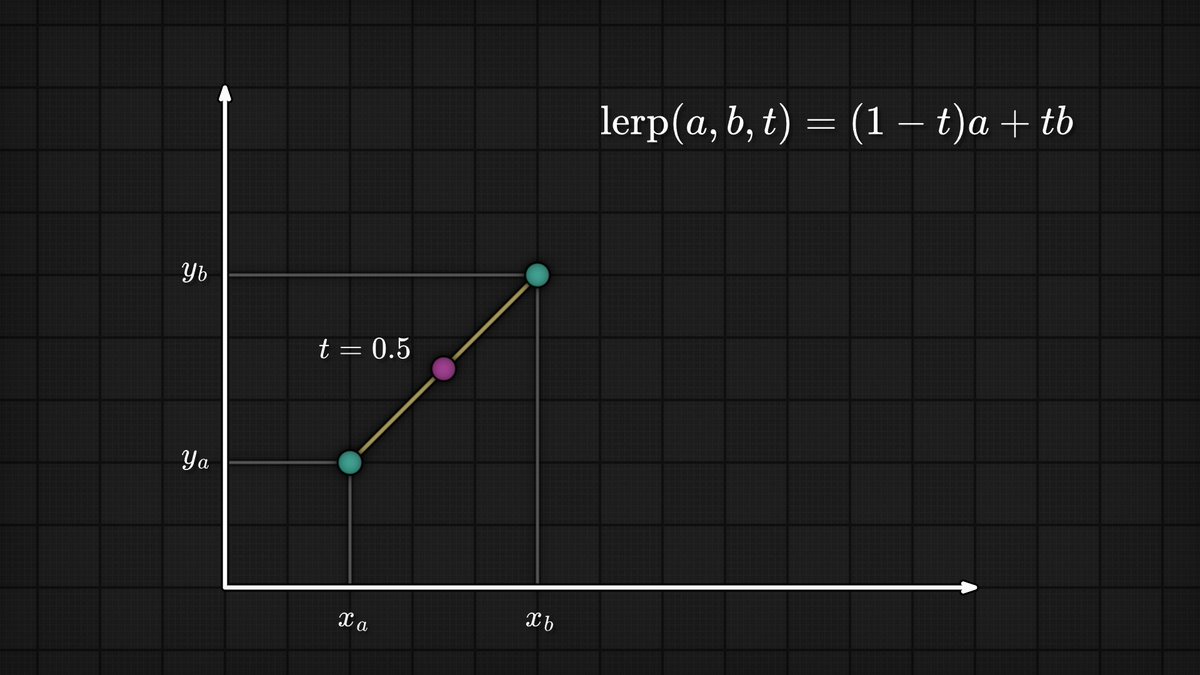
Lerp is used everywhere in games. It’s simple, but combined with a few small tricks it becomes incredibly powerful.
This thread is full of visual examples.
14
191
1,486
87,757
Stefan Reinalter retweeted

May 10
Looking for ways to get the word out about our new game, Beyond the Pins 2: The Second Frame.
Point-and-click streamers or media types, reach out if you want to check things out!
Coming soon to NES, MS-DOS and PC/Mac.
#nes #msdos #mt32 #indie #pointandclick #adventure
2
22
66
2,986
Stefan Reinalter retweeted

Apr 30
New blog post!
In "Quantizing tangent frames", we look at various established methods to represent tangent frames in the vertex data, squeeze a few variants into 32 bits per vertex and look at the resulting precision.
zeux.io/2026/04/30/quantizin…
Retweet, like and subscribe!
2
42
188
10,008
Why do I work on a game?
I currently spend most of my programming day reading and writing assembly code, which can fatigue my brain pretty fast.
Compared to that, working on a game seems... easy and relaxing?
6
1
48
3,152
Very well said Ryan, fully agree.
Still wonder about posts of people using agents to churn out 15kLOC per day, which always makes me think "that's not a good thing" and "what are you doing with so much code?!".
Apr 29

A fundamental division between schools of thought in programming is (a) the elimination through simplifying of cruft, boilerplate, and extra abstraction layers, and (b) the automation of maintaining cruft, boilerplate, and extra abstraction layers.
One of the reasons I drifted away from C and newer languages with adjacent philosophies towards a subset of C is that I found myself in the first camp. Some problems were simply not as hard as I was making them. Memory management, threading, UI, and so on could be simplified such that not only the high level C code became simple, but the actual machine code also became simple.
This is starkly different from modern C and Rust programming culture, where the philosophy is simply that dealing with the complicated lower level details is a matter of *automation*. The compiler needs to generate something extra, it needs to check extra things, and so on.
“Agentic programming” falls into the latter camp, and this is also why I don’t employ it in my workflow (other than search engine usage and so on). I don’t need it to generate 10s of 1000s of lines of code. The requirement of 10s of 1000s of lines of code—for implementing something derived from the information content inside a tiny prompt—is an architectural red flag.
Perhaps a substantial portion of that code simply shouldn’t exist. I find that my programs become much better when I do that simplification pass first. After that, there’s drastically less boilerplate, less maintenance, and less busywork to begin with.
2
2
70
8,743
If you also grew up with The Last Ninja on C64 like me, do yourself a favour and grab Matt Gray's latest Reformation 5 release.
The Inner Sanctum is bloody *perfect* (wait for the drop at 2:14):
mattgray1.bandcamp.com/track…
2
576
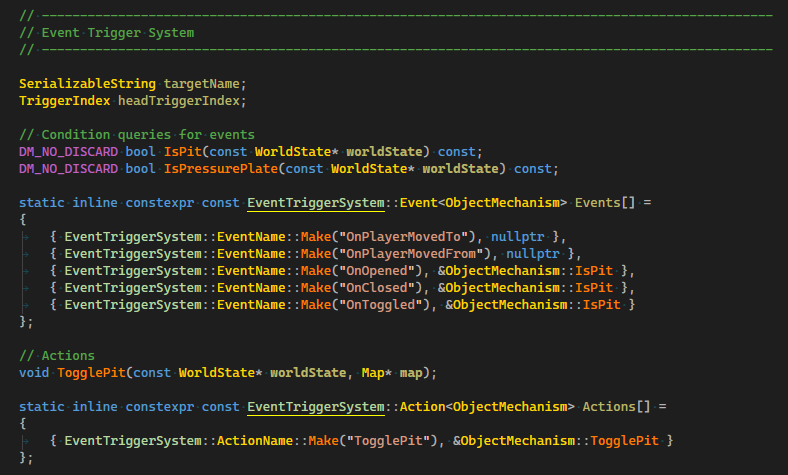
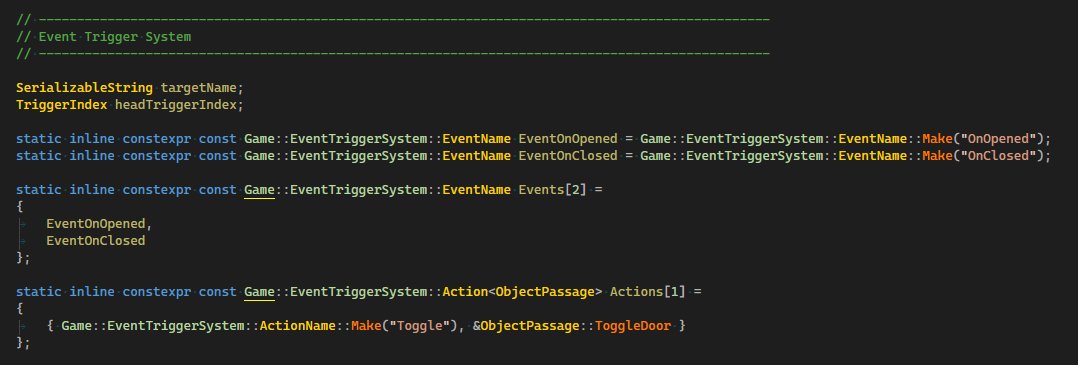
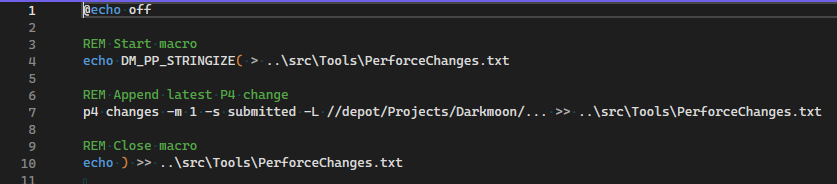
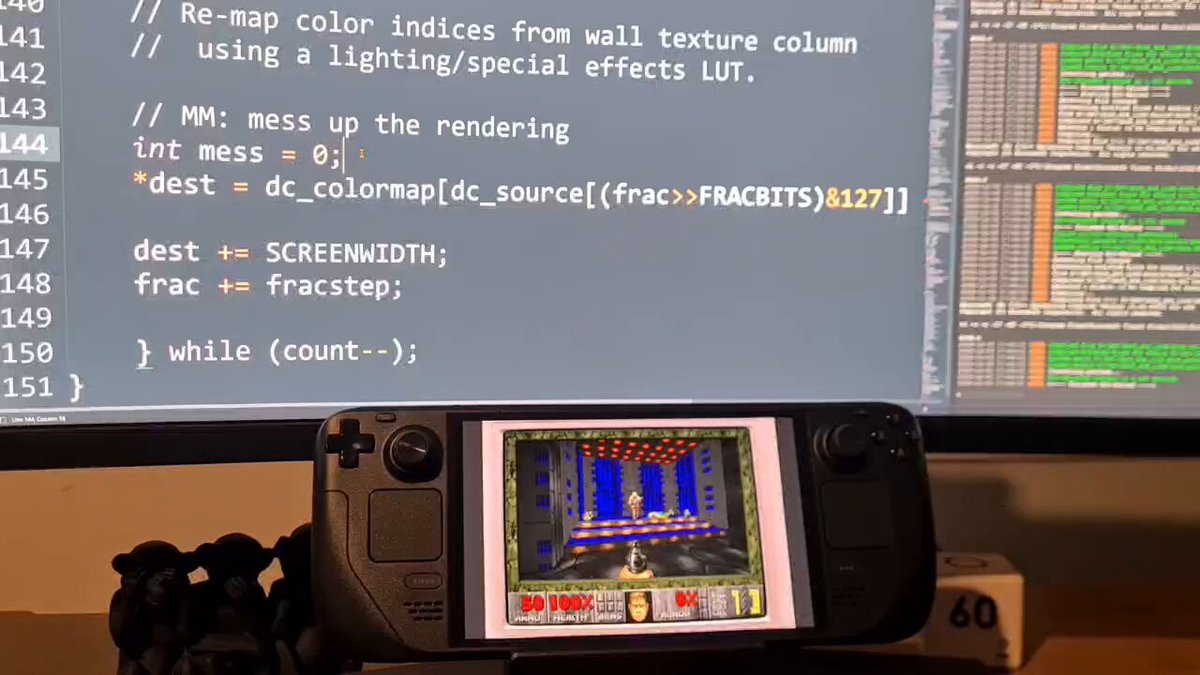
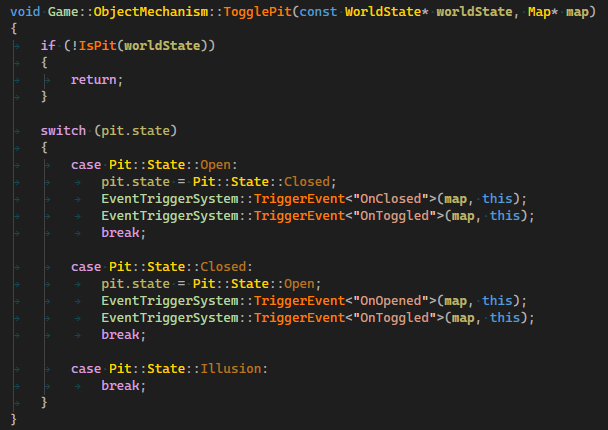
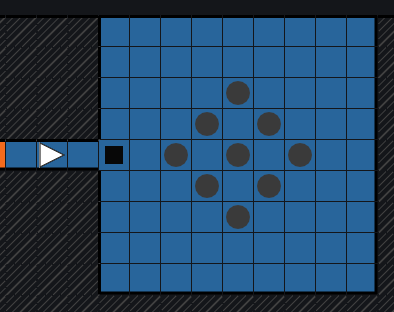
Spent another hour on the I/O system I did recently.
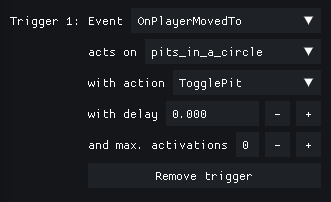
With C hot-reload, it's *amazing* how fast I can add new events and actions, and tie them up in the editor.
I can go in, add a new event to a static array, trigger that in code, and almost instantly use it in the editor.
2
7
228
15,088
The editor will only show you events eligible for the type of selected object, and possible actions depending on the target name.
Everything can be edited in real-time.
Deliberately not showing the game yet - give me some more time.
7
1,397
Stefan Reinalter retweeted

Apr 27
statemens like this are so dumb I don't even know where to begin. but I'll try. 🧵
Apr 26

Alguien acaba de pulverizar a toda la industria de assets 3D.
Lo que en 2023 ocupaba a un artista 3D senior durante tres semanas, hoy lo haces tú solo en una tarde de sábado sin abrir Blender una sola vez.
El stack completo:
→ Concept art generado en 30 segundos con nano banana o GPT image
→ Conversión imagen → malla 3D con Hunyuan3D, Tripo o Meshy
→ Limpieza de topología auto-rigging en Meshy o Tripo
→ Animaciones instantáneas vía Mixamo
Te dejo de prueba un capibara hecho íntegramente con este pipeline. Modelado, riggeado, animado. Game-ready para Unity o Unreal.
Cero artistas contratados. Cero líneas de código. Una tarde.
La barrera de entrada a la industria del videojuego acaba de caer al suelo.
Community note
This is AI generated.
x.com/ajondc/status/…
15
7
291
43,554
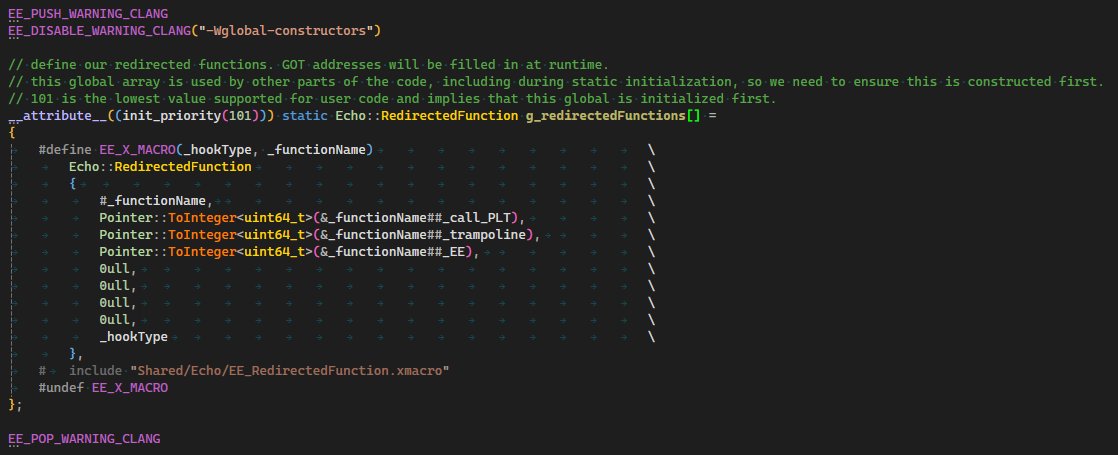
Ah it's getting messy.
(I'm the first to admit that having __attribute__((init_priority(101))) anywhere is not a good sign)
2
1
43
4,891