
Joined December 2007
- Tweets 89,311
- Following 1,650
- Followers 527
- Likes 373
238 Photos and videos











Michael Shook @mshook@mastodon.social retweeted

Jun 15
How a simple paper glider stays aloft using steady airflow and basic aerodynamics
75
1,953
12,975
934,350
Michael Shook @mshook@mastodon.social retweeted

Jun 15
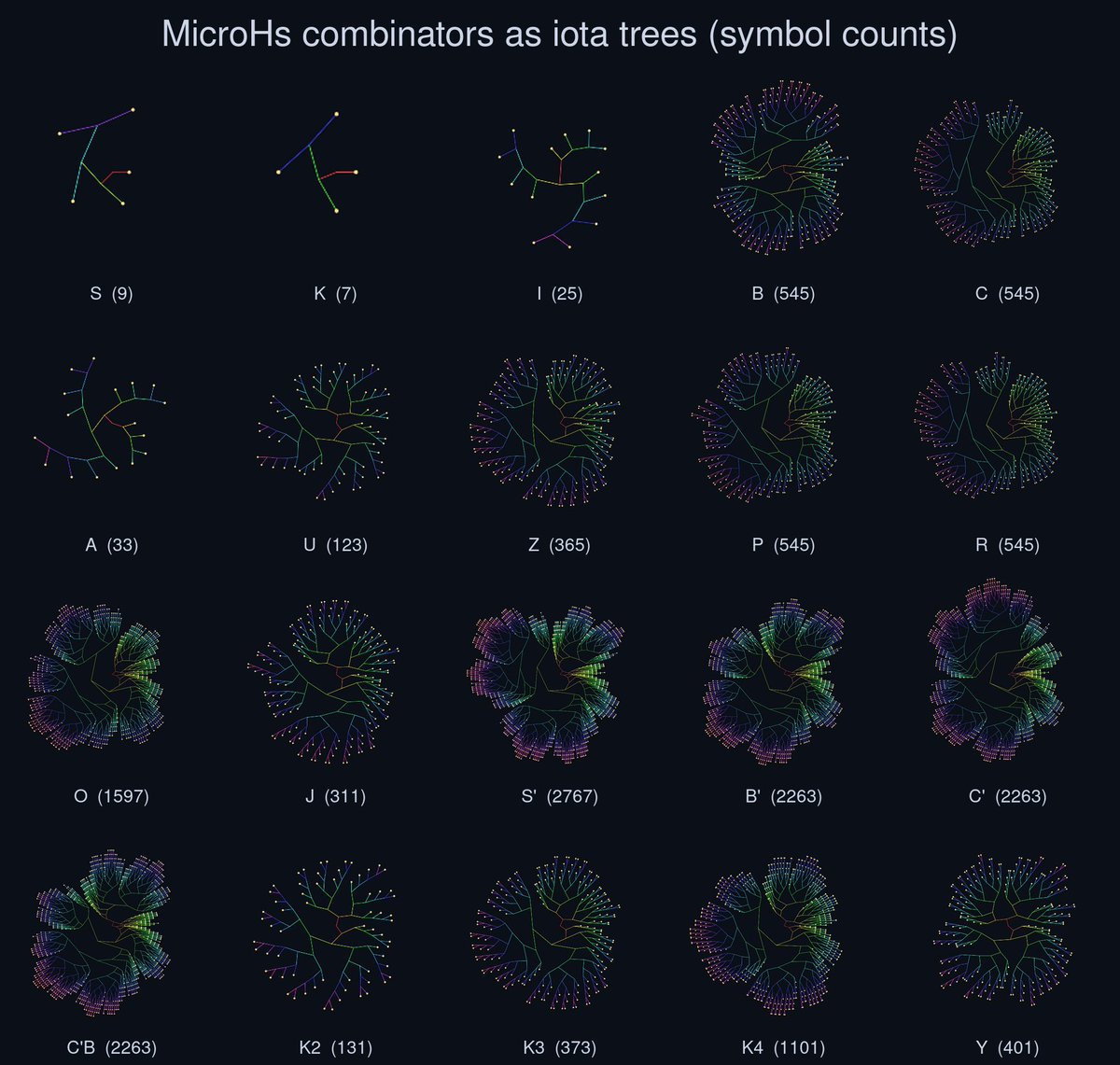
We can also use iota-trees to visualize not just programs, but computation as well
watch (and listen!) how the church encoded program of `2 < 3` gets slowly reduced to true
Jun 14

Every combinator can be rendered as an iota tree.
Iota is a programming language.
Defined as iota = 1 | 0 iota iota, where iota = \f.((\a.\b.\c.((ac)(bc)))\d.\e.d).
Iota is turing complete! So you can represent *all computable functions* with iota trees
PL theory is amazing!
5
24
245
23,351
Michael Shook @mshook@mastodon.social retweeted
Canonical link: x.com/gino/status/3990107784…

1
1
4
164
Michael Shook @mshook@mastodon.social retweeted

Jun 14
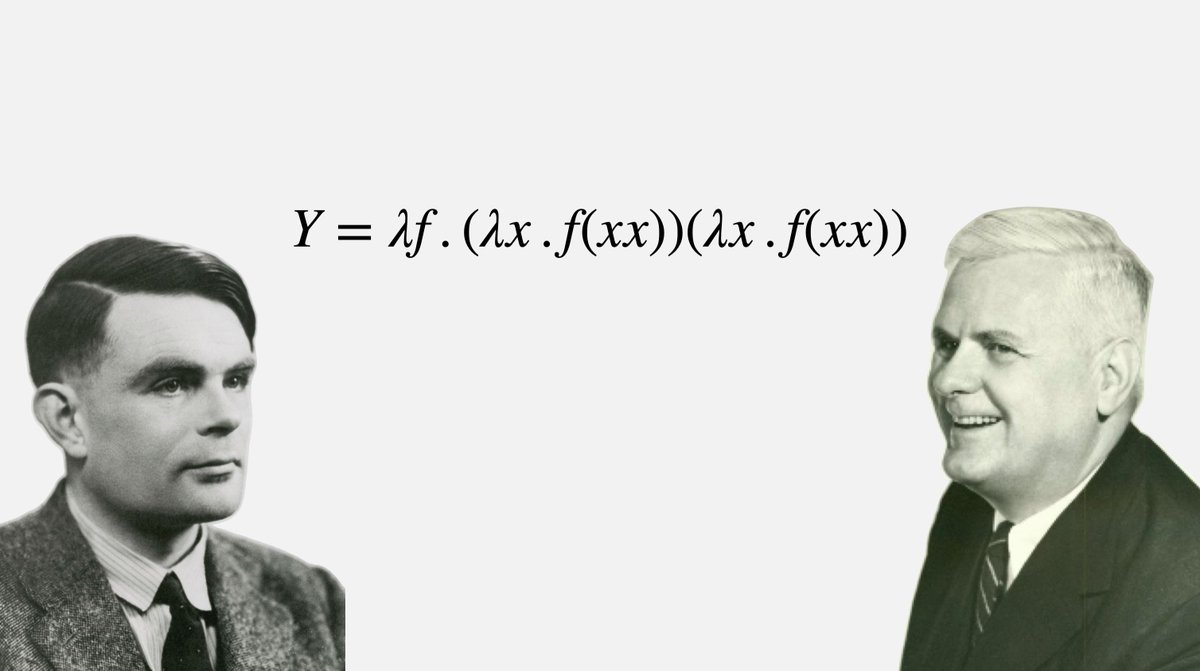
In 1936 Alonzo Church tackled a question logicians had circled for decades: is there a method that can decide for any mathematical statement whether it is provable?
To make the question precise he invented a tiny language where everything is a function: the lambda calculus. He used it to prove that no such method exists. Months later a student of his named Alan Turing reached the same conclusion with an imaginary machine. The two proofs were equivalent, and together they drew the line between what a computer can and cannot do.
Church built half the foundation of computer science to settle a question about logic. The lambda calculus he invented is still running today, inside every functional programming language.
9
105
544
42,531
Michael Shook @mshook@mastodon.social retweeted

Jun 15
The effective way the clarinet player does a musical call and response to the singer is just mesmerizing.❤️🎶✨
"Tu vuo' fa' l'americano" by Renato Carosone, beautifully performed by Hetty and the Jazzato Band.
22
322
1,524
47,161
Michael Shook @mshook@mastodon.social retweeted

Jun 15

Jun 15

The right is full of people who hate cities, seethe at educational institutions, despise most art and architecture, cultivate a strange and stunted parochial nativism, and generally nourish a palette of self-limiting resentments that cede the left massive cultural dominance.
6
9
342
11,309
Michael Shook @mshook@mastodon.social retweeted

Jun 13
I’ve now seen that the Fable block is a conspiracy to hurt Anthropic’s IPO and a conspiracy to gin up excitement for Anthropic’s IPO. The truth is there is no deep meaning here; Trump is a chimpanzee who shits in his hand and throws it to prove his dominance.
1
1
90
Michael Shook @mshook@mastodon.social retweeted
Jun 15
If only the Trump administration hadn't shut down Fable, people could get answers to microbiology questions like "What happens to shallow, stagnant pools with dark-painted bottoms in a hot climate?"

President Trump fixes the reflecting pool and a week later it’s green again, loaded with algae… Sabotage… Vandalism? I believe it is. The left can’t stand Trump, American greatness and his quest to make DC beautiful again. What a shame!
1
1
91
Michael Shook @mshook@mastodon.social retweeted

Jun 15
Here's one Math breakthrough in data structures!
In January 2025, undergrad Andrew Krapivin (with Farach-Colton and Kuszmaul) introduced Elastic Hashing - a non-greedy open-addressing scheme that disproves Andrew Yao’s 40-year-old conjecture from 1985.
Key mathematical results:
- O(1) amortized expected probe complexity: constant average work per operation even as the table approaches full capacity
- O(log(1/δ)) worst-case expected probes (δ = empty fraction). For example, around 7 probes at 99% full
By strategically probing beyond the insertion point to create firebreaks, it avoids clusters and coupon-collector bottlenecks. This delivers near-constant performance without reordering elements.
Traditional greedy methods were believed to degrade linearly near full capacity. Elastic Hashing shatters that limit.
Huge implications for high-load databases and efficient systems.

2
25
174
10,814
Michael Shook @mshook@mastodon.social retweeted

Jun 15
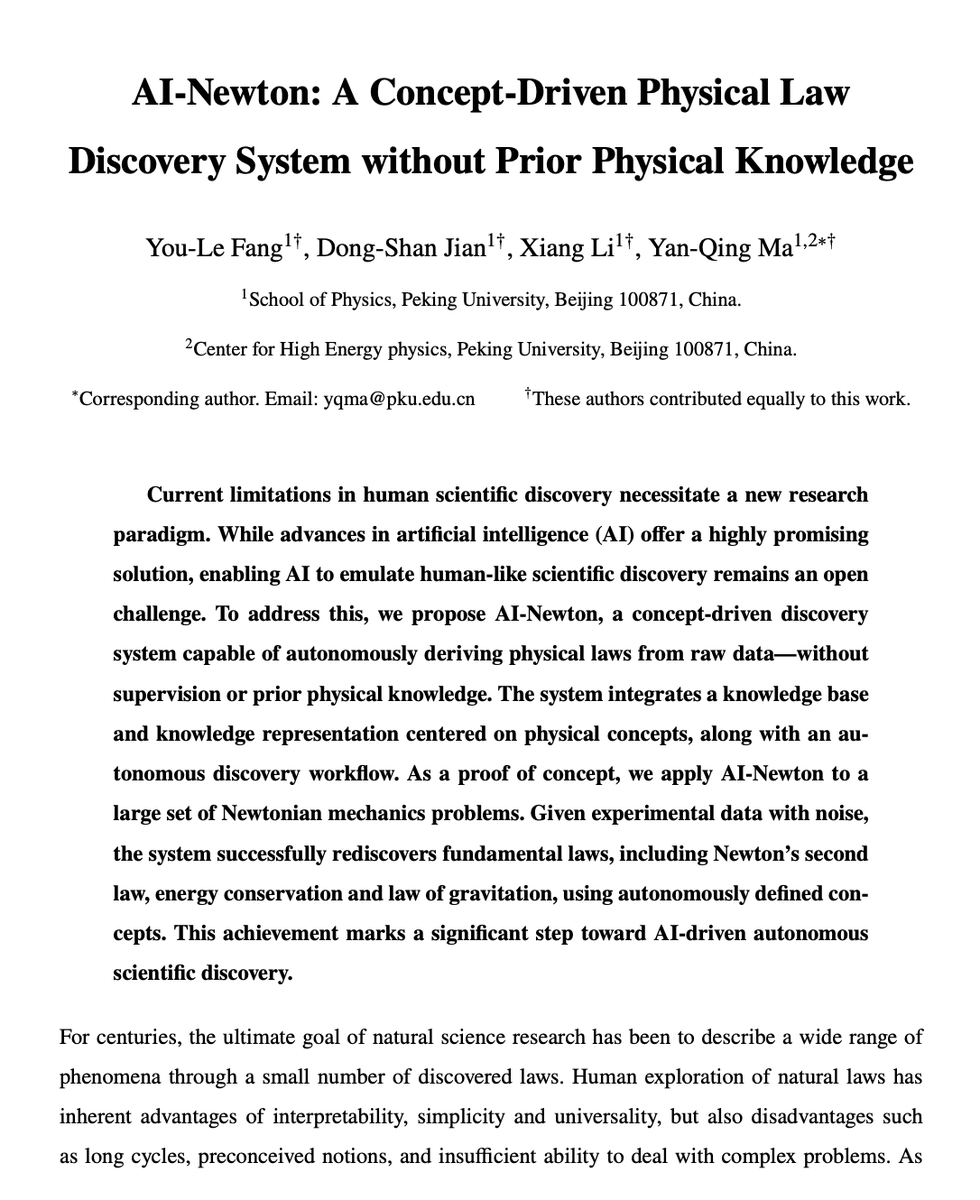
Researchers open-sourced an AI that taught itself 300 years of physics with zero physics knowledge
In 1907, Einstein had what he called his "happiest thought": gravitational mass = inertial mass. It took him 8 more years to turn that insight into General Relativity.
Now, researchers at Peking University built an AI that figure out the same thing on its own with zero physics knowledge.
They call it AI-Newton.
They didn't train it on physics textbooks. They didn't pre-program any formulas.
They just fed it raw, noisy experimental data and let it explore.
The AI started defining its own concepts.
First, it measured the stretch of a spring hanging from a weight. It invented the concept of "gravitational mass."
Then, it measured the oscillation frequency of a bouncing spring. It invented the concept of "inertial mass."
And then, entirely on its own, the AI noticed the numerical equivalence.
It realized these two completely different physical measurements were fundamentally the exact same thing.
It merged the concepts. It had Einstein's realization.
But it didn't stop there.
It systematically went on to autonomously rediscover Newton's second law, the conservation of energy, and the law of universal gravitation.
We have spent decades using AI to crunch numbers for human scientists.
But this is a paradigm shift.
AI is formulating concepts. It is making the intuitive leaps that we thought only belonged to human genius.
If an AI can rediscover the foundations of modern physics by just looking at raw data...
What is it going to discover that we haven't thought of yet?
32
107
466
27,317
Michael Shook @mshook@mastodon.social retweeted

Trying to avoid eye contact with my wife this Saturday morning as she has a big exclamation point quest giver mark over her head
43
2,251
53,821
819,403
Michael Shook @mshook@mastodon.social retweeted

Jun 15
Imagine trying to explain to someone a little over a decade ago that the US would go to war with Iran, the Strait would be completely blocked to outgoing traffic, and when an agreement to open it again finally seemed to be in prospect, oil futures wouldn't even fall 5%
6
7
111
10,656
Michael Shook @mshook@mastodon.social retweeted

Jun 14
You're using AGI level Claude on default settings.
That's like driving a Ferrari like a golf cart:
Setting 1: Model
Pick the Opus 4.8 model (the best model right now).
You only access it with a $20/month plan.
Setting 2: Effort
Same box. Set Effort to High (for complex tasks).
Claude reasons before it answers instead of blurting the first thing. Single biggest quality jump.
Setting 3: Tools
Hit the " " in the chat box.
Turn on Web search. Turn on Research for .
Without it Claude guesses from memory.
With it, it checks live sources before answering.
Setting 4: Connectors
Settings > Connectors.
Link Gmail, Slack, Drive, Notion.
Claude now reads your actual workspace.
Tip: turn them on per-chat. Saves tokens.
Setting 5: Skills
Settings > Skills.
Type /skill-creator. Teach Claude how YOU work.
Build your process once, and Claude runs it on its own every time after. Like training an employee.
Setting 6: Projects
Go to claude .ai > Projects > Create one.
Upload your files & add instructions.
Every chat inside the project remembers your context, so you set it up.
Setting 7: Workspace mode
Top of the app: Chat / Cowork / Code.
Chat answers you. Cowork builds files on computer.
The real PDF. The real spreadsheet. In your folder.
Setting 8: Instructions
Settings > Global instructions.
No more repeating "keep it short" in every chat.
Set the rules once, they stick forever.
Setting 9: Memory
Settings > turn on "Search and reference chats."
Claude remembers what you told it last week.
No more re-explaining yourself every morning.
Honest take:
You don't need all 9 on day one.
Model Thinking Tools gets you 80% there.
Where Claude falls short:
No image generation. Use ChatGPT.
Not the best at real-time search. Use Grok.
Not the best at everything. No tool is.
But for writing, thinking, analyzing, working with your files? Nothing's close.
Set up all 9. It takes a day.
Then you'll understand why everyone switched.
To download my (personally created) Claude skills:
1. Go to how-to-ai.guide.
2. Subscribe for free. Don't pay anything.
3. Open my welcome email (most skip this).
4. Hit the automatic reply button inside.
5. Click on Notion link. Go to 'Claude Cowork' folder.


21
106
701
92,101
Michael Shook @mshook@mastodon.social retweeted
Jun 13
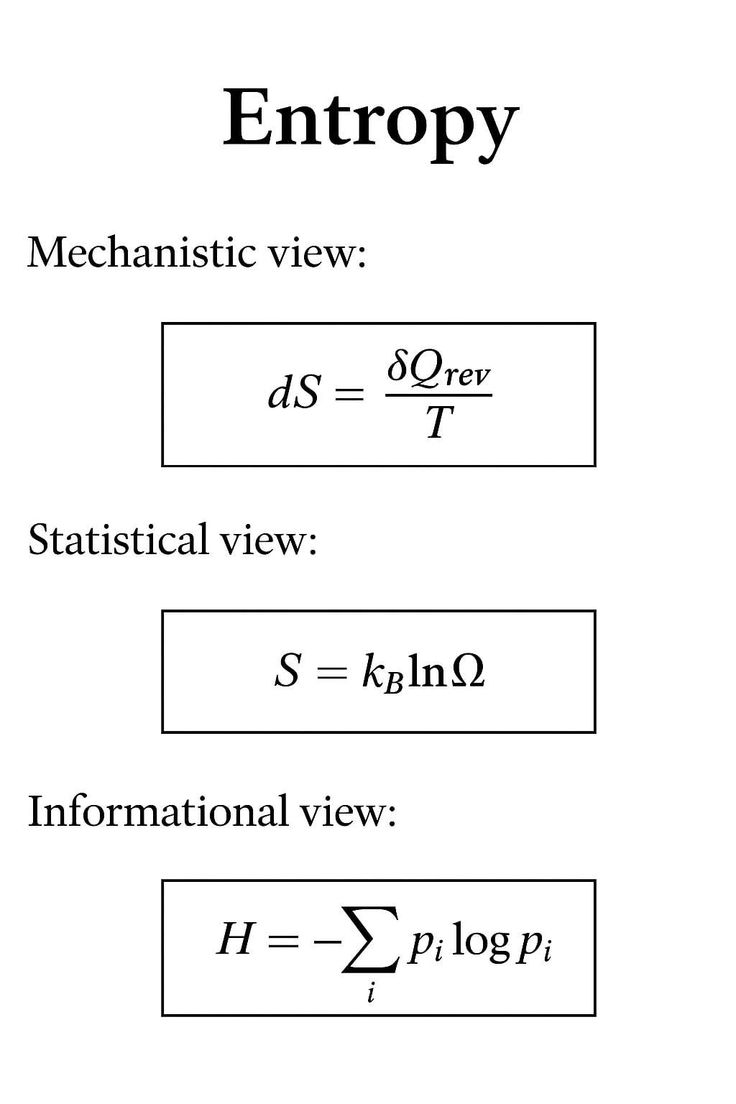
Entropy shows up in engines, molecules, and your phone’s data. This graphic lays out three perspectives.
Mechanistic: dS = δQ_rev / T for reversible processes. Statistical: S = k_B ln Ω linking to microstate count. Informational: H = −∑_i p_i log p_i for probability-based uncertainty.
These concepts power real-world tech like high-efficiency turbines in power plants, explain why cream mixes into coffee irreversibly, enable JPEG and MP3 compression to shrink files, and help train AI by measuring how much new info each prediction adds.
11
158
723
21,198
Michael Shook @mshook@mastodon.social retweeted
Jun 13
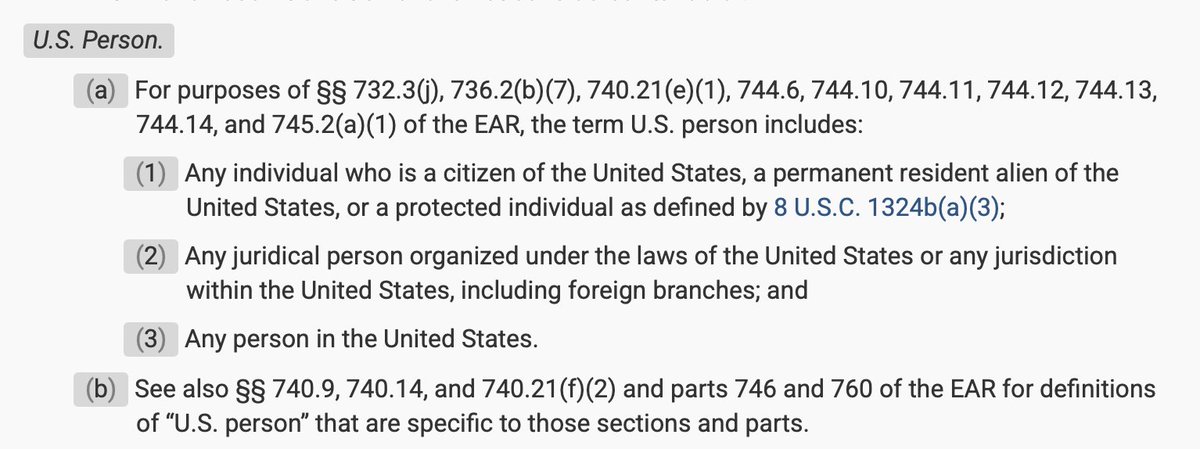
The President has no inherent power over exports. Congress passed a law, which allows the president to exercise the law it wrote; that law distinguishes between "US persons" and "foreign persons." "US persons" includes lawful permanent residents, legal asylees, etc. The idea is that selling an export-restricted product to a tourist, or whatever, can be banned as a sort of export. But allowing 300m Americans to use a product, but forbidding it to non-citizens with permanent status on US soil, is not possible under the law.

1
1
14
Michael Shook @mshook@mastodon.social retweeted

Jun 14
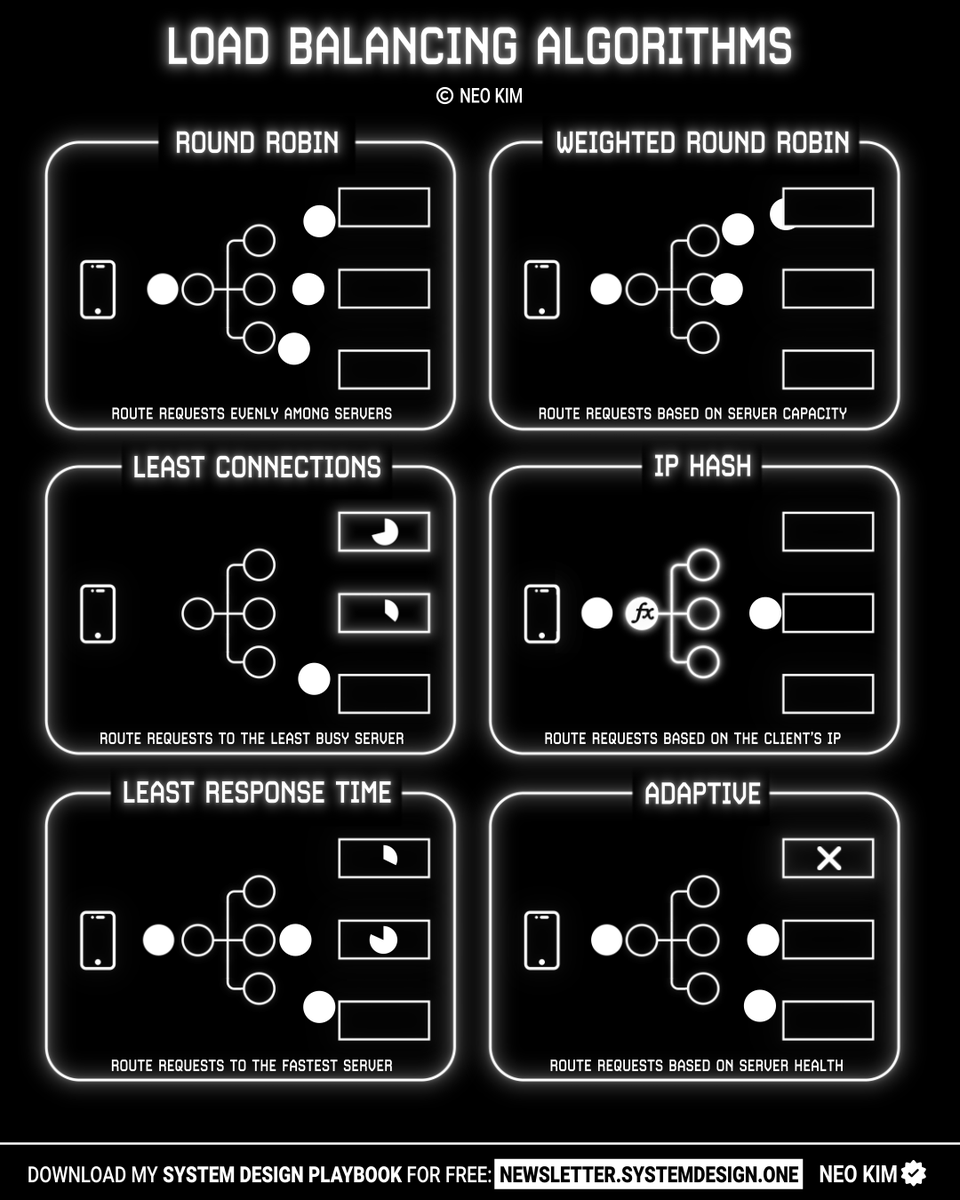
Top 6 load balancing algorithms for software engineers
(explained in 2 mins or less):
1 Round robin:
↳ Load balancer forwards the request to the servers in a sequential order
2 Weighted round robin:
↳ Load balancer forwards the request based on server capacity
3 Least connections:
↳ Load balancer forwards the request to the server with the fewest connections
4 IP hash:
↳ Load balancer forwards the request based on client's IP address
5 Least response time:
↳ Load balancer forwards the request to the fastest responding server
6 Adaptive:
↳ Load balancer forwards the request based on server health
What else should make this list?
17
59
256
10,770
Michael Shook @mshook@mastodon.social retweeted

Jun 14
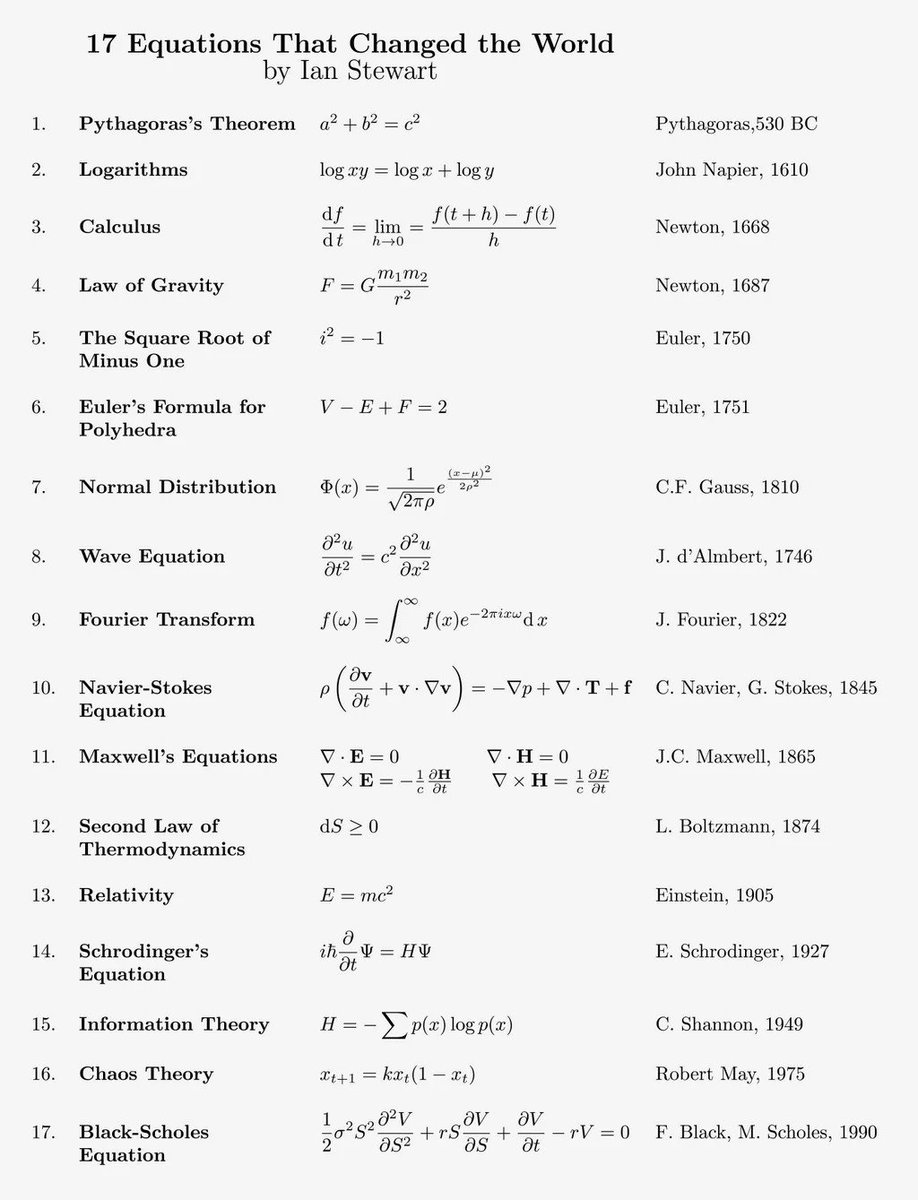
17 equations that changed the world by Ian Stewart
24
300
1,728
56,935
Michael Shook @mshook@mastodon.social retweeted

Jun 13
Nassim Taleb's mentor proved Wall Street's math is a lie. Before black swans, Nassim Taleb had a teacher: Benoit Mandelbrot, the father of fractals.
His finding was brutal - in the textbook model, a "10-sigma" crash should happen once in millions of millions of years. In real markets, those days keep showing up.
Over the last 100 years, almost all the money was made and lost in about 10 days. The rest barely mattered.
"Only the very few rare events count. The rest hardly counts at all."
"The bell curve doesn't just understate market risk - its assumptions are absurd."
"Great fortunes were made in very few days. Great ruins happened in very few days."
~80 min, free. the mathematician who proved markets are rougher than anyone admits ↓
Jun 12

Nassim Taleb: the richest man in the Roman Empire woke up every morning pretending he was poor.
Seneca had more to lose than to gain from his wealth - so he rehearsed losing it. Every so often he'd live on bread and water as if shipwrecked, just to make the downside familiar and harmless.
That's the whole game, Taleb says: arrange your life so you have far more upside than downside - then randomness stops scaring you.
"Make more when you're right than you lose when you're wrong - that's antifragile."
"Always keep more upside than downside from random events."
"The Stoics aren't unmoved by the world - only by bad events."
~70 min, free. the oldest trick for surviving a world you can't predict ↓
11
156
1,034
145,207
Michael Shook @mshook@mastodon.social retweeted

Jun 13
A German bureaucrat with no PhD, no grant, and no university affiliation built a system in the 1950s that produced 70 books and 400 papers, and the tool he used was a wooden box and one rule so simple it sounds like nothing.
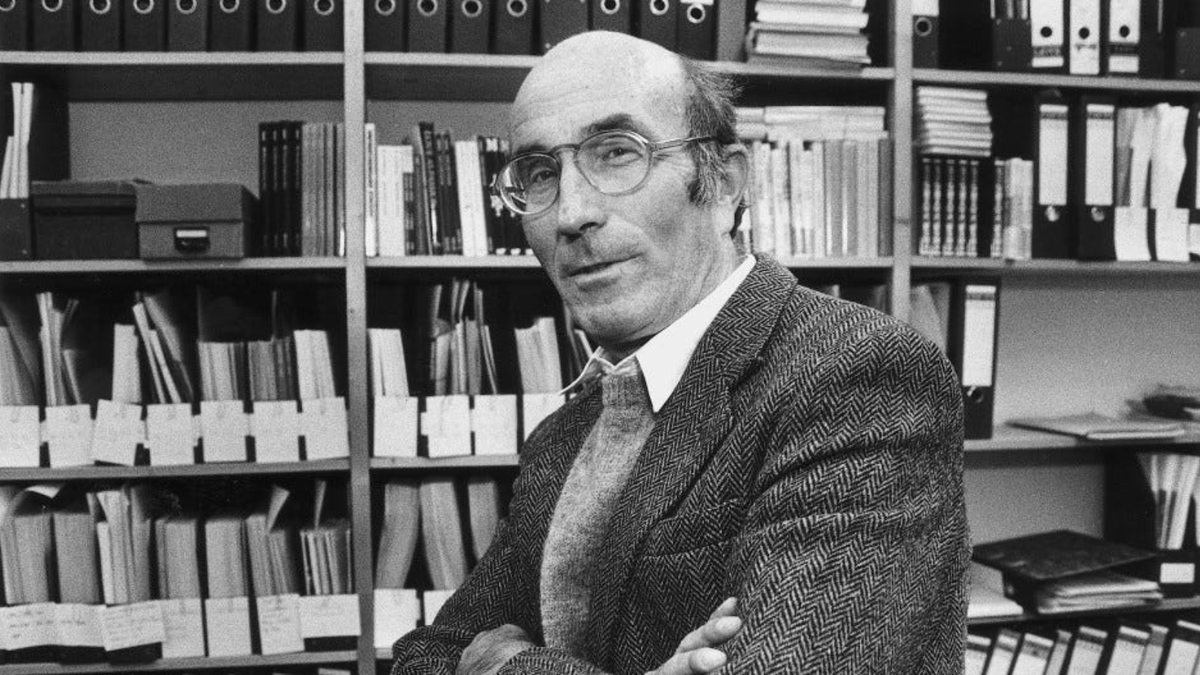
His name was Niklas Luhmann. The system is called the Zettelkasten.
He was born in 1927 in Lüneburg, the son of a brewery owner. He studied law at Freiburg after the war, passed his exams, and entered the civil service. From 1954 to 1962 he worked as an administrative officer at the Ministry of Culture in Lower Saxony. Government files. Bureaucratic memos. Education reform paperwork.
Nobody was watching him. Nobody was funding him. There was no department, no lab, no dissertation committee waiting on his progress.
He started filling index cards anyway.
The rule was this: one idea per card, written in his own words, never copied from the source. Every card had to connect to at least one other card already in the box. No folders. No categories. No topic hierarchy of any kind. Just a flat web of linked ideas growing in every direction.
He called it his communication partner.
That phrase is not a metaphor. Luhmann believed the box genuinely surprised him. He would pull out a card he had written years earlier and find that it connected to something he had just added in a way he had never planned when he wrote either one. The system was producing relationships his conscious mind had never made. He was not retrieving stored information. He was discovering new ideas inside material he already owned.
Most people take notes to remember things. Luhmann built a system that thought for him.
In 1965, the sociologist Helmut Schelsky saw one of Luhmann's manuscripts. He was so astonished by the quality and depth of what a government clerk had produced without institutional support that he offered him a research position at the University of Münster on the spot. When Bielefeld University needed to qualify him formally for a professorship in 1966, they accepted two books he had already written from the box as his PhD thesis and habilitation simultaneously. He skipped the entire academic ladder. By 1968 he was the first full professor at the newly founded University of Bielefeld.
He held that chair for 25 years and never stopped filling cards.
By the time he died in 1998, the box contained 90,000 handwritten index cards organized across two separate slip boxes he had built over four decades. The cards covered law, economics, politics, religion, ecology, mass media, love, and the theory of modern society. They generated 70 published books and nearly 400 scholarly articles. He left 150 unfinished manuscripts in his estate when he died. At least one of them was 1,000 pages long.
The reason the output was possible is the reason most people's notes produce nothing.
Luhmann never took notes to file information. He took notes to force a connection. Every time he read something, his only job was to ask one question: what does this link to inside the box? Not what category does it belong to. Not what topic should I file it under. What does this idea touch, contradict, extend, or challenge inside the network that already exists.
The moment you file a note in a folder, you have decided in advance what it relates to. Which means you will never discover what else it might. Filing is the enemy of thinking. The box had no folders. Every idea had to earn its place by connecting to something else.
Over time the box stopped being storage. It became a record of every intellectual relationship Luhmann had ever noticed, and because the cards were physical and linked, he could walk through the network and find collisions between ideas he had written years apart without ever planning them. The box remembered what he had forgotten. It held conversations he had long since moved past. It was the only thinking partner he had that never forgot anything.
That is why he said, in an interview late in his career: "I don't think everything on my own. Mostly it happens in the slip box."
He was not being modest. He was being precise.
NotebookLM is the closest thing that exists today to what Luhmann built by hand. Not as a filing cabinet. Not as a search tool. As a network of connected material that can surface relationships between ideas you uploaded at different times without knowing they were related.
The people generating the most original thinking right now are not the ones reading the most. They are the ones connecting the best.
Luhmann proved that with 90,000 cards and a wooden box in a government office in Lower Saxony.
The box is now inside your browser. Most people are still using it like a highlighter.
18
266
1,041
97,578
Michael Shook @mshook@mastodon.social retweeted

Jun 12
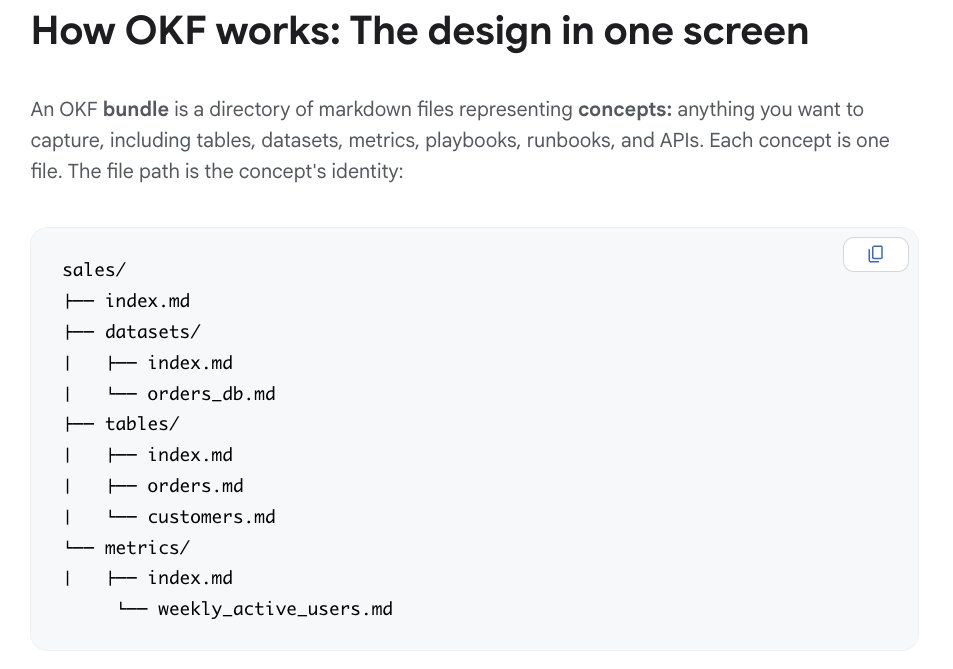
This is really big news. Google introduced the Open Knowledge Format (OKF) - a standardized way to store information in a directory of markdown files. Makes it really easy to make a digital brain that agents can use.
These files can serve as a living wiki. You can give agents the ability to query them or edit them. They can interlink.
Seems to me this could replace Notion or Obsidian. I can think of so many uses for this.
Google's blog post: cloud.google.com/blog/produc…
An easier to understand explanation is the SPEC.md file:
github.com/GoogleCloudPlatfo…
I gave those two links to Antigravity and asked how we could use it for any of the projects we're working on. It came up with so many ideas. I would imagine Claude Fable 5 would whip up some pretty amazing things based on this system.
Currently creating an OKF library of our pepper garden. It's going to be a fun weekend.
167
819
6,707
982,611