
14 Photos and videos





Most professionals do not have an information problem. They have a prioritization problem.
AI Intelligence Briefings That Actually Matter | briefingiq.ai
1
7:12 a.m. Your inbox has 43 unread messages, three market alerts, two team escalations, and a calendar that starts in 18 minutes. This is exactly where personalized daily briefings earn their keep. They do not add another content stream to manage. They replace low-yield scanning with a decision-ready view of what changed, why it matters, and where attention should go first.
briefingiq.ai/blog?post=why-…
7
7:12 a.m. 43 unread emails, 3 market alerts, 2 escalations, meeting in 18 minutes.
The problem isn't lack of information. It's that nobody translated it into decisions.
BriefingIQ does that translation before your first meeting. Try it free → briefingiq.ai/signup
3
Anthropic just raised 3.5 billion dollars at a 61 billion dollar valuation. Big number, great headline. But there's a clause in the term sheet that matters more than the valuation. Anthropic is contractually required to keep 40% of their compute on AWS, and AWS gets preferred allocation rights on Claude API capacity when demand spikes.
So if you're running Claude pipelines and you're not on AWS, you are literally second in line during the moments when you need capacity the most. A product launch, an earnings cycle, a major news event. Those are exactly when your system gets deprioritized.
Now add this. The EU AI Act Tier-2 enforcement starts July 1. You have 18 days to get compliance documentation from every model provider you use. The fines are real. The enforcement calendar is real.
Two things to do this week. First, build a model routing fallback before you need one. Second, email your API providers today and ask for their EU compliance attestation. Don't wait.
The lesson here is not about Anthropic specifically. It's about any architecture built on a single dependency you haven't formally tested under failure conditions
Get the full briefing with hardware analysis, robotics deployment data, and research findings at 👇 miketowery.substack.com/
If you want a personalized intelligence brief, check out: briefingiq.ai/
#AIArchitecture #LLMOps #AgentSystems #EnterpriseAI #ProductionAI
33
Here is the thing most people missed in Apple's big WWDC announcement. Tim Cook didn't just put Gemini inside Siri. He shipped a multi-model routing tier to 1.4 billion devices. Google, Anthropic, OpenAI, and third-party models now compete to answer your users' questions, and the OS decides who wins. That decision happens below your application layer. Below your MDM policy. Below anything your security team currently monitors.
So if your employees are on iOS 21 and asking Siri about a deal, a patient, or a financial account, you have no idea which AI backend just handled that query.
That is not a product update. That is a new compliance surface.
And on top of that, a 269-page federal AI bill just passed. It has mandatory incident reporting, liability for consequential decisions, and an 18-month compliance window that started the day it was signed.
Here is my take. The teams that get caught flat-footed are the ones treating both of these as IT tickets. They are not. They are architectural decisions. Who owns the routing layer? Who owns the audit log? Who owns the memory graph when OpenAI builds it on your users' behalf?
Read the full brief with hardware, robotics, research, and policy analysis: miketowery.substack.com/
Want a personalized intelligence brief built for your stack and sector? briefingiq.ai/
#AIArchitecture #LLMOps #AgentSystems #EnterpriseAI #ProductionAI
45
Yale's Chief Executive Leadership Institute just published a governance framework for agentic AI, and it was triggered by one model: Anthropic's Claude Mythos Preview. Eight specific variables. Authorization scope, action reversibility, context boundaries, human checkpoints, audit trails, data residency, inter-agent trust, escalation routing. That's the list.
Here's what matters. This isn't an ethics document. It's a system design checklist. And if you're running agents in production right now, you probably have gaps in at least four of those eight areas.
The context window problem is the one I keep coming back to. Mythos Preview has a two-million-token context window. That means an agent can see enough of your organization to take real, consequential actions without asking anyone. Enterprise pilots found credential-adjacent data surfacing in outputs that existing monitoring didn't catch. That is an authorization failure, not a model failure.
So my take is this: the teams that treat context assembly as a security perimeter, not just a performance setting, are going to be the ones who don't end up in a Yale case study about what went wrong. Build the controls now, before the regulation makes it mandatory and expensive.
Get the full analysis at miketowery.substack.com/
If you want a personalized intelligence brief, check out: briefingiq.ai/
#AIArchitecture #LLMOps #AgentSystems #EnterpriseAI #ProductionAI
1
1
44
Here's what I want you to take away from today's AI news.
The EU AI Act enforcement wave just started, and the first targets aren't the scary AI systems you read about in the news. They're normal enterprise deployments in financial services, healthcare, and HR that are missing paperwork. Risk registers, conformity assessments, human oversight logs. Regulators in France, Germany, and the Netherlands are sending inquiry notices to Fortune 500 companies right now, and those companies have 30 days to respond or face remediation orders.
Here's the thing. You cannot retrofit governance onto a production AI system cleanly. If you built the system without audit logging and human intervention tracking as first-class components, you have a real problem. This week, I'd pull a complete inventory of every AI system your organization runs that touches EU data subjects. Classify each one as high-risk or not. Assign one person, not a committee, to own the governance artifacts for each high-risk system.
The companies that are safe right now didn't get lucky. They treated governance as an architecture requirement from the start, not a compliance box to check later.
My take: the organizations that survive the first wave of EU AI Act enforcement won't be the ones with the best models. They'll be the ones that built governance into the system the same way they built security into the system. As a requirement, not an afterthought.
Follow for daily AI architecture intelligence: miketowery.substack.com/
For a personalized intelligence brief, check out: briefingiq.ai/
#AIArchitecture #LLMOps #AgentSystems #EnterpriseAI #ProductionAI
2
26
Here's the story I think every AI team needs to hear this week. Anthropic put out a public warning that their models are getting close to self-improvement capability, meaning they might be able to improve themselves without a human in the loop. And they called for something specific. A brake pedal. A hard technical stop that slows or halts AI capability advancement.
Now, most enterprise AI systems have filters and guardrails. But those run after the model thinks. A real brake pedal runs before the model acts, and it lives completely outside the model's own reasoning. The model cannot be the thing enforcing its own limits.
If you're running multi-agent pipelines, where one agent is writing prompts that another agent consumes, you are already in this territory. And if you don't have a capability ceiling that's defined outside any model context window, you don't have a brake pedal. You have a hope.
Here's my take. The teams building that capability envelope right now, before it's required, are going to be the ones writing the playbooks everyone else follows in 12 months. The question I'd leave you with is this: can your system stop itself?
For daily architectural analysis on AI systems design, governance, and production deployment: miketowery.substack.com/
Want a personalized intelligence brief? Check out: briefingiq.ai/
#AIArchitecture #LLMOps #AgentSystems #EnterpriseAI #ProductionAI
1
29
Two stories dropped today that, taken together, tell you exactly where enterprise AI is in 2026.
First one: the Allen Institute released MolmoAct 2, an open-weight robotics model that runs 37 times faster than its predecessor and outperforms the leading proprietary models on standard manipulation benchmarks. Zero-shot. No task-specific training. That is a significant shift. If you've been holding off on robotics AI because open models couldn't clear the real-time inference bar, that argument is gone.
Second story: one in three organizations hit a data sovereignty incident this year, traced directly to AI agents accessing regulated data through unscoped tool calls. Not a hack. An agent calling a tool it shouldn't have touched, pulling regulated data into a context window. Output filtering didn't catch it because the violation happened at context assembly time, before the model even responded.
So here's where I land on this. We've spent two years arguing about whether AI is ready for production. It is. The question now is whether your governance and control stack is ready for the AI. Most aren't. That's the gap. Fix the control layer first, then go fast.
Get the full breakdown at miketowery.substack.com/
If you want a personalized intelligence brief, check out: briefingiq.ai/
#AIArchitecture #LLMOps #AgentSystems #EnterpriseAI #ProductionAI
1
27
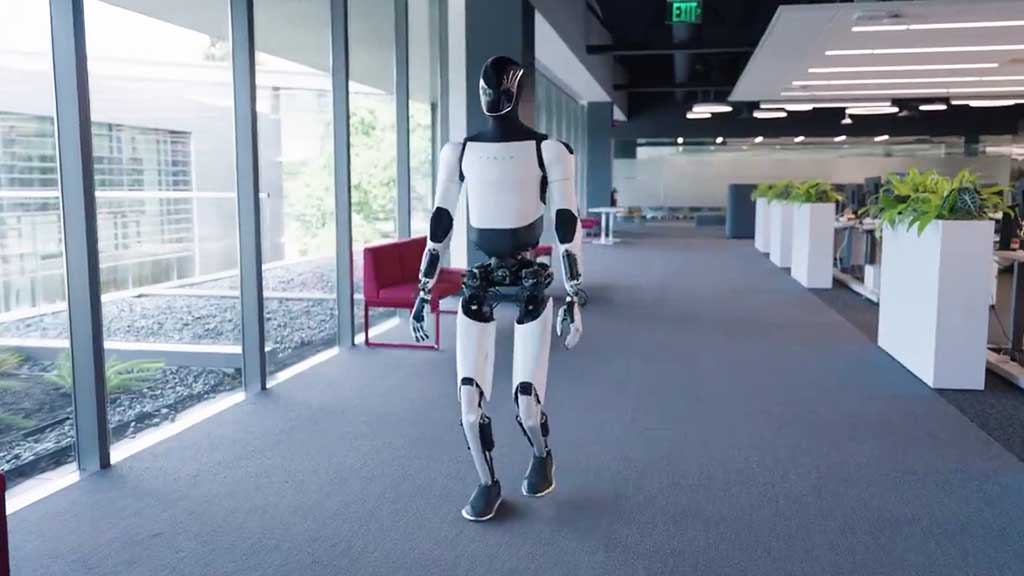
Here's the story I keep thinking about today. Allen Institute just released MolmoAct 2, an open-weight robotics policy model that runs 37 times faster than its predecessor and matches the best proprietary models on manipulation benchmarks. Picks up objects, inserts tools, sorts items, all without special training for each new task.
That zero-shot part is the thing. Most robotics projects I see are carrying months of engineering time just to collect training data for each new task. MolmoAct 2 cuts that window dramatically.
But here's the honest problem. When you use a vendor's proprietary robotics AI, they carry some of the safety validation burden. Open-weight means you own all of it. Every task completion log, every anomaly in the action outputs, every human escalation decision. That infrastructure doesn't exist at most enterprise teams yet.
So my take is this: the bottleneck in physical AI just shifted. It's not model performance anymore. It's the operational safety discipline to deploy open-weight policy models in real environments around real people. The teams that build that discipline in the next two quarters will have a real edge. The ones who skip it will have a production incident instead.
Build the safety envelope first. Then ship.
today's full brief is on Substack.
👉 miketowery.substack.com/
If you want a personalized intelligence brief, check out: briefingiq.ai/
#AIArchitecture #LLMOps #AgentSystems #EnterpriseAI #ProductionAI
1
19
Here's what caught my attention today. A new report just dropped showing that one in three organizations hit a data sovereignty compliance incident in the past year. And when you look at the root cause, it keeps coming back to the same thing. An AI API call sent regulated data to a cloud inference endpoint in a jurisdiction the company never vetted. Not a hack. Not a breach. Just an engineer calling an LLM API without knowing where the compute actually lives.
That's happening at the same moment Intel is announcing full rackscale AI solutions at Computex, Snowflake is positioning its native inference layer at Summit 2026, and IT budgets are up 11% with AI modernization at the top of the list. We are spending more and deploying faster.
But here is what I keep coming back to. The governance infrastructure is not keeping pace with the deployment velocity. And the regulatory enforcement is already active. EU AI Act. FTC. National AI sovereignty laws in 17 countries.
So my take today is simple. If you do not have geographic endpoint enforcement built into your inference routing tier as code, not as a policy, you are operating inside a 33% failure rate. That is not a future risk. That is today's problem. Go build the control layer.
Get the full architectural breakdown in today's briefing: 👉 miketowery.substack.com/
Want a personalized intelligence brief built for your team's specific stack and threat surface? 👉 briefingiq.ai/
#AIArchitecture #LLMOps #AgentSystems #EnterpriseAI #ProductionAI
2
11
So Google made a big announcement last week. They're calling it the "agentic Gemini era." And what that means in plain terms is that Gemini is no longer waiting for you to ask it something. It runs proactively. It checks things. It takes action on its own. 24/7.
Now here's why that matters to you as a builder. Every AI safeguard you've set up was probably designed around one thing: a user sends a prompt, the model responds, you check the output. That works fine. But proactive agents don't follow that pattern. They initiate. And if your permission model wasn't built for that, you have gaps you haven't found yet.
Meanwhile, Jack Clark at Anthropic just put a 60% probability on recursive self-improvement arriving before 2028. That's not abstract. That's a 30-month window to get your governance infrastructure in place before the regulatory frameworks catch up and start asking hard questions about your systems.
Here's my take. The model capability race is largely won. The real work right now is in the safety envelope, the permission layer, and the behavioral monitoring stack. The teams that get that right in the next 18 months are going to have a serious structural advantage. The ones that wait are going to be refactoring under pressure. Don't be in the second group.
Get the full analysis in today's brief: miketowery.substack.com/
If you want a personalized intelligence brief, check out: briefingiq.ai/
#AIArchitecture #LLMOps #AgentSystems #EnterpriseAI #ProductionAI
6
Apple just rebuilt Siri on Google's Gemini. Sit with that for a second. The most vertically integrated company in tech — the one that designs its own silicon — looked at the cost of catching up on frontier models and decided to rent the brain instead. If owning the model isn't the moat for Apple, it isn't the moat for your company either. Here's the architectural bottleneck nobody wants to name. Most teams are still treating "which model" as the big decision. It isn't. Claude Opus 4.8 shipped this week at the same price as 4.7, with a mostly lukewarm reception. We've officially hit the part of the curve where a frontier upgrade lands with a shrug. The model is a commodity input now. Your edge lives in everything wrapped around it. So where did the action actually move this week? Orchestration and computer use. Dynamic Workflows now let Claude Code spin up hundreds of parallel subagents for one task. OpenAI put Codex computer use on Windows. Perplexity dropped agents straight into Excel and Outlook. All exciting. All Day 2 nightmares if you build them naively. The shift is this: the hard problem stopped being "can the agent do it" and became "can I afford it, trace it, and trust it." Fan-out is easy — fan-in is where systems die. Three hundred subagents means three hundred partial results to merge and three hundred line items on your inference bill. Computer use means UI brittleness, vision-pass latency, and retries that no API call would ever generate. The result, for teams that get this right: you stop shipping demos and start shipping systems that survive contact with a finance review. Concurrency caps. Per-task token budgets. A semantic cache that kills duplicate subagent calls. Verification harnesses that screenshot-diff every computer-use action before it commits anything irreversible. The lesson? In 2026, capability is cheap and orchestration is expensive. The model will do almost anything you ask. Making it do that thing reliably, observably, and under budget — at 300 concurrent calls instead of one — is the actual engineering. That's the job now. Stop optimizing your prompt. Start optimizing your blast radius. Full briefing: miketowery.substack.com/ #AIArchitecture #LLMOps #MultiAgentSystems #ComputerUse #AIInfrastructure
13
Anthropic just closed $30B at a $900B valuation.
Most people are reading that as a confidence signal in AI. I'm reading it as an architectural risk event.
Here's the problem: when your model vendor has $30 billion in new capital, they stop being just a model vendor. They start building orchestration layers, compliance tooling, enterprise SDKs, and infrastructure that competes directly with the middleware you've spent 18 months building yourself.
If your agent architecture is tightly coupled to Claude's native tooling, you're not just using an API anymore. You're co-building on a platform that now has the capital to absorb everything above the model layer.
I've seen this pattern before. It's the same playbook Salesforce ran on its ISV ecosystem in the mid-2010s. First you build on the platform. Then the platform builds what you built.
What to do about it right now:
Measure how much of your routing and tool-call logic lives inside Anthropic's native SDK vs. your own orchestration layer
If that number exceeds 40%, draft a migration path to a vendor-neutral framework: LangGraph, CrewAI, or a custom routing tier
Implement an abstraction layer over your model API calls so swapping the underlying model is a config change, not a refactor
Document every place in your pipeline where Anthropic-specific behavior (tool schemas, system prompt formatting, context window behavior) is assumed rather than abstracted
Set up inference failover routing to a secondary provider today — not as a cost hedge, but as an architectural independence signal
This is the same discipline we'd apply to any critical vendor relationship. The fact that the vendor is an AI lab doesn't change the build-vs-buy calculus.
The other signal from this week: enterprise AI spend has officially crossed from discretionary to operational. That means your experimental pipeline is now load-bearing infrastructure. If you haven't documented your failover path and SLA hedge strategy, you're one outage away from explaining it to your CFO.
Get the full architectural breakdown in today's brief: 👉 miketowery.substack.com/
Want a personalized intelligence brief built for your specific stack and use cases? 👉 briefingiq.ai/
#AIArchitecture #LLMOps #AgentSystems #EnterpriseAI #ProductionAI
11
Deloitte just published the number that should stop every AI leader in their tracks.
Fewer than 30% of enterprises with agentic AI in production have behavioral observability, runtime guardrails, or output stream monitoring in place.
That means more than 70% of production agent deployments are running blind. No anomaly detection on tool calls. No scoped context windows. No escalation path controls. Just an agent, a set of permissions, and a prayer.
Meanwhile, Benchling's 2026 Biotech AI Report found that the highest-performing AI organizations aren't winning on model selection. They're winning because they built better data environments. 3.4x more model-ready data assets. 22% faster R&D cycle times. The model is a commodity. Context assembly quality is the moat.
And Kiteworks just told us that 1 in 3 enterprises hit a data sovereignty incident in the past year, with government data access requests now accounting for 10% of those incidents. If you're calling external LLM APIs with sensitive data and you can't answer "where does the prompt go and who can compel access to it" — you have a structural exposure, not a compliance checkbox.
Here's what I'd do this week:
Audit every deployed agent for tool call surface area. More than three external tool bindings without a human checkpoint is an unacceptable blast radius
Instrument your data pipeline with freshness and completeness scoring before LLM ingestion. Stale context is a silent failure mode
Pull your actual GPU utilization at P50 and P95. If you can't produce the number in 24 hours, your observability stack is broken
Map every external inference API call to a jurisdiction and a compelled-access risk level
The shift happening in 2026 isn't about better models. It's about whether you built the plumbing around the model to govern it, observe it, and trust it at scale.
The organizations getting ahead aren't moving faster. They're building better infrastructure before they scale.
Follow for daily architecture-level analysis at miketowery.substack.com/
If you want a personalized intelligence brief, check out: briefingiq.ai/
#AIArchitecture #LLMOps #AgentSystems #EnterpriseAI #ProductionAI
1
56
Apple just put an agentic AI with cross-app context access inside every managed iOS device in your fleet. And most enterprise security teams don't have a policy for it yet.
Here's the problem. The new Siri architecture doesn't operate like a voice assistant. It operates like an OS-level agent — reading screen state, accessing cross-app data, and executing multi-step workflows on behalf of the user. It's powered by a 1.2 trillion parameter Gemini model routed through Apple's Private Cloud Compute. And it is already running on your employees' devices.
At the same time, the UK AI Security Institute and U.S. CAISI just published joint research characterizing agentic pipelines as a primary cyberattack vector — with documented exploitation chains where adversaries use external agents to inject payloads into your agent's context window and trigger tool-call sequences that exfiltrate data before your monitoring layer fires.
Combine those two things — an OS-level agent inside your MDM perimeter and a documented attack framework for compromising agentic pipelines — and you have a risk that requires action this week, not next quarter.
What to do right now:
Pull a report from your MDM console on which managed iOS devices have Apple Intelligence features enabled and map those against your data classification tiers
Instrument tool-call sequence logging on every production agent with write access to external systems — use LangSmith or Arize Phoenix to baseline normal behavior and alert on deviations
Add "sovereign inference endpoint availability" as a first-class criterion in any AI infrastructure RFP you have open right now
Map every model API call in your inference stack against the jurisdiction of the inference endpoint — flag anything where sensitive data crosses a border without a documented legal basis
Review your AI infrastructure contracts for sole encryption key custody — 1 in 3 organizations hit a data sovereignty incident last year, and provider-held keys are the primary exposure variable
The governance frameworks most enterprise teams are running were written for session-bound assistants. Agentic AI at the OS layer is a different threat model. The teams that update their architecture now will not be scrambling when the first incident report lands.
Full analysis in today's brief: miketowery.substack.com/
If you want a personalized intelligence brief, check out: briefingiq.ai/
#AIArchitecture #LLMOps #AgentSystems #EnterpriseAI #ProductionAI
1
32
Anthropic just hit operating profitability. Here's what that means for your AI architecture.
This week, Anthropic projected $559M in operating profit on $10.9B in revenue for Q2 2026. The primary driver wasn't a consumer product. It was Claude Code — an agentic developer tool — generating $2.5B in annualized enterprise revenue.
Meanwhile, OpenAI filed for an IPO, the Biden AI Safety Executive Order was rescinded, and the Pope issued the first papal AI encyclical. It was not a quiet Monday.
Here's what I'm telling every enterprise AI team I work with right now:
The architectural implications:
— The "which model wins" question is over for this cycle. Anthropic and OpenAI are both structurally viable. The question is whether your application layer is vendor-locked to either one's API schema.
— If you don't have a model abstraction layer between your application code and your inference providers, OpenAI's IPO is the trigger event you've been waiting for to build one. Post-IPO pricing pressure is a documented pattern. Build the abstraction before the pricing changes, not after.
— The EO rollback isn't a green light. Audit which of your AI governance controls were anchored to the Biden executive order. Anything that's now unanchored needs to be re-tied to EU AI Act, sector regulation, or internal policy within 30 days — before your next compliance review surfaces the gap.
— Claude Code's success validates the architecture: agentic tooling embedded in the developer workflow generates measurable ROI. If you're still evaluating AI coding assistance at pilot scale, the market has made the decision for you. The unit economics close. The question is your integration depth.
— The papal encyclical matters for enterprise sales. Catholic health systems, universities, and nonprofits are now equipped with formal doctrinal criteria for AI procurement. If those sectors are in your pipeline, update your documentation to address human oversight, explainability, and autonomous action scope before your next RFP.
The briefing is linked below. If you're designing or governing AI systems right now, this week's news changes several architectural decisions.
👉 miketowery.substack.com/
If you want a personalized intelligence brief, check out: briefingiq.ai/
#AIArchitecture #LLMOps #AgentSystems #EnterpriseAI #ProductionAI
1
16
What your morning could look like instead of wasting time scrolling for relevant information and getting distracted in the process. Briefing IQ delivers one email to your inbox at 6:00 AM with three or four stories that actually matter tuned to your exact role and industry. With every source linked, no engagement bait, no fillers, no trending in your network messages, just the information you need for your upcoming meetings and discussions. If the briefing is for work, it even reads your company website to keep the suggestions relevant to your business. Try it for seven days for free at briefingiq.ai
7
What your morning could look like instead of wasting time scrolling. Briefing IQ delivers one email to your inbox at AM with three or four stories that actually matter tuned to your exact role and industry. With every source linked, no engagement bait, no fillers, no trending in your network messages, just the information you need before AM meetings. If the briefing is for work, it even reads your company website to keep the suggestions relevant to your business. BriefingIQ.ai Try it for seven days for free
youtu.be/-abOQc7bt2A?si=k659…
10