
38 Photos and videos






Natalya St. Clair retweeted

Feb 16
Are you watching the Chinese New Year Gala? The Robot Kungfu show is mind blowing!!!
They just executed a coordinated martial arts routine with spatial precision, rhythm control, and dynamic balance adjustments in real time.
Kung fu, one of China’s most iconic traditional art forms , performed by machines built with cutting-edge AI control systems, advanced actuators, and high-speed feedback loops. Ancient discipline meets algorithmic precision.
Last year, humanoid robots stepped onto the Spring Festival Gala stage for the first time. This year, they held synchronized kung fu stances with balance that would humble half of us after leg day.
And they did it live!!! On the most-watched television event on the planet.
The progress in just one year is magical.
That’s what we call China speed.
What makes it even sweeter is where this happened.
I love how the progress is integrated in culture. In celebration. In a Lunar New Year gala watched by hundreds of millions.
It’s music to my ears.
The robots didn’t look like they were “trying” anymore. They looked like they belonged.
Their joint articulation was smoother.
Their formation timing tighter.
Their balance recovery almost elegant.
Their choreography is expressive.
That’s what happens when AI models improve, control systems get smarter, hardware stabilizes, and iteration cycles compress.
One year in robotics today is not the same as one year ten years ago.
It’s compounding.
If this is what 12 months looks like,
imagine 36.
The Chinese New Year Robot Kungfu Gala is just futuristic.
It was quite the statement!
The future is getting better very, very fast.
It was so beautiful to watch. What do you think?
748
2,692
10,666
1,550,262
“Atlas doesn’t have to move like a human.”
Hearing that from Boston Dynamics was a great example of human-centered AI: form doesn’t dictate behavior
youtu.be/5eMSMiL7F2o
#HumanCenteredAI #AIDesign #Robotics #UXDesign #ResponsibleAI
39
Natalya St. Clair retweeted

3 Dec 2025
My biggest worries about coding with AI:
1. Beginners not actually learning
2. Atrophy of skills
I’m seeing #1 happen and I don’t have a good answer yet.
Leveling up as an engineer requires grinding and it’s not always fun. If AI can solve most of the problems for you, when do you lean into the healthy friction? When do you embrace the suck? Coupled with fewer opportunities for pair programming, it’s definitely tougher for those starting their engineering career.
It’s not all bleak though. Those with high agency are figuring it out and learning extremely fast. I just worry about the industry as a whole outside these folks. We need better products and better education. I’m hoping to try and do my part here.
For #2, I’m definitely paranoid about this for myself. What will it feel like to build software in 5 years? Will I have forgotten someone of the skills I used to rely on? Maybe that won’t even matter because we will truly be operating at a higher level of abstraction. Even if that pans out, it’s always been important to deeply understand the systems/dependencies you’re building on.
I normally talk about the stuff I’m optimistic for but think it’s good to have a healthy skepticism here.
571
263
3,350
486,934
Natalya St. Clair retweeted

11 Nov 2025
I can't stop laughing 😆
This is a presentation of Russia’s first AI robot. I think it learned to walk from alcoholics.
3,479
3,144
25,212
1,664,637
Natalya St. Clair retweeted

29 Sep 2025
The arc of the moral universe is long, but it bends towards justice. Except it doesn’t bend on its own—it bends because we pull it in the direction of justice. What keeps me hopeful during times like these is being surrounded by people who are doing just that.
15,826
21,321
120,798
9,587,406

22 Sep 2025
I felt that one!
22 Sep 2025

22
Natalya St. Clair retweeted

18 Sep 2025
ICYMI: We just announced some exciting AI features coming to Chrome 🦖 See all the highlights from Behind the Browser: AI Edition now.
Watch here: goo.gle/4nzwXBv
182
190
1,025
497,428
Natalya St. Clair retweeted

16 Sep 2025
Generate persistent 3D worlds from a single image, bigger and better than ever!
We’re excited to share our latest results and invite you to try out our world generation model in a limited beta preview.
205
509
3,555
833,730
Natalya St. Clair retweeted

14 Sep 2025
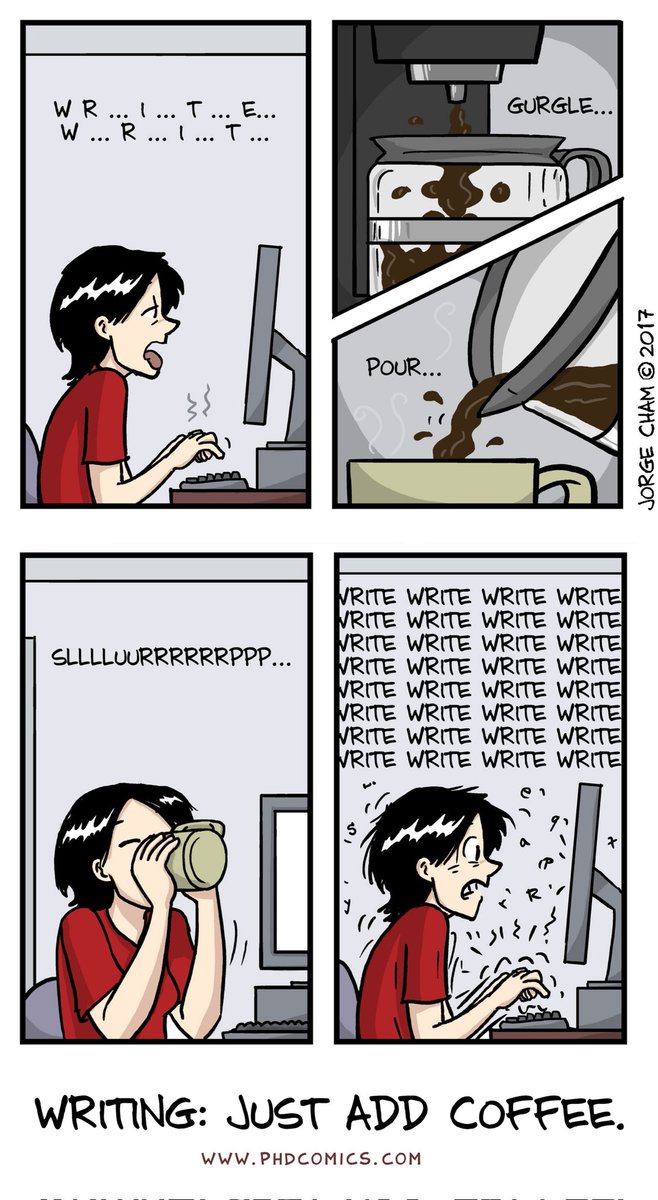
Writing: just add coffee
5
51
316
22,158
Natalya St. Clair retweeted

7 Sep 2025
This is MarsWalker
Robot vacuum that climbs stairs.
Its tracked base grips steps while 4 articulated arms probe the next riser, lift the nose, and keep the center of mass stable to avoid tipping on climbs or descents.
9
15
79
13,373
Natalya St. Clair retweeted

11 Sep 2025
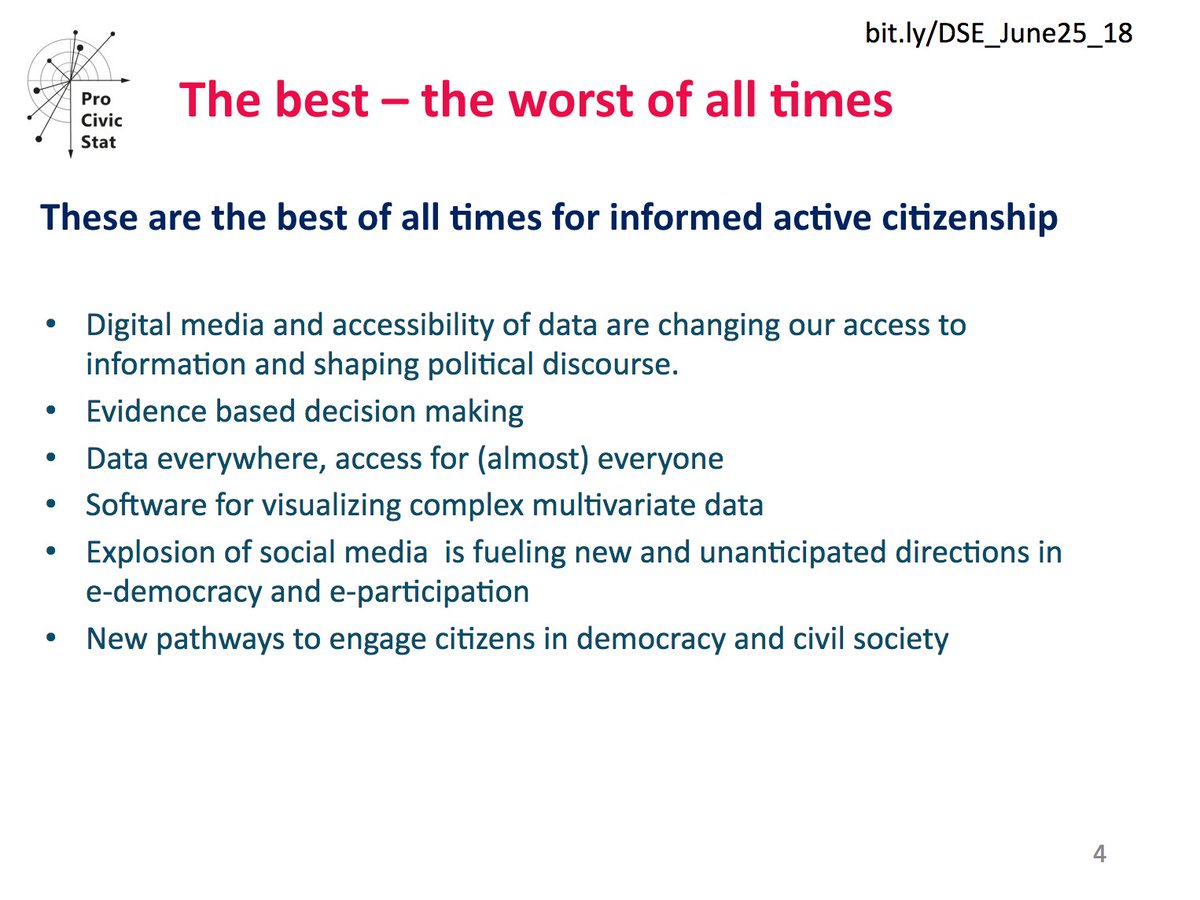
📉 12th grade math scores just hit their lowest since 2005.
📈 The first-ever K–12 Data Literacy & Data Science Progressions launched.
One class period today produces more data than the entire 20th century—our schools need a new roadmap.
👉 datasciencelearning.org

1
82
Natalya St. Clair retweeted

11 Sep 2025
🚨 In the new episode of my AfterMath series, I ask: Can a computer reach the full capacity of the human mind? With the recent advances in AI, this has become a hot topic for debate. I focus on the area I know best: mathematics. And I further narrow it down to the question: Can a computer be as good as a human in dealing with natural numbers? (Numbers like 0,1,2,3,4, and so on.)
I make an important distinction between Type I and Type II statements about natural numbers. Statements of Type I are about specific numbers (here computers excel), and statements of Type II are GENERAL statements that apply to ALL NUMBERS at once (such as Fermat's Last Theorem). Mathematics is about Type II statements, and in this domain computers hit a wall, which I'd like to call the "Turing Wall."
The problem is that Type II statements can't be reduced to Type I statements as computer's memory is finite. To handle Type II statements, one has to use FORMAL SYSTEMS, in which we symbolically encode properties of natural numbers, so they could be programmed on a computer. Once we choose the axioms and the rules of inference, we can run a computer, and it will produce many true statements about natural numbers. However, Tarski's Undefinability Theorem, which I introduce in this episode (it is closely related to Gödel's Incompleteness Theorems but is even more relevant to these issues, in my opinion), shows that this way we can NOT get all true statements about natural numbers.
In fact, the notion of "true statement" is not contained in a formal system. To introduce this notion in a given formal system, one has to choose a model of this formal system, and there are many inequivalent models.
Large Language Models give mathematicians a great tool for research, but they can't be used effectively for the kinds of foundational questions of mathematics we are discussing here.
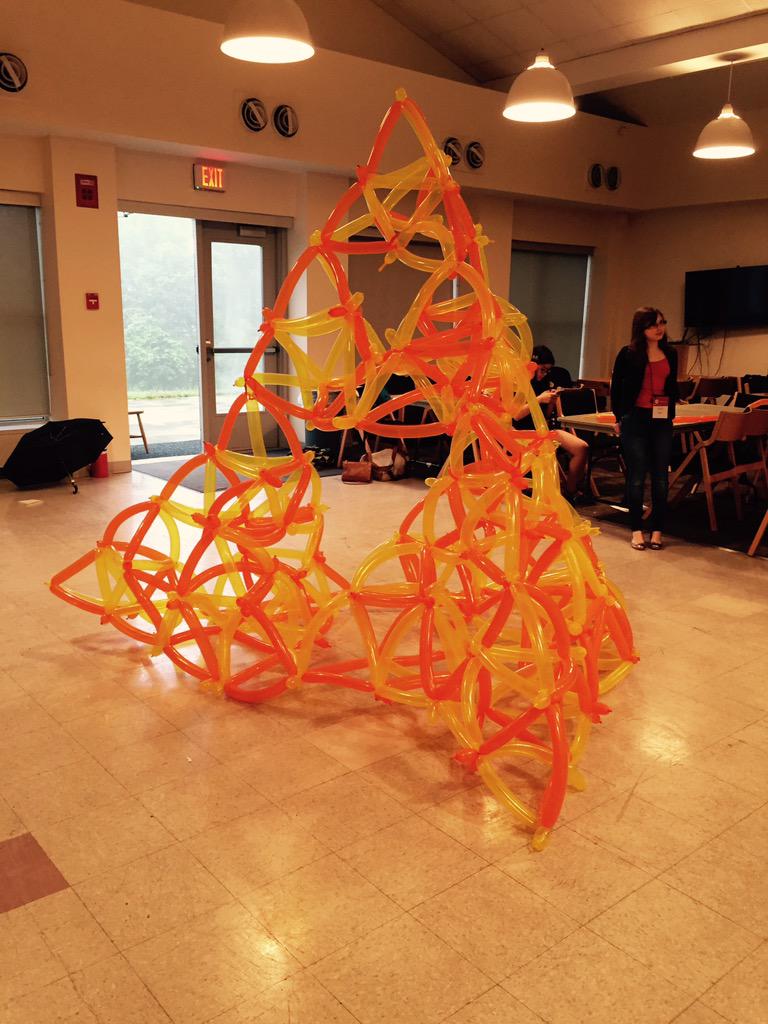
At the end of the episode, I go back to the 3-dimensional sphere I talked about in Episode 2. I give a 4-dimensional spacetime demonstration of it, using... a balloon. 😃
In a future video, I am planning to discuss the 3-dimensional sphere in more detail with my friend @ericweinstein.
See the links to the entire episode below.⤵️⤵️
20
21
146
107,088
11 Sep 2025
A great white shark was spotted eating a whale carcass today on a whale watch tour. Wild! 🦈
people.com/whale-watching-bo…
#WhaleWatch #NatureIsAmazing
28
Natalya St. Clair retweeted

10 Sep 2025
Students were eating lunch when they heard the gunshots. It’s yet another horrific school shooting, and every time my heart breaks for the kids, parents, and communities shattered by gun violence.
We can’t stop demanding change. Congress can and must pass gun safety legislation.

BREAKING: At least three students were wounded Wednesday in a shooting at a high school in the Denver metro area. cbsn.ws/41Ica6w
2,849
1,645
9,812
514,593
Natalya St. Clair retweeted

7 Sep 2025
Ultimate AI Prompt Directory 🔥
Over the past weeks I collected my favorite prompts and turned them into one "master directory" so you can just copy paste what you need.
Prompts you'll find:
👉 Foundation (auth, users, settings)
👉 Core UX & UI (dashboards, file uploads, realtime)
👉 Collaboration & Growth (teams, invites, notifications)
👉 Monetization (Stripe, PayPal, billing)
👉 Integrations (Slack, Resend, Maps, Calendly)
👉 Advanced Systems (feature flags, analytics, cron jobs)
👉 AI Superpowers (chatbots, semantic search, rec engines)
Built for Lovable. In Lovable.
Want access? Comment “Directory” and I’ll send you the link.
LFG 🚀
1,542
202
1,660
292,874
Natalya St. Clair retweeted

27 Aug 2025
Skip the camera and the coordination. AI avatars in Google Vids can help deliver your message instead. Just write a script and choose an avatar to deliver polished content. Perfect for trainings, demos, and more. Available today: vids.new
25
76
476
45,383
Natalya St. Clair retweeted

31 Jul 2025
There is now a path for China to surpass the U.S. in AI. Even though the U.S. is still ahead, China has tremendous momentum with its vibrant open-weights model ecosystem and aggressive moves in semiconductor design and manufacturing. In the startup world, we know momentum matters: Even if a company is small today, a high rate of growth compounded for a few years quickly becomes an unstoppable force. This is why a small, scrappy team with high growth can threaten even behemoths. While both the U.S. and China are behemoths, China’s hypercompetitive business landscape and rapid diffusion of knowledge give it tremendous momentum. The White House’s AI Action Plan released last week, which explicitly champions open source (among other things), is a very positive step for the U.S., but by itself it won’t be sufficient to sustain the U.S. lead.
Now, AI isn’t a single, monolithic technology, and different countries are ahead in different areas. For example, even before Generative AI, the U.S. had long been ahead in scaled cloud AI implementations, while China has long been ahead in surveillance technology. These translate to different advantages in economic growth as well as both soft and hard power. Even though nontechnical pundits talk about “the race to AGI” as if AGI were a discrete technology to be invented, the reality is that AI technology will progress continuously, and there is no single finish line. If a company or nation declares that it has achieved AGI, I expect that declaration to be less a technology milestone than a marketing milestone. A slight speed advantage in the Olympic 100m dash translates to a dramatic difference between winning a gold medal versus a silver medal. An advantage in AI prowess translates into a proportionate advantage in economic growth and national power; while the impact won’t be a binary one of either winning or losing everything, these advantages nonetheless matter.
Looking at Artificial Analysis and LMArena leaderboards, the top proprietary models were developed in the U.S., but the top open models come from China. Google’s Gemini 2.5 Pro, OpenAI’s o4, Anthropic’s Claude 4 Opus, and Grok 4 are all strong models. But open alternatives from China such as DeepSeek R1-0528, Kimi K2 (designed for agentic reasoning), Qwen3 variations (including Qwen3-Coder, which is strong at coding) and Zhipu’s GLM 4.5 (whose post-training software was released as open source) are close behind, and many are ahead of Meta’s Llama 4 and Google’s Gemma 3 — the U.S.’ best open-weights offerings.
Because many U.S. companies have taken a secretive approach to developing foundation models — a reasonable business strategy — the leading companies spend huge numbers of dollars to recruit key team members from each other who might know the “secret sauce“ that enabled a competitor to develop certain capabilities. So knowledge does circulate, but at high cost and slowly. In contrast, in China’s open AI ecosystem, many advanced foundation model companies undercut each other on pricing, make bold PR announcements, and poach each others’ employees and customers. This Darwinian life-or-death struggle will lead to the demise of many of the existing players, but the intense competition breeds strong companies.
In semiconductors, too, China is making progress. Huawei’s CloudMatrix 384 aims to compete with Nvidia’s GB200 high-performance computing system. While China has struggled to develop GPUs with a similar capability as Nvidia’s top-of-the-line B200, Huawei is trying to build a competitive system by combining a larger number (384 instead of 72) of lower-capability chips. China’s automotive sector once struggled to compete with U.S. and European internal combustion engine vehicles, but leapfrogged ahead by betting on electric vehicles. It remains to be seen how effective Huawei’s alternative architectures prove to be, but the U.S. export restrictions have given Huawei and other Chinese businesses a strong incentive to invest heavily in developing their own technology. Further, if China were to develop its domestic semiconductor manufacturing capabilities while the U.S. remained reliant on TSMC in Taiwan, then the U.S.’ AI roadmap would be much more vulnerable to a disruption of the Taiwan supply chain (perhaps due to a blockade or, worse, a hot war).
With the rise of electricity, the internet, and other general-purpose technologies, there was room for many nations to benefit, and the benefit to one nation hasn’t come at the expense of another. I know of businesses that, many months back, planned for a future in which China dominates open models (indeed, we are there at this moment, although the future depends on our actions). Given the transformative impact of AI, I hope all nations — especially democracies with a strong respect for human rights and the rule of law — will clear roadblocks from AI progress and invest in open science and technology to increase the odds that this technology will support democracy and benefit the greatest possible number of people.
[Full text: deeplearning.ai/the-batch/is… ]
242
858
3,993
635,906
Natalya St. Clair retweeted

2 Jul 2024
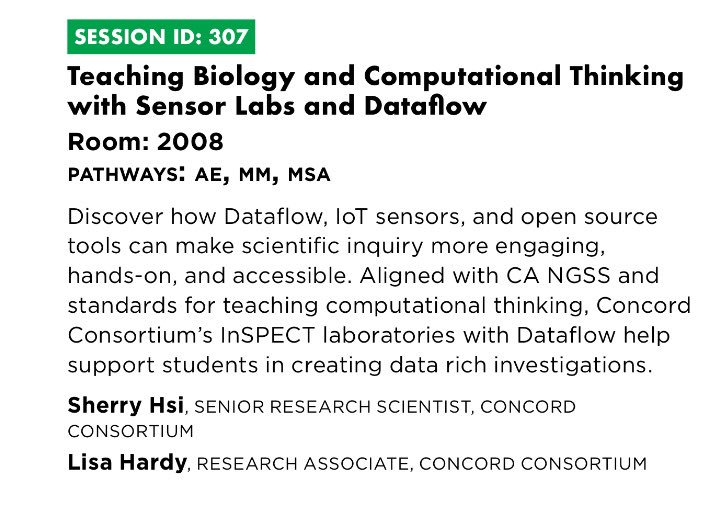
Exciting news! Our MultiData paper won the Best Paper award at ISLS 2024! 🎉 Check it out: 2024.isls.org/best-papers/ #ISLS2024
1
3
163