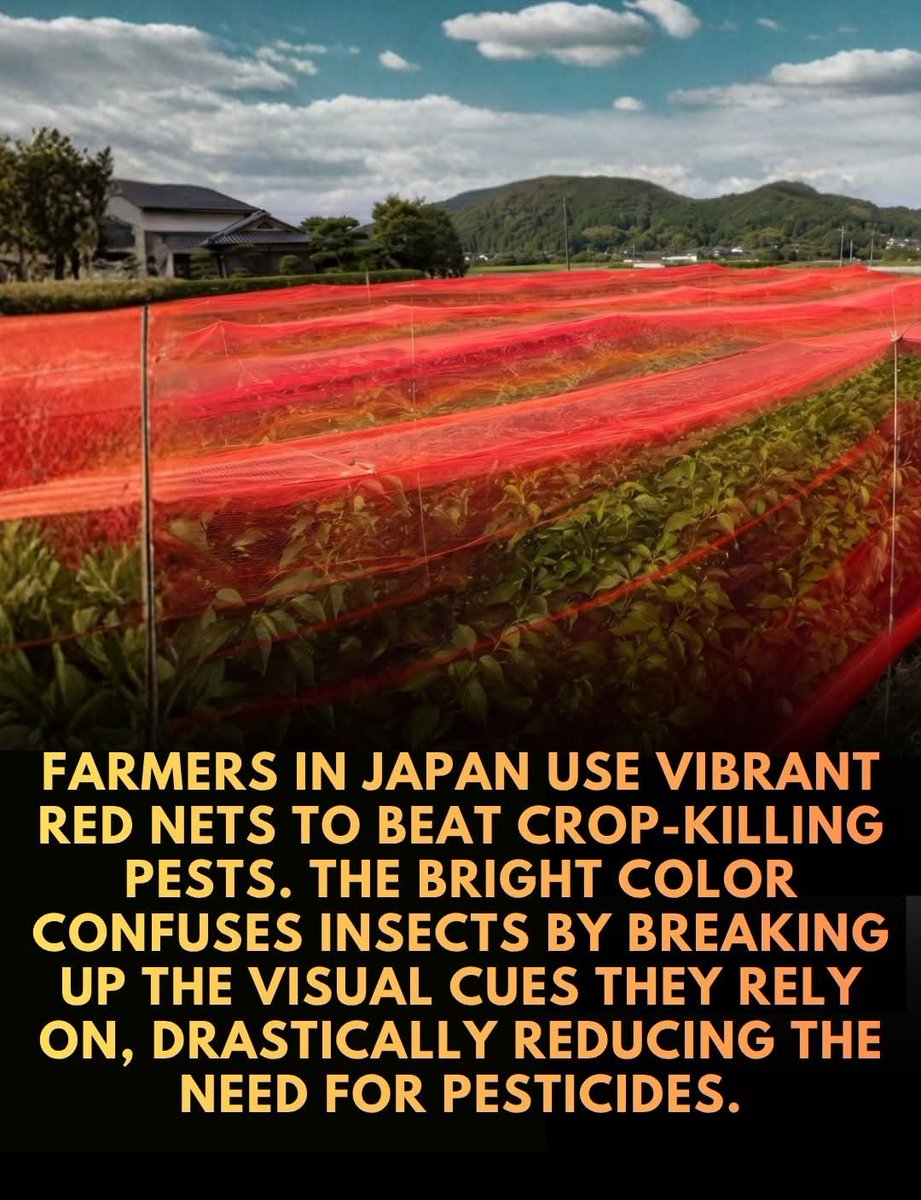
Changing netting to red can cut pesticide use by up to 50%, offering a highly effective, natural crop protection.
Farmers seeking to protect their crops have traditionally relied on black or white netting, but groundbreaking research reveals that switching to red nets may be the key to sustainable farming.
A study published in Scientific Reports by researchers at the University of Tokyo demonstrates that red netting is significantly more effective at deterring onion thrips—a highly destructive agricultural pest—than traditional black or white nets.
This optical defense mechanism is rooted in insect color vision, as these pests perceive red light as an obstacle or deterrent, essentially signaling them to keep away without relying on tight, air-restrictive mesh.
The real-world implications of this simple color swap are staggering. In field trials, crops covered by red netting required 25% to 50% less insecticide than uncovered fields. Furthermore, because this defense relies on color perception rather than physical blockage, the red nets can feature larger mesh holes, which improves greenhouse ventilation, lowers working temperatures for farmers, and reduces the humidity that breeds plant diseases.

By integrating optical pest control into standard farming practices, growers can drastically decrease their chemical footprint, combat insecticide resistance, and transition toward safer, more sustainable food production.
source: Tokumaru, S., Tokushima, Y., Ito, S., Yamaguchi, T., & Shimoda, M. (2024). Advanced methods for insect nets: Red-colored nets contribute to sustainable agriculture. Scientific Reports, 14(1).
ALT Changing netting to red can cut pesticide use by up to 50%, offering a highly effective, natural crop protection.
Farmers seeking to protect their crops have traditionally relied on black or white netting, but groundbreaking research reveals that switching to red nets may be the key to sustainable farming.
A study published in Scientific Reports by researchers at the University of Tokyo demonstrates that red netting is significantly more effective at deterring onion thrips—a highly destructive agricultural pest—than traditional black or white nets.
This optical defense mechanism is rooted in insect color vision, as these pests perceive red light as an obstacle or deterrent, essentially signaling them to keep away without relying on tight, air-restrictive mesh.
The real-world implications of this simple color swap are staggering. In field trials, crops covered by red netting required 25% to 50% less insecticide than uncovered fields.