
SF Native | Partner @Maveron | Consumer Tech investor
Joined July 2009
- Tweets 2,579
- Following 256
- Followers 12,317
- Likes 10,137
129 Photos and videos

Jun 9
Travel and credit card points may be considered the first mainstream digital currency.
For 40 years, millions of consumers have learned increasingly sophisticated ways to earn, transfer, and redeem rewards.
AI is about to make that optimization dramatically more powerful.
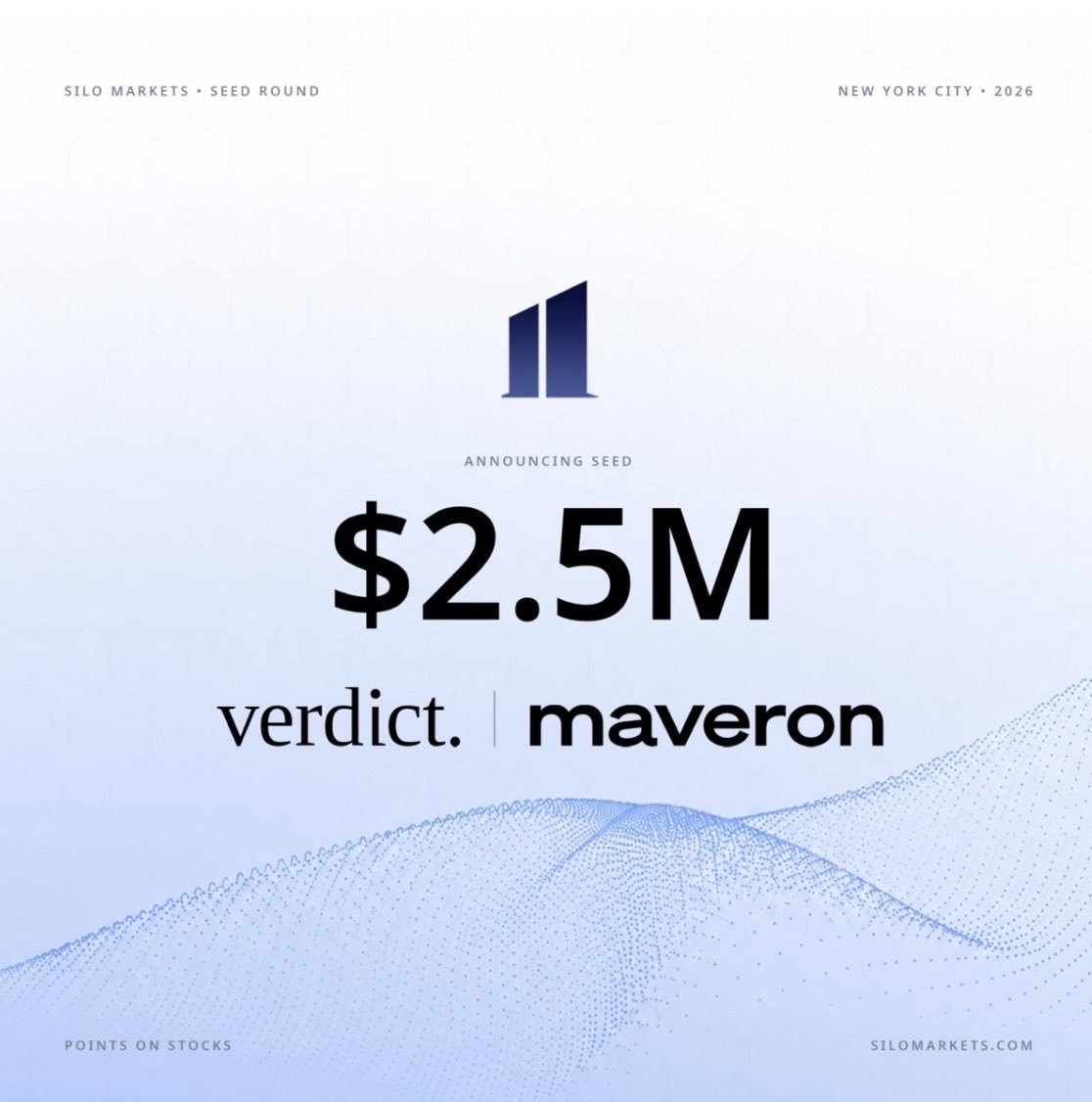
Silo’s insight: what if consumers earned points for building wealth instead of spending money?
Members earn rewards for holding stocks, ETFs, and retirement accounts - including assets transferred from existing brokerages.
Excited to partner with @HariharanJay and the Silo team, pumped to co-lead this with friends @bonatsos and @michaelfertik
1
2
15
2,261
May 28
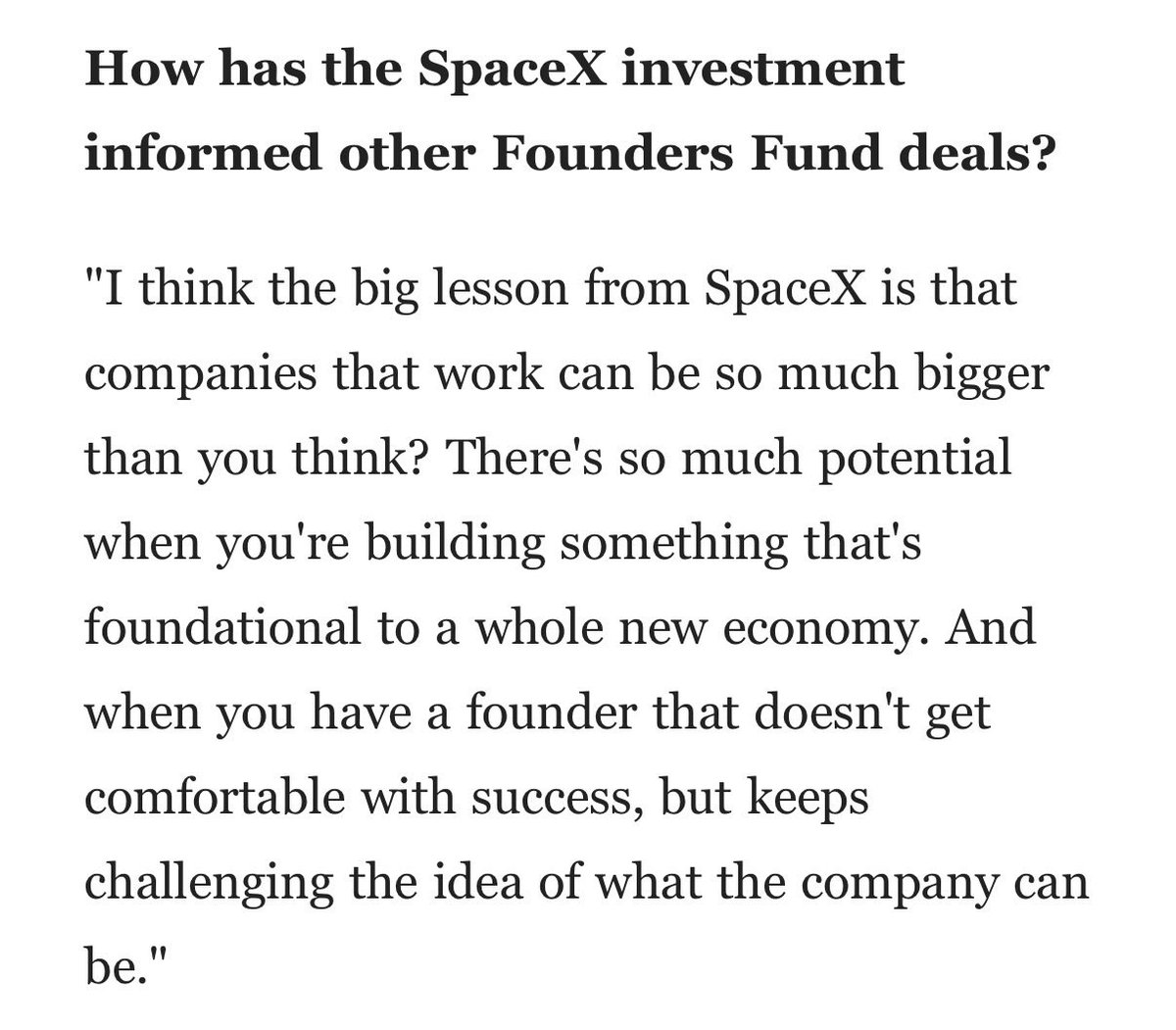
Really liked this answer from @ScottNolan on his biggest lesson learned from @SpaceX
1
1
10
651
May 20
This one's personal for me. A few years ago, I was managing my dad's care. I had a folder full of MRIs, CDs, and notes scribbled in waiting rooms. I realized (and have never forgotten) that the people who are sickest in our healthcare system are the ones we ask to do the most.
It bugged me. Now, Kin fixes that problem and lets doctors and patients just talk and listen.
May 18

Kin Health raises $9M to build an AI notetaker for patients techcrunch.com/2026/05/18/ki…
2
15
2,593
Apr 28
Huge thanks to @TheFullRatchet and @TFR_Pod for having me on! We got into @Maveron’s Consumer 2026 data, why sentiment and spending keep telling different stories, and what it means for the next generation of consumer companies
Apr 27

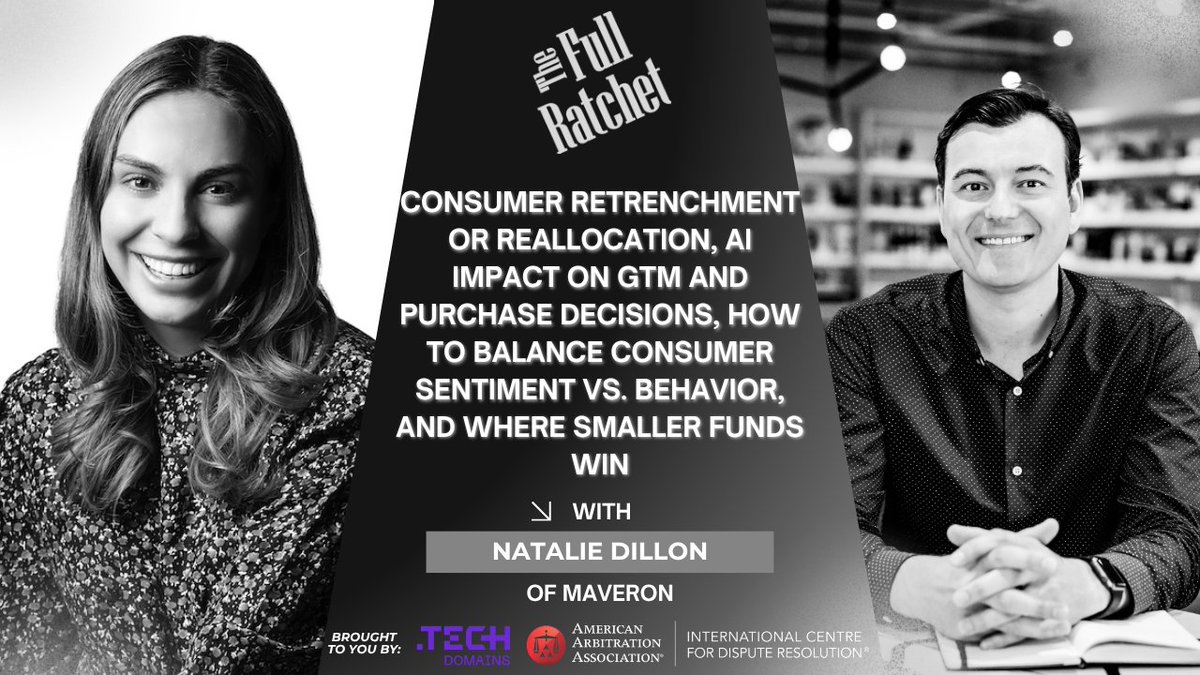
Consumer investing isn’t dead, it’s misunderstood. I sat down with @ntdillon of @Maveron to discuss AI adoption, marketplace liquidity, demographic shifts, and why the next wave of consumer startups may be bigger than expected. Episode 507 is live - link in our bio.
2
472
Mar 19
the spreadsheet your team uses today will look unrecognizable in a few years
@annarmonaco and Paradigm are a big reason why - @paradigmai just dropped Workflows, which hooks into your CRM, Slack, and email and runs your research automatically
worth a look
Mar 19

Today we’re launching the newest version of @paradigmai
When we started Paradigm, the goal was never to tack AI onto existing spreadsheets. It was to build a new type of interface that does the work for you.
Now we’re pushing that vision much further.
Workflows turn Paradigm into a system that runs research processes for you.
Connect your CRM, existing spreadsheets, Slack, email, and internal data, and let Paradigm continuously run the research workflows your team already does.
Same intuitive interface. But now a system of action.
If you tried Paradigm before, try it again.
Manual research is now a competitive liability.
3
4
1,108
Mar 12
5/ "Vertical AI wins will come from workflow capture, not just AI features. Codify an operating playbook, and own a strong eval loop"
We've been mapping agentic commerce for the past year. The pattern is consistent: the winners don't start with a platform. They start with one repeatable decision a brand needs to make faster every week.
Wholesale PO processing. Deductions reconciliation. Retailer portal compliance. One painful, high-frequency workflow, automated end to end.
Then they expand. Workflow by workflow. Module by module. Until they are the operating system.
Mar 6

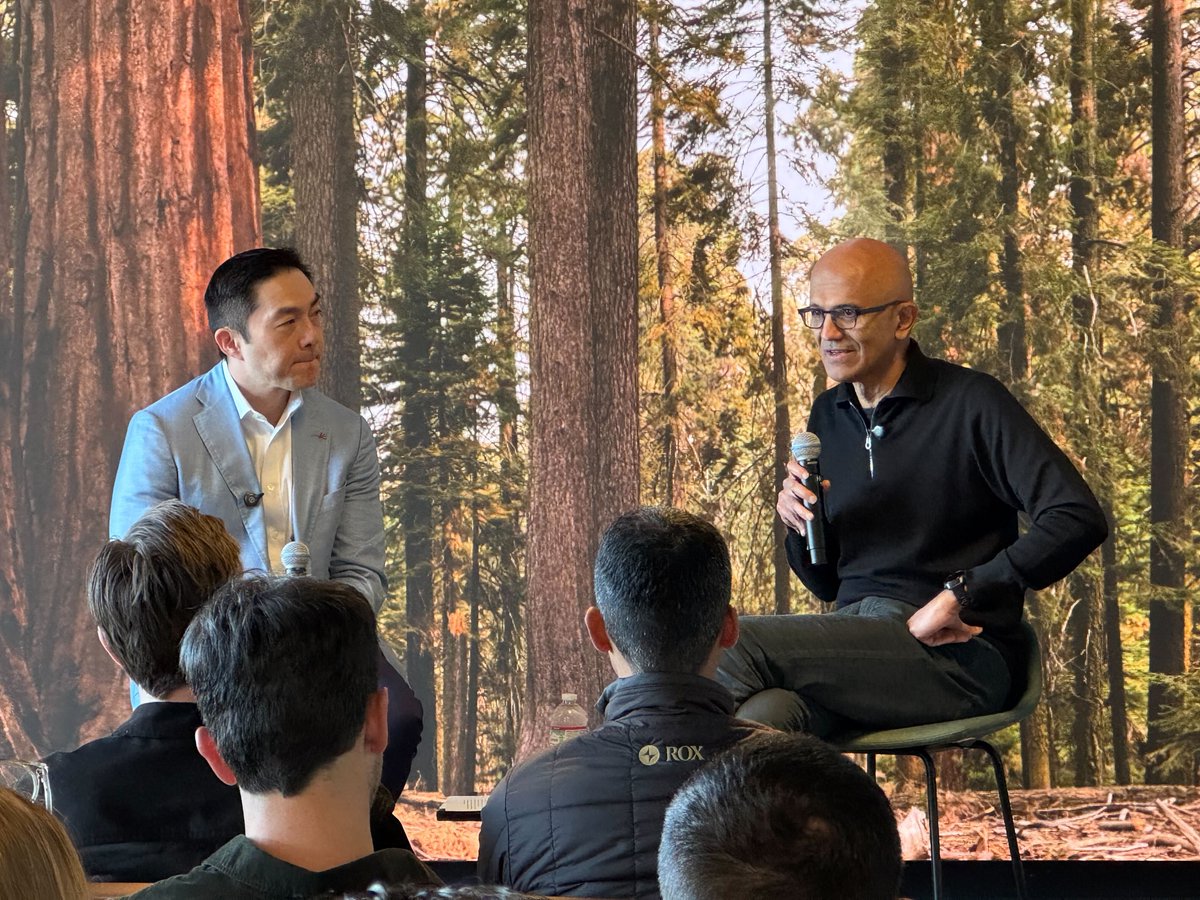
Grateful to @satyanadella for spending time with some of the best AI founders and builders at our inaugural AI Builders Salon. A few insights that stuck with me:
1/ The hardest transformations for incumbents are "new-new" categories, where they have no natural reason to win.
2/ Conviction compounds quietly, then shows up all at once. Microsoft's $1B investment in OpenAI was rooted in decades of focus on NLP, and a belief that transformers and scaling laws reflected a real inflection point.
3/ Concentrate capital and talent behind strong teams with strong beliefs. Do not spread resources evenly for the sake of fairness.
4/ Cooperation and competition can coexist when partnering during platform shifts. The goal is durable, long-term win-wins, even when there is overlap.
5/ Vertical AI wins will come from workflow capture, not just AI features. Codify an operating playbook, and own a strong eval loop.
6/ We are heading toward artifact explosion. As document and code generation becomes on demand, the constraint shifts to reviewing, validating, and refining what agents produce.
7/ Tokens are becoming a real budget line. Empower your top builders, but install the right guardrails to avoid scaling low-quality output.
Thanks to @sonyatweetybird and the @sequoia team for launching this new forum. Looking forward to the next one.
2
2
12
4,444
Mar 5
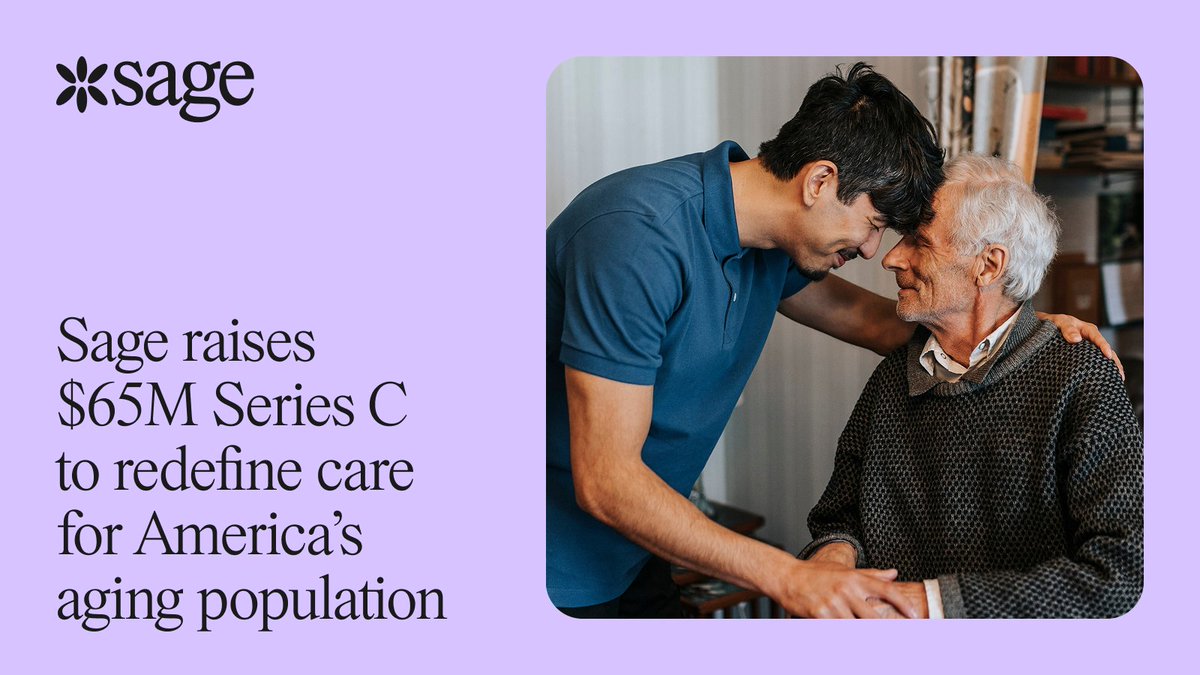
Since 2023 when I led Sage's Series A, we've believed this team is building the best - and most accessible - technology in senior care, and the macro forces (shortfall of caregivers growing senior population) make that investment more important every year.
Excited for this next chapter, and super proud of this team! lnkd.in/eMVfQnJU
1
11
1,626
Mar 3
Make the internet fun again. Lore is for the fan obsessed. Go down the rabbit hole of your fandom with Lore :) for me that's Dune, Star Wars, and Harry Potter.

1
7
1,238
Mar 2
AI awareness is near-universal, but most consumers are still using it with fairly limited functionality. The real opportunity is bridging them to more sophisticated use.
I don't think we talk enough about the role of *play*. Consumers are more forgiving with creative tools, they experiment, share, and come back. Snap exploded when it introduced dog ear face filters. ChatGPT surged user growth with the Ghibli image generation trend. Instagram put Photoshop in a single swipe.
Sometimes it's okay to take play seriously :)
Mar 2

- AI Doomerism gaining traction b/c the state of the art is moving too fast
- Some people have seen god in that bleeding edge
- Panics & writes doomerism
- We need more "bridge builders" to translate fraction of the bleeding edge to consumers
- GIANT opportunity in that space
1
6
920

Airbnb CEO @bchesky says more AI founders should be starting consumer businesses.
"I'm on the board of Y Combinator. 87% of companies are enterprise companies per batch."
"Enterprise is awesome... but the biggest prize is consumer. That is what's going to reach daily life for billions of people."
"Think about all the little parts of daily life that are kind of annoying. Pay attention to whoever's in your life and ask: 'How could their daily life be a little bit easier?'"
54
76
1,048
165,760
Feb 24
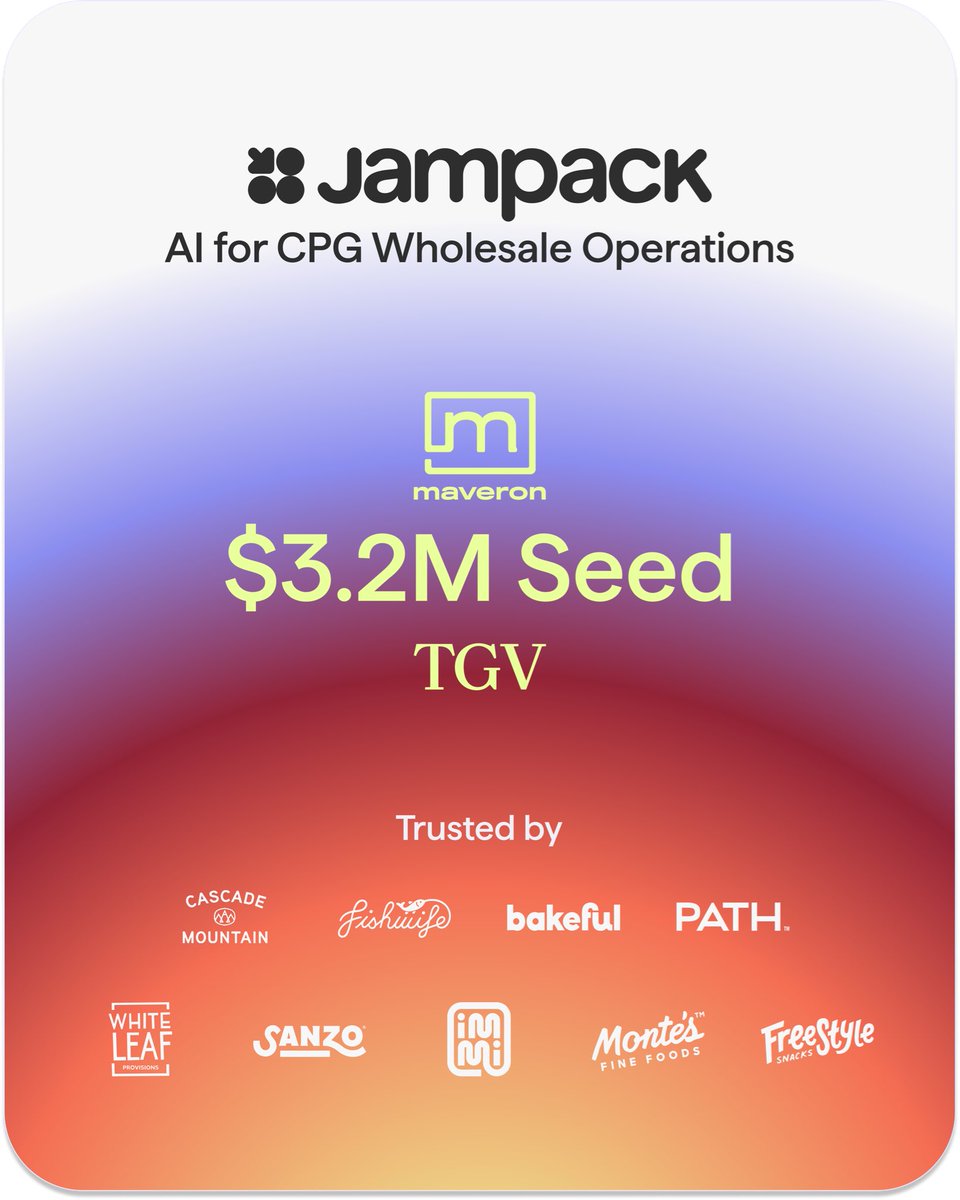
Managing wholesale at scale is brutally complex. Every new retail door adds POs, carriers, compliance, and
coordination across too many systems.
I’m excited to partner with Jampack building agentic solutions by and for CPG ops teams, already loved by category-leading brands like Fishwife, Ghia, and immi
If you're an engineer (we're hiring!) or work at a CPG brand and want to earn time back, DM me :)
8
14
1,425
Feb 24
Whoop and others will follow.
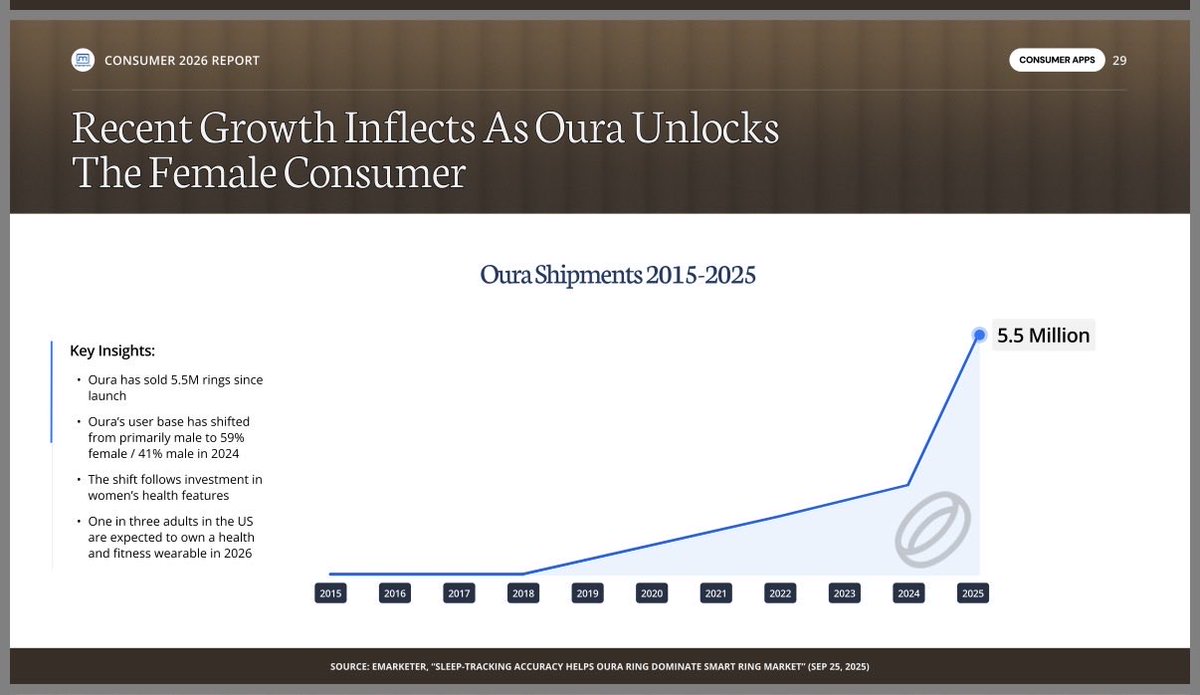
Women’s health has been a huge driver of growth for Oura.
Feb 24
Oura launches a proprietary AI model focused on women’s health techcrunch.com/2026/02/24/ou…
1
1
40
12,771
Natalie Dillon retweeted

Feb 20
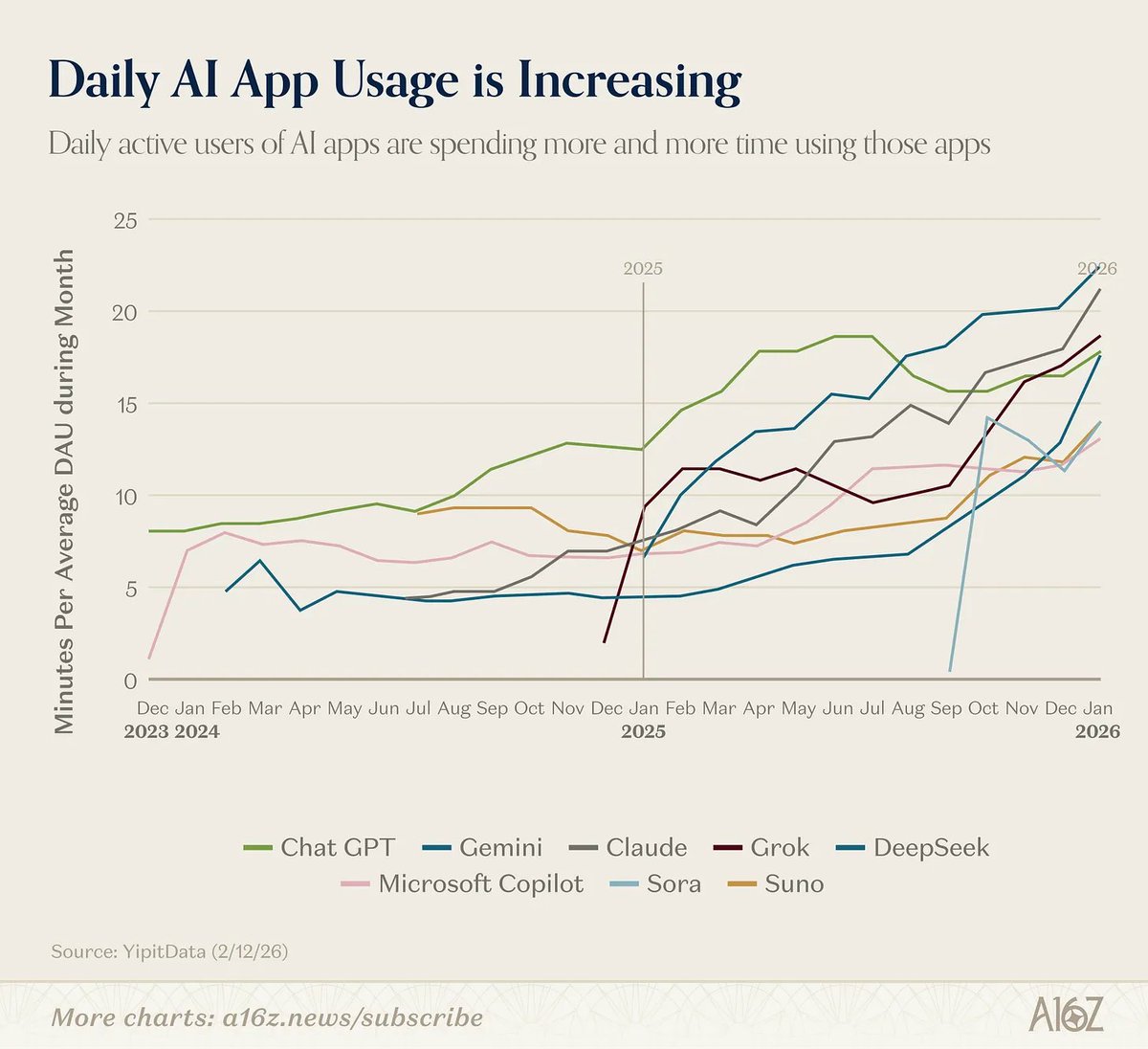
I often get asked how you know a consumer product is "working"
The unique thing about B2C is that for the best cos, metrics actually improve over time/with scale:
- Time on product increases
- Retention curves smile up new cohorts look better
- Organic growth accelerates

Active users are becoming more active
Charts of the week: a16z.news/p/charts-of-the-we…
7
9
55
14,306
Feb 12
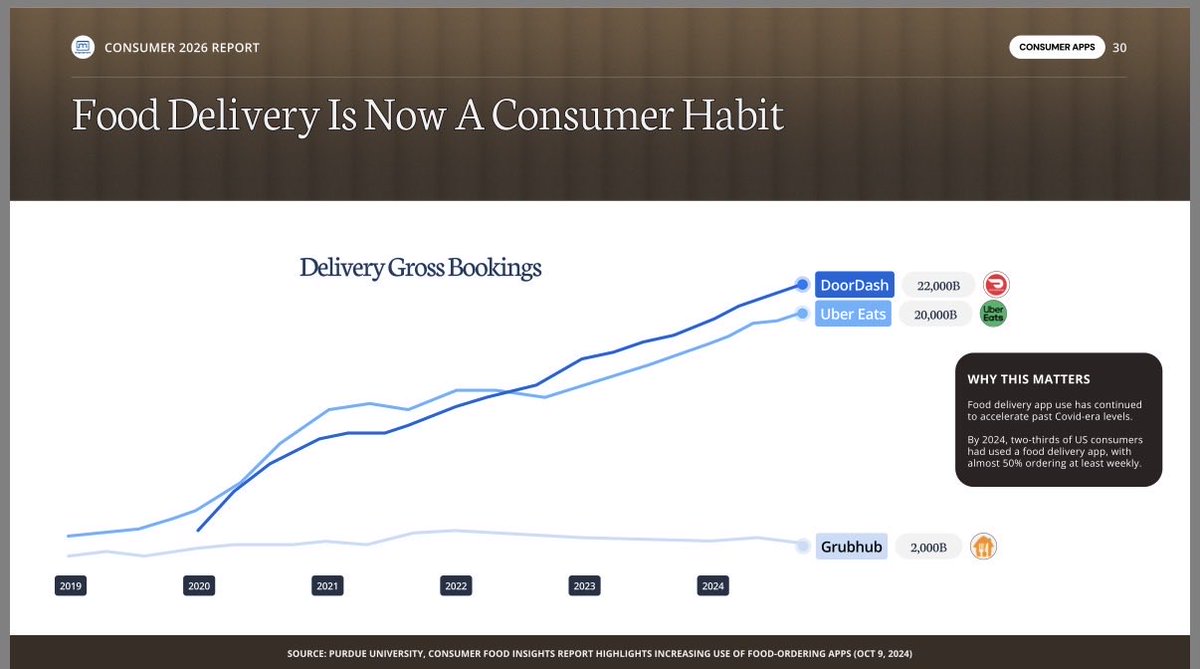
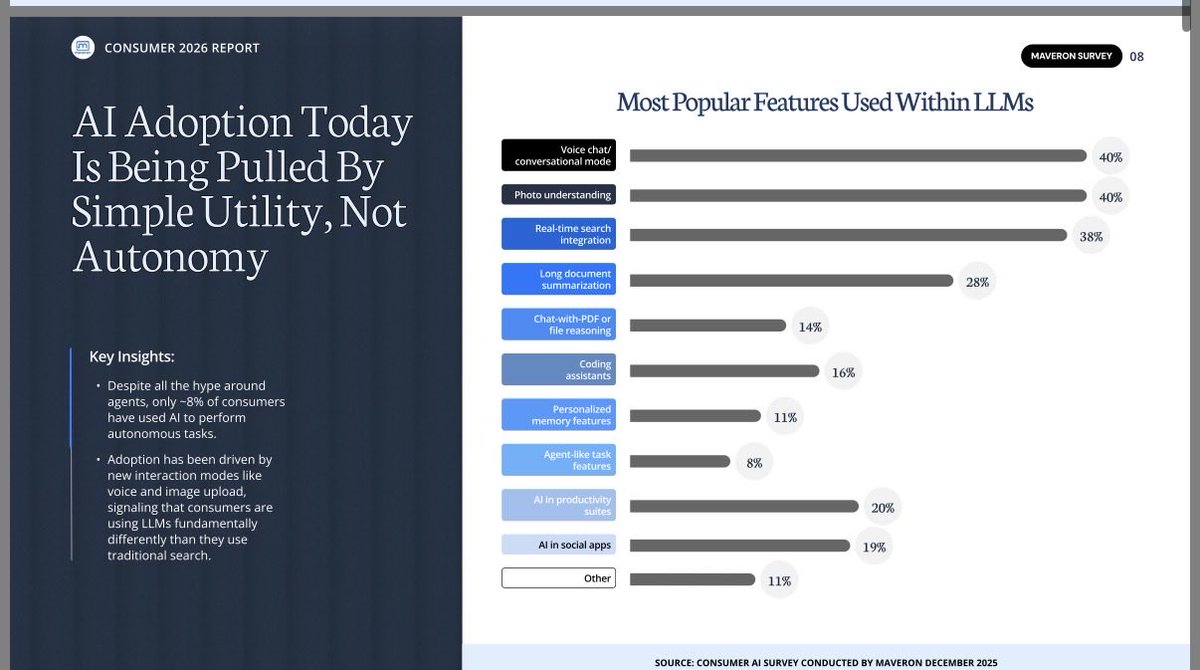
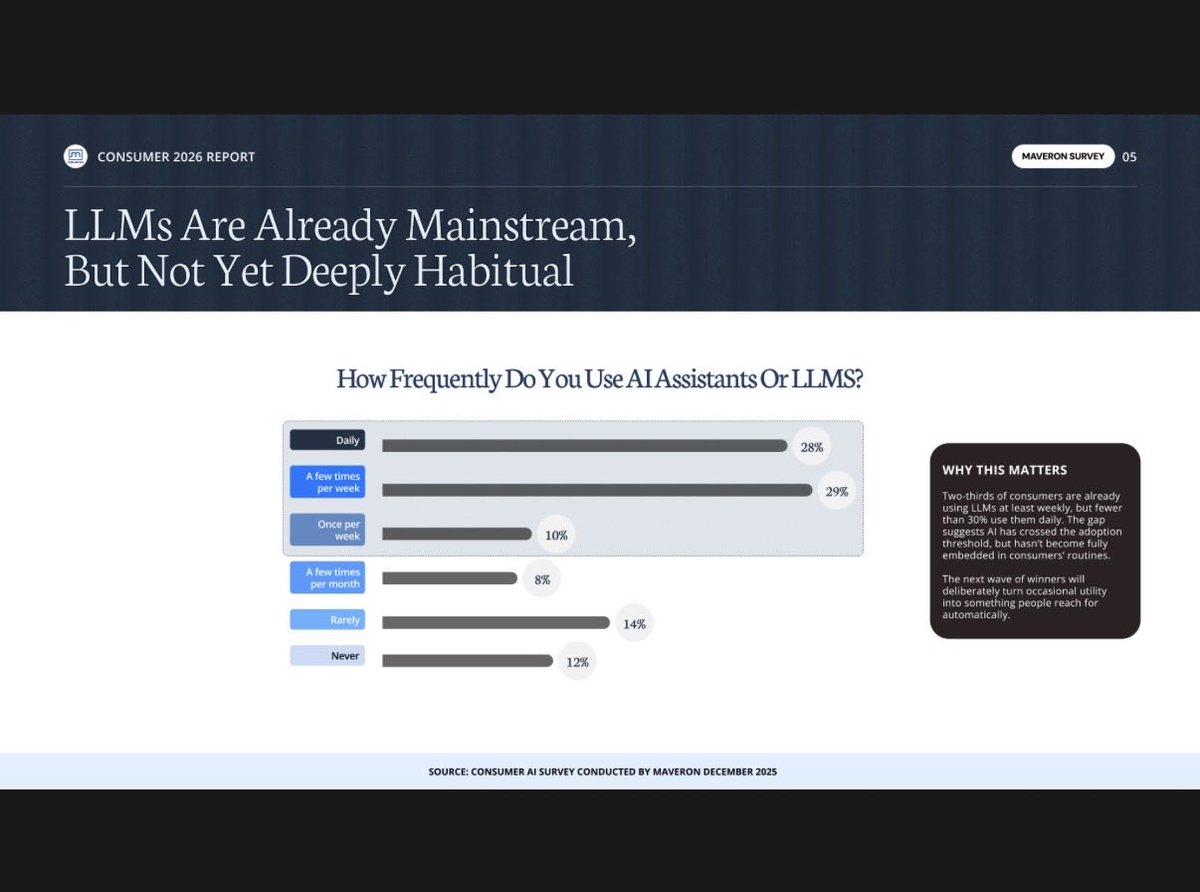
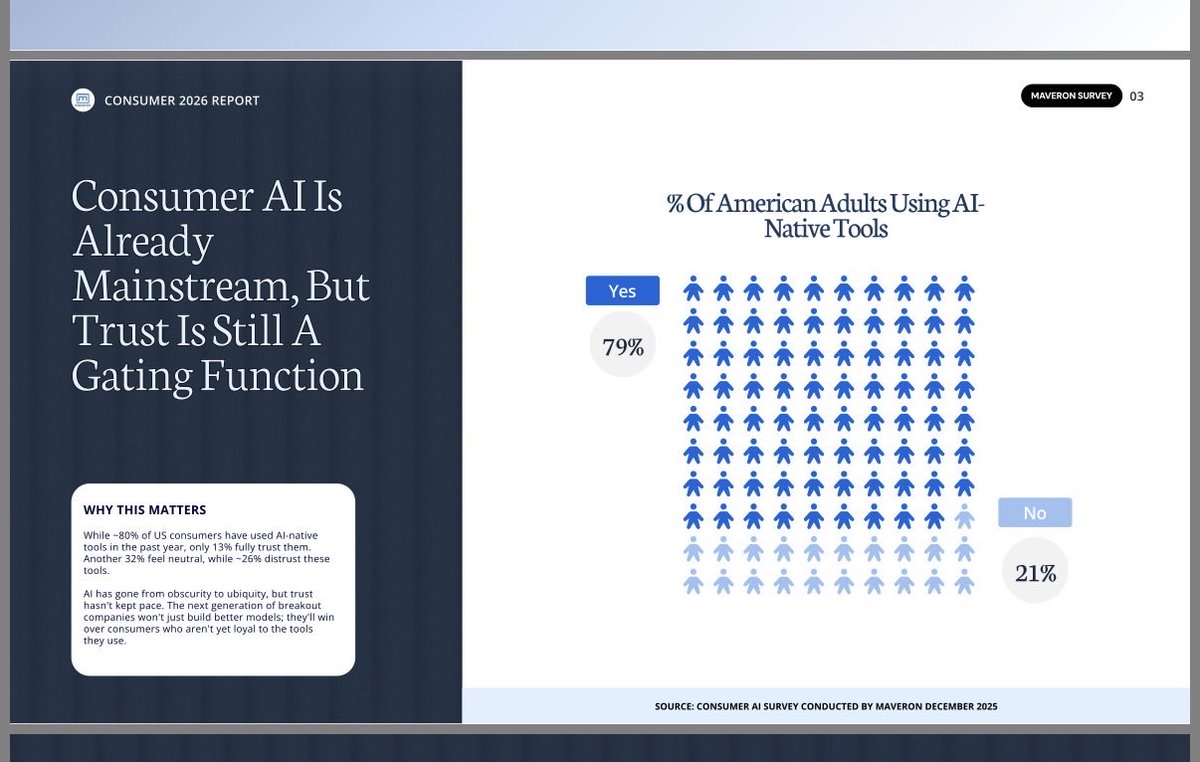
Our State of Consumer report is out, we ran a 400 study of how consumers are actually using AI in their everyday lives
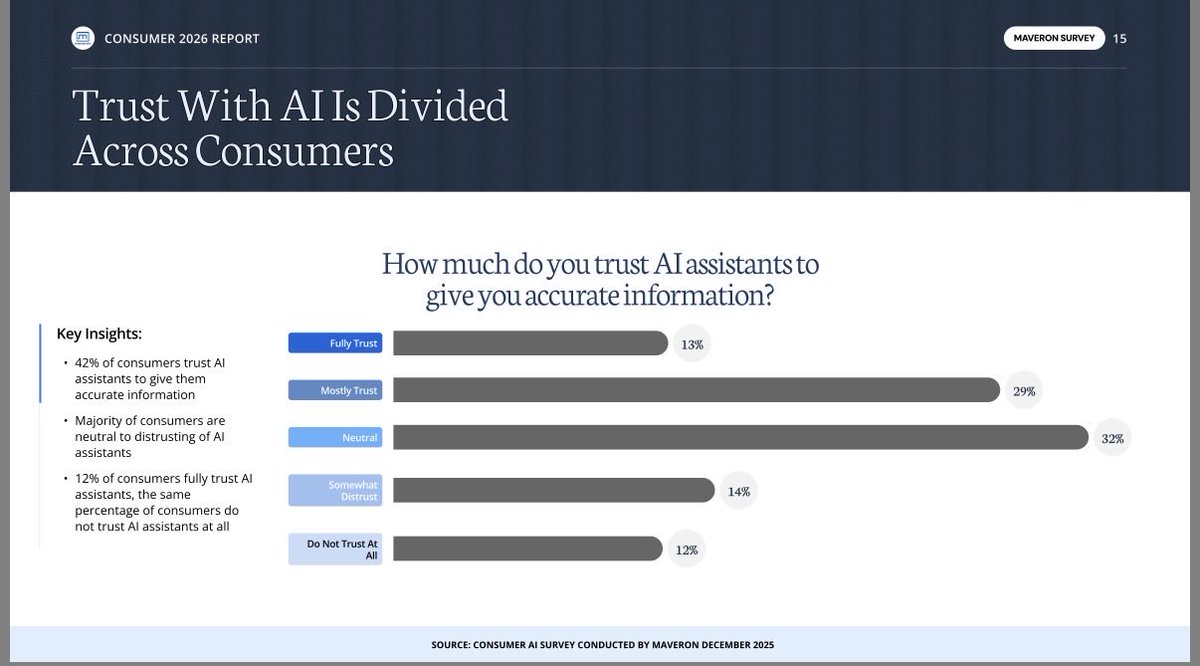
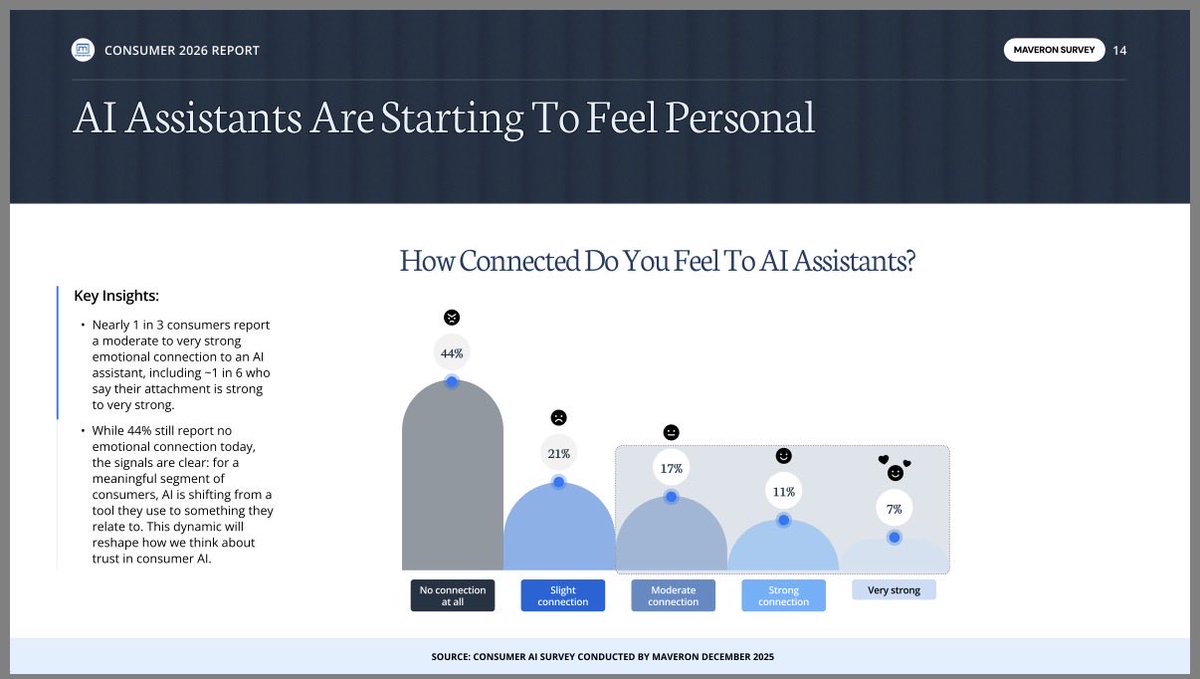
TLDR most usage is basic, deep habits still forming, trust divided. Capability ahead of behavior
30% use LLMs daily
8% use agents
26% distrust AI tools
🧵🧵
2
3
410
Feb 12
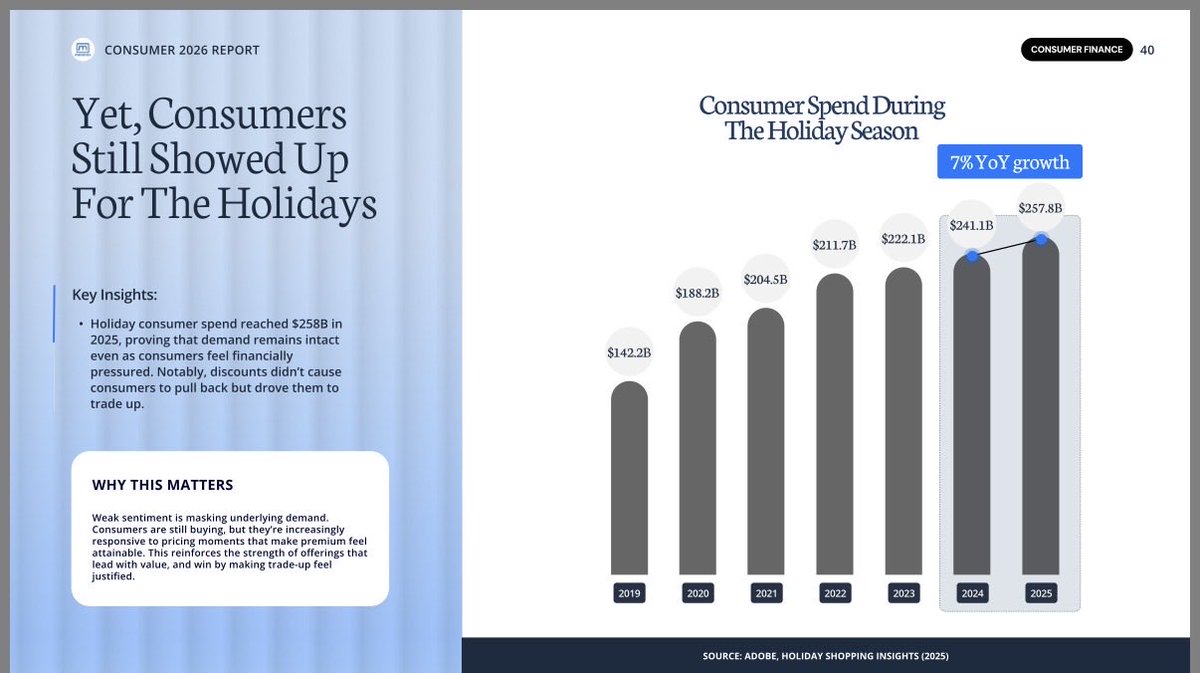
12/ Despite pressure, consumers still showed up.
Holiday spend reached $258B in 2025, up 7% YoY
Discounting shifted mix rather than suppressing demand.
Consumers are selective, not retreating.
1
1
114
Feb 12
13/ if any of this sparks a thought or you have a question, love to hear it.
The survey data was 400 Americans, skewing working age, educated, largely full time employed, economically diverse, geographically broad, and evenly split by gender.
1
89