
Joined November 2023
- Tweets 1,279
- Following 349
- Followers 8,356
- Likes 4,118
627 Photos and videos

Ricardo Sarraf retweeted

3
6
78
5,992

Jun 11
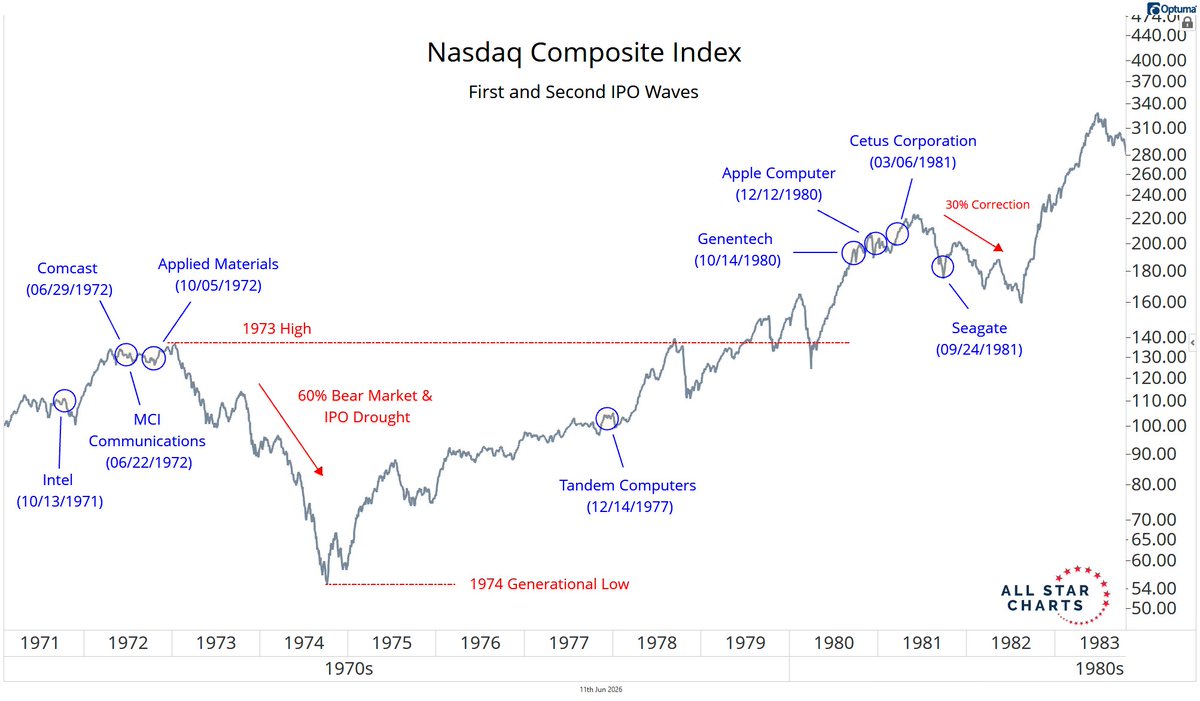
With the SpaceX $SPCX IPO tomorrow, I thought it an appropriate time to look back at the first two great IPO waves on the Nasdaq.
The Nasdaq went live in 1971, the first electronic market, and the venue where smaller and more speculative companies listed when they couldn't qualify for the NYSE.
The first wave rode the early-'70s hardware boom. Intel, Comcast, MCI Communications, and Applied Materials all came public in 1971–72, right into the 1973 top.
The Nasdaq then fell ~60% into the 1974 generational low and the IPO window shut. A multi-year drought followed.
The second wave arrived as the index reclaimed its old highs at the turn of the decade, and the companies coming public had changed.
Genentech listed in October 1980, the first biotech IPO. The stock offered at $35 and traded to $88 within 20 minutes.
Cetus followed in 1981 and raised ~$120M, the largest IPO to that point. Apple and Seagate rounded out the 1980–81 class.
Lesson here? issuance clusters near the highs.
A wave of major tech names is lining up to go public now.
The aesthetic similarities are there... but the scale differs.
Intel, Apple, and Genentech listed as small companies early in their growth. At least relative to the trillion dollar companies looking to offer shares soon.
We shall see. Everyone has or wants to have an opinion on SpaceX. That's fine. I believe the pain trade right now is to wait. Wait and see what happens. React instead of predict. groundbreaking... i know...
6
11
73
13,162
Ricardo Sarraf retweeted
Yields: up or down?
4
3
18
2,636
Jun 8
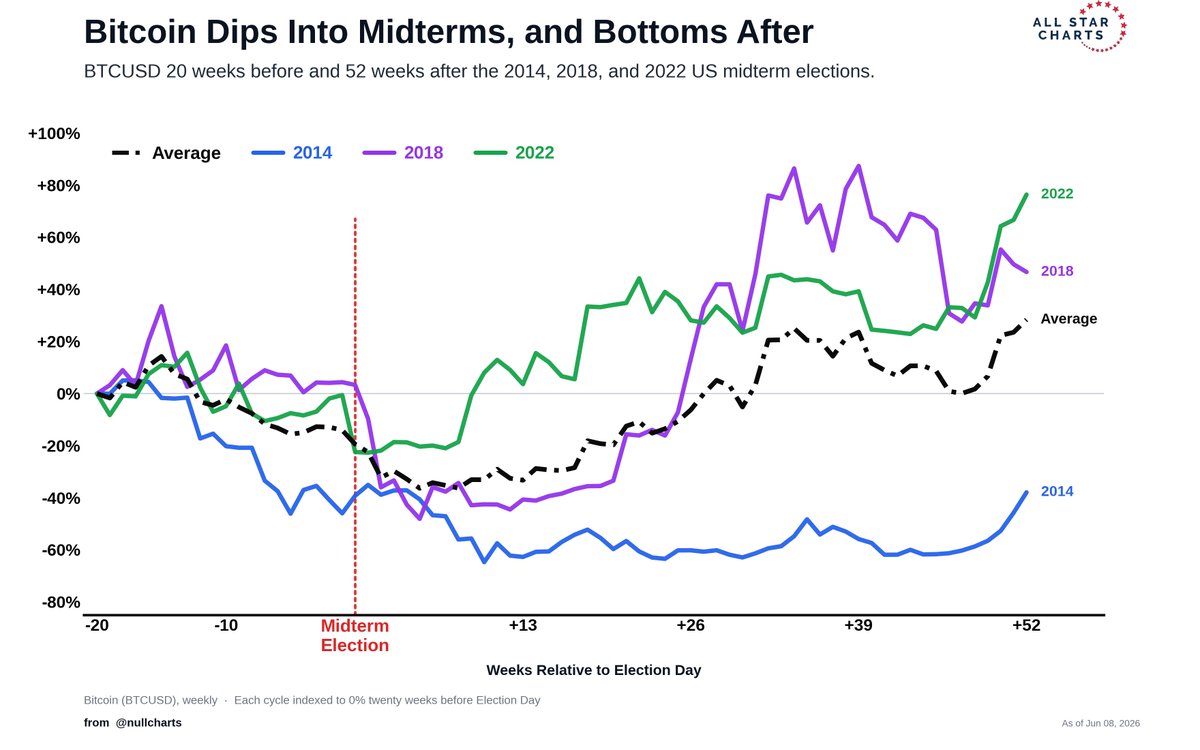
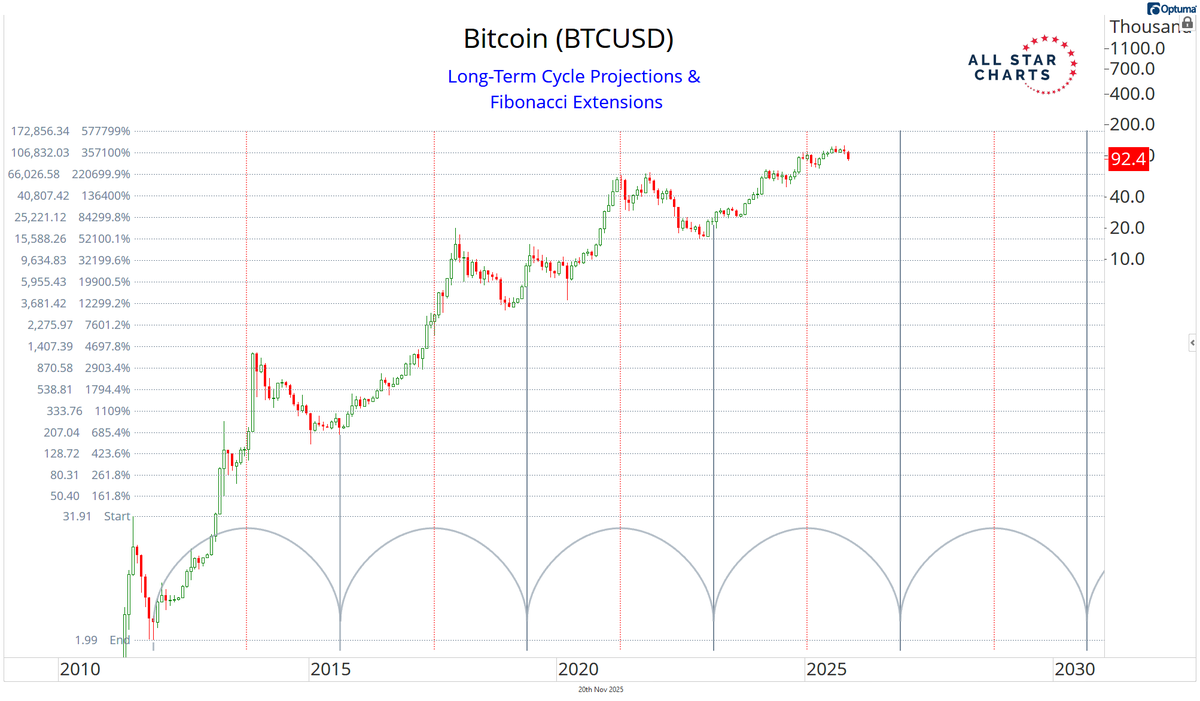
Seasonal good news for the Bitcoin.
With US midterm elections 21 weeks away, let's review the historical pattern.
20 weeks out, $BTC dips into the election — on average -20% by election day.
It bottoms about 5 weeks after the vote, then turns higher.
By 52 weeks out, $BTC was up ~28% on average from where it trades 20 weeks ahead of the election.
If the pattern holds, we're still a couple months from the low, with the bottom forming around 4Q26.
Caveat: only three data points (2014, 2018, 2022), so take it with a grain of salt. But it's on my radar.

2
27
2,551
Jun 8
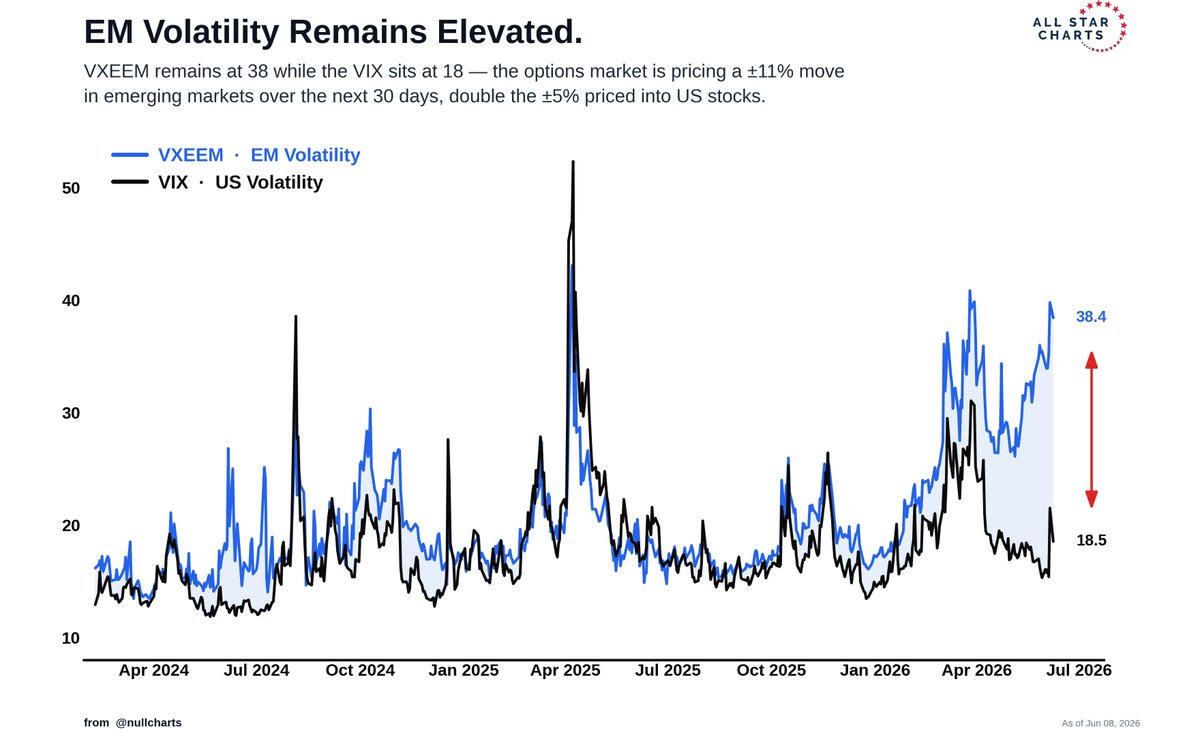
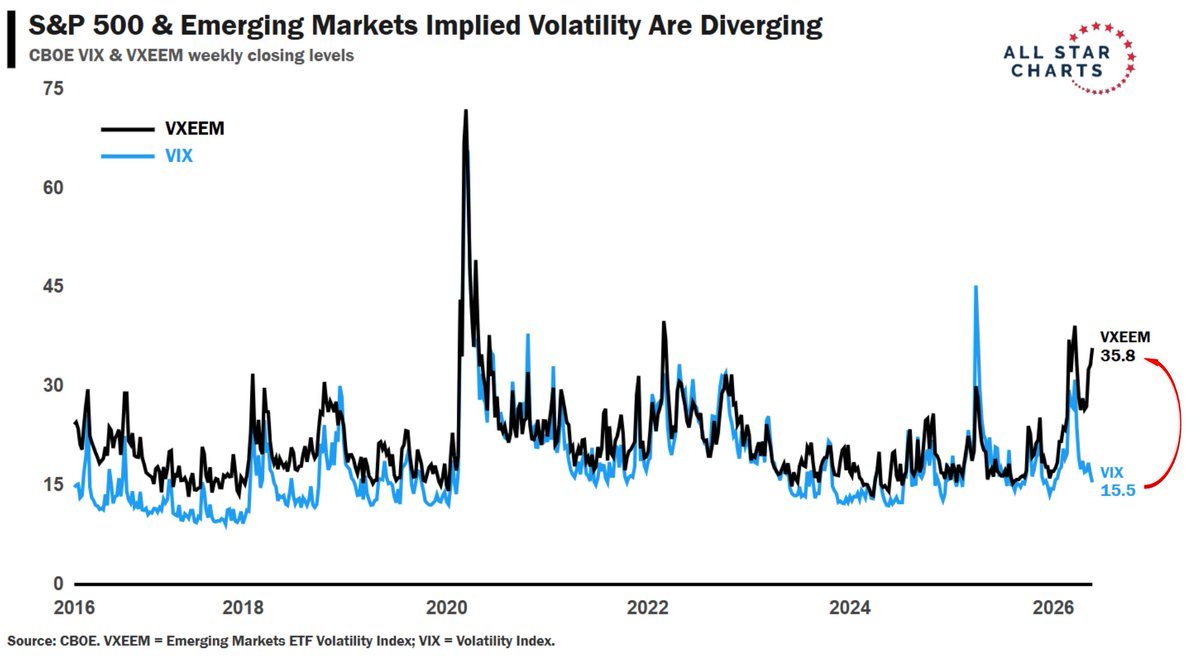
Emerging Markets vol $VXEEM remains elevated.
Friday's $VIX did little to close the gap.
The options market is pricing a ±11% move in emerging markets over the next 30 days, double the ±5% priced into US stocks.
$EEM is 50% Taiwanese and South Korean stocks... nearly half the index is mid-parabolic advance.
Nothing's broken yet, the spread here just captures the elevated two-way risk in the Asian hardware markets.
May 30
Today closed at the widest spread between US $VIX and EM $VXEEM implied vol in over a decade.
EM vol is spiking, US vol is unwinding.
Under the surface, $EEM is 47% Taiwan and South Korea... nearly half the index is mid-parabolic advance. Perhaps that's the driver?
Would love to see @CBOE publish VXEWY in the future... like they do for Brazil $VXEWZ.
2
19
2,422
Jun 8
Emerging Markets vol $VXEEM remains elevated.
Friday's $VIX did little to close the gap.
The options market is pricing a ±11% move in emerging markets over the next 30 days, double the ±5% priced into US stocks.
$EEM is 50% Taiwanese and South Korean stocks... nearly half the index is mid-parabolic advance.
Nothing's broken yet, the spread here just captures the elevated two-way risk in the Asian hardware markets.
May 30
Today closed at the widest spread between US $VIX and EM $VXEEM implied vol in over a decade.
EM vol is spiking, US vol is unwinding.
Under the surface, $EEM is 47% Taiwan and South Korea... nearly half the index is mid-parabolic advance. Perhaps that's the driver?
Would love to see @CBOE publish VXEWY in the future... like they do for Brazil $VXEWZ.
3
13
2,639
Jun 5
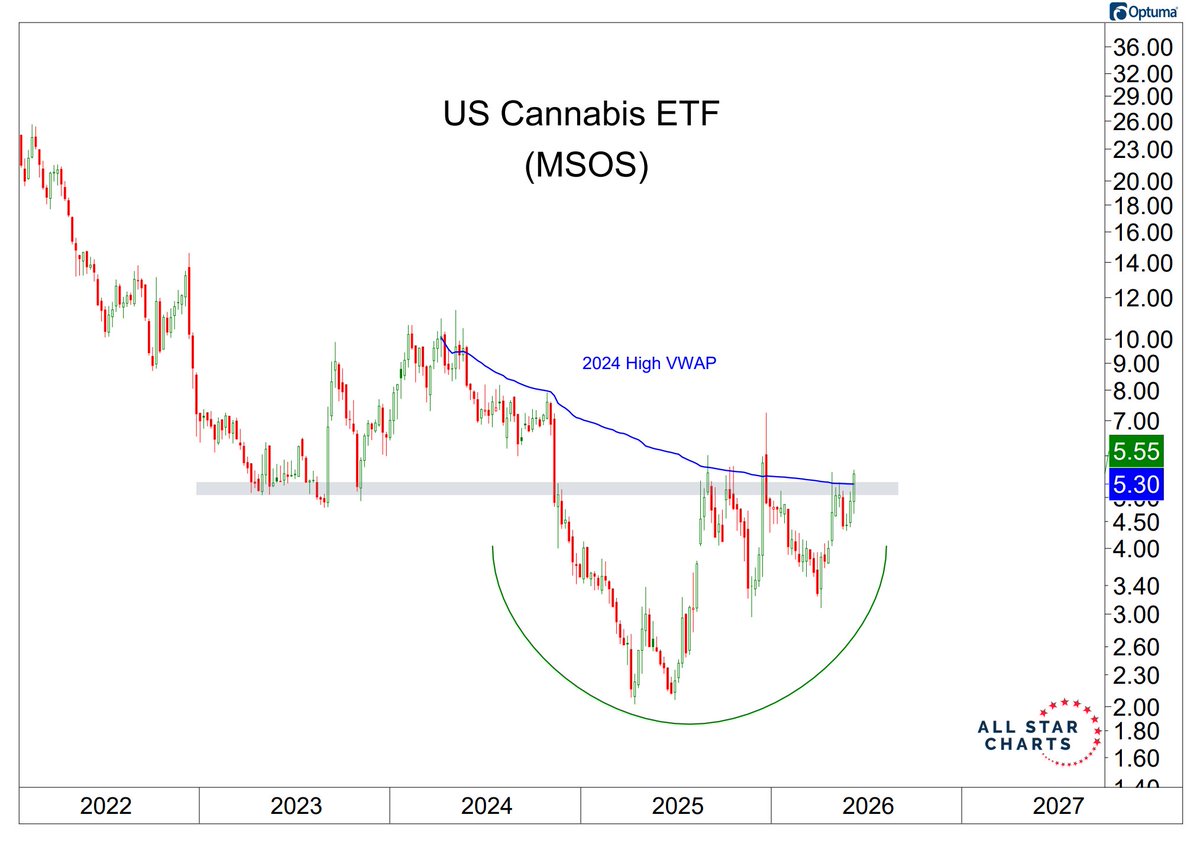
Always worth scanning for relative strength. Especially on big down days...
Today, the Pure US Cannabis ETF $MSOS stands out, up nearly 10%.
Weed stocks have historically been some of the most value destroying industries for investors.
Now, $MSOS is testing the volume weighted average price anchored to the 2024 highs... after having carved out an 18-month reversal base.
If bulls can reclaim it, the path to higher prices opens up.
4
5
43
4,658
Jun 4
great chart

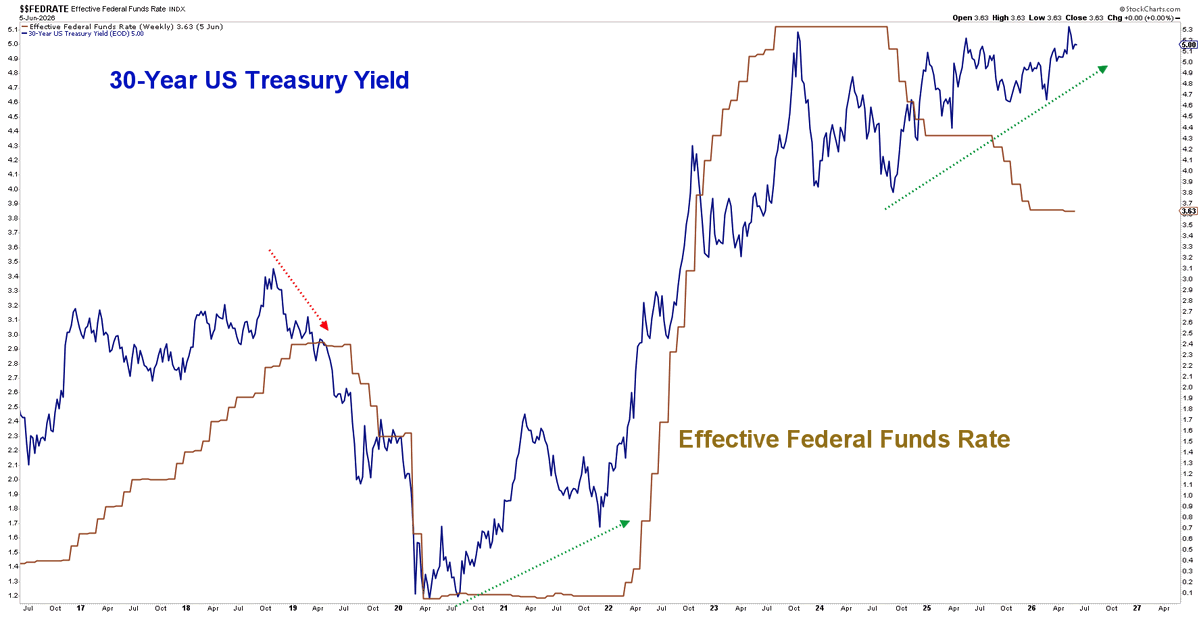
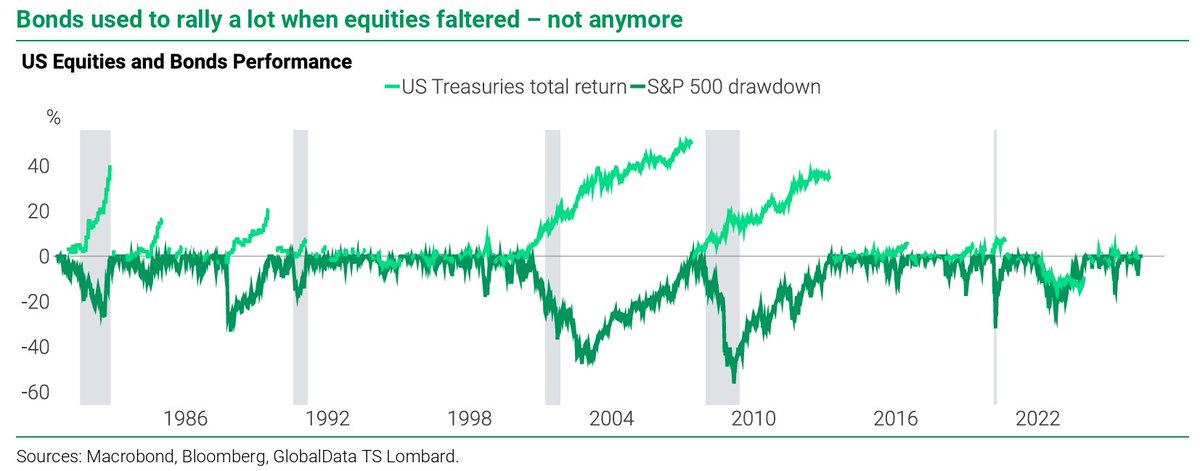
Central Banks are unlikely to cut rates below neutral unless confronted with a recession. This would severely hamper the ability of bonds to rally in a generic risk-off environment @Daniel_VonAhlen
1
15
3,398
Jun 3
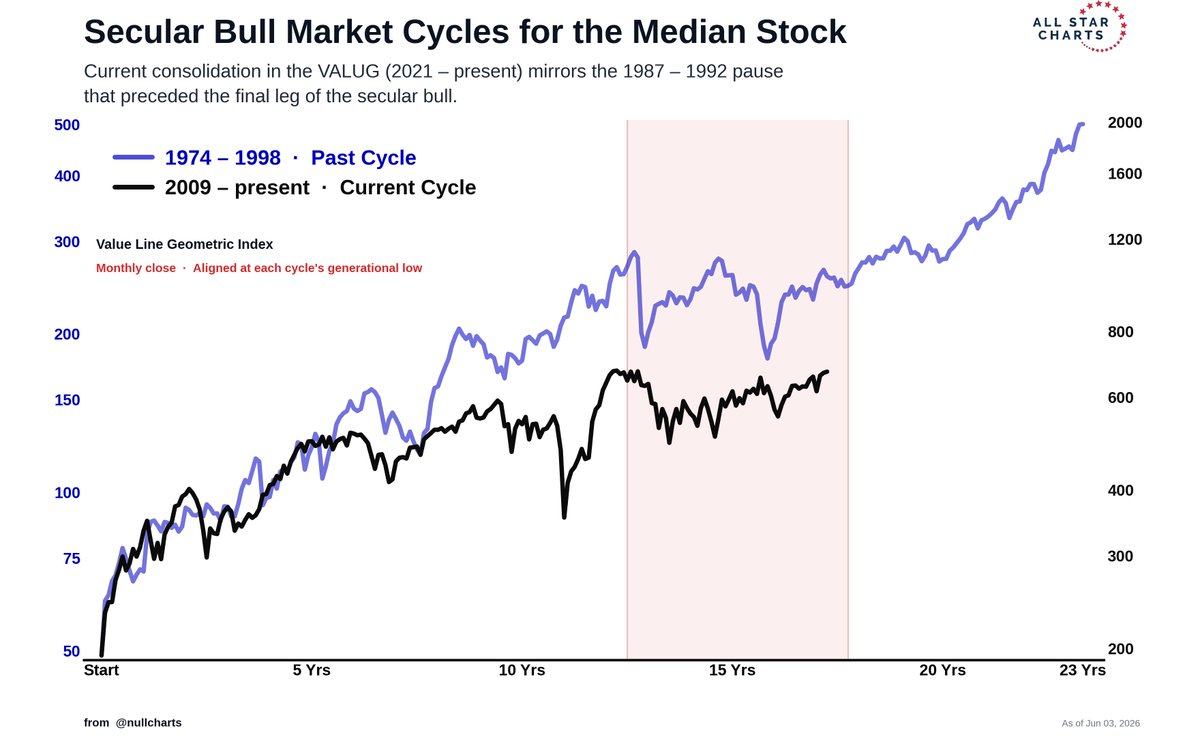
The major indices keep making new highs, yet the median US stock has gone nowhere for over 4 years.
Line up the current secular bull with the one that began in 1974, and this consolidation comes at a similar shape and place in the cycle as 1987–1992.
Back then, that consolidation set up the launchpad for the final leg higher of the cycle.
If the analog holds, we still have ~5 years left in this secular bull.
History may not repeat, but it often rhymes.
$VALUG
7
11
69
8,896
May 30
Today closed at the widest spread between US $VIX and EM $VXEEM implied vol in over a decade.
EM vol is spiking, US vol is unwinding.
Under the surface, $EEM is 47% Taiwan and South Korea... nearly half the index is mid-parabolic advance. Perhaps that's the driver?
Would love to see @CBOE publish VXEWY in the future... like they do for Brazil $VXEWZ.
1
2
37
7,999
May 30
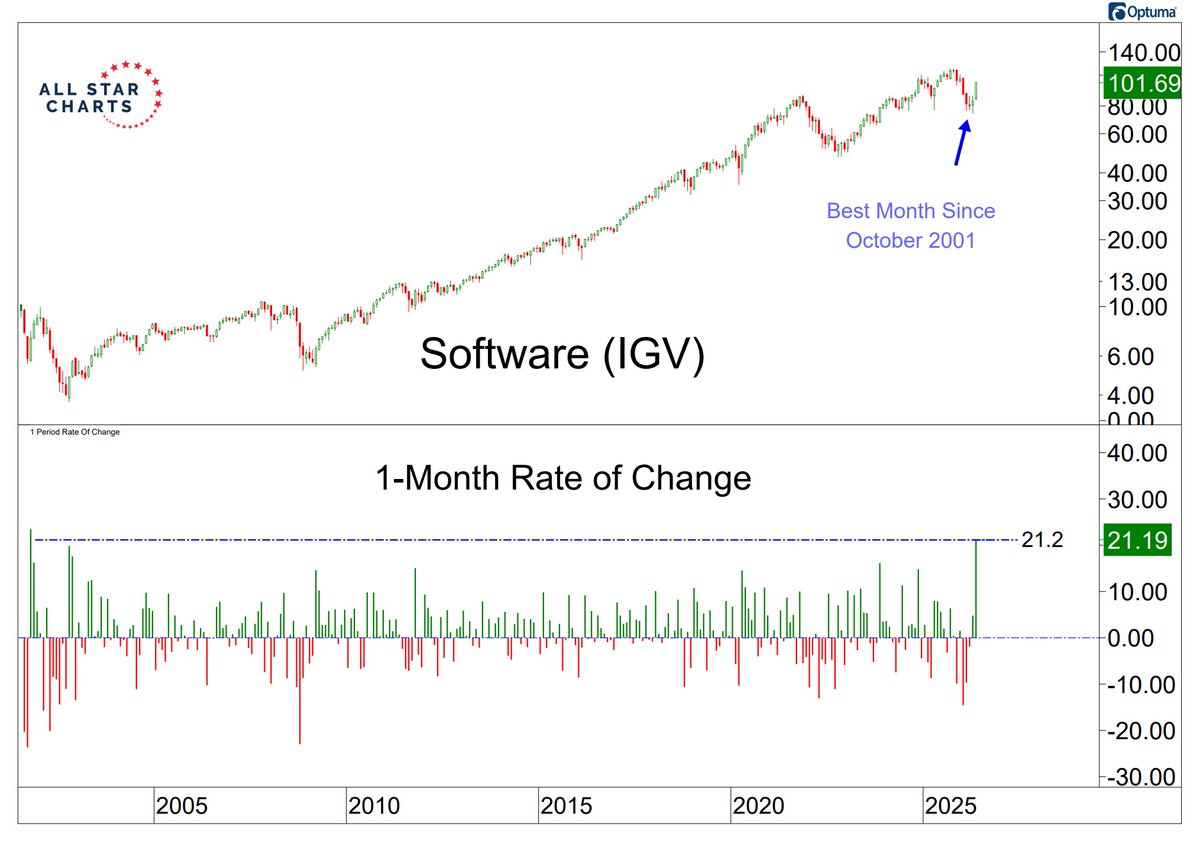
Software $IGV just posted its best month since October 2001.
May was a good time to flip the book.
Undoubtedly there will still be many losers in the space; zombified companies that stay alive while their stocks go nowhere and their business models slowly erode.
But the winners on the other side of this move are going to be massive.
5
9
68
6,136
Ricardo Sarraf retweeted

May 28
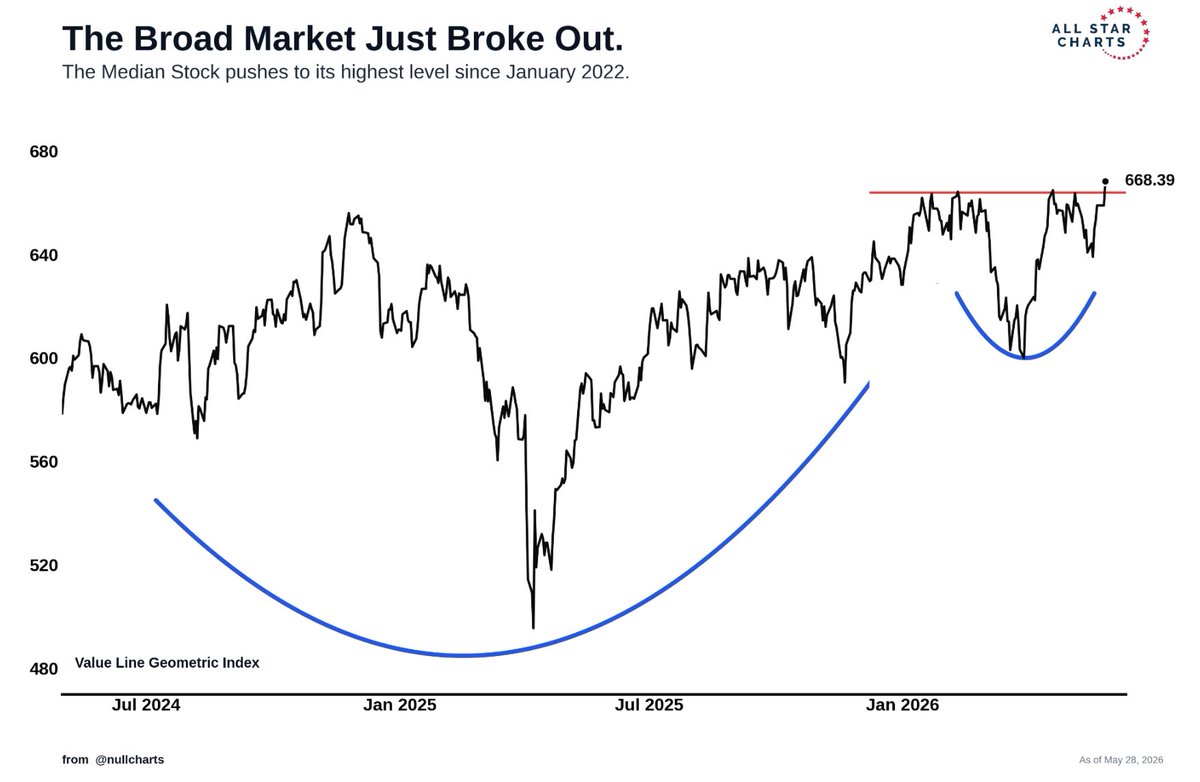
Today's Chart of the Day was shared by @nullcharts
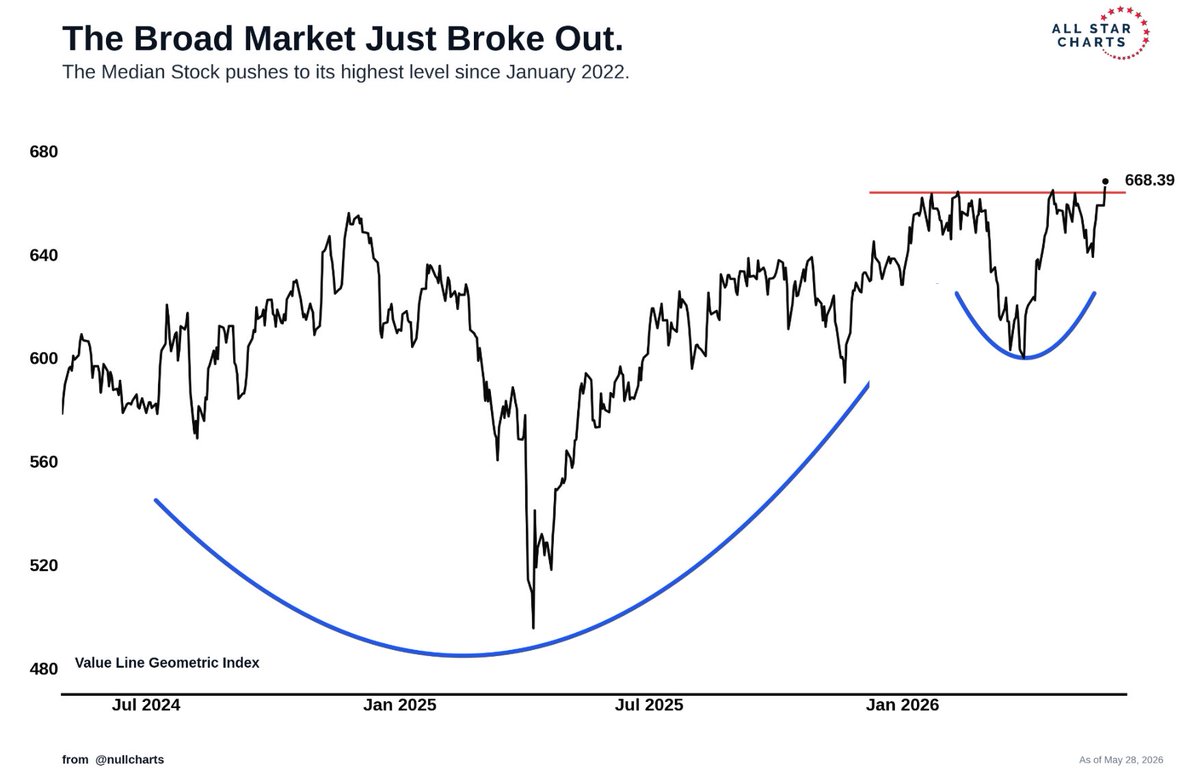
Participation is expanding, as the median stock just pushed to its highest level since January 2022.
Get the full breakdown in today's report plus more great charts. ⬇️
thechartreport.com/05-28-26
2
7
41
14,330
May 28
The Median Stock closed the session at it's highest level since January of 2022.
The Value Line Geometric Index $VALUG is currently 5% away from all-time highs.
5
7
36
3,620
May 28
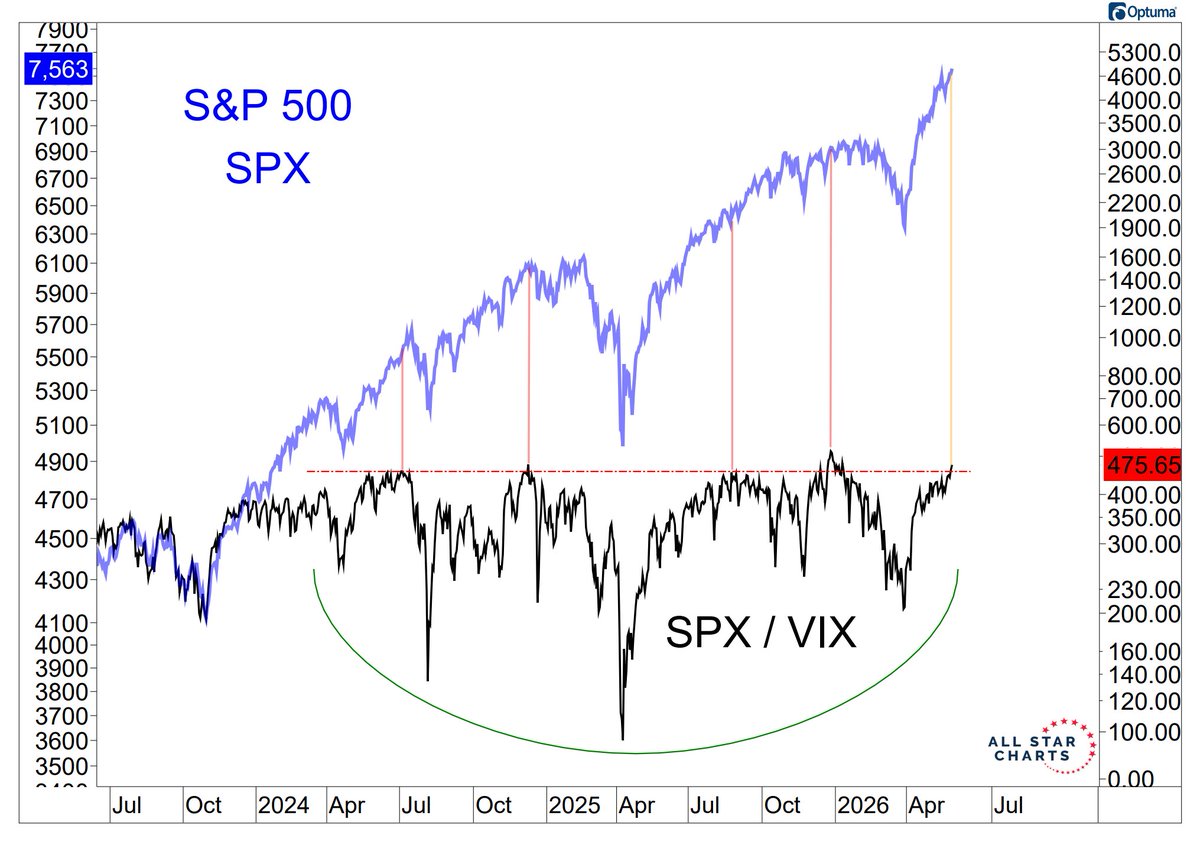
The SPX/VIX has failed to break above the 460 level a few times this cycle. Every tag of these highs marked the start of a corrective wave.
Could this time be different? The market has been rewarding plenty of risk-on and speculative areas.
If this ratio breaks out, it means implied volatility is continuing to collapse and equities remain in their uptrend.
I'm saying things could get more fun. I know... even more fun than right now... Buckle up
$VIX $SPX
8
18
104
12,625
May 27
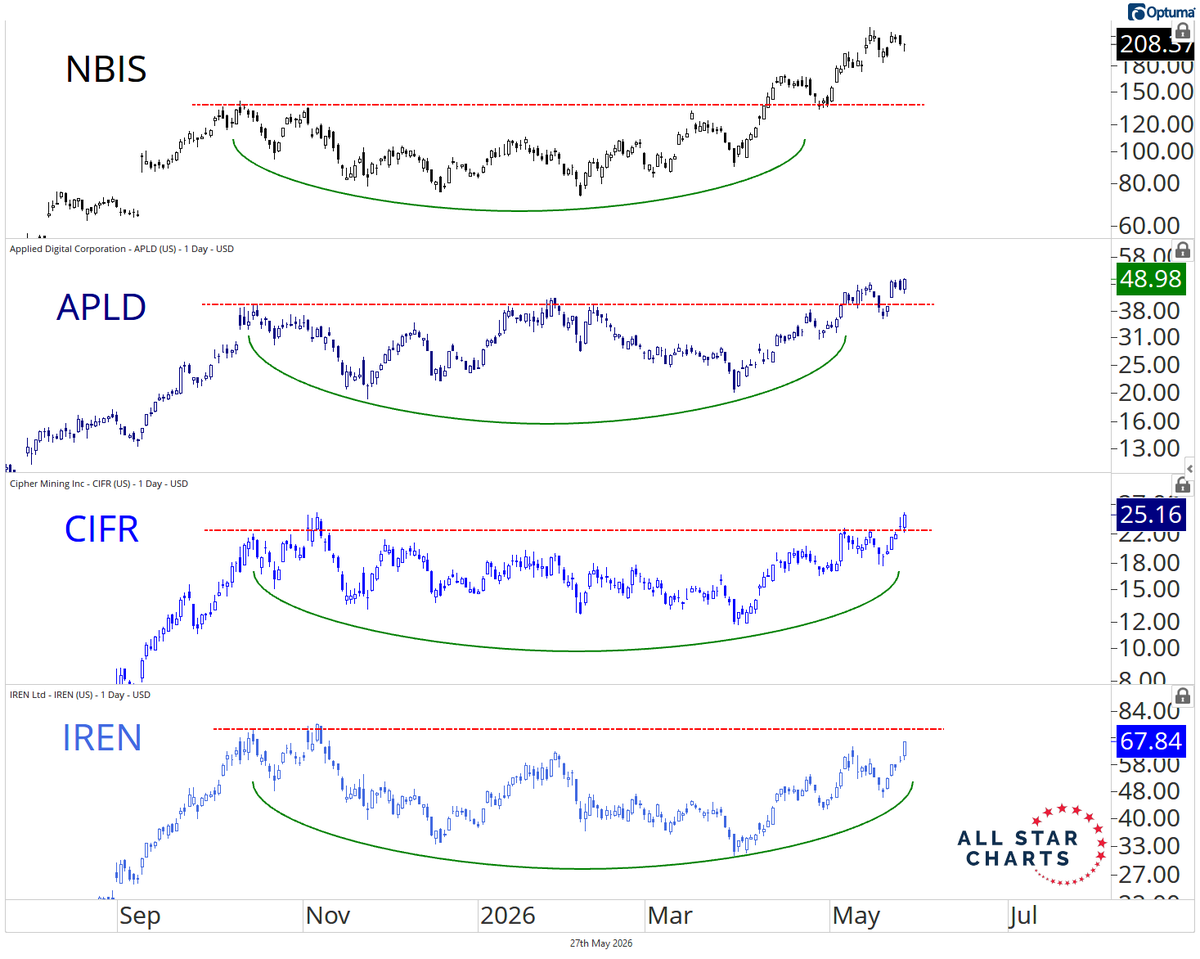
In the so-called "neocloud" space, Nebius $NBIS is the leader.
It operates a model many are trying to emulate.
Applied Digital $APLD, Cipher Mining $CIFR, and IREN $IREN are all completing the same pattern $NBIS already broke out of.
In the near term, the catch-up potential for the BTC miners pivoting hard into compute is significant.
Their optionality on the AI compute pivot has given them a higher beta to this theme historically...
1
6
70
5,524
May 25
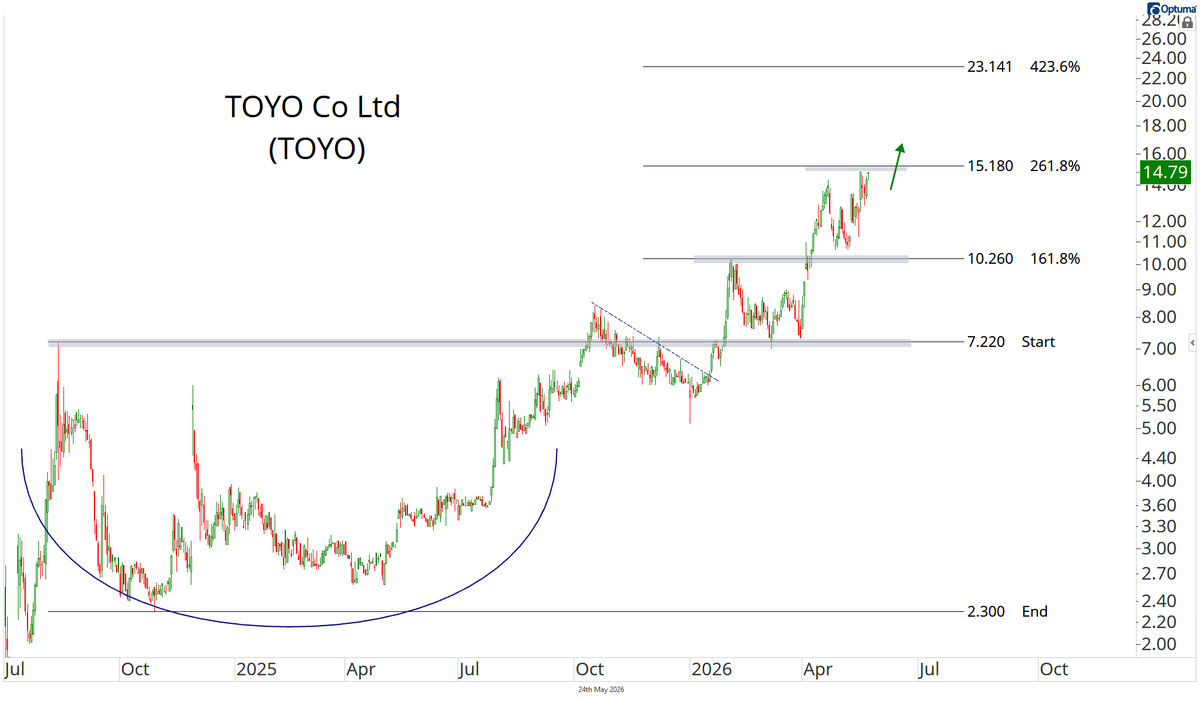
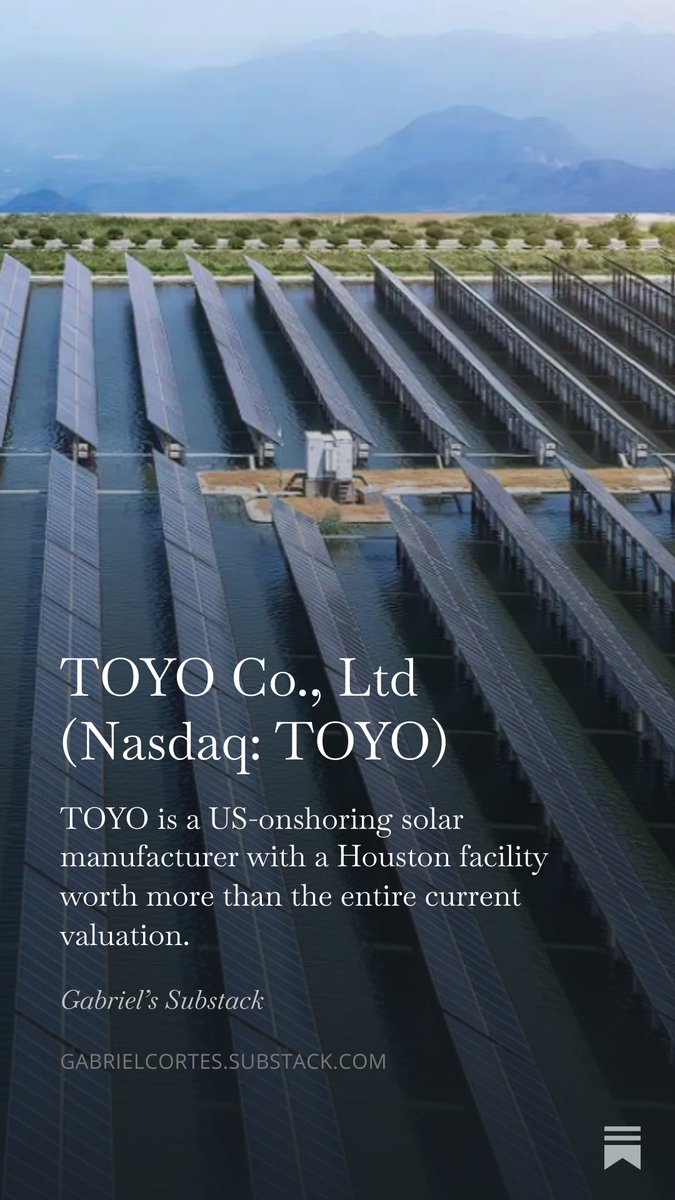
" $TOYO is a US-onshoring solar manufacturer with a Houston facility worth more than the entire current valuation " - @BabyBaconFat
I see a micro-cap solar name emerging from deep base printing a clean series of higher highs and higher lows.
Textbook bullish structure. Above $15, risk favors the bulls.
May 24

I am long $TOYO. I argue it is easily worth $2B just on it's Houston facility and section 45X credits. It makes $80M in annual tax credits today on a $558M mkt cap, and the market isn't pricing any growth.
Check out my in depth analysis below:
open.substack.com/pub/gabrie…
2
1
33
4,865
May 22
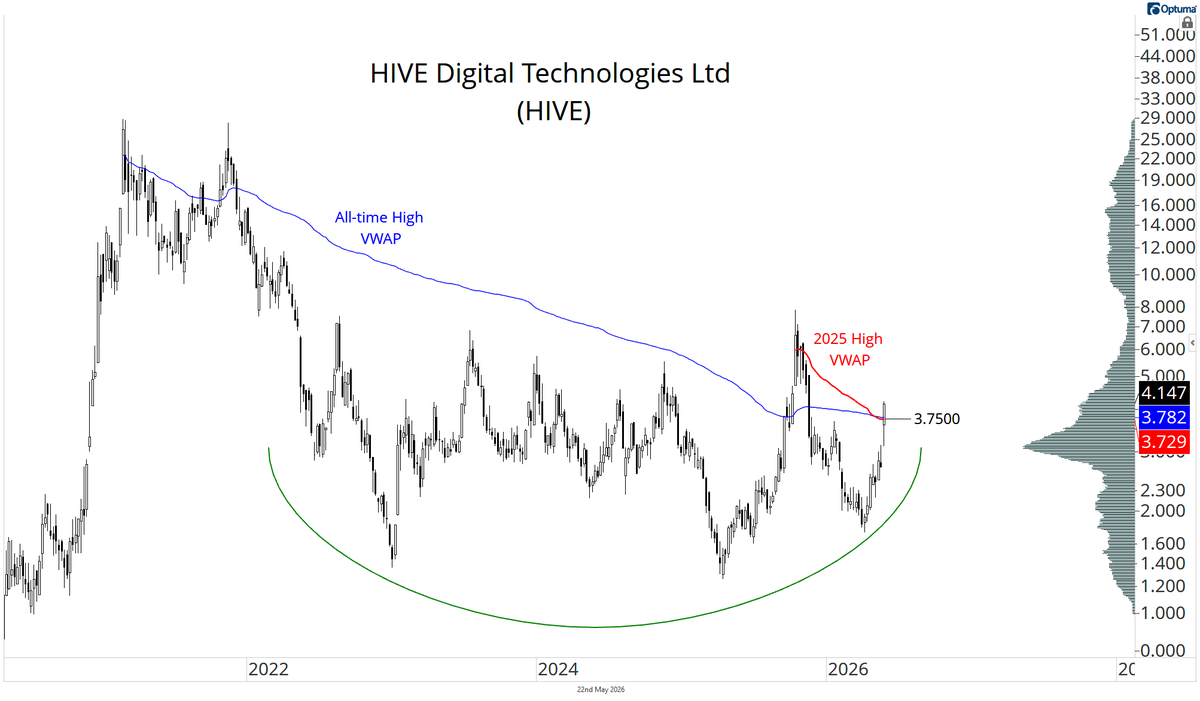
HIVE Digital Technologies $HIVE was an early mover pivoting from a BTC miner to AI compute.
The recent acceleration of the transition has been rewarded heavily.
Above 3.75, this one is set to advance.
May 21
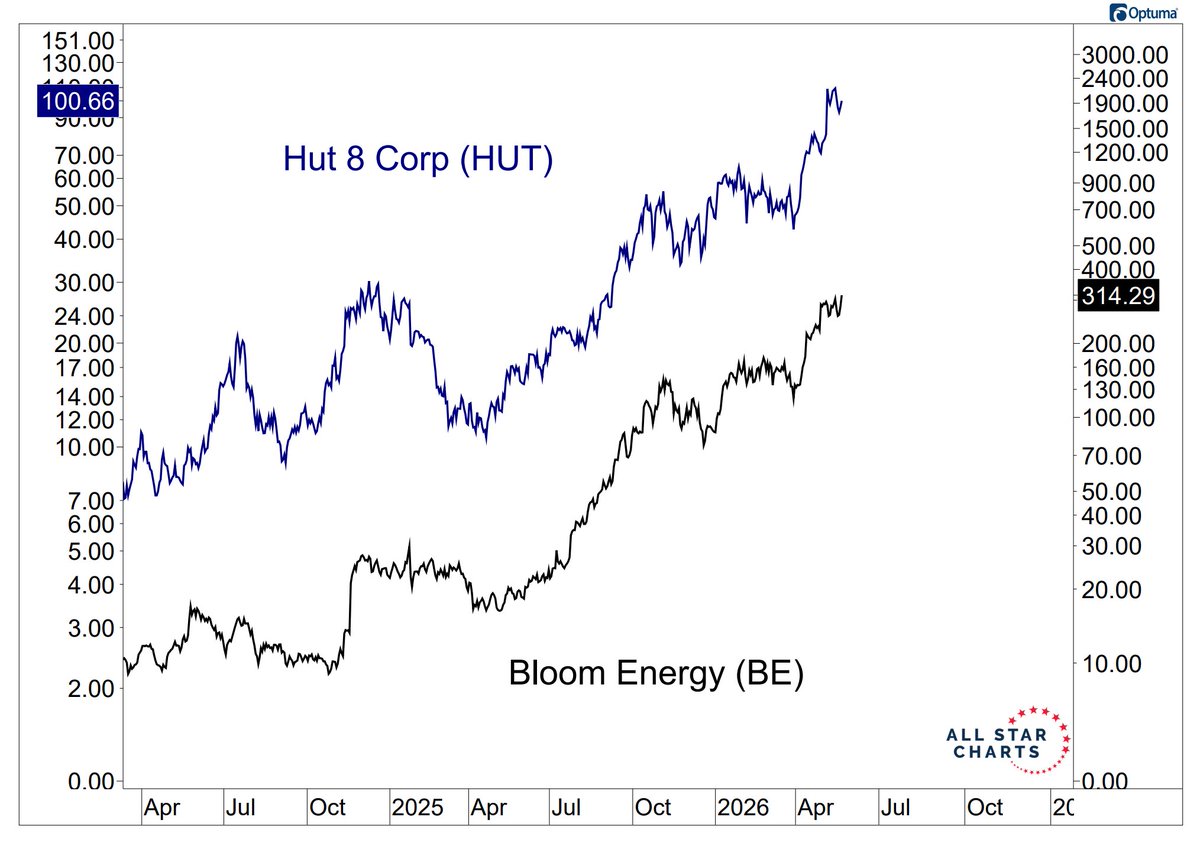
Two different stocks, seemingly different trades.
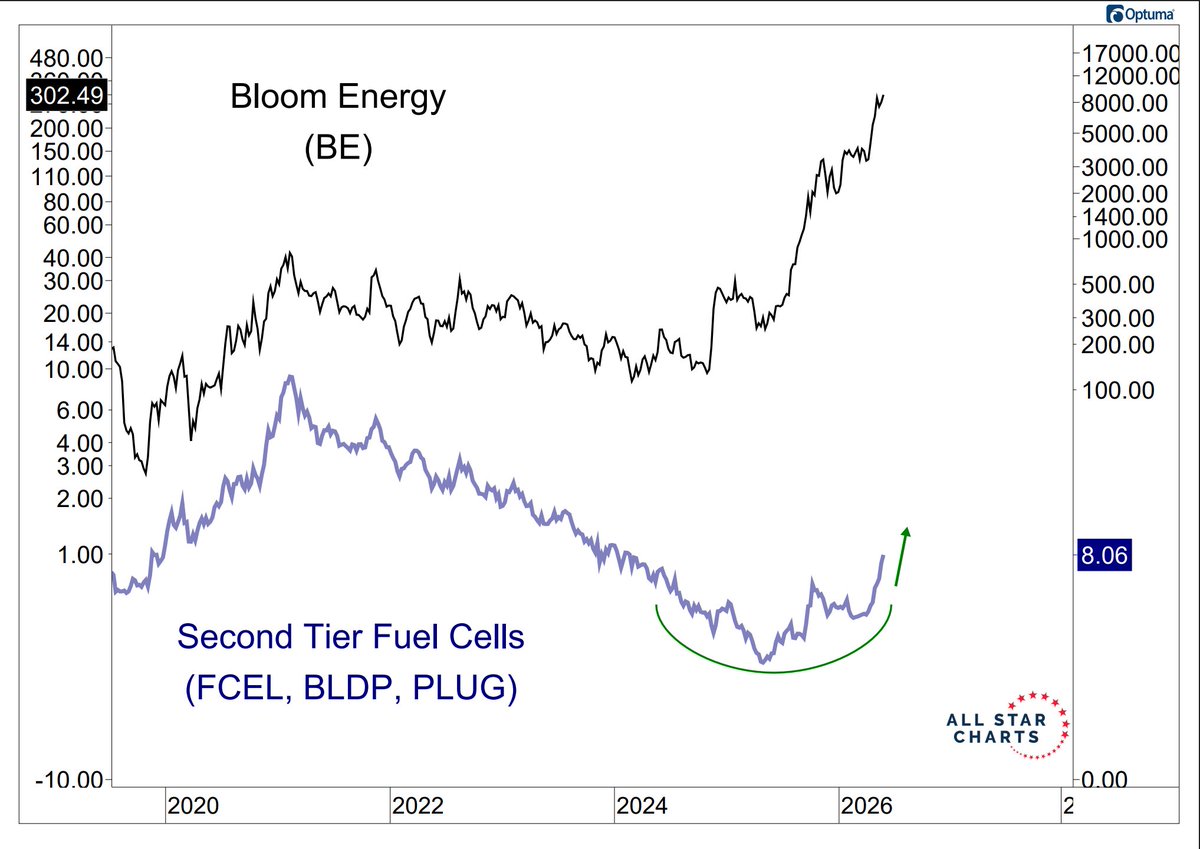
Hut 8 $HUT, the former BTC miner pivoting to compute.
Bloom Energy $BE, the fuel cell maker now powering the data centers behind the AI buildout.
But it's the same overarching theme: more compute.
4
1
22
4,432
May 21
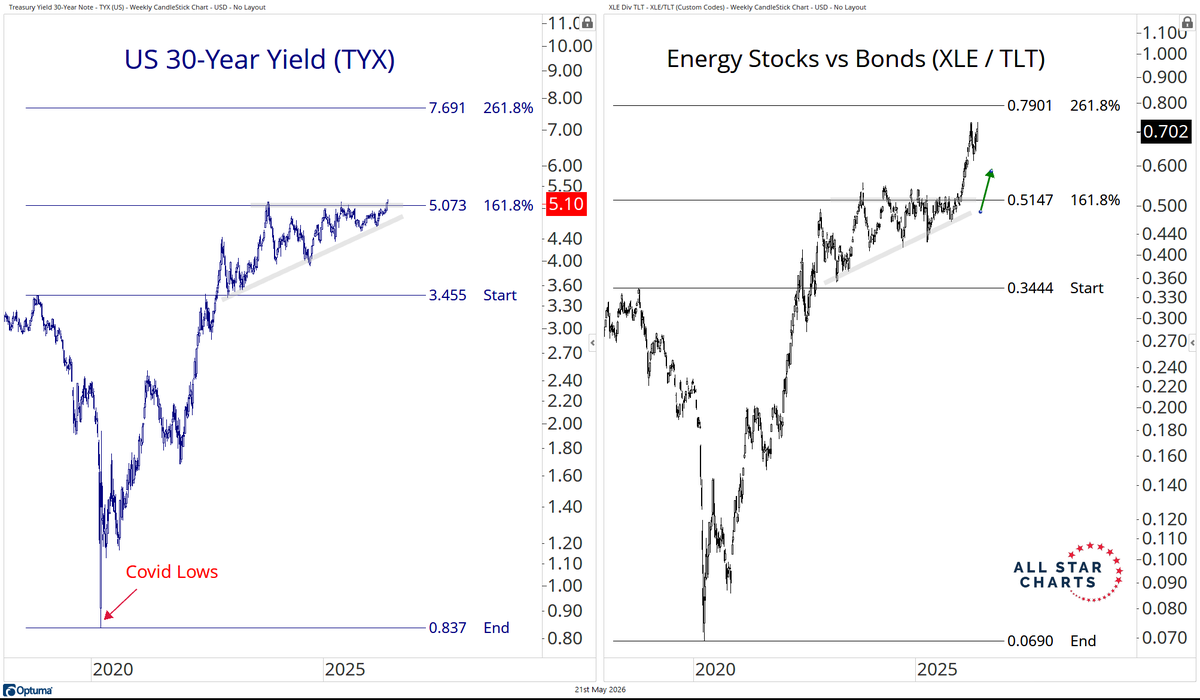
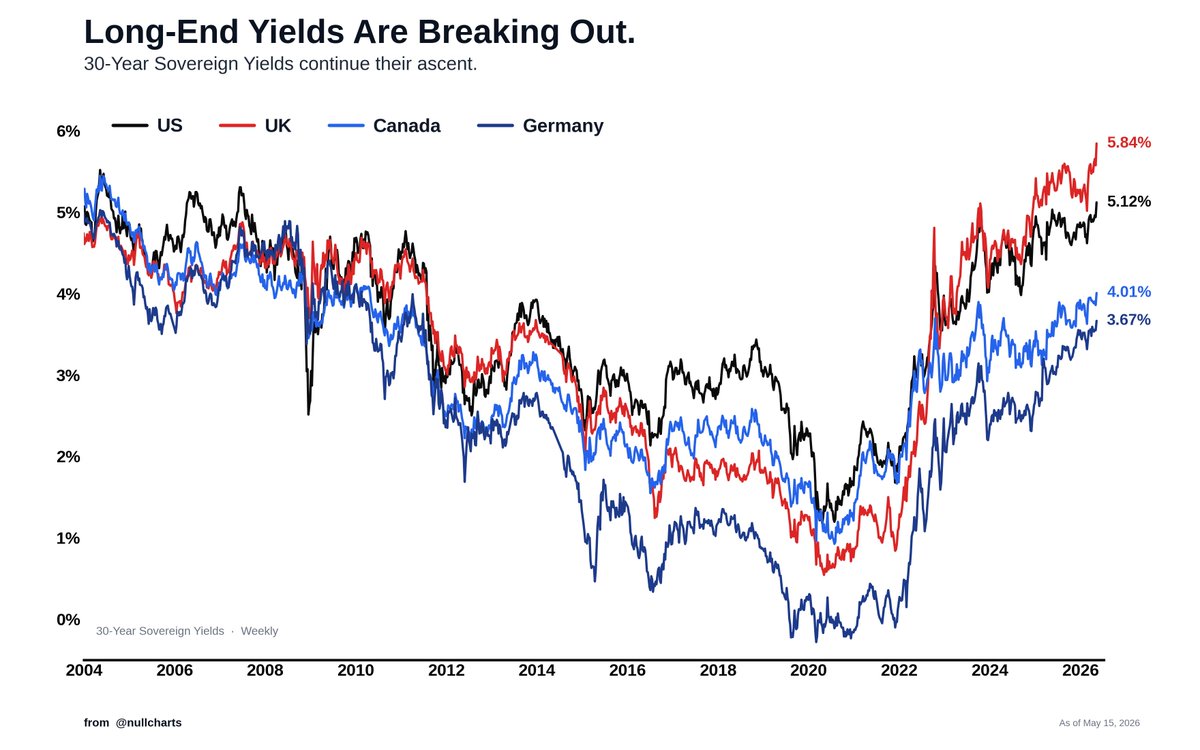
The US 30-Year Yield $TYX is seeing resistance at the 5% level.
That also marks the 161.8% Fibonacci extension of the decline into the generational Covid lows.
The Energy Stocks vs Bonds ratio had the exact same setup... it already broke out.
$XLE $TLT
May 15
Long-end sovereign yields are breaking higher today, and there's momentum to this moves.
It's not isolated to the United States, these moves are global, synchronized...
Commodities had been leading higher, now yields are catching up. $TYX $TLT
6
11
50
5,236
May 21
Two different stocks, seemingly different trades.
Hut 8 $HUT, the former BTC miner pivoting to compute.
Bloom Energy $BE, the fuel cell maker now powering the data centers behind the AI buildout.
But it's the same overarching theme: more compute.
May 14
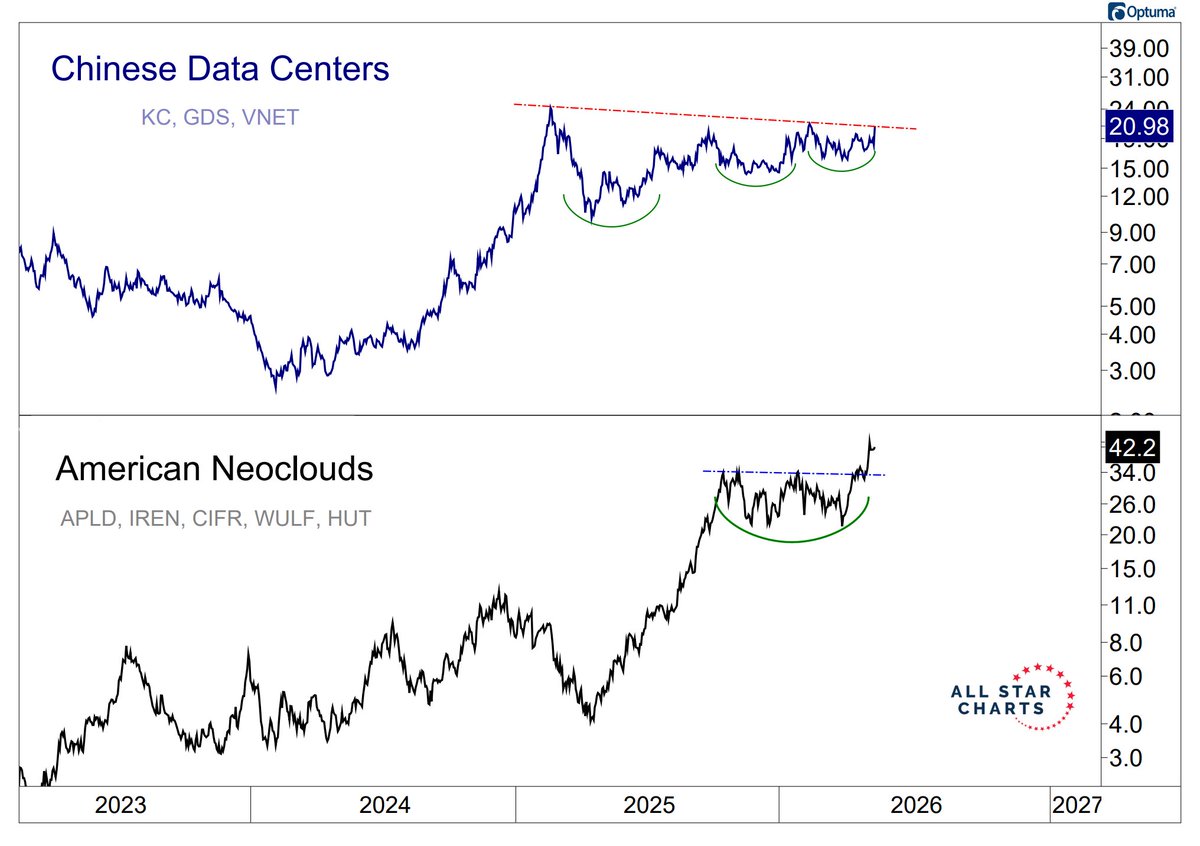
Money keeps flowing aggressively into anything related to AI-buildout/infra.
Last year, many crypto-miners pivoted into data centers and nearly 10x'd... the so-called neoclouds.
Chinese data center stocks were early leaders. Then have gone nowhere for over a year.
They look ready to catch up to the Americans.
$KC $GDS $VNET
4
29
8,908