
East Asia editor @globalvoices; see you at oiwan@mastodon.sdf.org
Joined November 2007
- Tweets 11,303
- Following 1,164
- Followers 8,240
- Likes 5,028
70 Photos and videos







oiwan retweeted

BREAKING: Israel blew up an entire village today in Southern Lebanon. This is violence. This is ethnic cleaning. This is genocide. And it is all happening under a “ceasefire” and being funded by the U.S.
32
589
1,446
33,008
oiwan retweeted

Apr 21
For @WIRED, I spoke to a med student in India who made thousands of dollars duping MAGA fans by creating a blonde AI influencer named "Emily Hart." Here's how he did it.


494
2,575
18,957
3,384,325
oiwan retweeted

Apr 20
Striking statement from China’s foreign press club, explicitly making clear its critique of China revoking visas, China detaining journos over coverage, not associated w/any media outlet. Media orgs - powerful ones - are not speaking up, and they should. fccchina.org/2026/04/20/fccc…
47
87
222
45,818
oiwan retweeted

Mar 16
No Kings. March 28th. Make a plan for where you'll be and bring your family and friends.
nokings.org
233
1,260
2,612
132,112
oiwan retweeted

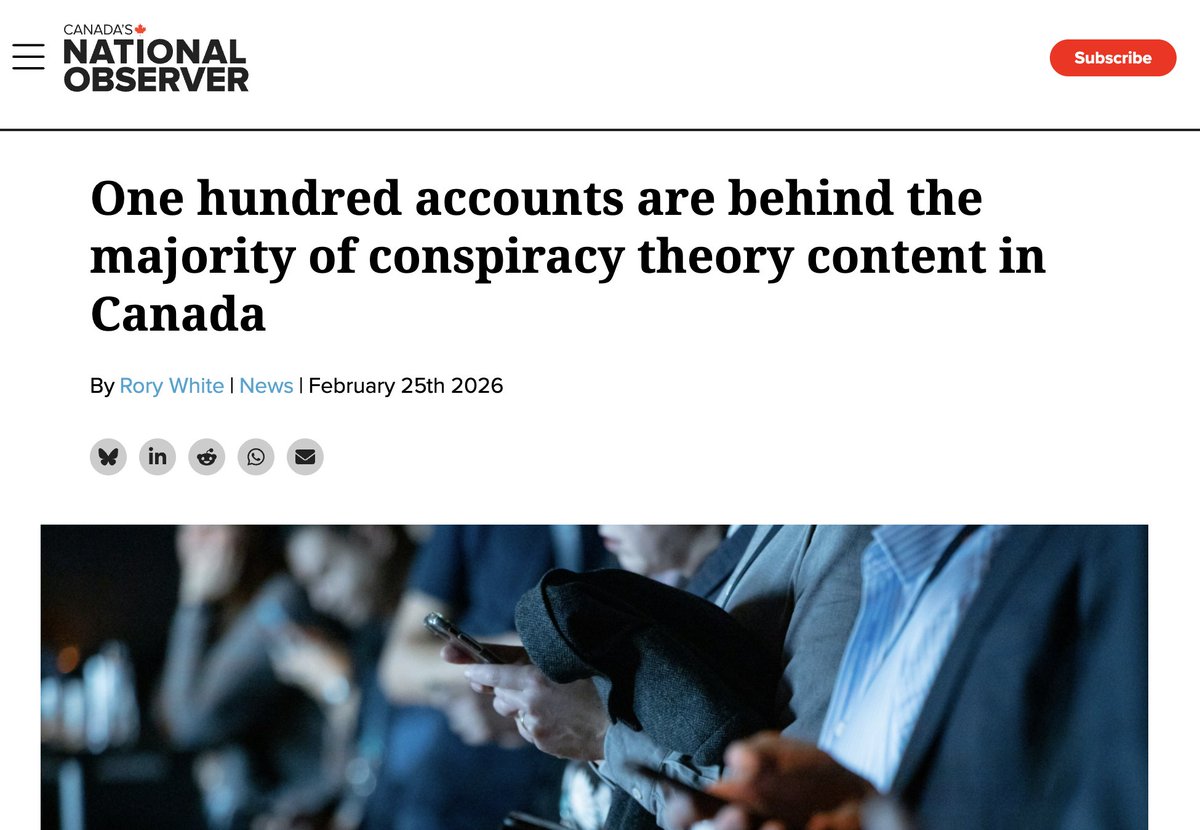
Just 100 users were responsible for almost 70% of online conspiracy posts from influential accounts they examined in Canada.
An analysis of over 14 million social media posts from accounts in Canada found that 87% of conspiratorial claims come from these influencers. But this tiny minority of true believers can have a momentous impact on local politics, influencing what people view as normal and acceptable and leads to self-censoring to avoid attacks from conspiracy theorists.
nationalobserver.com/2026/02…
These extremists create what we call "the funhouse mirror" effect of social media, where a small number of users create misperceptions of social norms. sciencedirect.com/science/ar…
365
1,302
2,795
135,534
oiwan retweeted
Hongkonger fights in #Ukraine as diaspora marks grim anniversary
Nid sees parallels between Ukraine’s resistance and Hong Kong’s own struggles. “We’re both being occupied by a neighboring power that’s gradually assimilating us.” @kellywsheung globalvoices.org/2026/03/02/…
1
1
187

Civilizationalism, the idea that world politics revolves around culturally bounded civilizations led by great powers, is energizing the Right on both sides of the Atlantic.
It is key to the effort to dismantle universalism and remake the international order. jacobin.com/2026/02/civiliza…
2
5
25
3,717
oiwan retweeted

Feb 10
As things stand, now that Jimmy Lai’s case is mostly done, the only “big” national security cases left are those relating to Tiananmen vigil leaders Chow Hang-Tung, Lee Cheuk-yan and Albert Ho, as well as another case against Joshua Wong. China would look to ride out those remaining cases and then have Hong Kong be completely forgotten in international consciousness. It is up to all of us who care about Hong Kong to make sure China does not succeed in “disappearing” Hong Kong’s crackdown from the world.
12
11
45
2,025
oiwan retweeted

Feb 10
Two decades ago, observers in the advanced liberal democracies said China could never catch up: the technological gulf was too vast and China's authoritarian institutions would obstruct innovation.
How did we get here? My essay in @ForeignAffairs
foreignaffairs.com/china/chi…
33
70
268
54,009
oiwan retweeted

Jan 31
It is shocking how little coverage there is of an unfolding humanitarian catastrophe in Ukraine due to Russia's destruction of its energy grid. It's -20C outside and half of the country experienced a total blackout today. Metro trains stopped operating in Kyiv and Kharkiv today. Rolling blackouts have been ongoing for weeks, often with no heating and running water inside people's houses. People get sick and die because of this. In the meantime, Russians laugh and call for more strikes to punish Ukraine for its unwillingness to surrender. These are strikes affecting millions of civilians amid the harshest winter in decades. These are crimes against humanity that Russia is confident it will get away with. We cannot let that happen
539
4,620
11,476
364,645
oiwan retweeted

2 Dec 2025
Critics say Hong Kong fire was due to negligence, not scaffolding
The fire has already claimed 156 lives and the city needs an independent investigation into the cause. @oiwan globalvoices.org/2025/12/02/…
3
6
803
oiwan retweeted

12 Nov 2025
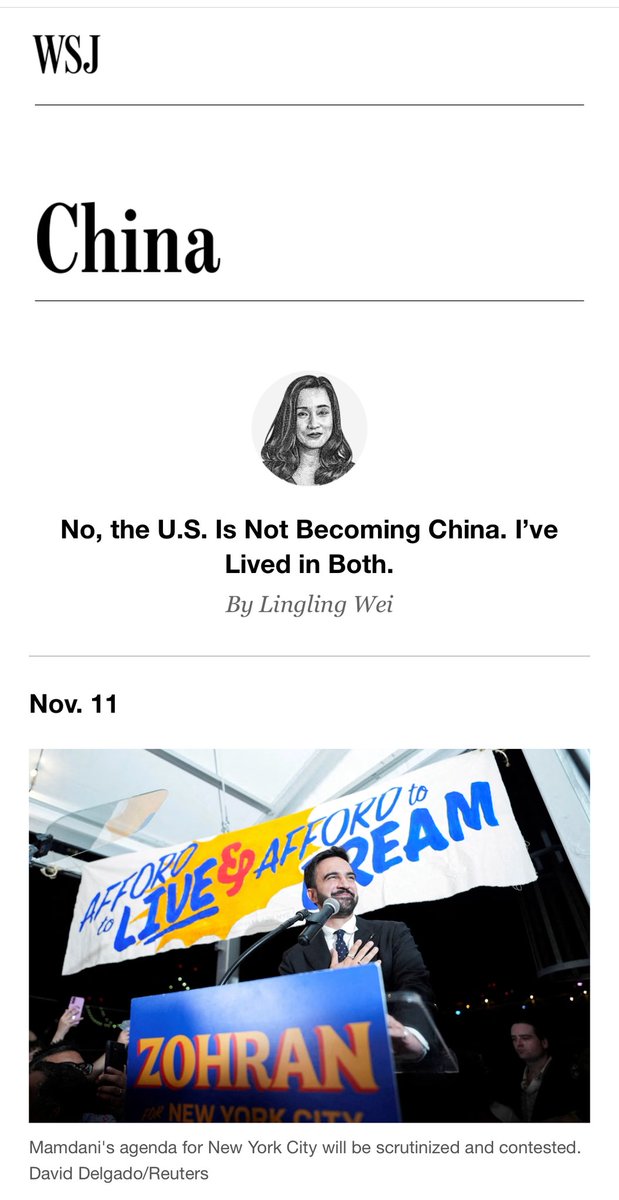
Despite disagreement, I do respect Lingling's work and her professionalism, but I must respectfully disagree again with several key points in the article below. I've lived in both countries too as a scholar.
Reducing China's governance to "the Party controls everything" and implicitly romanticizing US governance as "freedom and debate" is a deliberate oversimplified binary narrative.
China's challenges are not about "too much socialism."
America’s challenges are not about "too much democracy."
I think the real contrast is this:
➡️ The US is drifting toward "capital capturing policymaking."
➡️ China practices "the state regulating capital in the public interest."
In China, maybe you can't insult the government freely, but you won't go bankrupt because of medical bills, tuition fees.
In the US, you can insult the government all day-
but you can go bankrupt because of medical bills, tuition fees, or just trying to stay alive.
She says:
"You don't buy a home; you buy a 70-year lease from the government, which it can revoke."
But in America, millions can't even afford a lease. Additionally, some heirs of wealthy families have had to donate their parents' mansions because they can't afford the property taxes.
She says:
"In Mamdani’s New York, you can protest his policies outside City Hall."
But in the US, the reality is far more cynical:
You protest-nothing changes.
You vote-nothing changes.
Because money matters more than votes.
In China, when you call the mayor's hotline or file a petition, the case is registered, processed on a timeline, and officials are held accountable if they ignore it. "We the People" petition site, oh, looks like a joke.
China is not perfect.
But China tries its best to improve public welfare and build a functioning state that prioritizes people's needs.
The US used to do that-but administrations since the Bush era have largely given up on governing for the public good.
One system measures its success by how many problems get fixed;
the other measures success by how loudly people can complain.
Good governance is not about who talks better.
It's about who delivers better.
Be better, the United States of America.
11 Nov 2025

What people have in the U.S. is a messy, loud, and often vicious debate about how to allocate resources. What people have in China is the absence of one. wsjchina.cmail19.com/t/d-e-g…
143
154
807
211,916
oiwan retweeted

11 Sep 2025
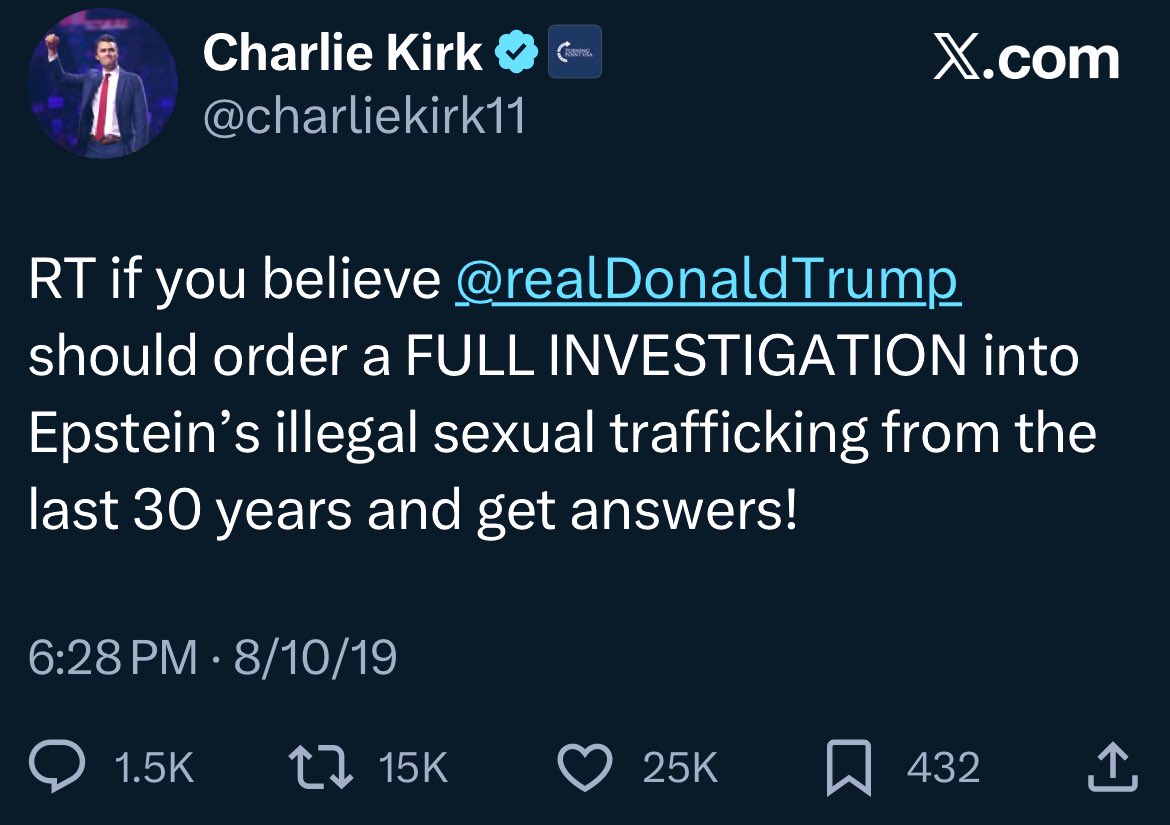
Anyone forgotten about the Epstein Files?
Stay Focused.
139
2,849
8,204
119,485
oiwan retweeted

8 Sep 2025
Charlie Kirk: "The DOJ should immediately move to unseal all the Epstein...Every file should be released to the public."
Megyn Kelly: "Put them all out there. Because if there's nothing in there, then we can see there's nothing in there."
421
3,014
9,393
8,106,735
oiwan retweeted

27 Aug 2025
My op-ed for the Telegraph on Gaza famine denialism and the false tropes used to promote it
27 Aug 2025

Seven common tropes used to deny Gaza’s famine, debunked by an expert @JeremyKonyndyk
The chorus of denial around serious food insecurity in the Strip is more than falsehood – it is active disinformation
Crucial analysis below - free to read🔓
telegraph.co.uk/global-healt…
13
132
382
74,462
oiwan retweeted
24 Aug 2025
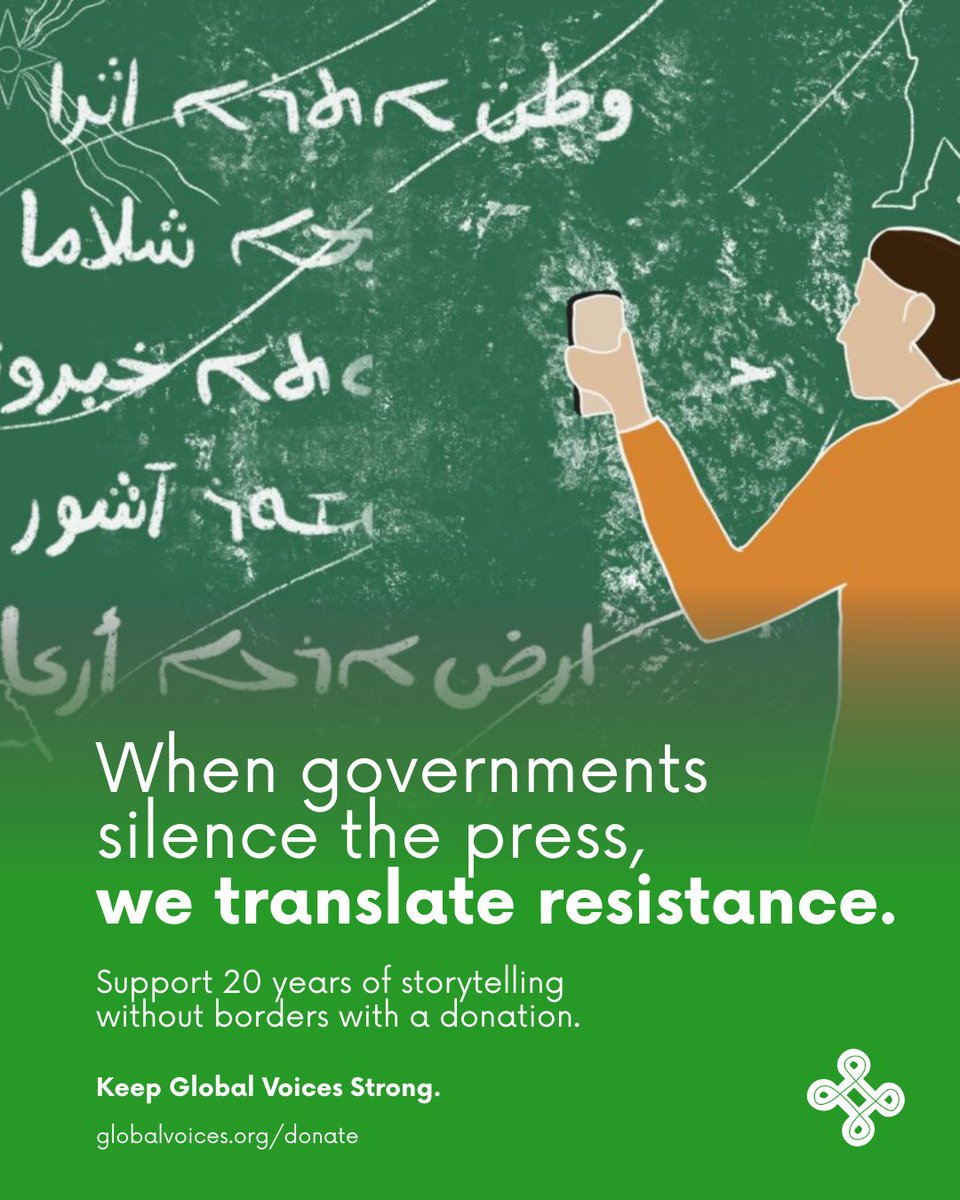
Media blackouts. Political pressure. Shrinking spaces.
Independent platforms like @globalvoices are more than important — they’re essential.
Help us survive and thrive.
globalvoices.org/donate/
#KeepGVStrong
3
2
480
oiwan retweeted

9 Aug 2025
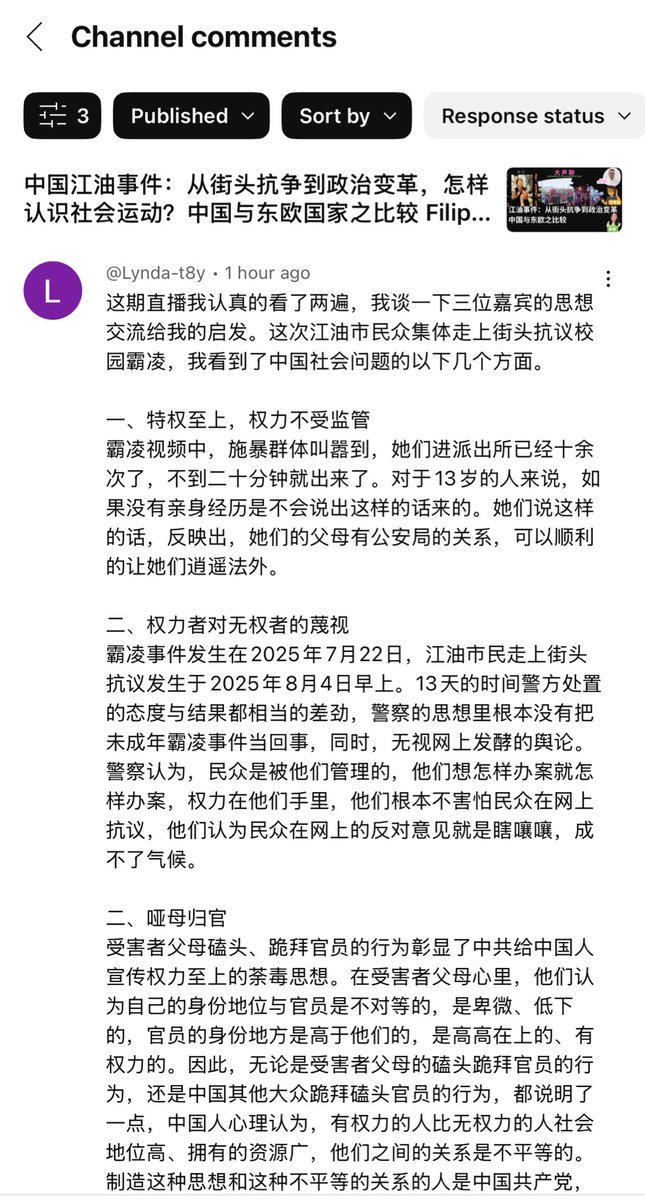
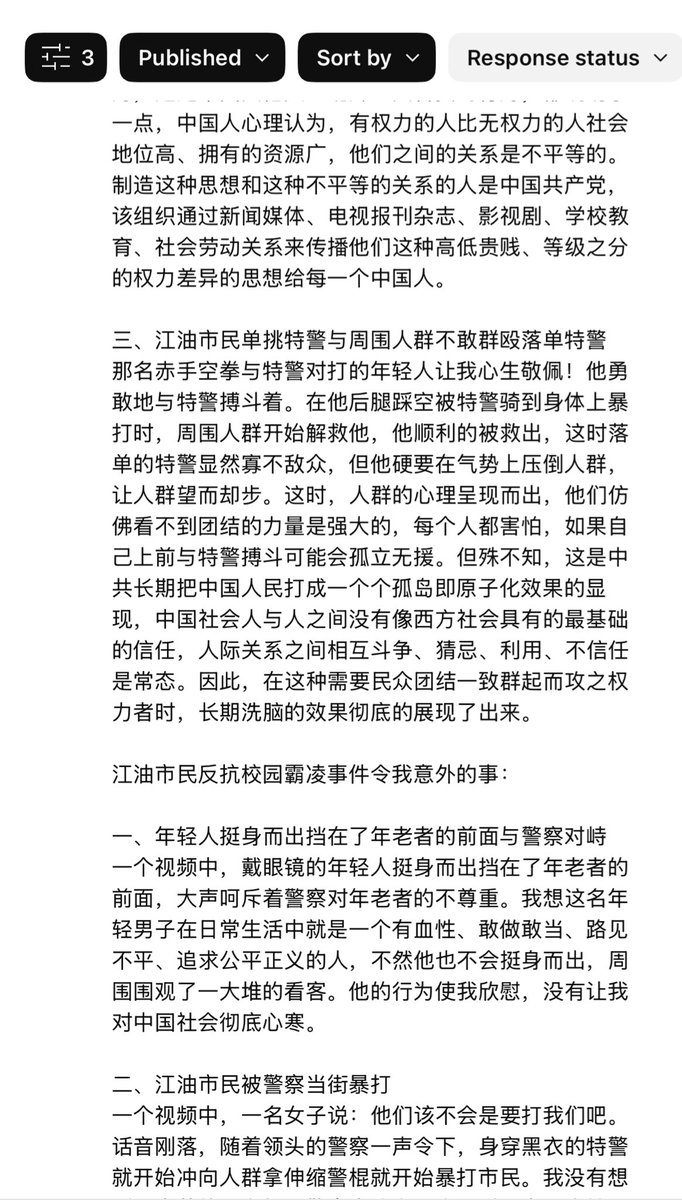
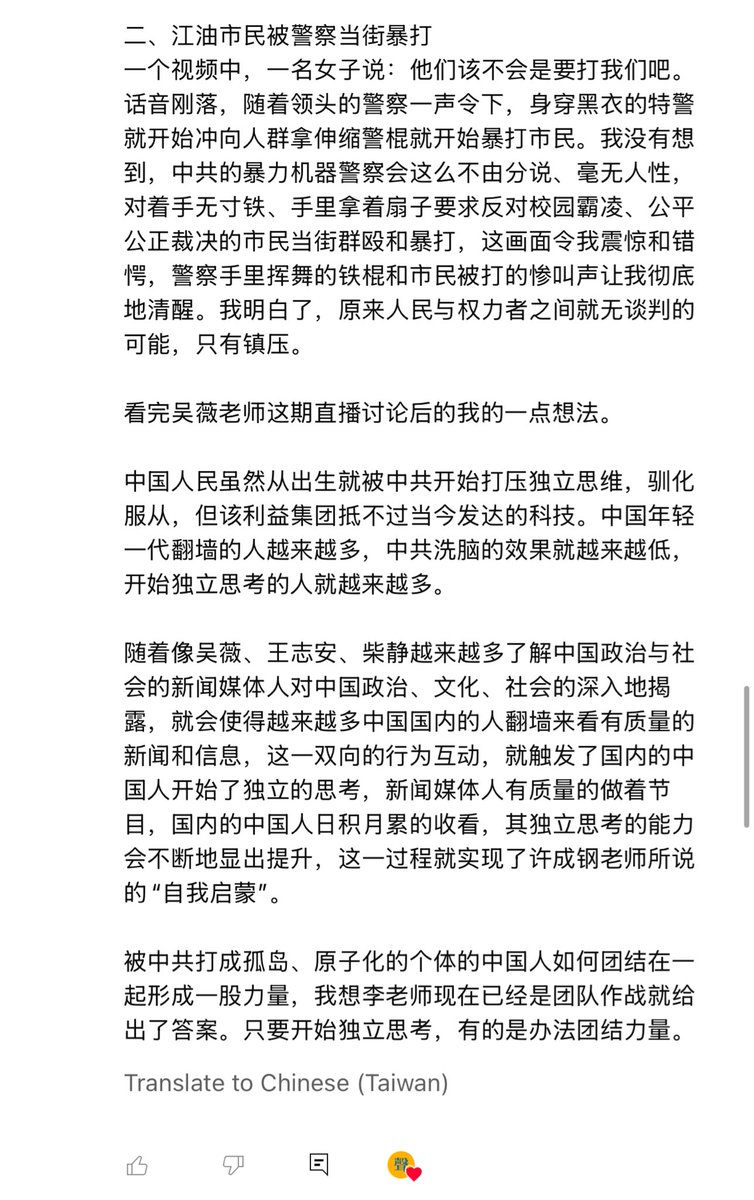
分享一个观众在我们周四江油事件直播节目youtube.com/live/WO-qWphN4lY…下面写的长篇留言。大声的观众喜欢在评论区写论文。这已经形成一个传统和社区文化。我真的是又感激又骄傲。这样真诚开放的交流,让人看到希望。
@22HomoPoliticus @nasredinhoja
4
3
43
10,998
oiwan retweeted
8 Aug 2025
Don’t let global stories disappear.
As funding dries up for independent journalism, you can help keep voices alive.
Donate to #keepGVstrong
globalvoices.org/donate/

4
4
594
oiwan retweeted
5 Aug 2025
Governments are tightening censorship.
Big tech is drowning us in algorithms.
Global Voices is still here — but we need you.
globalvoices.org/donate/
#KeepGVStrong 🌱

7
3
622
oiwan retweeted
30 Jul 2025
#KeepGVStrong🌱 by donating to a newsroom and platform that shapes a more inclusive internet.
More information: globalvoices.org/donate/
1
4
1,283