
Engineering design services to take your project from concept to reality. Contact us today.
Joined July 2011
- Tweets 1,572
- Following 230
- Followers 605
- Likes 5,690
854 Photos and videos



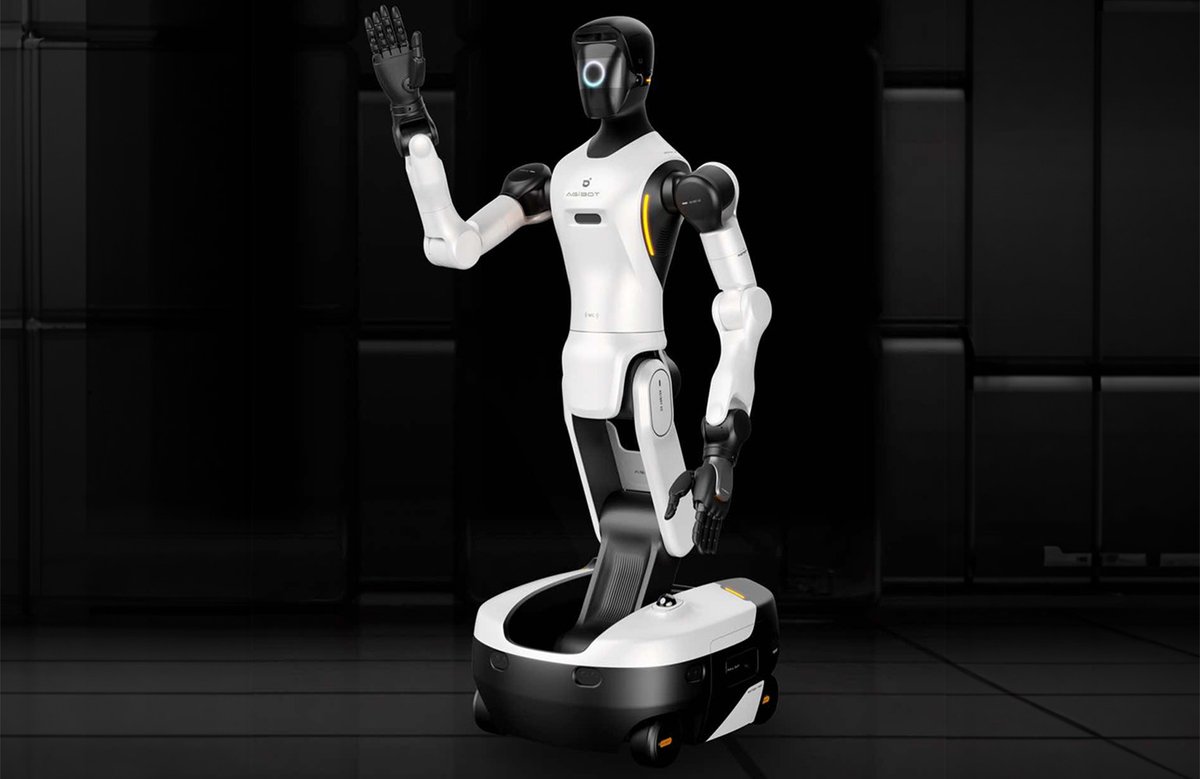
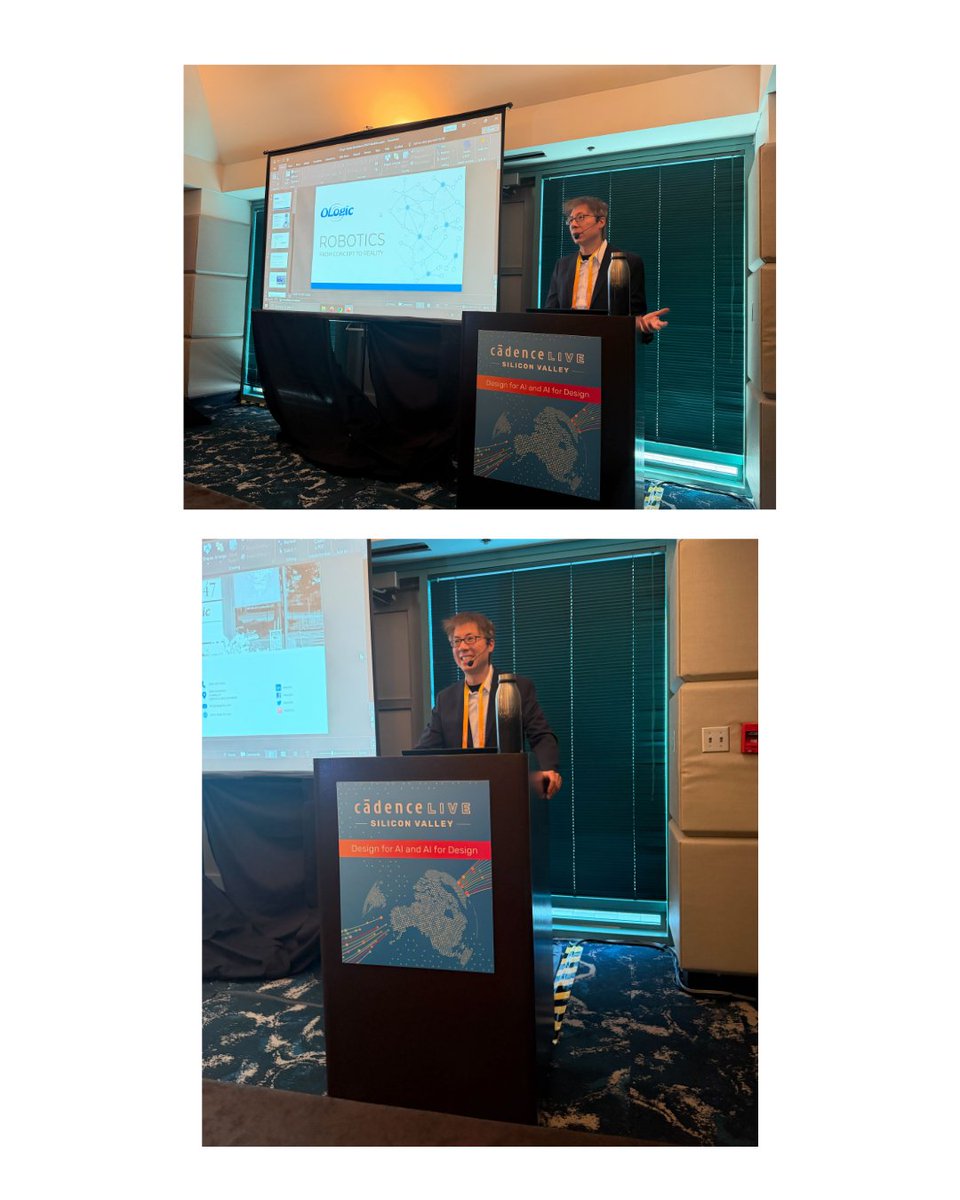

Humanoid robots are stepping onto the runway.
At a recent fashion event in Shanghai, humanoid robots joined human models on the catwalk, showcasing how robotics continues to expand into new industries and public-facing applications. The event highlights the growing intersection of technology, design, and human-robot interaction.
Read more: na2.hubs.ly/H05Vhqm0
#Robotics #HumanoidRobots #Innovation
1
22

Jun 12
Robotics, AI, and a little soccer.
This week's IEEE Spectrum Video Friday highlights some of the latest robotics innovations, including Rabona, a humanoid robot designed to play soccer, alongside other advances in mobility, autonomy, and human-robot interaction.
Watch the videos: na2.hubs.ly/H05VkTr0
#Robotics #ArtificialIntelligence #HumanoidRobots
12
Jun 11
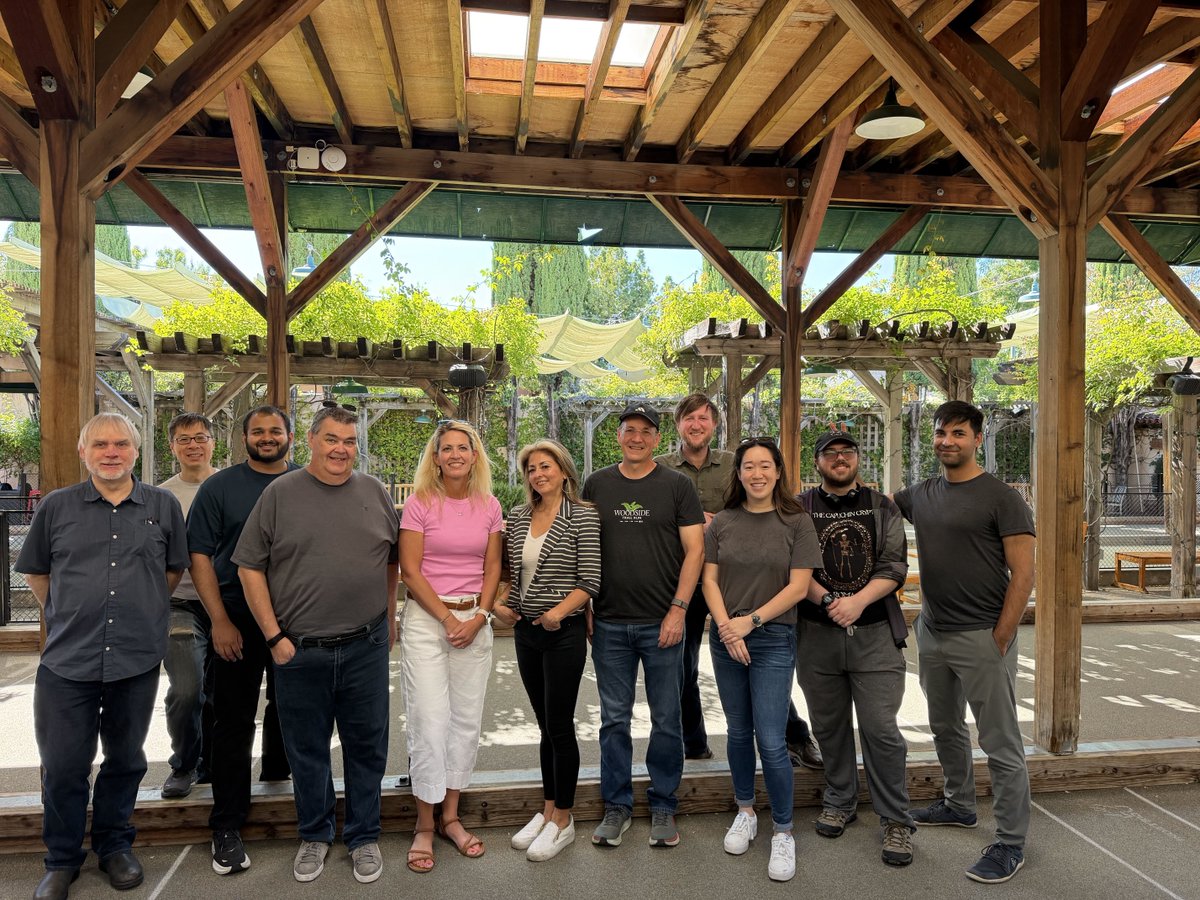
Counting down to summer with some friendly competition ☀️
A little friendly competition, plenty of laughs, and an afternoon of bocce ball with the team. Here's to longer days, stronger teamwork, and a great summer ahead!
#TeamOLogic #CompanyCulture #SummerKickoff #BocceBall
13
Jun 11
Hyundai Motor Group plans to deploy more than 25,000 Atlas humanoid robots, developed by Boston Dynamics, across its U.S. manufacturing facilities by 2028. The initiative represents one of the largest planned deployments of humanoid robots in industrial production and highlights the growing role of robotics in modern manufacturing.
Read more: na2.hubs.ly/H05VgLv0
#Robotics #Manufacturing #Automation
2
553
Jun 10
How do you measure whether a humanoid robot is actually improving?
Researchers at NIST have proposed a baseline performance benchmark designed to evaluate humanoid robots using standardized tasks and metrics. Establishing common benchmarks could help accelerate development, improve comparisons across platforms, and provide a clearer picture of real-world capabilities.
Read more: na2.hubs.ly/H05VjWC0
#HumanoidRobots #Robotics #Automation
17
OLogic, Inc. retweeted

Jun 9
Couldn't have made Instacore happen without Ted's amazing EE, ME, and SWE team from Ologic!
1
1
431
Jun 9
So amazing! 🎉 Congrats to Ryan and the entire Instawork team!
We are so excited to have helped on this awesome project!
#Instawork
Jun 9

Everyone in Embodied AI is talking about Vision-Language-Action (VLA) models. Almost no one is talking about the physical nightmare of collecting the data to train them. You can't scrape a kitchen table or a warehouse shelf from a web browser.
To get to millions of hours of diverse, real-world manipulation data, you need hundreds of rigs. But you can't buy them. If you build them out of off-the-shelf developer kits, they weigh 15 pounds, overheat in an hour, require bulky cabling, and break the first time an operator wears them on a job site.
At the Instawork Robotics Lab (IRL), we had to build our own. Meet the Instacore: a rugged, 4lb wearable egocentric data-capture engine designed specifically to survive a full shift on a standard power pack.
We didn't build a flashy humanoid. We did hard, blue-collar systems engineering:
💾 THE COMPUTE — A custom MediaTek Genio carrier board that runs completely fanless, routing 5 camera streams directly to on-board storage.
⚡ THE I/O PIPELINE — We ditched USB for industrial GMSL. Thin, ultra-flexible coaxial lines route high-speed data down to the backpack and Power-over-Coax (PoC) back up, completely eliminating batteries on the wrist.
⏱️ UNIFIED SENSOR CLOCK — The MediaTek Genio SoC drives a shared master clock straight to the ISPs driving our 5 global shutter sensors, stamping metadata at the microsecond of capture to ensure zero-drift temporal alignment.
👁️ OPTIMIZED OPTICS — 95 DFOV lenses on flexible PCB ribbon modules keep the wrist cams flat to prevent snags. A 145-degree chest camera captures the macro workspace, while a 50mm baseline rectilinear stereo head pair preserves close-up 3D mapping.
To build hundreds of these, we took over a warehouse in Mountain View in April, called it the Instalab, and brought in talented Pros with assembly backgrounds from Tesla, Apple, and Meta.
To test the systems, we had our Pros wear active rigs while assembling more rigs. The video below shows the raw, time-synchronized Foxglove playback of that exact loop.
Now, we’re shipping these units globally to scale data collection for real Pros on the job.
1
3
992
Jun 9
Researchers at Duke University have developed Argus, a unique 20-legged robot designed around "dynamic symmetry," allowing it to move, see, and react in any direction instantly. The project challenges conventional robotic design and could help shape the future of search-and-rescue, exploration, and autonomous systems.
Read more: na2.hubs.ly/H05VgrC0
#Robotics #Engineering #Innovation
29
Jun 8
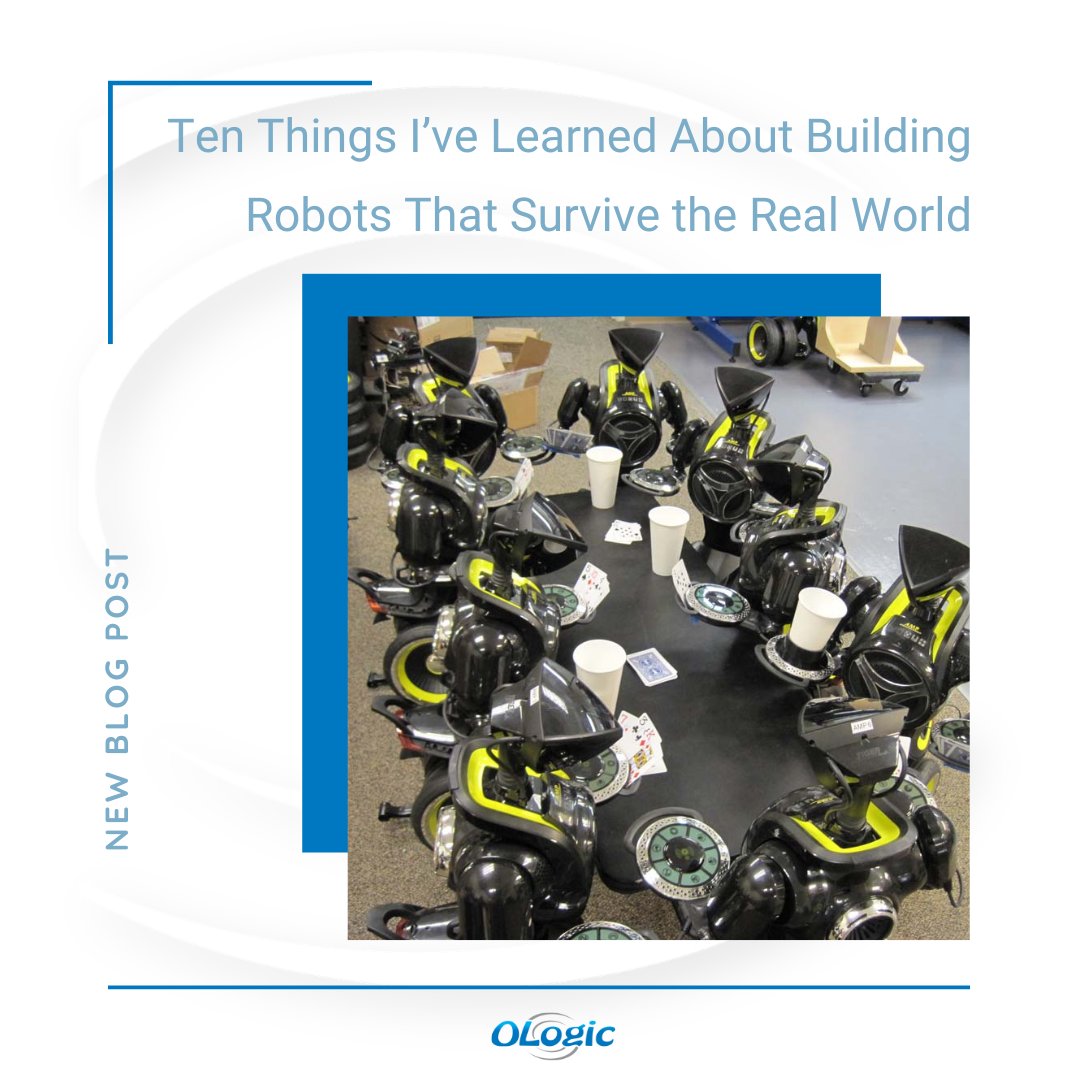
Behind every successful product is a series of engineering decisions, challenges, and breakthroughs.
At OLogic, we've helped startups and established companies bring innovative hardware products to market across robotics, medical devices, consumer products, scientific instruments, and more.
Our case studies offer a behind-the-scenes look at how we approach complex design challenges, from early concept development through manufacturing and launch.
Explore our latest case studies to see how we've helped clients turn ambitious ideas into real-world products:
na2.hubs.ly/H061qmh0
#ProductDevelopment #HardwareEngineering #Robotics
23
Jun 8
Robot arms have long been optimized for precision and repeatability—but is that what AI-driven robotics actually needs?
In this article, Ted, CEO of OLogic, explores how the rise of AI and foundation models is reshaping robotics, shifting the focus from extreme accuracy to reliability, durability, and scalable data collection.
Read more: na2.hubs.ly/H05Vhmx0
#Robotics #ArtificialIntelligence #Automation
20
Jun 7
What if open-source hardware could do for silicon what Linux did for software?
Pavona is a new open-source ecosystem designed to accelerate the adoption of secure, modular silicon from IoT devices to AI infrastructure while making hardware development more accessible and collaborative.
Read more: na2.hubs.ly/H05Vh7y0
#OpenSourceHardware #Semiconductors #Cybersecurity
21
Jun 6
An indigenous-led movement in New Zealand is leveraging artificial intelligence to preserve and revitalize the Māori language (*te reo*), while strictly maintaining cultural data sovereignty. Pioneered by Māori organizations like Te Hiku Media and academic researchers, the initiatives focus on building open-source automatic speech recognition (ASR) and text-to-speech models trained on decades of native speaker archives and community-crowdsourced audio. By operating under custom licensing frameworks like the *Kaitiakitanga* license, these projects ensure that indigenous linguistic data belongs to and benefits the community rather than being commercialized by big tech. The models achieve over 90% accuracy in transcription and are expanding to distinct regional iwi (tribal) dialects, creating a template for other global indigenous communities—such as Native Hawaiians and the Mohawk people—to independently build their own sovereign voice technologies.
Read the full report here: na2.hubs.ly/H05JhJD0
#IndigenousAI #TeReoMāori #DataSovereignty #SpeechAI #LanguagePreservation
31
Jun 5
Brain Corp has expanded its research partnership with the University of California, San Diego (UCSD) to develop a "contextual grounding layer" for autonomous mobile robots (AMRs). Led by Dr. Nikolay Atanasov at the Jacobs School of Engineering, the collaboration aims to advance semantic mapping and situational awareness beyond traditional SLAM technology. By creating an intelligent digital representation of physical environments, the partnership will enable robots, drones, and self-driving vehicles to safely integrate advanced AI models, respond intuitively to changing conditions, and seamlessly interact with humans. Brain Corp will leverage data from its global footprint of over 50,000 deployed robots to build and scale this foundational infrastructure across its BrainOS platform.
Read the full report here: na2.hubs.ly/H05JhDW0
#BrainCorp #UCSD #Robotics #PhysicalAI #AutonomousMobileRobots
33
Jun 4
Faraday Future (NASDAQ: FFAI) has secured $25 million in new financing through the issuance of convertible promissory notes, bringing its total capital raised over the past two months to $70 million. Pivoting from its traditional focus on luxury electric vehicles to "Physical AI," the company plans to use the funds to advance Phase 1 of its Embodied AI (EAI) robotics business plan through the end of 2026. The strategic roadmap centers on two main product lines: automotive-focused robots and humanoid/bionic robots, with a full-year target of shipping 1,500 units to commercial sectors including education, security inspection, and hospitality.
Read the full report here: na2.hubs.ly/H05Jgy60
#FaradayFuture #Robotics #PhysicalAI #EmbodiedAI #TechFunding
1
2
326
Jun 3
FANUC, the world's largest industrial robot manufacturer, has announced a strategic partnership with Google to integrate Google Cloud's Gemini Enterprise and Google's Intrinsic robotics AI platform into its industrial systems. By combining FANUC’s rugged automation hardware with Google’s generative AI and the visual programming environments of Intrinsic Flowstate, the collaboration aims to advance "Physical AI" across factory floors. The integration allows factory robots to process natural language voice instructions, autonomously perceive and adapt to changing environments, and learn complex new physical tasks with minimal programming. Moving quickly past the pilot stage, FANUC has already shipped more than 1,000 physical AI-equipped systems since demonstrating the technology at the Tokyo International Robot Exhibition.
Read the full report here: na2.hubs.ly/H05JhBc0
#FANUC #Google #PhysicalAI #IndustrialAutomation #Robotics
77
Jun 2
Serve Robotics (NASDAQ: SERV) is positioning itself as a major growth story in the "Physical AI" sector following its Q1 2026 earnings report and strategic expansion beyond the sidewalk. The company reported $3.0 million in revenue for the first quarter, marking a 578% year-over-year surge driven by a strategic pivot toward monetizing its deployed base of roughly 2,000 robots through high-margin software services and recurring revenue streams. Crucially, Serve has successfully expanded its physical footprint to 44 cities across 14 states by finalizing its acquisition of Diligent Robotics. This acquisition integrates the "Moxi" hospital robot fleet, effectively launching Serve into the lucrative indoor healthcare robotics market and transforming the company into a multi-domain autonomy platform.
Read the full report here: na2.hubs.ly/H05Jhxq0
#ServeRobotics #PhysicalAI #Robotics #AutonomousDelivery #MedTech
77
Jun 1
UK-based startup Humanoid has partnered with industrial manufacturing giants Bosch and Schaeffler to transition its general-purpose robots from the pilot stage to mass commercialization. Following a successful March 2026 proof-of-concept in Bühl, Germany—where the company's "HMND 01" robots used its KinetIQ AI framework to autonomously sort varied packages—Bosch has signed on as Humanoid’s contract manufacturing partner to produce the units for the European market. Concurrently, Humanoid finalized a major multi-year deployment deal with automotive hardware specialist Schaeffler. The phased agreement will embed thousands of wheeled Humanoid units into Schaeffler’s live factory floors via a Robot-as-a-Service (RaaS) model through 2032, while establishing Schaeffler as a preferred supplier to deliver millions of custom joint actuators back to Humanoid.
Read the full report here: na2.hubs.ly/H05JhDV0
#HumanoidRobots #IndustrialAutomation #Bosch #Schaeffler #PhysicalAI
41
May 31
Locus Robotics has acquired Vancouver-based Nexera Robotics to integrate its patented NeuraGrasp end-effector technology into the Locus Array autonomous mobile manipulation platform. By combining AI-driven grasping intelligence, computer vision, and a flexible soft-membrane structure, the technology allows a single robotic gripper to dynamically adapt to high-variability warehouse inventory. This significantly expands the range of SKU types Locus Array can pick autonomously—including porous textiles, irregular packages, and delicate goods—effectively eliminating one of the biggest manual bottlenecks in full-scale fulfillment automation.
Read the full report here: na2.hubs.ly/H05Jh9X0
#Robotics #WarehouseAutomation #LocusRobotics #PhysicalAI #Logistics
57
May 30
August Robotics has raised $30 million in a Series B funding round led by Big Pi Ventures to scale its fleet of autonomous construction and industrial robots. The company's modular automation platform ingests construction blueprints and coordinates precision robot fleets on-site without human intervention. Its latest product line—developed in partnership with Stanley Black & Decker's DEWALT brand—deploys autonomous, downward-drilling robots to accelerate schedules and eliminate manual bottlenecks at hyperscale AI data center construction sites. The fresh capital will fund global scale-ups across its international hubs, including new R&D and operations centers in Athens and Melbourne.
Read the full report here: na2.hubs.ly/H05Jhzj0
#AugustRobotics #ConstructionTech #Robotics #DataCenters #VentureCapital
24
May 29
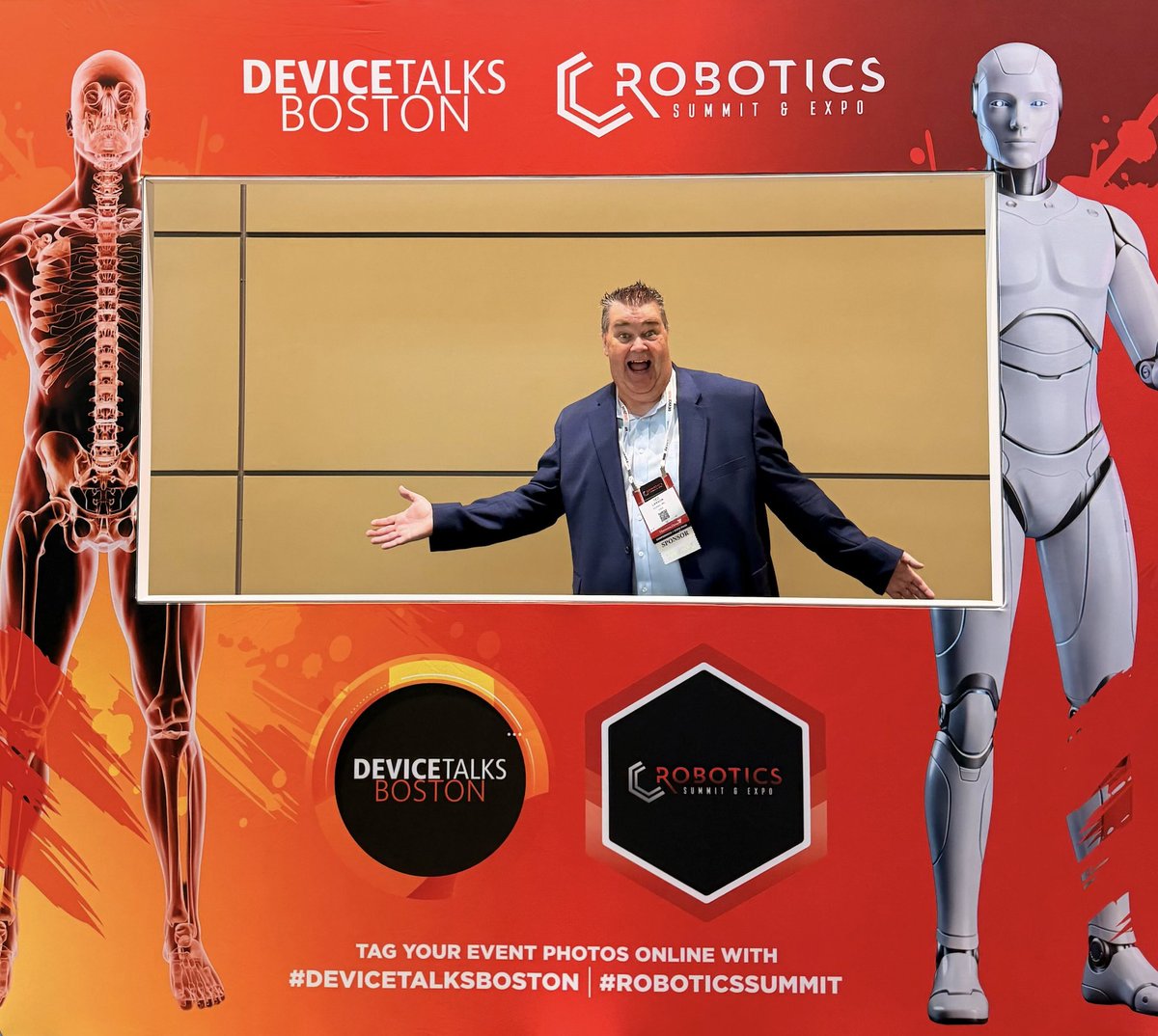
Ted gave a fantastic presentation at this year’s Robotics Summit & Expo in Boston! His session, “Building Better Robots: Balancing Hardware and Software for Real-World Success,” explored what it really takes to build robots that succeed beyond the prototype stage.
The presentation went incredibly well, and Ted had a great time reconnecting with longtime colleagues while also making new connections throughout the event. A huge thank you to everyone who attended the session and stopped by to chat, we truly appreciate the support!
#RoboticsSummit
25