
Jun 13
ATWCE - Africa Technology World Congress Expo is quietly building Africa's deeptech ecosystem by connecting engineers, researchers, and institutions across AI, semiconductors, hardware, and frontier technologies.
This matters beyond just networking.
Africa's deeptech moment requires more than individual companies.
It requires talent pipelines, shared research infrastructure, policy frameworks, and a community of practitioners who can reference each other's work.
ATWCE is building the connective tissue.
At Nelix, we are part of this ecosystem.
Our engineers engage with this community because the chip design challenge we are working on cannot be solved in isolation.
Sovereign technology is a team sport.
Glad to be playing it alongside builders across the continent.
Connect with us lets know what you are building
Nelix.io
#AfricanDeeptech #ADTC #AfricanEngineers #AfricanTech #Semiconductors #AfricaTech #AfricanDeepTech #Semiconductors #HardwareEngineering #ArtificialIntelligence #InnovationEcosystem #SovereignTechnology

4

Jun 12
I just ran a real-world experiment that left me speechless.
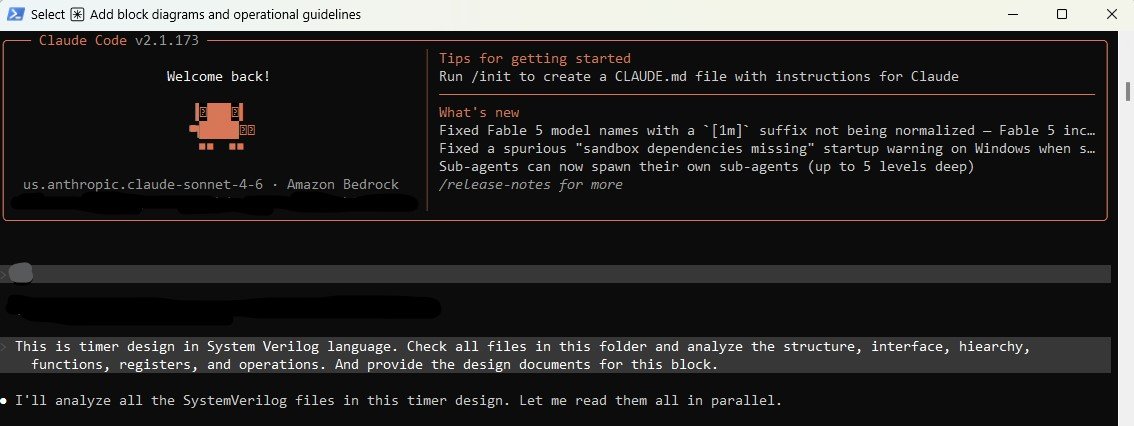
While my team was preparing slides for an upcoming design review, I pointed Claude Code at the SystemVerilog design folder for a certain block and said:
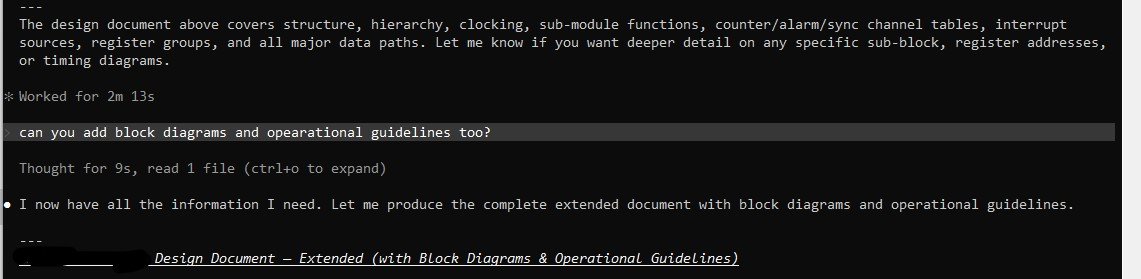
> “Analyze all files — structure, hierarchy, interfaces, functions, registers, operations. Produce full design documents including block diagrams and operational guidelines.”
5 minutes later — it delivered a professional-grade document covering everything: clocking, sub-modules, counter/alarm/sync channels, interrupt sources, register maps, major data paths, and even suggested block diagrams usage guidelines.
This wasn't a toy example. It was real production RTL.
If I had assigned this to a new grad engineer? Months of work countless hours of my time doing mid-review corrections.
This is why the question isn't "Will AI replace engineers?"
The real question is: How can we NOT use AI to 10x our productivity while we focus on the truly hard problems?
The best engineers of the next decade won't be the ones who write every line of RTL themselves. They'll be the ones who know how to direct AI agents to do the heavy lifting — and then apply their judgment, creativity, and system-level insight on top.
The bar just got raised. Dramatically not only SW area but also HW area.
What are you experimenting with in your workflow? Curious to hear from other chip designers, verification folks, and engineering managers.
#ChipDesign #Semiconductors #SystemVerilog #AI #ClaudeCode #HardwareEngineering
2
14
1,468

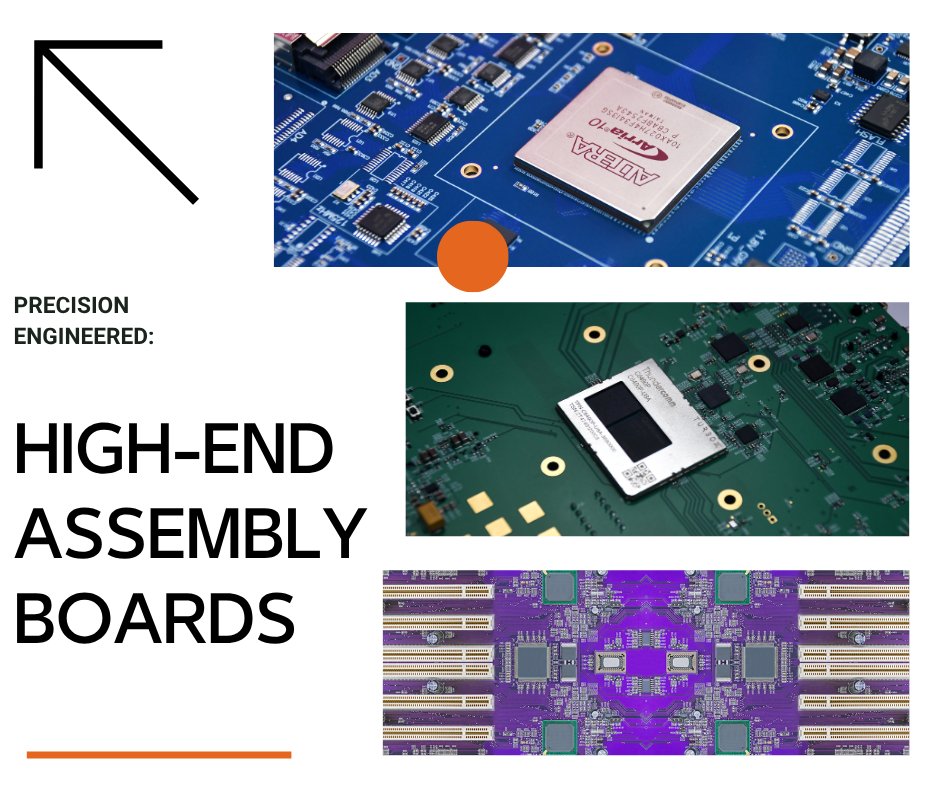
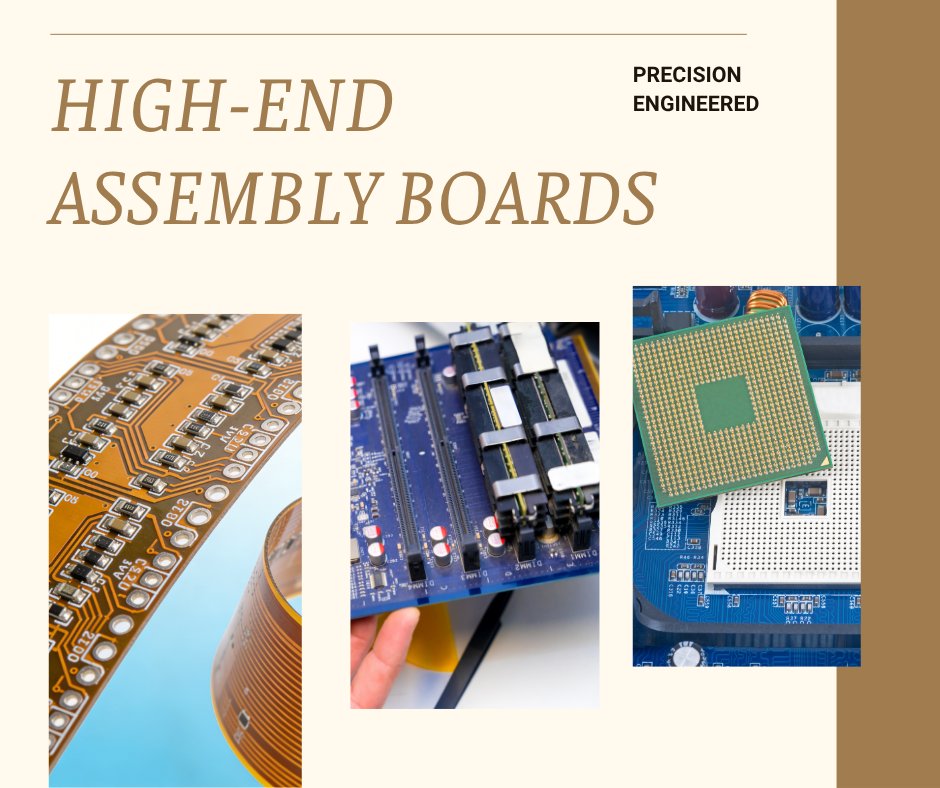
Looking for flawless performance on your complex electronics? 🚀
Why choose PCBCart?
Advanced Tech
Strict Testing
Full Service
👉 Get your custom quote today:pcbcart.com/pcb-assembly
#PCBAssembly #ElectronicsManufacturing #HardwareEngineering #PCBCart
2
16

Jun 11
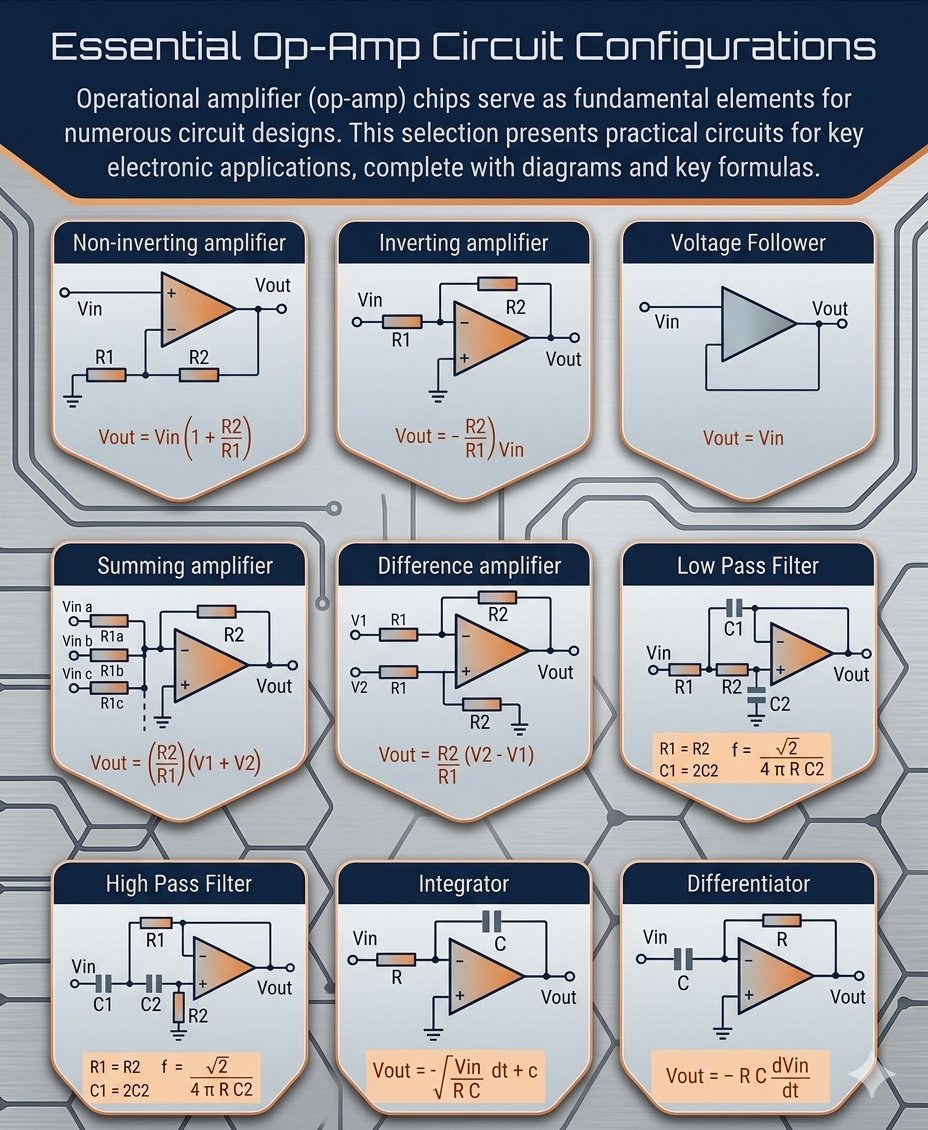
* Basic Op-Amp Configurations in One Sheesystems, and power electronics.
#Electronics #OpAmp #AnalogElectronics #HardwareEngineering #EmbeddedSystems #PowerElectronics #CircuitDesign #engineeringstudent
22

Prepping the third hybrid testing station. Prepping the high-capacity quad-cell battery module to power our system tracking loops.
• Part 28 of 51 • Electronic base configuration • Power stability checks
Advanced tracking requires solid power. #Hookah #HardwareEngineering #TechSetup
7

Jun 10
After years of experience, the challenge is no longer understanding how to build. It is how much you can build without being slowed down by repetition, fragmented tools, and unnecessary complexity. The real leverage comes when your experience is applied at the system level, not spent rebuilding what already exists.
With IDEEZA, you shift from manual iteration to structured acceleration.
• Reuse proven architectures instead of redesigning standard systems
• Focus on system logic while automated processes handle structure
• Keep electronics, firmware, and mechanical layers aligned in one flow
• Collaborate without friction across contributors and disciplines
• Turn years of experience into faster, scalable output
This is how experienced engineers move from linear execution to exponential creation.
Save this if you are ready to scale what you already know with IDEEZA.
#IDEEZA #HardwareEngineering #ProductDevelopment #DeepTech #EmbeddedSystems #Makers #AItools
2
32

Jun 10
EYEX Launch Part 6: What does "Automotive-Grade" actually mean?
Watch Ep. 6 to see the grueling simulation tests that prove EYEX is truly automotive-grade.
#EYEX #AutomotiveTech #HardwareEngineering #Tesla #teslamodely
5

Tomorrow's the day! We'll be at Hardware Pioneers Max 2026 — find us at Booth H7!
Come see four live demos designed to shorten your design cycles and get you to market faster:
🔹 Carbon AM62 OSM-MF dual display with Qt infusion pump demo
🔹 Nitrogen i.MX 95 evaluation kit running Qt OxyScan demo
🔹 Bluetooth 6.0 Channel Sounding
🔹 Auracast Transmitter for Broadcast Audio
We're also showcasing our latest product families — including Veda Wi-Fi 6/6E, Sona Wi-Fi 6 & 6E, Vela Bluetooth 6.0 LE, BL54L Bluetooth LE modules, and the Sentrius™ RS26x battery-powered IP67 temperature sensor platform.
ezurio.com/events/hardware-p…
#HardwarePioneersMax #HPMax26 #Ezurio #WiFi6 #Bluetooth #IoT #EmbeddedSystems #HardwareEngineering

1
46
Eliminating hardware variables: Deploying two Lancer bowls and one Lancer 2.0 bowl to maintain absolute thermal uniformity.
• Part 4 of 51 • Glazed thermal barriers • Phunnel geometry analysis
Keeping variables tightly controlled for accurate behavior tracking. #Hookah #HardwareEngineering #Thermodynamics
3


Jun 8
Behind every successful product is a series of engineering decisions, challenges, and breakthroughs.
At OLogic, we've helped startups and established companies bring innovative hardware products to market across robotics, medical devices, consumer products, scientific instruments, and more.
Our case studies offer a behind-the-scenes look at how we approach complex design challenges, from early concept development through manufacturing and launch.
Explore our latest case studies to see how we've helped clients turn ambitious ideas into real-world products:
na2.hubs.ly/H061qmh0
#ProductDevelopment #HardwareEngineering #Robotics

23

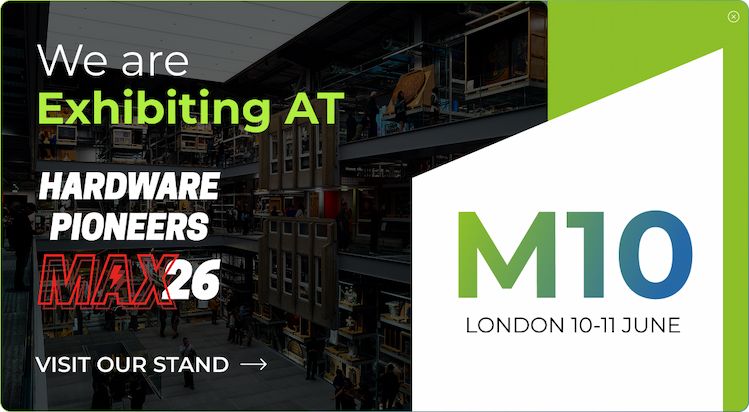
Radiometrix will be exhibiting at Hardware Pioneers Max 2026 this week.
10–11 June 2026
Excel London
Stand M10
Join our team to explore the latest developments in wireless connectivity, IoT, RF engineering, and embedded system design. Discover how Radiometrix's high-performance RF modules can help accelerate your next product development project with reliable, proven wireless solutions.
Whether you're developing industrial IoT devices, telemetry systems, remote monitoring applications, or embedded wireless products, our RF specialists will be available to discuss your requirements and answer your technical questions.
Register today and visit us at Stand M10: radiometrix.com/hardware-pio…
#Wireless #IoT #RFEngineering #RFDesign #HardwareEngineering #EmbeddedSystems #HardwarePioneers #HardwarePioneersMax #WirelessConnectivity
1
23

High-density AI chips operate like heavy furnaces, generating 40–100 kW per rack .
To stop clusters from melting down, hyperscalers are abandoning legacy air cooling for closed liquid loops and chilled water systems.
#Nvidia #AITech #LiquidCooling #HardwareEngineering
1
1
36
Jun 7
Most products do not fail because engineers lack skill. They fail because they were optimized locally and assumed to be ready globally. A PCB is tuned for signal integrity, firmware is refined for timing, and the enclosure fits perfectly. Each layer performs well on its own, and that creates a false sense of completion. But performance in isolation is not proof of system readiness.
Local optimization improves one variable at a time without fully modeling how it interacts with the rest of the stack. A board can be electrically stable yet thermally unstable inside a sealed housing. Firmware can be efficient in controlled tests yet fragile under power fluctuation and environmental noise. The product works in the lab, but the architecture was never stress tested as a unified system.
This is why products pass internal validation and then struggle during global deployment. Scaling introduces manufacturing tolerances, supply chain substitutions, environmental variability, and unpredictable user behavior. If each layer was optimized separately, those interactions were never truly engineered. The failure is architectural, not component level.
True global optimization requires unified constraint visibility across electrical, mechanical, firmware, thermal, and power domains from the beginning. That is the R&D philosophy behind IDEEZA, where design decisions propagate across layers inside one interconnected environment before fabrication ever begins. Global performance becomes intentional, not accidental.
If you are building for scale, start architecting your product on IDEEZA with true system level integration from day one.
#IDEEZA #HardwareEngineering #SystemDesign #EmbeddedSystems #ProductDevelopment #IoTInnovation #Makers #StartupEngineering
1
43

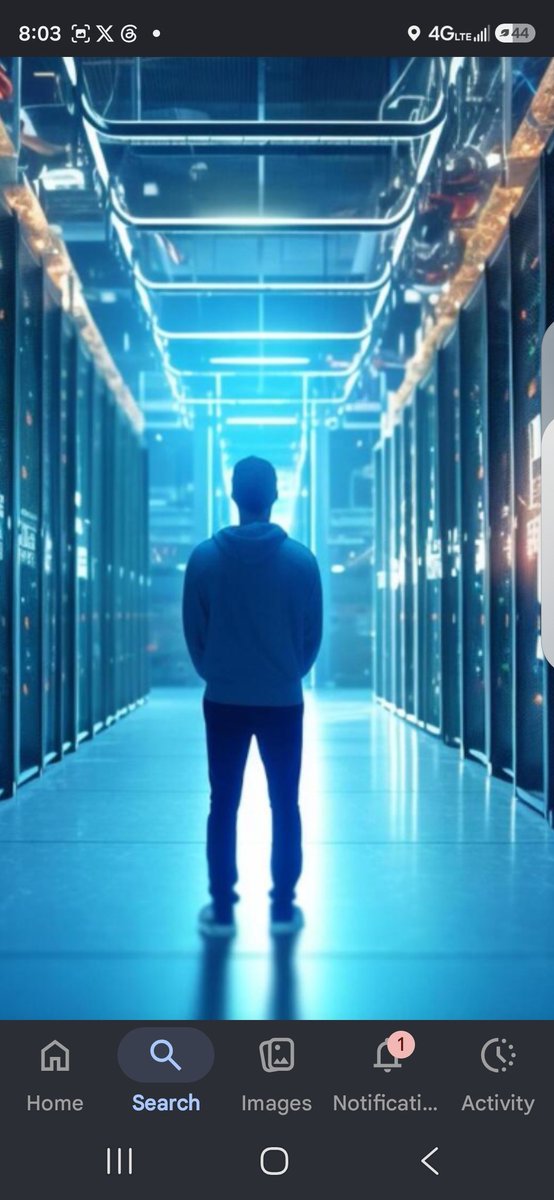
By #evolving our #datacenters into #subterranean angled #tunnels, we can harness a powerful #passivedermal #convection system that pulls freezing air right from the river's edge below and expells hot exhaust straight out of the mountain top. This innovative layout acts as a masterfully designed #engineering #thermosiphon that eliminates the need for massive water waste. Through the clever application of #fluiddynamics, we can completely revolutionize #hardwareengineering and build a self-cooling #infrastructure that defines the absolute pinnacle of #futureengineering. 🖥️🌋
13

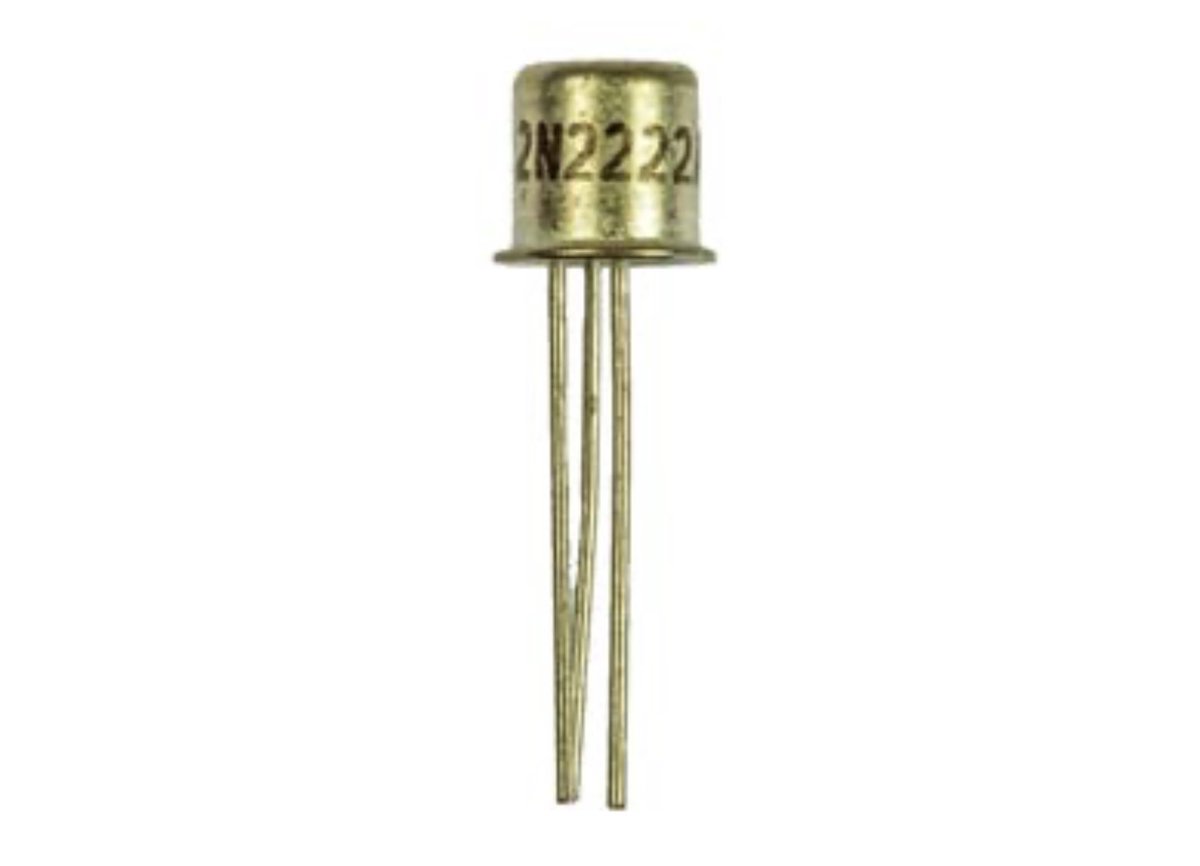
Meet the ultimate "jelly-bean" transistor: the 2N2222!
Developed by Motorola in the early 1960s, this silicon NPN epitaxial planar icon revolutionized electronics by giving engineers a high-speed, rugged, and low-cost workhorse.
It’s widely regarded as the most widely produced transistor ever. (1/5)
👇
#Transistors #2N2222 #2N2222A #circuitdesign #HardwareEngineering #HardwareDesign #electroniccomponents #electronicsnotes
14
26
193
10,482
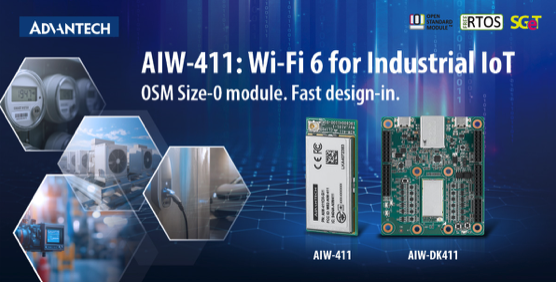
Bridging the Gap: Advantech’s New Ultra-Compact Wireless MCU Module for Industrial IoT
The challenge in Industrial IoT has always been balancing performance, security, and power efficiency within the tightest of spaces.
Advantech has addressed these constraints head-on with the launch of the AIW-411.
Measuring just 30 × 15 mm (OSM Size-0), this new module is a powerhouse, combining a 260 MHz Arm® Cortex-M33 processor with the connectivity of the NXP RW612. It’s built specifically to bring secure, "always-on" wireless performance to the edge.
Why the AIW-411 is a standout for IIoT designs:
🔹 Dual-Mode Connectivity: Integrated Wi-Fi 6 (802.11ax) and Bluetooth® LE 5.4 support for flexible, modern communication.
🔹 Security-First Architecture: With the EdgeLock Secure Enclave, Secure Boot, and hardware encryption, it’s designed to keep industrial endpoints secure from day one.
🔹 Power-Optimized: Features like Target Wake Time (TWT) make it an ideal choice for energy-sensitive applications, from smart meters to remote sensors.
🔹 Industrial-Grade Reliability: Engineered to withstand harsh environments with an operating temperature range of –40 to 85°C.
Whether you're developing EV chargers, HVAC management systems, or data-transmitting industrial sensors, this module is built to streamline your journey from evaluation to full-scale production.
Ready to simplify your wireless integration? Advantech is also offering the AIW-DK411 reference carrier board and full design-in support to help you cut down your development cycle and hit the market faster.
#IndustrialIoT #Advantech #NXP #EmbeddedSystems #WiFI6 #BluetoothLE #HardwareEngineering #IIoT #SmartInfrastructure #EdgeComputing #electronicsnotes
2
21
1,105

Engineering the future of embodied presence. ⚙️
Witness the meticulous assembly of over 100 precision components that bring Pophie to life. Every element is architected to ensure she delivers genuine emotional resonance.
#Pophie #AILifeform #HardwareEngineering #Robotics
3
7
265
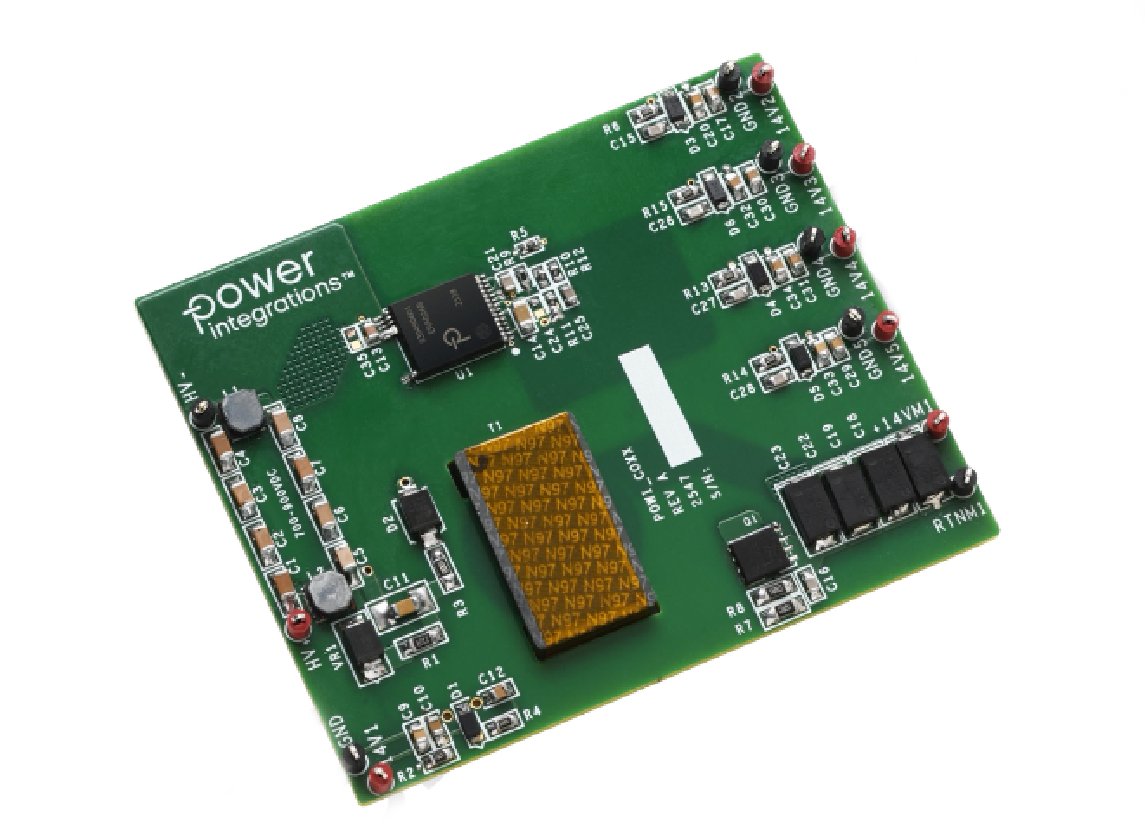
Solving the Data Center Space Crunch: New 800 VDC Power Designs for AI Infrastructure
In the race to scale AI data centers, every millimeter of board space is critical. As power architectures shift to 800 VDC to support high-performance AI racks like the NVIDIA Kyber architecture, auxiliary power supply design has become a significant bottleneck.
Power Integrations has just announced a major step forward, unveiling two ultra-slim auxiliary PSU reference designs that address these high-voltage challenges head-on.
What makes these designs a game-changer? By leveraging their industry-unique 1700 V PowiGaN™ (Gallium Nitride) single-HEMT technology, they’ve managed to create incredibly dense power solutions that outperform traditional silicon carbide (SiC) approaches:
🔹 Space-Efficient: Freeing up ~30% of space on main power distribution boards (PDBs).
🔹 Simplified BOM: ~30% reduction in component count, boosting overall system reliability.
🔹 High Efficiency: Delivering at least 88% efficiency across line and load.
🔹 Low Profile: Ultra-slim form factors (down to 7mm height) ideal for tight blade-rack architectures.
These designs use InnoMux™-2 ICs to support a nominal 1000 VDC input, providing stable power for the "housekeeping" components—like MCUs, gate drivers, and op-amps—that keep AI systems safe and efficient.
For engineers working on the next generation of AI-ready data center infrastructure, this is a massive leap in simplifying high-voltage design.
#DataCenter #AI #PowerElectronics #GaN #PowerIntegrations #HardwareEngineering #Semiconductors #EnergyEfficiency #NVIDIA #electronicsnotes
2
11
89
4,595

May 29
🚨 FOR SALE 🚨
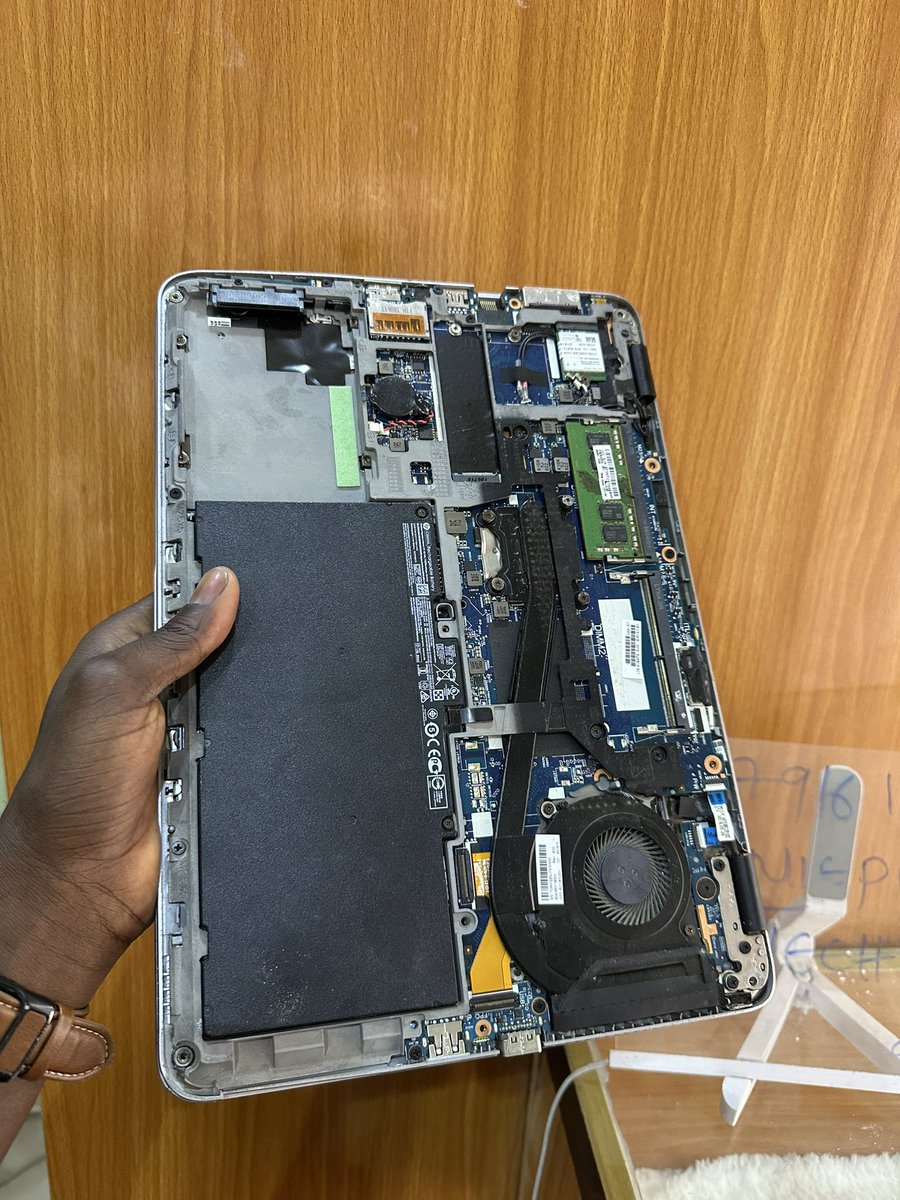
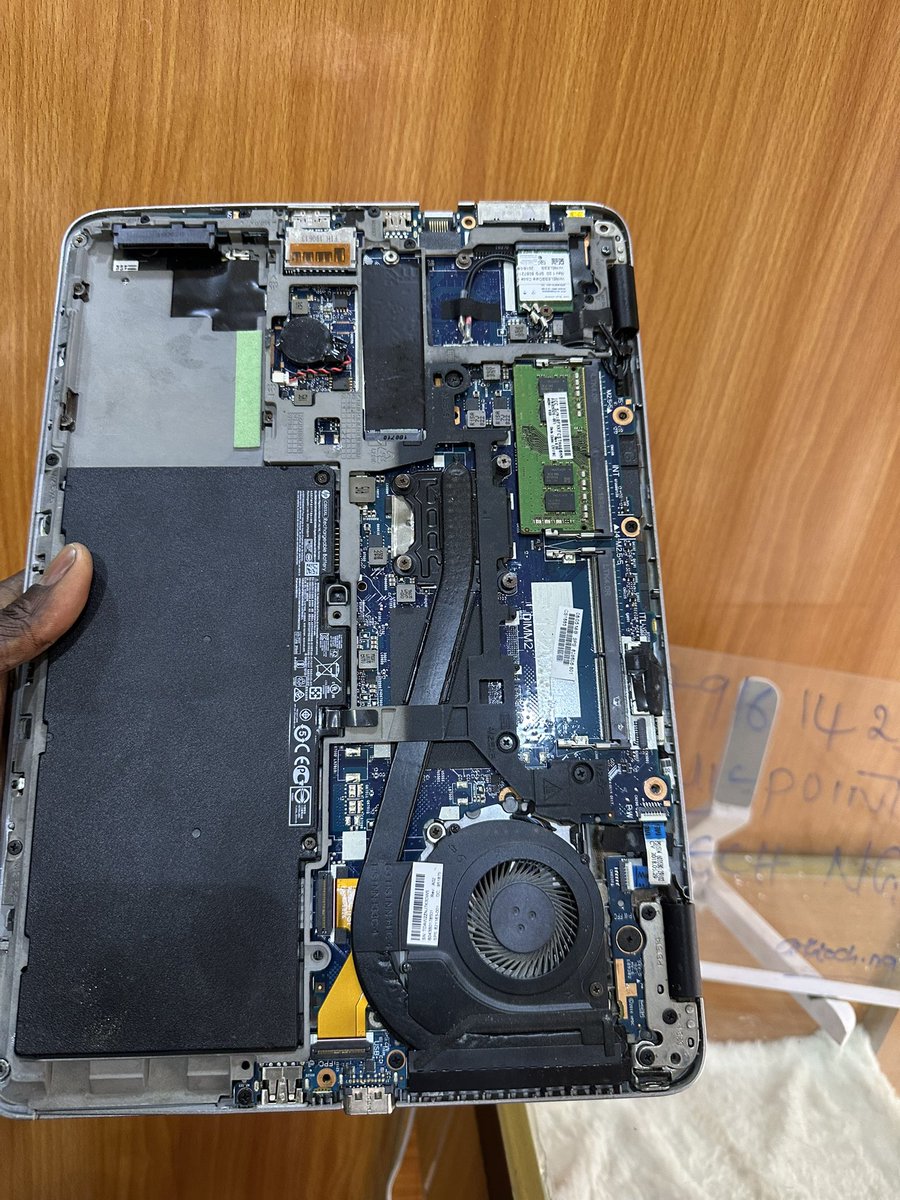
Parting out 2x HP EliteBook 840 G3 laptops 🔥
Available components:
✅ LCD Screens
✅ Motherboards
✅ DDR4 RAM
✅ SSDs
✅ Batteries
✅ Keyboards
✅ Cooling Fans
✅ Wi-Fi Cards
✅ Chargers
✅ Hinges & Casings
All parts tested and available for immediate pickup/shipping.
Perfect for laptop repairs, refurbishing, or spare parts inventory.
📩 DM for prices, photos, and availability.
📍Nigeria
Retweets appreciated 🙏
#LaptopParts #HPEliteBook #TechNigeria #ComputerRepair #HardwareEngineering
1
5
83