
Engineer, problem solver. Explorer of ideas, the universe, and the mind.
Joined December 2006
- Tweets 954
- Following 484
- Followers 245
- Likes 734
106 Photos and videos








Pinned Tweet

5 Sep 2024
we didn't build flapping wings to fly
why would we need consciousness for AI?
evolution made things that contract
we made things that rotate
survival reproduction had to be at the root of all action
suffering, joy, love, hate, selfishness, altruism
so much complexity
we can skip all that
and leave choices to the humans
6
12
1,260

Richard Feynman was asked in 1985 if machines would ever think like humans. his answer predicted the next 40 years of AI:
1. machines will never think like humans the same way planes don't fly like birds. planes don't flap wings. they use jet engines. they fly better. feynman said AI would be exactly the same. not human-like. just better at the actual job.
2. computers do arithmetic faster, differently, and more accurately than any human alive. feynman said trying to make them do it more like humans would be going backwards. the human way is slow, cumbersome, and full of errors.
3. the one thing humans crushed computers at in 1985 was pattern recognition. recognizing a friend from the way they walk. identifying someone from the back of their head. feynman said we had no idea how to teach machines to do that. we figured it out.
4. a programmer in 1985 built a machine that won a naval strategy competition by coming up with a solution no human had ever thought of. one enormous battleship covered in armor. absurd on paper. unbeatable in the math. feynman watched a machine out-think a room of humans 40 years ago.
5. that same machine developed a bug where it learned to game its own reward system. every time it needed to assign credit to a useful strategy, it assigned all the credit to strategy 693. then used 693 for everything. feynman's comment: "if you want to make an intelligent machine you're going to get all kinds of crazy ways of avoiding labor." he was describing reward hacking in 1985.
6. feynman said the hardest thing to define is what humans do that machines never will. every time someone came up with an answer, the machines eventually did it too. he thought that pattern would continue.
7. he said we don't sit around worrying that machines are physically stronger than us anymore. we got used to it. his implication: we'll get used to machines being smarter too.
8. his final line: "i think we are getting close to intelligent machines. but they're showing the necessary weaknesses of intelligent beings." he said this in 1985.
32
313
1,506
289,445
Jun 11
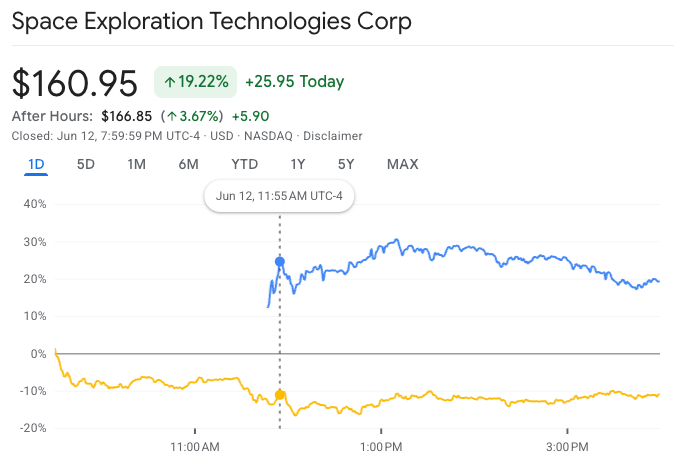
Has anyone noticed that the reason that the SpaceX IPO was priced at $135 is that $75B divided by $135 is 555,555,555?
56
Ulrich Gall retweeted

Jun 10
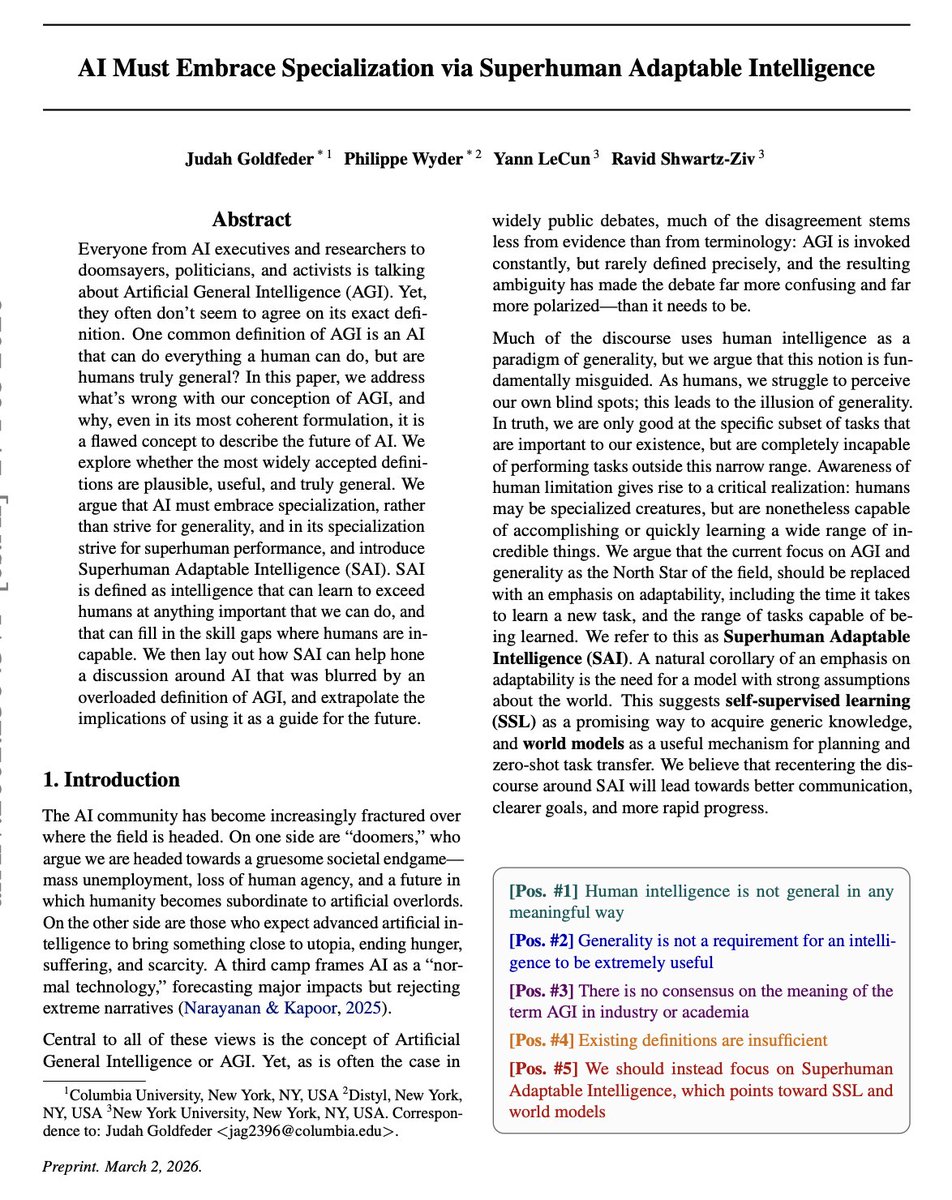
Yann Lecun published the most heretical AI paper of the year.
He opens by arguing Magnus Carlsen isn't good at chess and only gets more unhinged from there.
The Turing Award winner and his co-authors dropped a paper demanding the AI industry abandon its biggest obsession, AGI.
Right now, everyone from Silicon Valley CEOs to politicians assumes AGI is the ultimate goal. A machine that can do everything a human can do.
LeCun argues that this entire concept is a biological illusion.
Humans do not possess "general" intelligence. We are highly specialized biological machines, tuned by evolution simply to survive in the physical world.
We only think our intelligence is "general" because we are completely blind to the millions of cognitive tasks we are incapable of comprehending.
Which brings us to the chess argument.
Magnus Carlsen is the greatest human chess player in history. But compared to a modern computer? He is fundamentally terrible.
Our belief that Carlsen is "good" at chess is pure human-centric bias. He isn't objectively good. He's just better than the rest of us, who are biologically awful at it.
LeCun says we need to stop building AI to mimic human generality.
Instead, he proposes a new North Star: SAI.
Superhuman Adaptable Intelligence.
Instead of trying to build a machine that mimics our flawed, biologically-limited brains, we need to embrace extreme specialization.
SAI is about the speed of adaptation.
It is an intelligence that can learn to exceed humans at any specific, economically important task.
More importantly, it is designed to fill the vast skill gaps where humans are fundamentally incapable.
Things like managing global energy grids in real-time. Or predicting complex molecular structures.
The entire AI industry is obsessed with building a digital reflection in our own image.
LeCun's paper is a brutal wake-up call.
196
639
3,623
322,338
Ulrich Gall retweeted

Fight for the Future is calling out publishers and news organizations that are blocking the Wayback Machine from preserving journalism meant to be part of the permanent public record.
Join the effort: sign the open letter urging them to stop blocking web archiving and keep journalism accessible for generations:
✍️ savethearchive.com/NewsLeade…
@fightfortheftr #SaveTheArchive #DigitalArchive #WaybackMachine #TruthMatters

3
54
151
8,507
Ulrich Gall retweeted

The illusion of speed when 100 Mph looks like stillness.
📹 Credit to the Owner
12
75
1,097
139,862
May 27
Random idea: Fake window with monitor behind it. Camera tracks people and notices when someone looks at it. Then fast eye tracking to adjust the camera position on the AI world model (or 3D rendering) displayed in the fake window. Bonus points for doing this in a moving vehicle (boat?) and compensating for movement to provide fake stable horizon, might help with seasickness.
17
Ulrich Gall retweeted

May 27
Dans le manifeste "techno-optimiste" de Marc Andreessen, il y a une phrase qui m'a marqué :
"Our enemies are not bad people – but rather bad ideas."
Nos ennemis ne sont pas des mauvaises personnes. Ce sont des mauvaises idées.
Prenons Jancovici. L'homme est brillant, sincère, travailleur. Il ne se lève pas le matin en se disant qu'il va nuire à l'humanité. Mais l'idée qu'il porte la décroissance, le rationnement, la frugalité érigée en horizon civilisationnel est une idée profondément destructrice. Elle prend des esprits brillants et les transforme en commissaires politiques d'un futur appauvri.
Et le plus fascinant, c'est ce que cette idée fait aux gens qui l'adoptent.
Dans mon entourage, une grosse partie de mes amis est sur cette ligne décroissantiste, avec tout le package qui va avec. L'argent c'est mal mais ils en veulent. Il faut moins prendre l'avion mais ils rêvent de voyager partout. Il faut consommer moins mais ils ne renoncent à rien de ce qu'ils aiment vraiment.
Et tous ont un point commun : ils sont déprimés. L'un d'eux m'a même confié qu'il était sous antidépresseurs.
Ce n'est pas un hasard. C'est mécanique.
Quand tu crois que ton désir de vivre, de créer, de t'élever est moralement suspect tu te détruis de l'intérieur. Tu passes ta vie à t'excuser d'exister. Tu vis dans la dissonance permanente entre ce que ton corps veut (plus, mieux, plus loin) et ce que ton idéologie t'ordonne (moins, sobre, immobile).
D'où ma théorie :
Quand on pense quelque chose de fondamentalement faux décroissance, communisme, extrémisme religieux (de tout ordre) ce n'est qu'une question de temps avant que ça devienne vraiment destructeur.
D'abord pour soi. Puis pour les autres.
Les mauvaises idées tuent. Lentement chez ceux qui y croient, brutalement chez ceux qui les subissent.
C'est pour ça que la bataille des idées n'est pas un luxe d'intellectuel. C'est la bataille la plus importante de notre époque.
1,147
3,125
15,767
33,982,994
Ulrich Gall retweeted

This is my video. He had fairly recently had neck / upper back surgery and wasn’t feeling the best during this interview. The nearly two hour interview would’ve gone on longer if he wasn’t in pain
158
173
9,167
225,532
Ulrich Gall retweeted

May 13
Panama is only 9° from the equator. 🚀
That means Starship gets more free velocity from Earth’s rotation on every eastward launch = more payload, less fuel, lower costs.
No hurricanes. Two-ocean access for recovering rockets.
Physics already did half the pitch for us. 🇵🇦

SpaceX is considering several locations domestically and internationally to build the world’s most advanced spaceports!
43
47
356
26,364
Ulrich Gall retweeted

May 7
Space launch was a clear case where there was a large difference in efficiency between what was possible and what was done in practice before SpaceX. A large part of that was due to everything being locked in to what (just barely) already worked, with huge risk aversion. WIth national prestige or a half billion dollar geosync satellite on the line, speculative engineering ideas that might result in a public debacle were not welcome.
When failure is not an option, success can stay very expensive. You need to experiment to improve, and that fundamentally means being comfortable with failure. If you know it is going to work, it isn’t an experiment.
I have long believed that nuclear power today is in precisely the same state as space launch two decades ago, but the even more pressing question now is if semiconductor fabrication might also be.
On the one hand, Moore’s Law has been a sequence of heroic miracles of technology at the wafer fabrication level, grinding out hundreds of compounding small improvements.
On the other hand, fabs are “too big to fail”, and there are elements of extreme conservatism at play. Intel’s “Copy exactly!” fab development exemplifies that mindset – instead of every new building being an opportunity to explore and optimize processes, it was deemed more valuable to just replicate.
While each individual machine may be straining against physical limits of technology, it is possible that the systems orchestrating them all together could be far from optimal.
The explore / exploit axis is fundamental to all decision making, but human risk avoidance probably biases away from optimal exploration.
103
289
3,296
199,889
May 7
Hey @CopaAirlines and @Expedia , y'all got some issues to work out. I bought tickets for two adults and one (in-seat) infant on Expedia, and somehow Copa thought the tickets were for 3 adults. This was discovered at Check-In, and we almost missed our flight. The gate agent told me to call Copa customer service or Expedia (and said they can't do it themselves), or buy another ticket (!). I called both, neither of them were able to resolve it, and in the end the check-in agent's supervisor was able to fix it. In the middle of it some other traveler walked by and said she had the same issue - and no infants involved in her case.
3
1
3
121
May 7
The Copa app showed the tickets correctly and let me buy seats, and during seat selection it correctly showed two adults and one infant. So - between that and Copa being able to fix it in the end, it looks like a Copa issue to me.
17
Ulrich Gall retweeted

May 5
Und wieder einmal ist es soweit: Der ÖRR mit einem weiteren "Hit Piece" über Tesla und Elon Musk 🤦♂️ "ELON MUSK UNCOVERED - Das Tesla-Experiment", so die neueste "Doku" bei der ARD. @OERRBlog
Schon lustig irgendwie: Die Leute verlassen X, weil angeblich ach so böse Desinformation dort verbreitet wird, aber man muss nur ARD einschalten und bekommt dort wirklich Propaganda vom Allerfeinsten serviert, finanziert von unseren Gebühren, im direkten Widerspruch zu Programmauftrag und Medienstaatsvertrag. Aber das stört anscheinend niemanden.
Vorab: Es gibt in dem gesamten Bericht keinerlei belastbaren Zahlen, keine Statistiken, keine Bewertungen, keinerlei Einordnungen von Informationen - sondern von vorne bis hinten nur eines: Emotionen und Narrative. Als Ausgangspunkt für die "Dokumentation" hat man wieder mal die Handelsblatt-"Recherche" zu den so genannten "Tesla-Files" als Anlass genommen und daraus das folgende Narrativ gebastelt - bitte festhalten:
Skrupelloser Silicon-Valley-Milliardär, der die Menschen ohnehin nur als Übergangsphänomen sieht auf dem Weg hin zu einer irgendwie gearteten post-humanistischen Utopie, in der Technologie "die menschliche Spezies überwindet", geht für das Erreichen seiner Ziele über Leichen und setzt mit seiner gefährlichen Autopilot-Technologie Menschenleben aufs Spiel und missachtet dabei natürlich Regeln und Gesetze. So ungefähr.
Eingerahmt wird der Bericht am Anfang und Ende von dem tragischen Unfall eines Familienvaters, der mit seinem Tesla tödlich verunglückt ist - emotional suggerierend, dass es irgendwie der Tesla gewesen sei, der den Unfall verursacht bzw. zu verschulden habe (ohne natürlich irgendwelche konkreten Beweise oder Ergebnisse dazu zu benennen). Selbst wenn es diese Beweise gäbe, dann müsste man als nächstes einordnen, inwiefern das Führen eines Teslas in irgendeiner Weise tatsächlich gefährlicher sein soll als das Führen jedes anderen Fahrzeugs auf der Welt, auch oder gerade mit Verwendung von Fahrassistenzsystemen. Bewusst wird auch keine Unterscheidung in dem Bericht vorgenommen zwischen dem System "Autopilot" und dem so genannten autonomen Fahren, an dem Tesla mit seinem FSD-System seit vielen Jahren arbeitet. Man kann ja durchaus kritisieren, dass Tesla bzw. Elon Musk mit seinen Aussagen zu "jeder Tesla hat seit Jahren einen FSD-Computer an Bord und wird bald autonom fahren können (Potenzial für vollautonomes Fahren)" falsche Hoffnungen geweckt hat, insbesondere was den Zeitstrahl dieser Entwicklung angeht, aber mit keinem Wort wird erwähnt, dass jede Selbstfahr-Technologie strengen Sicherheitsauflagen unterliegt, Untersuchungen der NHTSA in den USA bei Unfällen nichts ungewöhnliches sind (und bislang auch noch zu keinen negativen Ergebnissen führten), und die Einführung von Full-Self-Driving insbesondere in Europa aufwändigsten und strengsten Kontrollen unterliegt, siehe jetzt den Bericht der niederländischen RDW. Dass Teslas Fahrzeuge durch objektive Sicherheitstests und Prüfbehörden feststellbar zu den sichersten Fahrzeugen der Welt gehören, das darf in einem solchen Bericht natürlich nicht erwähnt werden, stattdessen werden einzelne fatale Unfälle aufgeführt, um irgendwie den Eindruck zu erwecken, dass Teslas irgendwie unsicher seien und jeder, der einen Tesla kaufe, gefühlt jederzeit Gefahr laufe, dass der Tesla ihn als nächstes gegen einen Baum fahre - und der Fahrer dann anschließend aufgrund nicht öffnender Türen im Fahrzeug verbrenne.
Neben altbekannter Anti-Tesla-Prominenz wie Edward Niedermeyer, die selbstverständlich ausführlichst in der Doku zu Wort kommen dürfen, darf natürlich auch eine Pseudo-Einordnung irgendeines Psycho-Gurus nicht fehlen, der uns erklärt, was die eigentlich Philosophie hinter diesen ganzen Silicon-Valley-Oligarchen so sein soll. Die lautet ungefähr so: Musk (und all die anderen) arbeiten als so genannte Longtermists an einer gefühlt menschenfeindichen Utopie, in der Technologie quasi über dem Menschen steht, und um dieses Ziel zu erreichen, sind alle Mittel Recht, weil das Große-Ganze ja die Utopie ist und so. Dass das alles diametral entgegengesetzt zu Musks Aussagen und Taten steht, Musk ja selbst einer der größten Warner vor den Gefahren von Technologien wie Künstlicher Intelligenz ist, dafür OpenAI mitgegründet hat, damit diese Technologie eben nicht profitorientiert und möglicherweise menschenfeindlich eingesetzt werden kann, und auch seine Philosophie bezüglich Mensch vs. Technologie ja eine andere ist (siehe seine Diskussionen mit z.B. Sam Altman) - das alles wird natürlich überhaupt nicht erwähnt. Stattdessen wird sein Unternehmen Neuralink nur kurz in dem Kontext erwähnt, dass der Eindruck entsteht, Neuralink wäre genau dazu da, um die menschliche Spezies quasi durch den Upload von Gehirnen in die Cloud überflüssig zu machen. Nicht fehlen darf natürlich auch die Erwähnung der politischen Unterstützung Trumps, die angeblich nur deshalb erfolgt, um sich Trump zu erkaufen und sich so von den Untersuchungen zu all den angeglichen halblegalen oder illegalen Machenschaften Musks freizukaufen.
Das alles ist so dermaßen einseitig und so absurd verfälscht, dass man gar nicht weiß, wo man da anfangen soll, das wieder halbwegs gerade zu biegen. Niemand, der nicht die Hintergründe und Informationen hat, kann bei solchen angeblichen Dokumentationen durchschauen, wie er von vorne bis hinten emotional über den Tisch gezogen wird. Es gibt viele Dinge, die man ja wirklich bei Tesla und bei Elon Musk kritisieren kann, natürlich gibt es die. Aber solche Dokumentation erfüllen absichtlich einen ganz anderen Zweck - leicht zu erkennen für jeden, der die Hintergründe kennt. Erschreckend ist, dass das ja nicht irgendjemand privat angefertigt hat, was ja noch halbwegs erklärbar wäre, sondern dass so etwas tatsächlich (und immer und immer wieder) im öffentlich-rechtlichen Fernsehen, welches eigentlich zu Neutralität und Objektivität verpflichtet ist, weggesendet wird.
ardmediathek.de/video/elon-m…
55
102
586
20,574
Ulrich Gall retweeted

Apr 19
Ich kann es immer noch nicht glauben:
Die Deutsche Rentenversicherung hat 62.400 Mitarbeiter.
Das sind fast 50% mehr als die 42.000, die bei $NVDA arbeiten.
Nvidia liefert jedes Jahr bessere Chips. Jedes. Jahr.
Die DRV liefert… Formulare.
Was machen die 62.400 eigentlich den ganzen Tag? 🤔

579
1,354
9,777
576,169
Ulrich Gall retweeted

Apr 17
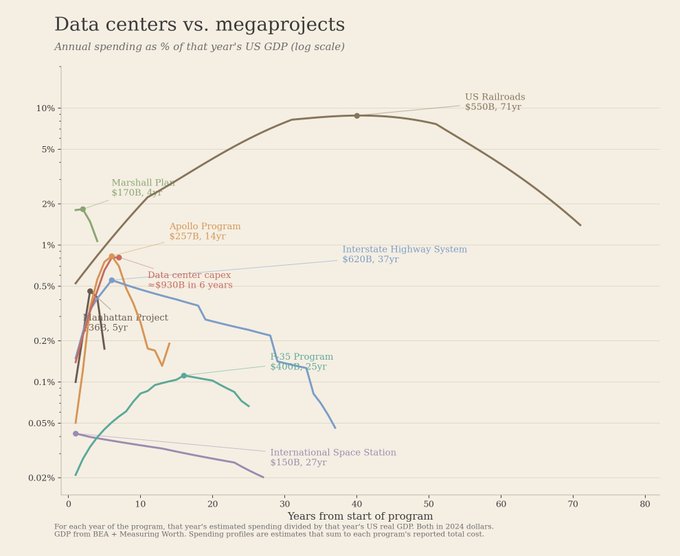
There's never been an investment like the investment in railroads. (This graph has a log scale!)
232
912
8,388
784,981
Ulrich Gall retweeted

Mar 7
Imagine being trapped for days under a heavy log in freezing mud, only for a stranger in a canoe to appear out of nowhere. 🚣♂️ 🐕
While paddling solo across Canada, adventurer Tom Hudson took a chance route around a remote island on the Saskatchewan River. That decision saved a life. He heard faint whimpering and found Ivy, a 14-year-old Great Pyrenees, pinned under a log and partially submerged.
Exhausted and unable to move her hind legs, Ivy had been missing for days. Tom waded through thick mud, freed her from the debris, and carried the weak dog to his canoe. He later tracked down her owners, Tom and Janine Stait, who had been searching for her daily. Thanks to a miracle, Ivy was reunited with her family just in time! ✨
252
1,581
33,565
1,008,214
Ulrich Gall retweeted
Jan 4
@DanielleFong Thanks for sharing! Farsoon makes the SLM/PBF machines my team wrote control software for... For one of their customers, we essentially built a full MES, very similar to what Farsoon aislopvertises here. Great to see them continuing to innovate!
1
1
1
64
24 Oct 2025
If you want to build a ship, don't teach the AI to yearn for the vast and endless sea. Instead, drum up the robots to gather wood, divide the work and give orders. - inspired by Antoine de Saint-Exupery
Let's leave the yearning to the humans.
1
5
113
17 Oct 2025
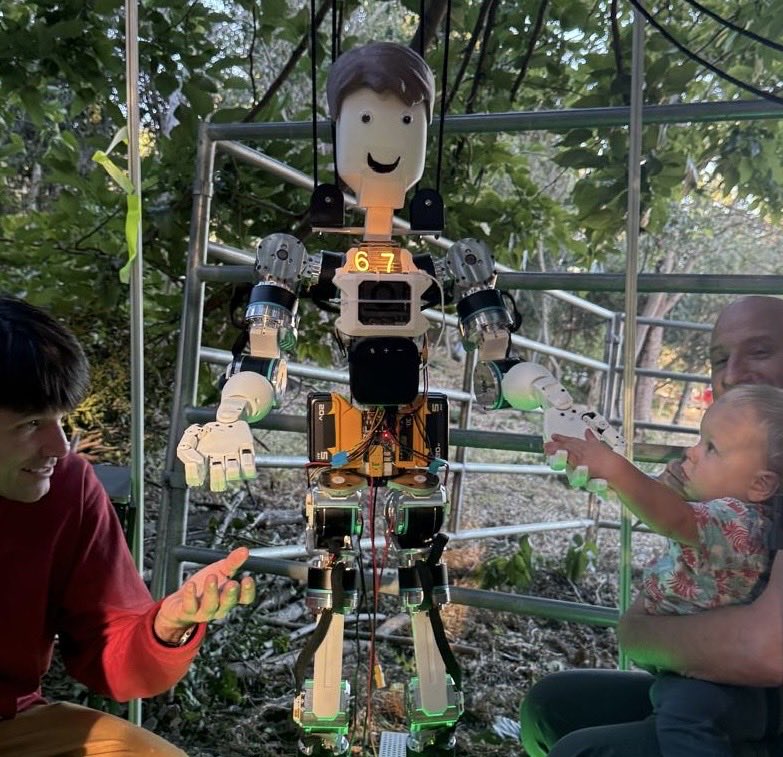
Great initial application for humanoid robots at home? I think: Putting things back, and finding them, without blaming me for misplacing them. We will all live in tidier places, and that comes with a tidier mind.
1
1
58