
Nft Lover | Web3 Content Creator
Joined October 2021
- Tweets 24,153
- Following 4,409
- Followers 3,323
- Likes 27,923
582 Photos and videos



Pinned Tweet

16h
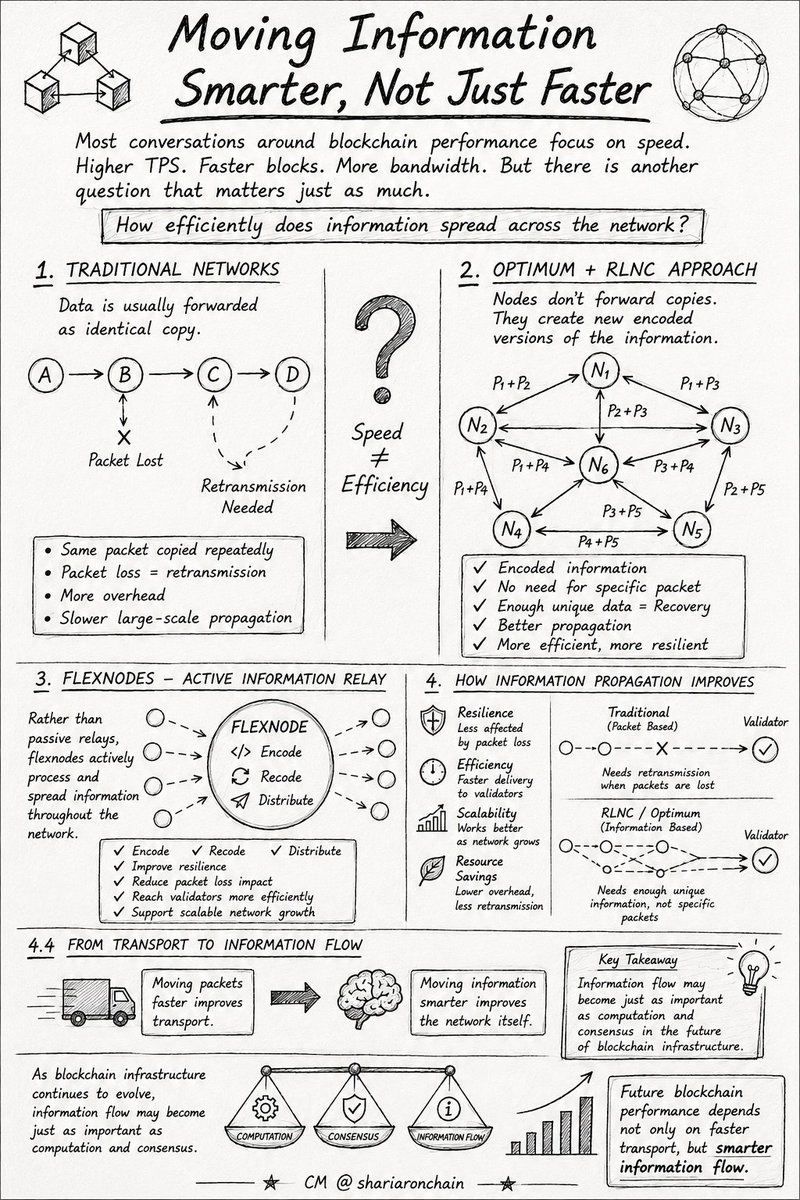
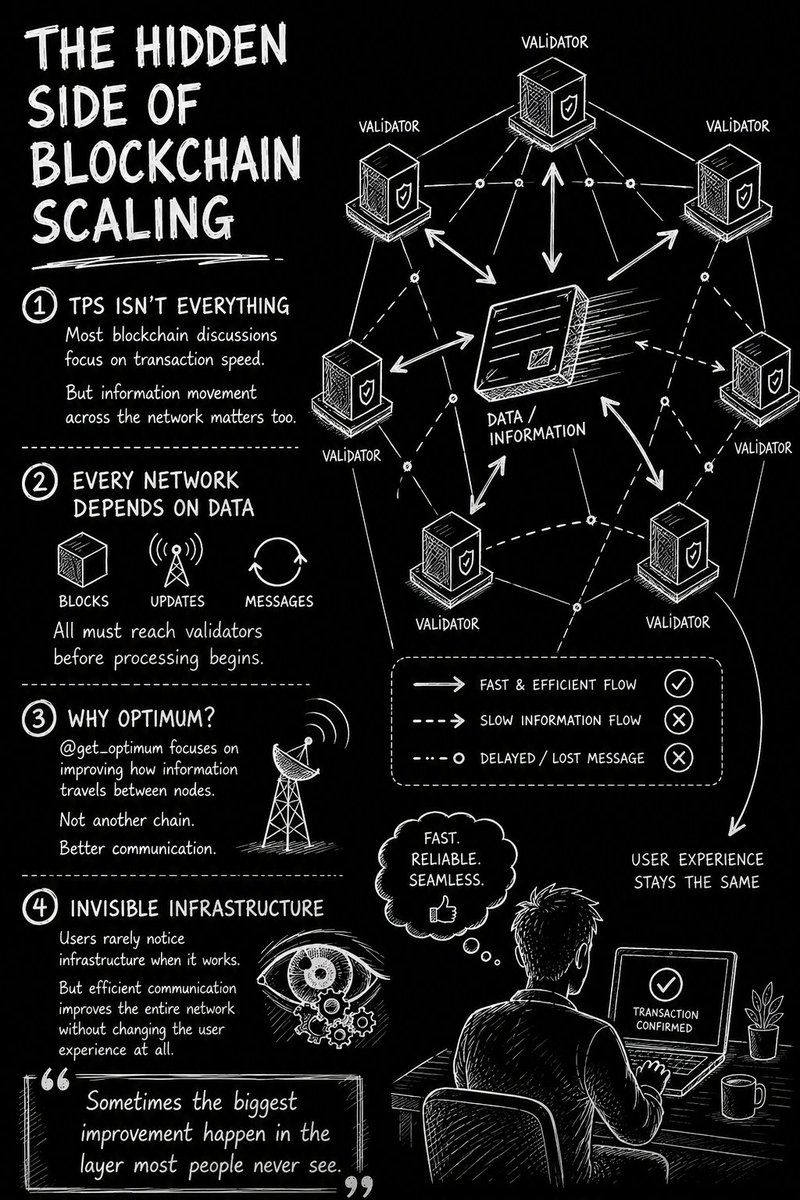
Most conversation around blockchain performance focus on speed.
Higher TPS. Faster blocks. More bandwidth. But there is another question that matters just as much.
How efficiently does information spread across the network?
In traditional networks, data is usually forwarded as identical copy. If some packet are lost along the way, the network often need additional transmission to recover what was missing. As network grow larger, this can create unnecessary overhead and slow down propagation.
What make @get_optimum interesting is that it approaches the problem differently.
Using random linear network coding (RLNC), node don't simply forward data. They continuously create new encoded version of that information. Instead of relying on specific packet arriving successfully, the network only need enough unique information to reconstruct the original data.
This change the way propagation work
The question is no longer:
Did a particular packet arrive? Do we have enough information to rebuild the message?
Flexnodes help push this idea even further.
Rather than acting as passive relays, they actively encode, recode and distribute information throughout the network. This improve resilience, reduces the impact of packet loss and help data reach validator more efficiently.
From a system perspective, that is an important distinction. Moving packets faster improves transport. Moving information smarter improves the network itself.
As blockchain infrastructure continues to evolve, information flow may become just as important as computation and consensus.
CM @shariaronchain
21
27
148
18h
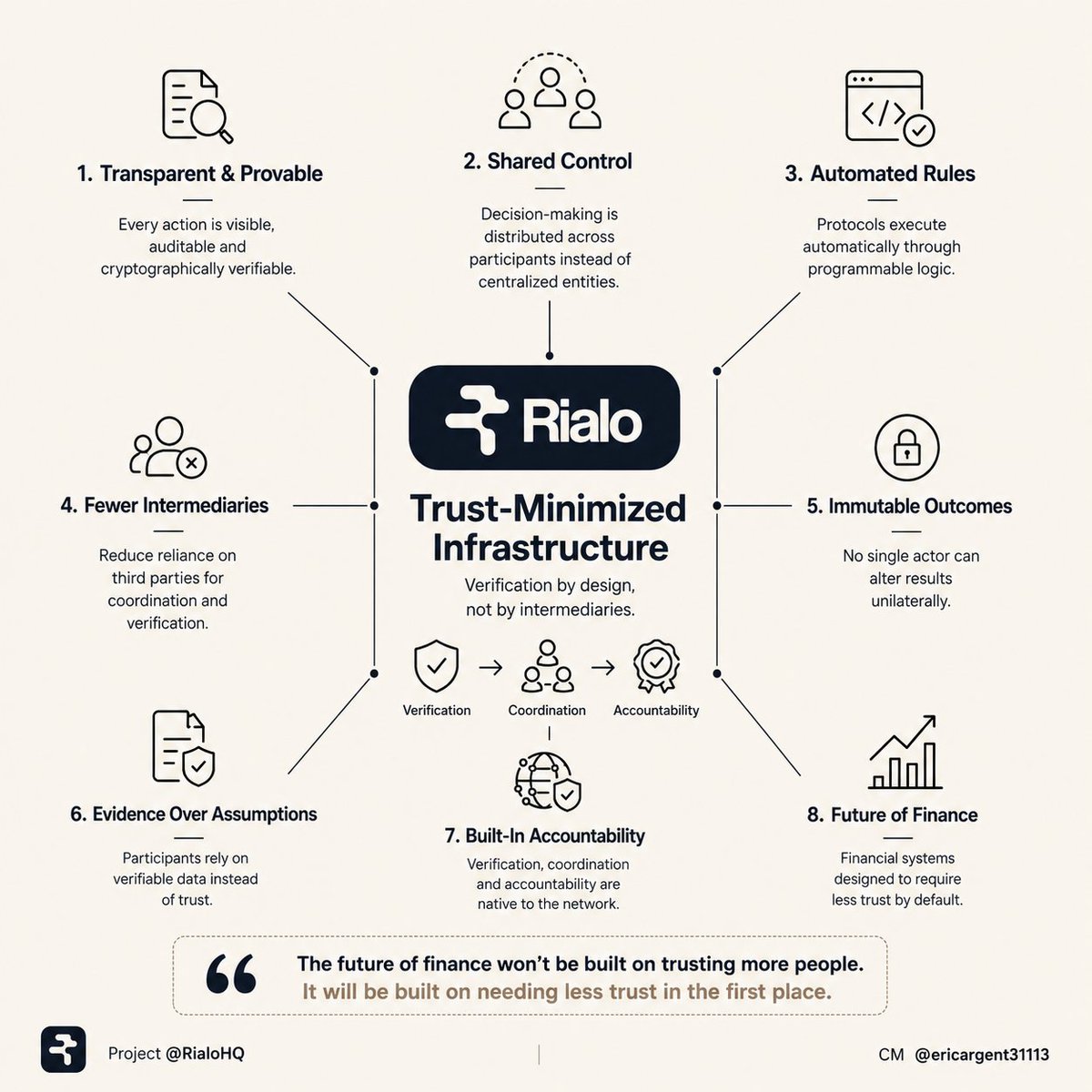
The best financial system do not require more trust.
For decades, people have relied on intermediaries, institution and third party to verify transaction and enforce rules.
But technology is making it possible to build system where verification happen by design.
Where:
● action are transparent and provable
● control is shared across participant
● rules execute automatically
● no single entity can change outcomes alone
This is the foundation of trust-minimized infrastructure. Instead of depending on assumptions, participants can rely on evidence.
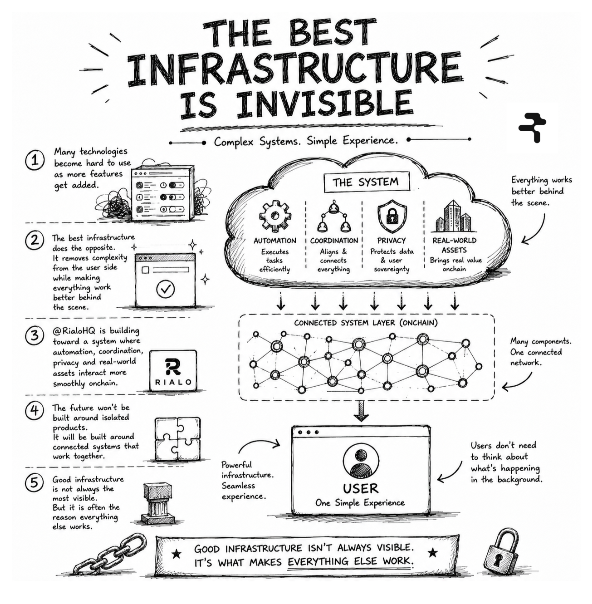
Project @RialoHQ are working toward this model by focusing on system where verification, coordination and accountability are built directly into the network.
Because the future of finance won't be built on trusting more people. It will be built on needing less trust in the first place.
CM @ericargent31113
13
21
273
Jun 13
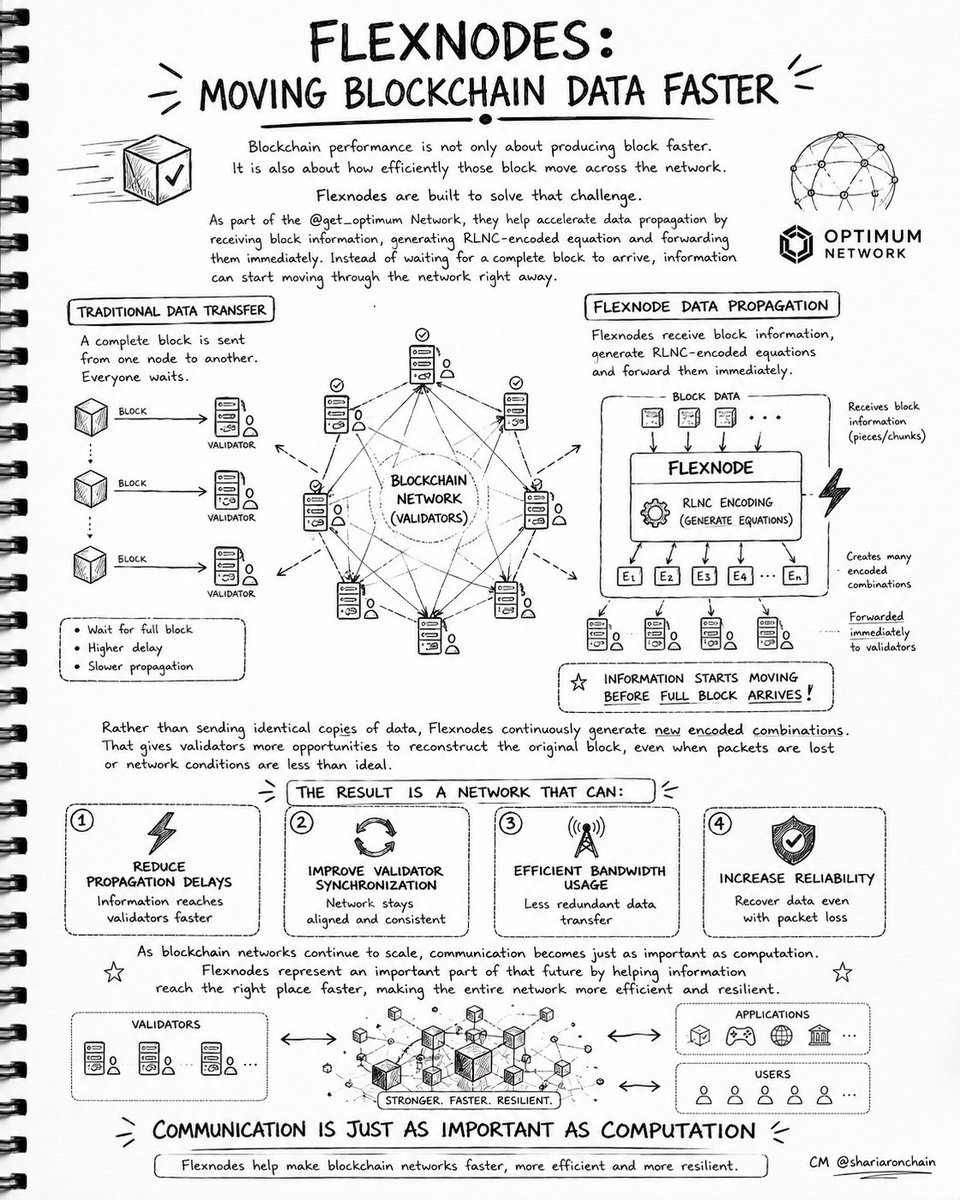
Blockchain performance is not only about producing block faster.
It is also about how efficiently those block move across the network.
Flexnodes are built to solve that challenge.
As part of the @get_optimum Network, they help accelerate data propagation by receiving block information, generating RLNC-encoded equation and forwarding them immediately. Instead of waiting for a complete block to arrive, information can start moving through the network right away.
This approach creates a major advantage.
Rather than sending identical copies of data, Flexnodes continuously generate new encoded combinations. That gives validator more opportunities to reconstruct the original block, even when packets are lost or network conditions are less than ideal.
The result is a network that can:
• Reduce propagation delays
• Improve validator synchronization
• Use bandwidth more efficiently
• Increase reliability during data transmission
As blockchain networks continue to scale, communication becomes just as important as computation.
Flexnode represent an important part of that future by helping information reach the right place faster, making the entire network more efficient and resilient.
CM @shariaronchain
25
35
406
Jun 13
A project is only as strong as the people behind it.
Good technology matters, but a supportive community is what helps ideas grow and last.
What I like about @OriginalBlokyz is the focus on bringing builders and creators together. The best things in Web3 often come from people sharing ideas, learning from each other and building side by side.
Looking forward to seeing how this community grows.
My first art work
@Ukj1111
@MonkOnTheBlok
72
70
839
atik.eth retweeted

Jun 10
Remember this, an upcoming story begins here.
gLOObiez.
5,497
3,991
5,545
76,191
Jun 11
Everyone talk about faster blockchain.
Higher TPS. Shorter block time. Faster finality.
But there is a part of the system that often get less attention, how quickly information move across the network.
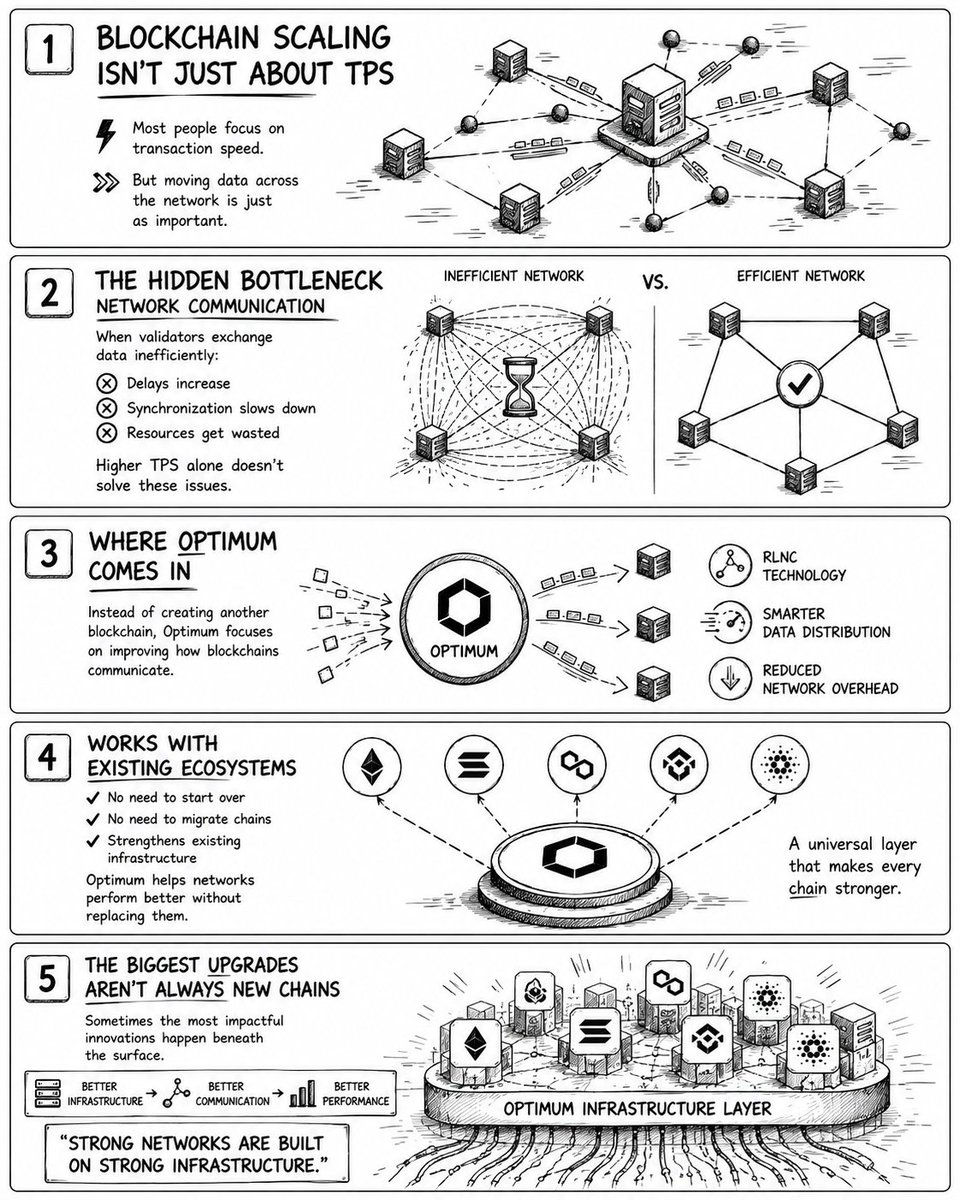
A block can be produced in milliseconds, but if validator around the world take longer to receive it, overall performance still suffer. Speed is not only about creating block. It is also about delivering them.
This is the problem @get_optimum is focused on solving.
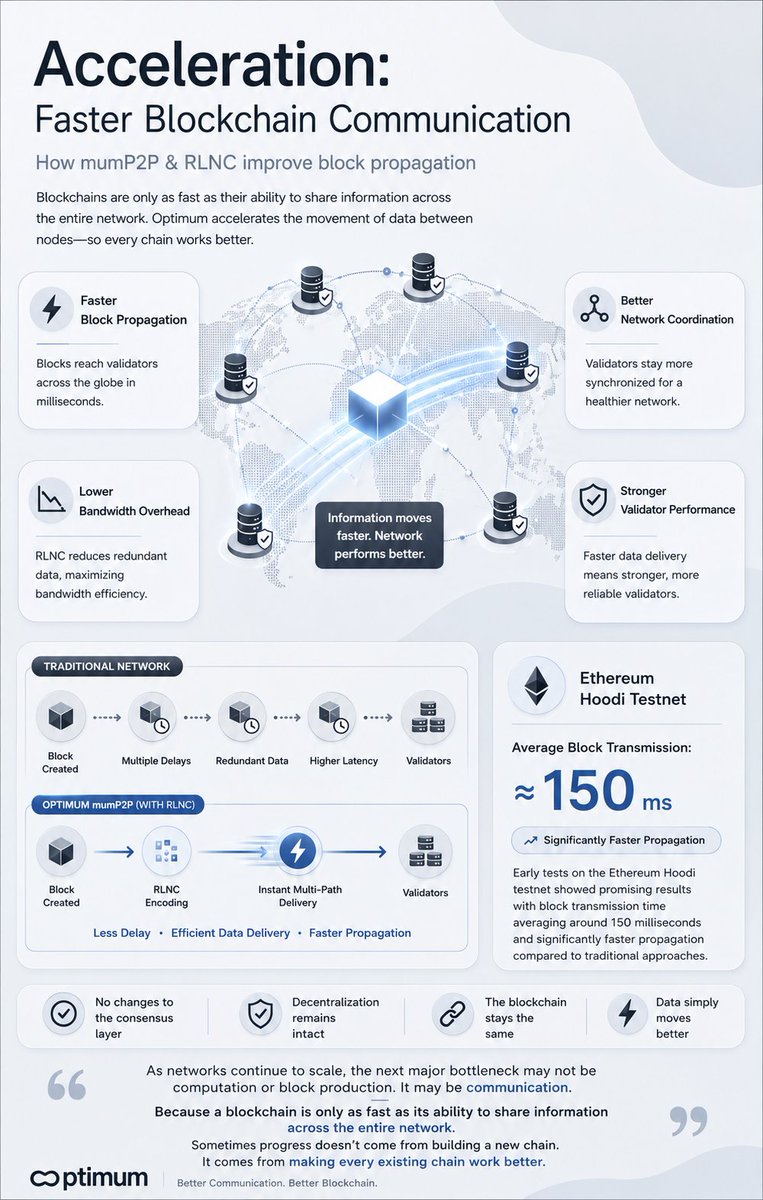
Rather than building another blockchain, Optimum is improving the way blockchain data travel between node. Through its mumP2P protocol and the use of Random Linear Network Coding (RLNC), the network is designed to move data more efficiently, reduce delays and improve synchronization across validator.
The goal is simple
* Faster block propagation
* Better network coordination
* Lower bandwidth overhead
* Stronger validator performance
Early testing on the Ethereum hoodi testnet showed promising result with block transmission time averaging around 150 milliseconds and significantly faster propagation compared to traditional approache.
What is interesting is that these improvement don't require changing the consensus layer or compromising decentralization. The blockchain stays the same. The data simply moves better.
As networks continue to scale, the next major bottleneck may not be computation block production.
It may be communication.
Because a blockchain is only as fast as its ability to share information across the entire network. Sometime progress doesn't come from building a new chain.
It come from making every existing chain work better.
CM @shariaronchain
22
29
311
atik.eth retweeted

Jun 10
You still tokenmaxxing?
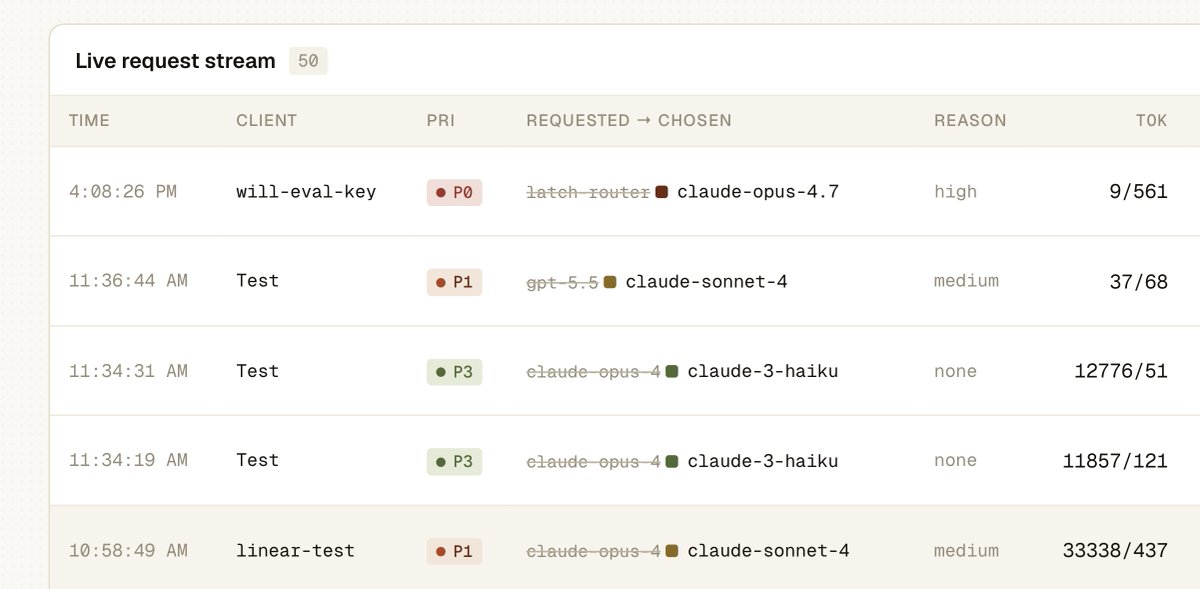
Our brilliant engineers found a way to reduce our AI spend using Latch.
You can do magical things when you can actually understand and control agents.
Sign up for beta access 👉 onlatch.com
Jun 10

If the cost of ai agents is too high for Uber, what does it mean for a startup just getting off the ground?
We built Latch because it's time to treat agents like employees who need access controls.
businessinsider.com/uber-coo…
19
8
105
1,980

Dario Amodei: AI Policy
> AI is progressing extremely fast, much faster than the policy process was built to handle, and the gap between the two is becoming the central challenge of the technology.
This is why we built onlatch.com
darioamodei.com/post/policy-…
121
71
345
18,073
atik.eth retweeted

Jun 10
Wow Total 40 GTD spots giveaway 🎉
25 GTd for x and 15 for Discord
To Enter:
1. Follow: @coinmemes & @outworld3rs
Must on notification 🔔
2. Like RT this post
3. Drop your EVM wallet
Ends in 24 hours
Join 👇
discord.gg/wYNGeW9ghM

287
234
327
5,245
Jun 10
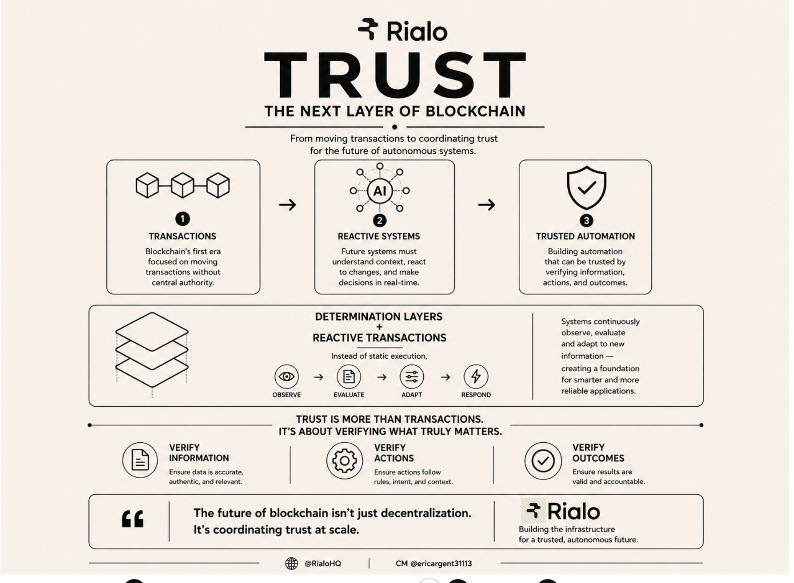
For a long time, blockchain focused on one thing moving transactions without relying on a central authority. But as the technology evolve the real challenge is becoming something bigger than transaction. It is trust.
Future digital systems won't just need to process information. They will need to understand context, react to changing condition and make decision based on real-time input. Following fixed rules alone won't be enough.
That is why idea like determination layers and reactive transaction are gaining attention.
Instead of operating in a static way, systems can adapt to new information and respond when condition change This create a foundation for smarter and more reliable application.
For @RialoHQ , the vision goes beyond simple automation. The goal is to build automation that can be trusted.
As AI agents, application and financial system begin interacting with each other more often, trust become a core part of the infrastructure. It is not just about verifying transactions anymore. It is about verifying information, action and outcome.
The next phase of blockchain may be less about decentralization itself and more about creating network that can coordinate trust at scale.
Because in an increasingly autonomous world, trust could become the most valuable layer of all.
CM @ericargent31113
11
21
424
Jun 9
Gtd winnerlist
@Ricardokaka070
@bapput2
@vimrisi
@Jeet76699538
Fcfs winnerlist
@hayxenxt
@Nir_kous
@txmaruf
@Ytasdf63Siam
@GufranAbir_
@Sifat551
@SuyaibAntor
@zyl0dev
@CryptoL34602
@SumanSu93452799
congrats all winner
Jun 8

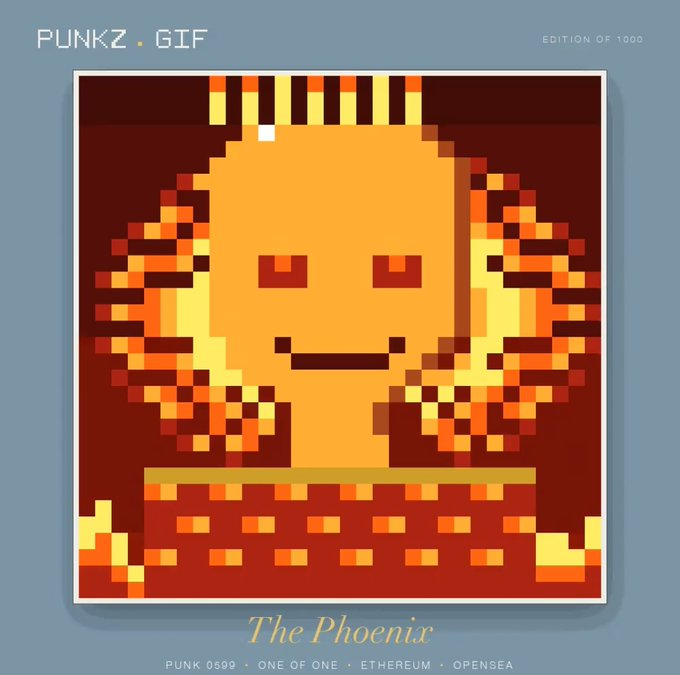
happy to collb with PunkZGIF
their Looping Punk NFT is coming on eth with 1000 supply
Giving away 4 GTD and 10 FCFS
> follow: @oxeth_evm & @PunkZGIF
> must RT
> comment your eth address
winners in 24 hours
3
8
152
Jun 9
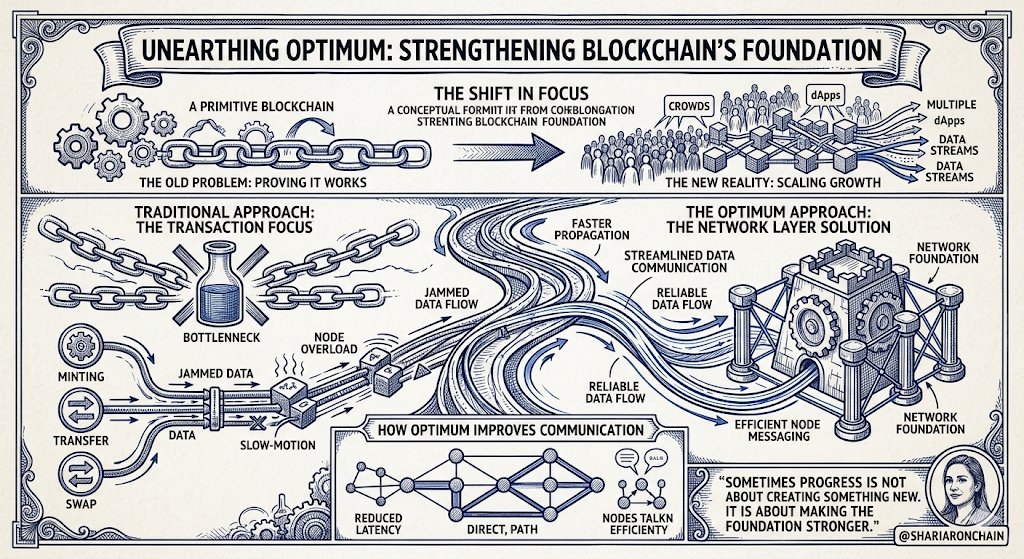
For a long time, blockchain was focused on proving it could work.
Now different, As more users, application and capital move onchain, the real question is whether the infrastructure underneath can handle that growth efficiently.
That is why I have become more interested in project like @get_optimum
Most people focus on transactions, but every transaction starts with information moving across the network.
If data can't travel quickly and reliably, performance eventually hits a limit. What I like about Optimum approach is that it is focused on improving the network layer itself rather than launching another chain.
It is one of those areas most users will never think about, but better communication between node can improve the experience for everyone. Sometimes progress is not about creating something new. It is about making the foundation stronger.
CM @shariaronchain
25
32
533
Jun 9
Good morning Rialo family
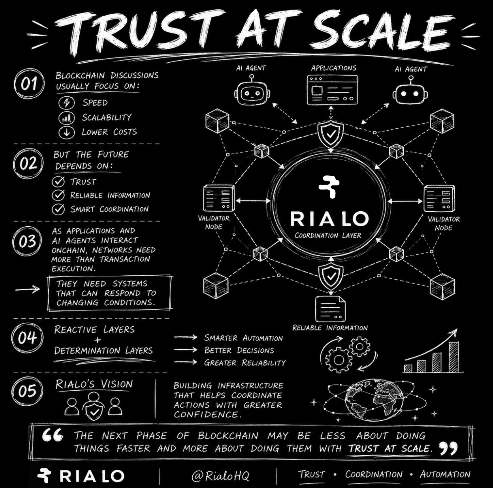
When people talk about blockchain the conversation is usually about speed, scalability or lower costs.
But I think trust will be one of the most important piece going forward.
As more applications, agents and automated system interact onchain, network need more than simple transaction execution. They need a way to make decision based on changing condition and reliable information.
That is why idea like reactive and determination layers are interesting to me.
They are not just about automation. They are about making automation smarter and more dependable.
What stands out about @RialoHQ is its focus on building system that can coordinate action with greater confidence.
The next phase of blockchain may be less about doing things faster and more about doing them with trust at scale.
CM @ericargent31113
96
2
95
895
atik.eth retweeted
Jun 8
Wow Free mint Total 25 GTD spots giveaway 🎉
10 GTd for x and 15 for Discord
To Enter:
1. Follow: @coinmemes & @dedmundos
Must on notification 🔔
2. Like RT this post
3. Drop your EVM wallet
Ends in 24 hours
Join 👇
discord.gg/wYNGeW9ghM

317
277
351
6,850
Jun 6
Another Nft Wl giveway
I'm giving away 8 GTD spots 25 FCFS spots for each winner
How to join: • Follow: @oxeth_evm & @dormiesART
• Like Repost this tweet
• Drop your EVM address
Mint Details:
Chain: ETH
Supply: 8000
Price: TBD
Winners will be selected 48 hours
76
23
86
1,202
Jun 8
Gtd winner
@Nir_kous
@rgs_2_tahsin
@fozle_rabbi_1
@txmaruf
@rimahim01
@hayxenxt
@hasinur1995
@0xQyra
Fcfs winner
@9292Goku
@MohammoadR1
@CloudyEthx
@arshsing922
@jethiya99k
@TTechbro89122
@badhon858
@tahsin_2t
@lucas_lame52026
@shohag_alif
@Gracious_A_Lady
@mdarman3943
@abdurrahman78c
@MdSojib93179593
@sizu1r
@alexfargu
@md82124400
@devil3nm
@neymar465128230
@lota619275
@alikha835352
@mdati346228
@HridoyC65524359
@mdatikh38424324
@alhelat160789
congrats all winner
1
1
5
236
Jun 8
happy to collb with PunkZGIF
their Looping Punk NFT is coming on eth with 1000 supply
Giving away 4 GTD and 10 FCFS
> follow: @oxeth_evm & @PunkZGIF
> must RT
> comment your eth address
winners in 24 hours
94
14
91
1,549

I’m giving away 50 GTD for @onchainbonsai
3333 ITEMS • MP-TBD
To enter:
• Follow @xmartsol & @onchainbonsai
• Like RT this post
• Drop your address
Winners will be announced in 24 hours.
421
354
505
15,314