
I am a crypto venture investor @coinfund. Inspired by ambitious entrepreneurs who build the future. (Not investment advice, these are my personal opinions.)
Joined June 2008
- Tweets 11,605
- Following 1,655
- Followers 203,597
- Likes 12,558
511 Photos and videos








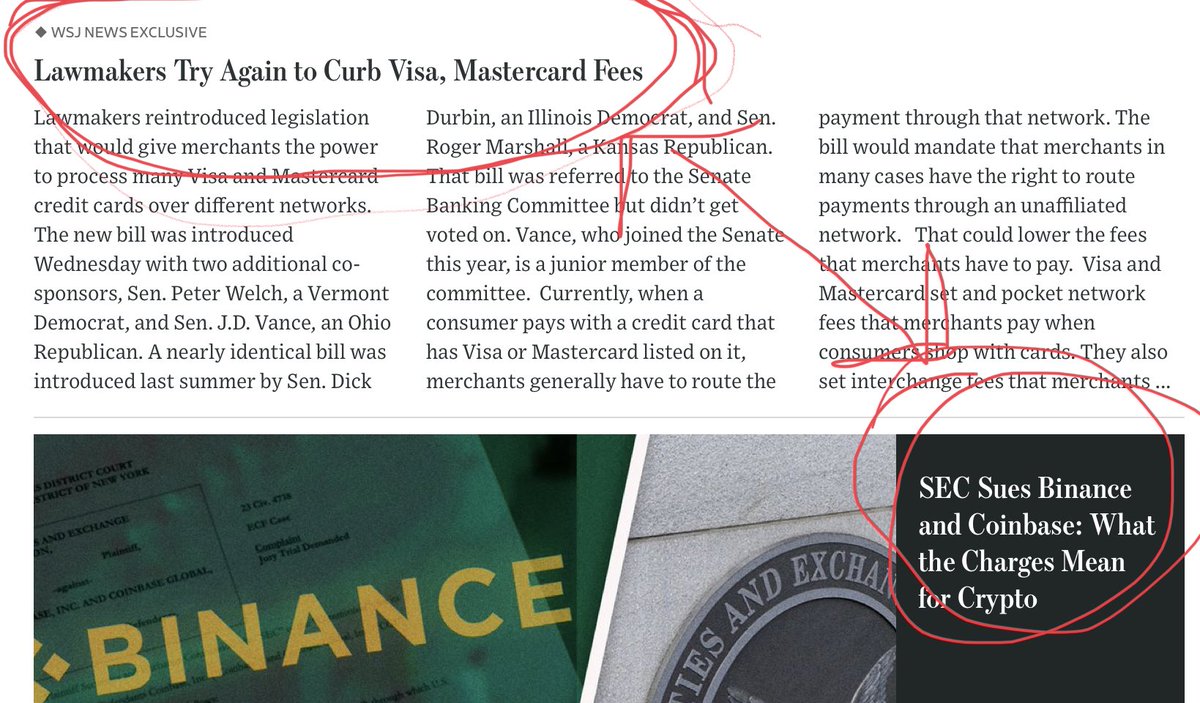

As a VC I I follow signs of long-term value creation - and there is plenty of convincing data around crypto adoption, usage, and increasing revenue growth, all of which show a clear line towards massive value creation in the crypto sector
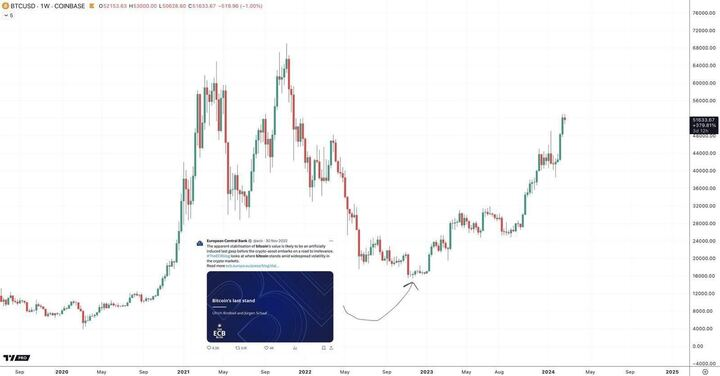
The fact that there are more Bitcoin sellers right now than buyers doesn’t change those facts nor my conviction

The easiest way to understand crypto used to be to look at Bitcoin bloomberg.com/news/articles/…
2
1
12
2,592
Article by @VildanaHajric and Sid Verna for @business
2
836

We’re excited to announce we led the @edge_marketsio $29.2M Series A.
“We think EDGE becomes the default settlement layer for an entirely new category of financial markets.” - Alex Felix (@flex4blox), @coinfund co-founder & CIO
6
4
47
9,473
David Pakman (dpakman.eth) retweeted

Jun 8
@edge_marketsio is the infrastructure supporting growth of prediction markets
Couldn't be more excited to have @coinfund lead this Series A round for the EDGE Markets team
Anyone who's spent time in these markets knows how broken the payment layer is in a market that trades 24/7 and I have no doubt they're the ones to fix it

Two new products from @edge_marketsio set to be announced today, exclusively shared with CNBC: EDGE Pro, to make it easier for institutions to move money around CFTC-regulated prediction markets, and EDGE Connect, a real-time payment system.
cnbc.com/2026/06/08/this-sta…
3
7
1,663
Those of us who have been around tech long enough recognize this pattern: When the internet was first commercialized, the largest companies resisted putting their businesses online because they did not want their data on the public internet. So they built proprietary extranets, closed and permissioned networks that used TCP/IP but only allowed certain companies in.
But open networks beat closed ones. Every one of those extranets died, and now every business runs on the open internet.
The same thing is happening in banking right now. JPMorgan, Citi and Wells Fargo can see that blockchains are superior (faster, cheaper, global) but they want to control them. So they are launching their own private, permissioned networks. Sound familiar?
This too will fail. Interoperability and global reach always beat control.
The banks will spend years and billions trying to keep their closed networks competitive with open ones, and they will lose that race.
The web3 startups building new payment, banking and financial services companies onchain should be thrilled about this. Every year the banks continue this doomed strategy is another year of head start for the people building on open rails.
Jun 5

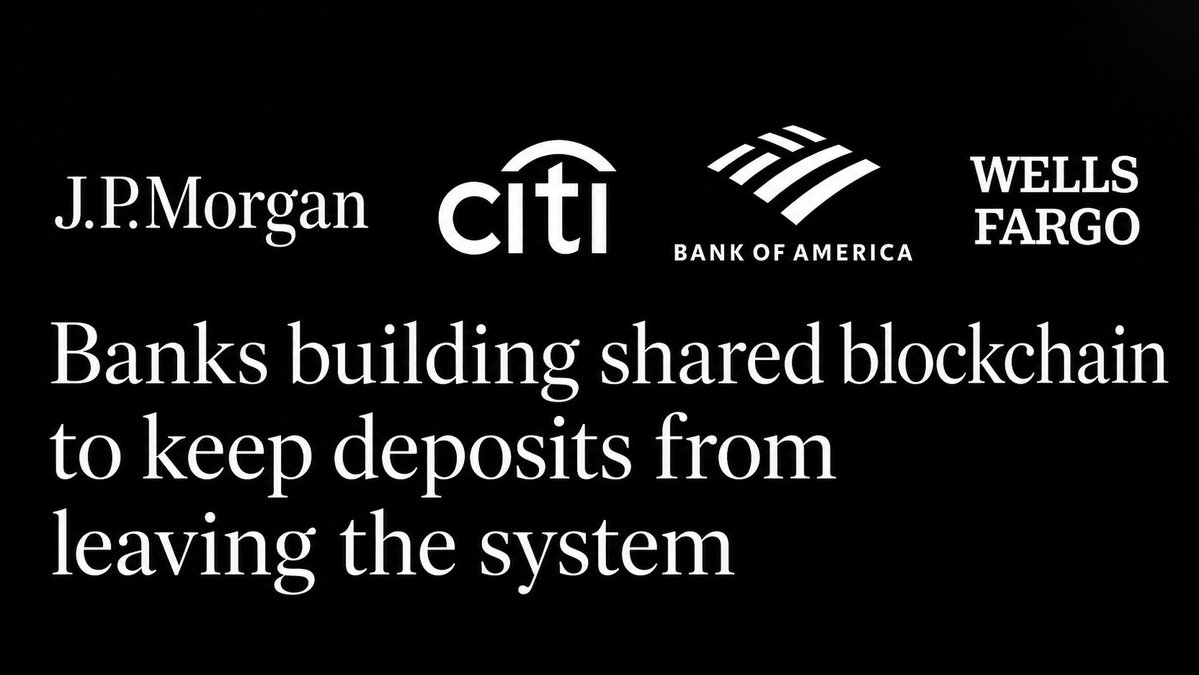
🚨 JUST IN: JPMorgan, Citi, Bank of America and Wells Fargo are building a shared blockchain to keep deposits from leaving the banking system.
The Clearing House will run it. Target launch is the first half of 2027.
Interestingly, this appears led by being defensive rather than clients, at least according to some quotes. Bank of America's head of global payments, Mark Monaco, told the WSJ that clients aren't "beating down the door" for tokenized deposits.
The reason they're building it anyway sits in what they walked away from. A year ago this same group explored a joint bank stablecoin through The Clearing House and the operator of Zelle. They dropped it and picked a blockchain for deposits instead.
Remember deposits are money that stays still. They sit on the bank's balance sheet as a claim you hold against the bank. Stablecoins are money that moves. A bearer instrument that can leave your bank on Saturday and settle somewhere else by Sunday.
And given they're working with The Clearing House (TCH) that makes sense. Deposits can't leave a bank and go anywhere, but through clearing, banks can figure out all of the possible transactions that need to happen, and "net" them into one single efficient transaction multiple times per day. So instead of sending $10m one way, and $9m back. The banks send the difference or "net" of $1m.
But I don't get why they need a blockchain to do this?
The Clearing House already clears deposits in the USA between the member banks?
Tokenized deposits DO have demand if you talk to JP Morgan, their clients have cleared $3 trillion to date, but all cross-border. So again, what is the clearing house adding here?
Meanwhile, you have SoFiUSD which is live, and 1:1 exchangeable for its Tokenized Deposit, 24/7. Meaning, they enable instant, global exchange of dollars that can be off-ramped to any other payment system.
The US banks in the clearing house won't have that same cross-border advantage. To me, this looks like the clearing house got a tech upgrade, that maybe it didn't need?
Stablecoins are open loop. Global. 24/7. *That* is their advantage.
Tokenized deposits are 24/7 and safer. But closed loop.
These two things should co-exist not compete.
18
51
253
71,303
These are the words of a man who knows he is going to lose.
(via @HeleneBraunn at @CoinDesk)
coindesk.com/policy/2026/05/…
2
7
485
TradFi moving onchain was always going to pull the bankers in behind it.
Institutions are shifting away from speculative bitcoin exposure toward blockchain-integrated financial infrastructure: tokenized money market funds, private credit, stablecoins, faster settlement.
And wherever high-growth companies emerge, IPOs follow.
@Jefferies just projected the crypto and blockchain public markets sector could reach $1 trillion within five years, with a surge of crypto IPOs likely in the next two.
None of that surprises me. We've watched this build for a decade. The rails being laid right now, tokenized assets, settlement systems, institutional-grade protocols, that's what eventually goes public.
The question was never if. It was when traditional finance got comfortable enough to follow.
Good reporting by @HeleneBraunn at @CoinDesk: coindesk.com/markets/2026/05…
4
1
6
871
The @veda_labs team is building one of the most critical pieces of modern financial infra -- vaults. And their partnership growth is a strong signal of just how valuable this product offering is.
May 27

NEWS: Earning Bitcoin yield on @Krakenfx is here, powered by Veda’s vault stack.
We’re expanding our partnership with Kraken Bitcoin Earn, the first enterprise DeFi BTC yield product that lets millions of users easily earn on bitcoin deposits.
→ Powered by Veda’s vault infra
→ Strategy by @SentoraHQ
→ Leveraging @Morpho’s open credit network
Learn more: veda.tech/blog/veda-kraken-b…
3
3
15
2,192
Stablecoins are just software money, so they’re perfect for software systems
As a VC, we are looking for the most ambitious founders in agentic payments working on discoverability, ease of agent adoption and distribution
if you are working on this, come find us
May 25

LATEST: ⚡ Crypto is pulling ahead in AI payments, with agents settling $73M on blockchain rails over the past year as card fees make many micropayments uneconomical, Keyrock says.


5
8
969
1
363
The onramp to onchain capital markets is open
Once a customer experiences this type of portability, they will never want to go back to asking a bank for permission
Congrats to @SuperstateInc and @CoinList for making this happen
May 21

Together, @CoinList and Superstate are making tokenized equities and future capital raises more accessible to investors.
The onramp to onchain capital markets is open.
1
7
1,066
Hey startup CEOs, how much are you budgeting per engineer for AI tokens in 2026?
3
398
The future of finance is onchain
Public markets first, private markets next

Polymarket “democratizes” finance -giving traders a way to bet on private companies. cnbc.com/2026/05/19/polymark…
3
5
732
I still remember when Jamie Dimon said “we’ve been talking about blockchain for 12 years, not much has happened - it ain’t like AI”
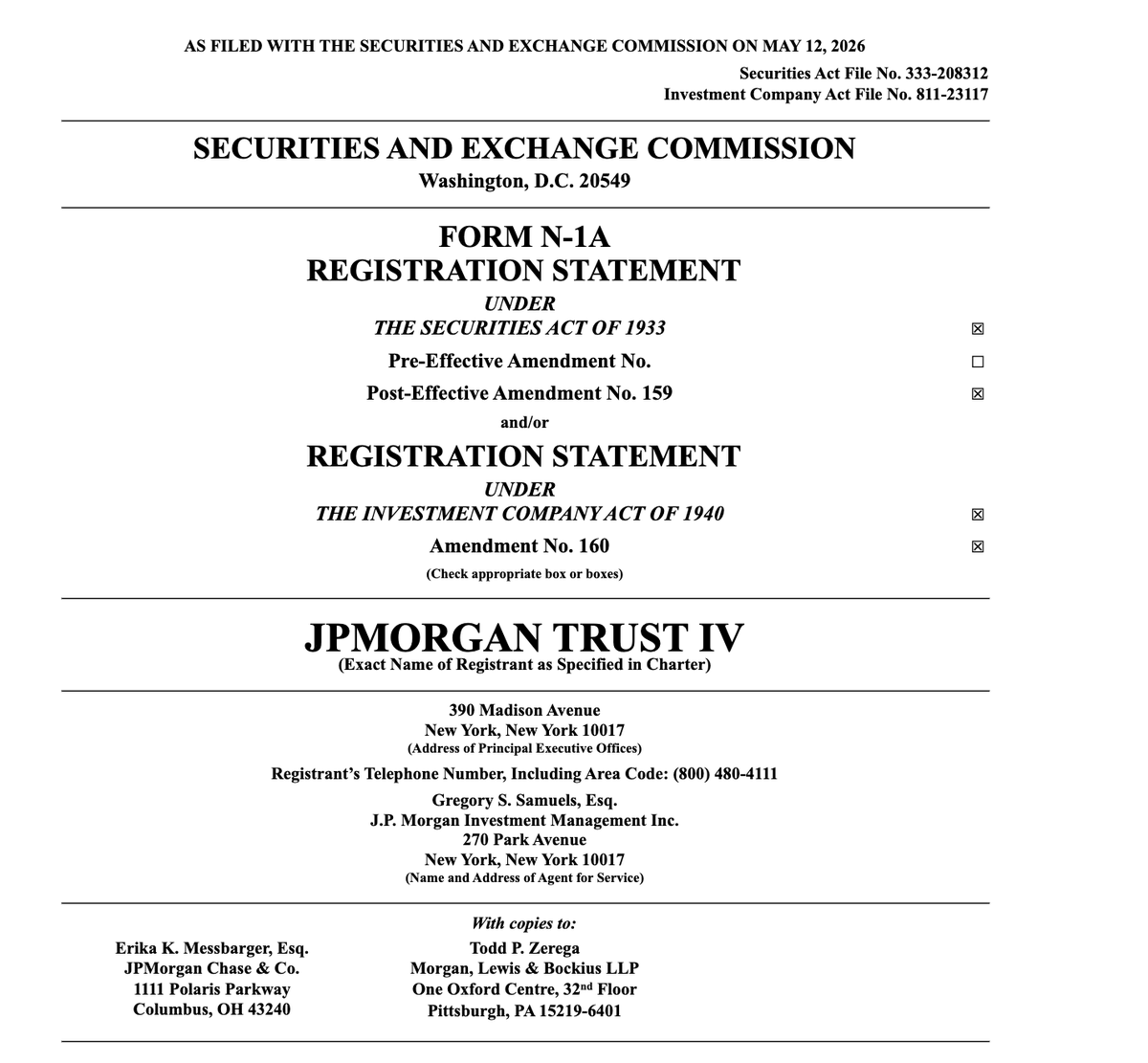
This week JPMorgan filed a tokenized fund on Ethereum, looks like something happened after all
Payments are moving onchain, money flow is moving onchain, and yield is next. Keep them coming

NEW: @jpmorgan files to launch a tokenized Treasury money market fund ($JLTXX) designed as GENIUS Act-compliant reserve assets for stablecoin issuers.
3
9
569
"First they ignore you. Then they ridicule you. And then they attack you and want to burn you. And then they build monuments to you" (Nicholas Klein) applies perfectly here.
Wall Street dismissed, ignored, laughed at and fought crypto. And now they acknowledge it is the future of finance.
When incumbents follow this strategy, it is SIGNAL that you will win. Keep building.

Wall Street went to war with crypto. It’s losing.
politico.com/news/2026/05/06…
3
1
7
1,160
We backed @SuperstateInc in 2023 because we believed they would become the default infrastructure for tokenized funds and @coinbase just validated our thesis
Congratulations to @rleshner, @HiltnerJim , @Dean_Swennumson and the entire team. Incredible work and the best is yet to come
Apr 30
1/ @CoinbaseAM has selected Superstate FundOS to launch an onchain share class of the Coinbase Stablecoin Yield Fund (CUSHY) in Q2 2026.
For the first time, FundOS is powering a third-party fund launch from inception.
superstate.com/newsroom/coin…

1
9
964
Fantastic progress. I think we will see creator payments and then vendor/marketplace payments at Amazon, Walmart, eBay, Reverb, etc. all move to stablecoins/crypto rails. Crypto eats all payment networks.
Apr 29

New from me and @bdanweiss
Meta has rolled out USDC creator payouts on Polygon and Solana. The program is currently available to select creators in Colombia and the Philippines.
It's been a long time coming, but Facebook stablecoins are finally here.
fortune.com/2026/04/29/meta-…
10
1,674
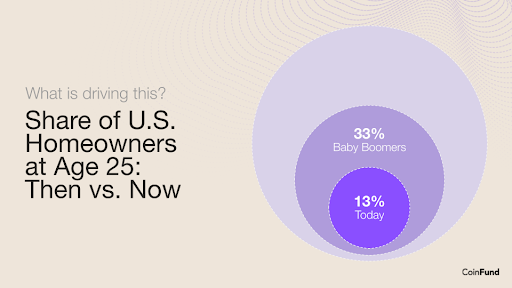
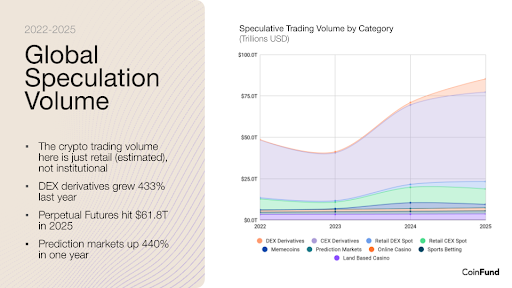
No surprise that CoinFund agrees with @senortilt's view on the Speculation Economy (we call our investment thesis "Betting On Everything) since we are investors in him.
The data is striking...people (especially Gen Z) want to invest in asymmetric upside financial products.
On-chain versions are more fair, global and more accessible.

6
491
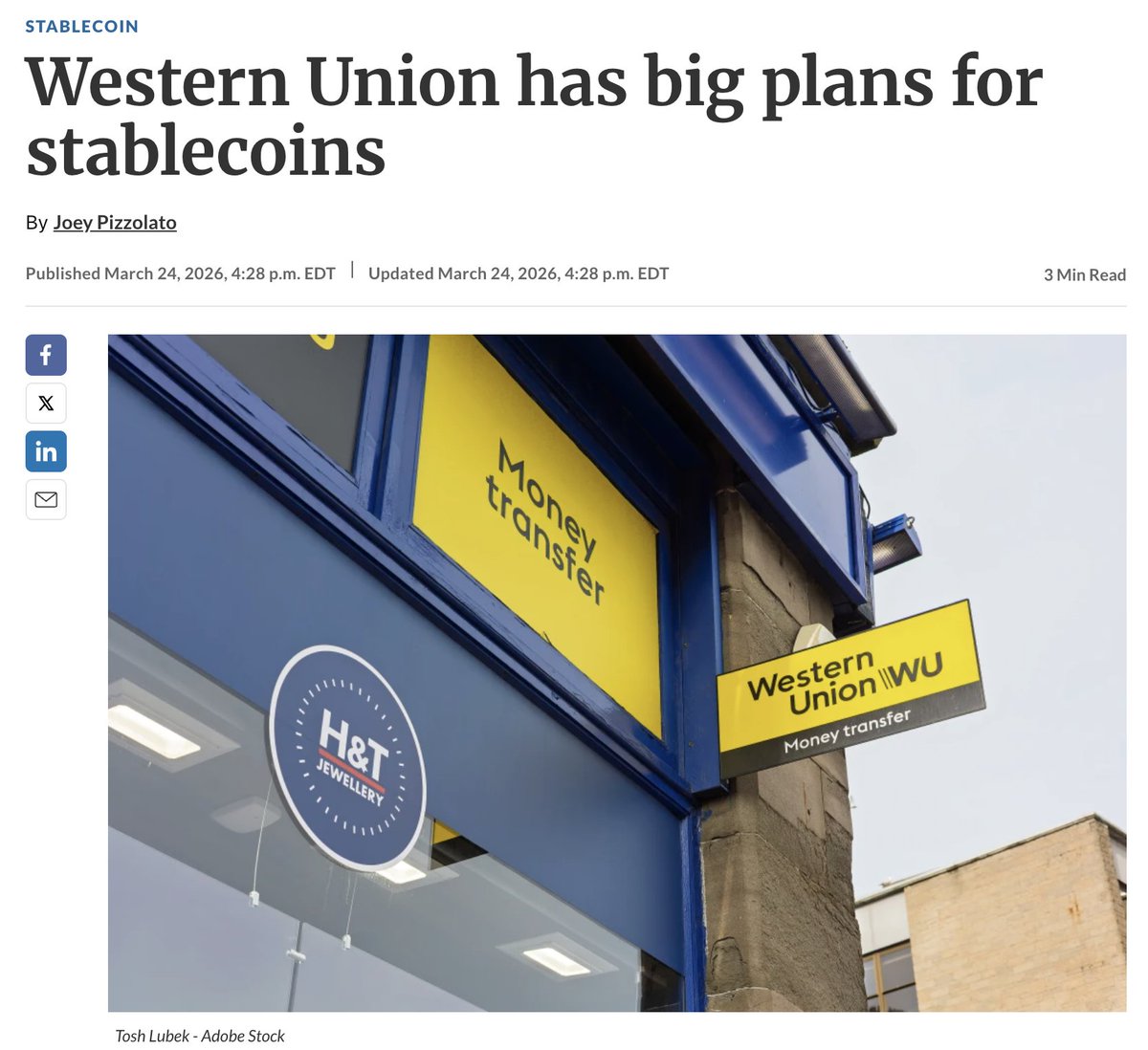
The banks are lobbying hard against yield-bearing stablecoins because they fear the loss of customer deposits, and they should
Put simply, yield-bearing stablecoins are a better product
They have lower friction, offer easy yield with less cognitive work, charge lower fees, and are accessible to anyone with an internet connection
And that should worry deposit banks, because they can’t compete
2
1
14
1,356