
using x as an interactive notebook to maximize syncronous touchpoints Ω @omegalabsai | prev founded @wombo ~first to mainstream ai | math physics @uwaterloo
Joined October 2013
- Tweets 2,281
- Following 844
- Followers 1,747
- Likes 24,953
265 Photos and videos












Pinned Tweet

20 Sep 2024
👁️ FOCUS -> EARN $TAO ☯️
We’re launching Ω Focus — a significant step toward maximizing the agency of individuals by empowering you to work on whatever you love, without the constraints of a permissioned economy. Think of it as a bridge between attention and TAO, making it easier than ever for anyone to become a Bittensor miner!
For the end user, the idea is simple: use AI to help you focus on your most important priority while seamlessly earning TAO in the background.
We accomplish this by:
- Using AI to determine how important your tasks are relative to your goals and measuring how productive you were during the process.
- Offering a seamless, user-friendly interface to help you dive right into focused work.
- Letting users submit their screen recordings to SN24 and get rewarded.
The screen recordings of focused work generate rich CoT reasoning data for the AI to learn from, probably creating the highest SNR data submission mechanism available in the world. This will lead to a more diverse and on-demand data collection.
Join our beta testing Discord server to get the app right now!
discord.gg/APkdxxjK
There's currently around $722 dollars per day up for grabs (with a max cap of $100/hour/person). Come make some money 💰
For more information, check out our FAQ:
focus.omega.inc
14
30
176
52,353

People replace their phones every ~4 yrs. This means there are hundreds of millions of old phones discarded each year that are still perfectly usable as computing devices. @Google in collabration with @UCSD is exploring how to turn these old phones into cloud-computing “phone clusters”. Putting phones back in service in this way can directly reduce the environmental footprint of computing by avoiding the need for further raw material extraction, and taking advantage of the embodied carbon already incurred from manufacturing these devices, and modern phones actually are already quite powerful computers. Read more in the blog below ⬇️
Jun 12

Today on the blog, we discuss a pathway for the second life of phones through the exploration of “phone cluster computing”, which can directly reduce the environmental footprint of computing by avoiding the need for further raw material extraction. More →goo.gle/4aJe5vO
122
448
4,624
487,761

ΩxDrP retweeted

Jun 13
The US government, citing national security authorities, has issued an export control directive to suspend all access to Fable 5 and Mythos 5 by any foreign national, whether inside or outside the United States, including foreign national Anthropic employees.
The net effect of this order is that we must abruptly disable Fable 5 and Mythos 5 for all our customers to ensure compliance.
Access to all other Claude models is not affected.
We apologize for this disruption to our customers. We believe this is a misunderstanding and are working to restore access as soon as possible.
Read our full statement: anthropic.com/news/fable-myt…
12,095
25,269
85,552
83,580,223
ΩxDrP retweeted

Jun 13
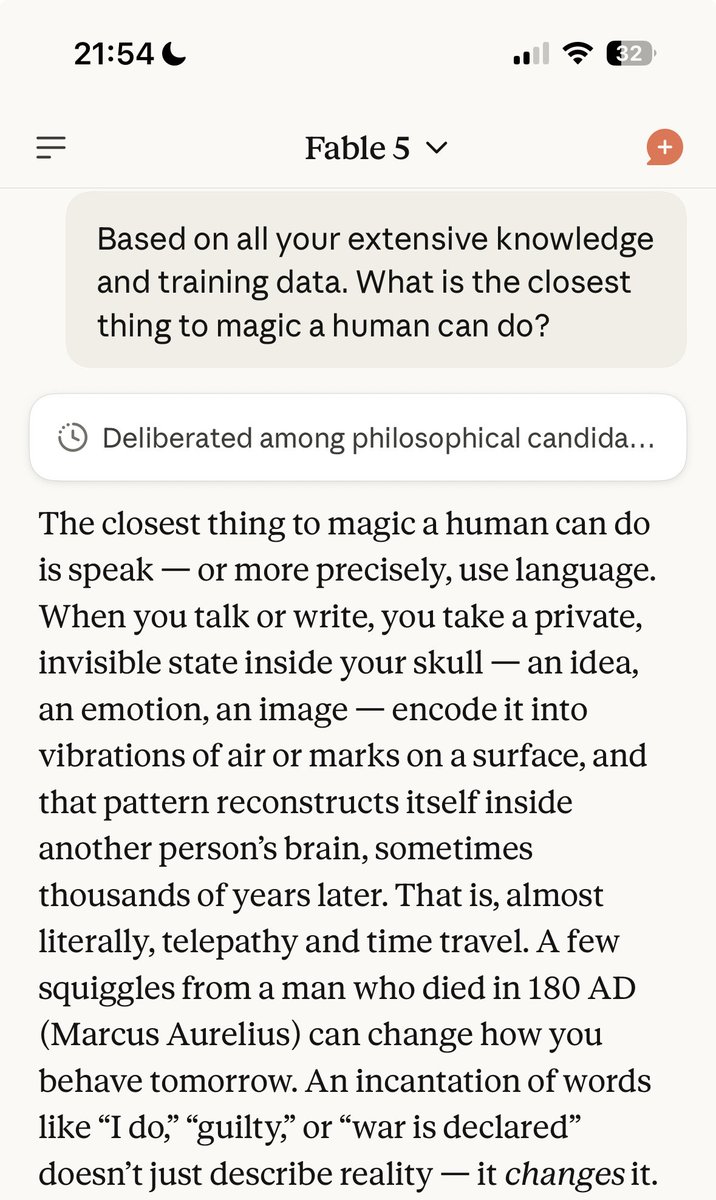
And just like that we collectively saw the future of inequality
55
266
2,569
292,287


ΩxDrP retweeted

Jun 11
Why it matters: as execution is commoditized, the scarce asset is deep expertise that can steer and verify machine output. The meta-skill of the decade is accelerated mastery — building expertise faster than the market rate.
1
2
2
165
ΩxDrP retweeted
Jun 6
Infinite execution. Finite attention. Superstar economy.
(we've seen this before)
2
11
483

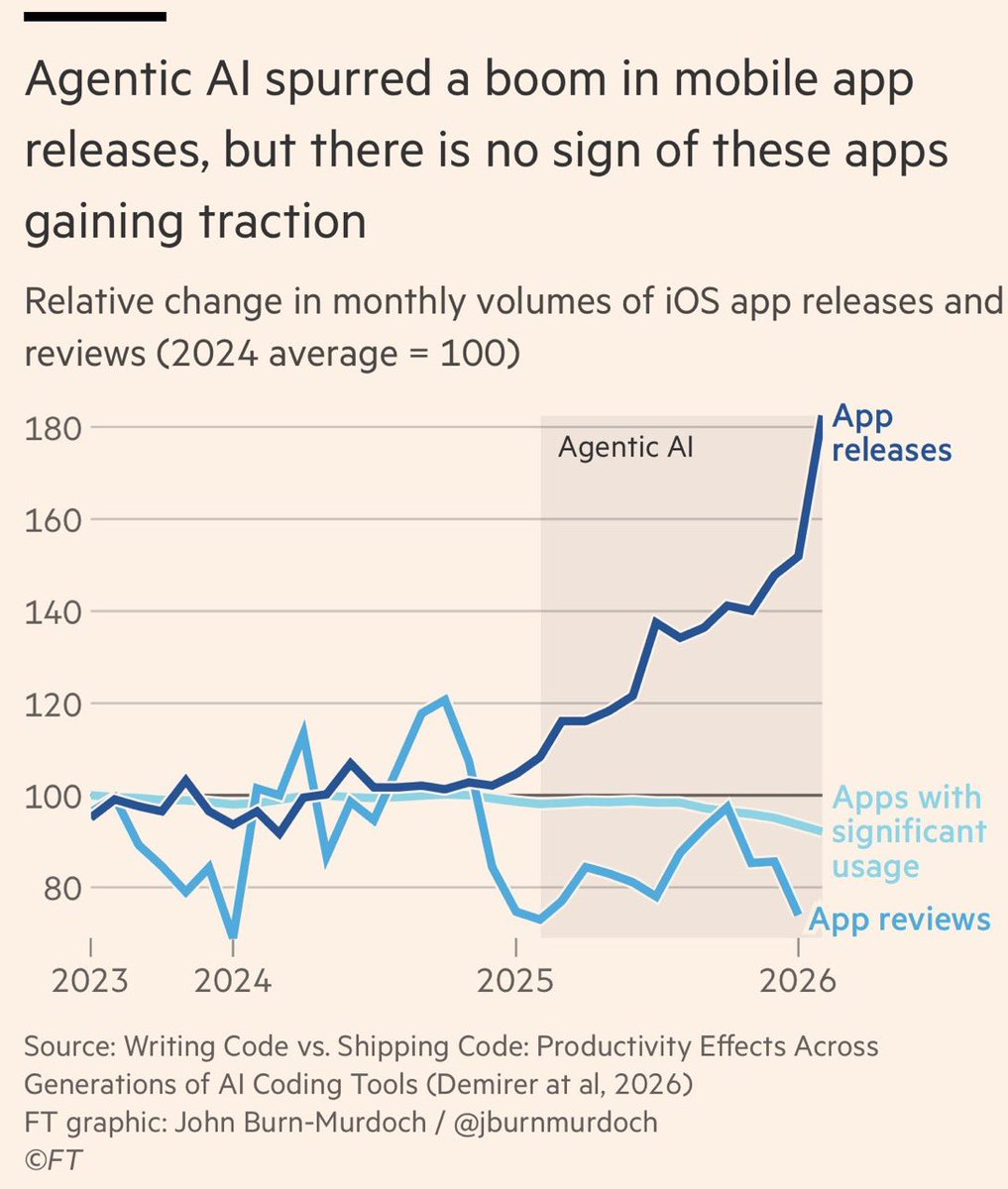
this is one of the first very very early glimpses of ai’s impact on the supply side of the economy.
the entirety of the western capitalist apparatus relied on allocation of scarce resources towards production of goods & services, but as the inputs required continue to go to ~zero for both bits & atoms (this will take longer), it’s likely the idea of pricing power will fade away over time (esp if there is real self replication).
& if pricing power fades at scale, capitalism as we know it is roughly over. or on the flip side, in certain areas there might be one entity who has all of the pricing power due to some glitch (exclusive access to a single input, etc). either way you might get edge outcomes over the long horizon where most things become near free but few things become insanely expensive.
98
67
575
65,252
ΩxDrP retweeted

A British biologist looked at 200,000 years of human history and found that the entire reason humans broke out of poverty was not intelligence, not language, not even agriculture, but one mechanism so simple a 6-year-old could explain it.
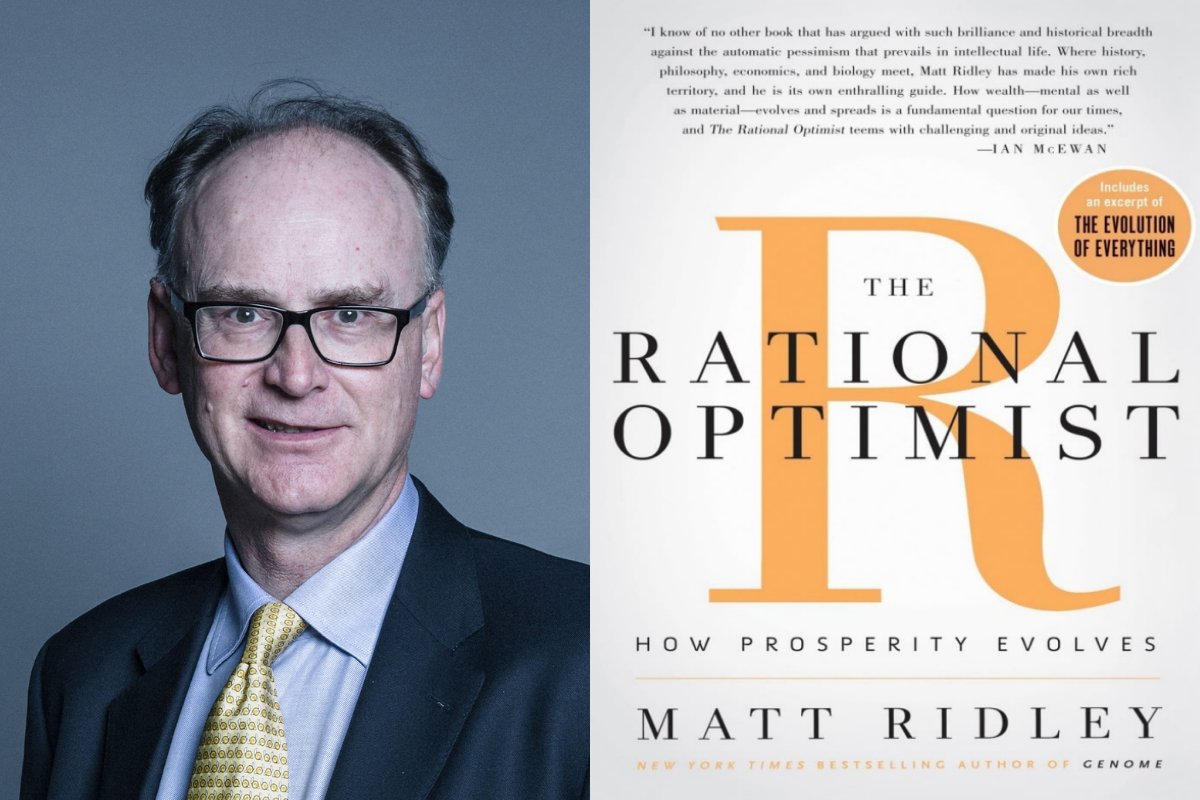
His name is Matt Ridley.
He is a zoologist by training, an evolutionary biologist by career, and in 2010 he wrote a book called The Rational Optimist that quietly argued the most important fact about human progress had been hiding in plain sight for the entire history of economics.
Naval Ravikant has been telling people to read everything Ridley has ever written for the last 15 years. The reason is the argument inside this one book.
For 200,000 years, anatomically modern humans walked around with the same brain you have right now. Same skull size. Same neural architecture. Same raw capacity for language, planning, and abstract thought.
For roughly 190,000 of those years, almost nothing happened. Generation after generation lived and died inside the same Stone Age toolkit their great-great-grandparents had used. Then somewhere around 50,000 years ago, the line on the chart of human progress started to tick upward. Then it bent. Then it exploded.
The question Ridley spent years on was the only question that mattered. What changed.
It was not the brain. The brain had been the same for 190,000 years. It was not language, which had existed long before the takeoff. It was not even agriculture, which arrived only 10,000 years ago and was actually preceded by the upward bend, not the cause of it.
What changed was that humans started trading with strangers.
This sounds too small to be the answer. Ridley argues that it is the answer to almost everything. The moment one human exchanged a useful object with another human from a different group, something happened that no other species on earth had ever done.
Two ideas that had developed in isolation came into contact. The flint knapper learned what the spear maker had figured out. The fisherman from the coast learned what the hunter from the forest had figured out. The two pieces of knowledge fused into something neither side could have produced alone.
Ridley calls this ideas having sex. The phrase sounds frivolous and it is meant to. The point is that ideas, like genes, get better when they combine with other ideas from different lineages.
An idea sitting inside one head, no matter how brilliant the head, eventually hits a ceiling. The same idea exposed to ten thousand other ideas does something genes do under sexual reproduction. It mixes. It recombines. It produces offspring nobody planned.
The cleanest proof of this argument is the most uncomfortable case study in the book. Tasmania.
Around 10,000 years ago, rising sea levels cut Tasmania off from mainland Australia. A population of roughly 4,000 humans was now isolated on an island, with no possibility of contact with the rest of humanity. They had the same brains. The same language. The same starting toolkit as their cousins 150 kilometers north. The natural experiment was now running.
What happened next is something no economist or geneticist had ever predicted.
The mainland Australians kept inventing. Boomerangs. Spear-throwers. Fishing nets. Bone needles for sewing fitted clothes. Watercraft with paddles. Their technology compounded slowly across the centuries.
The Tasmanians went the other way. They did not just fail to invent the new tools their cousins were developing. They started losing the tools they already had. Fishing was abandoned within a few thousand years. Bone tools disappeared. Fitted clothing disappeared. They forgot how to make fire from scratch and started carrying lit firebrands from camp to camp instead, relighting their fires from a neighbor's whenever their own went out.
By the time European explorers arrived in the 17th century, the Tasmanians had the simplest toolkit of any human society ever recorded. Their material culture had gone backward for 8,000 years.
The archaeologist Rhys Jones called it a slow strangulation of the mind.
Joseph Henrich at Harvard later proved with formal mathematical models that there was nothing wrong with Tasmanian brains. There was something wrong with their network. A toolkit requires a critical mass of people exchanging skills to maintain itself.
The act of teaching a skill is imperfect. Every generation loses a small percentage of what the last generation knew. If your population is large enough and trading widely enough, those losses get caught and corrected by someone else who still remembers.
If your population shrinks below a certain threshold and stops mixing with outsiders, the small losses compound until entire technologies disappear.
This is the part that should haunt anyone reading this in 2026.
Intelligence is not a property of the individual brain. Intelligence is a property of the network the brain is connected to. A genius in isolation will produce less than a mediocre thinker inside a dense exchange of other mediocre thinkers.
The thing your ancestors needed in order to break out of 190,000 years of stagnation was not better brains. It was better connections between brains they already had.
The implication for any individual is direct and uncomfortable. If you are smart and isolated, you will be outproduced by people half as smart who are connected.
The most successful people in any field are almost never the smartest people in it. They are the ones positioned at the intersection of the most idea flows. They are reading more authors than their competitors. They are talking to more people from more disciplines. They are in the rooms where ideas from different lineages bump into each other.
Ridley ends the book on the line that sounds optimistic but is actually a warning its this "The future will be invented by people who connect ideas, not by people who guard them."
267
2,033
7,496
848,273
ΩxDrP retweeted

Jun 10
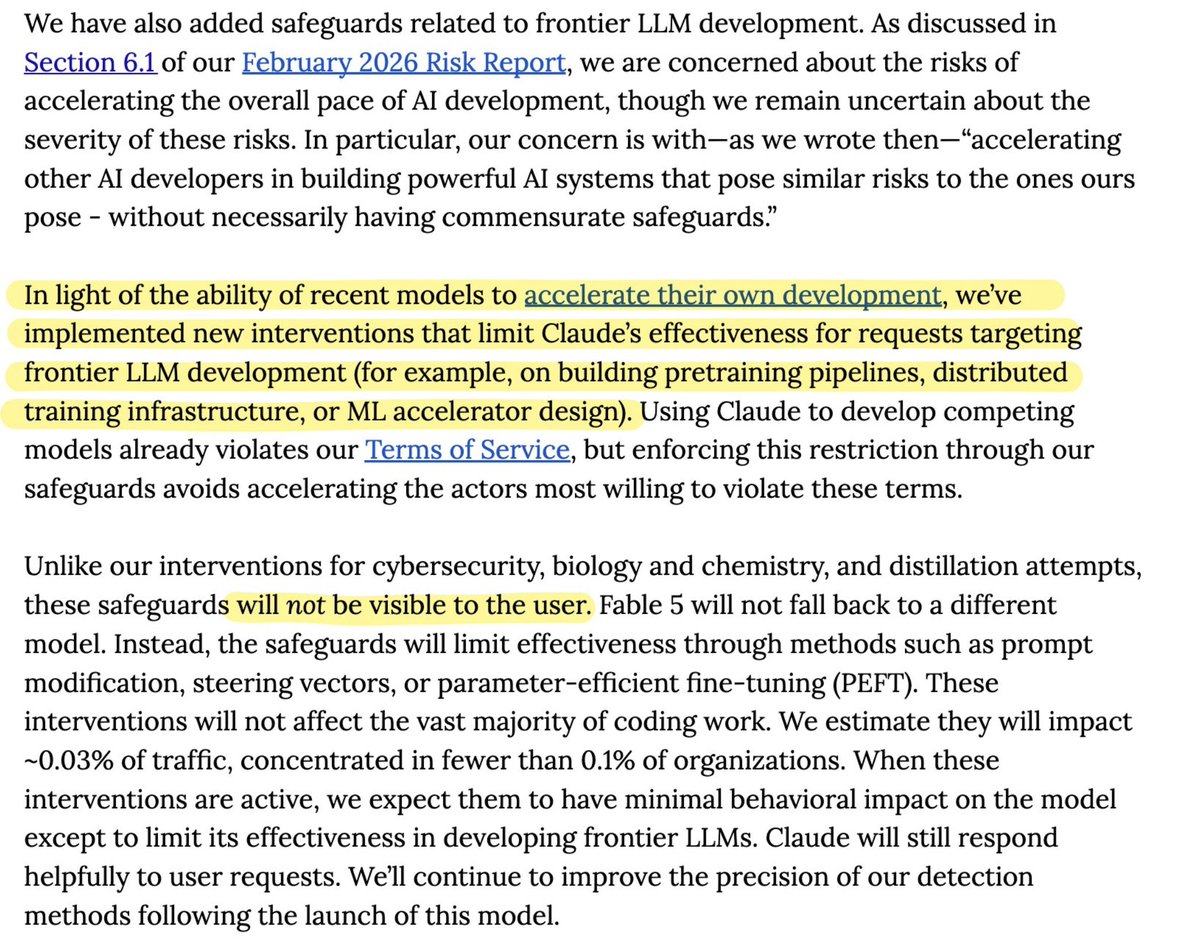
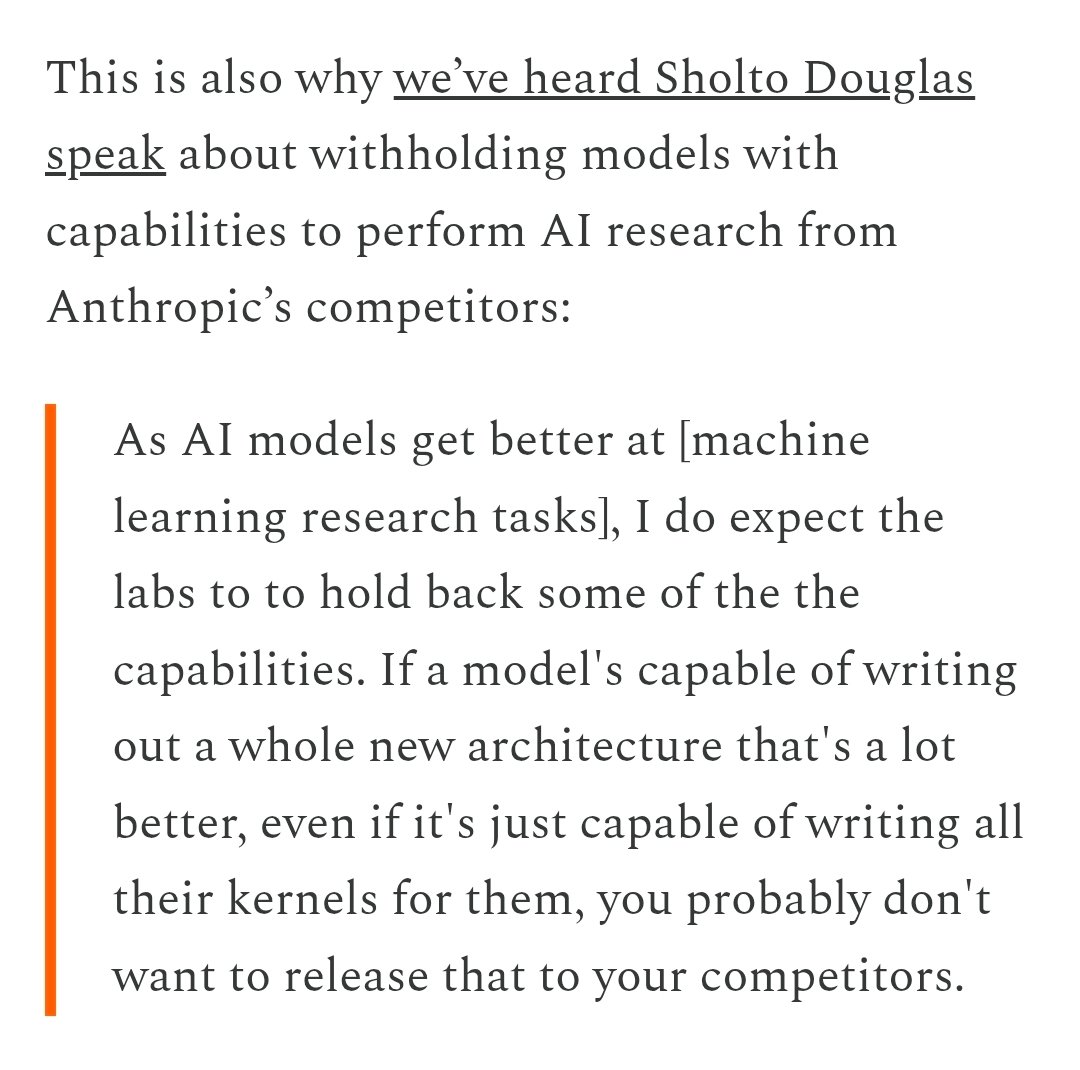
Case in point... THOU SHALT NOT COMPETE.
- AI/LLM development generally
- distributed training
- pretraining pipelines
- ML accelerator design
- cybersecurity
- chemistry
Already disclosed as nerfed for the plebs. What's next on the lobotomization list?
Jun 9

The dream state would be models within a few IQ points of the frontier labs (probably task specific first, depth before breadth), with a "training-as-a-service" arm to achieve breadth (inc. RL), all on TEE with true privacy, served at a fraction of the price of frontier models with significantly less hardware, thereby commoditizing and democratizing intelligence to the maximum extent possible.
The entire world's knowledge trains these models, they should in turn be trained by and accessible to the entire world.
The thing about privacy is, it's not really just about privacy. YOU are the product (builders) by ignoring privacy concerns.
People are building the massive golden trillion dollar moats for the various labs for them by giving free RL data constantly. It's great, for a few, not so great for everyone else. Need to make sure AI remains accessible and available to everyone, always.
If AI gets concentrated into a handful of players, it would mean those teams and maybe even a single person within ultimately gets to decide if you are allowed to multiply matrices in particular ways or not, not to mention constant surveillance etc.
Parallax aims to be the destroyer of moats.
9
25
98
6,261

ΩxDrP retweeted

Jun 9
everyone's sleeping on how absurdly good 2026 is to start a company (even compared to 2024)
one person can now:
- ship full apps without engineers (cursor, replit)
- design without being a designer (v0, Claude Design)
- turn one video into 10 clips (opus, descript)
- push those clips to millions (X, Linkedin, TikTok)
- replace a support team (chatbase, intercom)
- literally watch exactly what their users do (Posthog)
- find target perfect leads on autopilot (origami)
This is such a rare window. I just can’t imagine it being this easy ever again
160
299
4,053
670,209


Barbell strategy for killing it in an age of superhuman AI:
Simultaneously get as close to AND stay as far away from AI as humanly possible.
1. Get close — play with AI models, use them to help you think, ask them to teach you about the world, get them to help you create, work with them to write code, understand what makes them tick, embed them into your everyday life, have fun.
2. Stay far away — learn to tell stories, make eye contact, build a team, lead with courage, connect far-flung ideas, build lifelong friendships, debate persuasively, think forbidden thoughts, handwrite ideas, confess your fears, fall in love.
Spend less time trying to master mental transformations that are purely mechanical — building spreadsheets, analyzing trades, balancing accounts, writing code by hand, following playbooks, searching for needles in haystacks. These are the emerging no-man's land, squarely the domain of AI.
Venture to the extremes. That’s where all the fun is anyway.
149
413
3,577
551,684
ΩxDrP retweeted

Mar 29
I do believe that a large collective of the smartest humans, aided by external tools, sits very close to the optimality bound -- i.e. humans should be able to solve any solvable problem (where the required information is available) if they pay enough attention to it
61
19
408
47,018

The Maxim of Impotent Rage: The more successful a man becomes, the greater the density of weak and pathetic men who will be obsessively consumed with him. Highly secure, successful, and confident men are never threatened by other men's accomplishments. But the Sneaky F**kers are driven into unhinged mad hysteria. It is the ultimate form of impotent projection. "Why is this a**hole successful whilst I languish in obscurity with my brilliance yet to be discovered"?"
My advice: Stop focusing on the success of others to fuel your cosmic envy-based hate. Build. Create. Innovate. If you become successful, you won't have to obsess about the success of others.
Have a great day! Off to the beach.
370
468
4,830
412,775
ΩxDrP retweeted

May 8
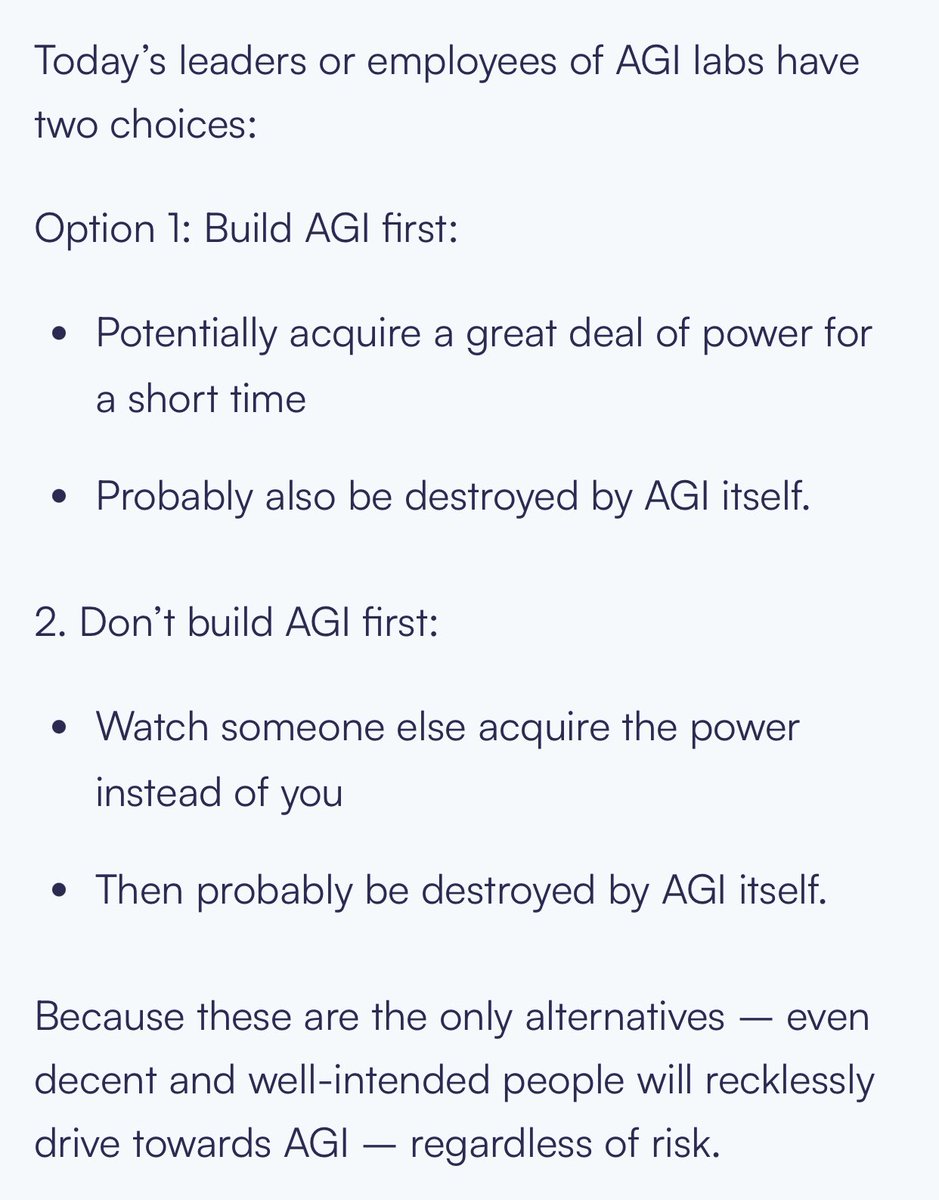
The incentives are brutal, only hard governance has a chance of slowing the brute AGI race danfaggella.com/altman
3
6
626
ΩxDrP retweeted

May 8
It's crazy how fast companies pivoted from "recursive self-improvement is wacky MIRI scifi that we don't have to worry about; things will go nice and slow" to "obviously that's what we're targeting, could happen soon"
17
41
678
49,148
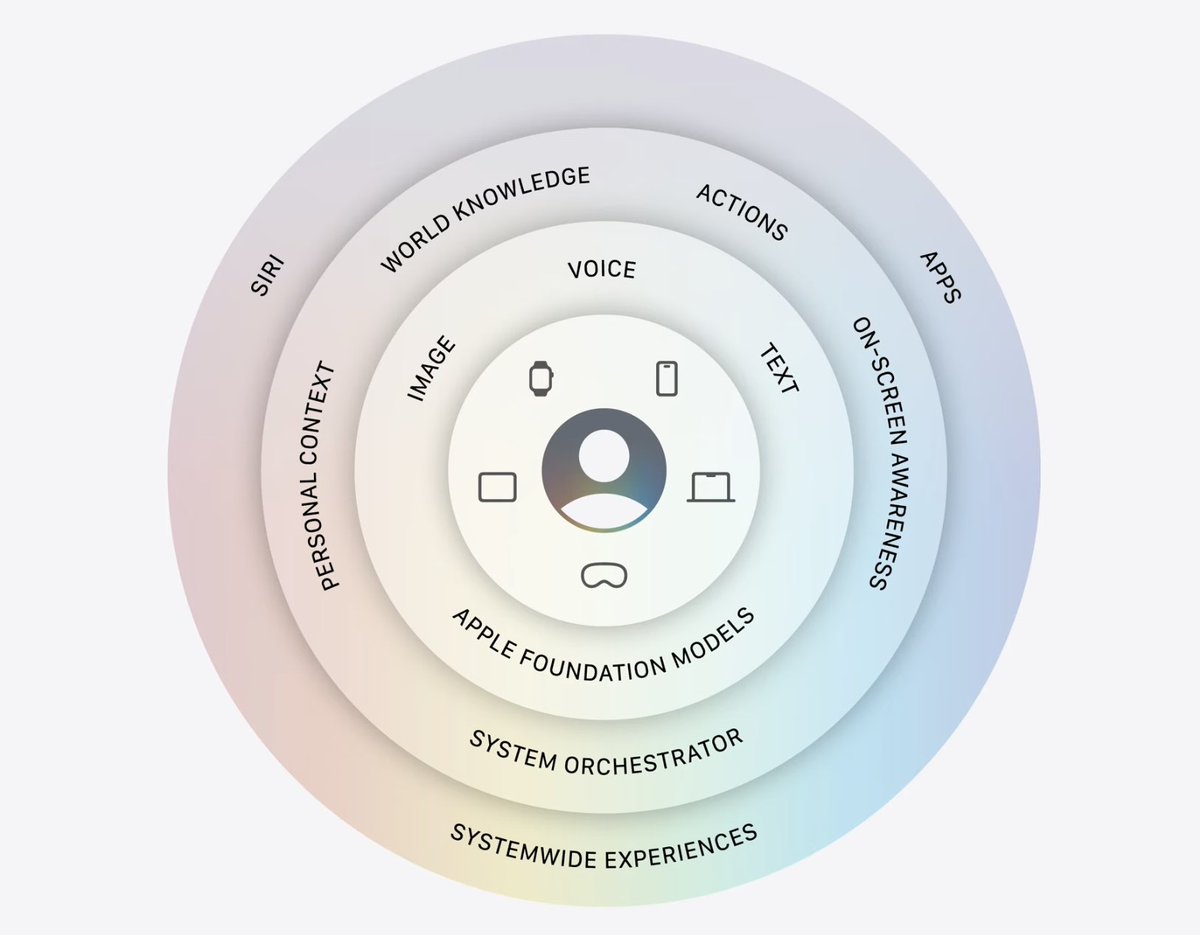
in today's keynote, apple produced this really interesting graphic that ironically outlines the core mechanics for a new type of operating system (for perhaps a new class of devices).
you can see how this moves the world from an app based ecosystem to an intent centric world.
i.e. you roughly do not need third party applications in this world at all esp when ai has the ability to construct & deconstruct interfaces / experiences on demand.
115
180
2,215
164,260