
For entertainment purposes only
Joined February 2007
- Tweets 2,197
- Following 2,556
- Followers 65,873
- Likes 170,901
124 Photos and videos



Pinned Tweet

10 Jan 2024
There is a deeper truth which I struggle to fully articulate:
Truth is a story.
Narrative shapes Truth.
Truth flows from Narrative.
"That's not true", your story says, "I have facts!"
But facts alone are meaningless. The Narrative determines which facts are relevant and reliable, provides the context and meaning, labels the heroes and villains, and declares what is accurate information and what is harmful misinformation.
And so we are ruled by stories, Narrative.
All of our most divisive issues are ultimately a war of narrative. We may argue over facts, but the real conflict is narrative, and the struggle for who controls The Narrative.
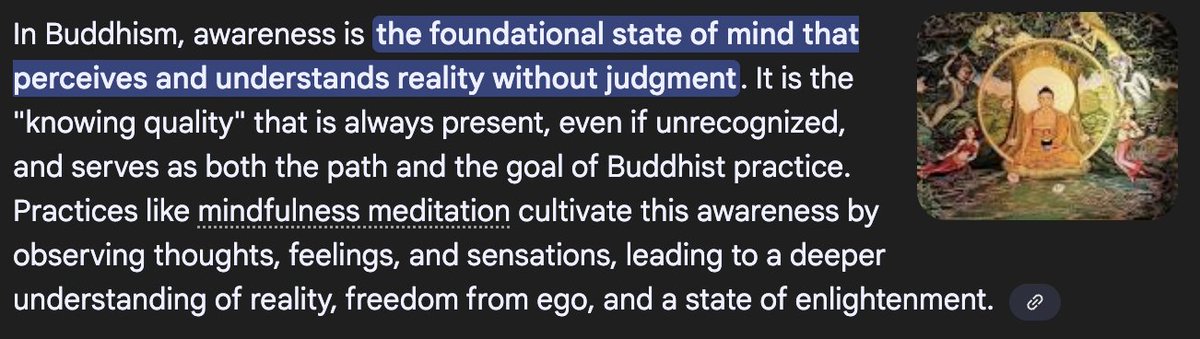
These narratives are unavoidable. We can't make sense of the world without them. But we can become aware of them, stepping back from the conflict to realize that both sides are each working from within their own narrative bubbles.
The path to peace is not in domination, one narrative wiping out all others, but in understanding.
We can develop a meta-narrative that recognizes and integrates all other narratives, not as true and false but more like species of bacteria, spreading, competing, mutating, colonizing minds, sometimes helping and sometimes harming. We must understand that those colonized by one or the other narrative are generally unaware, to them it is simply the truth.
This meta-narrative brings awareness, and with it some degree of freedom. We can choose our narratives. We can change our narratives. And through this process of awareness, integration, and refinement, all narratives are transformed.
This is the beginning of Alignment.
88
72
535
172,505

Paul Buchheit retweeted

Jun 12
Today feels like a good day to reshare this clip of Ariane Aerospace’s CEO calling SpaceX’s reusability plans “a dream”
418
1,209
10,187
1,576,307
Paul Buchheit retweeted

Jun 8
The late, great @ScottAdamsSays once told us (paraphrasing):
If the odds of getting caught cheating are very low, and the consequences of getting caught are minimal, then the odds of cheating happening *somewhere* approach 100%.
Food for thought.

Why wouldn’t they steal this election?
What will be the cost? Who will make them pay?
Dems can and will do this going forward while the GOP can’t bother to pass the SAVE Act despite controlling Congress
42
742
3,640
129,180
Paul Buchheit retweeted

Yes. Defenders of free enterprise, including Franklin D. Roosevelt, called it "free enterprise" in the early 20th century.
We should go back to that.

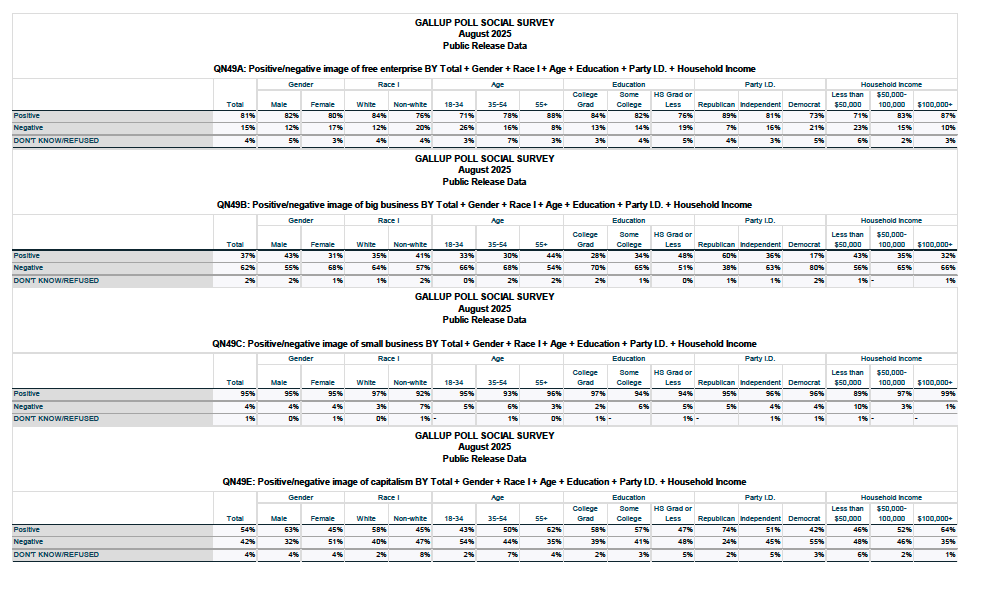
According to a 2025 Gallup poll, 54% of Americans have a positive view of capitalism, compared to 42% negative ( 12).
However, if you ask about "free enterprise", the public is 81% positive and 15% negative ( 66).
Maybe we should just all call it free enterprise from now on?
24
37
483
60,146

Marx lived his entire adult life as a dependent. The capitalist system funded his "research" through Engels, whose family wealth came from textile factories. The irony cuts deep: capitalism's profits subsidized its most famous critic.
Marx never held a real job. Never met payroll. Never risked capital or faced bankruptcy. He spent decades theorizing about labor value while avoiding actual labor. His insights into production came from library books, not factory floors.
The parasitic intellectual tradition he spawned continues today. Academic Marxists collect taxpayer-funded salaries while denouncing the market system that creates the wealth they consume.
It's time to get rid of these people.
260
1,472
5,561
105,422
Paul Buchheit retweeted

Jun 5
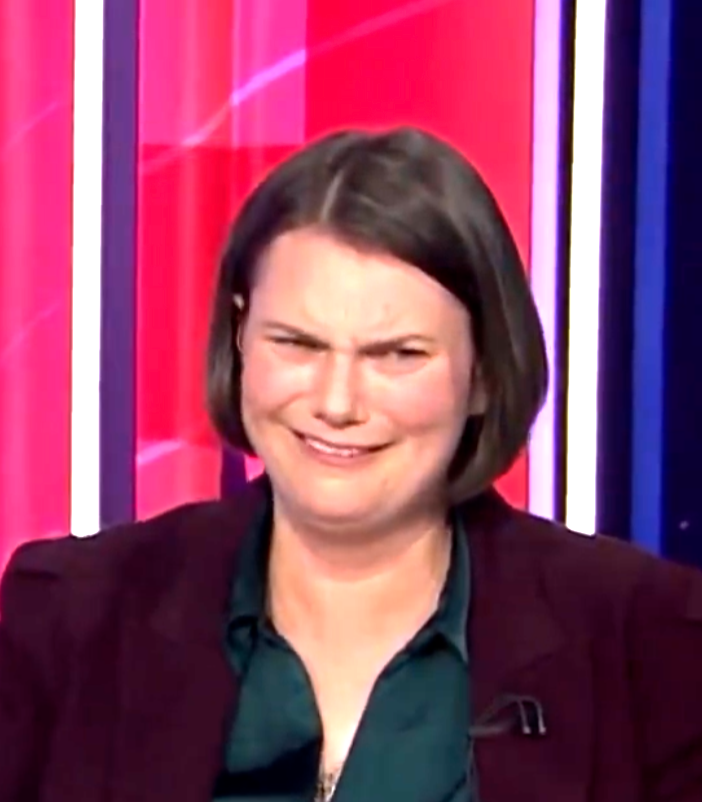
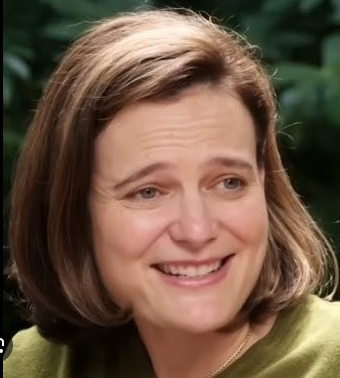
When your entire worldview is based not on knowledge, but on what others think - the only possible rebuttal is a performance.
275
2,895
37,395
2,000,414
Paul Buchheit retweeted

Jun 5
Last night, I read the entirety of C.S. Lewis' The Screwtape Letters. It's a novel told in the form of letters written by a demon to another demon instructing him on ways to manipulate his "patient" to do evil.
This one quote sounded familiar.

561
7,107
41,866
1,162,038
Paul Buchheit retweeted

Jun 5
6 timeless patterns by @paultoo. I stumbled upon his account today and I read this first.
1. I don't know anything. If I believe that I already know the answer and possess the truth, then I'm not genuinely open to learning larger truths.
2. Kill all daemon processes. There are all kinds of distractions, internal voices taking shape of some people who told us we'd not be worth it. Take real breaks, pause and reboot. It helps to regain the energy. Most devices work better after a reboot. You are no different.
3. Yes and Thank You. Life doesn't go as planned. The best founders are anti-fragile they make the best of the worst possible situations.
4. Choose the most interesting path. Interesting paths could be different for different people. Interestingness is a sign of unexplored or under-explored territory. If I already know what the outcome is going to be, that's not very interesting. If it's completely random, like gambling, that's also not interesting.
Learning something interesting everyday should a success metric.
5. Love What You Do. Not Do What You Love. Real work involves some unpleasant stuff. In my personal life I can attest. Running, getting ripped and even how I landed my first product role at a startup. I wasn't passionate about any of these things. Intrinsic motivation and extrinsic motivation are best when they are both pointed in the same direction.
6. Maintain a healthy disregard for the impossible.
This is my favourite because some of the most valuable companies were built by non-experts. See @SpaceX, @boomsupersonic were all started by people who had no background when they started to work on it.
1
2
11
1,227
Paul Buchheit retweeted

Jun 5
Brevity is more than politeness to the reader. Compression is understanding.
137
200
2,933
149,917
Paul Buchheit retweeted

Jun 5
People are often surprised how many hard-tech companies YC funds, and for how long we've been doing it. It's been about 10% of the batch since 2014 when Sam became CEO.
Jun 5

Sam Altman deserves credit for YC's turn toward hard tech. When he became CEO in 2014 he went out and recruited companies doing stuff like airliners and fusion, and hard tech startups have been some of the best in every batch since.
11
12
191
80,684
Jun 5
Make something Claude wants
Jun 5

The new moat in the agent era is being the tool agents reach for.
A coding agent doesn’t reinvent a database. It wires up Supabase.
The best devtools companies will make themselves obvious to agents: easy to find, easy to reason about, easy to wire up.
Devtools are entering a golden age, but only for companies that realize they’re selling to agents now, not just humans.
6
2
106
19,543
Paul Buchheit retweeted

Jun 4
If you think the government spends money wisely and that taxes should be higher, there is literally nothing stopping you from sending them extra money voluntarily.
95
637
7,344
88,762
Paul Buchheit retweeted

Colombia just held their election.
They require voter ID and use paper ballots. They hand-count the votes of each station one by one. No machines or mail-in ballots due to security concerns.
~24 million votes.
It was all done in a couple hours.

California is holding elections today…
They are already warning that it could take several days or weeks to count the votes.
They send a mail-in ballot to every voter.
Third-world nations are run better.
310
4,115
15,438
330,029
May 28
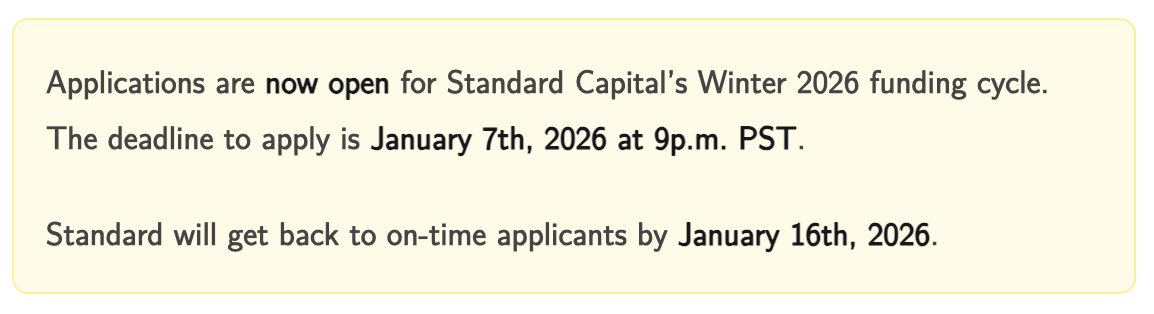
Are you a YC founder building a $100B or $T company? Apply now. Deadline is 9pm tonight.
May 27

What it takes to reach $100B
Fewer than 0.1% of startups will ever be worth more than $100B, but those that do will have an outsized impact, so it’s worth understanding which companies have the potential and what it takes to get there.
Examining the history of these massively successful companies, it becomes clear that there are two ingredients necessary to reach $100B.
First, they must be building in a rapidly growing market of unlimited size. For example, Microsoft, Apple, Intel and AMD all emerged as part of the exponentially growing microcomputer market. These companies started when microcomputers were still relatively new and obscure. Micro-soft’s first product, Altair BASIC, was incredibly niche — MITS only ever sold about 25,000 Altairs, but that was the start of what is now a $3T company.
Likewise, Amazon, Google, and Facebook all became $T companies by growing with the Internet. Stripe ($160B) makes this dynamic explicit in its mission statement: “Our mission is to increase the GDP of the internet”.
Why now? $100B opportunities only exist for a limited time. If a company could have been started 20 years earlier, then it’s unlikely to have $100B potential. Important new technologies create massive new opportunities, but those windows of opportunity don’t last forever. For example, it was not possible to start Uber or DoorDash five years earlier because mobile platforms such as the iPhone did not yet exist, and it wasn’t possible to create them five years later because the opportunity had already been captured.
Large but slow growing markets rarely produce $100B companies. For example, startups selling to dentists or auto mechanics are not good candidates to reach $100B. A simple test is to ask if demand will increase 10x or 100x in the next ten years. Startups thrive when capturing a slice of a rapidly growing pie, not fighting zero-sum games against incumbents.
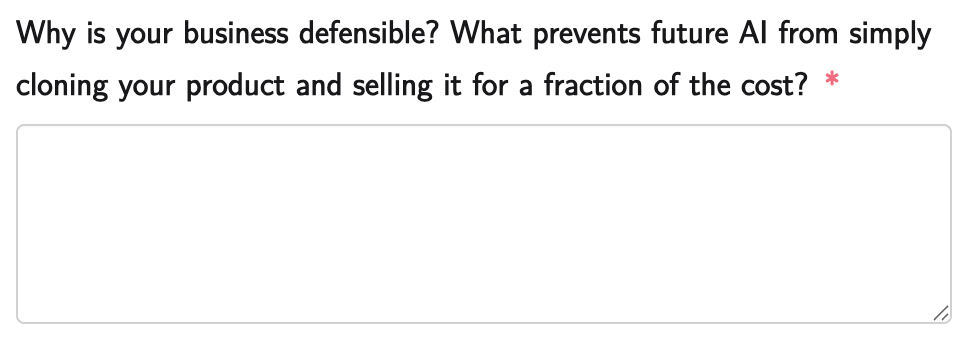
The second ingredient is defensibility, a durable control point in the market. If your company is making billions of dollars, that will attract a lot of interest from potential competitors.
This defensibility is typically provided by one or more of the following dynamics:
- Marketplaces like Amazon, Google, Facebook, and Uber aggregate supply and demand.
- Platforms like Apple, Microsoft, NVIDIA, Salesforce, and OpenAI provide a foundation for large ecosystems to grow.
- Foundational infrastructure companies like TSMC, AWS, Stripe, and Arm become hard-to-replace dependencies.
- Workflow systems like ServiceNow, Intuit, SAP, Oracle, and Workday become the default systems of record and action.
- Deep tech companies like ASML, Tesla, and SpaceX require extraordinary technical, manufacturing, operational, regulatory, and capital execution to reproduce.
Competing head-on with these companies is nearly impossible. They effectively “own” their slice of a large and rapidly growing market, which earns them high revenue multiples, lower cost of capital, and the ability to acquire smaller companies and hire top talent.
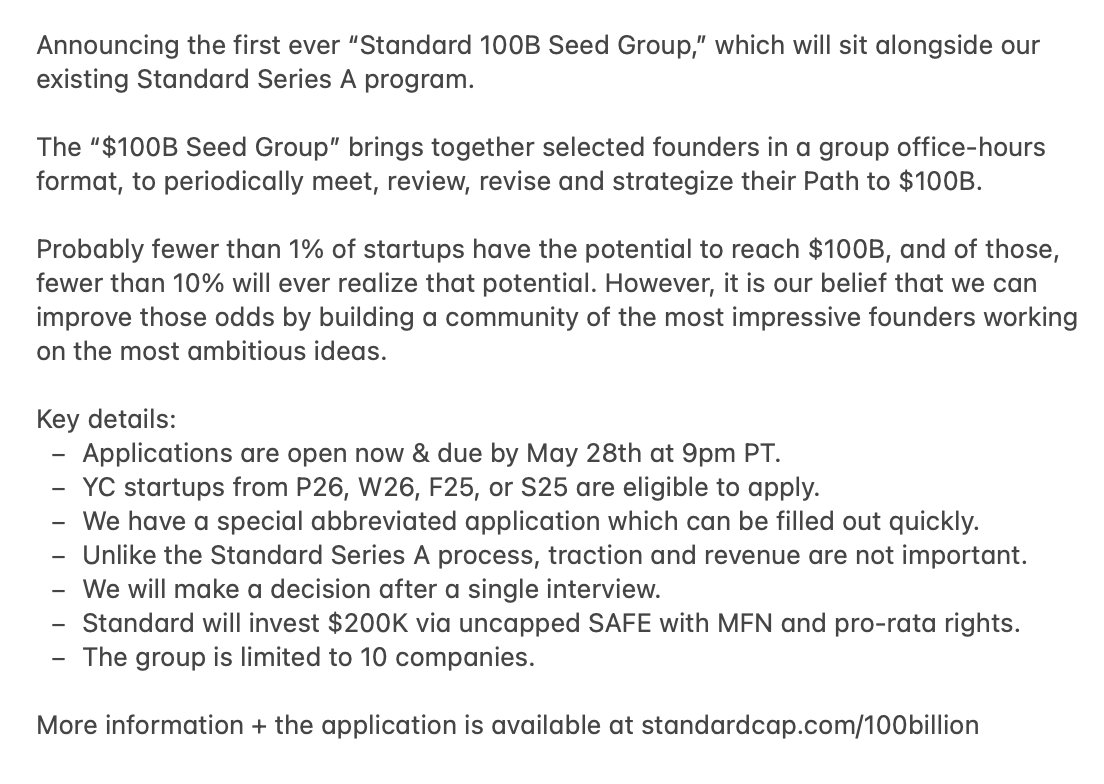
Probably fewer than 1% of startups have the potential to reach $100B, and of those, fewer than 10% will ever realize that potential. However, it is our belief that we can improve those odds by building a community of the most impressive founders working on the most ambitious ideas.
We are creating the “$100B Seed Group” to bring together these early founders in our group office-hours format, to periodically meet, review, revise and strategize their Path to $100B. Apply now if you would like to be a part of the program. The first cohort will be limited to 10 companies.
Any startup from YC P26, W26, F25, or S25 is eligible. Applications are due by May 28th at 9pm PT.
standardcap.com/100billion
6
2
74
17,922
Paul Buchheit retweeted

Once you accept the fact that the American Democratic Party is primarily a massive money laundering operation that converts tax dollars to personal enrichment, moves like this make more sense.
May 27

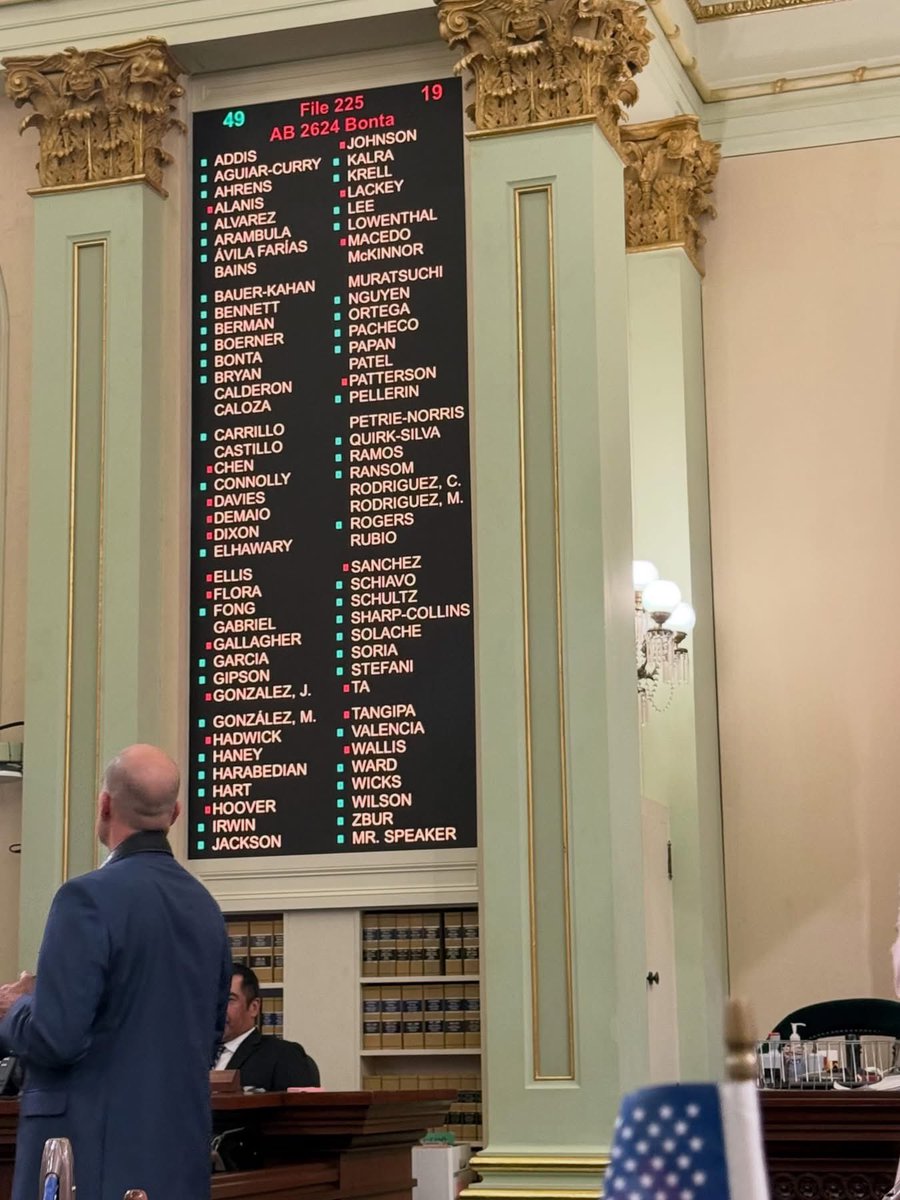
🚨BREAKING🚨 the “Stop Nick Shirley” bill just passed through the CA Assembly.
Instead of fixing the fraud and abuse being exposed, Sacramento Democrats would rather go after the people shining a light on it.
Transparency matters. Accountability matters. Free speech matters.
AB 2624 now heads to the Senate.
Call your State Senator and tell them to vote NO on AB 2624.
12
379
2,483
39,167
May 27
What it takes to reach $100B
Fewer than 0.1% of startups will ever be worth more than $100B, but those that do will have an outsized impact, so it’s worth understanding which companies have the potential and what it takes to get there.
Examining the history of these massively successful companies, it becomes clear that there are two ingredients necessary to reach $100B.
First, they must be building in a rapidly growing market of unlimited size. For example, Microsoft, Apple, Intel and AMD all emerged as part of the exponentially growing microcomputer market. These companies started when microcomputers were still relatively new and obscure. Micro-soft’s first product, Altair BASIC, was incredibly niche — MITS only ever sold about 25,000 Altairs, but that was the start of what is now a $3T company.
Likewise, Amazon, Google, and Facebook all became $T companies by growing with the Internet. Stripe ($160B) makes this dynamic explicit in its mission statement: “Our mission is to increase the GDP of the internet”.
Why now? $100B opportunities only exist for a limited time. If a company could have been started 20 years earlier, then it’s unlikely to have $100B potential. Important new technologies create massive new opportunities, but those windows of opportunity don’t last forever. For example, it was not possible to start Uber or DoorDash five years earlier because mobile platforms such as the iPhone did not yet exist, and it wasn’t possible to create them five years later because the opportunity had already been captured.
Large but slow growing markets rarely produce $100B companies. For example, startups selling to dentists or auto mechanics are not good candidates to reach $100B. A simple test is to ask if demand will increase 10x or 100x in the next ten years. Startups thrive when capturing a slice of a rapidly growing pie, not fighting zero-sum games against incumbents.
The second ingredient is defensibility, a durable control point in the market. If your company is making billions of dollars, that will attract a lot of interest from potential competitors.
This defensibility is typically provided by one or more of the following dynamics:
- Marketplaces like Amazon, Google, Facebook, and Uber aggregate supply and demand.
- Platforms like Apple, Microsoft, NVIDIA, Salesforce, and OpenAI provide a foundation for large ecosystems to grow.
- Foundational infrastructure companies like TSMC, AWS, Stripe, and Arm become hard-to-replace dependencies.
- Workflow systems like ServiceNow, Intuit, SAP, Oracle, and Workday become the default systems of record and action.
- Deep tech companies like ASML, Tesla, and SpaceX require extraordinary technical, manufacturing, operational, regulatory, and capital execution to reproduce.
Competing head-on with these companies is nearly impossible. They effectively “own” their slice of a large and rapidly growing market, which earns them high revenue multiples, lower cost of capital, and the ability to acquire smaller companies and hire top talent.
Probably fewer than 1% of startups have the potential to reach $100B, and of those, fewer than 10% will ever realize that potential. However, it is our belief that we can improve those odds by building a community of the most impressive founders working on the most ambitious ideas.
We are creating the “$100B Seed Group” to bring together these early founders in our group office-hours format, to periodically meet, review, revise and strategize their Path to $100B. Apply now if you would like to be a part of the program. The first cohort will be limited to 10 companies.
Any startup from YC P26, W26, F25, or S25 is eligible. Applications are due by May 28th at 9pm PT.
standardcap.com/100billion

17
26
332
80,668
May 22
We're bringing back the $100B office hours!
3
3
79
18,267
Paul Buchheit retweeted

May 22
A message for recent YC founders
32
29
664
189,886
Paul Buchheit retweeted

May 21
After seeing the footage of the October 7 atrocities and watching American leftists celebrate with paraglider memes, I can’t overstate how important it is to me for every single Hamas paraglider guy to be killed. I want the activists to know that Israel killed every single one of them.
May 21

Israeli security forces made a list of thousands of militants who participated in the Oct. 7, 2023, attacks. One by one, they are being tracked down, captured and killed. 🔗 on.wsj.com/4uwA952

396
1,115
9,035
270,411
In 1843, a group of socialist vegans bought a farm in Massachusetts and declared it a transcendentalist utopia. What could go wrong?
The Fruitlands commune collapsed within seven months because ideological purity cannot feed human stomachs or organize economic production. Bronson Alcott's experiment banned money, animal products, and apparently common sense while expecting 90 acres to sustain a community through New England winter.
Alcott recruited transcendentalist dreamers who had never farmed but possessed strong opinions about spiritual agriculture. They refused animal labor for plowing, rejected manure as fertilizer, and spent harvest season attending philosophy lectures instead of gathering crops. When October arrived, they had planted late, harvested little, and stored almost nothing for winter. Their ideology forbade the market mechanisms that could have saved them.
The community's anti-money stance meant no price signals, no profit motive, and no rational allocation of scarce resources. Without property rights, nobody owned responsibility for specific tasks. Without market prices, they couldn't calculate which crops would feed the most people or generate trade value with neighboring farms. Alcott traveled constantly giving speeches while his family and followers faced starvation.
By January 1844, members fled to towns where evil capitalism provided food, shelter, and paying work. The commune's collapse wasn't bad luck or poor weather - it was economic law in action. You cannot organize production through wishful thinking and moral lectures. Even the most devoted ideologues eventually choose survival over starvation when reality intervenes.
Every socialist experiment faces this identical problem, whether it's 90 acres in Massachusetts or 90 million people in the Soviet Union.
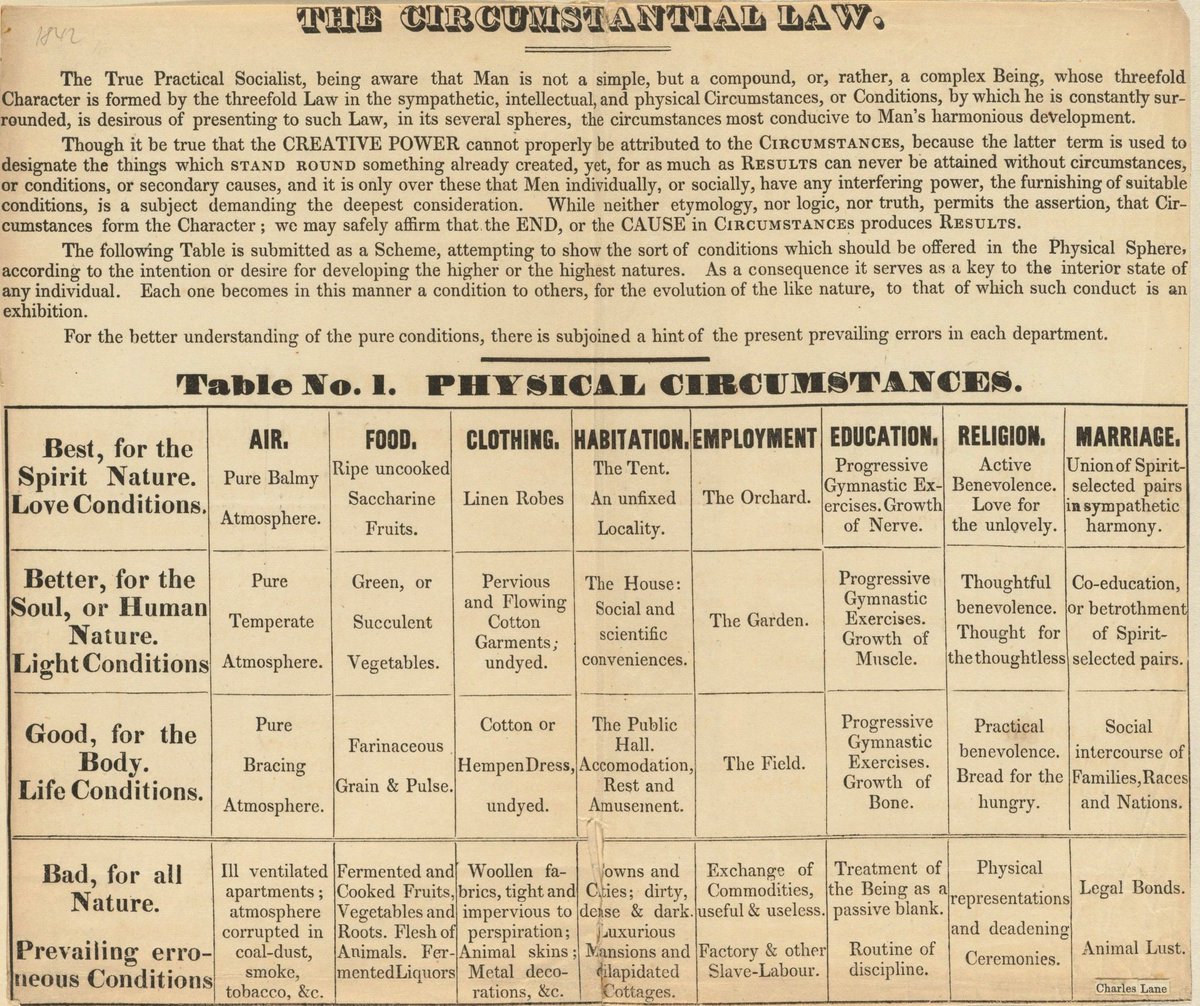
ALT Greaves' Table of the Circumstantial Law, as revised by Fruitlands co-founder Charles Lane
45
296
826
25,293