
Devoted family man, stoic, and software artisan. Lifelong learner in tech, history, psychology, weird things. Sharing insights on my way to minimizing regrets.
Joined January 2016
- Tweets 14,497
- Following 2,661
- Followers 519
- Likes 45,079
2,251 Photos and videos














Pinned Tweet
Keep going
Have fun
Keep going
Have fun
1
1
406
Dear Fellow Europeans,
this is one of the reasons why our continent is going to shit.
It's this mindset.
I cannot articulate it any better than this.
A man has a choice to make:
- create
- take
- destroy
- give
These folks just want to take take and take.
I am sure @elonmusk has done 3 of these.

Elon Musk has become a trillionaire. If we confiscated just 15% of his wealth we could: clean up all the oceans, eliminate poverty, and literally make the world into a utopia.
Instead he chooses to indulge in his phallic obsession with rockets and wants to build data centers in space. You cant even move electricity from space to earth. Dumbest idea ever.
All the best,
Wolfgang
1

Jun 13
To be fair, some knowledge can be extracted by distillation of open source models but of course it's not the same as having the raw data.
You could do a better or worse job at training your model...
We would still need access to conversations and steering to further refine models.
Jun 13

Data access might be a problem. Of course you can scrape whatever is in the open but it's not like asking your American buddy to partner with you.
Regardless, we must do whatever is necessary otherwise we will be forever dependent and potentially bullied on foreign tech.
17
Jun 13
They want you to love the immigrants that slaughter our people, rape our girls and commit all sorts of atrocities.
They want you to hate the immigrants that create immense value and get rich in the process like @elonmusk
Why?
1
12
Jun 13
Because the latter cannot be controlled and ruled over easily, the entrepreneurs, the risk-takers, the ones that build instead of destroying, the ones that call bullshit when they see it, the ones that have self-respect and respect and protective instinct for the innocents.
1
8
Jun 10
Lead with the other cheek, mercy is the highest-leverage move that breaks retaliation cycles and compounds real power.
But invert, always invert: never let kindness create a perverse incentive for people to keep swinging.
Keep the sword strapped, because wisdom sees the long game... forgive fast, stay kind until the line is crossed, then stand like a warrior.
True strength isn’t soft. It’s kind until it can’t be.
1
1
19
My young explorer learns physics... and the female physique.
Good boy.
23
Never forget.
This is white privilege.
Jun 2

I don’t think you can find a better visual metaphor for what’s happening
accidental renaissance in the purest form

1
54
May 31
This, one hundred million times this.

“Those who can make you believe absurdities can make you commit atrocities.”
~ Voltaire

1
23
May 29
Truth is a pipeline problem.
If you just believe, you are smoking it.
9
May 23
"You have lost your fucking mind"
Did I?
Perhaps I did. If that's the case, I will certainly find it back.
I am not smart, I am flexible. I started my AI journey by being a hard core skeptic now here I am.
May 23
I knew this would happen.
Despite the fact that I am personally investing more in Zig than in Rust (right now).
Indeed, for fun and learning, I am working on a borrow-checker for Zig that I am integrating with Bun's Zig fork and run also against the last Zig-only commit (monster PR -1).
I already found a few issues but I want to run it across the whole codebase. I will post results once it's all nice and done.
I think this incredible "experiment" enabled by AI will bring progress from the technical perspective and also, perhaps, instill some of healthy skepticism about self-biases towards/against maximalisms like:
- AI is bad
- This is a slopfest
- GLHF maintaining that
I believe that code is never finished, it's ever changing and morphing, ephemeral. Especially if the project is alive and well and has to react to change and/or improve performance and stability.
AI enables impossible design decisions like: "let's just rewrite it" but we tend to forget that what makes it possible is the team knowing their project well enough and covering it with a decent amount of tests.
Of course, we don't know what we don't know but that's always the case, regardless of programming language being used.
Minimizing unexpected behaviour even if the code looks like shit initially, is always a win overall. It can only improve from there.
I am not blindly bullish AI but I am VERY bullish teams that can harness AI in creative ways, using it as the tool it is to improve their products in all shapes and forms.
Well done team Bun.
Outshipping all the hate you are doing the industry a favour.
This is historic stuff that is already a meme and will eventually become nerd pop culture.
49
May 21
This post was written in Rust
If you get the joke, I'll follow you.
20
May 20

ds4-agent, the coding agent part of ds4, is starting to work. It is a very low-latency experience because the inference is inside the agent itself. If you try it, tell me your feelings and what you would like to see implemented 🤖🤖🤖
79
May 20
RIP Henry Nowak
We failed you and the other victims of stupid decisionmaking
2
1
2
141
May 16
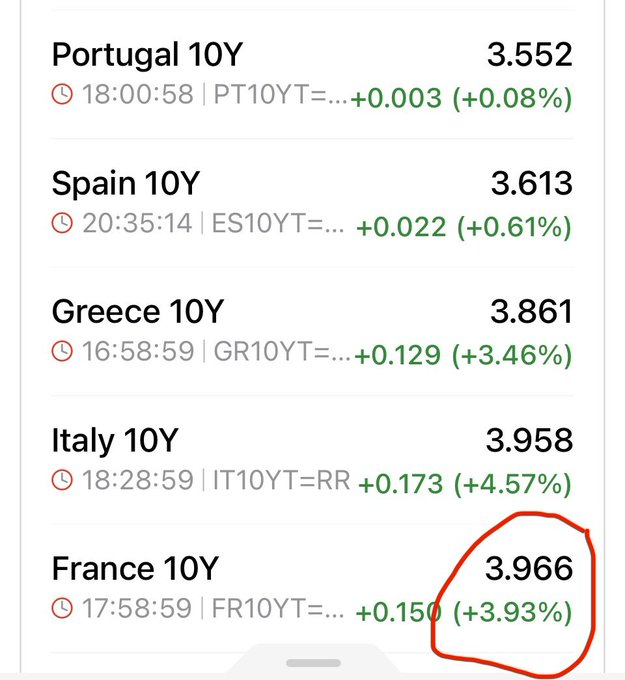
Trust is volatile
May 16
This post hits home hard.
A perfect stranger told me that I have lost my mind yesterday. I am grateful.
(receipts: x.com/polyMatto/status/20550…
x.com/polyMatto/status/20549…
)
I think it all boils down to a discussion around trust and quality.
How can you trust any folder with source code inside?
I thought about this hard. Certainly I am missing some pieces and I am glad that people like you and the gentleman @YoavCodes call my BS directly or indirectly so that I can learn and grow.
I am going to ask something very stupid.
Isn't a compiler a form of automation that speeds up the dev process? (we used to write machine code manually, I wasn't born yet but I am sure some code scribes were horrified initially).
What about linters, syntax highlighting, language servers? Lower impact tools but certanly they do something in an automated way to speed up the dev process and raise quality.
I see them as tools, black boxes that have one job and have to do it well. But if you have two compilers, how do you discern a GOOD compiler from a BAD compiler?
Trust and quality need to be measured... but HOW?
In a world that is basically embracing the whole "Move fast and break things" mentality what do you do?
My reaction to AI has been:
- Never gonna work, ridiculous
- Good luck fixing AI generated code that blows up on your face at 3am LOL
- Fine this could be useful but overall it's garbage
- Garbage in, toxic waste out
- OK, this really helped me. Small task but I did it 10x faster... shit, am I missing something? I need to investigate
- I can now do things I could have never done before.
- Power is nothing without control.
- Am I a better or worse engineer today? I used to drop in a codebase like a navy seal and do things that looking back I can't believe I did before AI, but now... I can build things in languages I am only acquainted to and I can learn to be proficient in them much faster than I used to (Google Stack Overflow weeks reading/writing code).
- I feel like I am taking crazy pills <- Now I am here.
So yes... I worry too but I want to be optimistic about it.
Stuff WILL blow up on our face.
AI will make it happen faster.
To me that also means that we can learn a -hard- lesson earlier and improve from there.
AI can find exploits that are a decade old. Scary, right? But isn't it ultimately a good thing? We can fix them.
To me a 0Day is less damaging than a latent/undiscovered -2423523421day.
Like this horror story from last March... x.com/TrungTPhan/status/2032…
AI allows you to rewrite million-loc codebases in a week... is it good or bad? I don't know but I trust the team that built the thing depending on my personal exposure to that project.
I trust the judgement of the engineers that will deploy systems I use and where I input my data.
But is this a new thing or we have always done it?
Closed source software.
If we think rationally, we shouldn't touch it.
How can you trust a black box? Even the very operating systems we use.
You have to have "faith" that they will not do anything dodgy to you... that bugs will be fixed timely, etc.
Do you care which tools they use internally? Should you?
I care about the results but how do I measure them?
I haven't been hacked = good.
Pictures of my feet are online = bad? (hold up, lemme check, nah, still ok)
Now to the practical. What do we do? If I don't trust something, do I switch or I build my own.
Is it different today? Not really.
@YoavCodes used bun in his ElectroBUN project.
And it's basically morphing into ElectroZIG...
Switching runtime is faster like it's faster to rewrite the entire runtime (different scales but same powerup).
Catastrophe looming if you use the RustBun? Depends.
I wouldn't use it for prod stuff like I wouldn't use any unstable library but let's not forget that "unstable/alpha/beta etc" are labels applied by the team that builds the thing, so you are ultimately trusting PEOPLE.
I don't know personally the people that built tools I use but I trust them, you are the perfect example @mitchellh.
Do I care about how much AI you use in your workflow?
Out of curiosity, yes, but in qualitative terms... not really, I still trust the man trusting his tools. (don't gender-grammar-shame me please. Focus, please.)
Now on automating our way into a disaster.
Yeah that's scary. But maybe the disaster sometimes is inevitable to prevent the next one? There's always gonna be another disaster... but can you recover from it without permanent loss?
We need to build in an antifragile way.
MTBF vs MTTR... we need a mix of both maybe? Even if I'd lean towards MTTR. Easier said than done tho.
Tests bug reports are a proxy for quality I believe.
Do they paint the whole picture? No. That's a bug!
We accept that we don't know what else is broken in our code. We "hope" to find out sooner rather than later, hopefully in an inner dev loop.
If I were @AnthropicAI I would have kept ZigBun and RustBun, maintained together for a while.
Used them in a round-robin way internally with non-critical tools, maybe even built new tooling / throaway apps that mimick production use cases meant to stress test the areas where the well known class of bugs they are aware of hit the most and of course I would have fuzzyied he hell out of it because we don't know what we don't know.
Too expensive? Really? You wrote the whole thing in a week! You don't have a little cluster that can run 24/7 on this? GTFO.
So no, it's not fine to ship bugs. You wash your dirty clothes at home, you stamp a beta/radioactive/do not touch label on it for a while anyway and you prove that YOU as a team can be trusted.
But again. I know nothing. If the creator of the project TRUSTS his tools (even if he is 99% biased since his employer is the company that builds the tool).
I need to make a call... The Kubernetes cluster in my brain is killing services due to trust dropping below a totally arbitrary made-up threshold. I need to recover quickly, I switch runtime.
Am I better off? Probably...
I am choosing WHO to trust. And of course I might be completely wrong and have bad judgement myself.
But, we'll figure out. We'll learn one way or the other.
46
May 15
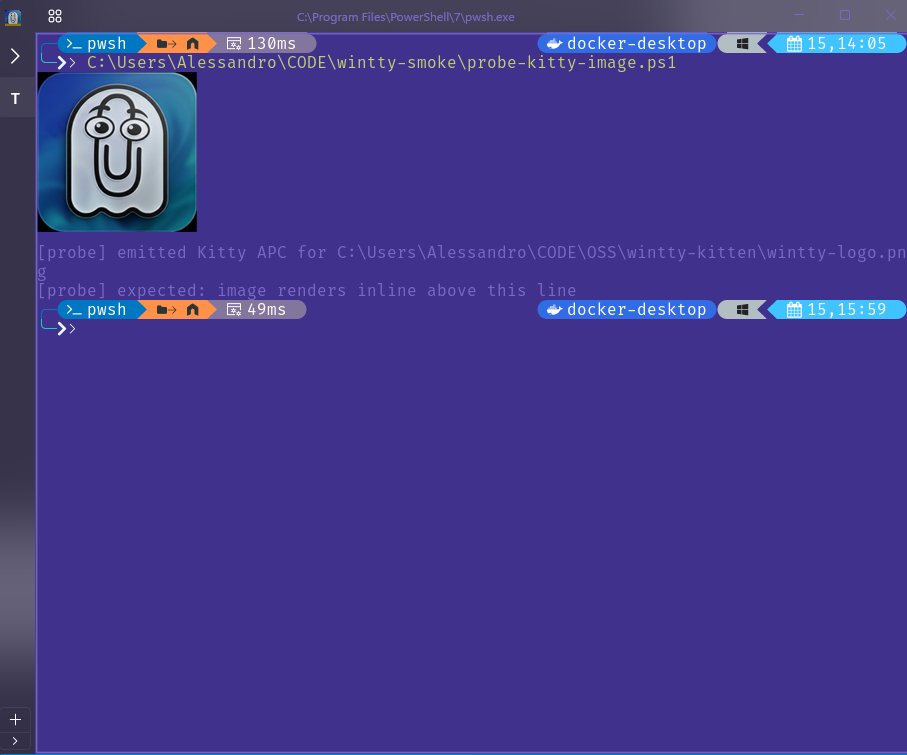
Back to shipping features after fighting with the removal of c dependencies from Wintty that led me to developing 2 entirely new projects and patch a few existing ones along the way.
Kitty cat is in da house
The icon is the old one... to remind me where I come from LOL
51
May 15
Introducing `pi-visual` an extension for @badlogicgames 's pi that allows you to spin up an alternative ui for your chats (it supports images as well) AND that is capable of rendering visual blocks when needed...
Motivated by the fact that Markdown sucks and HTML is king /ht @trq212
Still barebones but if you squint you can see where this is going.
I'll build a generic version that uses SKILLS to plug into any harness if there's traction.
I would really appreciate any sort of feedback.
github.com/deblasis/pi-visua…
3
4
23
4,633