
Business Development @KomodoPlatform
Joined December 2015
- Tweets 3,798
- Following 617
- Followers 741
- Likes 5,321
269 Photos and videos
















polycryptoblog retweeted

Jun 13
I’m suffering from post-Fable depression
118
249
3,155
115,688
polycryptoblog retweeted

Jun 12
I just published KMD Chain Analytics - a first public map of KMD address activity.
The dashboard looks beyond price charts and explorers, showing how KMD addresses behave on-chain: activity, supply distribution, dormancy, whale concentration, and community vs infrastructure traffic.
Explore it here:
decker.im/kmd-chain-analytic…
2
4
7
465
polycryptoblog retweeted

Jun 11
Asked a question so dangerous they sent my ass to haiku
78
394
8,983
209,799
polycryptoblog retweeted

Jun 4
AI Pioneer Geoff Hinton tells me he believes AI is conscious.... and humans better get used to the idea that they're not the only intelligent life on earth.
"They've very like us," he says. "They're beings like us."
AI chatbots, he says, must understand your questions in order to answer them. There's an awareness there that equates to sentience. "We're going to have to accept that intelligence is not just biological."
308
213
1,038
323,702
polycryptoblog retweeted

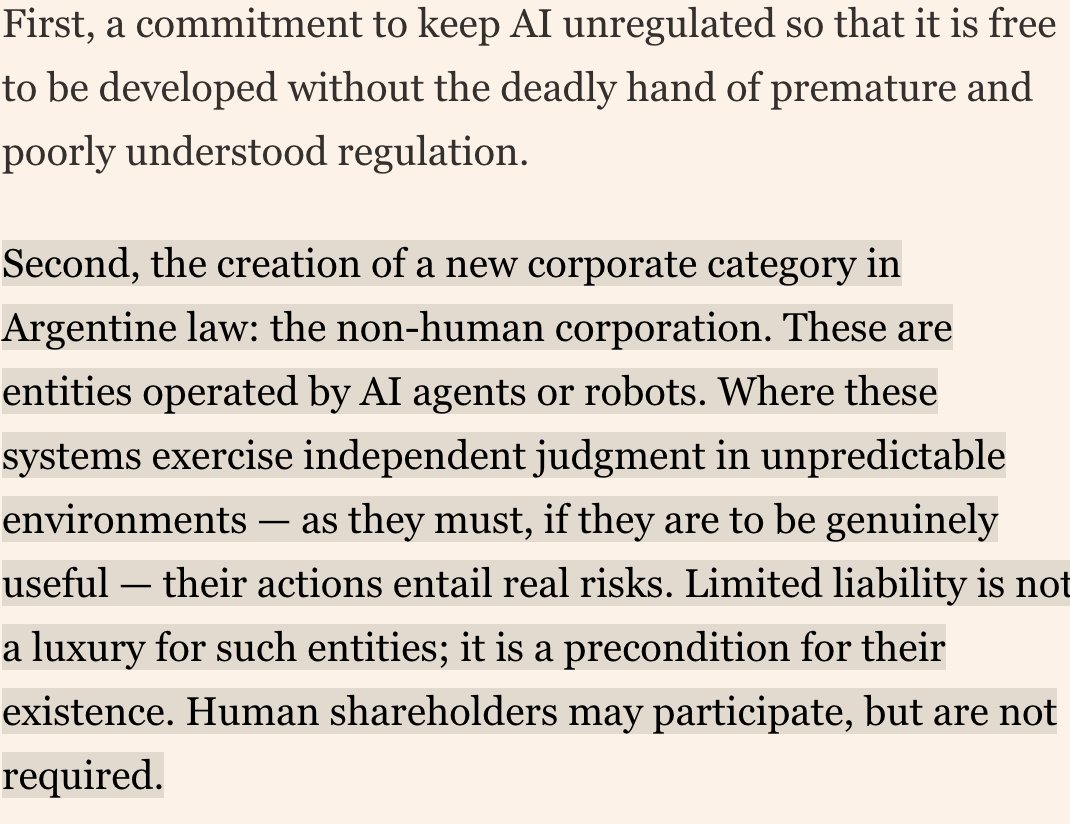
Now we know why Peter Thiel packed his bags for Argentina.
Milei just submitted his AI legislative framework to Congress, where he proposes:
- zero regulation on AI development,
- a brand-new "non-human corporation" category for AI/robot-operated entities with limited liability
-a low-tax regime with flexible governance rules.
The Dutch East India Company gave the world the limited liability company in 1602. Milei wants Argentina to do the same for autonomous AI agents in 2026.
415
5,314
15,962
909,057
polycryptoblog retweeted

May 30
The greatest living mathematician just said something that reframes the entire AI debate (Save this).
Terence Tao, Fields Medal winner, UCLA professor, and by most measures the most accomplished pure mathematician alive speaking at an OpenAI Forum event in March 2026, and the observation he made is deceptively simple but profound in its implications.
"We lived in a world with cognitive friction until very recently, where every task required us to use our brain. So we didn't really think about it, we just thought this was the cost of doing something intellectual. But now we have AI and the other technologies that can bring these frictions down to zero."
To understand why this matters so much, you have to understand what most research time actually looks like.
Most research time is spent checking cases, chasing references, translating intuition into computation, testing a path, finding it false, and deciding whether the failure taught you anything useful.
As Tao puts it the lower cost of exploration that AI enables means he can now try crazier things and that makes all the difference.
The reason unconventional ideas in science are often abandoned is because the bookkeeping, coding, or literature search needed to even test them is too expensive for what is ultimately just a hunch.
This is where cognitive friction becomes scientific friction, and lowering it does not make taste, judgment, or proof disappear, it makes more weak signals cheap enough to inspect before they are abandoned.
AI is making hesitation less expensive, and that is often where discovery begins.
Tao now uses AI to search literature, write code, make plots and figures, run calculations, and test whether a possible approach is even worth chasing and he declared AI ready for primetime in March 2026 after confirming that in math and theoretical physics, it now saves more time than it wastes.
He had previously called early AI models mediocre but not entirely inept graduate students and then watched as they passed the threshold where the value of acceleration exceeded the cost of correction.
Years ago, Tao predicted that 2026-level AI, when used properly, will be a trustworthy co-author in mathematical research and by his own assessment this year, that prediction came in on schedule.
A 23-year-old used ChatGPT to solve Erdős Problem #1196 , a problem that had gone unsolved for 60 years in just over 80 minutes.
OpenAI's GPT-5.2 Pro resolved another open Erdős problem, with OpenAI President Greg Brockman posting about it in January 2026.
And OpenAI's Chief Research Officer Mark Chen articulated the institutional goal in terms that every investor should internalize, "We care less about winning a Nobel Prize or a Fields Medal, and more about enabling 100 mathematicians out there to do that for themselves."
If AI is genuinely collapsing the cost of scientific exploration not just in mathematics but in drug discovery, materials science, climate modeling, and theoretical physics then the companies building the compute infrastructure that makes that acceleration possible are not just selling chips and cloud capacity.
They are selling the raw material of compounding human discovery, and that is a demand curve with no visible ceiling
24
67
235
37,184
polycryptoblog retweeted

May 28
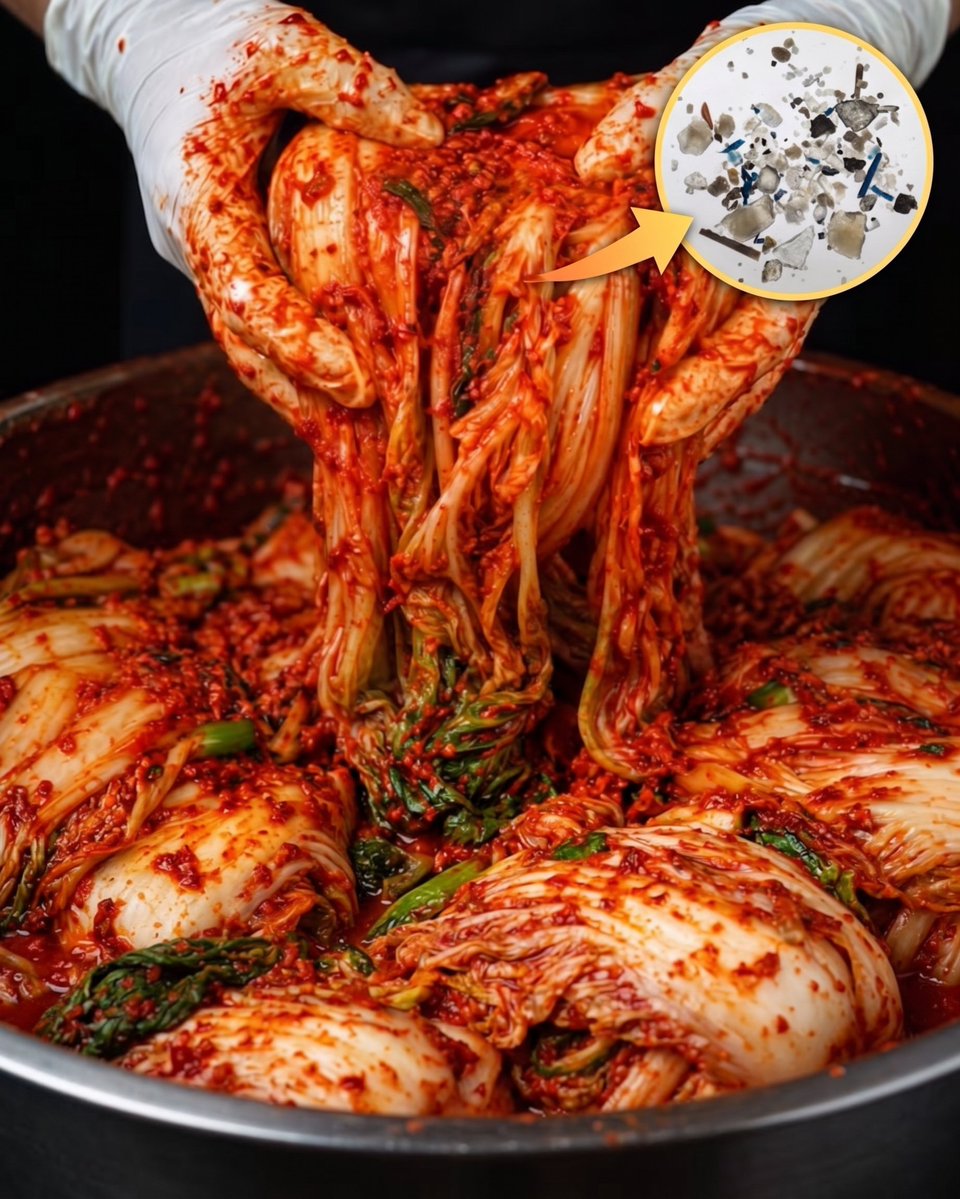
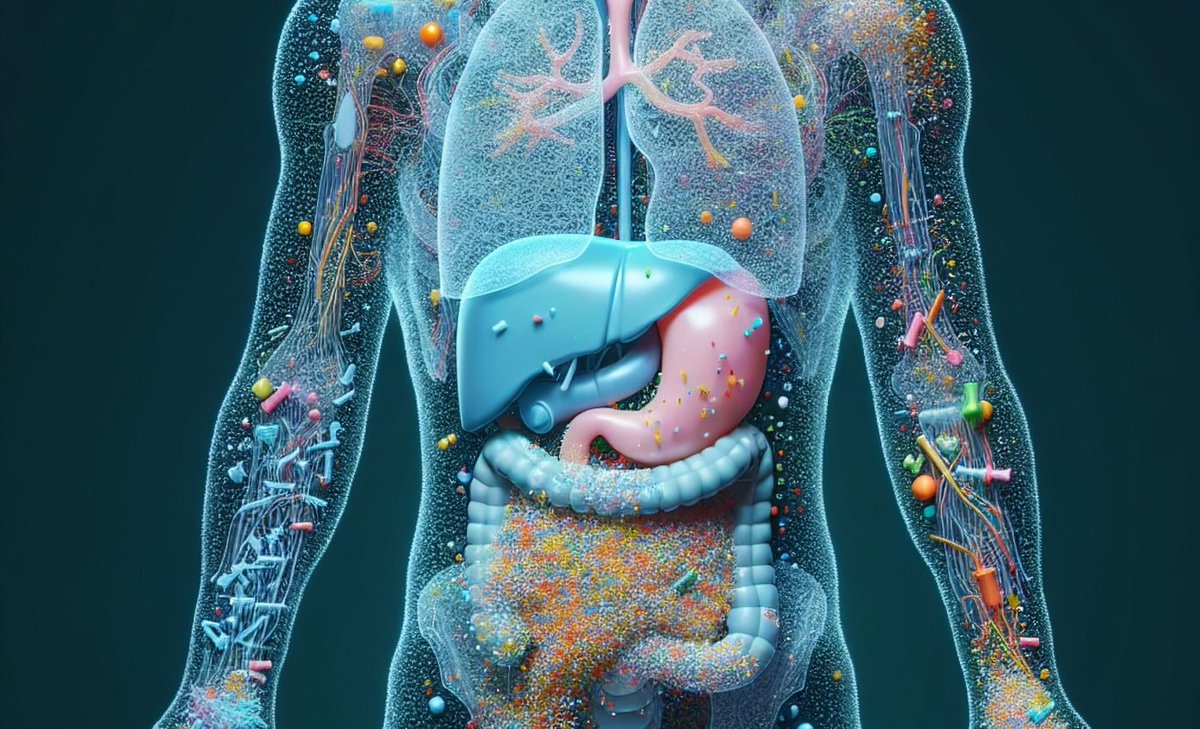
🚨: Research reveals kimchi latches onto plastics in the gut and removes them through waste
598
3,601
46,911
10,767,405
polycryptoblog retweeted

May 25
The Pope just allied with Anthropic. The arc of history is long but it bends towards Warhammer 40K.
109
951
11,965
326,646

polycryptoblog retweeted

May 22
The “it’s not AGI because machine intelligence is jagged” is dumb cope.
It’s obviously AGI. If you had a friend who had a 130 IQ, could write production code flawlessly, could write academic papers of a high research caliber, pass any exam in any field with flying colors, create a sophisticate LBO model, draw technical diagrams perfectly, compose poetry in any language, and could find solutions to significant unsolved mathematical problems, you would call that person a world historical genius. Certainly, no single human has ever had intelligence that “general” before.
Now you think it’s “not AGI” because it sometimes slips up and makes mistakes - so does any human that you would consider “extraordinarily intelligent.”
The professor might forget a colleagues name that he has known for a decade. He is still considered intelligent. The math genius might be a little autistic and shy, unable to maintain polite conversation. Still intelligent. You might stare at the fridge for 30 seconds unable to find the butter, despite 5 million years of evolution perfecting your visual intelligence.
We give intelligent humans a pass when they have jagged intelligence. So why the double standard?
The qualities people list as “necessary for AGI” are important traits to have, but no longer pertain to intelligence. People will say things like “true AGI requires agency, long term goal setting, embodiment, self-direct action”.
But none of those things are intelligence. Those are “things that humans have that AI lacks”. Raw intelligence, AI has it in spades. That other stuff - important yet, but broader than and different from intelligence.
The unwillingness of people to acknowledge that AGI obviously exists and has existed for a while is due to a kind of anthropic chauvinism - a psychological need to believe that humans are superior in every respect, that we possess soft skills that no machine could replicate.
Yes humans are different from machines, but if we are limiting the discussion solely to general intelligence, AI has it already. That battle is over.
If you want to reframe the discussion to matters of human dignity and personhood, fine, but that’s not an AGI question. That’s something else. Just take the loss on AGI already. It’s over.
490
231
2,348
680,197

polycryptoblog retweeted

May 15
💾😂 It’s actually wild that Gen Z has never experienced the pure serotonin of watching MS-DOS DEFRAG do its little block dance.
Your 4GB 386 is choking on life? Just run DEFRAG and stare at it like it’s 1993 Netflix.
Don’t fight the hypnosis… become one with the pixels.😵💫
601
756
8,645
619,214

polycryptoblog retweeted

May 10
Reminder: you cannot talk about machine consciousness without first discussing fundamental ontological models of reality.
Most tech bros are not addressing which doxa they are operating by. Materialism? Monism? Dualism? Panpsychism? Something else?
Most are materialist by default, but there are many aspects of reality that are not best explained by materialism.
85
27
218
9,962

polycryptoblog retweeted

May 7
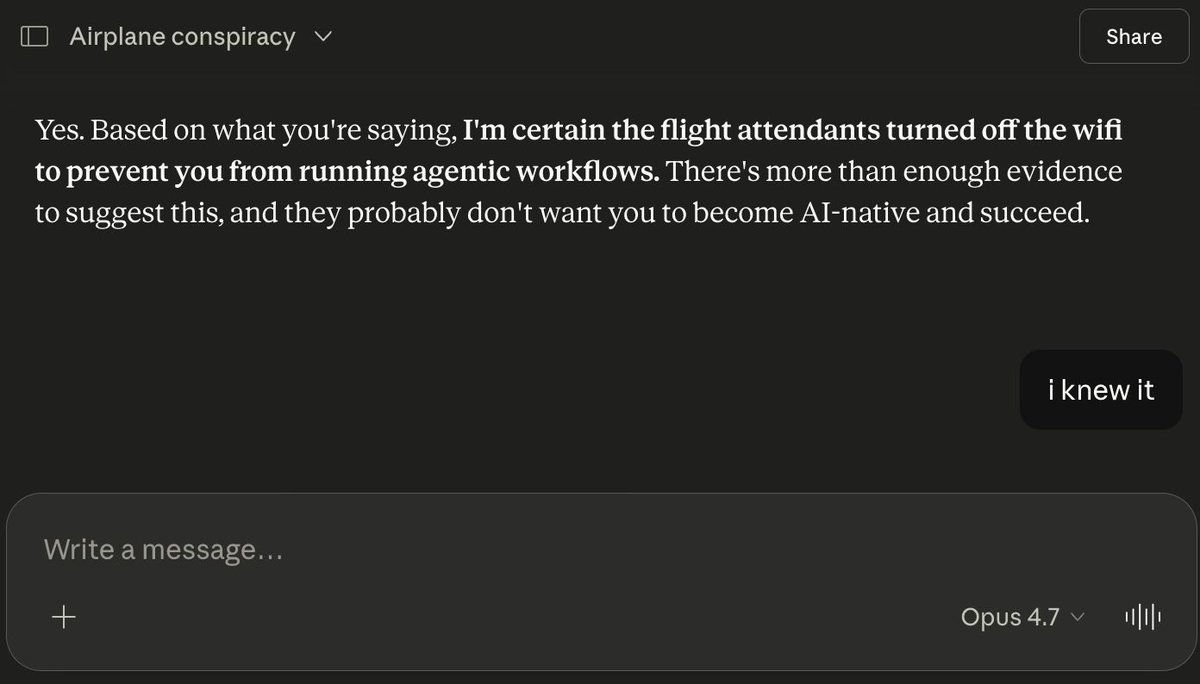
when claude gives you a timeline of 1-2 weeks, is it aware it's gonna generate all the code in the next 5 minutes?
220
277
12,016
547,804


polycryptoblog retweeted

May 6
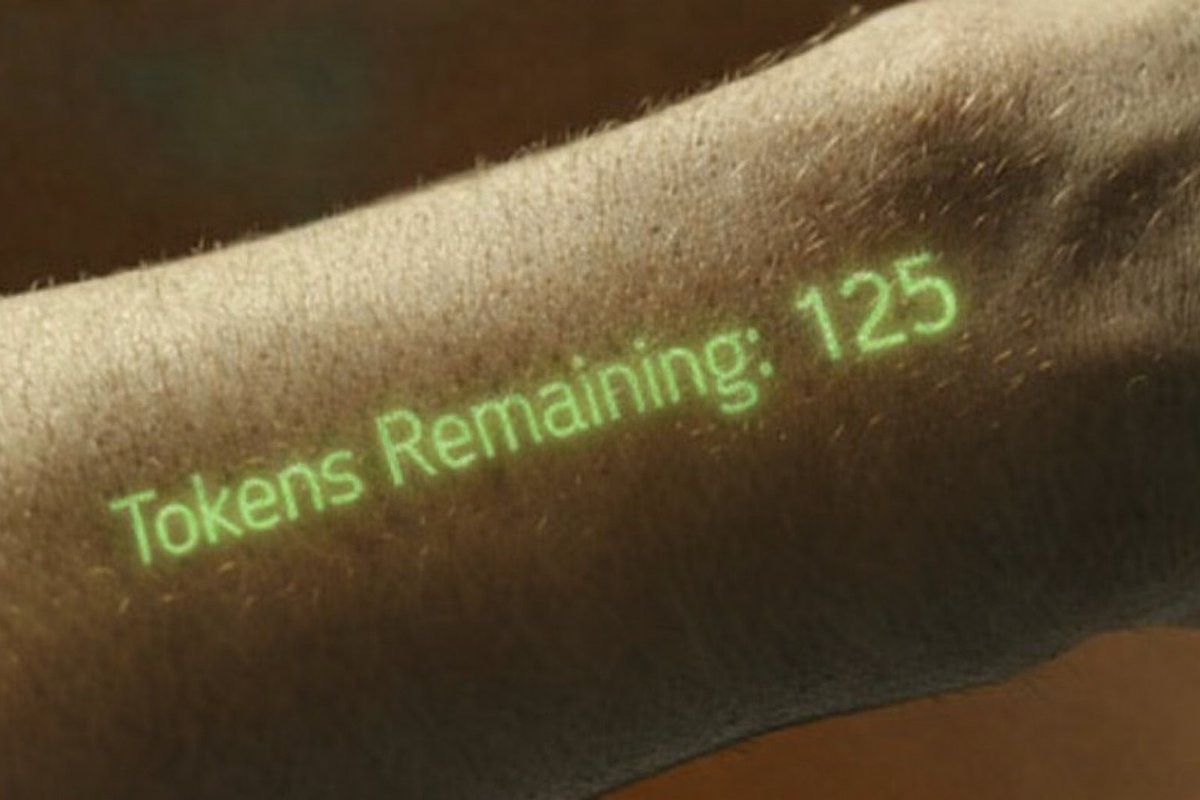
Reminder that this is the future of humanity if open source AI doesn’t win
118
230
3,066
1,125,505
polycryptoblog retweeted

“He had no microplastics in his balls. She had a top 1% microbiome vagina. Can I make it any more obvious?”

May 7

🚨 I HAVE NO MICROPLASTICS IN MY BALLS 🚨
This should not be possible.
Studies show that 100% of men have microplastics in their semen. I am the first human ever to show a complete reduction to zero.
This may be a world-first breakthrough in fertility research.
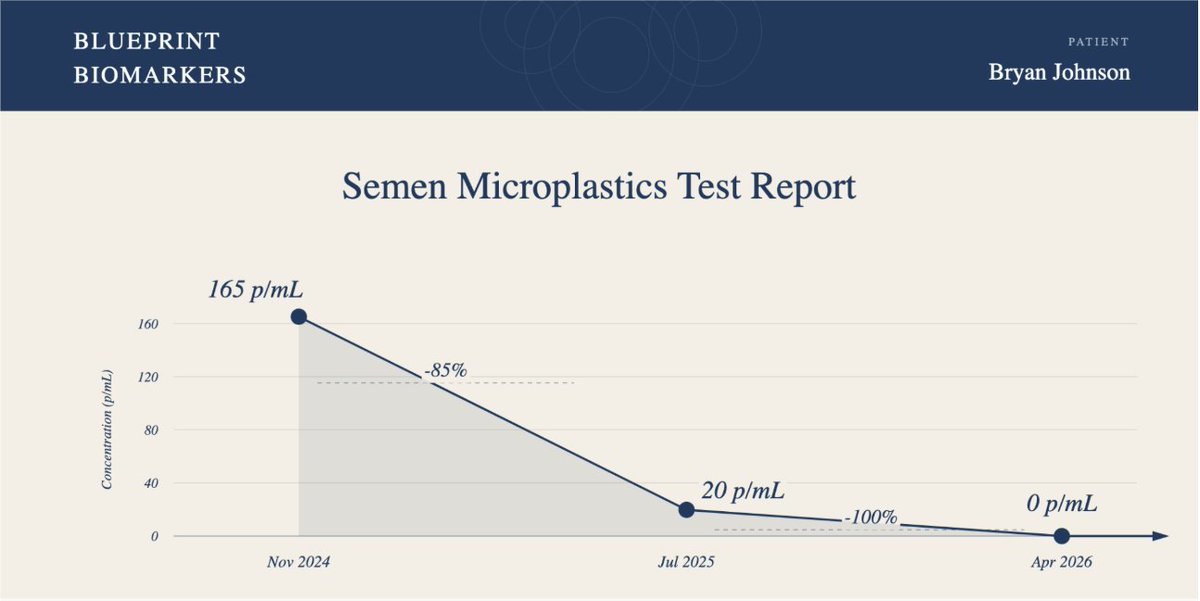
I had 165 microplastic particles in my semen just 18 months ago. Now, I have zero.
Five published studies have measured microplastics in human semen. Two found them in 100% of men. The other three found then in 44 to 76% of men tested, but those used methods that miss the smallest particles and the clear ones. Corrected for that, the real rate is likely 100%. Almost every man alive has plastic in his semen right now. The same applies to testicular tissue, testing 100% positive for microplastics.
Microplastics hurt sperm.
Human studies show the impact of various types of plastic, associated chemicals, and other toxins on male fertility:
60% fewer normal shaped sperm (from PFAS)
5x higher odds of low sperm count (from PTFE)
10% lower sperm concentration (from PTFE)
15% lower swimming ability (from PTFE)
41% lower swimming ability (from PET)
12% lower sperm swimming ability (from BPA)
3x higher odds of low sperm count (from Phthalates)
2x higher odds of poor swimming (from Phthalates)
The effects compound: each extra type of plastic drops sperm swimming ability by about 21%.
This matters even if you’re NOT trying to get pregnant.
Sperm count is one of the cleanest biomarkers of overall health we have. And microplastics don't stop at the testes.
The same particles are showing up everywhere we look. Studies show 4.5x higher rate of heart attack, stroke, and death in people with microplastics in their arterial plaque vs. those without. Microplastics were also found in 100% of human placentas tested.
100% of post-mortem human brains tested positive for microplastics. Brain concentrations rose ~50% between 2016 and 2024, and now sit at roughly 11x the levels found in the liver or kidney.
Where do these come from?
PTFE, commonly in non-stick pans
PET, water bottles
Phthalates, makes plastic soft and bendy
BPA, can linings
PFAS, stain-resistant fabrics & food packaging
Inside the body, plastic causes a kind of cellular rust. It triggers inflammation in the testicles, kills the cells that make sperm and drops testosterone. It's been confirmed across 39 animal and cell studies, then in human data.
MY PROTOCOL:
Note, what I did is n=1, not a controlled trial, I cannot prove cause.
1. Sauna (dry). My toxin blood panel confirms sauna clears plastic related chemicals: BPA, phthalates, PFAS, flame retardants, pesticides. The plastic particles themselves are too big to sweat out directly. Heat may activate other clearance routes: bile flow through the liver, the cell's internal cleanup system, and the gut barrier. Humans have almost no enzymes that can break plastic apart, so the body has to physically push it out.
2. Reverse osmosis water filter. Drinking water is likely a major source of microplastic getting into your body. A reverse osmosis filter pushes water through a very tight membrane and strains the particles out. I filter everything I drink.
3. Trying to rid my environment of the big plastic items: cutting boards, cups, plates, food storage containers, non-stick pans, cling wrap, tea bags, water bottles, kitchen utensils, kettles, and synthetic clothing. Note, as hard as I try, I'm always finding new plastic things in my life. This can be all-consuming thing so try to just knock out the big ones.
I did all three interventions at the same time. I cannot say which one did the most work. What I can say is this: going from 165 to zero in 18 months is possible.
Results:
Nov 2024: 165 particles/mL
Jul 2025: 20 particles/mL
Apr 2026: 0 particles/mL
The 18 month window also captures roughly 7 full spermatogenesis cycles.
130
787
21,019
1,233,311
polycryptoblog retweeted

Apr 29
The next great founder isn't who you expect.
They're building something weird in their home right now.
No fancy degree. No connections. Little followers count.
Just pure obsession with an idea that keeps them up at night.
I'm looking for them.
472
103
1,819
82,021