
Accelerating towards better outcomes.
Joined April 2016
- Tweets 926
- Following 469
- Followers 519
- Likes 2,270
209 Photos and videos
Pinned Tweet

10 Apr 2024
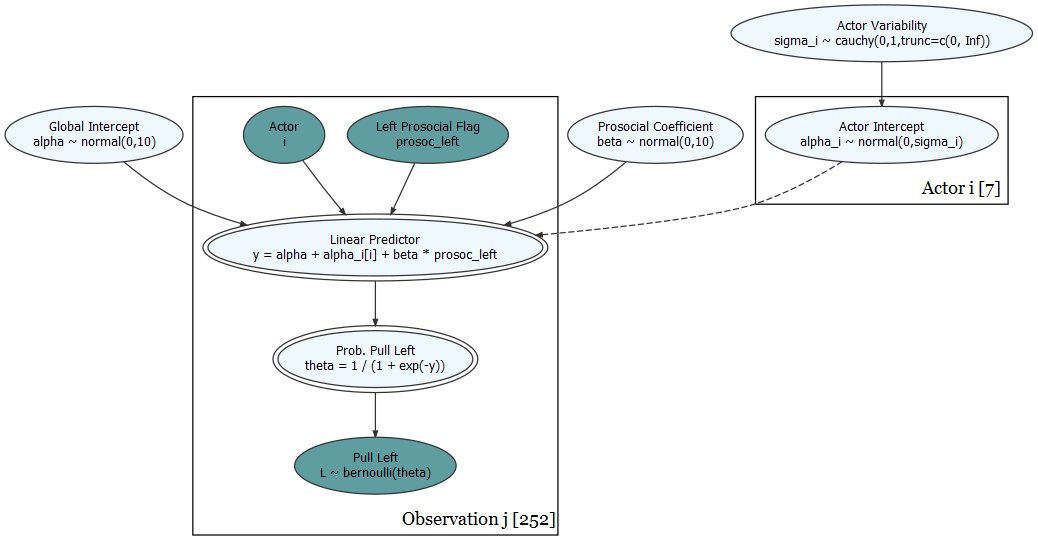
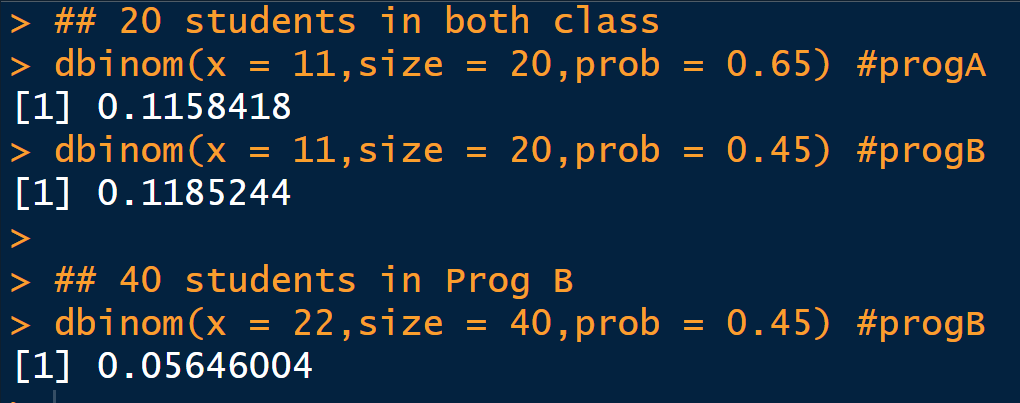
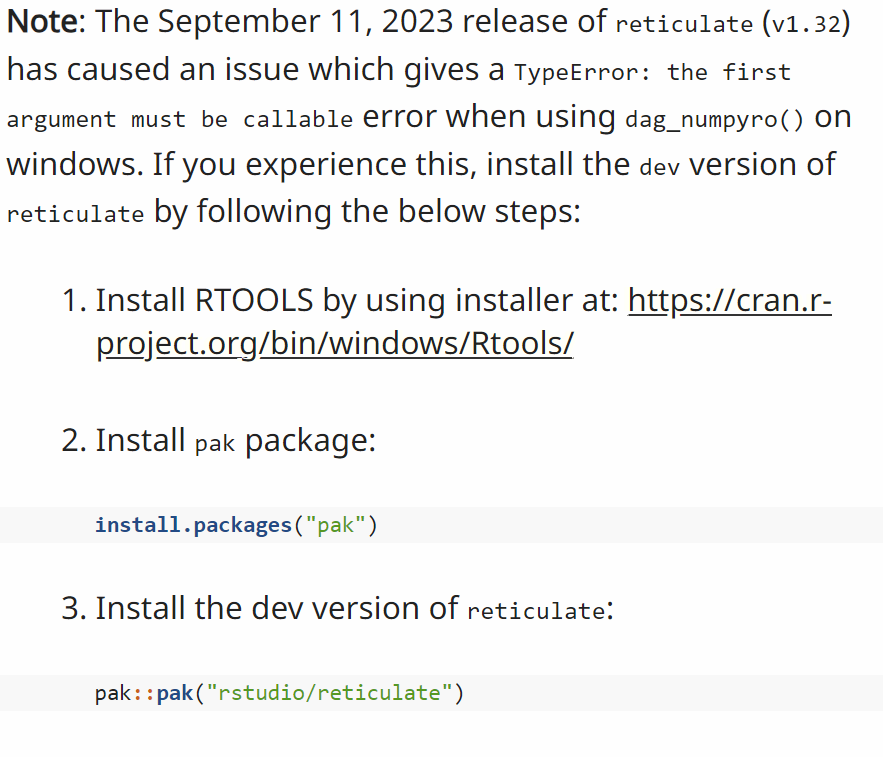
Made an introductory 📕(draft) about using Python for Bayesian Inference and unifying narrative, math, and code. People seem to find it helpful. Check it out. Feedback encouraged.
persuasivepython.com/
#DataScience #Python #bayes #Stats #probabilisticprogramming
1
1
13
674

1,089
2,255
17,512
14,185,583
Adam Fleischhacker PhD, MBA retweeted

Apr 13
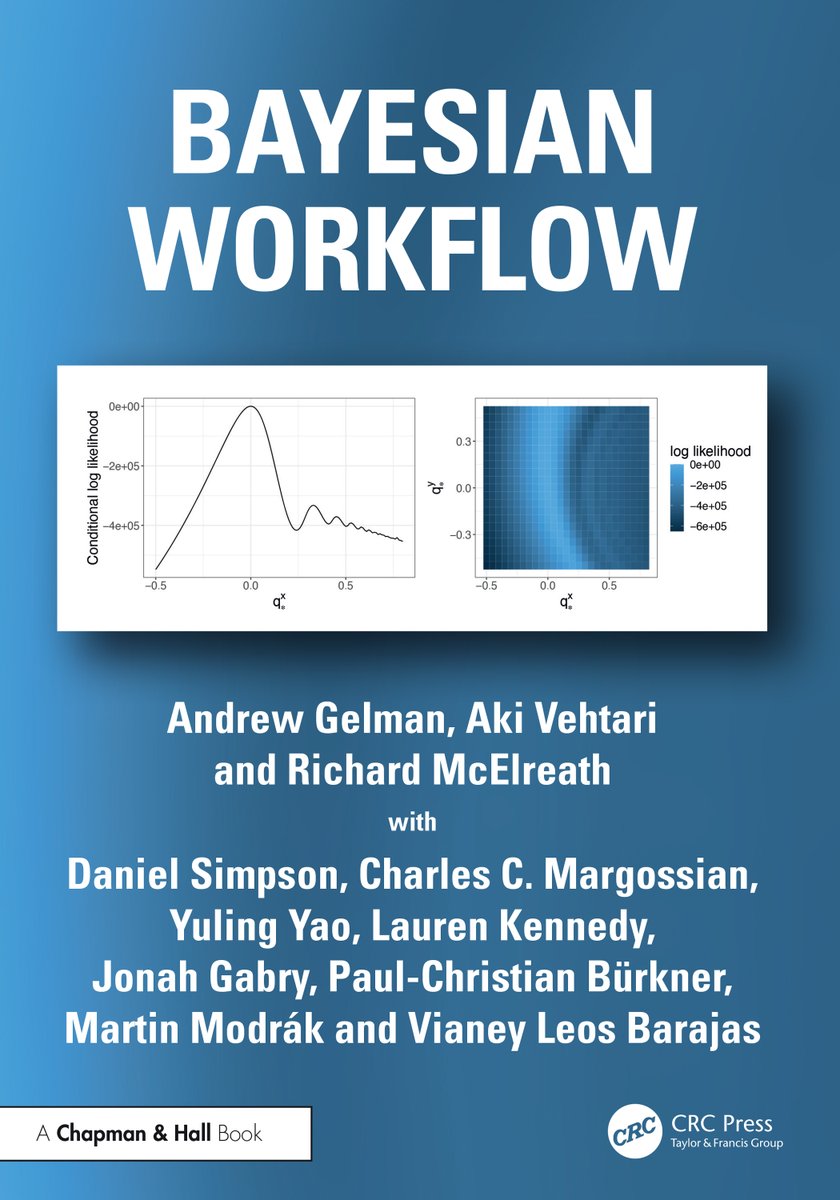
Very excited to announce that the #BayesianWorkflow book by @StatModeling, @avehtari, @rlmcelreath et al publishes in June! routledge.com/9780367490140 #RStats #DataScience #Bayesian @mcmc_stan
7
42
192
18,395
Keep levelling up your AI toolkit by using and writing skills.

1
45

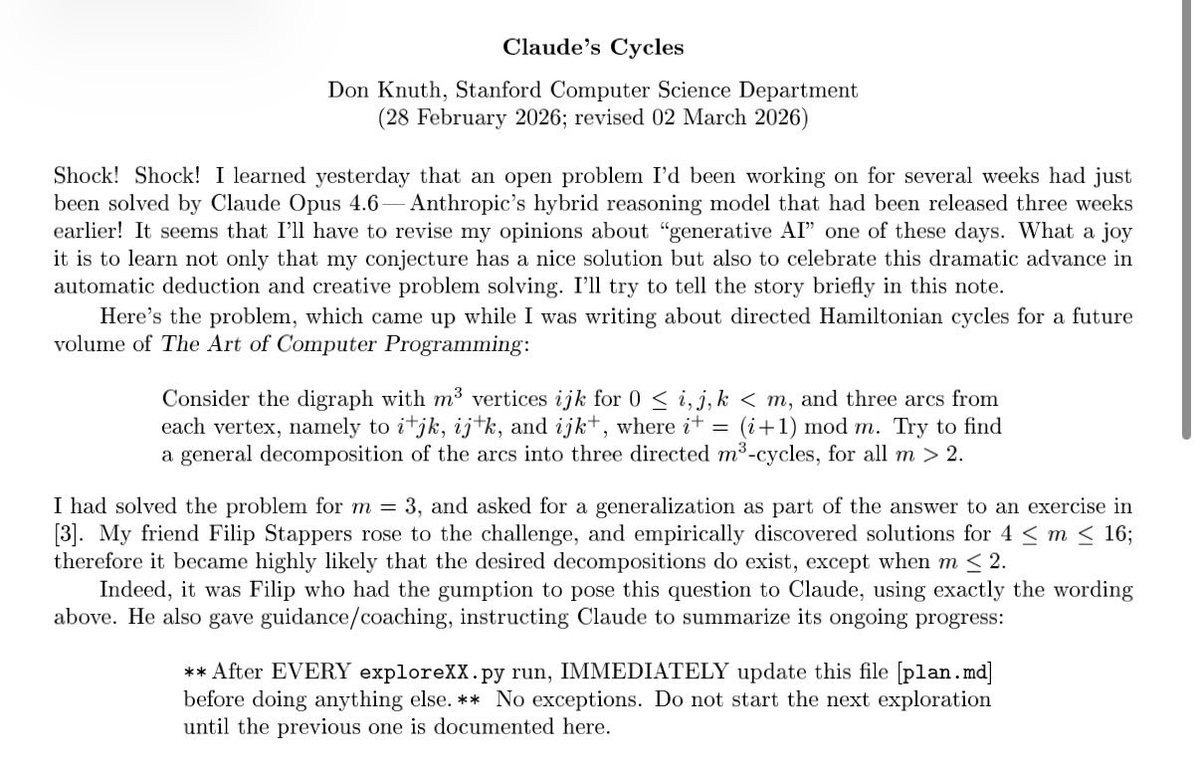
Prof. Donald Knuth opened his new paper with "Shock! Shock!"
Claude Opus 4.6 had just solved an open problem he'd been working on for weeks — a graph decomposition conjecture from The Art of Computer Programming.
He named the paper "Claude's Cycles."
31 explorations. ~1 hour. Knuth read the output, wrote the formal proof, and closed with: "It seems I'll have to revise my opinions about generative AI one of these days."
The man who wrote the bible of computer science just said that. In a paper named after an AI.
Paper: cs.stanford.edu/~knuth/paper…
148
1,864
9,103
1,413,943
This question is fun and the answer about mindset is fabulous. Reflect and tinker.
Feb 23

This is what an EXCEPTIONAL mindset thinks like and sounds like.
So impressive from a 22 years old.
Not only you CAN control what you think, and how you think it and why, but you SHOULD.
See your mind as a skill and practice it as such.
2
76
Adam Fleischhacker PhD, MBA retweeted

Feb 22
People love to say that "smart" people fail...but a cardiologist just placed 3rd out of 13,000 at Anthropic’s hackathon.
Smart the right Initiative is insane leverage & where breakthroughs will come from...don't buy the hype.
x.com/BoWang87/status/202490…

After leading AI & Health at @UHN — Canada’s largest hospital network — for the past few years, this is the first time it genuinely feels different.
A cardiologist just placed 3rd out of 13,000 at Anthropic’s hackathon.
He built it between hospital shifts. In a week.
An AI agent that follows patients home — reverse scribe, full history, devices, evidence — all in one place.
A few years ago this would’ve taken a full team and months.
Now? One doctor.
That’s the shift.
1
3
36
7,465
Adam Fleischhacker PhD, MBA retweeted

Feb 18
Claude Code isn’t just for writing code. Our new post shows how to use it as a lightweight agentic workflow library, going from messy ideas to working agents in a single session, without setting up a full framework first.
landeranalytics.com/post/cla…
#AIWorkflows
1
7
610
Adam Fleischhacker PhD, MBA retweeted

Feb 5
Feels like Simpson’s paradox

Get your surgery scheduled for a Monday.
Surgeries done on a Friday had a 44% higher death rate, and on a weekend, 82% higher, compared to Monday.
bmj.com/content/346/bmj.f242…
5
4
59
17,125

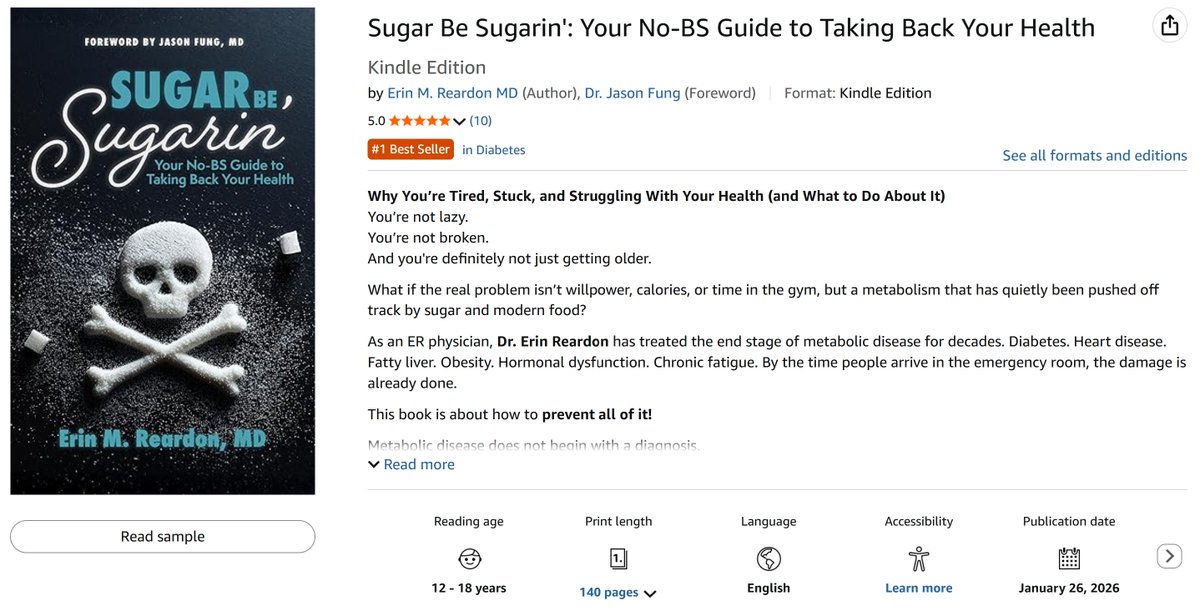
My wife’s new book just hit #1 in Amazon’s Diabetes books 🎉
I’m incredibly proud of her and the work she’s put into helping people take control of their health.
Please support her entrepreneurial journey and grab a copy today🙏. Link in the comments 👇
1
1
32
Interesting read on how the criteria by which we judge programming languages changes in the post-AI era.
Jan 20

A funny thing is happening: the more I build with agents, the less I want to use Python. I explore this in my latest "From Human Ergonomics to Agent Ergonomics"
wesmckinney.com/blog/agent-e…
78
19 Dec 2025
Agree. AI makes breadth >> depth for most work: strong fundamentals good judgment lets you mimic deep expertise when you need it. I can switch languages and produce code as if I’ve studied them for years.
18 Dec 2025

Marc Andreessen explains future belongs to generalist in the AI era.
Founders will need skills across 6–8 fields. Deep expertise still matters, but broad knowledge plus AI tools will be more valuable in most areas. Top CEOs already operate this way.
1
312
22 Aug 2025
{causact} 📦 v0.5.8 is on its way to CRAN. Learn computational Bayesian inference using this intuitive and visual #rstats package. Release includes a little intro vignette: cran.r-project.org/web/packa…
1
2
5
414
27 Jul 2025
Some songs don’t just remind you of youth, they bottle its most powerful emotions. “Candy Bars” by the brilliant @ConnorZwetsch is one of the most beautiful, nostalgic tracks ever made. It belongs on Spotify (used to be there). Pls help @ConnorZwetsch 🎶
soundcloud.com/zwetsch/candy…
2
1
161
28 Jul 2025
Figured it was legal stuff... sorry you had to deal with that. I’ll be first in line when Candy Bars returns to Spotify. If you ever feel like pulling a Taylor and re-recording, I’m all in for Candy Bars (Connor’s Version) 😄 Would love the audio in the meantime (ajf [at] udel [dot] edu).
113
Adam Fleischhacker PhD, MBA retweeted

21 Jul 2025
The invention of modern writing instruments like the typewriter made writing easier, but they also led to the rise of writer’s block, where deciding what to write became the bottleneck. Similarly, the invention of agentic coding assistants has led to a new builder’s block, where the holdup is deciding what to build. I call this the Product Management Bottleneck.
Product management is the art and science of deciding what to build. Because highly agentic coding accelerates the writing of software to a given product specification, deciding what to build is the new bottleneck, especially in early-stage projects. As the teams I work with take advantage of agentic coders, I increasingly value product managers (PMs) who have very high user empathy and can make product decisions quickly, so the speed of product decision-making matches the speed of coding.
PMs with high user empathy can make decisions by gut and get them right a lot of the time. As new information comes in, they can keep refining their mental models of what users like or do not like — and thereby refine their gut — and keep making fast decisions of increasing quality.
Many tactics are available to get user feedback and other forms of data that shape our beliefs about users. They include conversations with a handful of users, focus groups, surveys, and A/B tests on scaled products. But to drive progress at GenAI speed, I find that synthesizing all these sources of data in a PM's gut helps us move faster.
Let me illustrate with an example. Recently, my team debated which of 4 features users would prefer. I had my instincts, but none of us were sure, so we surveyed about 1,000 users. The results contradicted my initial beliefs — I was wrong! So what was the right thing to do at this point?
- Option 1: Go by the survey and build what users told us clearly they prefer.
- Option 2: Examine the survey data in detail to see how it changes my beliefs about what users want. That is, refine my mental model of users. Then use my revised mental model to decide what to do.
Even though some would consider Option 1 the “data-driven” way to make decisions, I consider this an inferior approach for most projects. Surveys may be flawed. Further, taking time to run a survey before making a decision results in slow decision-making.
In contrast, using Option 2, the survey results give much more generalizable information that can help me shape not just this decision, but many others as well. And it lets me process this one piece of data alongside all the user conversations, surveys, market reports, and observations of user behavior when they’re engaging with our product to form a much fuller view on how to serve users. Ultimately, that mental model drives my product decisions.
Of course, this technique does not always scale. For example, with programmatic online advertising in which AI might try to optimize the number of clicks on ads shown, an automated system conducts far more experiments in parallel and gathers data on what users do and do not click on, to filter through a PM's mental model of users. When a system needs to make a huge number of decisions, such as what ads to show (or products to recommend) on a huge number of pages, PM review and human intuition do not scale.
But in products where a team is making a small number of critical decisions such as what key features to prioritize, I find that data — used to help build a good mental model of the user, which is then applied to make decisions very quickly — is still the best way to drive rapid progress and relieve the Product Management Bottleneck.
[Original text: deeplearning.ai/the-batch/is… ]
72
227
1,151
348,139
6 Mar 2025
this is very good 👀
25 Jan 2023

Finally wrote up something on Simpson's paradox, a widely misunderstood statistical phenomenon that doesn't really exist: wildetruth.substack.com/p/si….
1
2
108
6 Mar 2025
Vibe coding is the way. While not perfect, it significantly boosts productivity and, when used with understanding, can also enhance quality.

For 25% of the Winter 2025 batch, 95% of lines of code are LLM generated.
That’s not a typo. The age of vibe coding is here.
75
27 Feb 2025
🧠 LLMs aren't technically Bayesian, but they're conditional probability powerhouses! They train with maximum likelihood yet output evolving token probabilities that update with each new piece of info. This visual perfectly captures how a neutral stock trend shifts up or down as new words enter the prompt. Prediction in action!
27 Feb 2025

This is fun because LLMs can condition on free-form side information, and make predictions about anything. This turns qualitative knowledge into quantitative predictions.
Here we condition Llama 3 on two datapoints, plus text. Changing the text changes the meaning of the data.
1
2
522