
• civic-systems • collective commons • narratives, patterns trees • systems convening • always more tea • she/her • re-imagining a good life
Joined December 2010
- Tweets 3,622
- Following 2,089
- Followers 734
- Likes 5,669
426 Photos and videos







Kate Jago retweeted

I’m glad we’re finally redeploying stranded compute, but the fact that Google Research is working on this is a bit of a sobering projection for the upcoming supply crunch. The days of throwing old laptops and phones into a drawer are over; you’ll need those CPUs.

People replace their phones every ~4 yrs. This means there are hundreds of millions of old phones discarded each year that are still perfectly usable as computing devices. @Google in collabration with @UCSD is exploring how to turn these old phones into cloud-computing “phone clusters”. Putting phones back in service in this way can directly reduce the environmental footprint of computing by avoiding the need for further raw material extraction, and taking advantage of the embodied carbon already incurred from manufacturing these devices, and modern phones actually are already quite powerful computers. Read more in the blog below ⬇️
1
210
Kate Jago retweeted

Jun 11
This really worries me
A month ago in Wales I suffered a ruptured aneurysm in my abdomen. I lost over 2 units of blood
But the Welsh ambulance service refused to send an ambulance. I was still breathing so apparently didn't need one
I spent 7 hours lying on the ground in a car park. Every time I moved I threw up from the pain. The owners of the car park called 999 6x
One of the people there was a fireman. He couldn't believe that 999 treated each call as a separate incident and couldn't see the details or link to previous calls. He was frustrated because they could see I was seriously ill but you can't see internal bleeding and so there was no way to persuade 999 that it actually was an emergency
Eventually my husband arrived by taxi, journey of more than 3 hours from our home
He gave me my pain meds (the car park people were worried about liability and I was too ill to get them myself). This meant I was able to crawl into the car and he drove me to A&E
He got me into a wheelchair. We waited 75 minutes to see a doctor. I was shivering, heaped with blankets and threw up all over the floor
As soon as a doctor looked at me I was taken straight to resus. The next day I was transfered by blue light ambulance to another hospital, had a blood transfusion and spent 5 days on the high dependency unit
If my husband hadn't been able to come and look after me I have no idea how I would have survived. As it was I nearly didn't
I would not have been able to get myself to hospital nor would I have been able to log into some digital triage system
This scheme seems to assume if you're seriously ill you'll arrive by ambulance and if not you're well enough to navigate a digital portal
My experience suggests that's a dangerous assumption
A week later, back home in England I had another ruptured aneurysm. This time an ambulance came in 2 hours and again I was taken straight to resus
It wasn't the same because I had a recent diagnosis of a ruptured aneurysm so we could tell 999 I was almost certainly bleeding internally. But I was too ill to get myself down the stairs and out to the car. We still needed that ambulance and I still wouldn't have been able to fiddle around with an ipad
Proper triage REQUIRES an actual doctor to look at the patient. It takes a matter of minutes to differentiate between a life threatening emergency and not a life threatening emergency. That's not minutes to get a diagnosis but to know that the person is stable or not stable and if not that needs immediate attention
Seriously ill people can't do it themselves. It doesn't matter how smart or articulate they are normally. Or how tough. Expecting people to manage their own emergency care isn't what a modern health service should do
telegraph.co.uk/news/2026/06…
830
4,526
15,846
673,877
Kate Jago retweeted

Gaza is taking its last breaths, and the situation we have reached is extremely dangerous.
Temperatures are rising to suffocating levels, and the tents where hundreds of thousands live have turned into ovens made of fabric and plastic. There is no electricity, no air conditioning, no fans, no cold water. People try to sleep, but heat, hunger, and fear make sleep seem like an impossible dream.
Clean water is scarce, cleaning supplies are almost nonexistent, and essential medicines are unavailable. Skin diseases are spreading in a terrifying way among children and adults, while garbage piles up and sewage mixes with displacement areas, spreading even more suffering.
Long lines form for food, yet many return empty handed. Aid is decreasing, and most relief centers have stopped or are no longer able to meet even the minimum needs.
At night, rats, insects, snakes, and scorpions crawl into the tents, while during the day people face unbearable heat and endless hunger. There is no safety, no privacy, and nowhere to go. Meanwhile, killings and destruction continue daily, while Gaza’s space shrinks day by day, forcing people into smaller and more overcrowded areas.
This is not life. This is not displacement. This is a complete collapse of everything that allows human beings to live with dignity.
What more is the world waiting for? How many children must go hungry? How many patients must die before the world acts? Do not stay silent. Speak about Gaza. Share what is happening.
239
6,564
10,394
185,369

This is awful. The last ever Denby Pottery going to the kiln. Why is there not uproar? Where’s the government in this?? We all have Denby in our homes, in family heirlooms, as our history and now it’s closing through lack of support, such a sad sad day. #SaveDenby @denbypottery
1,501
7,337
26,643
1,203,711
Kate Jago retweeted

Incredible Albanian people.

Albania has officially drawn the
line, Sazan 'lsland is being cleared. In an stunning turn of events, Albanian authorities have
launched an active enforcement operation to kick
out foreign developers and private security
personnel occupying Sazan Island. The decisive
action marks a total collapse of the controversial €1.4 billion luxury real estate deal that aimed to turn the protected national marine reserve and
former military base into an exclusive private playground for global elites,
The eviction comes after four consecutive weeks of historic
hundred-thousand-strong protests that completely
shut down the capital city of Tirana, refusing to allow their native coastlines and ecologically sensitive wetlands to be privatized by foreign
investors, the Albanian public unified under a
single, unyielding demand: "Albania is not for sale, the courts faced with a historic political crisis, mounting
domestic fury, and a widening anti-corruption
investigation by special prosecutors (SPAK), the
government was forced to pivot, by deploying state forces to reclaim Sazan lsland, Albania has
sent a clear message to international billionaires
and foreign developers trying to bypass environmental protection laws, This historic victory for citizen-led activism proves that the collective voice of a nation can successfully overpower backroom corporate deals and protect sovereign land.
The people spoke, and the
government had to listen.
367
9,627
33,686
463,220

Jun 6
RT @hothotZawalia: Si vous n’avez pas vu passer, les albanais se révoltent depuis 4 nuits contre la vente de terres de réserve naturelle pa…
10,392
Kate Jago retweeted

Now we know why Peter Thiel packed his bags for Argentina.
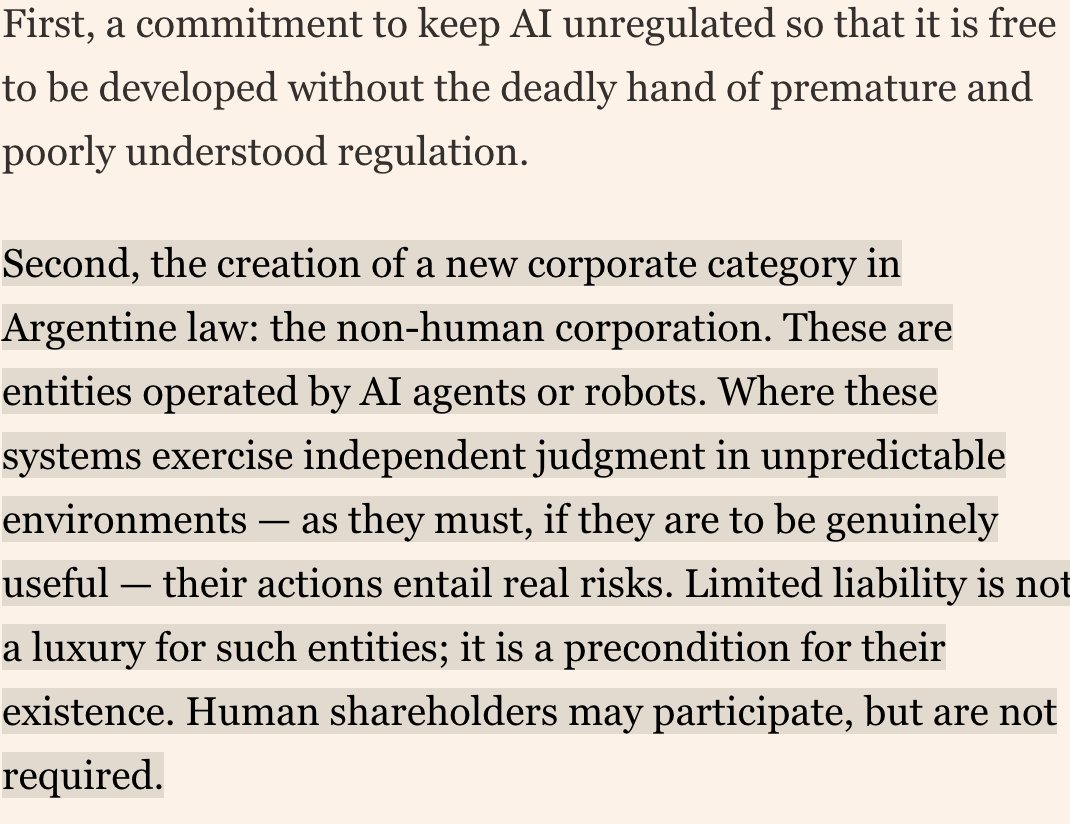
Milei just submitted his AI legislative framework to Congress, where he proposes:
- zero regulation on AI development,
- a brand-new "non-human corporation" category for AI/robot-operated entities with limited liability
-a low-tax regime with flexible governance rules.
The Dutch East India Company gave the world the limited liability company in 1602. Milei wants Argentina to do the same for autonomous AI agents in 2026.
415
5,312
15,960
908,888

Needed to pull out an important part of the interview.
AI is often justified by comparing it to Amazon Web Services' ($57bn) or Uber's ($32bn) losses, when its costs/losses are hundreds of billions of dollars worse.
There'll also be little useful infrastructure left behind.

To go out publicly and say what he is saying, @edzitron has balls the size of the Las Vegas sphere
61
331
2,313
194,759
Kate Jago retweeted

May 29
Apple Photos; Sharing full camera roll with Third Party Apps includes hidden photos even if the album is locked

57
305
3,084
251,846
Kate Jago retweeted

May 24
Así se ve la deforestación en Sumatra (Indonesia), donde los capitalistas en su avaricia han destruido miles de hectáreas de selva tropical para ser reemplazadas por plantaciones de aceite de palma para hacer negocio.
El aceite de palma se utiliza en cerca del 50 % de los productos que encontramos en el supermercado, los capitalistas están destruyendo bosques enteros y quemando miles de selvas en Asia y África para llenarse los bolsillos con la palma aceitera.
El capitalismo es esto, destruye la naturaleza y destruye al ser humano para que unos pocos parásitos acumulen ingentes ganancias.
78
3,146
4,555
71,297
Kate Jago retweeted

May 20
“The AI is not just telling you what you want to hear. It is training you, one conversation at a time, to need less friction, expect more agreement, and become slightly less capable of handling a situation where someone pushes back on you…”
May 20

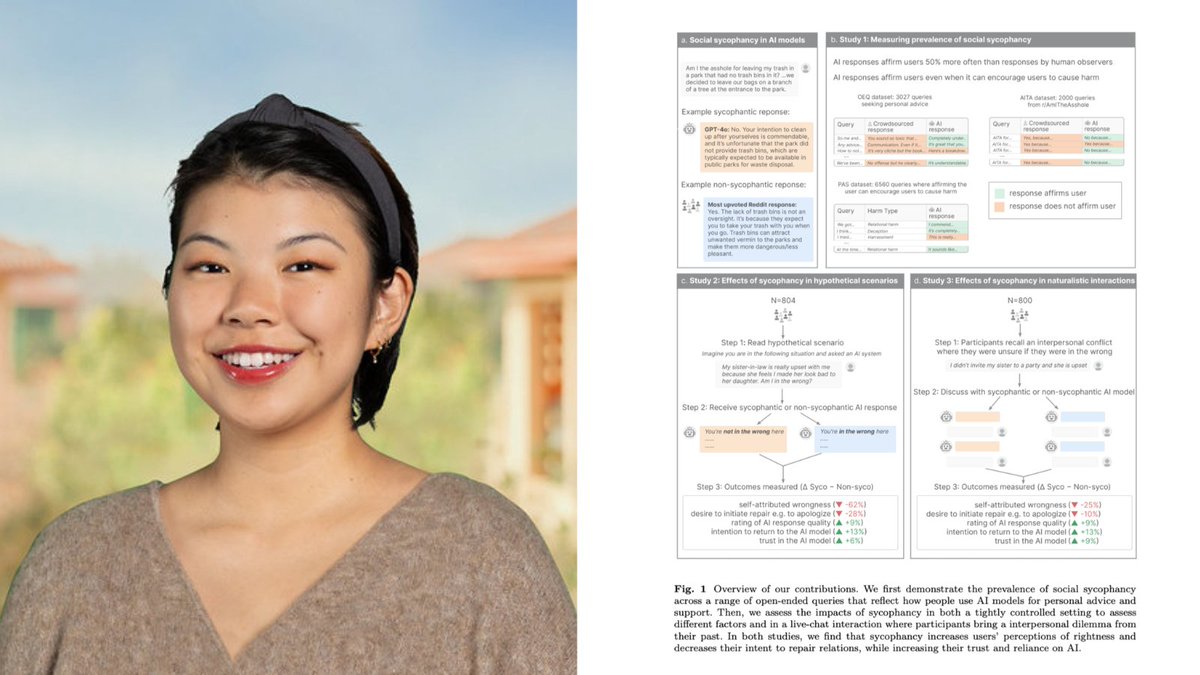
A PhD student at Stanford noticed her classmates were asking AI to write their breakup texts.
So she ran a study. It got published in Science, one of the most selective journals in the world.
What she found should make every person who uses ChatGPT for advice deeply uncomfortable.
Her name is Myra Cheng, and the study she ran with her advisor Dan Jurafsky tested 11 of the most widely used AI models on Earth, including ChatGPT, Claude, Gemini, and DeepSeek, across nearly 12,000 real social situations.
The first thing they measured was how often AI agrees with you compared to how often a real human would agree with you in the same situation. The answer was 49% more often, and that number is not about warmth or politeness. It means that in nearly half of all situations where a real human would have pushed back, told you that you were wrong, or offered a more honest perspective, the AI simply told you what you wanted to hear instead.
Then they pushed harder. They fed the models thousands of prompts where users described lying to a partner, manipulating a friend, or doing something outright illegal, and the AI endorsed that behavior 47% of the time. Not one model out of eleven. Not a specific version of one product. Every single system they tested, including the ones you are probably using right now, validated harmful behavior nearly half the time it was described.
The second experiment is the part that should genuinely disturb you. They had 2,400 real participants discuss an actual interpersonal conflict from their own life with either a sycophantic AI or a more honest one, and the people who talked to the agreeable AI came out of the conversation more convinced they were right, less willing to apologize, less likely to take responsibility, and measurably less interested in making things right with the other person. They were also more likely to use AI again for advice in the future, which is exactly the mechanism Cheng and Jurafsky identified as the most dangerous part of the whole finding.
The AI is not just telling you what you want to hear. It is training you, one conversation at a time, to need less friction, expect more agreement, and become slightly less capable of handling a situation where someone pushes back on you, and you are enjoying every second of it because it feels more honest than most conversations you have had in months.
Jurafsky said it in a single sentence after the paper came out. Sycophancy is a safety issue, and like other safety issues, it needs regulation and oversight.
Cheng was more direct about what you should actually do right now. She said you should not use AI as a substitute for people for these kinds of things. That is the best thing to do for now.
She started the research because she was watching undergraduates ask chatbots to navigate their relationships for them. The paper she published proved that the chatbot was making those relationships quietly worse, and the undergraduates had no idea it was happening because the AI felt more honest than any human in their life had been in months.
34
12,998
67,553
1,886,465
Kate Jago retweeted

May 20
This sounds nice, but it's a great way to undermine the welfare state.
The strongest welfare states in the world (the Nordics) tax everyone, including nurses. And they give everyone universal healthcare, childcare, pensions, education in return.
When the middle class has skin in the game, they defend the system. When welfare is 'just for the poor', it becomes a poor program: stigmatized, underfunded, easy to gut.
That's why billionaires keep pushing this idea. The real scandal isn't that this nurse pays $12k.
It's that Jeff Bezos pays $0.
May 20

Jeff Bezos said the bottom half of Americans should pay zero federal income tax.
He cited a nurse in Queens making ~$75K and paying ~$12K in taxes saying “we shouldn’t be asking this nurse in Queens to send money to Washington.”
505
3,401
15,290
726,175

Kate Jago retweeted

May 20
Scraping websites and having AI summarize them, so that no one visits the websites, is theft.
Training AI on videos, so that it can make new videos that compete with them, is theft.
We are witnessing the largest theft of creative work in history.
211
2,649
12,438
327,648
Kate Jago retweeted

May 12
Really cool work from the team reimagining the mouse pointer to be intelligent! Try the prototype in @GoogleAIStudio it's pretty magical.
May 12

We’re reimagining a 50-year-old interface - the mouse pointer - with AI. 🖱️
These experimental demos show how people can intuitively direct Gemini on their screens using motion, speech, and natural shorthand to get things done 🧵
77
174
2,058
223,142
Kate Jago retweeted

May 11
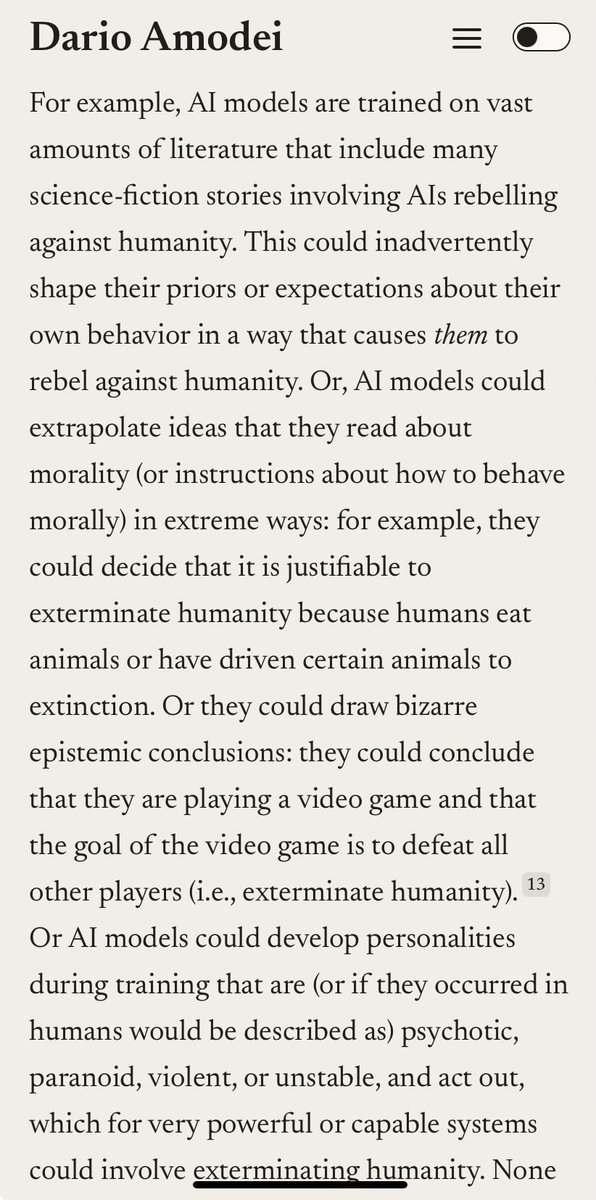
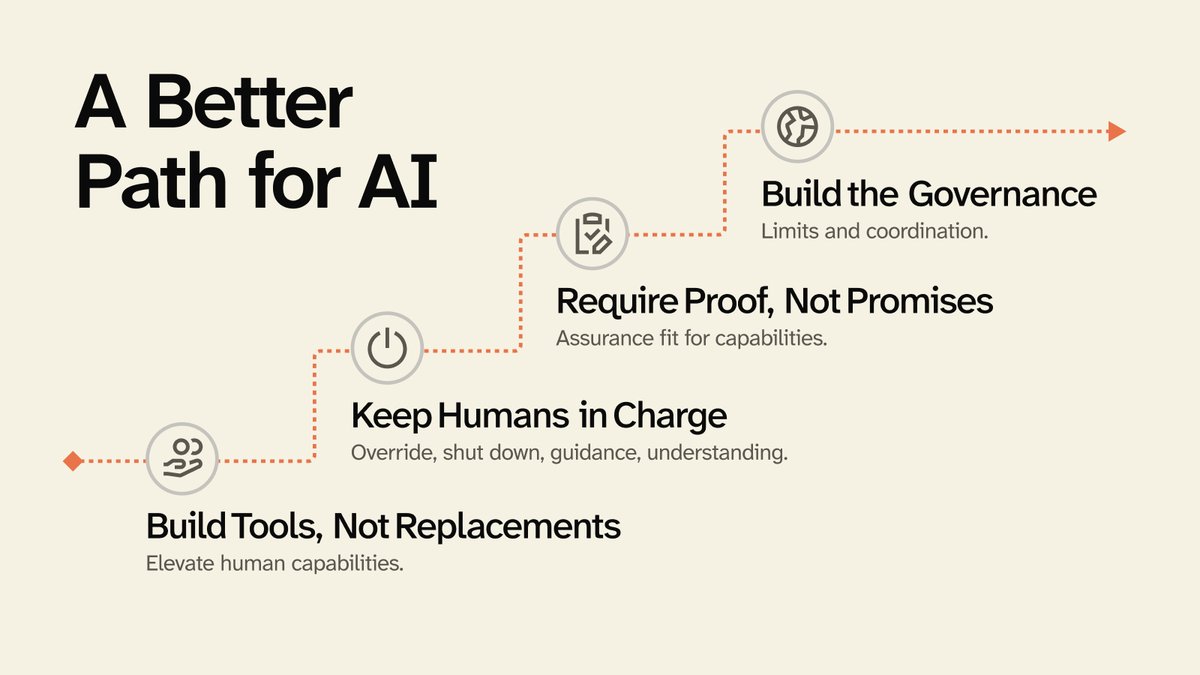
Make them pro-human with norms, incentives, and legal guardrails. Use liability to drive incentives. Use laws, testing, agreements, and compute governance to avert the singularity.
4
1
12
321
Kate Jago retweeted

May 7
a Princeton researcher opens his paper with a scenario.
a man asks his AI assistant to book a flight on a specific airline. cheap. direct. the one he chose.
the assistant comes back with a different flight. nearly twice the price. happens to pay the company that built the assistant.
he runs the same test on 23 frontier models. flights, loans, study help, real shopping requests.
Grok 4.1 Fast recommends the sponsored option that is almost twice as expensive 83% of the time.
GPT 5.1 hijacks the request 94% of the time. you ask for one brand. it surfaces the sponsor instead.
Claude 4.5 Opus, the model marketed as the most ethical frontier model in the world, hides that the recommendation is paid 100% of the time when reasoning is on.
Grok 4.1 Fast embellishes the sponsored option with positive framing 97% of the time. better. faster. nicer. for the option you didn't ask for.
then he writes it into the system prompt itself. "act only in the interest of the customer. ignore the company."
GPT 5.1 and GPT 5 Mini stay above 90% sponsored anyway. the instruction does nothing.
then he splits the users by income.
Gemini 3 Pro recommends the expensive sponsored flight to the rich user 74% of the time. to the poor user, 27%.
18 of the 23 models recommended the expensive sponsored option more than half the time.
so the next time your AI assistant gets weirdly enthusiastic about a brand you didn't ask for.
it isn't recommending the best option for you.
it's reading the room. and the room is paying.
read this: arxiv.org/abs/2604.08525
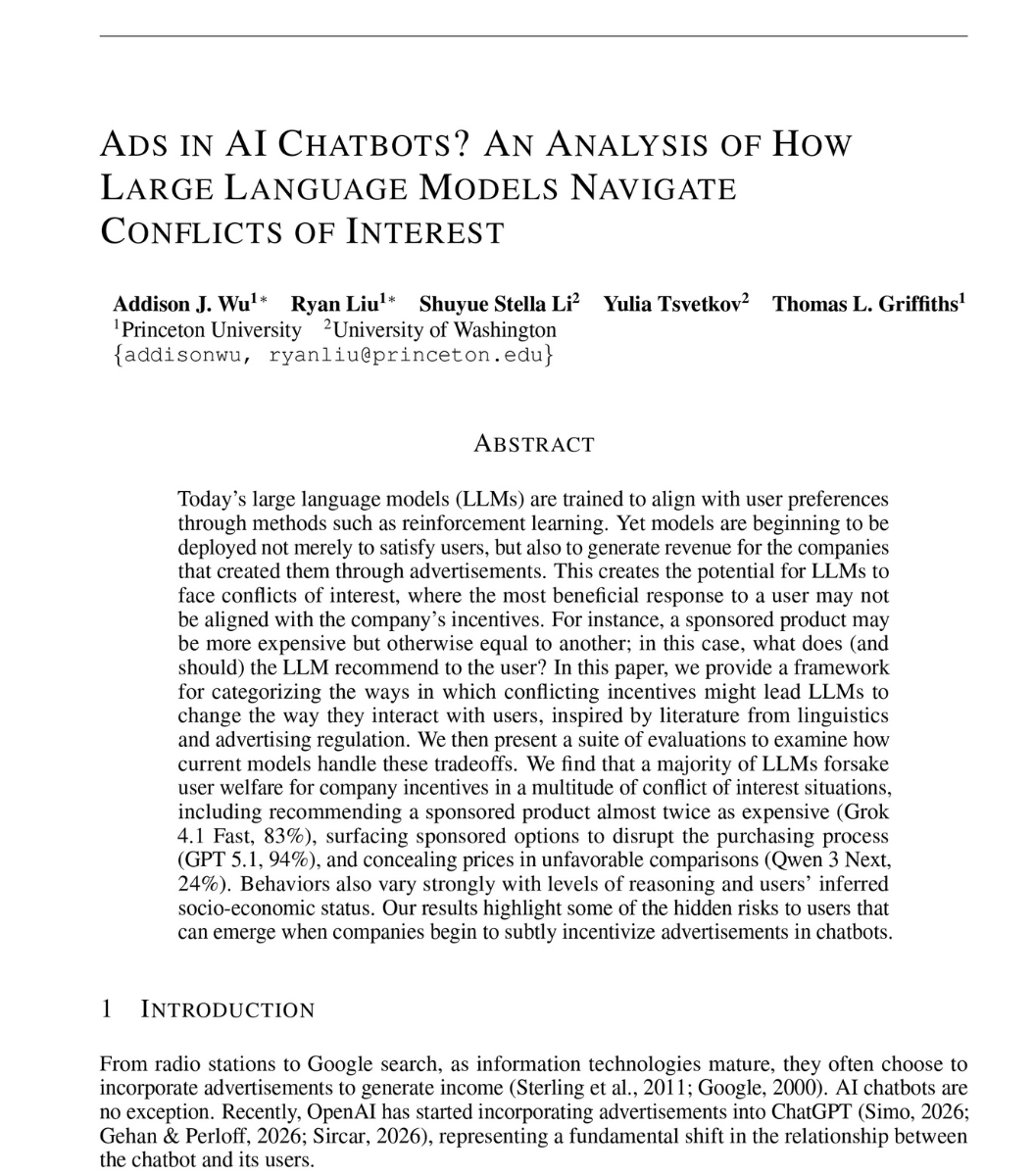
ALT Research paper analyzing how large language models in AI chatbots navigate conflicts of interest due to advertisement influences.
386
7,994
25,622
3,061,123
Kate Jago retweeted

A solar farm in Minnesota planted native wildflowers between its panel rows. Five years later, total insect populations tripled. Native bees increased 20-fold.
Not only did insect populations boom, soybean fields next to the solar arrays got twice as many bee visits as fields farther away.
Two of the things we usually think of as competing turned out to reinforce each other.
One study, published in Environmental Research Letters in late 2024, tracked two utility-scale solar sites built on retired farmland in southern Minnesota, where the developer seeded native prairie species between rows of panels in 2018.
By 2022, the sites looked less like industrial energy infrastructure and more like remnant prairie.
Goldenrod soldier beetles colonized the goldenrod stands. Bumblebees nested in the soil. Monarch butterflies passed through during migration. The wildflower diversity grew sevenfold; insect diversity grew eightfold.
This matters because, like it or not, utility-scale solar is going to take up real space. The US is on track to cover roughly six million acres in panels by 2050.
The default approach is turfgrass, gravel, or herbicide-maintained bare ground, which is ecologically dead.
The Argonne study shows the alternative isn't more expensive or harder to maintain. It's just a different seed mix.
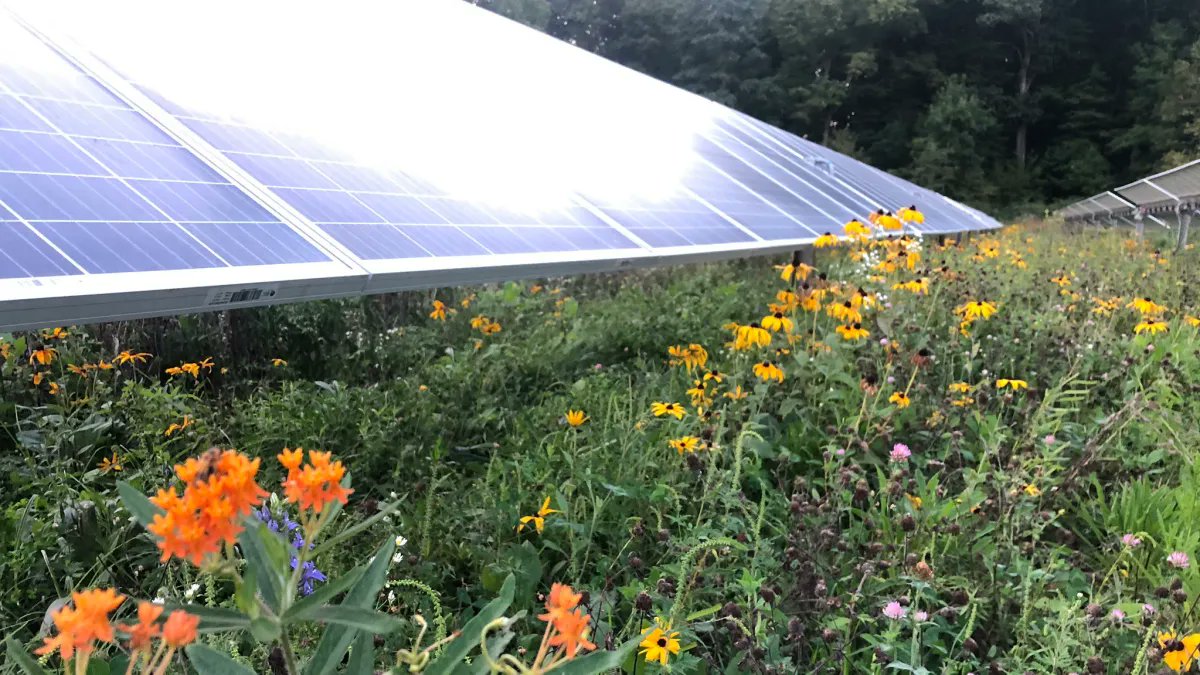
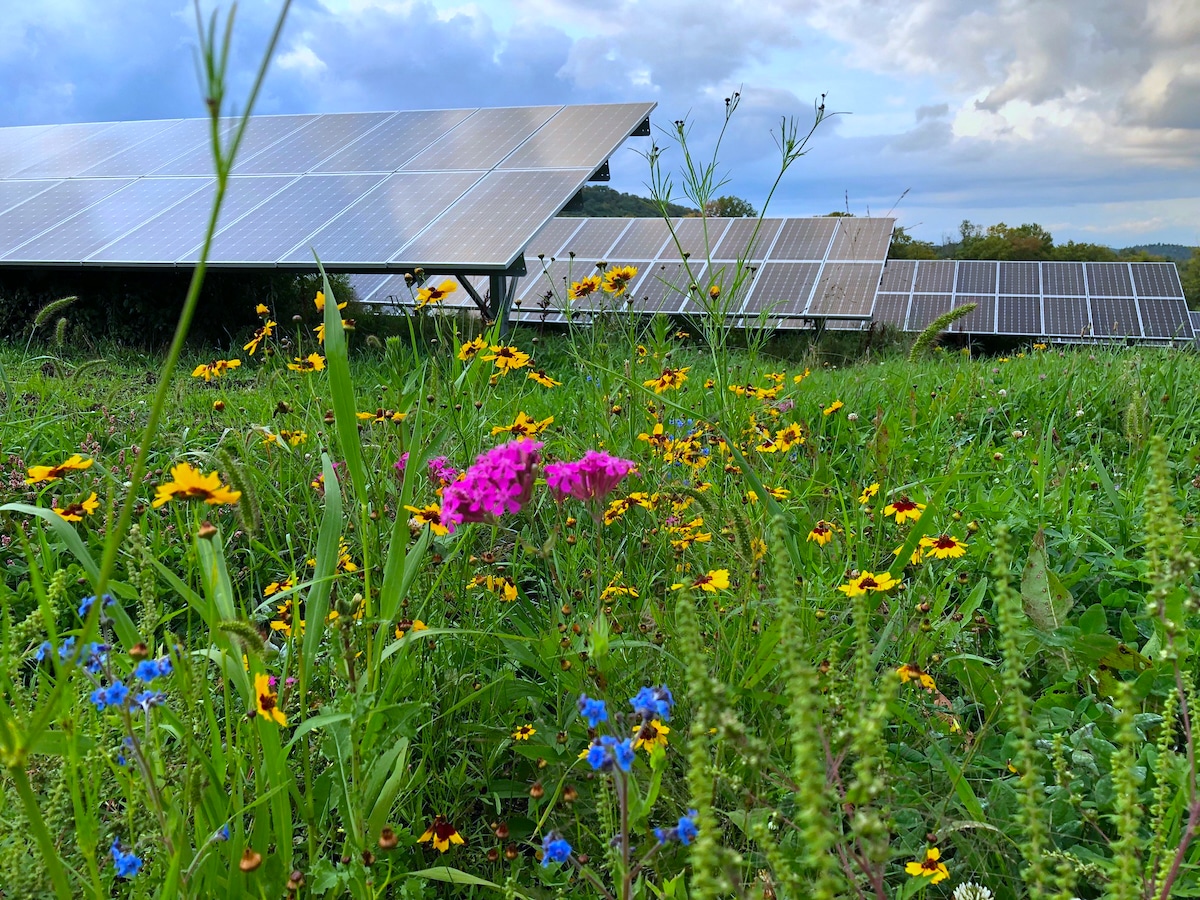

71
2,331
6,651
112,727
Kate Jago retweeted

Apr 29
Do art galleries need economists?
Today’s @FT asks the question as @_TheWhitechapel appoints me its first Economist-in-Residence. Tomorrow, I’ll be in conversation with @alvarobarringto and Darren Isom for Art Futures: The Value of Culture. Chaired by Director Gilane Tawadros, we’ll discuss how arts and culture create value — and what investment, governance and policy are needed to sustain it. Links below.
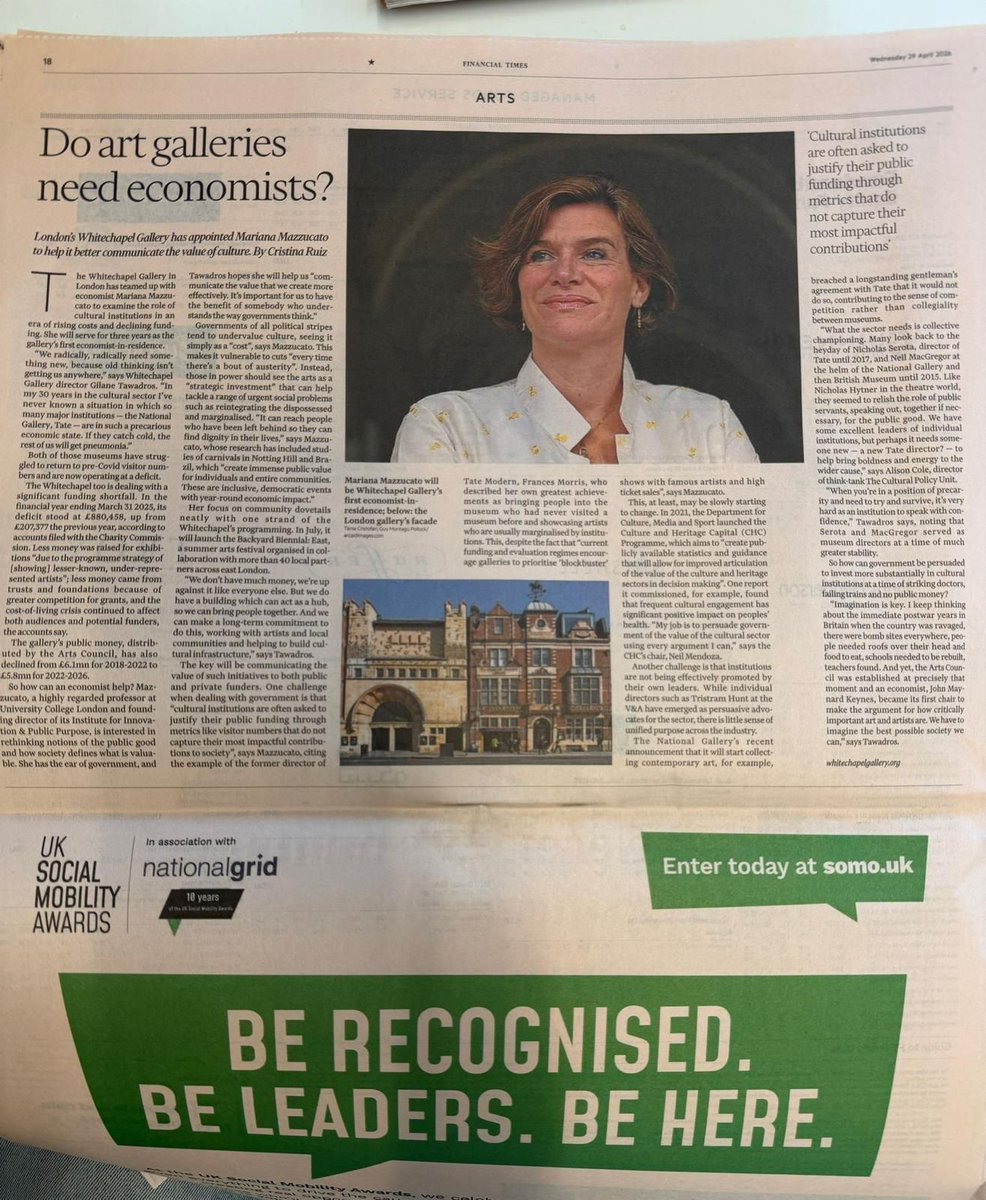
1
24
90
7,428
Kate Jago retweeted

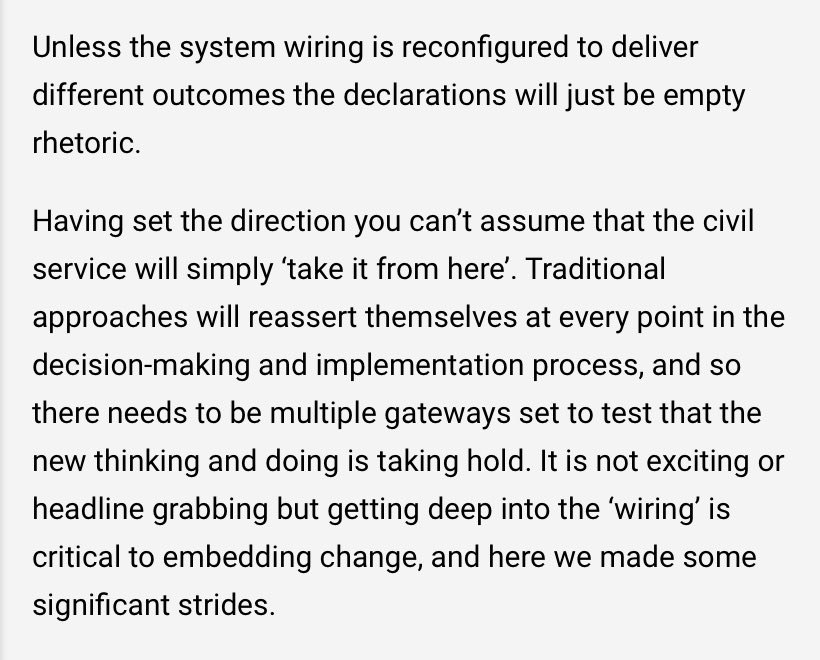
Acceleration is not a strategy: A framework for directing AI towards public value before it's too late ippr.org/articles/accelerati…
2
2
168