
Erstwhile goer of places, doer of things. Frequent plaintiff, occasional defendant. The long moral arc ain't gonna bend itself.
Joined March 2008
- Tweets 4,171
- Following 1,171
- Followers 630
- Likes 2,679
272 Photos and videos












Parity retweeted

4 Mar 2025
The F-35 Joint Program Office (JPO) just lost further NATO orders in the 2030s and 2040s.
The F-35 Block VI planned for that period just got vaporized.
The Tempest GCAP will get those NATO Euro Stealth orders instead.
4 Mar 2025

The Republican party is officially the party of Russia.
Good luck selling weapons to other countries from now on.
121
344
2,327
142,869
My God. These people are *completely* *fucking* *unhinged.*
And just so we're clear, by "these people" I mean the absolute wackadoodles who think a minor flying with adult supervision and CBP paperwork is being trafficked.
Good grief. The shame.
23 Dec 2024

ALERT🚨: I’m on my United flight going from AZ back home to NJ — and I’m sitting next to a young migrant child traveling solo.
Her backpack is tagged with a DOJ Security tag from U.S. Customs & Border Patrol.
She’s wearing all new clothes and shoes and does not speak English.
@FrontlinesTPUSA @TPUSA


2
704
Parity retweeted

27 Oct 2024
Organizing ask: I need every Boricua on here to take that rally clip and drop it in your family WhatsApps and group chats. 🇵🇷🇵🇷🇵🇷🇵🇷🇵🇷
ESPECIALLY if you have family in these states. And give them the link to IWillVote.com while you’re at it.
Ya tu sabes ⬇️
27 Oct 2024

Puerto Ricans by state:
Pennsylvania: 450k
North Carolina: 100k
Wisconsin: 65k
Michigan: 50k
Florida: 1.1 million
New York: 1 million
3,751
13,898
56,696
4,831,926
@saulnier_jeremy Just watched Ruby Ridge.
Never in my life did I think I'd see a film that hangs key story elements on technically accurate depictions of obscure features of DICV systems.
As an OG member of the tiny population of activists who used to research that stuff: 🧠🤯
1
3
270
Parity retweeted

21 Oct 2024
tlc tried to warn us
36
1,566
15,372
583,328




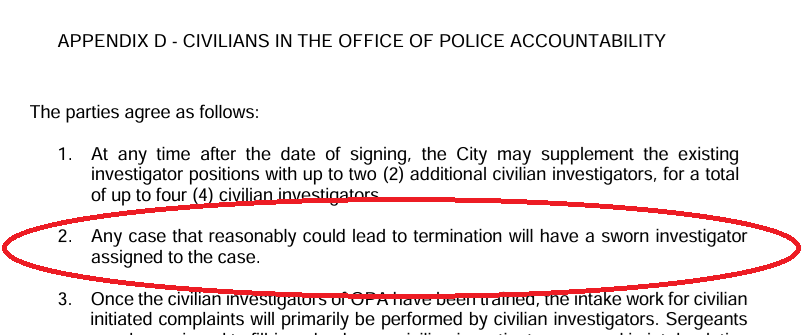
That is a straight-up lie.
By contractual agreement with the city of Seattle, only Seattle Police Officers Guild members can investigate Seattle Police Officers Guild members.
It's right there in black & white on page 80. ("Sworn" means "guild member.")
harrell.seattle.gov/wp-conte…

OPA is administratively within SPD but physically and operationally independent. This promotes independent investigations and decision-making. It also provides access to all SPD-controlled data, evidence and personnel needed for thorough and timely complaint handling
#Seattle

ALT Alt text: Blue graphic with a megaphone image. It says Did you know OPA is administratively within SPD but otherwise independent.
2
153
Co-signed

Dear Tesla board members: I will never buy a @Tesla, solely because of their CEO. I’m their target demographic. I will buy another electric vehicle. You’re not complying with your fiduciary duty by allowing him to continue as CEO. Pass it on.
1
110
Parity retweeted

5 Oct 2024
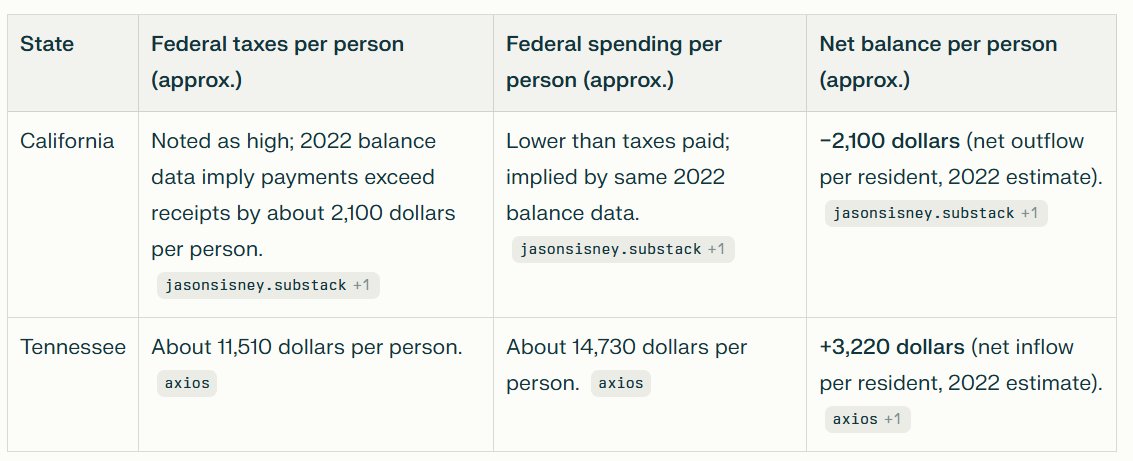
This is not true. We do not ask for this money back.
2,347
7,181
46,228
3,381,863
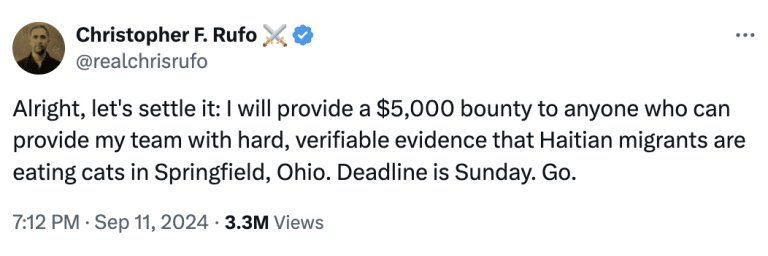
Today's so-called "conservatives" are all about hard work, contributing to society, and free markets right until the Wrong People show up to work hard, contribute to society, and buy houses.
This 🤡 sure went to a lot of effort to tell on himself with full citations.
15 Sep 2024

I’ve spent the past couple hours researching and analyzing data on the effects of the large-scale Haitian migration to Springfield, Ohio.
For anyone saying this is no big deal, I have questions:
1. RISING RENTS
Despite being a low cost of living area, the people of Springfield can barely afford to keep their homes.
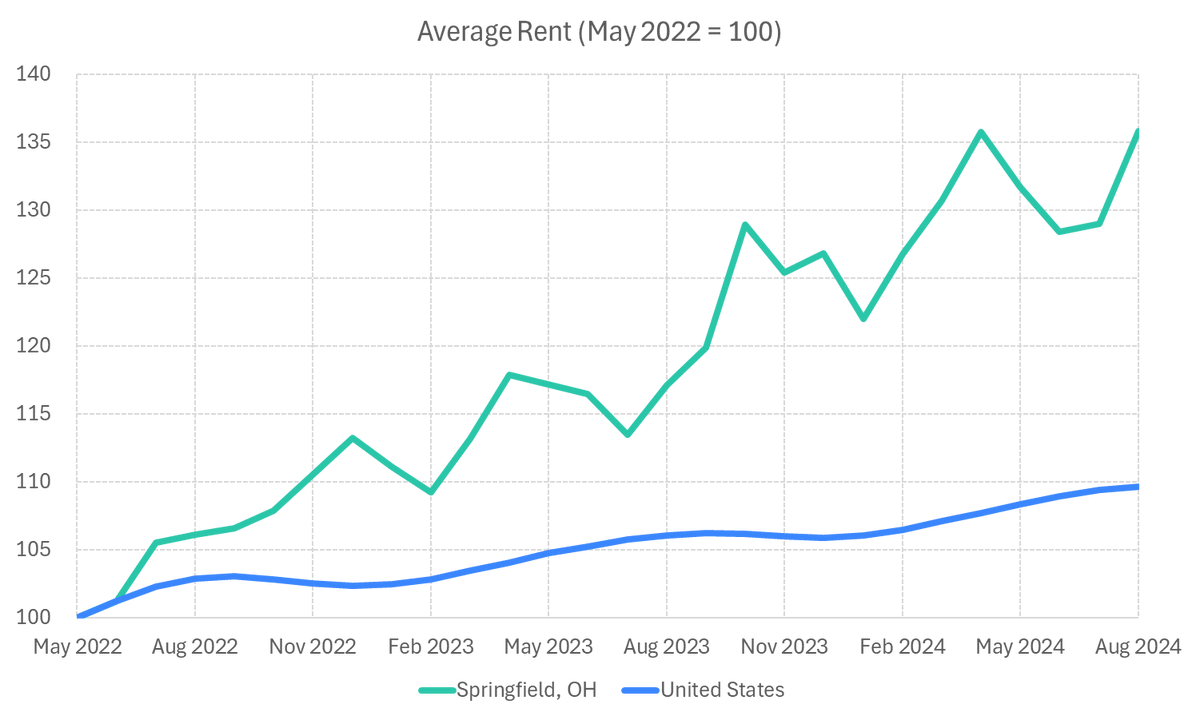
Since May 2022, average rent in Springfield has increased by 36%, from $667/month to $905 per month [1]. This compares to an increase of just 10% over the same period for the US overall [2].
This massive increase in average rent is made all the more painful because people in Springfield are disproportionately renters, not homeowners. In all of Ohio, 33.2% of people—one in every three—rent their homes. In Springfield, though, 48.6%—nearly one in two—rent [3].
My question: Do you think it’s fair and equitable for working-class families in Springfield—who are among the most economically disadvantaged people in American society—to have to bear an increase in rent rates that’s more than 3.5x the average increase that the rest of America had to pay over the past 28 months?
What do you tell the 48.6% of people in Springfield renting homes when, through no fault of their own, they now have to spend an extra $238 per month—$2,856 per year—in a city where the average annual income is just $31,244 [4]?
2. SCHOOL FUNDING SHORTFALLS
I read the latest annual report and five-year financial forecast for the school district in Springfield. As somebody who has spent a career in finance, I found it highly troubling.
The Springfield City School District, which educated 7,415 students last school year, is one of the most disadvantaged school districts in the state of Ohio. Out of 611 districts in the state, Springfield is ranked 593 for median income and 583 for property-tax revenue per student. 12.5% of students are in English language learning programs (ask a teacher, by the way, how difficult it is to find ESL-qualified teachers, especially for poorer school districts), 3.8% are homeless, and 17.6% have disabilities. A staggering 76.2% of students are eligible for Medicaid.
For the 2023 fiscal year, the district had a budget of $137.7M, funded 73% from “intergovernmental” sources (i.e., the state and federal government) and 23% via local property taxes. Property taxes, of course, are a double-edged sword for parents in a school district: If the district needs more money, either you can pay more in property taxes or your kids’ schools can suffer resource shortfalls. There’s no juice without the squeeze, and the families of Springfield have been squeezed plenty already.
The district ended FY2023 with $102.1M in cash. By the end of 2028, however, that cash is projected to dwindle down to just $17.6M. In the absence of additional funding—a bailout from the state government, or additional property taxes that residents of Clark County are scarcely able to afford—the district will have a $5M deficit this fiscal year, a $10M deficit in FY2026, a $15M deficit in FY2027, and a $19M deficit in FY2028.
My question: Is it fair to the students, the parents, the teachers, the staff, and the taxpayers of the school district in Springfield to impose even more burdens on an already strained school system? Is it reasonable to expect a low-income school district—with no notice whatsoever—to take on hundreds of additional students, many of whom do not speak English, are behind their current grade levels, and require a disproportionate level of support from teachers and paraeducators?
If you were a working-class parent in an underresourced school, would this give you more optimism about and confidence in your own child’s educational prospects in the district?
(Note: All references in this section are from [4] and [5].)
3. LACK OF MEDICAL CARE ACCESS
The medical system in Springfield was strained even prior to the influx of 20,000 migrants from an impoverished country. It’s since been pushed to the breaking point.
According to the US Department of Health and Human Services, Springfield is a designated Health Professional Shortage Area [6]. In 2021, when Clark County had a population of 135,000, the county had 2,220 residents for each primary care physician [7].
Assuming that migration has increased the population of Clark County by 20,000 people, and assuming there has been no net increase in the number of doctors in the county, the ratio of Clark County residents to primary care physicians would now be 2,549 to 1. For comparison, the overall ratio for Ohio is 1,330 to 1. In other words, on a per-capita basis, Springfield has just half the number of primary care physicians that the rest of Ohio does.
City commission meetings are full of complaints from residents about significantly longer waits at healthcare clinics. A healthcare system that struggled to serve even 135,000 people simply won’t be capable of serving 155,000 people, especially when the additional 20,000 people are seeking healthcare after years of tragic neglect.
When all of America, wealthy and poor areas alike, is suffering from a shortage of primary care physicians, this is not the type of problem that can be solved quickly. Short of Doctors Without Borders deploying into the city and erecting field hospitals, it will take years for the ratio to revert to what it was previously, let alone to decrease to a level comparable to the rest of the state.
My question: Are you okay telling the citizens of Springfield—who, again, make an average of just $31k per year and who are far more likely than almost anyone in America to receive healthcare via Medicaid—that they and their families won’t be able to receive timely attention to their healthcare needs, because an influx of 20,000 people now gets priority?
4. COMPARISON TO OTHER CITIES
Since the Spring of 2022, more than 200,000 migrants have arrived in New York City [8], increasing the city’s population by 2.3%. Since August 2022, another 40,000 have arrived in Chicago [9], representing 1.5% of the city’s population.
In response, both cities declared states of emergency.
The population of Springfield, on the other hand—a city far less prosperous than New York or Chicago, with a minuscule fraction of its public- and private-sector resources—has seen an increase of 50%.
My question: If it’s an emergency when migrants move into two of America’s wealthiest and most populous cities and increase the population by a low-single-digits percentage, why is it not an emergency when the population of a small, poor, disadvantaged town mushrooms 50%?
5. CULTURAL CHANGE
Thousands of books, essays, and academic papers have been written about the challenges of “gentrification,” wherein new residents (typically higher-earning White and Asian people) relocate to an area that traditionally comprised primarily Black or Hispanic people. There are even entire university departments and academic conferences dedicated to researching this phenomenon, the downsides of which—in the words of the scholars and activists who oppose it—include:
Displacement of long-term residents
Cultural erasure
Loss of social networks
Loss of affordable housing
Increased cost of living
Community conflict
Longer commutes
Increased homelessness
On the other hand, those who defend gentrification often claim the people moving into such areas are revitalizing them, bringing families, new jobs, and economic growth to communities that would otherwise be stagnant or dying (sound familiar?).
So, here’s my final question: Aside from the racial dynamic being inverted, how is what’s happening to the 40,000 legacy residents of Springfield any different from the gentrification that an entire cottage industry of academics and professional activists spend their careers opposing?
We have a mass influx of people that has rapidly led to every single downside listed above. Long-term residents—especially those who don’t own their homes—are being displaced, due to escalating rents and property values. Social services are at the breaking point. The culture is undeniably changing, and in a manner about which many long-term residents aren’t enthusiastic. The people of the community have had zero vote or say in any of this.
So tell me what the difference here is. What are people like me missing here?
143
Parity retweeted

11 Sep 2024
BREAKING: Donald Trump can still win last night’s debate if Mike Pence just has the courage to do the right thing
241
1,606
15,997
509,361
Parity retweeted

6 Sep 2024
The moment during the job interview when you realize you've lost the gig to Tim Pool.

11
126
630
51,652
Parity retweeted

23 Aug 2024
I hope Steve Bannon is listening to this speech on a little transistor radio in his hot cell, wondering what the prison will serve for lunch tomorrow.
132
729
5,998
266,538
Parity retweeted

23 Aug 2024
Re: special guest rumor - I’m not sure where it started, but the people who told me aren’t prone to hyperbole.
FWIW, Beyoncé was the rumor.
Makes me feel a little better that Rueters, TMZ, The Hill, and other outlets also reported it, but either way - I apologize.
I don’t like giving bad information, and that’s on me. Mea culpa.
Even people at the DNC were hearing that Beyoncé was in the building, so whoever started the rumor got a whole bunch of us.
Maybe it was a ratings ploy by the DNC, but I don’t think so - they had a hell of a lineup either way, and it was a fantastic performance.



845
566
9,044
1,338,082