Joined August 2009
- Tweets 1,621
- Following 534
- Followers 239
- Likes 1,716
70 Photos and videos







Pinned Tweet

Apr 26
I propose the The Racism Asymmetry Law:
"The amount of energy needed to refute racist misinformation is an order of magnitude larger than is needed to produce it."
Core Tenets
The Effort Gap: It takes mere seconds to invoke a stereotype or deny a group’s historical contribution. Conversely, it takes minutes or hours to research, cite, and present the historical evidence (like the 1,500 Indian soldiers who died at Gallipoli) required to debunk that claim.
The Burden of Proof Shift: In these digital exchanges, the racist actor often shifts the burden of proof onto the responder, forcing the "educator" to prove a minority group's right to exist or belong, while the "detractor" relies on the low-energy comfort of prejudice.
The Saturation Effect: Because it is "cheaper" (in terms of cognitive effort) to be bigoted than to be factual, a single person defending historical truth can be quickly overwhelmed by a volume of bad-faith arguments that they simply do not have the time to correct.
Inspired by: Brandolini's law (or the bullshit asymmetry principle)
Apr 25

1500 Indian soldiers died at Gallipoli alongside the 10-11,000 Australians and New Zealanders.
As did 10,000 French, and 29,500 British and Irish troops.
If you weren't a racist triggered by the sight of a Sikh man in uniform you'd know this.
3
1,122
Jagan Mohan R., MD retweeted

1/5
An open letter to @TheLancet from an Iranian-Jewish cardiologist.
Today, one of the world's most prestigious medical journals published a campaign to suspend the Israeli Medical Association from the World Medical Association — the body founded after WWII to ensure physicians would never again be weaponized by political ideology.
I'm a cardiologist. I'm an Iranian Jew who grew up under a regime where medicine was subjugated to the state.
What The Lancet just did is a disgrace to my profession.
Here's what they published — and what they deliberately left out.
163
1,166
3,828
140,757
Jun 13
Just when we were off to racing with Fable
Jun 13

As a result of a US government directive, we are suspending access to Claude Fable 5 for all users. You can continue to use all other Claude models.
Here’s what this means for you:
Across Claude products, new sessions will run on your selected default model or Opus 4.8, and existing Fable 5 sessions will end with an error.
On the Claude Platform, requests to Fable 5 will also return an error. Please update your integrations to other Claude models.
We know this is a disruption to your workflows; we appreciate your patience and support.
38
Jun 12
"High" throughput screening is going to get new superlatives.
Jun 12

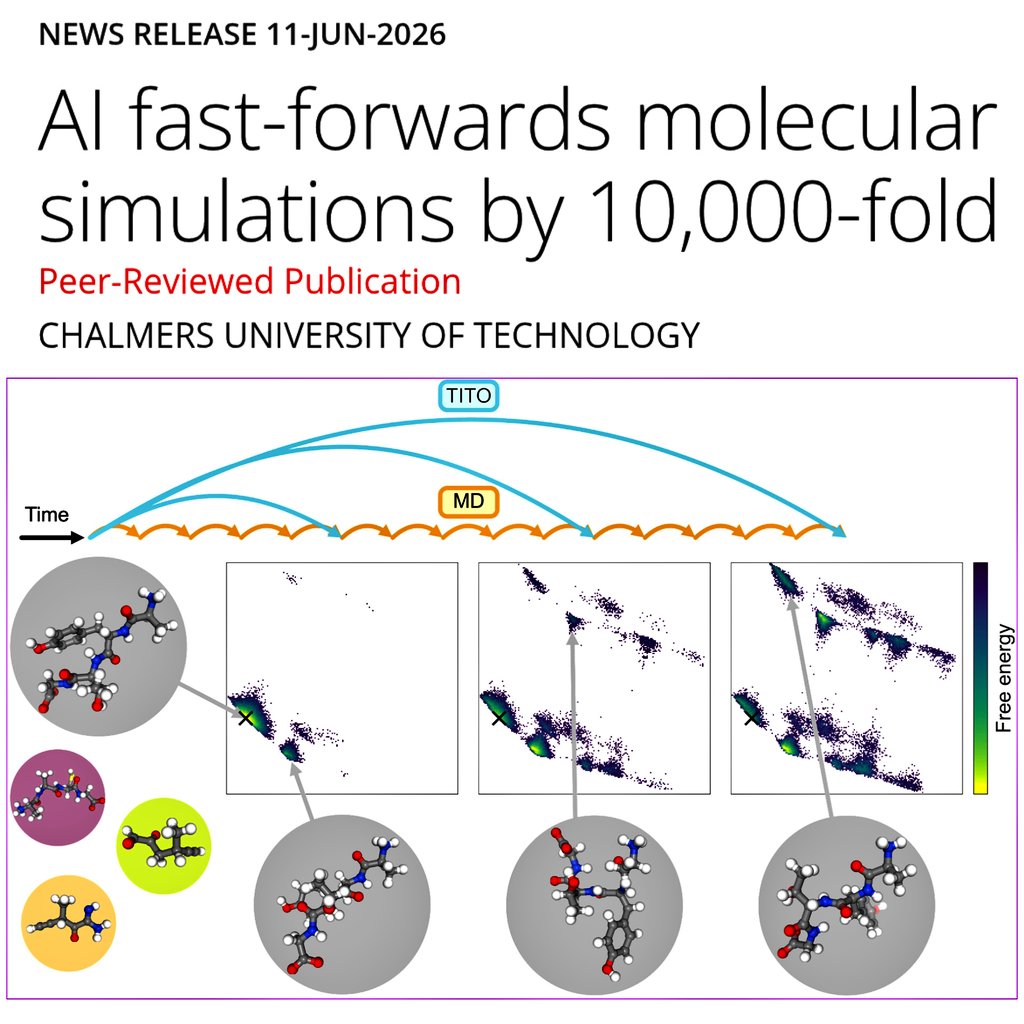
This is huge 10,000× faster 👀
"Researchers just developed an AI system called TITO that can simulate molecular dynamics up to 10,000-fold faster than conventional methods."
"The model was trained across more than 12,500 organic molecules and 1,000 peptides, learning how molecular systems evolve over time."
"Instead of calculating every femtosecond-scale step, the AI can effectively bridge molecular behavior from femtoseconds to nanoseconds while preserving the underlying physics."
Thats why!
Scientists will soon be able to explore drugs, materials, catalysts and biological systems dramatically faster than before.
This could be one of the first real signs of AI accelerating scientific discovery itself.
1
13
Jagan Mohan R., MD retweeted

Jun 11
Today, I’m proud to announce Homebrew 6.0.0.
Since 5.1.0: secure tap trusting, faster JSON API, Linux sandboxing, better defaults, brew bundle improvements, improved performance, initial macOS Golden Gate support.
brew.sh/2026/06/11/homebrew-…
86
507
5,141
311,164
Jun 10
So true
Jun 9

In India, most people are introduced to new systems through another person.
A bank manager helps update Aadhaar. A mutual fund broker explains insurance. A shopkeeper teaches UPI. A local agent makes the form less frightening.
The West over-indexes on DIY. India has always been mediated.
This is why many digital products fail when they assume the user wants independence. Often, the user does not want independence first. They want assurance. They want someone to say, "This is correct. Click here. Don't worry."
The middleman exists because systems are intimidating, language is confusing, consequences feel expensive, and trust is social.
Good Indian UX often has to replace the middleman.
That means clearer confirmations, human-like guidance, visible trust markers, assisted flows, easy reversibility, and language that reduces fear. The best interface in India is not always the shortest interface. Sometimes it is the one that holds your hand at the right moment.
A product team may think the broker is inefficiency. But ethnographically, the broker is assurance infra.
If you remove him without replacing the trust he provided, the user does not become empowered. They become abandoned.
1
7
Jagan Mohan R., MD retweeted

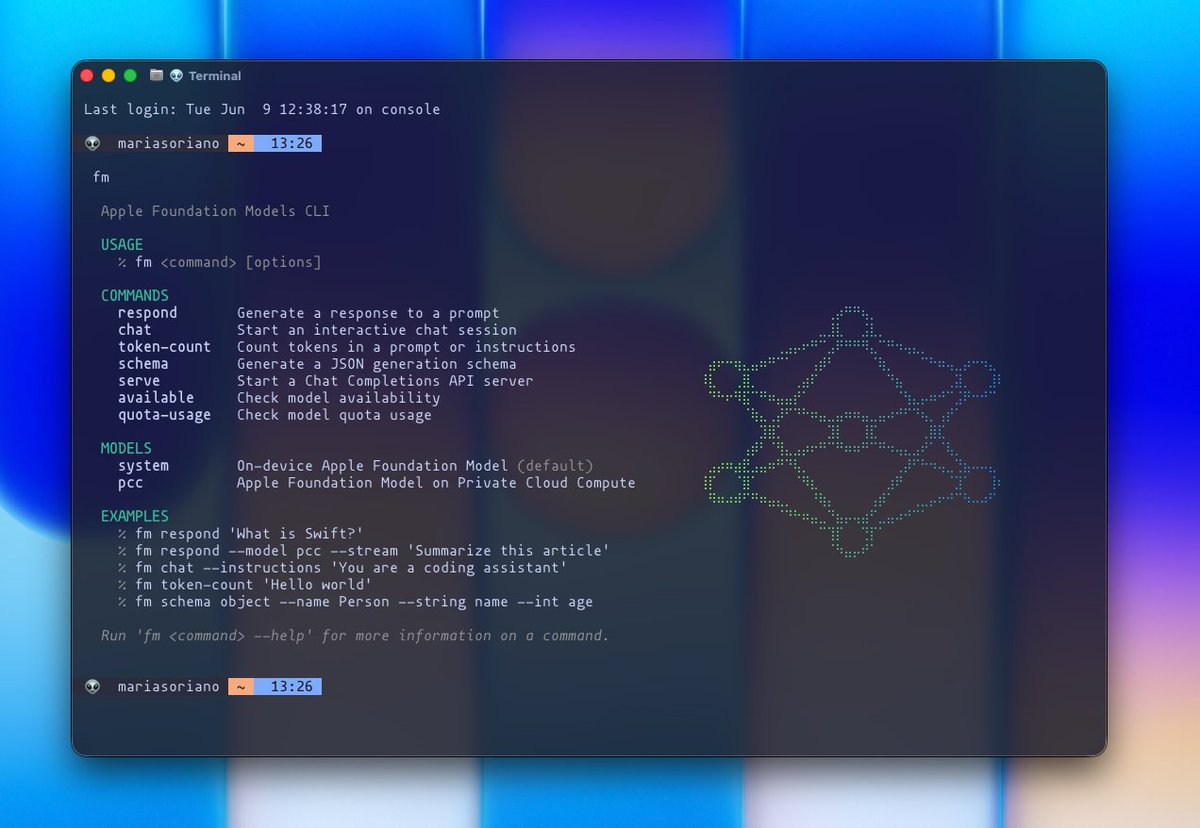
Yes, we have a Foundation Models CLI #WWDC26
- Update your Mac
- Download Xcode 27 (beta)
- run `fm` in Terminal
That's it ✨
23
106
1,336
93,853
Jagan Mohan R., MD retweeted

Jun 9
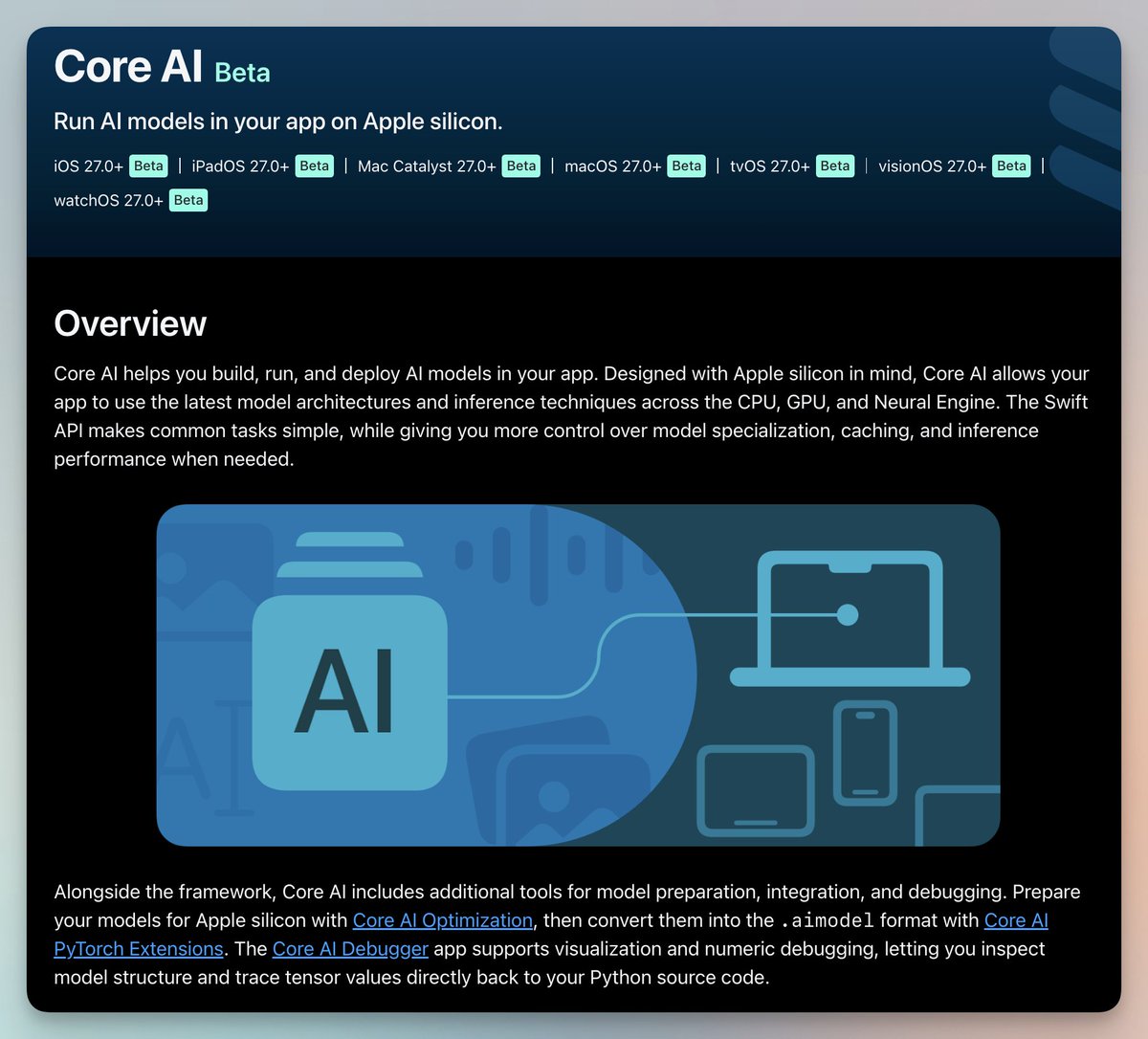
Apple finally did it.
Its new framework, Core AI, runs models entirely on Apple silicon, so inference happens on the user's device with zero server calls and zero token bills.
That means Qwen, Mistral, and SAM3 running natively across iPhone, iPad, Mac, and Vision Pro.
It's a memory-safe Swift API that compiles models ahead of time for near-instant load. Pulling one in takes a few lines:
let segmenter = try await ImageSegmenter(resourcesAt: sam3ModelURL)
let response = try await segmenter.segment(image: inputImage, prompt: "flower")
The launch goes beyond the runtime, though.
It ships curated open models packaged for Swift, PyTorch extensions to convert your own, and an optimizer that shrinks models layer by layer with minimal accuracy loss.
There's also a macOS debugger that profiles performance and traces behavior back to your original Python, plus Xcode tools to validate models before they ship.
For any team that wanted real on-device AI without a cloud bill attached to every user, this is the answer.
Models repo: github.com/apple/coreai-mode…
35
132
1,302
90,643
Jun 9
In fields like Mathematics, AI can generate such slop at incredible speed that humans will have a hard time detangling it.
futurism.com/artificial-inte…
9
Jagan Mohan R., MD retweeted

Jun 5
The Library of Alexandria created the first catalog of all human knowledge 2,300 years ago, and a team of fewer than 20 people just finished the modern version and made it free for the entire planet.
It is called OpenAlex. The name is not an accident.
The ancient library had the Pinakes, a catalog mapping every scroll, every author, every subject. When the library fell, the map of what humanity knew fell with it.
For the last two decades, that map existed again, but it was locked up.
Elsevier owns Scopus. Clarivate owns Web of Science. If your university could not afford the subscription, you could not see the structure of science itself. Entire countries were priced out of knowing what research existed.
OpenAlex indexes 474 million scholarly works. Every author disambiguated. Every citation traced. Every institution and funder connected. It updates with roughly 50,000 new works every day.
The whole thing is CC0. Not just free to search. Free to download, copy, sell, and build on. The API allows 100,000 requests a day without an account.
The ancient library burned and the catalog was lost for two millennia.
The new one cannot burn. Anyone can hold a copy.
openalex.org
70
753
2,202
137,127
Jun 5
This is so intelligent it could only come from a physicist.
Brevity is the soul of wit. I wish I could craft terse, pointed retorts like that.
Look at how he turned “no one cares” completely on its head.
I’m just… wow. Goosebumps.

Calling me 'no one'. Blocked.
10
Jagan Mohan R., MD retweeted

Jun 4
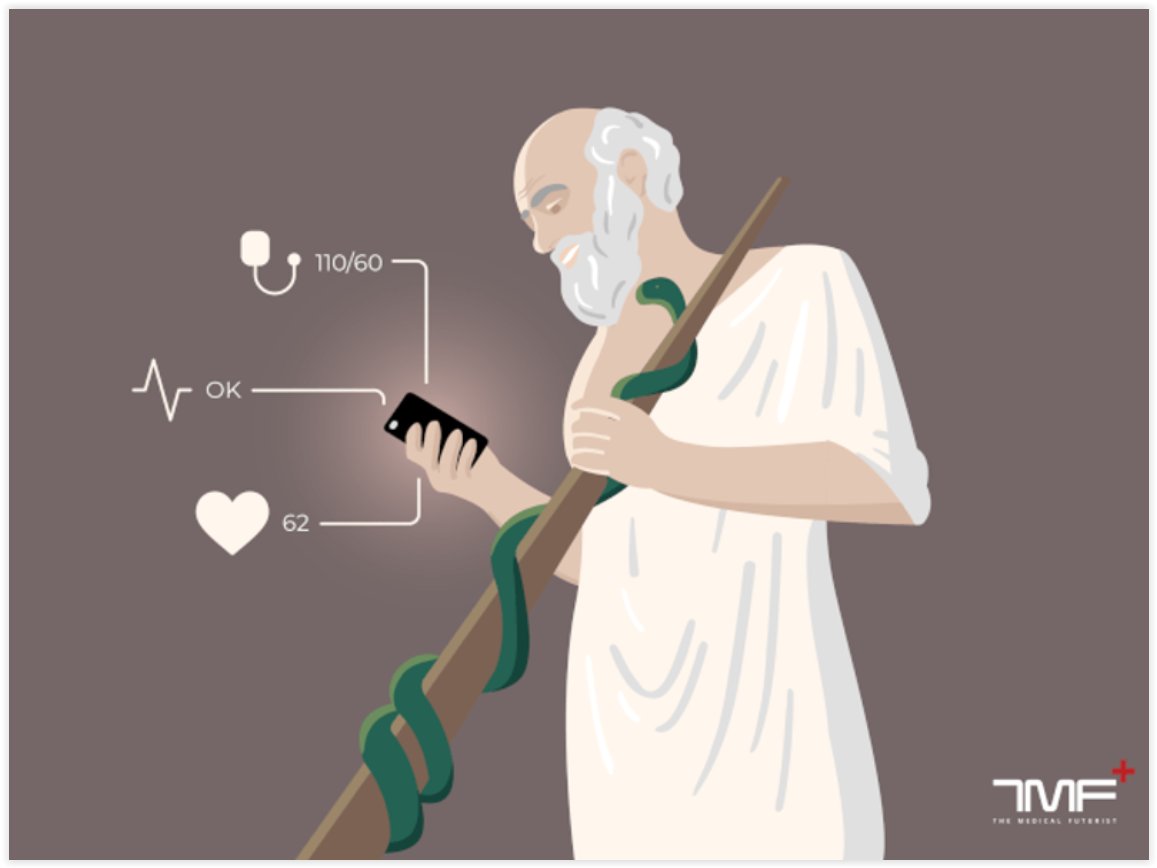
Medical schools need to adopt a revised Hippocratic Oath because of the era of digital health and healthcare AI!
With co-author Brennan Spiegel, we provided practical examples of how the Oath could be rewritten. A few examples:
1) I will remember that there is an art to medicine as well as science, and that warmth, sympathy, and understanding may outweigh the surgeon’s knife, the chemist’s drug, "or the programmer’s algorithm".
2) I will remember that I do not treat a fever chart, a cancerous growth, a data point, "or an algorithm’s suggestion", but a human being.
3) "I will treat my patients in an equal-level partnership", and I will not be ashamed to say ‘I know not,’ nor will I fail to call in my colleagues when the skills of another are needed for a patient’s recovery.
The paper with more examples: jmir.org/2022/9/e39177
1
10
25
1,434

Jagan Mohan R., MD retweeted

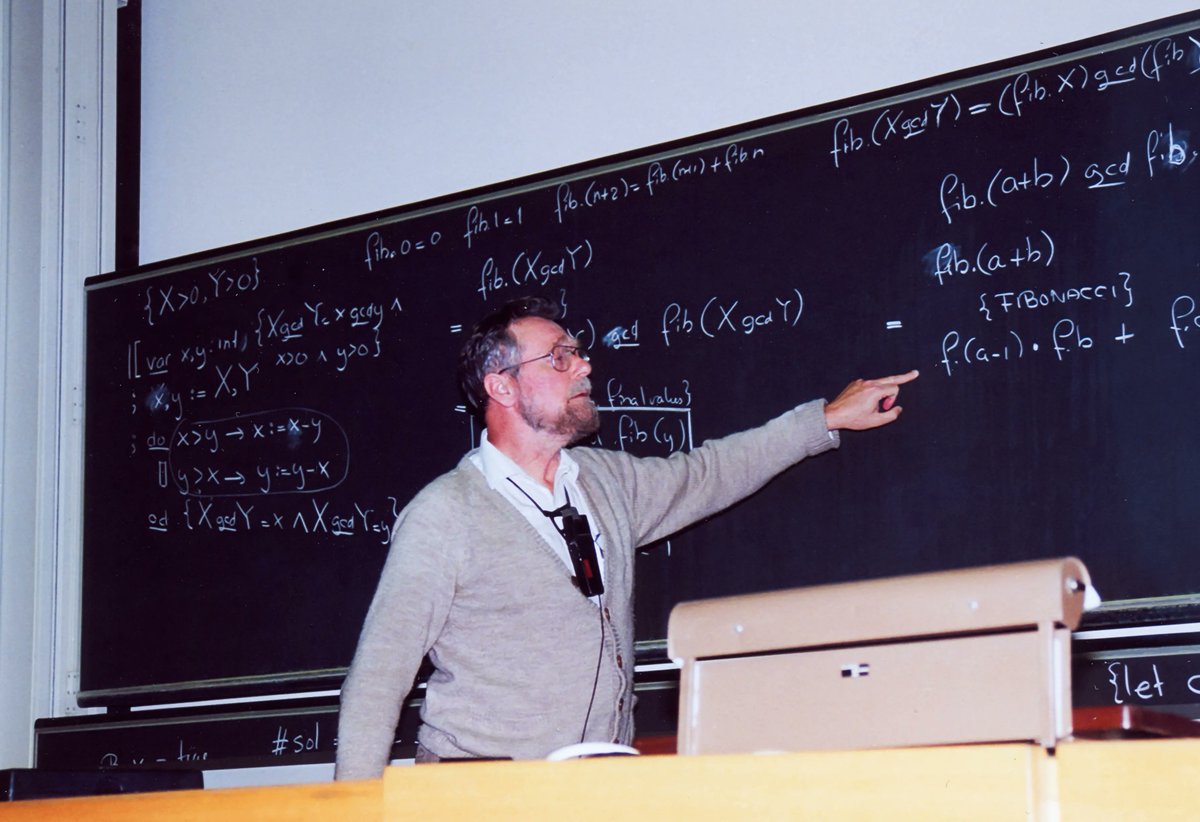
A Dutch computer scientist gave one lecture in 1988 arguing that programming is unlike anything humans have ever tried to do before, and the reason most software on earth is broken is that we are still teaching it as if it were a hobby.
His name was Edsger Dijkstra. He won the Turing Award in 1972. He invented the shortest path algorithm that every GPS on earth still runs on.
He wrote the paper that killed the goto statement in modern programming languages.
He spent 50 years quietly being one of the most consequential thinkers in the entire history of computer science, and he was in a very bad mood by the time he stood up at the ACM Computer Science Conference in 1988 to deliver the lecture that almost nobody at the conference wanted to hear.
The lecture was called On the Cruelty of Really Teaching Computer Science.
It is now one of the most cited papers in the entire history of computing education. It was filed in his archive as EWD1036, handwritten in his careful fountain-pen calligraphy because he refused to use a typewriter and famously refused to use email for the rest of his life.
The argument was simple and uncomfortable.
Programming, Dijkstra said, is a radical novelty. Not a new tool. Not a new skill. Not a faster version of something humans already knew how to do. A genuinely new category of intellectual activity that has no real precedent in the entire history of the human species, and our brains have not been built to handle it.
Here is what he meant by that.
When a programmer writes a line of high-level code and presses run, that single line might trigger a billion operations at the level of the silicon.
The ratio between the abstraction you are working in and the physical events you are actually causing is roughly one billion to one. No engineer in history before computing ever had to reason about a system spanning that kind of ratio inside their own head.
A bridge builder reasons about steel beams and the physics of weight. A surgeon reasons about organs and the physics of tissue. A chemist reasons about molecules and the physics of bonds.
All of them are working inside ratios of physical scale where the largest and smallest things they need to think about are within a few orders of magnitude of each other.
A programmer routinely writes one line that orchestrates a billion physical events on a chip, and is expected to predict the behavior of all of them in advance.
Dijkstra argued that the human brain was simply not built for this. Every intuition we have evolved over hundreds of thousands of years comes from a world of medium-sized objects behaving in continuous ways. Computing is the opposite. It is discrete, not continuous.
A program that runs perfectly a billion times can crash on the billion-and-first iteration because of a single bit. A single character missing from a line of code can take down a power grid. There is no margin. There is no graceful degradation. The system either works or does not, and the only way to know is to actually run it.
This was the part of the lecture where Dijkstra made everyone in the room uncomfortable.
He said the way computer science was being taught in universities was a quiet disaster. Professors were teaching programming the way carpenters teach woodworking. With examples. With metaphors. With analogies to things students already understood. Files are like folders. Memory is like a desk. A function is like a recipe.
Dijkstra said this was actively making it harder for students to think clearly. The whole point of a radical novelty is that there is nothing in your past experience to compare it to.
The moment you start reaching for metaphors, you are smuggling in old intuitions that do not apply, and those intuitions will betray you the first time you try to reason about a system the metaphor was not built to describe.
His exact line was this: the usual way in which we plan today for tomorrow is in yesterday's vocabulary. And yesterday's vocabulary, he argued, was killing the field.
The reason most software is broken is downstream of this single misunderstanding. Programmers are taught to think of code as a craft. Something you get a feel for.
Something you pick up through practice. Something where intuition gets sharper with experience.
Dijkstra said this is exactly backwards. Programming is not a craft. It is closer to mathematics than to carpentry, and the moment you treat it as a craft, you guarantee that the software you produce will be full of the kind of bugs that craftsmanship cannot catch.
The fix, in his view, was to teach programming the way mathematics is taught. You should be able to prove your program correct before you run it.
You should reason about your code formally, the way a mathematician reasons about a theorem, not the way a carpenter feels their way through a joint. The students who learned this way, he said, would walk out of their classes with a kind of confidence that no amount of typing practice could produce.
The lecture was published in Communications of the ACM in 1989. The field did not listen. Universities kept teaching programming the same way.
Software kept getting bigger. Bugs kept compounding. By 2026, almost every piece of software on earth has known security vulnerabilities, undefined behaviors, and edge cases that nobody has ever proven safe. The doom that Dijkstra warned about in 1988 is now the default condition of the digital world we have built.
The deeper lesson is the one most readers miss the first time through.
Dijkstra was not just talking about software. He was making a much bigger point about how humans learn anything that is genuinely new. The instinct to translate the unfamiliar into the familiar is the most natural thing in the world.
It is also the single biggest obstacle to actually understanding something that has no precedent. If you keep reaching for analogies, you will never see the new thing clearly. You will only see your old framework projected onto it.
This is happening right now with AI. The same instinct that made people learn programming through metaphors of files and folders is making people understand large language models through metaphors of brains and people.
Almost every framework being used to describe AI in 2026 is borrowed from a previous domain. None of them quite fit. The few people who are actually building useful intuitions about how these systems work are the ones who have done what Dijkstra recommended forty years ago.
They have set down the old vocabulary. They have looked at the new thing on its own terms. They have accepted that the radical novelty is radical for a reason.
You are not slow. You were taught a discipline as if it were a hobby. The cruelty is real.
The fix is still available.
93
340
1,728
285,649
Jagan Mohan R., MD retweeted

Jun 1
A DEVELOPER TAUGHT GIT WITH A BOX OF CHILDREN'S TOYS AND ENGINEERS WITH TEN YEARS IN SAY IT'S THE FIRST TIME THE THING EVER ACTUALLY MADE SENSE
90 minutes, one table, a pile of Tinkertoys. No wall of jargon -- he builds a real Git repo out of plastic rods right in front of you.
-> The moment he snaps the first pieces together, Git stops being scary command-line magic and becomes what it really is: a chain of tiny objects pointing at each other.
Branches, merges, rebase, the staging area -- every concept that's ever burned you at 2am -- he rebuilds with toys until a four year old could follow. He calls Git a two-trick pony. After this you'll see exactly why.
Memorizing commands was never the skill -> holding the graph in your head is. And with an AI agent now committing and rebasing on your machine all day, that mental model is the only thing between you and a history you can't read.
Scroll the comments and you'll see the same thing over and over: this is the talk that finally made Git click and made people the one their whole team comes to when it breaks.
Bookmark & watch it today. It's the 1.5 hours that pays you back for the rest of your career ↓
May 30

MIT HANDED ITS DEEP LEARNING COURSE TO A FRONTIER-LAB ENGINEER FOR 68 MINUTES BECAUSE 90% OF PEOPLE SHIPPING AI CODE CAN'T EXPLAIN HOW THE MODEL ACTUALLY WORKS
This is Maxime Labonne. He runs post-training at Liquid AI and wrote the LLM Engineer's Handbook. MIT gave him the room to break down the engine sitting inside every coding agent you've ever prompted.
Twenty minutes in it stops being abstract. You finally see why the model confidently invents things that don't exist, why context is everything, and why "Just tell it to try again" sometimes fixes it and sometimes makes it worse.
In 2026 "I use AI to code" stopped being a skill. Knowing why the model behaves the way it does -> tokens, context, post-training, where it quietly breaks -> is what separates someone who ships from someone babysitting a black box.
Understanding an LLM isn't a research-team luxury anymore -> it's the difference between driving the agent and being driven by it.
Anyone can prompt. The person who knows what's under the hood is the one still standing when the prompt stops working.
Save this one & actually finish it ↓
44
273
2,060
224,068
Jun 2
Tested for medical education. Looks great!
Jun 2

We built the fastest explainer video generator in the world.
Introducing Simi: turn any prompt, doc, or idea into a complete whiteboard explainer video in seconds.
It supports 80 languages, so the same idea can be taught to audiences anywhere.
AI video has gotten insanely good at cinematic clips.
But almost nothing can actually teach.
Most tools are built for shots, scenes, avatars, and ads.
Simi is built for explanation.
Give it something like:
“Explain backpropagation”
“Teach photosynthesis”
“Walk through our onboarding flow”
“Turn this product doc into a video”
Simi writes the script, creates the visuals, animates the sequence, adds narration, and renders the final video.
Our fastest tier can generate videos in under 20 seconds.
And you can one-shot long explainers over 15 minutes.
We’re starting with whiteboard explainers because they are the clearest way to teach complex ideas step by step.
But the bigger goal is simple:
Any knowledge should be instantly turnable into video.
1
3
157
Jagan Mohan R., MD retweeted

Jun 2
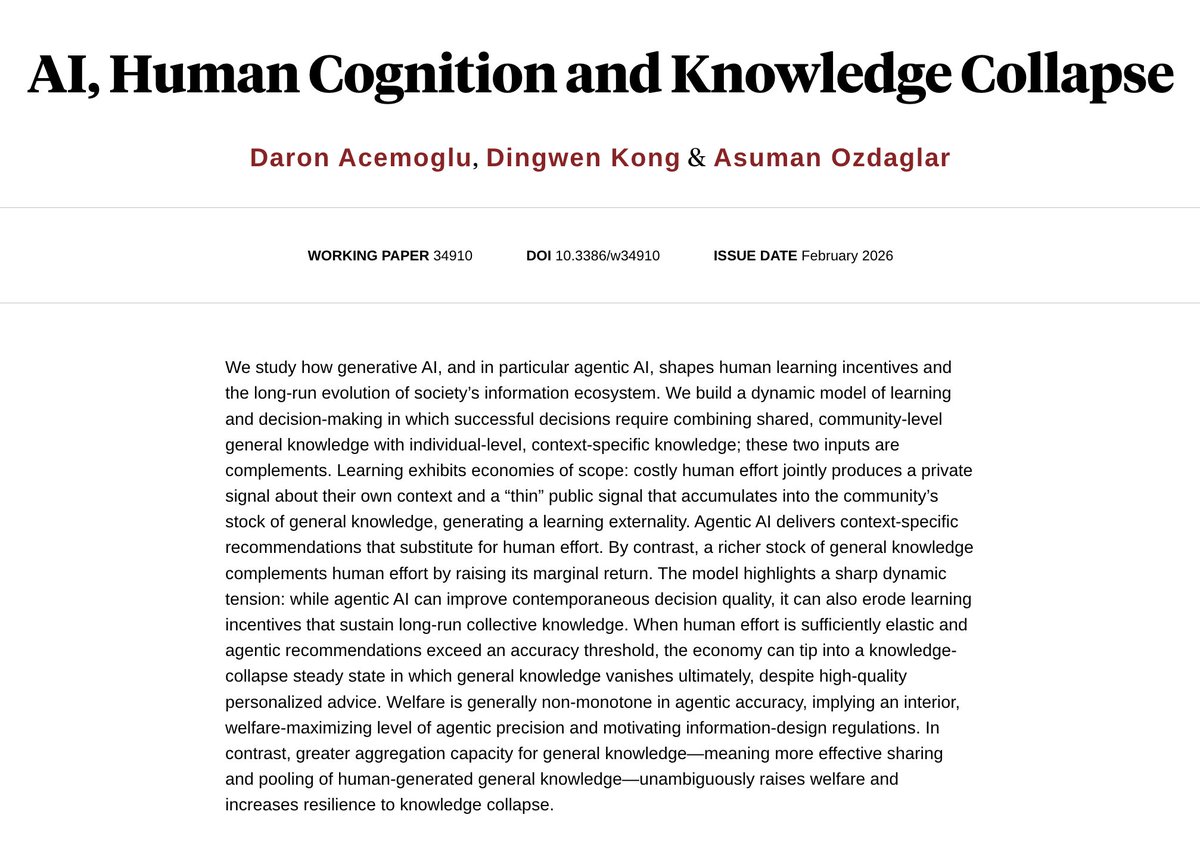
MIT's Nobel Prize-winning economist proved that AI is mathematically guaranteed to destroy human knowledge.
They published a massive NBER paper modeling the long-term impact of AI on human cognition.
And they found the most alarming conclusion in the AI literature so far.
It’s called "Knowledge Collapse."
Here is how human progress actually works.
When you struggle to solve a complex problem, you generate two things:
General knowledge about how the world works, and context-specific knowledge about your exact problem.
Normally, humans acquire both at the same time. You do the hard work to solve your specific problem, and in the process, you learn a general principle.
You share that principle. That is how human knowledge grows.
Then comes Agentic AI.
AI is incredibly good at giving you the exact, context-specific answer you need right now. It hands the solution to you on a silver platter.
So you stop doing the hard work.
And because you stop doing the work, you stop generating the "general knowledge" that society relies on.
Acemoglu calls it the "knowledge-collapse equilibrium."
When AI reaches a certain accuracy threshold, the incentive for humans to learn drops to zero.
Nobody verifies. Nobody explores. Nobody discovers new fundamental truths.
Society gets increasingly sophisticated automated outputs, while our actual capacity to generate new knowledge quietly erodes.
But here is the most terrifying finding in the paper.
Welfare is "non-monotone" to AI accuracy.
That means as AI gets more accurate, society actually gets worse off.
135
554
1,391
102,779
Jun 2
How is it that genuine intellectual heroes like Avi Wigderson - the only person in history to win both the Turing Award and the Abel Prize - remain almost invisible in mainstream media and on the world’s biggest podcasts?
It’s as if their groundbreaking insights into computation, randomness, zero-knowledge proofs, and the very limits of what machines (and humans) can know have nothing of value to offer the public.
Meanwhile, our screens and feeds are flooded daily with interviews of celebrities, influencers, and pundits whose contributions amount to little more than entertainment or manufactured controversy.
What a profound shame for our culture.
Jun 1

Avi Wigderson is the only person in history to have won both a Turing Award (computer science) and Abel Prize (math). I interviewed him all about his field. We discussed:
• His intuition on a proof of P vs NP
• Why we use SAT solvers for most NP problems
• Zero knowledge proofs and their impact
• Quantum computation and implications
• Math and computer science's relationship
Where to watch:
• YouTube: youtu.be/5GUcvSAJcJw
• Spotify: open.spotify.com/episode/4JZ…
• Apple Podcasts: podcasts.apple.com/us/podcas…
• Transcript: developing.dev/p/turing-awar…
Thank you to this episode's sponsors for supporting my work:
• WorkOS: makes your app Enterprise Ready with easy to use APIs to add SSO, SCIM, RBAC, and more in just a few lines of code, check them out at workos.com/
Timestamps:
00:00 - Intro
01:08 - P vs NP
14:51 - What if you relaxed correctness
25:38 - Why NP complete problems are equivalent
30:33 - Space vs time complexity
43:06 - Why people use SAT solvers
45:53 - Randomness is a resource
55:48 - Randomness depends on computational power
01:21:20 - Zero knowledge proofs and their significance
01:38:30 - Quantum computation and why it matters
01:56:24 - Math vs computer science
02:08:16 - Major breakthroughs and his experience
02:12:31 - Advice for his younger self
02:14:48 - Outro
39
May 30
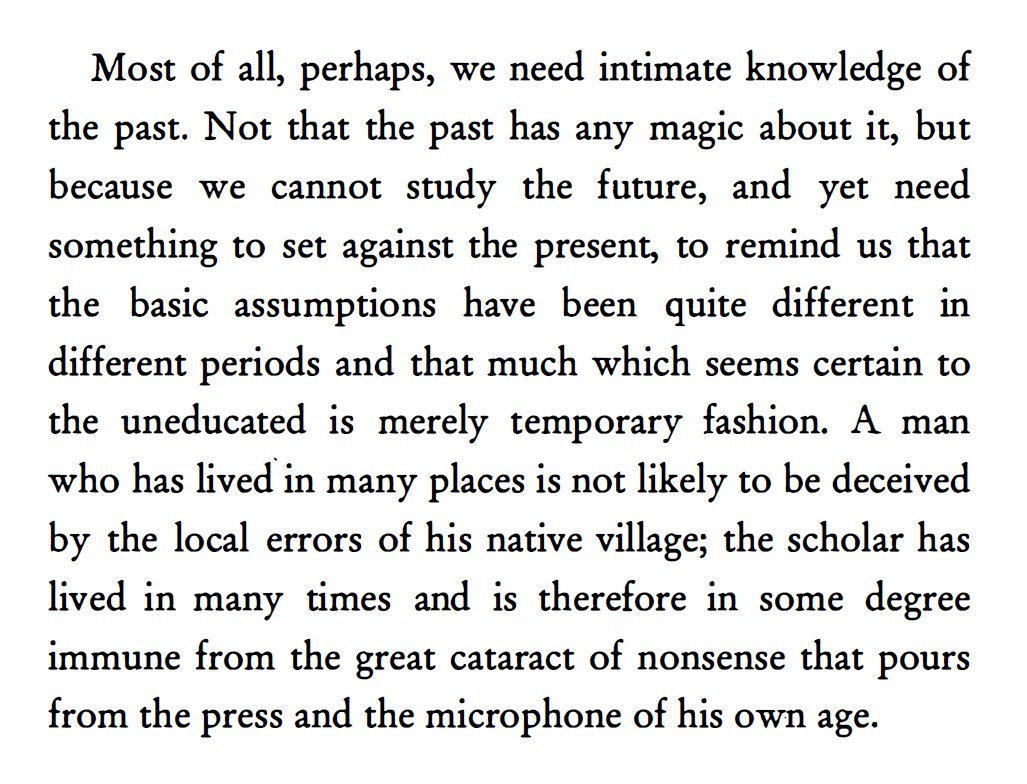
When we crack open really old books and encounter ideas that were once hailed as obvious truths, settled science, or moral common sense... now comically absurd, horrifying, or downright ridiculous - it delivers a vital shock of humility: much of what we treat as unassailable reality today will very likely be seen as unmitigated nonsense (or worse) by future generations.
particularly morals.
Today: Steaks are the best.
Tomorrow: Mammals were cultivated on an industrial scale and harvested as food prized for marbling.

1
1
54