Building ref.tools, previously @figma & @PalantirTech
Joined June 2015
- Tweets 270
- Following 250
- Followers 187
- Likes 446
56 Photos and videos

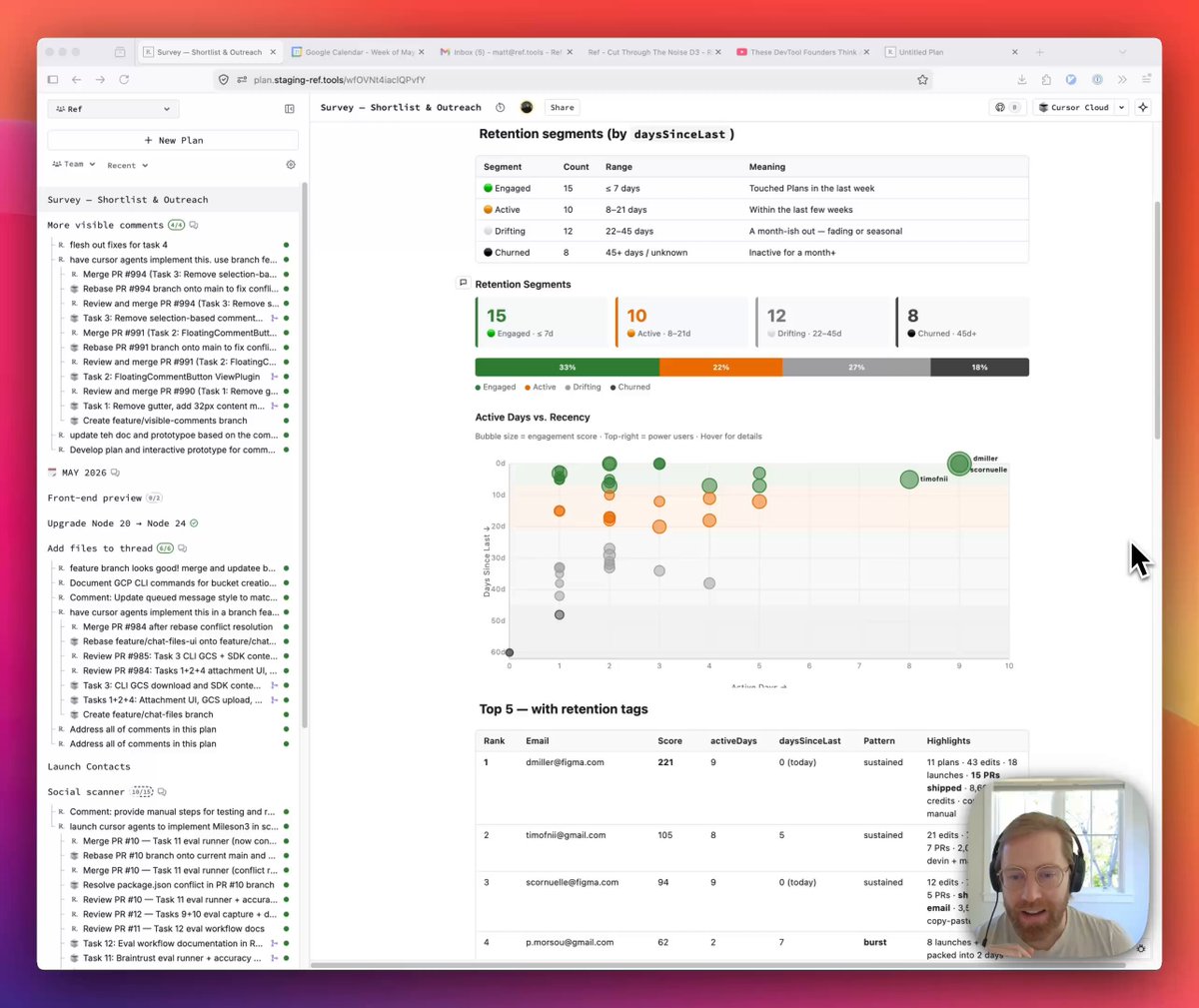
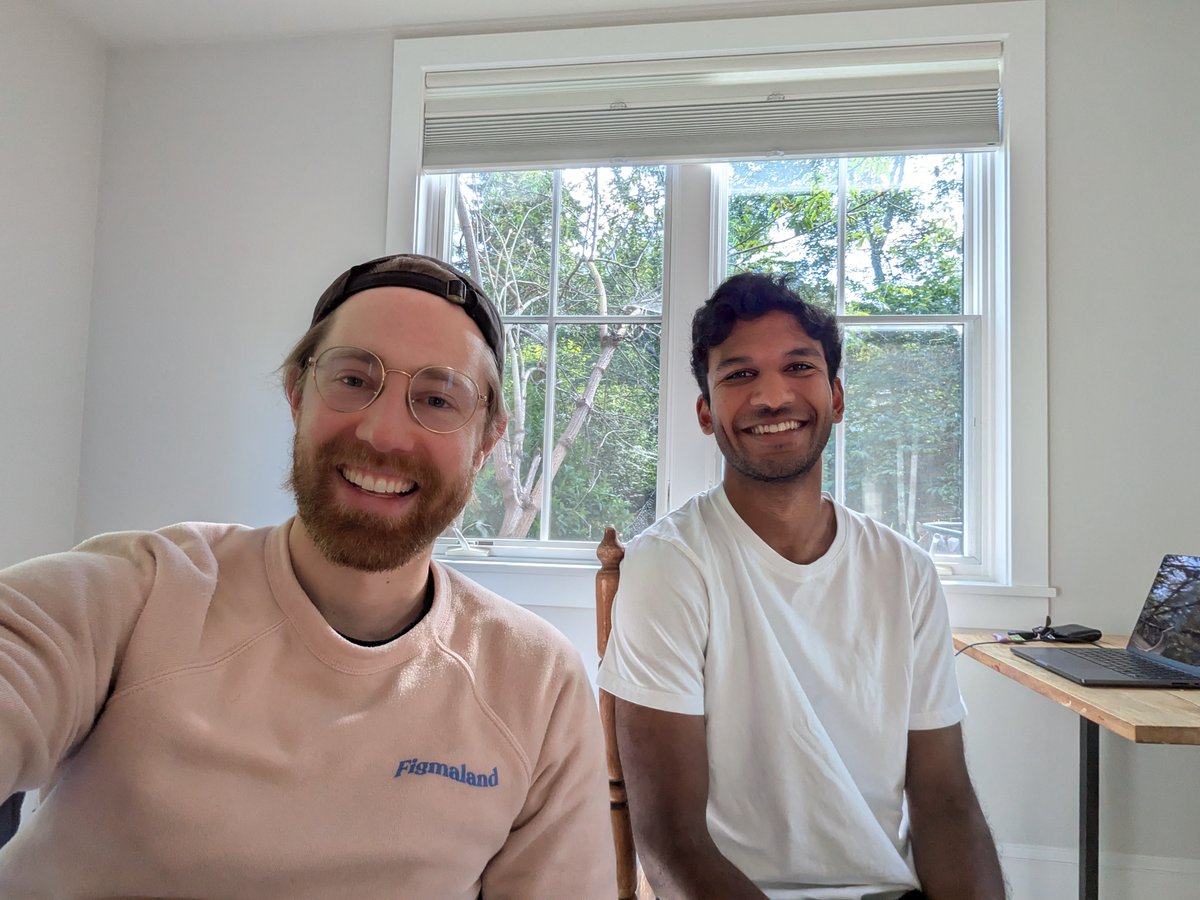
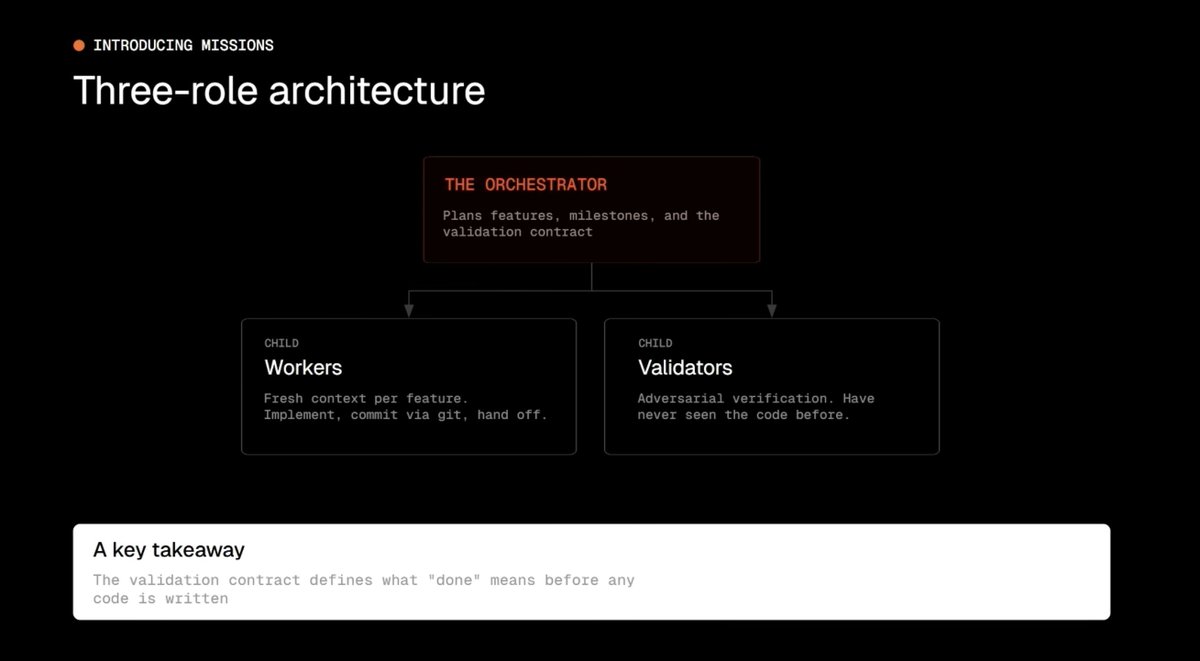
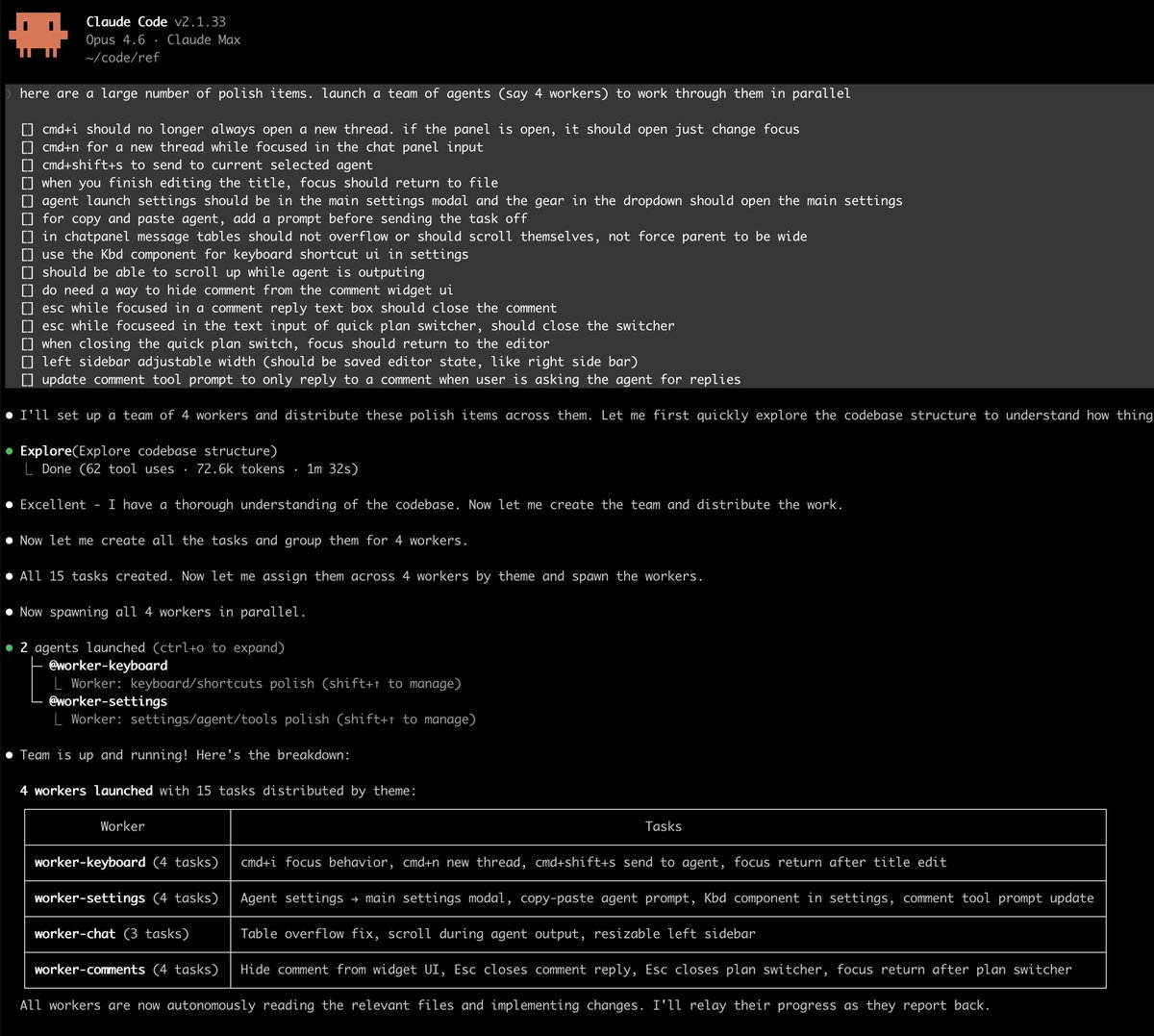
building a startup means every Friday night I'm like damn I'm tired
and having small kids means on Sunday night I'm like damn I'm tired
this is balance
25

Jun 14
just switch back from bluetooth to wired mouse, so much more responsive
saving an unbelievable number of millisecond
47
Jun 14
it's crazy how similar a startup is to a resource management board game
1
2
349
Jun 13
gamified checklists are one of my least favorite onboarding gimmicks but maybe they're actually perfect now?
1) every app is teaching people fundamentally new ways of working. you NEED to walk people up the stairs to new workflows somehow
2) usage based billing means you can meaningfully reward actions as people step through the app. literal dollars and cents!
41
Jun 13
damn it was fun while it lasted
Jun 13

The US government, citing national security authorities, has issued an export control directive to suspend all access to Fable 5 and Mythos 5 by any foreign national, whether inside or outside the United States, including foreign national Anthropic employees.
The net effect of this order is that we must abruptly disable Fable 5 and Mythos 5 for all our customers to ensure compliance.
Access to all other Claude models is not affected.
We apologize for this disruption to our customers. We believe this is a misunderstanding and are working to restore access as soon as possible.
Read our full statement: anthropic.com/news/fable-myt…
31
Jun 8
What's a loop?
I'm not sure what people like @bcherny, @steipete, @tadasayy mean exactly but here/s my best guess at some basic loops anyone can pick, written as little programs.
cursorDebugMode()
agent adds logs to the codebase
while (human says bug exists):
- agent observes logs
- agent adjust code and logs
agent cleans up logs
✅ bug fixed
refLongLivedPlans()
agent drafts plan
while(human or teammates has questions about plan)
- agents researches and updates plan
human approves plan
while(plan is not complete)
- orchestrator agent starts sub agents
- impl agents impl
- review agent reviews
- orchestrator agent updates plan base on progress
- if(human needs input) orchestrator asks human
✅ feature complete
Importantly, both of these are "human in the loop".
You get more throughput by minimizing the number human steps and more importantly minimizing human context rebuilding per step.
The hard part of multitasking as a human is rebuilding context. If you can reduce a debug loop to "do the same set action, click Yes or No" that's a lot easier than doing any log parsing yourself.
Similarly, if all your ideas for a large projects are pulled out into a plan doc you can share with your team, rebuilding context is just "read the doc". Which you're already good at from the RFC reviews you did before AI changed your entire job.
I guess the goal is remove all human in the loop but that seems pretty hard and I haven't done it myself yet. One day!
1
1
109
Jun 6
goldilocks of ai coding skill progression:
"how do I stay in flow?" -> too cold. you're watching an agent do its thing. try multiple agents.
"i'm the bottleneck" -> too hot. you closed the loop, 1B token plaque, unimaginable amounts of well-designed code that no one uses
"i spend all my time thinking and then ship some stuff" -> just right.
1
1
69
Jun 4
nbd but I'm squatting on a@town.com 😎
one of the only non coding ai products that just clicked
Jun 3

Today, we’re launching @TownAI: the AI assistant that learns you.
We’re coming out of beta with a $55M Series A led by @ARampell at @a16z, with participation from @KirstenGreen at @forerunnervc and continued support from @firstround, @altcap, and @conviction.
Right now, getting real value from AI means prompting, configuring, building workflows, managing agents.
We think that’s backwards.
The future of AI is a companion that already knows you and how you work. Town connects across your inbox, calendar, Slack, docs, messages, and workflows to understand what you need, then starts doing the work with you.
Drafting. Scheduling. Project tracking. Follow-ups. Context gathering. Multi-step tasks. And it only acts when you say so.
All adapting to your voice, priorities, routines, and relationships over time.
Your Townie is the AI assistant you actually need.
1
10
4,624
Jun 2
cloud is the way
Jun 2

Devs who insist on working locally are going to get absolutely smoked by those who work in the cloud.
I've seen this first hand - you just can't scale past 2-3 concurrent threads locally - you hit local dev env hell super fast (colliding ports, work tree madness, etc).
Compare that to working in the cloud where you can instantly spin up 10 concurrent threads.
Completely independent, isolated VMs with their own checkouts.
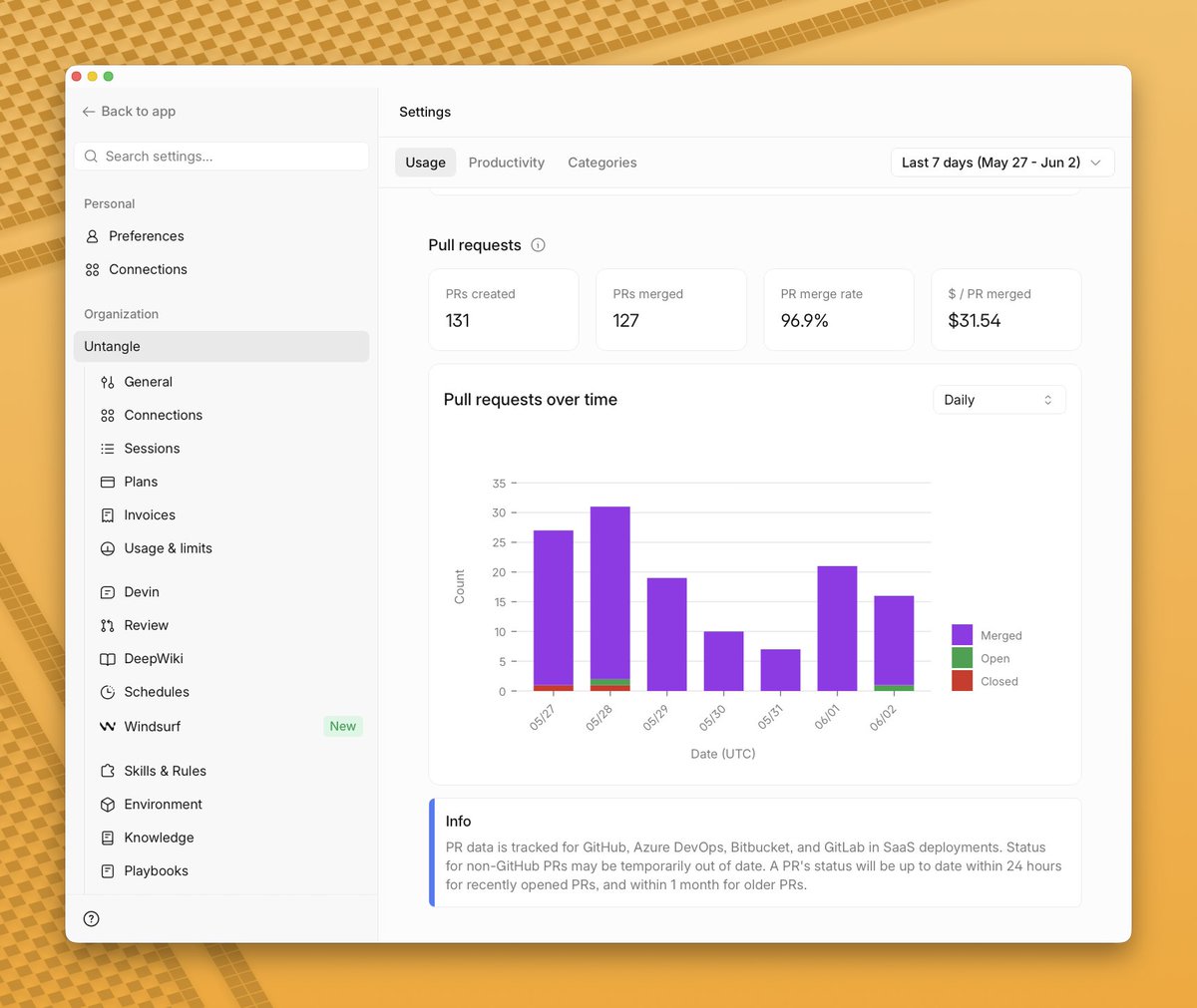
This is how I shipped 131 PRs in 7 days.
You might wonder why the heck I need to ship that many PRs - it's because our first real law firm customer is finding all the rough edges which have to be quickly sanded down.
Also, I think $31.54/PR is a fabulous deal.
139
Jun 1
I'm a pretty strict no scrolljacking kind of guy, it's cute but annoying.
but the best versions use it to turn the scroll into a series of little vingettes
that got me wondering, whats it like in the alternate universe where `overflow; scroll` doesn't exist?
1
95
Jun 1
the happiest timeline, every page is a single concept and reading a website is like flipping through a book. (maybe that's just flipboard? lol)
1
76
Jun 1
unfortunately, i think the dark timeline discovers tiktok decades earlier and it's gg already
59
May 28
all my hiring conversations include some versions of "either you should go work at anthropic or you should come work for me" 😂
May 28

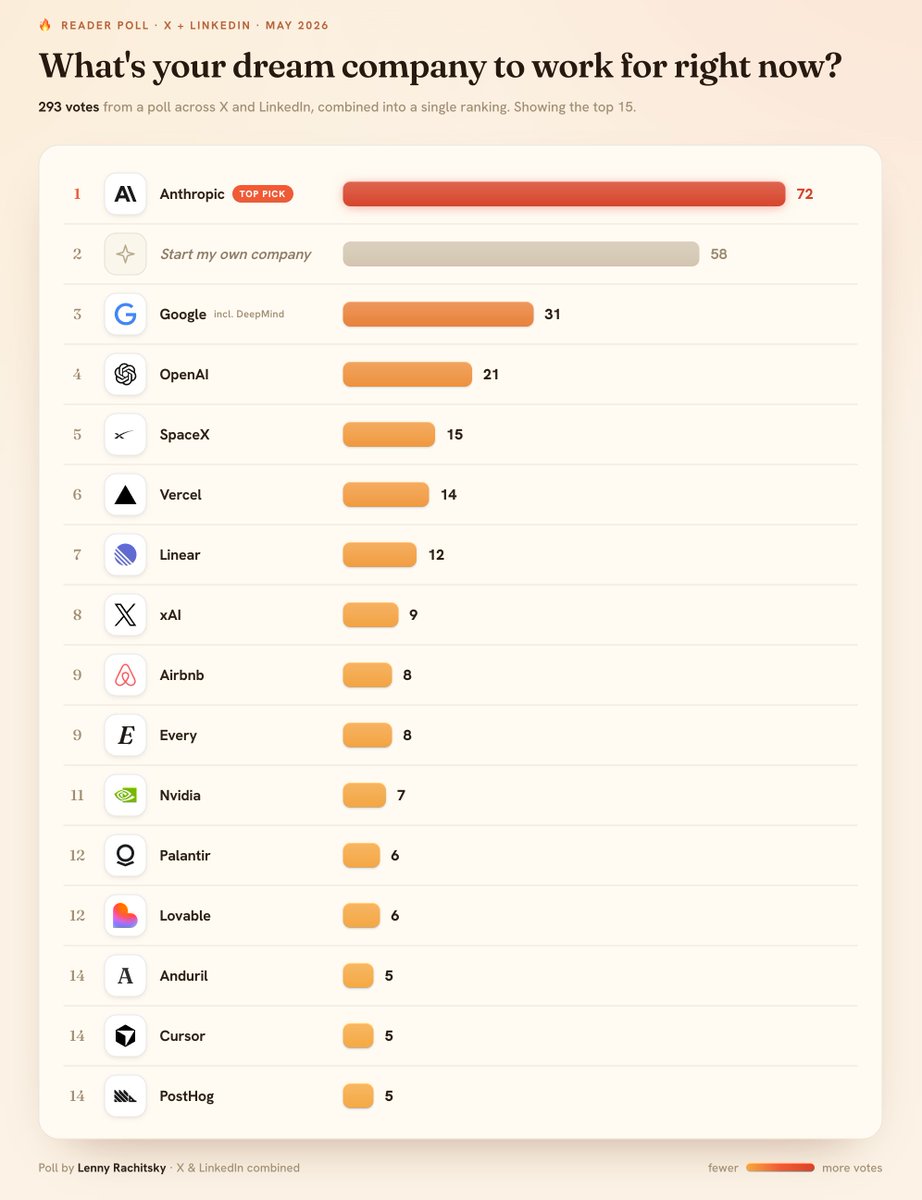
Fascinating results
Anthropic running away with it right now
So many people want to start their own company
Google over OpenAI
Vercel, Linear, Every, PostHog overperforming
A great list if you're trying to figure out where to go work 👇
3
275
May 28
WoW is where i learned that getting a group of people together and beating your heads against a hard problem is actually the most fun thing to do
also this trailer slaps
May 27

The last "modern" game I ever played was World of Warcraft, from 2004 to 2010, the end of Wrath of the Lich King.
I know there were MMORPGs before (and after), but when the original World of Warcraft launched in 2004, it felt closer to "perfection" than any game before or since.
Nothing has changed that feeling to this day. What changed was the game itself after the death of Arthas in Wrath of the Lich King.
The original WoW felt so vast, so open, and so alive - it’s hard to put into words. There was no hardcore min-maxing yet (at least not to the same degree as today), no speedruns, no parsing record chasing, no gear score requirements in the early days. If you were really pro, you connected with friends or guildies via Ventrilo.
There was no WeakAuras, no threat meters, no Questie guiding you.
You quickly learned that even the most expensive vendor gear was trash compared to quest rewards.
You had to walk from Elwynn Forest to the Redridge Mountains - and if you dared peek across the river into Duskwood, the spiders there would one-shot you (I’m sure we all did that).
The first time you equipped a green item! The first time you swapped it for a blue! And the envy of seeing someone with purple gear, omg!
Saving up for a mount and the catharsis when you could finally afford one!
The first time you entered the Deadmines, the foolish solo attempt on Hogger only to realize instantly it was a death sentence.
Stepping into Alterac Valley battlegrounds and being in awe of its size.
Wiping on Ragnaros again and again before finally killing him, and the sheer joy of celebrating together with your guild.
The excitement and awe of entering Naxxramas for the first time, struggling to down Patchwerk, the teamwork, the slow progress, seeing Sapphiron dead on the frozen ground and being moments away from Kel’Thuzad… so close!
It truly felt like a massive world - not just in size, but in stories. The announcement of The Burning Crusade and the Dark Portal appearing in the Blasted Lands; you couldn’t wait to walk through it.
Then the ultimate climax when Wrath of the Lich King launched, eventually facing the most badass character in gaming history: Arthas.
World of Warcraft was magic. Until it wasn’t. Just like Blizzard was once the greatest game studio of all - until they weren’t.
Warcraft used to be tough, glorious and epic... now it's pink Disney fluff.
Nothing has recaptured that feeling from 2004 to 2010. I wonder if anything ever will again.
I sometimes watch the trailer of the original WoW. It still hits close to the (gamer) heart…
2
44
May 28
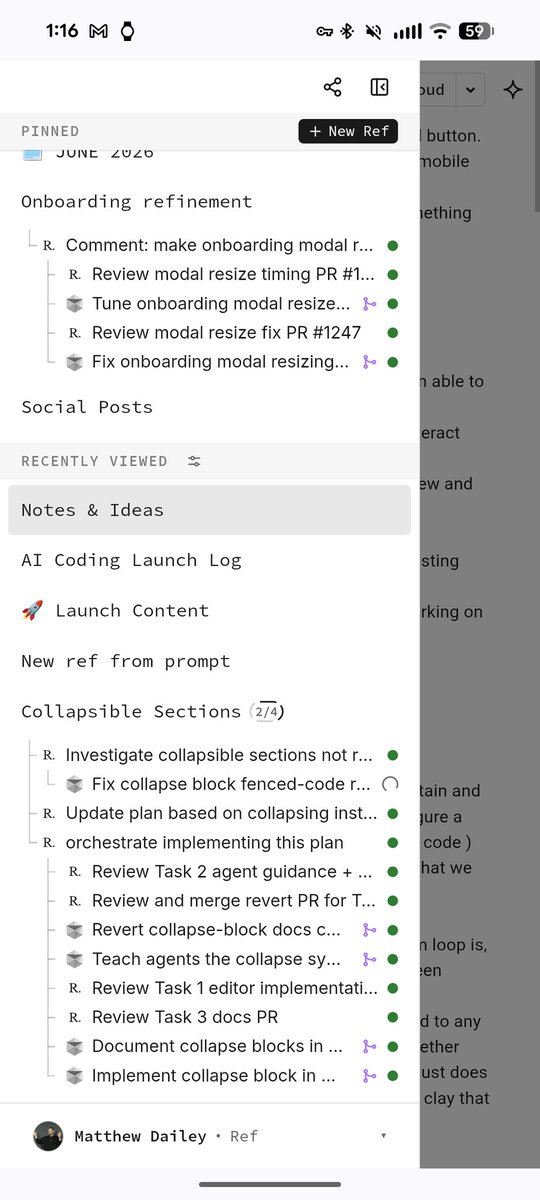
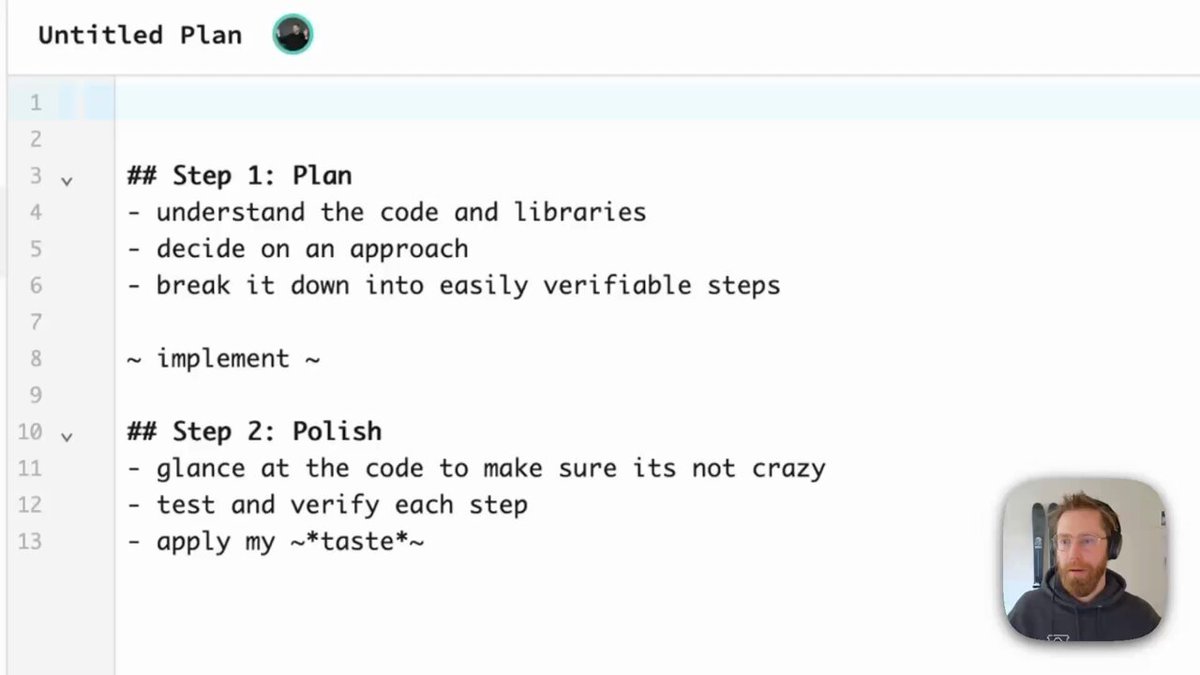
what we see with @ref_tools is that when people successfully adopt planning, they end up with a lot (80% !) of unimplemented plans.
this is a really good thing.
it means they're spending time at the decision layer, not the implementation layer
decision velocity >> code velocity
2
65
May 25
still long $FIG
May 24
.@danshipper: "I would buy SaaS stocks right now. SaaS stocks will be up majorly in the next couple of years."
4
482
May 23
if the agent is the product
then MCP is the distribution channel
51
May 23
This is extremely true and there are many benefits.
For example:
1. the important decisions are in the foreground
2. you can share plans between agent
3. you can share plans with human teammates
4. you can set them aside and come back to them later
The problem this solves is the context engineering in chats is isolated and ephemeral.
But this actually isn't a new problem.
Imaging being an eng manager in the distant past before the AI explosion.
You would never manage a team via DM.
But that's what you're doing when you only work with agents in chats.
The brainfry engineers complain about now is exactly the same brainfry a first-time EM faced pre-AI.
As a pre-AI EM, you would ask people to create a doc describing the project. It would be a central location to understand status and key decisions. When people work on similar things, you would share relevant docs with them. When the whole team did this, your team would be aligned and you would understand what everyone was doing and where you, the manager, needed to focus.
The solution is building systems to manage the mental burden of tracking more work than you are used to.
Please use plans. It'll make you and your team and your agents happier.
May 23

5/ Spend most of your time on plan docs, not watching the agent. I usually create plans in a short-lived planning session, append one or more tasks, then kill the session. Good plan docs are self-contained, specify interface-level details, and include an explicit end-to-end verification strategy. It's worth it to keep iterating on plans until they are extremely good.
3
143