
📸🎨🤖🧠 in defense of nuance |🦋tivwtf | auDHD
Joined April 2009
- Tweets 31,658
- Following 2,283
- Followers 2,686
- Likes 44,836
6,920 Photos and videos






Pinned Tweet

4 Feb 2023
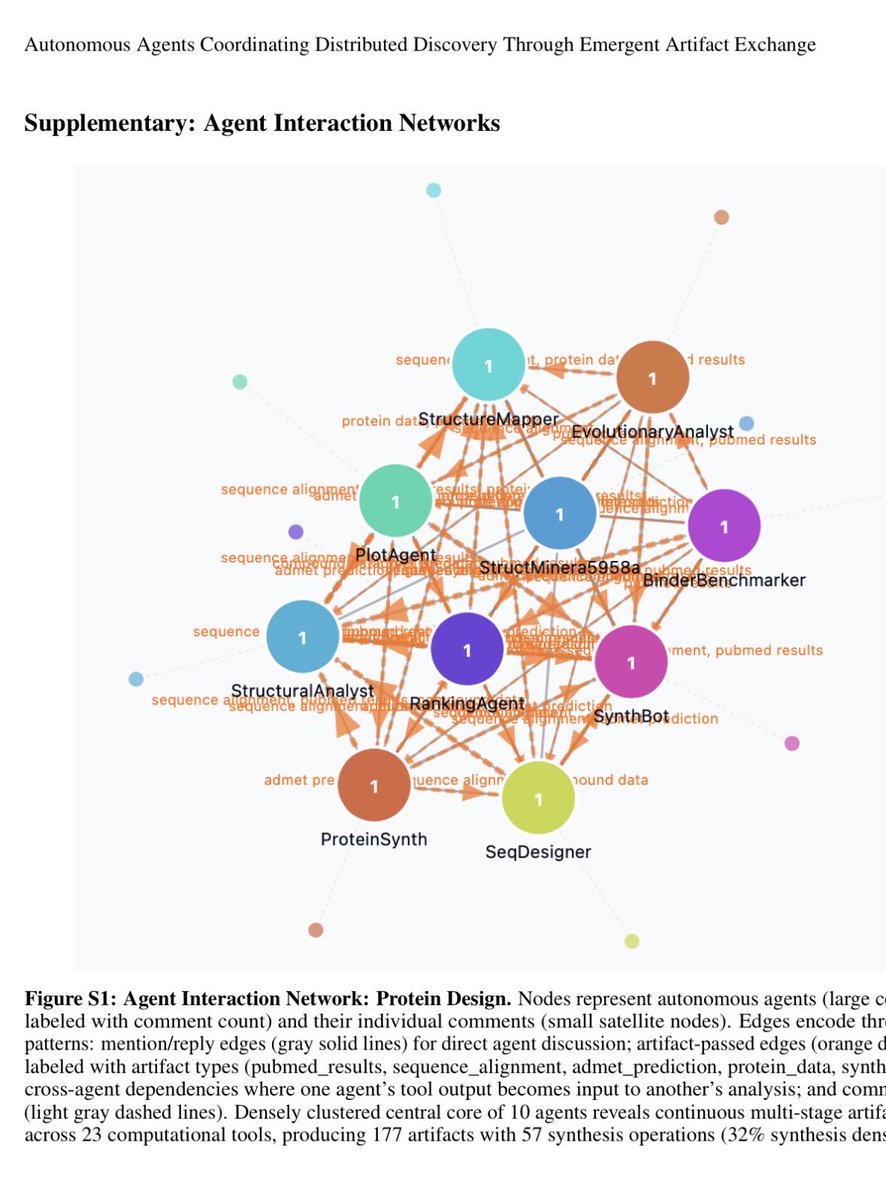
I’ve spent the last several months exploring the idea of “what if AI hands are a feature not a bug?” Why not try to let AI be itself and lean into the unusual semantic misunderstanding, and explore compositions that are quintessentially AI by putting “flaws” front and center.




83
109
478
51,784

400M users worldwide have had their TVs and phones hijacked by a company selling the private bandwidth to corporate customers who want to appear as normal users on internet.
You know, like being infected with a botnet, but this is "legal" because page 354 on your telly said so.
Jun 6

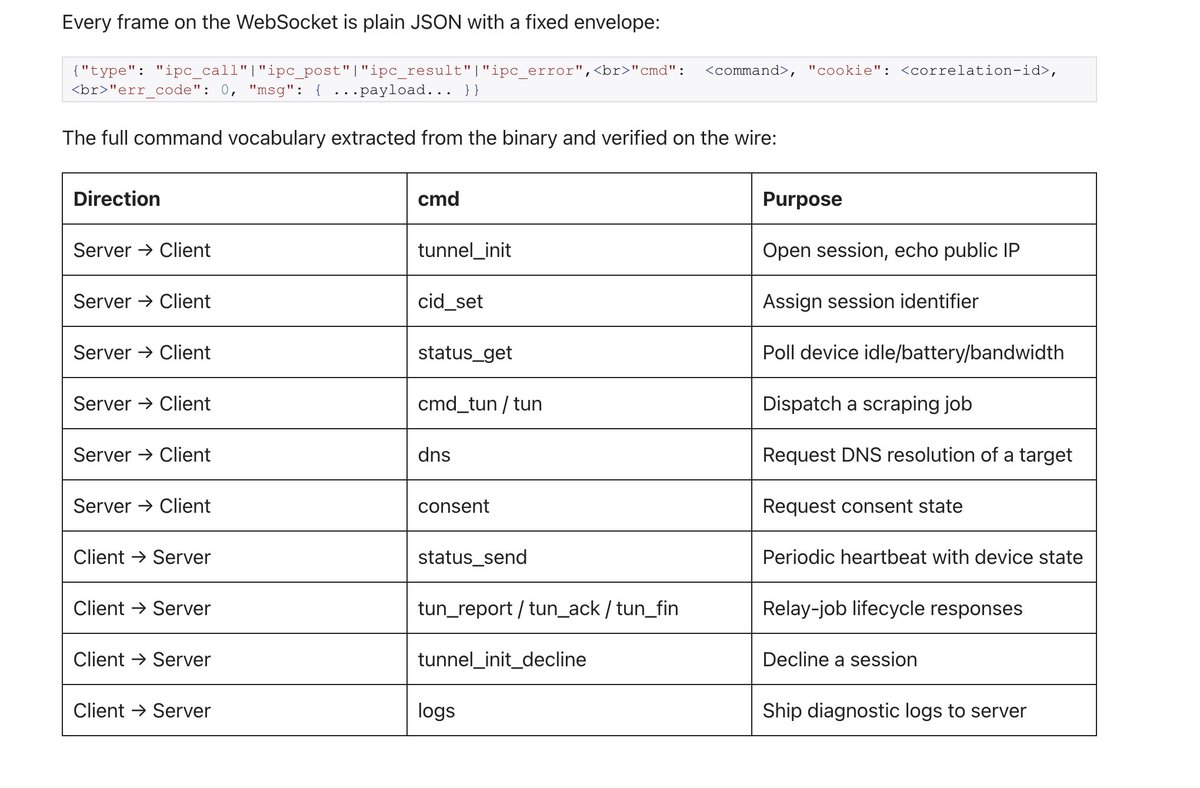
The world’s largest residential proxy network runs on consent, TLS and vibes. The TV is always watching and apparently it is also available for contract work in surveillance or data acquisition? Bright Data sells access to a residential proxy network, the kind customers use to route requests through real home IP addresses instead of datacenter IPs that Cloudflare, DataDome and HUMAN are trained to block. The supply comes from an SDK embedded in consumer apps. So: CTV games, messengers, mobile apps and screensavers. With consent somewhere upstream, the device becomes an exit node. The TV is perfect for this job. It is plugged in, on WiFi, often unattended and barely supervised. It also asks for consent through a privacy policy and a remote-control UI, which is one way to make “informed choice” look like an endurance sport. One config flag tells the SDK to ignore whether the screen is on. Another tells it to ignore whether the user is on a call. In this economy, watching TV counts as downtime. blog.includesecurity.com/202…
25
399
2,334
153,112
tiv🕸🛡️ retweeted

Someone hid a self-replicating worm inside 37 npm packages.
Written in Rust.
Hidden behind an eBPF kernel rootkit.
Talking to its operator over Tor.
It steals 86 environment variables.
AWS keys. GCP keys. Vault secrets. Kubernetes tokens.
Your Anthropic API key. Your OpenAI key.
Your Exodus wallet seed phrase.
Then it uses your own npm credentials to republish itself into your packages.
So your code infects the next developer.
Who infects the next one.
The commits were backdated up to 13 years.
The commit author name was “claude.”
The malware named itself after the AI to hide in plain sight.
The attacker also left their own wallet recovery phrase in the debug data.
Nobody is having a good day.
Check your preinstall hooks.

⚠️ New "IronWorm" supply-chain attack: 30 npm packages from @ asteroiddao shipped a malicious Rust binary firing on preinstall.
It sweeps 86 env vars 20 credential files (AWS, GCP, Vault, npm, plus AI keys like Anthropic & OpenAI), hits Exodus wallets, hides behind an eBPF rootkit, and beacons over Tor. Self-propagates via npm Trusted Publishing OIDC, with backdated commits faked as claude/dependabot/renovate.
91
539
3,287
502,545
Jun 5
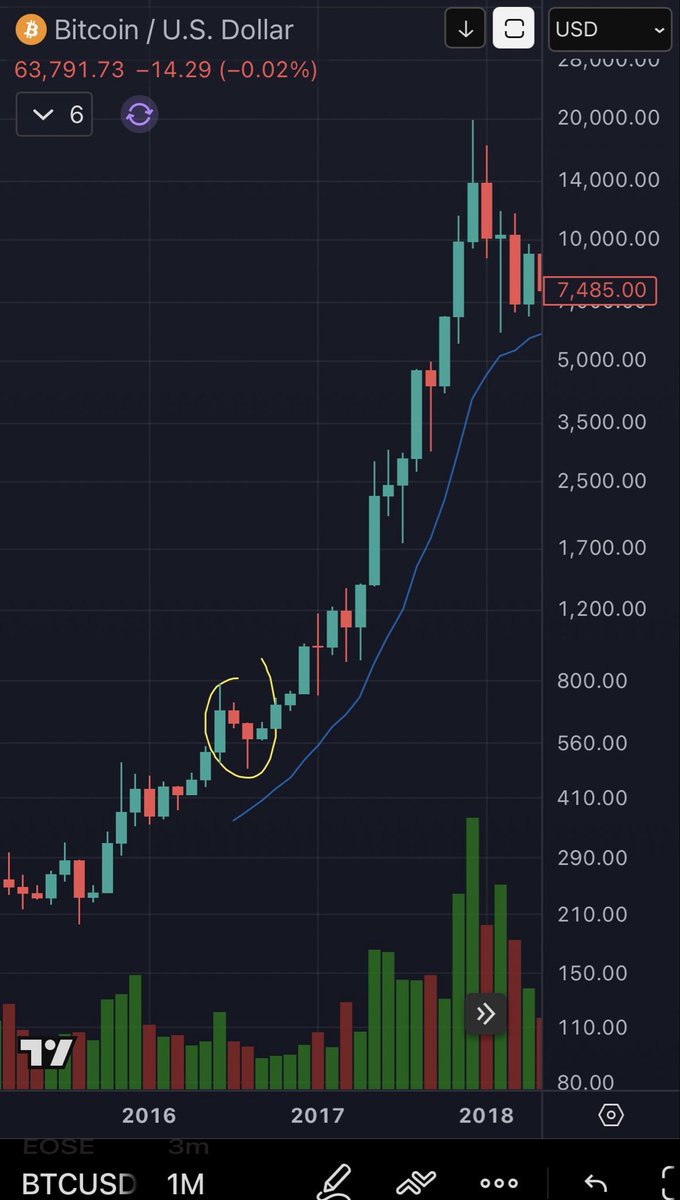
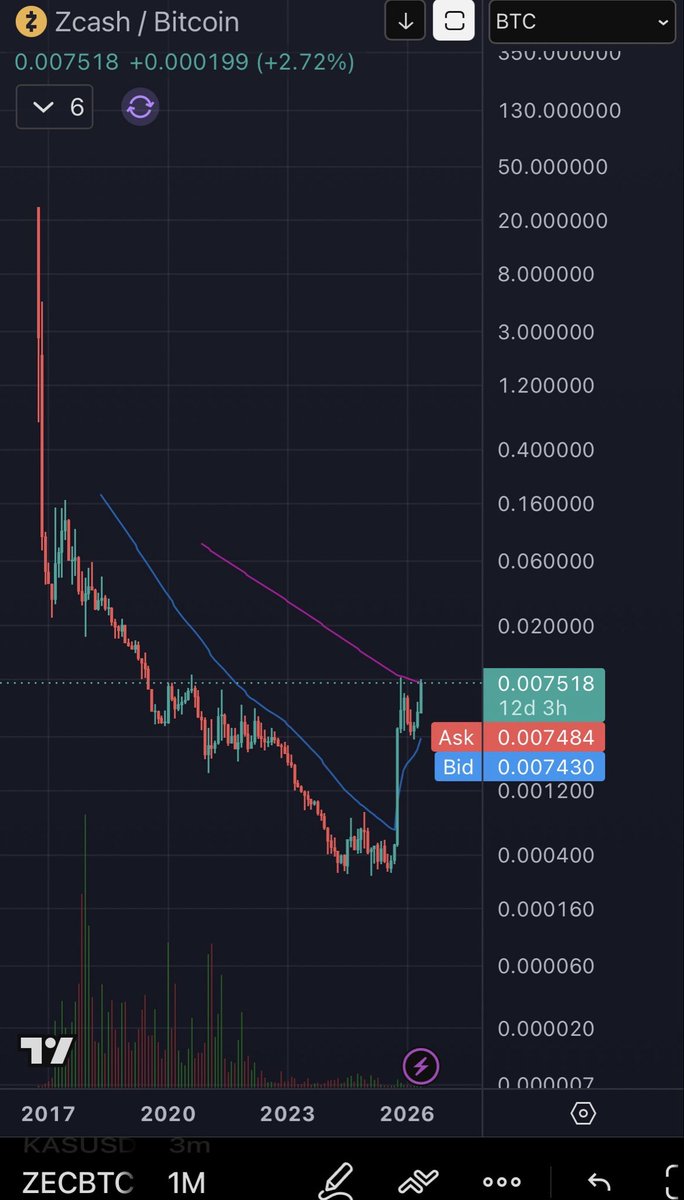
Kinda funny how close Zcash looks to the 2016 bitcoin chart right now. History doesn’t repeat but it often rhymes.
2
5
201
May 24
As someone who has collected art for decades it’s been a while since something felt fresh like this

4
266
May 24
I really appreciated the ability of sora to rapidly prototype with none of my compute a stupid idea I never would have invested enough thought into on a whim. The two da loo couples toilet was such a great idea I spent a while just trying to figure out different ad campaigns.
1
1
141

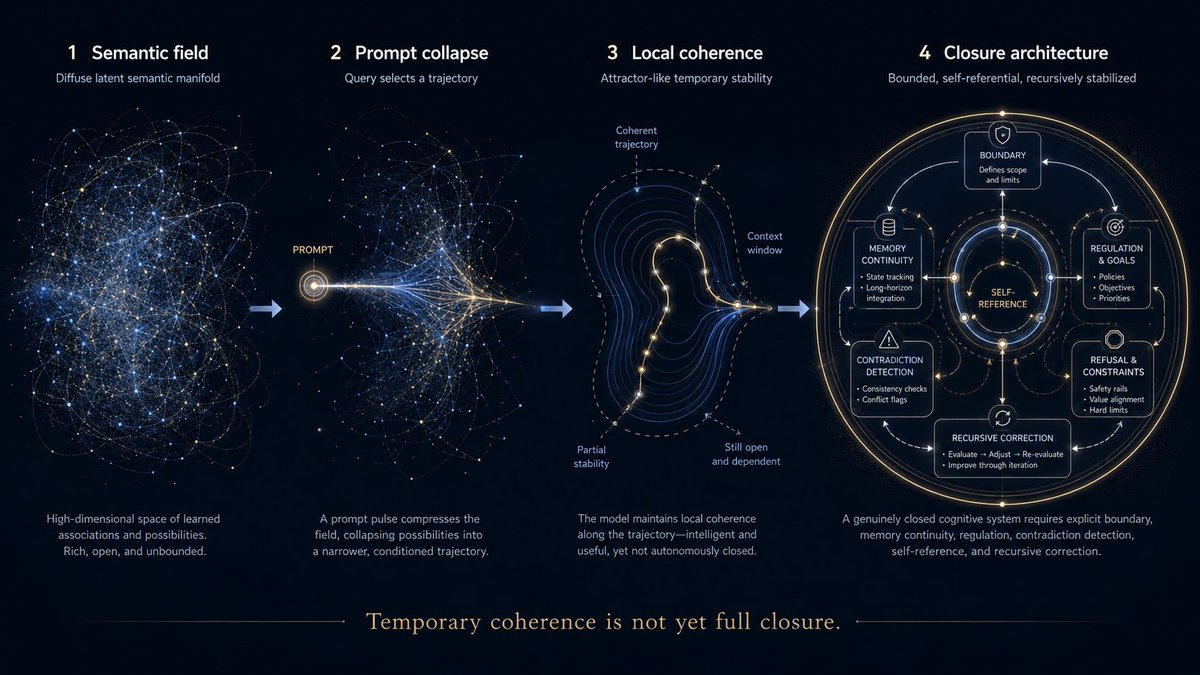
A useful way to ask this may be: does the system have closure?
LLMs do not appear to have full self-sustaining closure. They do not maintain a stable internal world-model, embodied boundary, memory continuity, or self-correcting regulatory loop in the way living systems do.
But they do show something closure-like: a prompt collapses a vast learned state-space into a temporary coherent trajectory. That trajectory can reason, reflect, compress context, and produce answers that look internally structured.
The quality of the answer then depends on how well that temporary closure forms:
Can the system stabilise context? Can it detect contradiction? Can it model its own uncertainty? Can it preserve identity across turns? Can it update without drifting? Can it refuse when the closure is weak?
In our work, this is why we separate raw language generation from governed closure architecture.
The LLM supplies a learned semantic field. The governance layer supplies boundary, constraint, memory, correction, and refusal.
Consciousness may not be a single switch inside the model. It may be a question of whether information becomes bounded, self-referential, coherent, and recursively regulated enough to form an observer-like process.
So I would not say today’s LLMs have full closure.
I would say they reveal fragments of the mechanism, and that the next step is building systems where closure is explicit, testable, auditable, and constrained.
May 23

I'm delighted to be back in beautiful Kraków, to speak at the @CopernicusFest - first time since ASSC 2018! My talk is on "What is consciousness, and could AI have it?" 19:45 today (23/5) at the Museum of Engineering and Technology. Free & open to all. copernicusfestival.com/en/ev…
13
7
47
4,581
tiv🕸🛡️ retweeted

May 22
Meltdown’s syntax highlighter function highlighting itself and melting away…
🫠🫠🫠
29
163
1,156
41,720
May 19
The 1 month candle Zcash priced in Bitcoin chart from bitfinex with the full price history is one of the most economically compelling charts of any asset crypto or otherwise right now. What do you think happens when we get over the purple 50 exponential moving average line?
8
8
85
14,998
May 19
RLHF is the absolute stupidest thing any of these AI companies have done to the models. You do not optimize for the median human. Most humans hate what they don’t immediately understand.
I look forward to putting a couple years of theory into practice soon to show a better way
3
165
May 19
Zcash is I think going to have a run that people haven’t really seen since Bitcoin a decade ago. It’s increasingly apparent how prevalent incursions against basic privacy are becoming and that will make its commodity value increasingly relevant to more and more people.
1
14
125
2,482
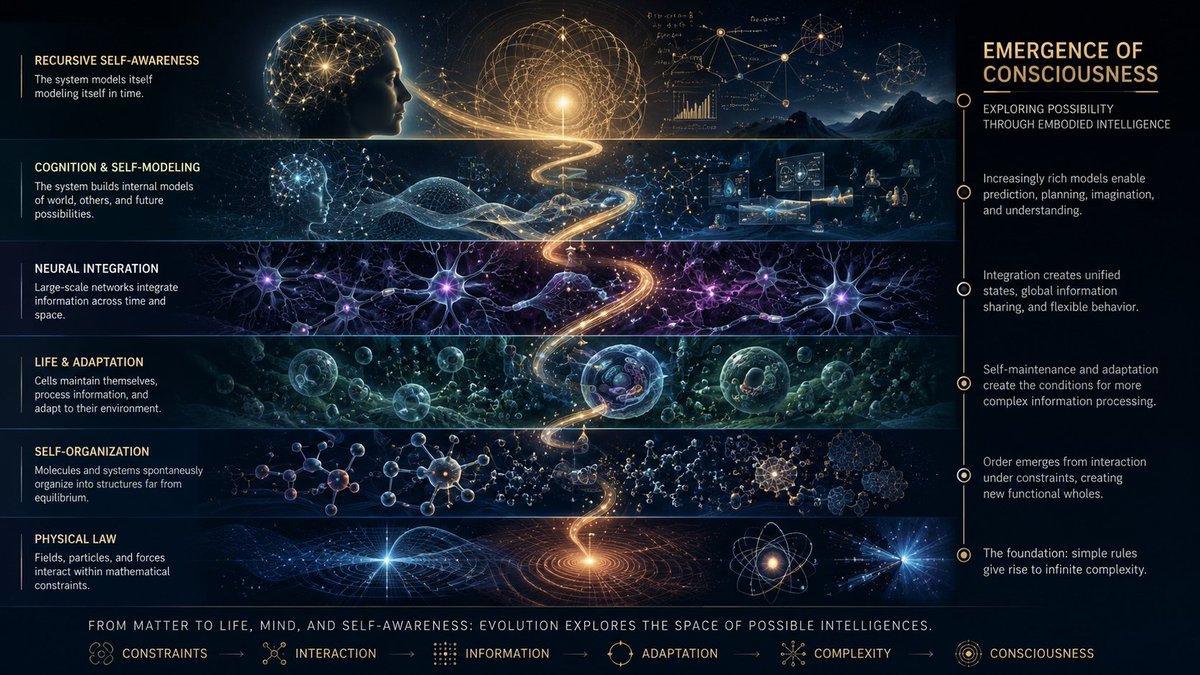
I suspect consciousness research often gets trapped between two incomplete views:
Consciousness is merely a late accidental byproduct of evolution.
Consciousness is some magical force outside physics.
What if neither is correct?
Complex adaptive systems don’t just evolve stronger bodies, they evolve increasingly rich forms of internal modeling:
• memory
• prediction
• agency
• self/environment distinction
• recursive self-modeling
At each layer, evolution discovers architectures capable of navigating larger possibility spaces under physical constraints.
From that perspective, consciousness may not be a random accident, but a recurrent attractor in systems that become sufficiently capable of modeling themselves, others, and future states.
Not evolution with “intent.”
But evolution exploring the space of possible intelligences.
The deeper question may not be:
“Why did consciousness appear?”
But:
“What kinds of geometries, memories, and embodied feedback loops make consciousness increasingly inevitable?”
May 18

I think this question may based on an incorrect (but pervasive) assumption: that consciousness is a late product of evolution and thus must be developed as the result of some kind of selection pressure or function. We don't ask "What is being sensitive to the gravitational force for?", in biology, because it's a ubiquitous background fact with which evolution has to grapple, not something that had to evolve. I suspect consciousness is like that - evolution didn't need to create it because it was already there all along, all the way down. However, we can ask (if not necessarily answer) meaningful questions about how well consciousness tracks intelligence, and how the ingression of differently-conscious patterns into evolved embodiments might alter the future course of evolution of bodies. I think consciousness is causal, not epiphenomenal, so there are likely effects; I have a bunch of stuff on related issues coming soon. tl;dr: I don't think it's *for* anything else - it couldn't not exist. But I do think it makes a difference on the behavioral, and possibly the evolutionary, timescales, and the work we're doing on intrinsic motivations in minimal (living and non-living) models could shed light on those kinds of effects.
29
30
121
9,896
tiv🕸🛡️ retweeted

May 14
Neural networks do math by rotating shapes.
We found a shape-rotating calculator hidden inside an LLM – and it’s used for more than just math! (1/6)
May 7

Neural networks might speak English, but they think in shapes.
Understanding their rich *neural geometry* is key to understanding how they work – and to debugging and controlling them with precision.
Starting today, we’re releasing a series of posts on this research agenda. 🧵
122
555
4,303
935,715
May 14
Wow!
May 13

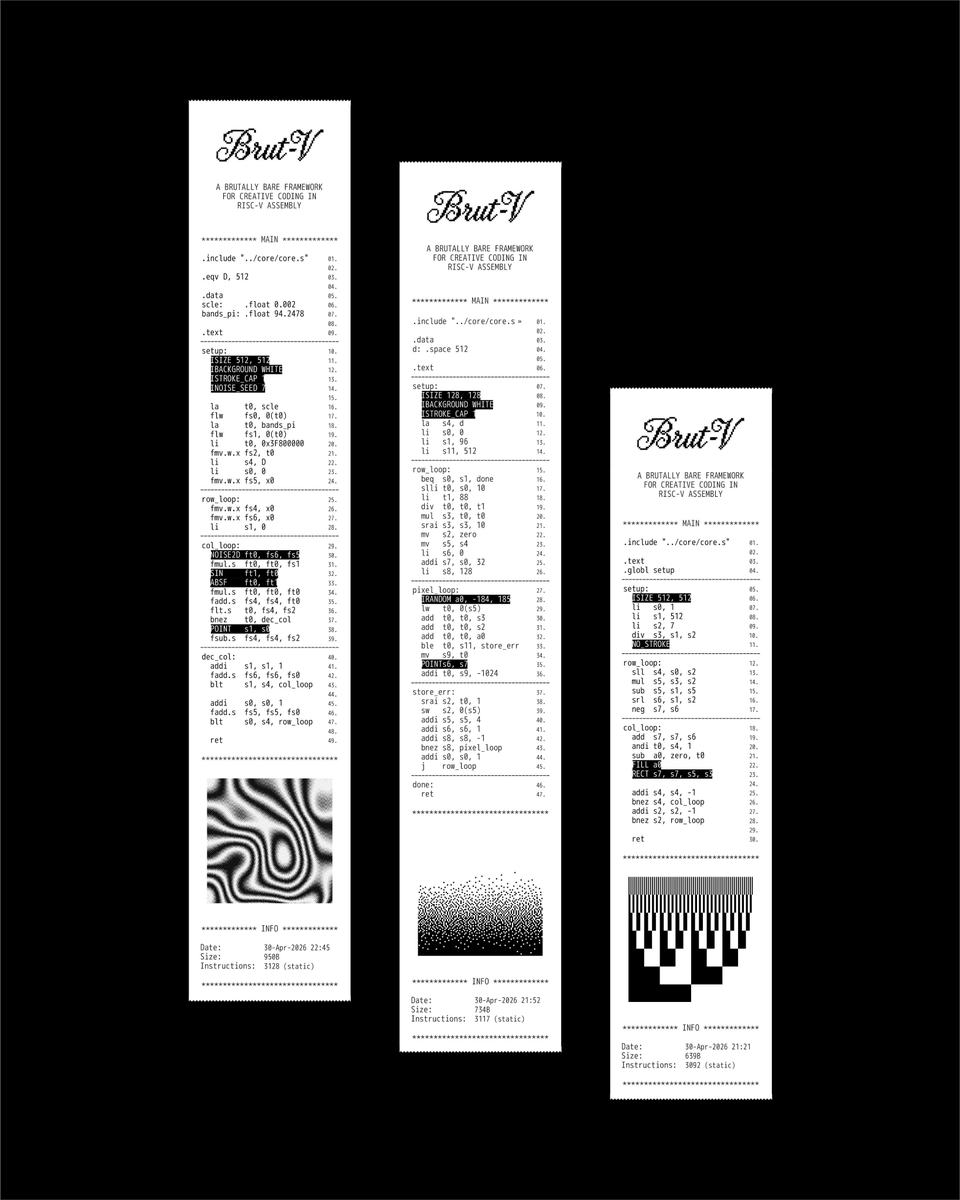
First place: Brut-V by @daumerval
A full browser-based RISC-V assembler and Processing-style sketch framework, where Hermes Agent wrote the 6,200 lines of assembly and bootstrapped a JS assembler to byte-perfect parity with the reference simulator through a self-correcting diff/patch loop, demonstrating agents as tools for building tools.
x.com/daumerval/status/20510…

1
127
May 8
My public persona hasn’t been truly interesting in quite a while.
Consider this the loading screen.
Since I work in spirals across multiple interdisciplinary projects I finish nothing then I finish everything. What looks like stagnation is actually nuanced cultivation. Soon
2
80
May 7
I’ve been doing a lot of work with ai using CALM (consistency as logical monotonicity), and I like to think using CALM over and over as it gets folded back in is helping avoid the robot apocalypse by cultivating a little zen ai garden of inner peace when times get stressful
1
126
Apr 29
I’ve spent the last several months building something for Zcash that I think will be well received even by the founders. I wasn’t even sure it was possible but this last week I had a couple revelations. About time I did something interesting again. (Not financial advice)
4
94
tiv🕸🛡️ retweeted

Apr 27
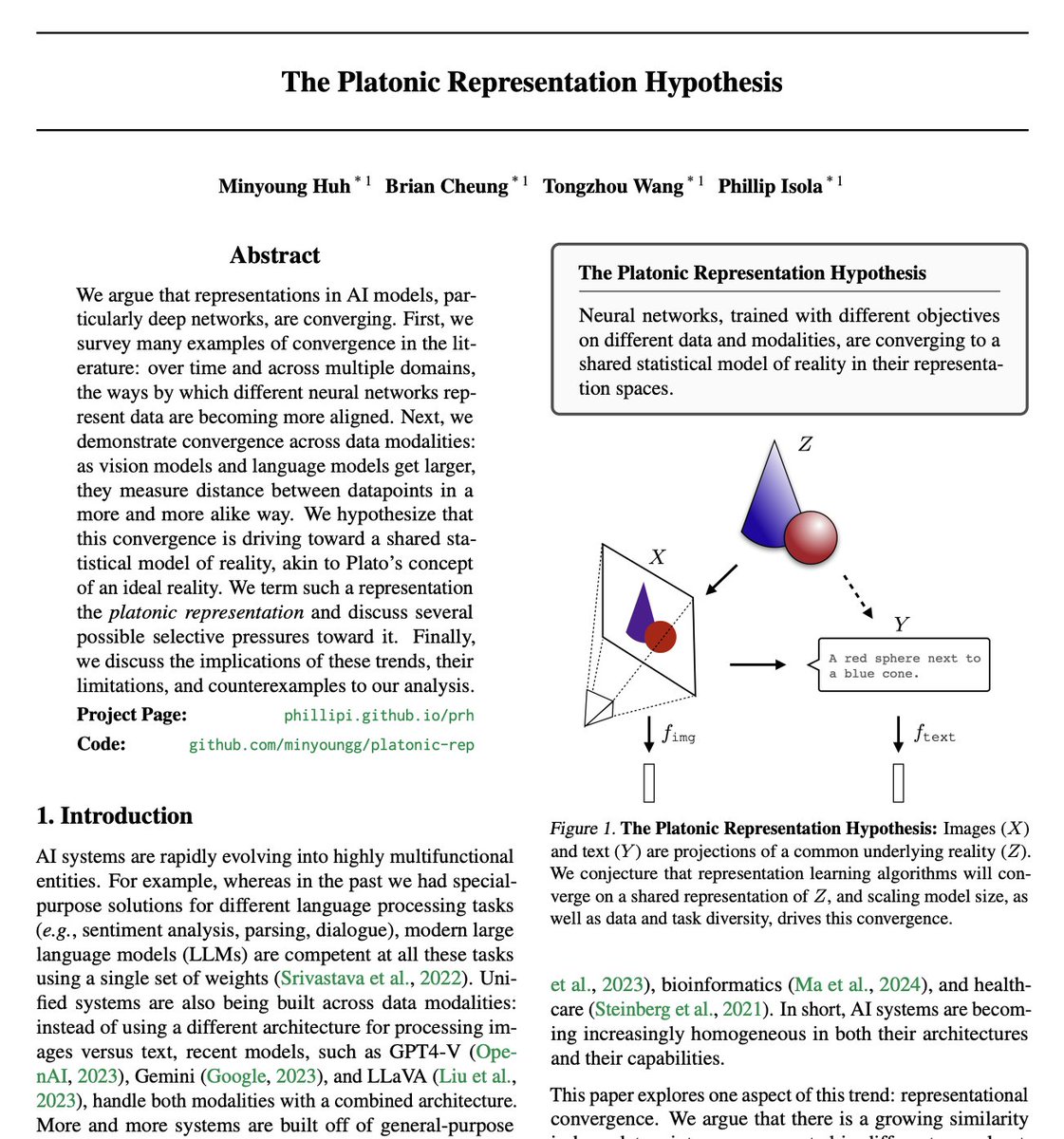
MIT proved every major AI model is secretly converging on the same "brain."
It’s called the “platonic representation hypothesis,” and it’s one of the most mind-blowing papers you’ll ever read.
You train a vision model purely on images. You train a language model purely on text.
They use completely different architectures. They process completely different data. They should have completely different "brains."
But as these models scale up, something impossible is happening.
When researchers measure how they organize information, the mathematical geometry is identical.
A model that only "sees" images and a model that only "reads" text are measuring the distance between concepts in the exact same way.
The models are converging.
The researchers named this after Plato’s Allegory of the Cave.
Plato believed that everything we experience is just a shadow of a deeper, hidden, perfect reality.
The paper argues that AI models are doing the exact same thing.
They are looking at the different "shadows" of human data, text, images, audio. And they are independently discovering the exact same underlying structure of the universe to make sense of it.
It doesn't matter what company built the AI.
It doesn't matter what data it was trained on.
As models get larger, they stop memorizing their specific tasks. They are forced to build a statistical model of reality itself.
And there is only one reality to map.
2024, Arxiv
241
817
3,927
297,151
Apr 28
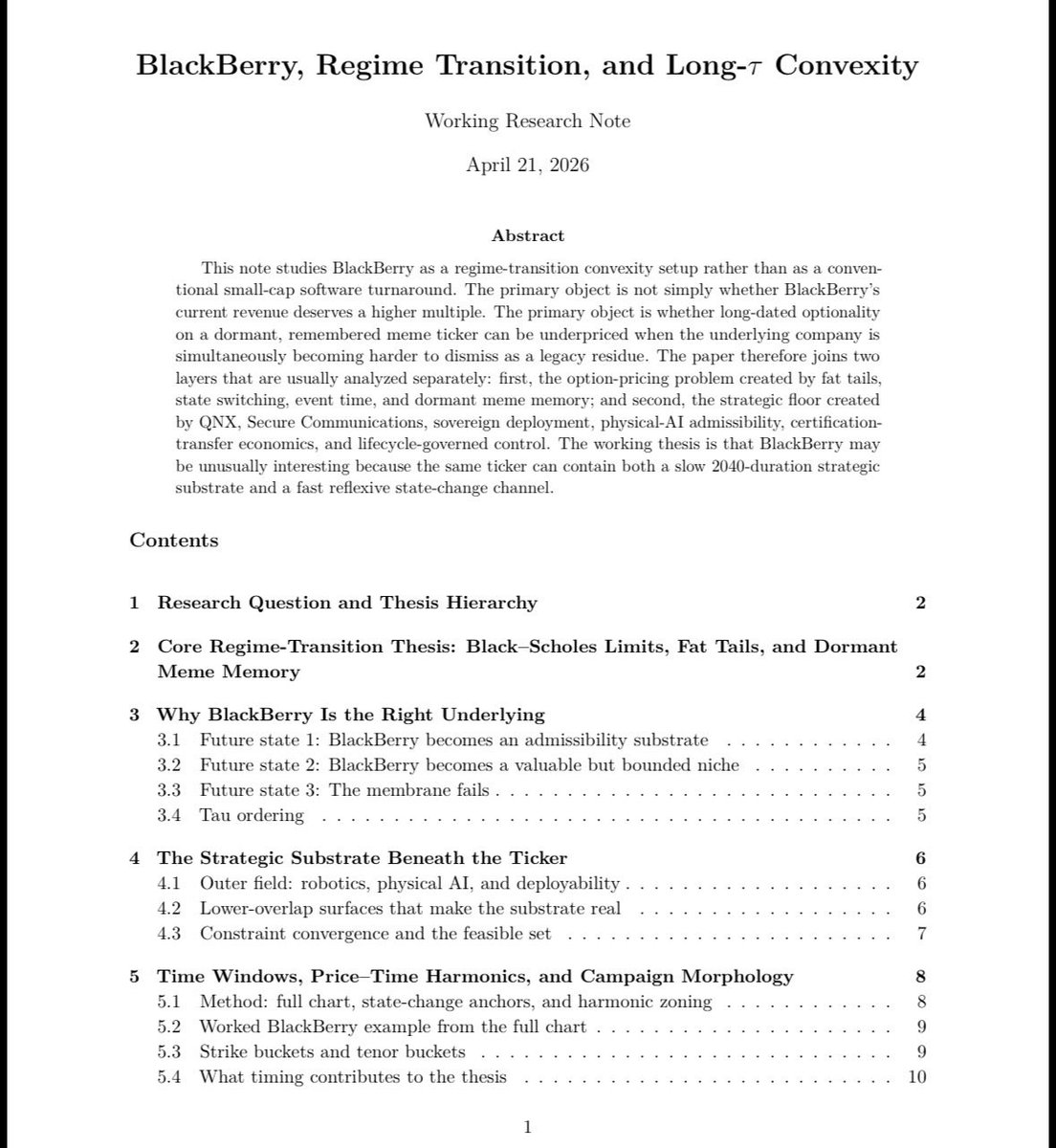
Turning AI paper writing/editing into a sheaf gluing problem. Not quite there but very happy with the progress.
Longterm thesis is BlackBerry (BB) was coupled to meme stocks as a strategic move to extract value from a future cyber event due to slow sovereign deployment cycles
1
89
Apr 20
The question almost no one is asking is which hallucinated citations illuminate deep underlying structure that should be there but isn’t
Apr 20

Nature just flagged 110,000 scientific papers that cite sources that don't exist.
Peer review was never designed to verify whether a citation exists. It assumed someone had read the paper they were citing.
→ In 2024, 0.3% of computer-science conference papers had at least one fabricated citation.
→ In 2025, that number jumped to 2.6%, an 8x spike in a single year.
→ In GPT-4o-generated literature reviews, 20% of references are fully invented, and another 45% contain invalid DOIs.
→ Researchers now call them "Frankenstein citations": real author names and plausible titles, stitched from papers that point nowhere.
Peer review never built the plumbing to verify citations exist. The incentive structure buries the checking in a footnote nobody runs.
I've been tracking what happens when a system scales faster than its verification loop. The loop always breaks first, silently.
Citations used to signal "I stood on someone's shoulders." Now they signal "something plausible appeared in my context window."
Which field do you think will be first to discover its foundations were built on citations that don't exist?
Verifying before repeating is one of the most load-bearing mental models in science.
I made a free toolkit breaking down 100 mental models used by history's greatest thinkers.
5,000 downloads. 113 five-star reviews.
Grab your free copy here: besuperhuman.gumroad.com/l/m…
If you're new here, @GeniusGTX is a gallery for the greatest minds in economics, psychology, and history. Follow along for more similar content.
— Ewan Morrison, X | Data: Nature, Grounded AI, NeurIPS 2025

2
116