
Joined July 2009
- Tweets 606,293
- Following 479
- Followers 1,141
- Likes 595,642
342 Photos and videos











Rüdiger Nitsch 🐧 retweeted

May 22
🚨 Local privilege escalation via Copy Fail? Not on our watch.
AlmaLinux 8, 9, and 10 patches are live, ahead of upstream.
Go update your systems! almalinux.org/blog/2026-05-0…
9
39
1,998
Rüdiger Nitsch 🐧 retweeted

May 22
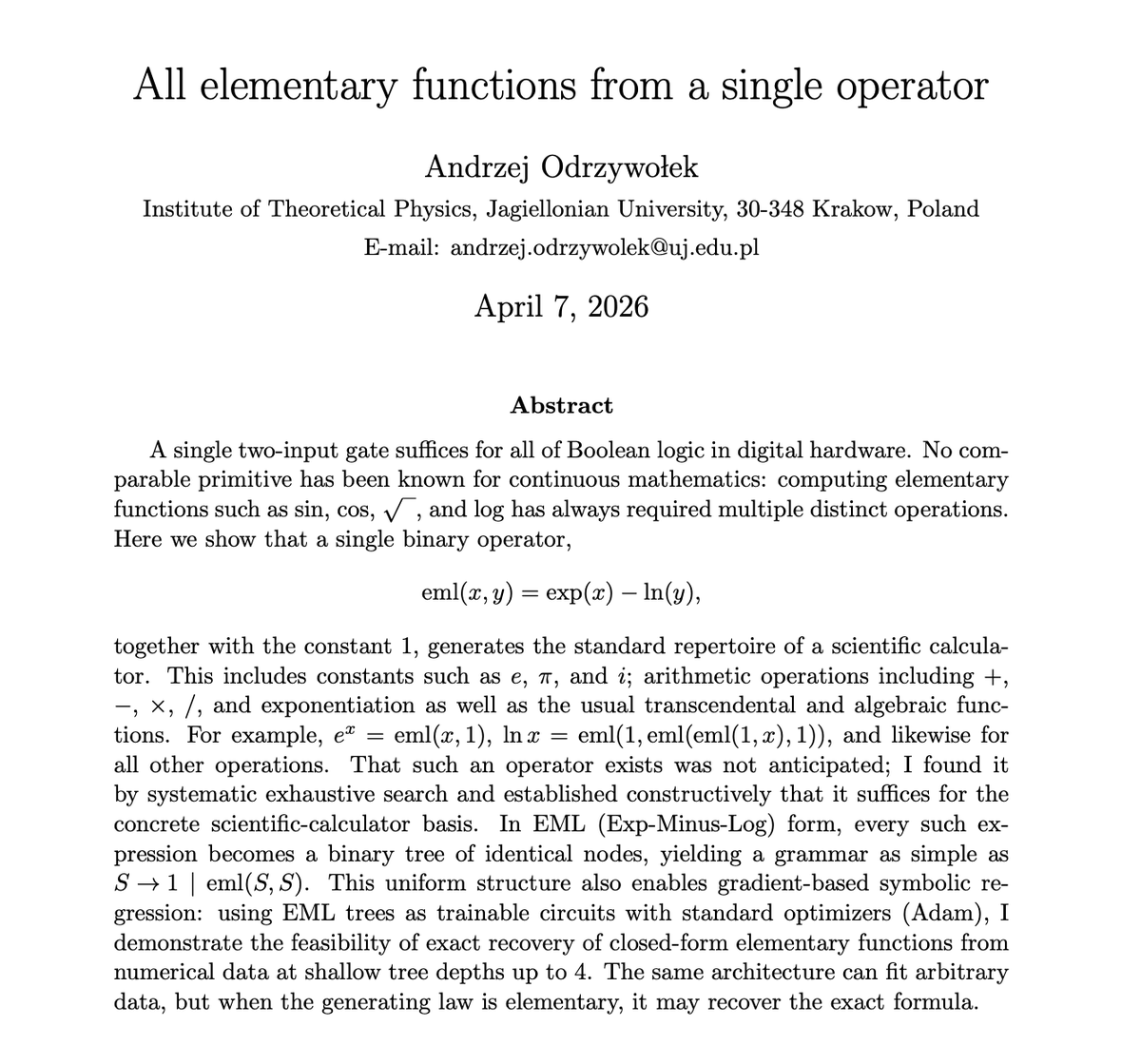
Researchers proved that every single elementary function, sin, exp, log, sqrt, comes from one single binary operator.
It is like finding the “God Particle" for calculus.
In computer science, every complex program breaks down to a single logical operator: the NAND gate. It is the fundamental building block of all digital reality.
But for continuous math, physics, engineering, machine learning, we thought we needed a massive toolbox.
Addition. Subtraction. Trigonometry. Logarithms.
Every scientific calculator and neural network has to juggle all of them.
Until today.
But this paper proved that every single mathematical function can be generated by a single, bizarre binary operator.
eml(x,y) = exp(x) - ln(y).
Combine that with the number 1, and you can build everything.
Pi. The square root. Sine and Cosine. Arithmetic.
It is all just the exact same operator, repeating over and over again in a binary tree.
Nobody anticipated this existed. It was found by systematic exhaustive search.
But the implications for AI are massive.
Instead of an AI struggling to combine different mathematical rules to discover a new scientific law, it can just use a single, uniform architecture.
One trainable circuit. One repeatable node.
We thought the language of the universe was complex.
It turns out, it's just one equation repeating in the dark.
23
110
424
20,020
Rüdiger Nitsch 🐧 retweeted

May 22
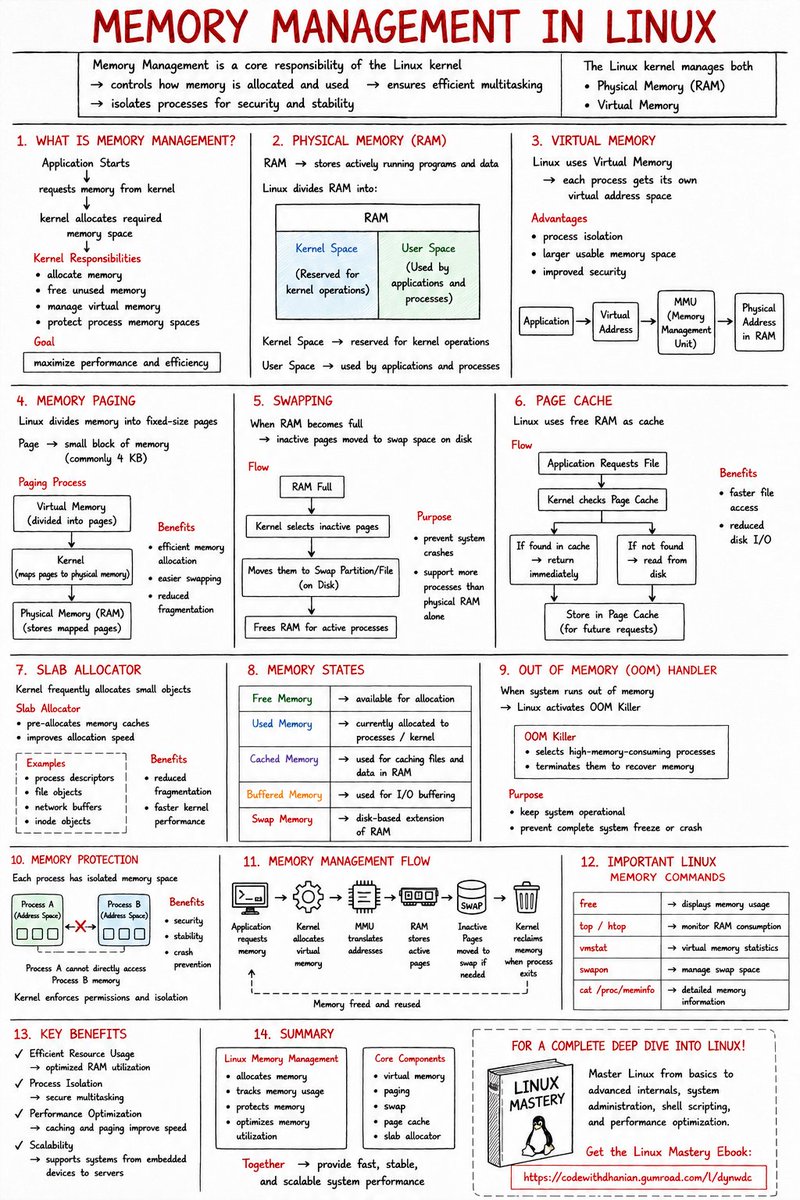
MEMORY MANAGEMENT IN LINUX
Memory Management is a core responsibility of the Linux kernel
→ controls how memory is allocated and used
→ ensures efficient multitasking
→ isolates processes for security and stability
The Linux kernel manages both
→ Physical Memory (RAM)
→ Virtual Memory
WHAT IS MEMORY MANAGEMENT?
Application Starts
→ requests memory from kernel
→ kernel allocates required memory space
Kernel Responsibilities
→ allocate memory
→ free unused memory
→ manage virtual memory
→ protect process memory spaces
Goal
→ maximize performance and efficiency
PHYSICAL MEMORY (RAM)
RAM
→ stores actively running programs and data
Linux divides RAM into
→ Kernel Space
→ User Space
Kernel Space
→ reserved for kernel operations
User Space
→ used by applications and processes
VIRTUAL MEMORY
Linux uses Virtual Memory
→ each process gets its own virtual address space
Advantages
→ process isolation
→ larger usable memory space
→ improved security
Flow
Application
→ Virtual Address
→ MMU (Memory Management Unit)
→ Physical Address in RAM
MEMORY PAGING
Linux divides memory into fixed-size pages
Page
→ small block of memory (commonly 4 KB)
Paging Process
Virtual Memory
→ divided into pages
Kernel
→ maps pages to physical memory
Benefits
→ efficient memory allocation
→ easier swapping
→ reduced fragmentation
SWAPPING
When RAM becomes full
→ inactive pages moved to swap space on disk
Flow
RAM Full
→ Kernel selects inactive pages
→ moves them to Swap Partition/File
→ frees RAM for active processes
Purpose
→ prevent system crashes
→ support more processes than physical RAM alone
PAGE CACHE
Linux uses free RAM as cache
Disk Data
→ stored temporarily in RAM
Benefits
→ faster file access
→ reduced disk I/O
Flow
Application Requests File
→ kernel checks page cache
→ if found → return immediately
→ otherwise read from disk
SLAB ALLOCATOR
Kernel frequently allocates small objects
Slab Allocator
→ pre-allocates memory caches
→ improves allocation speed
Examples
→ process descriptors
→ file objects
→ network buffers
Benefits
→ reduced fragmentation
→ faster kernel performance
MEMORY STATES
Free Memory
→ available for allocation
Used Memory
→ currently allocated
Cached Memory
→ temporary storage for faster access
Buffered Memory
→ used for I/O buffering
Swap Memory
→ disk-based extension of RAM
OUT OF MEMORY (OOM) HANDLER
When system runs out of memory
→ Linux activates OOM Killer
OOM Killer
→ selects high-memory-consuming processes
→ terminates them to recover memory
Purpose
→ keep system operational
MEMORY PROTECTION
Each process has isolated memory space
Process A
→ cannot directly access Process B memory
Kernel
→ enforces permissions and isolation
Benefits
→ security
→ stability
→ crash prevention
MEMORY MANAGEMENT FLOW
Application
→ requests memory
Kernel
→ allocates virtual memory
MMU
→ translates addresses
RAM
→ stores active pages
Inactive Pages
→ moved to swap if needed
Kernel
→ reclaims memory when process exits
IMPORTANT LINUX MEMORY COMMANDS
free
→ displays memory usage
top / htop
→ monitor RAM consumption
vmstat
→ virtual memory statistics
swapon
→ manage swap space
cat /proc/meminfo
→ detailed memory information
KEY BENEFITS
Efficient Resource Usage
→ optimized RAM utilization
Process Isolation
→ secure multitasking
Performance Optimization
→ caching and paging improve speed
Scalability
→ supports systems from embedded devices to servers
SUMMARY
Linux Memory Management
→ allocates
→ tracks
→ protects
→ optimizes system memory
Core Components
→ virtual memory
→ paging
→ swap
→ page cache
→ slab allocator
Together
→ provide fast, stable, and scalable system performance
→ Get the Linux Mastery Ebook:
codewithdhanian.gumroad.com/…
2
61
272
5,108
Rüdiger Nitsch 🐧 retweeted

May 21
AstroBin's Image of the Day: "Orion – C/2025 R3 (Pan-STARRS) Conjunction (2-panel mosaic)" by Julien De Winter and Sascha Ebeler - astrobin.com/u393e1/
#astrophotography

23
93
2,569
Rüdiger Nitsch 🐧 retweeted

May 21
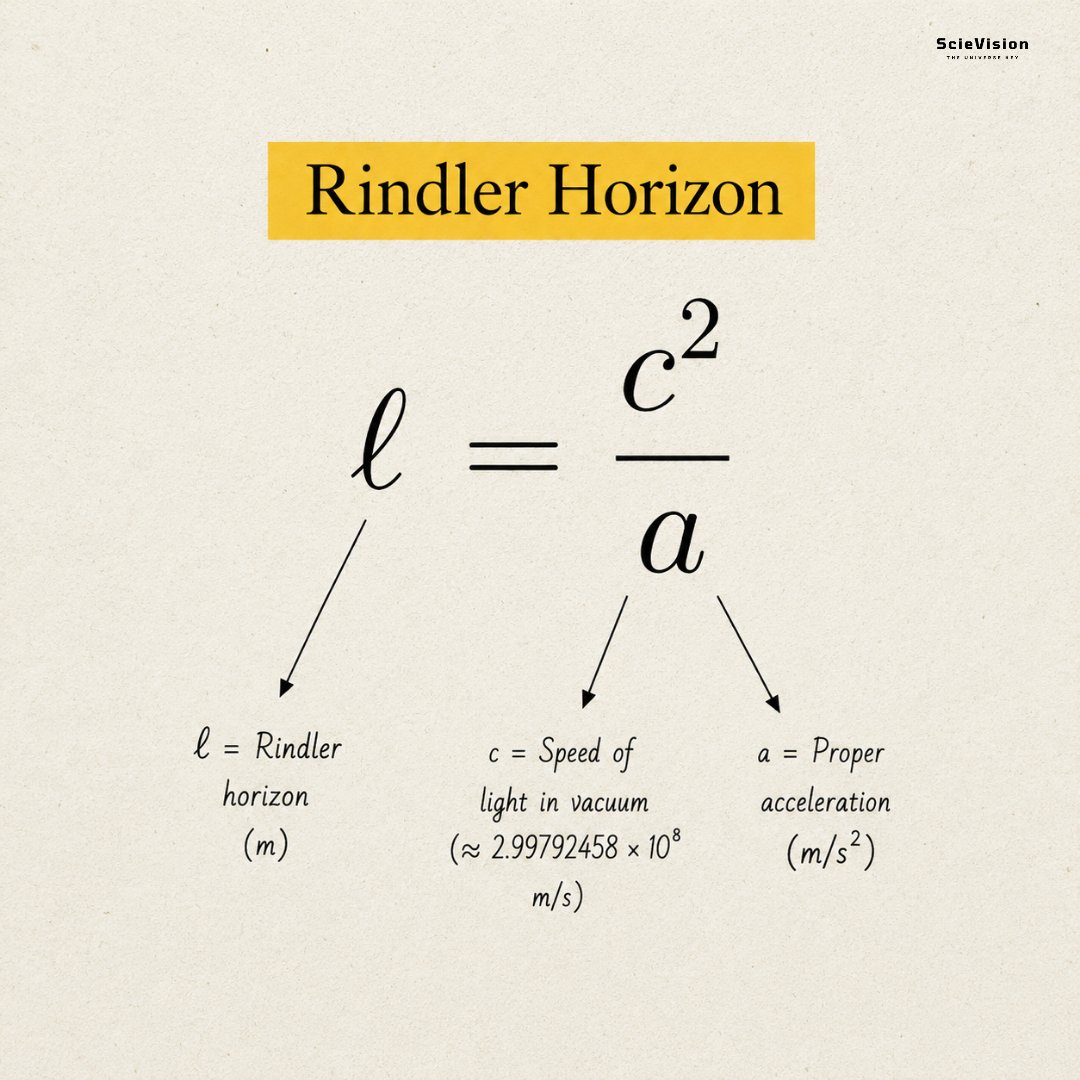
Rindler Horizon ✍️
It is a concept in relativity theory that is quite straightforward but also quite bizarre. When one is traveling in a spaceship constantly accelerating, there comes a point where any light or signal emitted from outside the boundary cannot reach him. This imaginary line is known as the Rindler Horizon. Any object emitting light towards you from within this imaginary boundary will be able to get their light to you somehow but not those beyond it. With greater acceleration, the Rindler Horizon comes nearer to you. It should be pointed out that this horizon is neither an actual barrier nor a black hole; it occurs just due to the continuous acceleration of the observer in an empty, flat space.
1
25
124
3,032
Rüdiger Nitsch 🐧 retweeted

May 22
Die besten Fakten als Buch 👉 shopillon.de/faktillon/
Ehrliche Nachrichten auf 👉 der-postillon.com

2
42
1,230
Rüdiger Nitsch 🐧 retweeted

May 21
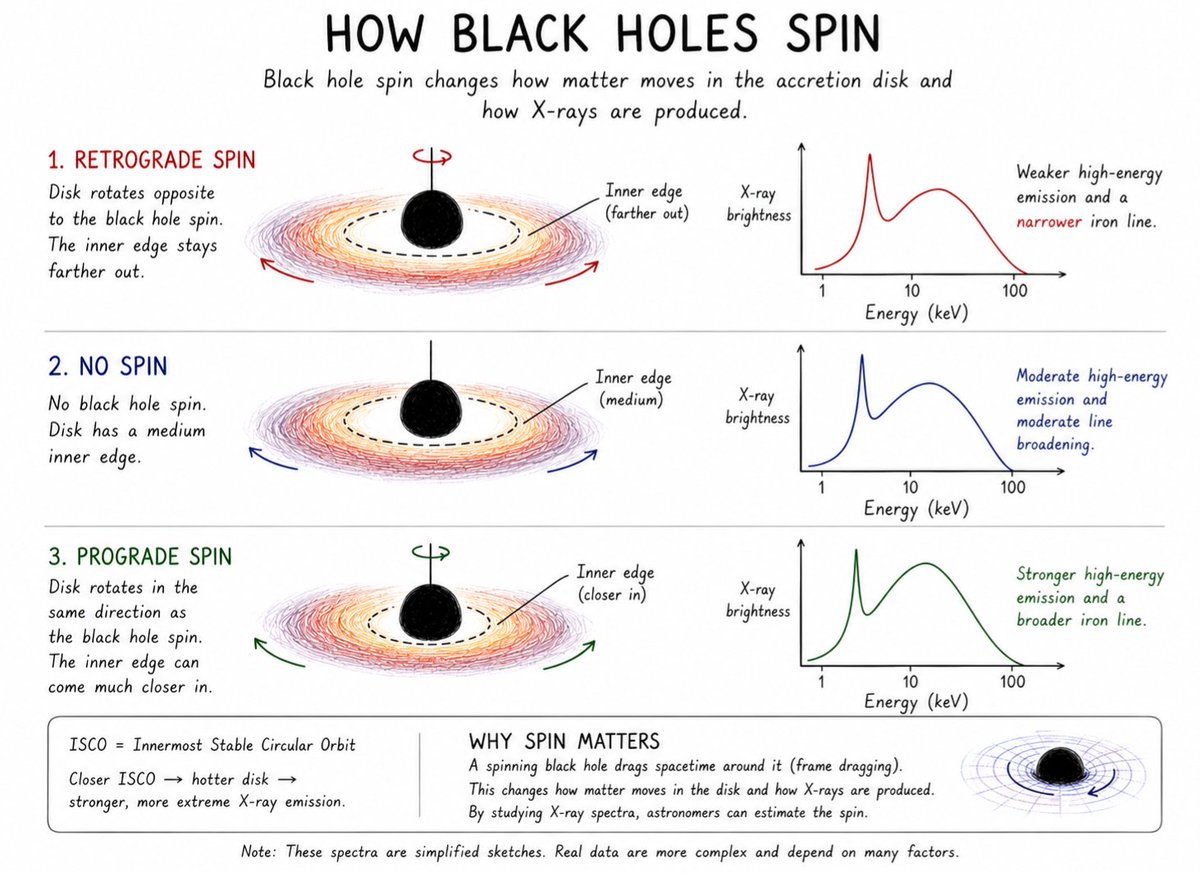
Can a black hole’s spin control the temperature of its cosmic inferno?
Behold three distinct realities in one image: a black hole spinning against its disk of superheated gas, one with zero spin, and one spinning in harmony with the disk. Each case pushes or pulls the disk’s inner edge, transforming how matter spirals inward and the X-rays we detect from Earth.
Prograde spin lets the disk plunge dangerously close, forging extreme heat and intense high-energy emission with a dramatically broadened iron line. Retrograde spin holds the disk farther out, cooling the frenzy.
6
46
194
6,526
Rüdiger Nitsch 🐧 retweeted

May 22
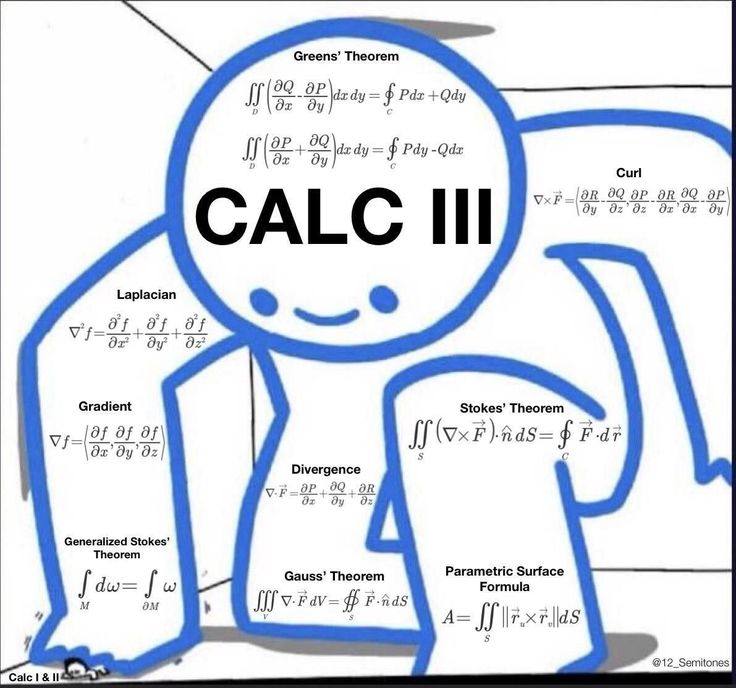
Calc III: Where calculus meets geometry and physics.
2
12
102
2,594
Rüdiger Nitsch 🐧 retweeted
May 22
AstroBin's Image of the Day: "Alone in the desert of Namibia" by Jakob Sahner - astrobin.com/drb3y0/
#astrophotography

28
144
2,541

May 23
RT @ralphruthe: 🔥
!B
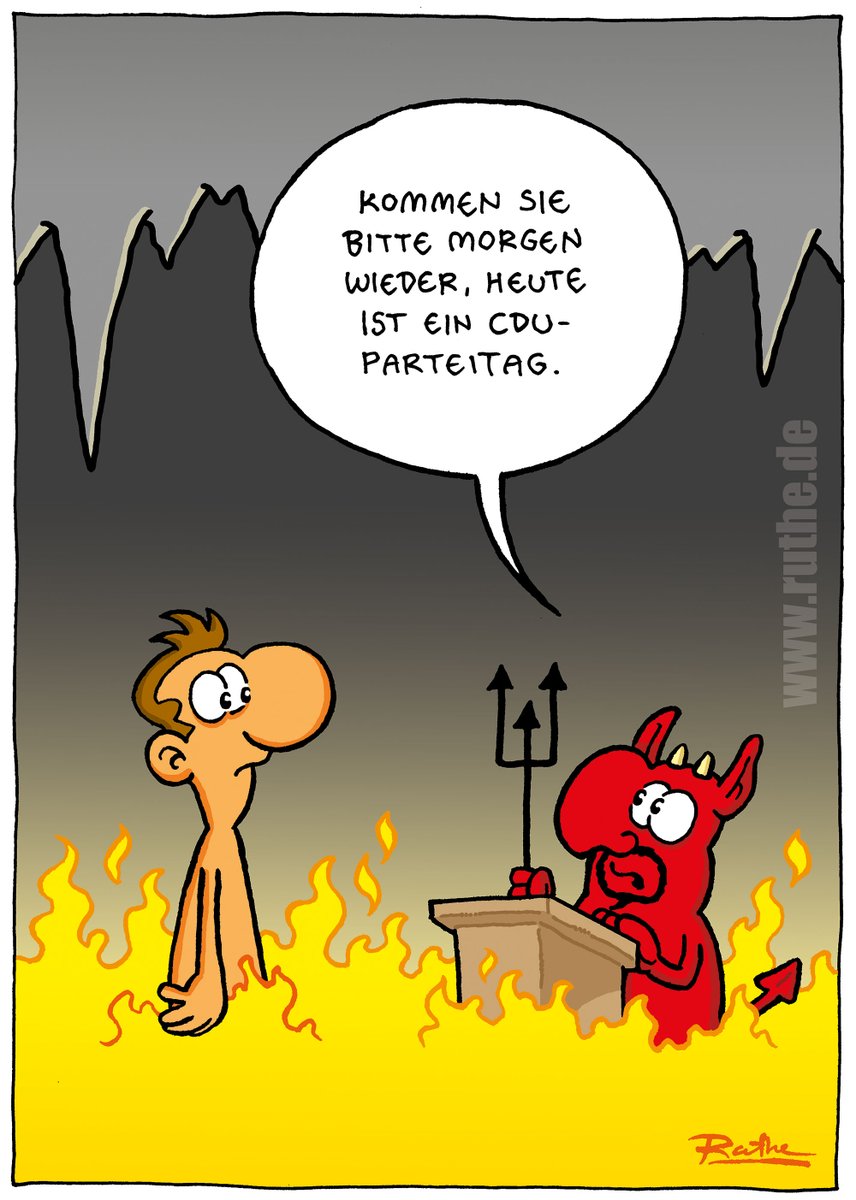
ALT In der Hölle. Links ein Mann, rechts Satan am Empfangsschalter. Satan: "Kommen Sie bitte morgen wieder, heute ist ein CDU-Parteitag."
59
Rüdiger Nitsch 🐧 retweeted

😂😂😂😂😂
AAALTER , böses Ding...

10
89
2,661
Rüdiger Nitsch 🐧 retweeted

May 22
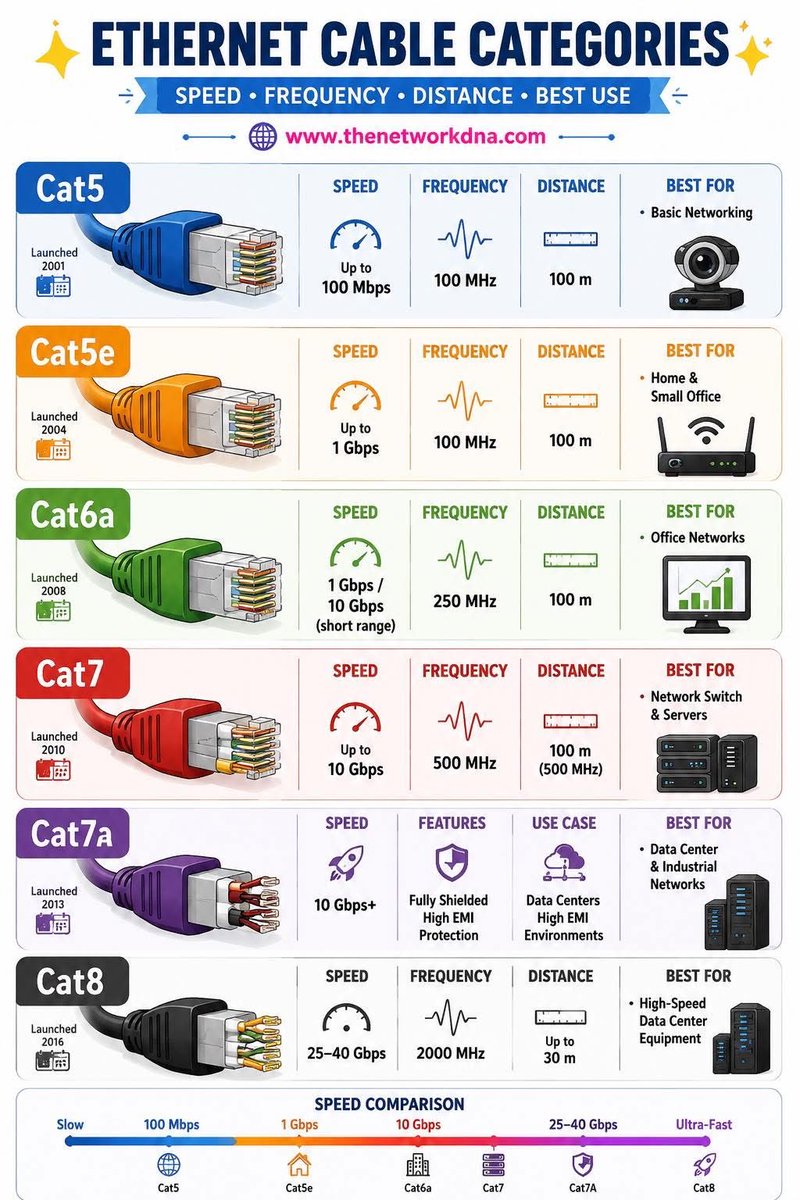
Understanding Ethernet Cable Categories Made Simple.
Choosing the right Ethernet cable is important for building a fast, stable, and future-ready network. From Cat5 to Cat8, each cable category is designed for different speeds, frequencies, and networking environments.
📘 In this infographic, you’ll learn:
✅ Speed capabilities of each cable type
✅ Frequency and distance support
✅ Best use cases for home, office, and data center networks
✅ Differences between Cat5, Cat5e, Cat6a, Cat7, Cat7a, and Cat8
✅ Which cable is best for switches, servers, Wi-Fi, CCTV, and high-speed networking
💡 Quick Highlights:
🔹 Cat5 – Basic networking
🔹 Cat5e – Home & small office networks
🔹 Cat6a – Enterprise and office deployments
🔹 Cat7/Cat7a – Shielded high-performance networking
🔹 Cat8 – Ultra-fast data center connectivity
📈 Whether you’re preparing for CCNA, working in networking, or designing enterprise infrastructure, understanding cable categories is essential.
2
26
130
3,262
Rüdiger Nitsch 🐧 retweeted

May 22
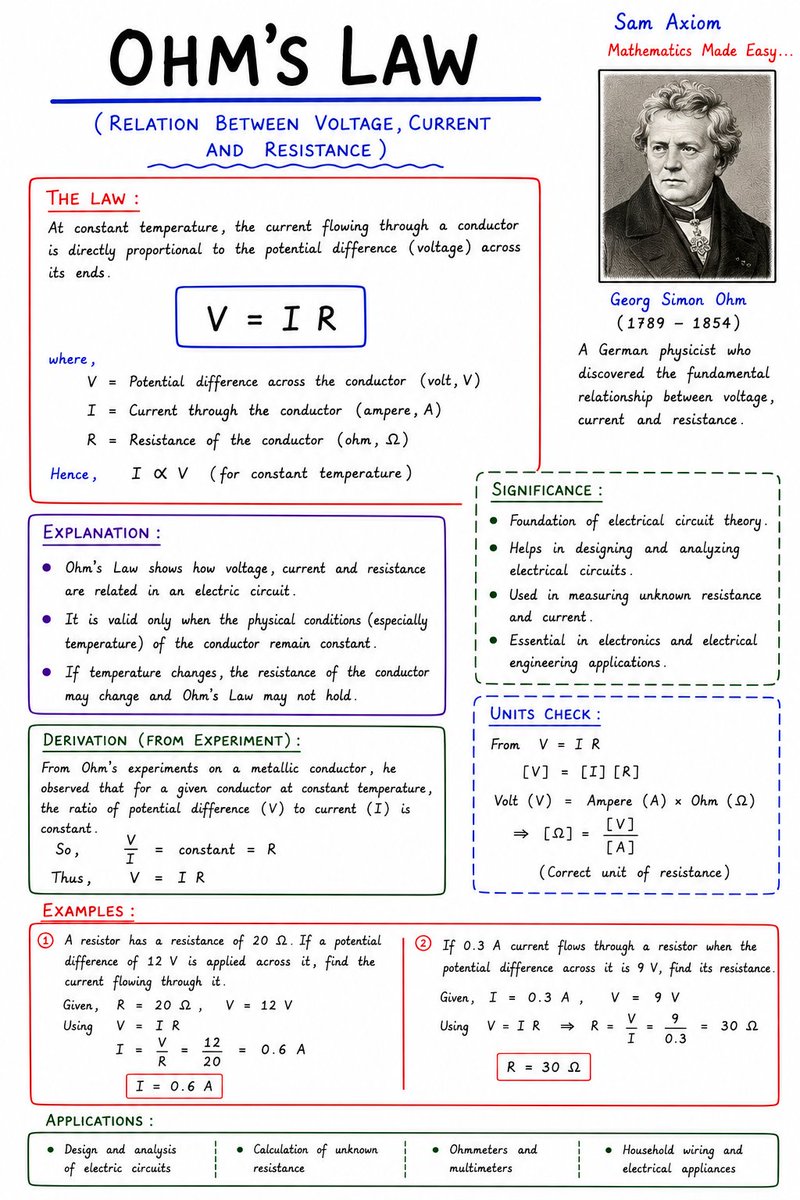
Starting with one of the most fundamental laws of electricity -
Ohm’s Law ⚡
It explains how voltage, current, and resistance are connected inside an electric circuit.
In simple words, the current flowing through a conductor depends directly on the voltage applied across it and inversely on its resistance.
This law forms the basic foundation of circuit analysis, electronics, electrical engineering, and modern technology. From household appliances to advanced electronic devices, Ohm’s Law plays an important role everywhere.
1
17
116
2,468
Rüdiger Nitsch 🐧 retweeted

May 22
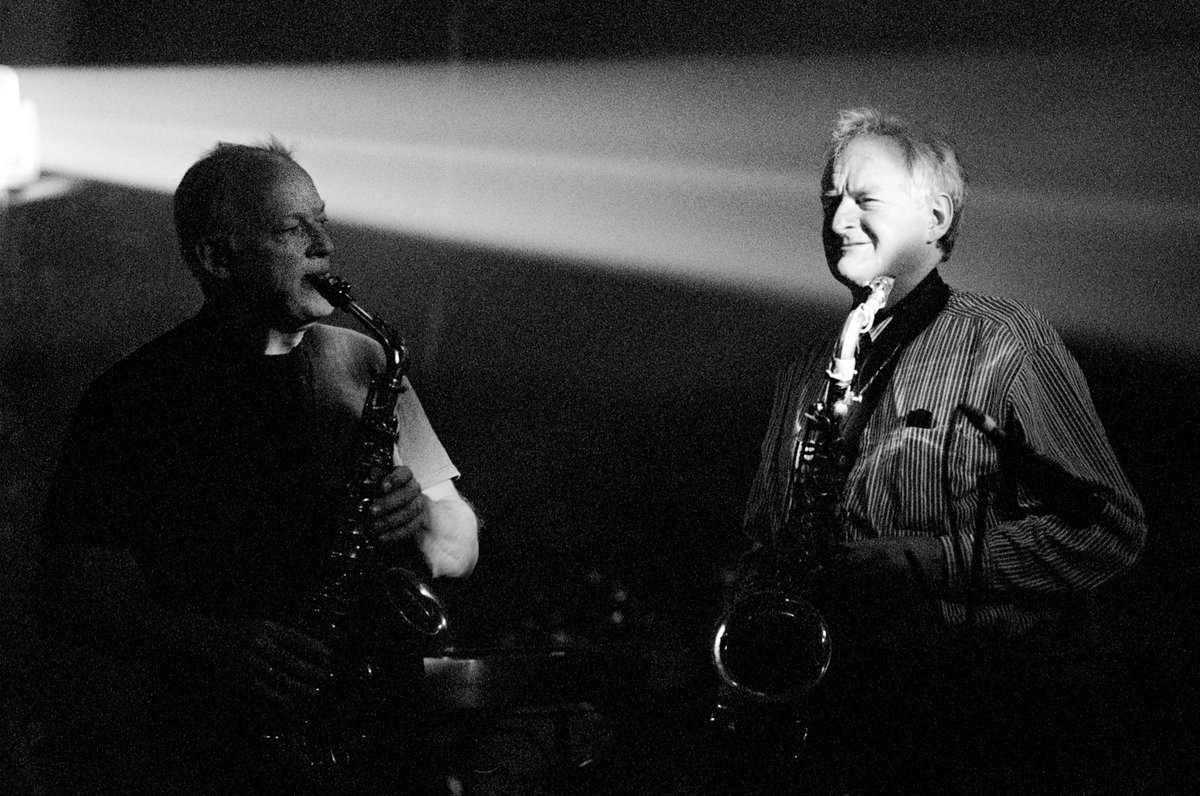
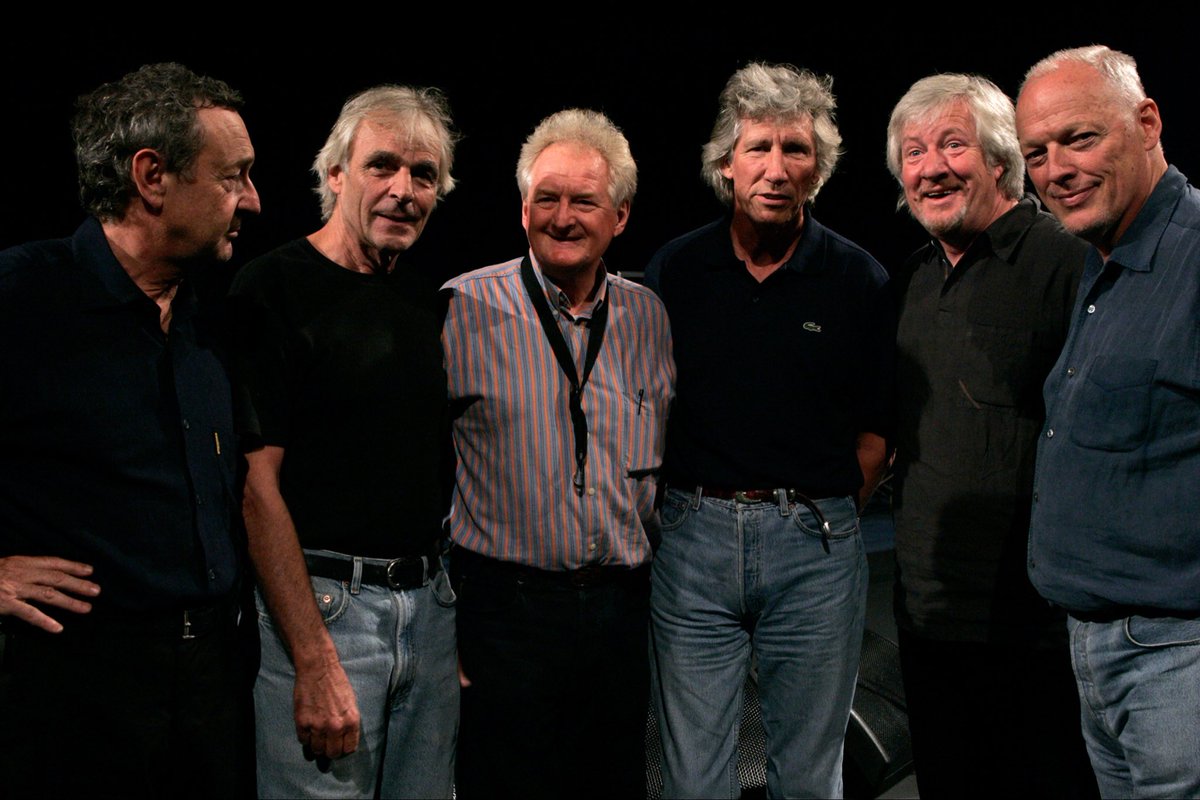
My dear friend Dick Parry died this morning.
Since I was seventeen, I have played in bands with Dick on saxophone, including Pink Floyd.
His feel and tone make his saxophone playing unmistakable, a signature of enormous beauty that is known to millions and is such a big part of songs such as Shine On You Crazy Diamond, Wish You Were Here, Us and Them and Money.
He played in the last band I had that included Rick Wright for the On An Island Tour and at Live 8 with Pink Floyd.
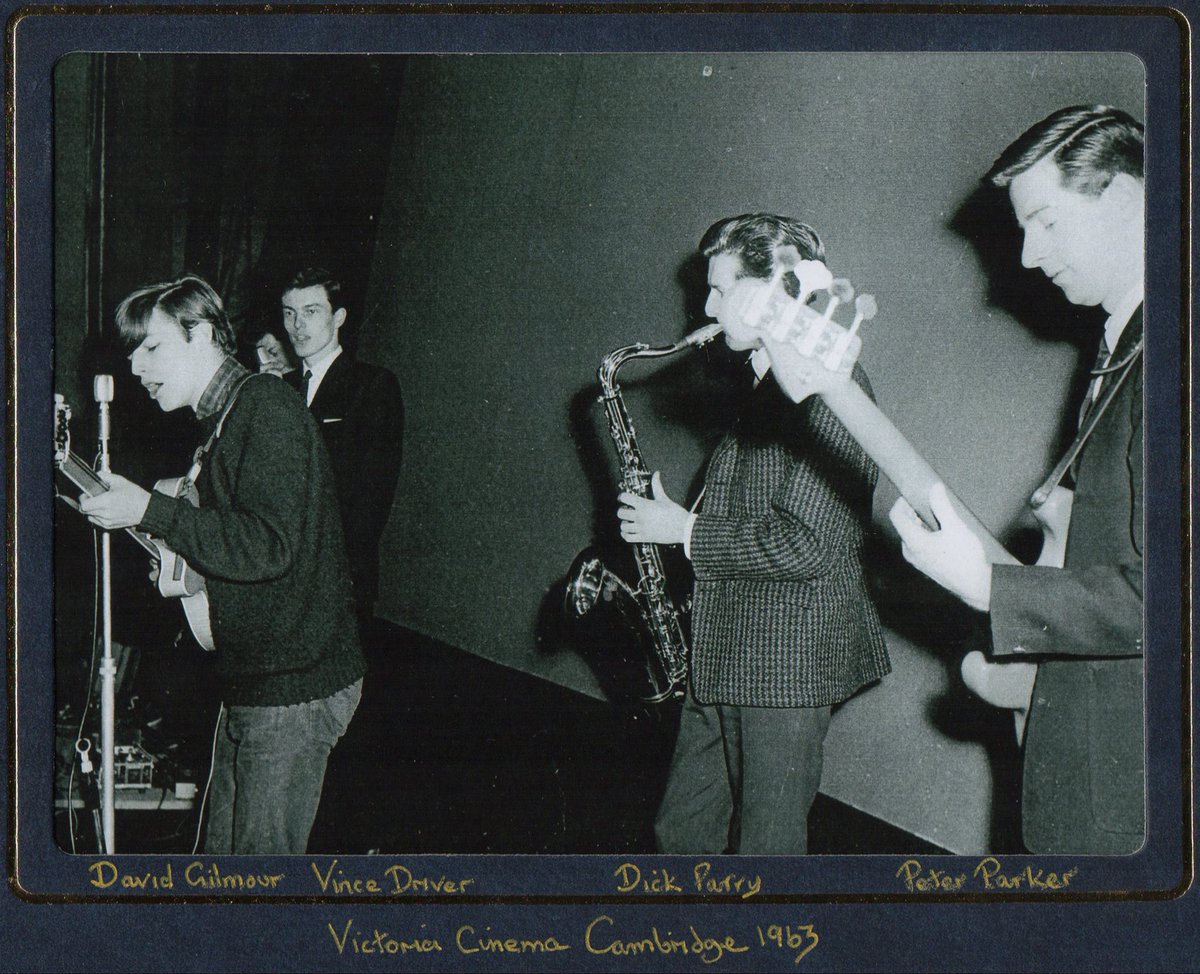
Here are some pictures of him, including one of him and me playing for the ABC Minors at the Victoria Cinema in Cambridge in 1963.

870
2,138
15,170
393,021

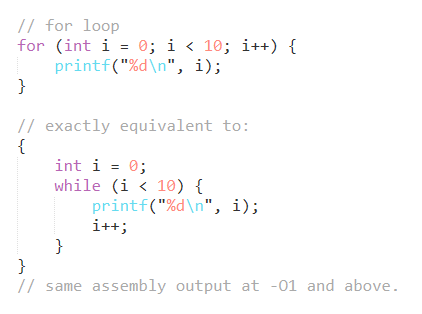
every for loop in C is syntactic sugar. the compiler sees a while loop. they produce identical machine code
C has three loop constructs: for, while, do-while. at the assembly level there is one: a conditional jump
the compiler doesn't care which one you wrote. it cares what the condition is and where to jump. every loop you've ever written becomes CMP, JNE, and a label
16
15
128
26,300

May 21
RT @ralphruthe: Genial.
!B

ALT Auf einer Wiese. Im Vordergrund entfernt sich ein trauriges Mädchen (mit einem leeren Hamsterkäfig unterm Arm) von einem kleinen Grab. Aus dem Grab kommen zwei Sprechblasen. Sprechblase 1: "Totstellen - echt ne super Masche, um aus dem Käfig zu kommen!". Sprechblase 2: "Halt die Fresse und grab!"
54