
Joined February 2018
- Tweets 976
- Following 4,751
- Followers 280
- Likes 5,014
19 Photos and videos

Artem Kushner retweeted

Excited to present sampleworks: a modular platform for generating biomolecular conformational ensembles by coupling AI structure predictors to experimental data. First pub from @diffUSEproject. thestacks.org/publications/s…
1
4
10
445
Artem Kushner retweeted

Jun 12
The Bitter Lesson for Biology — Adam Green on Scaling Laws for Virtual Cells
In this episode, the founder of Markov Biosciences, @adamlewisgreen, explains the "bitter lesson" for biology, the idea borrowed from Richard Sutton that large unbiased datasets and the right training objective tend to outcompete models with hard-coded rules and human priors.
We talk a lot about virtual cells, sources of bias in data, and his evidence that virtual cells pre-trained on plain observational data show clean scaling laws, getting monotonically better at predicting unseen perturbations as the models grow, and beating a state-of-the-art model built specifically for that task.
Our interview was about 3 hours long, but cut to 1.5 hours. My main goal was to understand Adam's perspective on virtual cells and his goal to "solve biology."
Search for "The New Biology" on YouTube, Spotify, and Apple Podcasts.
Timestamps:
00:00 — Cold open
01:58 — Clinical predictions from a virtual cell
05:38 — What is a "virtual cell"?
08:01 — The problems with single-cell RNA-seq
11:31 — The urns analogy
19:54 — Observational vs. perturbation
23:29 — The bitter lesson for biology
29:06 — Geometric Plackett-Luce
38:27 — Ablations and loss function
47:23 — Cells as specimens
59:26 — Antibody-Drug conjugates
1:11:16 — Will we ever understand the cell fully?
9
41
273
18,642
Artem Kushner retweeted

Jun 11
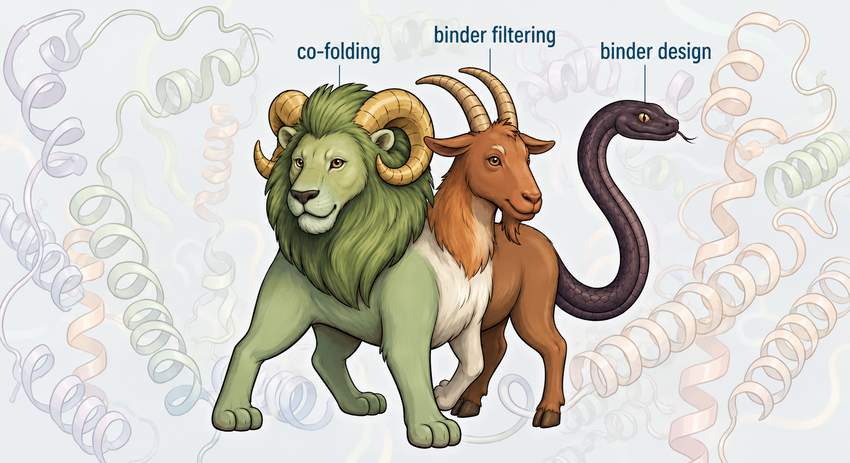
A big thanks to coauthors @mihirbafna14 @aiproteins Adam Klivans, and @lab_berger! Thanks to @TACC for GPU support and to Boltz and OpenFold for open-sourcing much of the code that enabled this work!
Preprint: biorxiv.org/content/10.64898…
Code: github.com/bjing2016/promera
(8/8)
4
32
9,816
Artem Kushner retweeted

I've spent months rethinking and rebuilding my programming languages course from scratch for the agentic coding era. I wrote myself a memo explaining what I'm doing. I figure others might be interested in the redesign, so here goes! Feedback welcome ofc.
docs.google.com/document/d/e…
19
37
320
23,755
Artem Kushner retweeted

Jun 8
AI has solved software. Biology is the next frontier.
We're hiring across every team at Adaptyv.
We’ve built the best automated lab for protein designers to experimentally test their AI-designed proteins. Today, the most advanced protein design companies run their wet-lab work on Adaptyv, from the biggest biopharmas to frontier AI labs to dozens of virtual biotech startups.
Demand has grown faster than we have, so we’re hiring across the board:
• Bio: Research associates, scientists and lab technicians to develop and run new assays at scale.
• Lab automation: Engineers and interns to onboard new lab instruments and scale our automation infrastructure.
• Software: Product and backend engineers to scale LabOS, our internal lab orchestration platform, our API for agents and the data pipelines that turn messy physical-world data into clean results.
• Partnerships, customer success and operations: Building partnerships with AI & pharma labs, making sure customers understand their data and can run more campaigns, making sure the company operations run smoothly
5
10
49
13,058
Artem Kushner retweeted

Jun 2
Introducing Strong Stochastic Flow Maps
TLDR: Stochastic Flow Maps where we learn the stochastic solution path.
Work led by Sam McCallum, @zwblasingame, with Timothy Herschelll, @AlexanderTong7, and @JamesFosterBath
Arxiv: arxiv.org/pdf/2606.01086
Code: github.com/sammccallum/ssfm
6
76
362
73,513
Artem Kushner retweeted

Reimagining Science for the AI Era. Listen to @beckypferdehirt CEO of Radial @AsteraInstitute discuss the $500M nonprofit seeking to create better conditions for AI in biology. Sponsors: @AlphaSenseInc Dash Bio. timmermanreport.com/2026/06/…
2
7
2,983
Artem Kushner retweeted
Jun 1
Binder design has come of age thanks to generative models—but how can we access the wider array of dynamic, multistate protein functions, so elegantly employed by nature?
@mihirbafna14 and I are excited to share SwitchCraft, a framework for designing such functions. (1/7)
17
143
619
84,854
Artem Kushner retweeted
May 29
The Magnetobiology Episode:
A company in San Francisco, called @NonfictionBio, is building proteins (like antibodies and enzymes) that can be controlled using small magnets.
In this episode, co-founder Maria Ingaramo and scientific advisor Andrew York explain how they engineered a protein, MagLOV, that responds strongly to magnetic fields, why most prior attempts have failed to replicate, and how the mechanism of magnetically-controlled proteins actually works. They also get into the “dream” use cases, like cancer drugs that activate only at the tumor, which might have a lower toxicity inside the body. This podcast is made possible by @AsteraInstitute.
I'm happy with how this episode came out. I think my interviewing skills are improving, and I'm getting better at building up context throughout the episode. Enjoy!
Search for "The New Biology" on YouTube, Spotify, and Apple Podcasts.
Timestamps:
00:00 - Opening
00:54 — Introduction
01:35 — The dream
05:38 — Why magnets vs. light or ultrasound
10:05 — The physics
17:48 — On the name "magnetogenetics"
21:25 — Birds and cryptochromes
27:09 — Why is the field filled with so much junk?
29:51 — Adam Cohen's molecule
33:24 — Markus Meister’s debunking
38:06 — The experiment
46:22 — Finding the LOV domain
54:11 — Singlets, triplets, and cysteine
56:54 — What the magnet is actually doing
1:05:13 — The conformational-change red herring
1:12:46 — The Quantum Biology Institute
1:19:31 — Founding Nonfiction Labs
1:24:38 — How to convince skeptical investors
1:29:39 — What a magnetogenetic medicine might look like
1:38:50 — First clinical indications
1:45:12 — The regulatory path
1:48:01 — What the field needs
1:54:30 — Appendix: Whiteboard lecture
7
40
229
41,086
Artem Kushner retweeted

The DiffUSE Project wants examples where structural heterogeneity matters but cannot be encoded in PDBx/mmCIF. X-ray, cryo-EM, time-resolved, multi-map, or fragment screening data welcome. Submit yours: diffuse.science/submit/
3
2
350
Artem Kushner retweeted

May 27
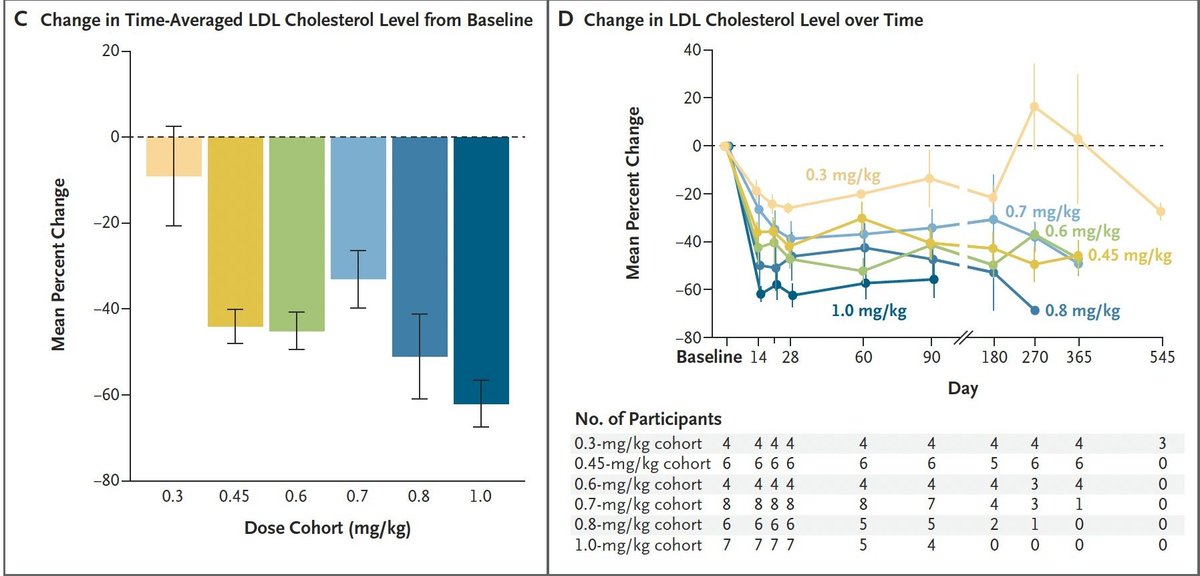
Every non-biotech person I describe Verve to is floored. They can't believe this is a future we get to live in - permanent solution for high cholesterol and strokes - even after I tell them it means editing their genes.
At the same time more than 90% of the biotech VCs I've talked to are bearish on exactly this direction.
"Why cure a disease if you can do monthly injections"
"Insurance would never cover cures"
I am excited for those people to not make any money when they are proven wrong. Its striking that no one sees that cures have been out of vogue for very silly reasons - we equated one-and-done to viral vectors, rare disease TAMs, and rare disease prices. None of those are relevant assumptions, and Lilly has multiple bets in this space to prove everyone wrong.
May 25

Eli Lilly has done it.
They've gone and made what seems to be a powerful, permanent gene therapy for LDL cholesterol.
That means they'll be able to effectively prevent most heart disease with a single infusion!
82
82
1,409
217,004

May 26
does it even matter if it's not "load bearing" or it hasn't "earned its keep"..?
19
Artem Kushner retweeted

AlphaFold-like models such as Boltz-2 and AlphaFold3 learn powerful priors over structures from PDB. But how can we make them aware of new X-ray crystallography data?
Introducing CrystalBoltz: end-to-end X-ray structure determination via experiment-guided diffusion.
1/4 🧵
5
65
241
25,197
Artem Kushner retweeted

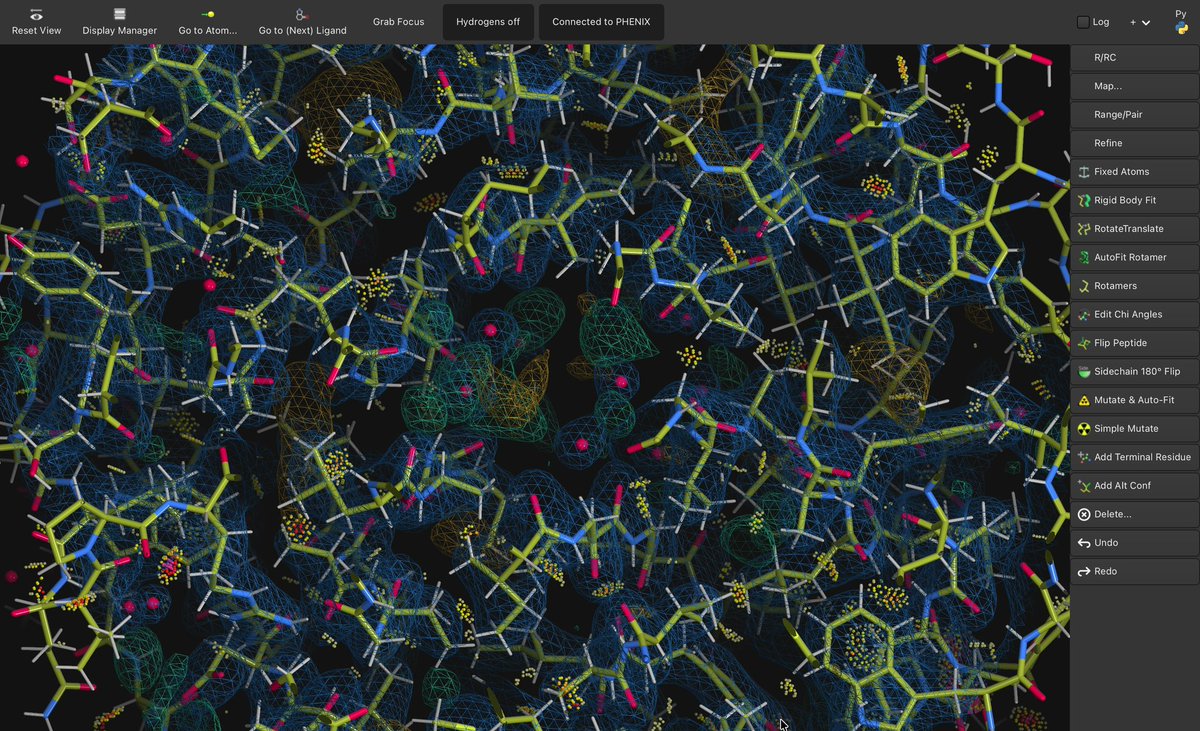
My biggest hot take for today is that everyone who works at the intersection of AI protein structure should fit an atomic model to density in Coot at least once
Gives you a totally different perspective once you see where the data actually comes from

Phenix integration is now back in Coot 1
Phenix 2.1 ❤️ Coot 1.2.x
3
9
91
9,936
Artem Kushner retweeted

May 6
My first blog post in over a year is a deep dive on flow maps🗺️, or how to learn the integral of a diffusion model to enable faster sampling and several other cool tricks.
It's the longest one yet👀 Let me know what you think!
sander.ai/2026/05/06/flow-ma…
7
174
749
90,144
Artem Kushner retweeted

May 4
We at @RenPhilanthropy are launching a new $20m fund to support open source scientific software
os4science.org/
5
10
80
8,691
Artem Kushner retweeted

May 2
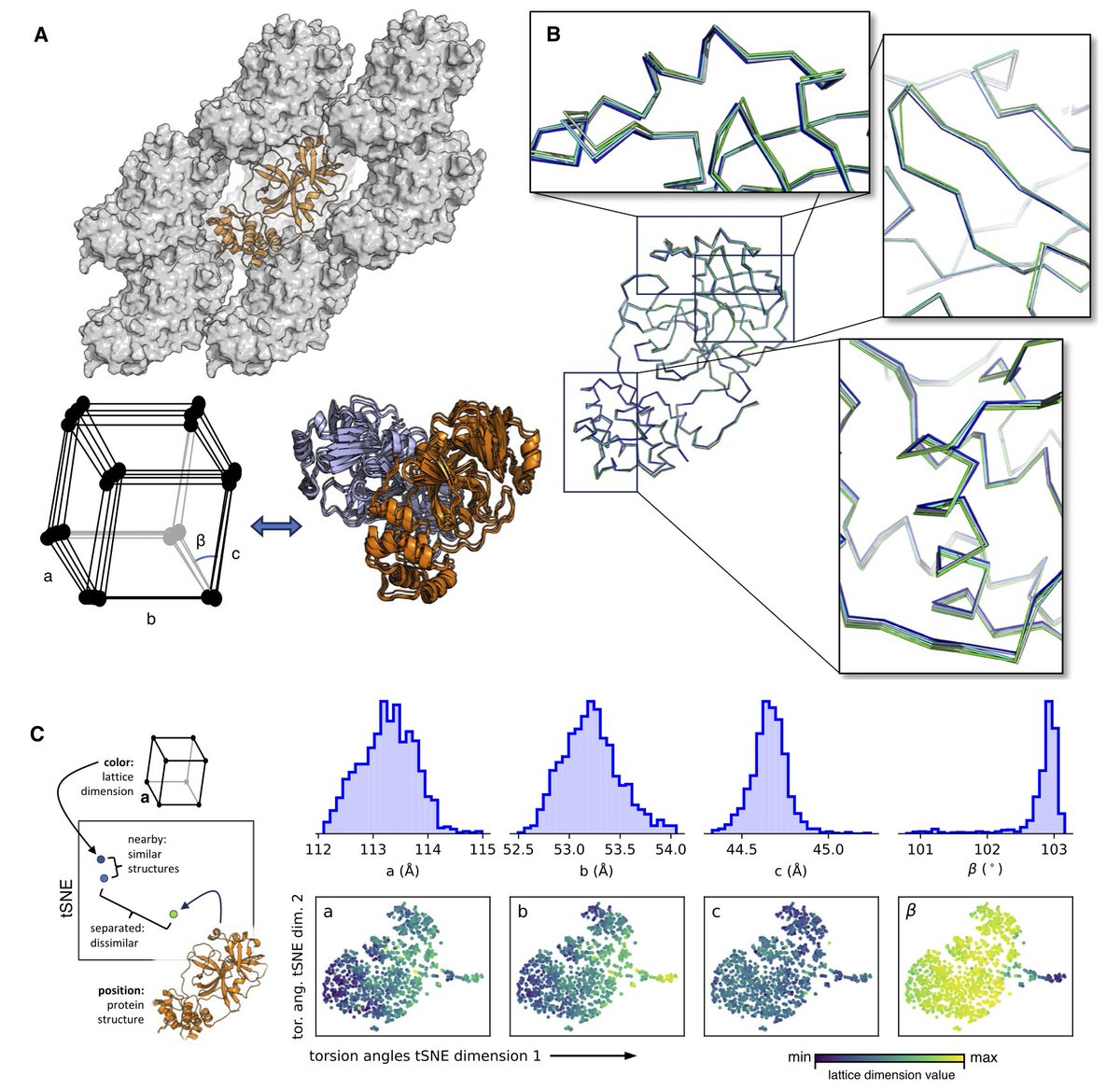
Statistical crystallography as a route to understanding protein dynamics! 1,146 crystal structures of SARS-CoV-2 Mpro reveal correlated motions connecting the dimer interface to the active site. Great to see this work out by the DESY team.
Link: rdcu.be/fgzPF
1
14
79
10,764
Artem Kushner retweeted

Apr 30
Categorical Flow Maps got accepted to #ICML2026 🎉
See you in 🇰🇷 :D
Many thanks to @osclsd @daan_roos_ @mmbronstein @wellingmax @ismaililkanc @LucaAmb and @jwvdm ♥️
Wanna know more about flow-based LLMs: flow-based-llms.github.io/
5
32
286
22,892
Artem Kushner retweeted

Apr 28
Generative design of sequence specific DNA binding proteins.
Most fun paper I have ever written, with @enishasehgal and @YPolitansk15183 and the team, on a project which is a testament to the power of RFdiffusion3.
biorxiv.org/content/10.64898…
10
85
407
30,578
Artem Kushner retweeted

Apr 27
We, @hlws_bot @PilarCossio2 @JiequnH, are sharing the official code release for EmbedOpt for seamless inference-time steering of protein diffusion models at github.com/rs-station/embedo…,
featuring:
✨ Tutorial on a real CryoEM map (EMDB-63136) (check out the animation below!).
📦 Environment locked with pixi for zero-headache reproducibility.
🛠️ Fully compatible with the new Protenix 2.0 codebase.
📊 All scripts to reproduce the paper's benchmark results are included out-of-the-box.
We are also proud to host this under the Reciprocal Space Station (RSS, @open_rss)—our growing hub for open-source structural biology software! 🌌
Paper: arxiv.org/abs/2602.05285
1
18
115
18,444