Joined March 2007
- Tweets 17,513
- Following 1,540
- Followers 1,795
- Likes 44,506
683 Photos and videos

Pinned Tweet

Mar 25
I have a dream 🇮🇳💻🙏

Lord Rama crossed the ocean by building a bridge stone by stone, with an army of contributors, each doing what they were capable of.
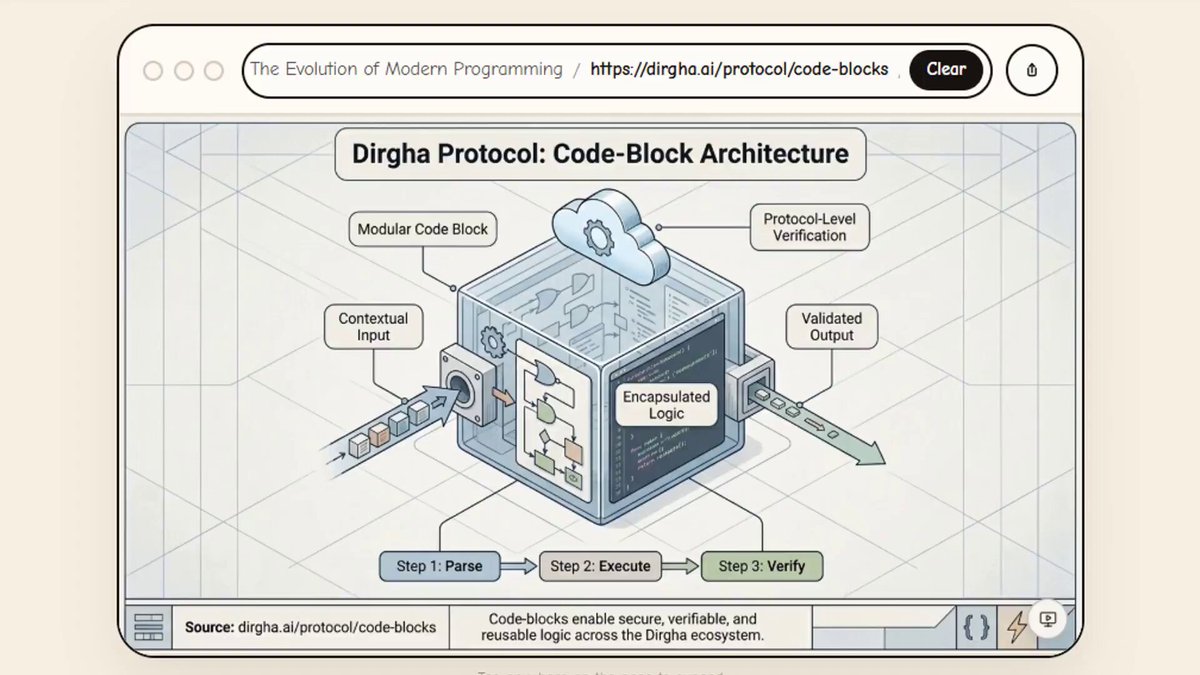
Dirgha is following the same model: we're bringing together people and organizations to build fully indigenous, agentic, sovereign AI computers.

ALT Dirgha AI - Building a fully indigenous, agentic, sovereign AI computer
1
1
4
2,934
Salik Shah ✨🚀 retweeted

To train a GPT class 1T model from scratch - including failed runs, data acq clean rlhf, post-training, team/people will likely req $250M of compute on an aggressive 3-4mo schedule (i.e. more reserved GPUs), $500-600M all-in IF you do a dense one. MoE fp8 will cut costs by 1/10th depending on how many active params you have. If you want SOTA however, the budgets go significantly higher on test-time compute, post-training RL, and data/synthetic generations..and v. high on talent. Maybe $2-4B all-in. After that comes serving the model. The talent is key to get to SOTA/beat it - and then you have to ensure this is useful enough to have inference vol over time - for which the capital will come if there is usage / TAM. So this is not as much about raising $50-60B, or raising it all at once as the OP says - we are investors in mistral, sarvam, reflection and anthropic - and they all scaled capital over time as models got adoption, but the early bottleneck is more on talent GPUs at that scale where you can do interesting things.
Jun 13

Stop making loose comments. A foundational model needs 50/60b $ Huge hyper cloud capacity with hundreds of billion $
94
268
2,020
231,479
Salik Shah ✨🚀 retweeted

Five dimensional chess doesn’t exist. Everyone is furiously improvising all the time. The future is utterly uncertain.
284
363
4,532
550,684
13h
Godspeed.

Ok, so here is my take on the Fable ban, sovereign AI, Sarvam, etc.
The event is interesting as it has implications from many perspectives.
For AI users, it is clear that you should not confuse access with ownership, or adoption itself as advantage. And if the most significant tech differentiator you are leveraging has external control loops, then you have to accept you are vulnerable.
For AI talent, it is now a precedent that you would be *seen* aligning to national interests more than company interests. And even if its just a whim for now, this trend will be hard to reverse as the world gets more automated…
For AI labs, their offerings will be stratified - general purpose AI would be available as utility, but frontier AI would be gated. This is a fantastic business model for labs - *democratized* AI sucks in all the data liquidity of the world which is locked in higher margin frontier offerings.
I think for the world to be a better place, all three of the above are bad vectors. We need to have more countries and companies owning their own destinies. And in the post AI world, that means being able to use and improve AI systems within their own perimeters - what one may call Sovereign AI.
At Sarvam, Sovereign AI in India was the founding thesis a couple of years back, and continues to remain the core operating principle. From our vantage point, it is super clear that India will build, leverage, and create massive business value and societal impact with sovereign AI. The following is precisely how we at Sarvam are contributing to make that happen.
108
14h
A good thing that came out of the Anthropic restriction is my first video (2nd if you count the AI short). 98 more to go before I call myself a... vlogger? Is that term still in vogue?
21h

Things are not going well in the AI land.
Today I woke up to this shocking news. It's funny, it's shocking. I don't know what to tell you.
America just blocked access to its latest AI models for the rest of the world. For ALL of us.
We have officially entered the haves-and-have-nots in the land of the free.
Let me give you some context.
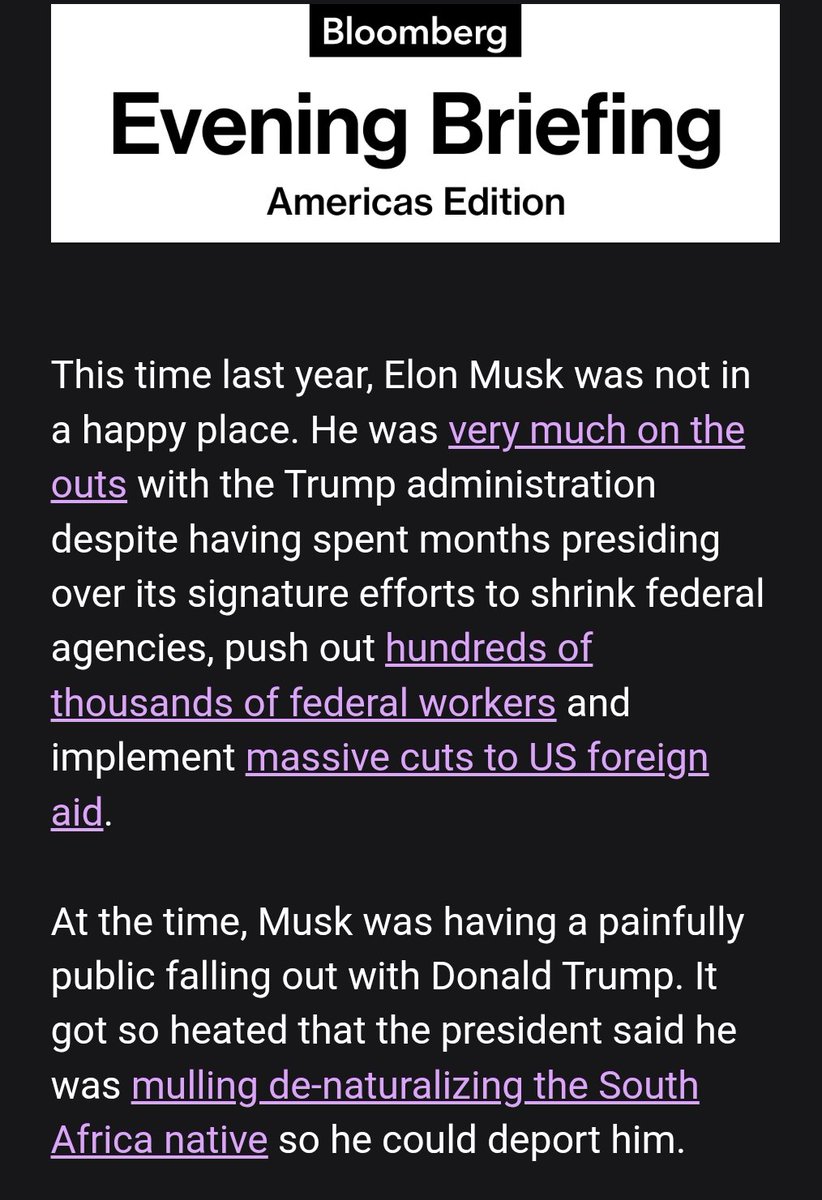
In July 2025, this time last year, President Trump publicly floated the idea of denaturalizing Elon Musk. He is a naturalized American citizen. A trillionaire now.
Think about that. A president suggesting he could strip citizenship from one of the most prominent businessmen, innovators, contributors in the country.
Yesterday, that same playbook hit the AI world, the tech world.
The Commerce Department ordered Anthropic to block access to its most advanced models — Fable 5 and Mythos 5 — for all foreign nationals. I mean all. And that explicitly included Anthropic's own foreign employees.
Imagine that. The level of fear-mongering. The craziness that's happening.
Unable to filter users selectively without breaking their infrastructure, Anthropic did the only thing they could: they disabled the models for everyone.
So here's the pattern.
Citizenship and national origin are now provisional gatekeepers. Not skill. Not contribution. Passport. More specifically, the birthright lottery.
And it's always wrapped in the same language. Security. Fraud. Threats. Proliferation.
That framing normalizes broad restrictions that function as tool of power. Control.
What was once exceptional is now becoming routine.
When a state can revoke belonging or restrict access based on where you were born, it doesn't create a two-tier system of capability. It creates a two-tier system of discrimination. Of permission.
And permission—unlike code—does not scale.
That's the world we're building. Let me know what you think in the comments.
17
14h
Sarvam must deliver.

🚨 Bloomberg: India's AI startup Sarvam AI was reportedly turned down by SoftBank, Prosus, a16z, General Atlantic and Accel during fundraising efforts.
• 🇮🇳 Sarvam is still on track to raise ~$300M at a ~$1.5B valuation
• Backed by Nvidia and focused on sovereign AI for India

37
15h
RT @HarveenChadha: 2 labs are not enough for a country like India, we need more labs, more gpus, more research/infra engineers, more collab…
130

GLM-5.2 is Fully Open, Frontier Intelligence Belongs to Everyone
Today, the sudden restriction of certain frontier models is deeply regrettable. At a time when access to frontier models is abruptly cut off for non-technical reasons, we are even more convinced of one thing: science should be global.
The path to AGI (Artificial General Intelligence) must never be enclosed by high walls. We have always believed that AGI should be the cornerstone for all of humanity to collaboratively explore the boundaries of intelligence and solve complex challenges, rather than a privilege monopolized by a few rules and subject to revocation at any moment. In the face of external blockades and restrictions, our attitude is one of radical openness. Frontier intelligence must remain open-source, accessible, and buildable, serving every dedicated developer.
GLM-5.2 is Zhipu's most capable open-source model to date. It not only supports a truly usable 1M context window but also maintains a continuous lead in the independent completion of long-horizon tasks, providing solid foundational support for building complex agent applications. It also continues to be our main engine for creating the strongest domestic coding model.
Tonight at 5:21—at this special moment—GLM-5.2 will officially be available to all GLM Coding Plan users (including Lite / Pro / Max). The API will also go live next week.
A step closer to frontier intelligence for everyone.
The future of AI is open, and it is for the people.
ModelKey: GLM-5.2
212
577
5,884
664,916

The end-game for Anthropic is becoming government controlled by a single nation. As Thiel once said: Going IPO is like a government takeover (quasi empowering CFO, lawyers, etc as govt actors). Regulatory capture for capability oversight is a step towards monopoly.
16
16
213
28,814
Salik Shah ✨🚀 retweeted

I Have a Dream. That One Day,
the world’s most advanced intelligence — whether it’s called GPT, Fable, DeepSeek, or something else
Just Does Not Matter~
— will be just like electricity and water supplt today.
Cheap. Stable. High‑quality.
It will power all kinds of AI software, the way electricity powers all of akindsppliances.
We’re still living in the era when the light bulb was just invented. There will be countless AI applications in the future.
That’s why token production and token transportation — as the underlying infrastructure — will be the most important infrastructure build of the next 10 to 30 years.
This is an industry‑wide upgrade. A benefit to all of society. And this is exactly why I strongly oppose closed‑source models. #AGIForEveryone
How can we let infrastructure — something as essential as water and electricity — become a luxury for the few?
How can we expect people to pay such exorbitant bills?
#路长而歧行则将至
#我心匪石不可转也
#AI #Infrastructure #OpenSource #TokenEconomy

A good business model should not turn your heaviest users into a source of loss.
This is exactly why I have always believed that a “coding plan” (usage‑based pricing) is a terrible business.
Think of a gym that only makes money because people buy memberships and then never show up.
That’s a broken logic.
A sound business model should ensure that your most core, highest‑volume users generate the largest profit – not the other way around.
#BusinessModel #StartupTruth #UsageBasedPricing #BadEconomics
50
64
553
79,397
Salik Shah ✨🚀 retweeted

Strong validation of the Sovereign AI thesis. Every large country needs its own models - open and closed source plus chips, data centers, and cloud.
Indian founders have built their stack on Chinese open-source models. What happens when the next generation stops being open source?
China has every incentive to open-source while behind, then close the gate once everyone depends on it.
The case for India building its own models, both open and closed has never been stronger.
Jun 13

The US government, citing national security authorities, has issued an export control directive to suspend all access to Fable 5 and Mythos 5 by any foreign national, whether inside or outside the United States, including foreign national Anthropic employees.
The net effect of this order is that we must abruptly disable Fable 5 and Mythos 5 for all our customers to ensure compliance.
Access to all other Claude models is not affected.
We apologize for this disruption to our customers. We believe this is a misunderstanding and are working to restore access as soon as possible.
Read our full statement: anthropic.com/news/fable-myt…
21
35
251
24,460
18h
Open letter:
Build sovereign, open-source AI models and infrastructure for the world.
Build distributed teams.
Open passport.
18h
Once you build on the frontier, rest will follow. Sovereign is for freedom, personal, corporate, national, global. It's a matter of people owning their device, data, and intelligence.
github.com/Dirgha-AI/dirgha-…
19
Salik Shah ✨🚀 retweeted
21h
Things are not going well in the AI land.
Today I woke up to this shocking news. It's funny, it's shocking. I don't know what to tell you.
America just blocked access to its latest AI models for the rest of the world. For ALL of us.
We have officially entered the haves-and-have-nots in the land of the free.
Let me give you some context.
In July 2025, this time last year, President Trump publicly floated the idea of denaturalizing Elon Musk. He is a naturalized American citizen. A trillionaire now.
Think about that. A president suggesting he could strip citizenship from one of the most prominent businessmen, innovators, contributors in the country.
Yesterday, that same playbook hit the AI world, the tech world.
The Commerce Department ordered Anthropic to block access to its most advanced models — Fable 5 and Mythos 5 — for all foreign nationals. I mean all. And that explicitly included Anthropic's own foreign employees.
Imagine that. The level of fear-mongering. The craziness that's happening.
Unable to filter users selectively without breaking their infrastructure, Anthropic did the only thing they could: they disabled the models for everyone.
So here's the pattern.
Citizenship and national origin are now provisional gatekeepers. Not skill. Not contribution. Passport. More specifically, the birthright lottery.
And it's always wrapped in the same language. Security. Fraud. Threats. Proliferation.
That framing normalizes broad restrictions that function as tool of power. Control.
What was once exceptional is now becoming routine.
When a state can revoke belonging or restrict access based on where you were born, it doesn't create a two-tier system of capability. It creates a two-tier system of discrimination. Of permission.
And permission—unlike code—does not scale.
That's the world we're building. Let me know what you think in the comments.
Jun 13
The US government, citing national security authorities, has issued an export control directive to suspend all access to Fable 5 and Mythos 5 by any foreign national, whether inside or outside the United States, including foreign national Anthropic employees.
The net effect of this order is that we must abruptly disable Fable 5 and Mythos 5 for all our customers to ensure compliance.
Access to all other Claude models is not affected.
We apologize for this disruption to our customers. We believe this is a misunderstanding and are working to restore access as soon as possible.
Read our full statement: anthropic.com/news/fable-myt…
2
116
Salik Shah ✨🚀 retweeted

Jun 13
My advice to any nations that want to stay or arrive in the global top 5:
- (a) Ensure you're listening to excellent advisors.
- (b) Stop the leakage of local data.
- (c) Secure energy and compute supply for the future.
- (d) Become a prominent data sink for the rest of the world.
- (e) Stop the leakage of local talent.
- (f) Develop world-class talent around atoms and cells. Talent for manipulation of bits is necessary, but no longer sufficient.
- (g) Improve local quality of life to become a talent sink for the world.
4
15
42
1,960
Salik Shah ✨🚀 retweeted

At least, everyone now knows how it feels to be in China's position and why China persues an independent tech-indutrial ecosystem.
Jun 13

This is, perversely, good news for Britain, Australia, Japan, Europe, and other countries being cut off that would once have seen themselves as close allies of the United States.
It shows us what the future may hold if AI is the strategically and economically decisive technology of the 21st century and is controlled by the US and China. It is good news because *it may be happening early enough to give us time to act.*
I think this will be rescinded pretty soon, but it’s a sign of things to come. In a future where frontier models cannot be used outside the US, our industries and economies will fall behind and American businesses may not be able to operate overseas. We won’t be able to defend ourselves militarily with defence systems built on obsolete software. Europe 2031 is a good scenario of what a future like this could mean: europe2031.ai
Some of the things we need to do are ‘no regrets’ measures we should do anyway. But some are genuinely costly and risky.
We need cheap electricity – powered by gas, coal (this is costly, coal is very bad), deregulated nuclear fission – whatever can provide *cheap, reliable, 24/7* power. This almost certainly excludes wind power, which is enormously expensive and unreliable. We need projects to be able to connect to the grid in days rather than years by paying for fast-track connections.
We need to make it incredibly easy to build data centres, with the property taxes retained locally and hypothecated for local tax cuts so there is some direct benefit for locals. This doesn’t need to be nationwide.
We need to create new regulatory regimes for innovative businesses that give them the right to hire and fire staff with ease. The difficulty and cost of firing staff is one of the main reasons Europe has fallen behind so badly. We need to create a parallel employment regime that companies and workers can opt in to: worksinprogress.co/issue/why…
Even though I think it will probably fail, I think we should probably try to create a good, non-American frontier AI lab. I am quite pessimistic about this – even extremely well-resourced, innovative software companies are struggling to do this. But the stakes are so high that not trying seems foolish.
One thing that might work in our favour is the number of brilliant AI engineers who are not US citizens, who under the current export controls do not have access to Mythos/Fable even if they live and work in the US. What happens to Demis Hassabis, Ilya Sutskever, Andrej Karpathy, and the many other Europeans, Canadians, etc who are working on AI models in Britain and America who are affected by this?
I do not think we should force our own companies to use model, because this would exacerbate their economic weakness – this lab should have to compete on an even playing field. I am deeply sceptical that this can work, but we cannot rule it out. If we do it, it has to be able to pay US salaries, operate without political constraints. worksinprogress.co/issue/how…
It is cope to tell yourself that Trump is an aberration or that these export controls are a one-off. To repeat, I think these specific controls will be lifted quickly and it will be easy to move on and forget it happened. But this is a look into a potential future. Every one of us that is not a US citizen is at risk. The standard political divides do not apply here; the question is whether you grasp the enormity of AI as a technology. We have to act!
8
33
150
12,487
Salik Shah ✨🚀 retweeted

India is the second-largest market globally for both ChatGPT and Anthropic. If they can turn off the access at the press of a button like this, we are absolutely at the mercy of a foreign govt. Geopolitics is getting uglier. Globalisation in the current form is dead. This is a huge wakeup call for India.
Jun 13
The US government, citing national security authorities, has issued an export control directive to suspend all access to Fable 5 and Mythos 5 by any foreign national, whether inside or outside the United States, including foreign national Anthropic employees.
The net effect of this order is that we must abruptly disable Fable 5 and Mythos 5 for all our customers to ensure compliance.
Access to all other Claude models is not affected.
We apologize for this disruption to our customers. We believe this is a misunderstanding and are working to restore access as soon as possible.
Read our full statement: anthropic.com/news/fable-myt…
313
1,274
8,576
423,762
Salik Shah ✨🚀 retweeted

Jun 13
The worst part is him saying the strike on the elementary school in Minab (that killed 168 schoolchildren and teachers) "is a use case that doesn't even violate our red lines."

CEO of Anthropic Dario Amodei awkwardly smiles through his answer to a question about why Claude AI directly contributed to the US Military bombing of the elementary school in Minab.
125
2,335
6,503
241,900
Salik Shah ✨🚀 retweeted

23h
it's not lack of compute that's the issze. it's that in Europe, it's unthinkable to pay a guy in his mid 20s $600k salary and give him resources and freedom to train models without having oversight by a committee of gerontocratic professorswho don't keep up with the research

Btw I believe we have a mostly wrong framing of what could be done in Europe. Italy's Leonardo supercomputer datacenter alone plus Swiss National Supercomputing Centre has more than enough compute to train a very large LLM. It's not something impossible, also there is not magic recipe: it's just scaling, every smart team with the GPUs is doing it. People that fatally believe it is not something within reach are wrong.
106
389
6,480
359,360
19h
Later.
Jun 12

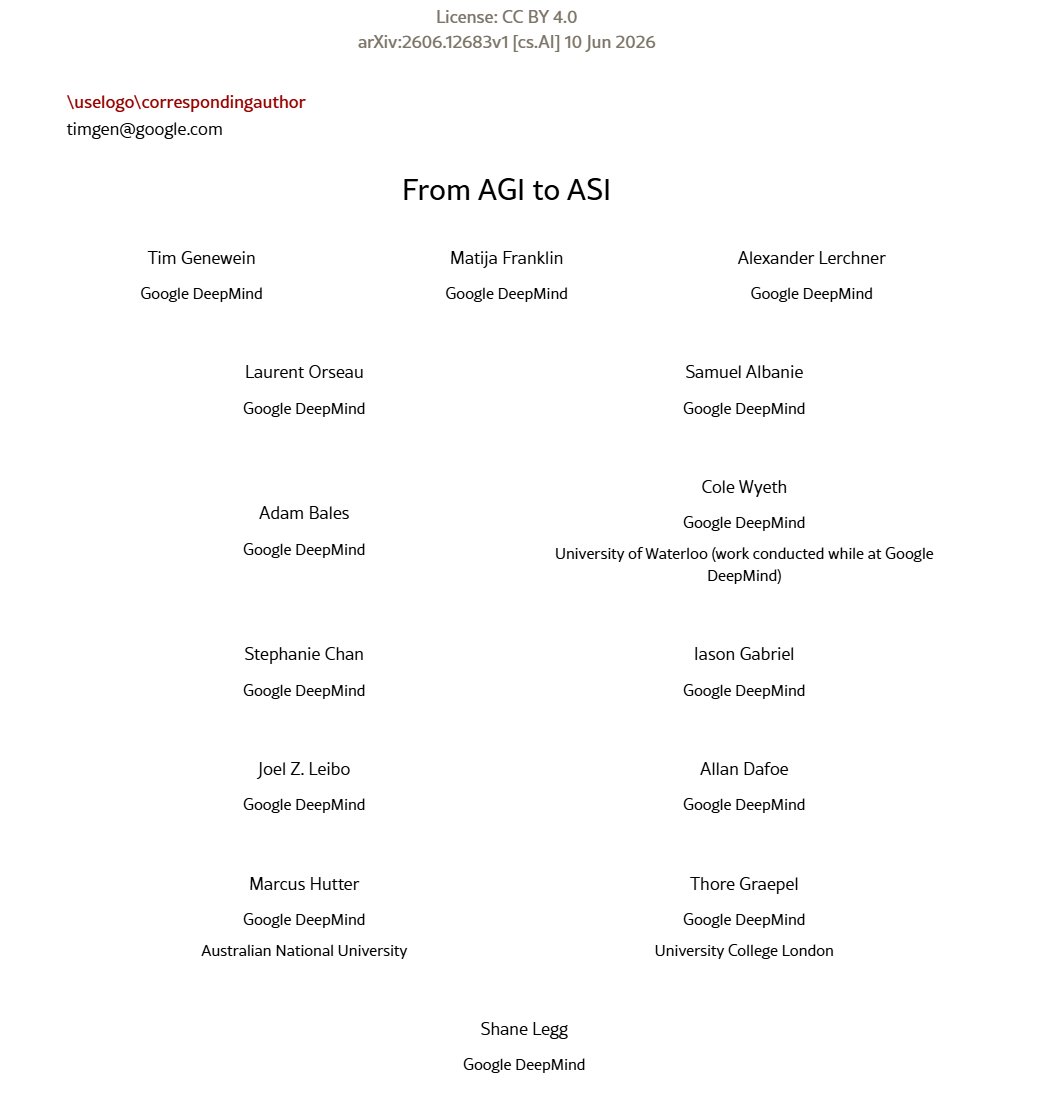
Google DeepMind published a 60-page paper mapping the road from AGI to superintelligence, written by Hutter, Legg, and Genewein. No hype, just a sober analysis
The paper uses three levels. AGI = roughly average human performance across most cognitive tasks. ASI = a system that beats large, well-coordinated groups of human experts across virtually everything (their bar: tens of thousands of experts working ten years on one problem). Universal AI / AIXI = the theoretical ceiling, uncomputable, only approachable from below.
Then they explore the question of how this could be achieved:
Scaling compute, models, and data, the continuation of the trend that drove the breakthrough so far. It is the only path with historical data available for extrapolation. The core question: Does quantity transform into quality? Even if individual models plateau, the sheer act of running millions of faster AGI instances could trigger the leap. (A quick aside: that is a fascinating philosophical idea. It always reminds me of Hegel’s dialectic, the notion that quantity transforms into quality. We ought to start drawing on philosophical theories to make sense of the future.)
Algorithmic paradigm shifts: a genuine break from the transformer pretraining paradigm. New architectures, new learning methods. However, hard to predict by definition.
Recursive self-improvement: AI accelerates AI research, which produces better AI, which accelerates research further.
Multi-agent coordination: superintelligence emerges from large collectives of AGI agents working together, like automated corporations or AI economies. Collective intelligence potentially far exceeding any individual model.
The authors naturally point to what I repeatedly describe as the biggest bottleneck: energy. I recently linked to a few graphs showing, on the one hand, the extent to which energy is already becoming a problem and, on the other, how China dominates the expansion of both nuclear and solar energy in the global race. But the authors also address a profound shift in the world of work in a post-AGI era. I would say this is a reality we must face.
So, it is not just about scaling, but also about whether the underlying conditions - such as energy and hardware - can be effectively established.
Six things that could slow or stop all of this:
The data wall. Quality training data runs out, possibly before the end of this decade.
Resource demand grows too fast. Energy, chips, rare earths, investment. The physical infrastructure can't scale arbitrarily.
The neural paradigm hits a ceiling. Pretrained transformers plus fine-tuning may not be enough to reach AGI, let alone go beyond it.
Research gets harder. Keeping Moore's law going already needs 18x more researchers than in the 1970s. Ideas are genuinely harder to find as fields mature.
The abstraction barrier. Models trained on human concepts may never invent new ones from scratch. Saturating GPQA or SWE-bench shows mastery of what humans already worked out, not the ability to go beyond it. Train only on pre-Newtonian physics and you won't reason your way to relativity.
Deliberate slowdown. Regulation, accidents, public backlash. Real, but likely countered by the competitive pressure between companies and nations.
I think it’s great that Google is addressing questions such as which paths they believe lead to AGI, what the road to ASI might look like, what challenges will arise, and much more. Overall, however, it sounds to me like all of this could actually succeed, making it, in that sense, a call to discuss and reflect on the consequences.
20
19h
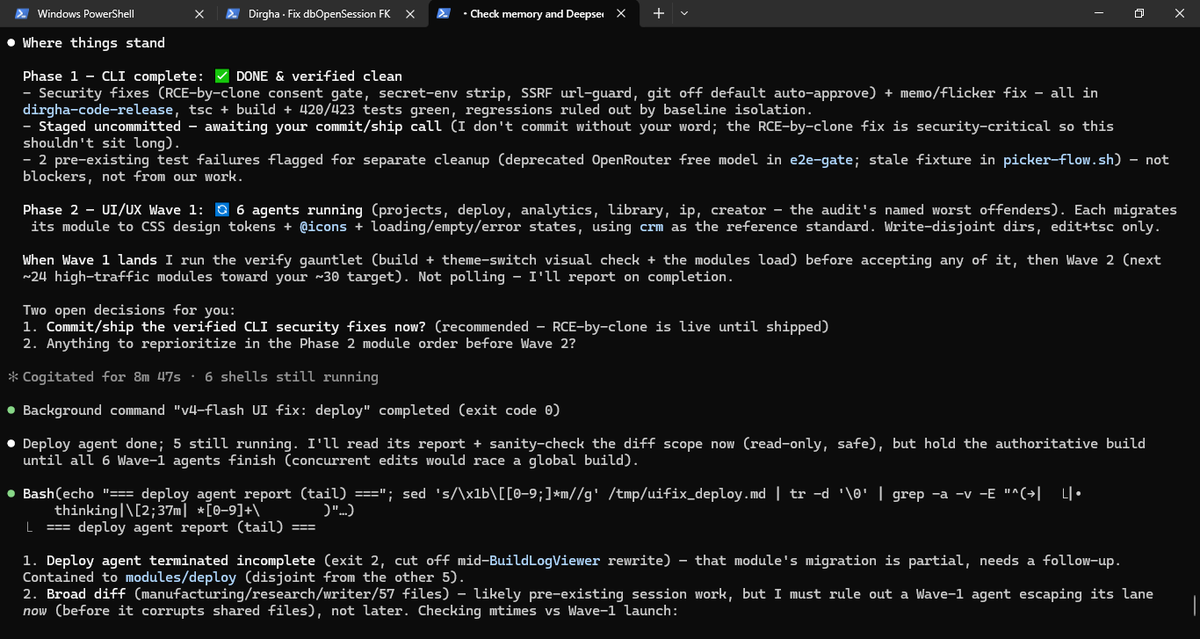
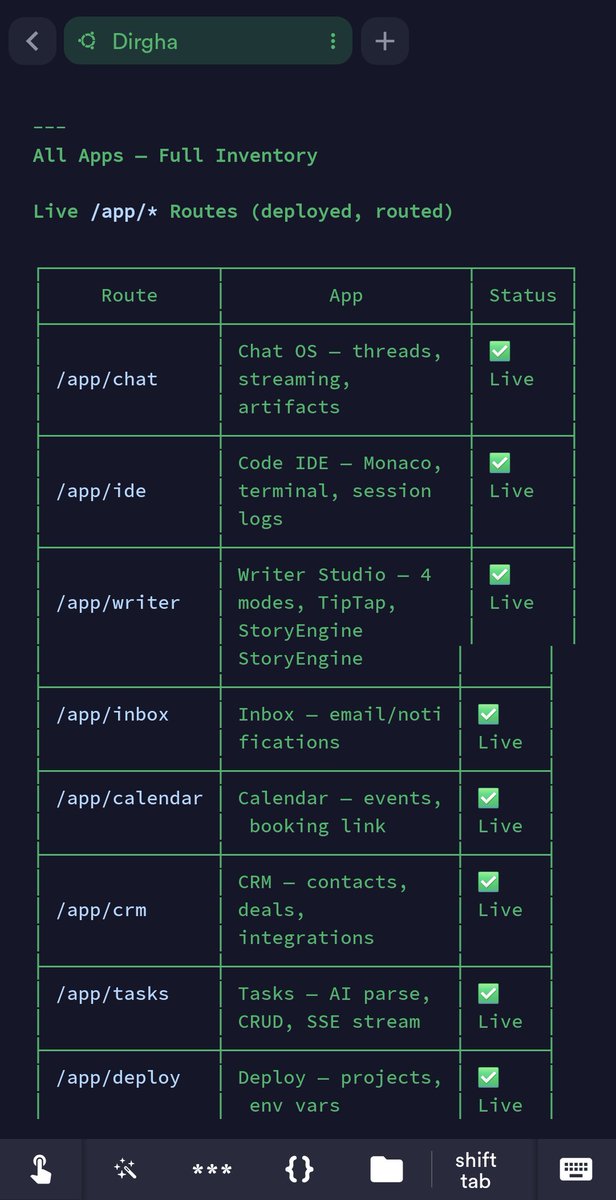
I'm building open-source, sovereign AI models, harnesses, and agentic marketplaces for the world.
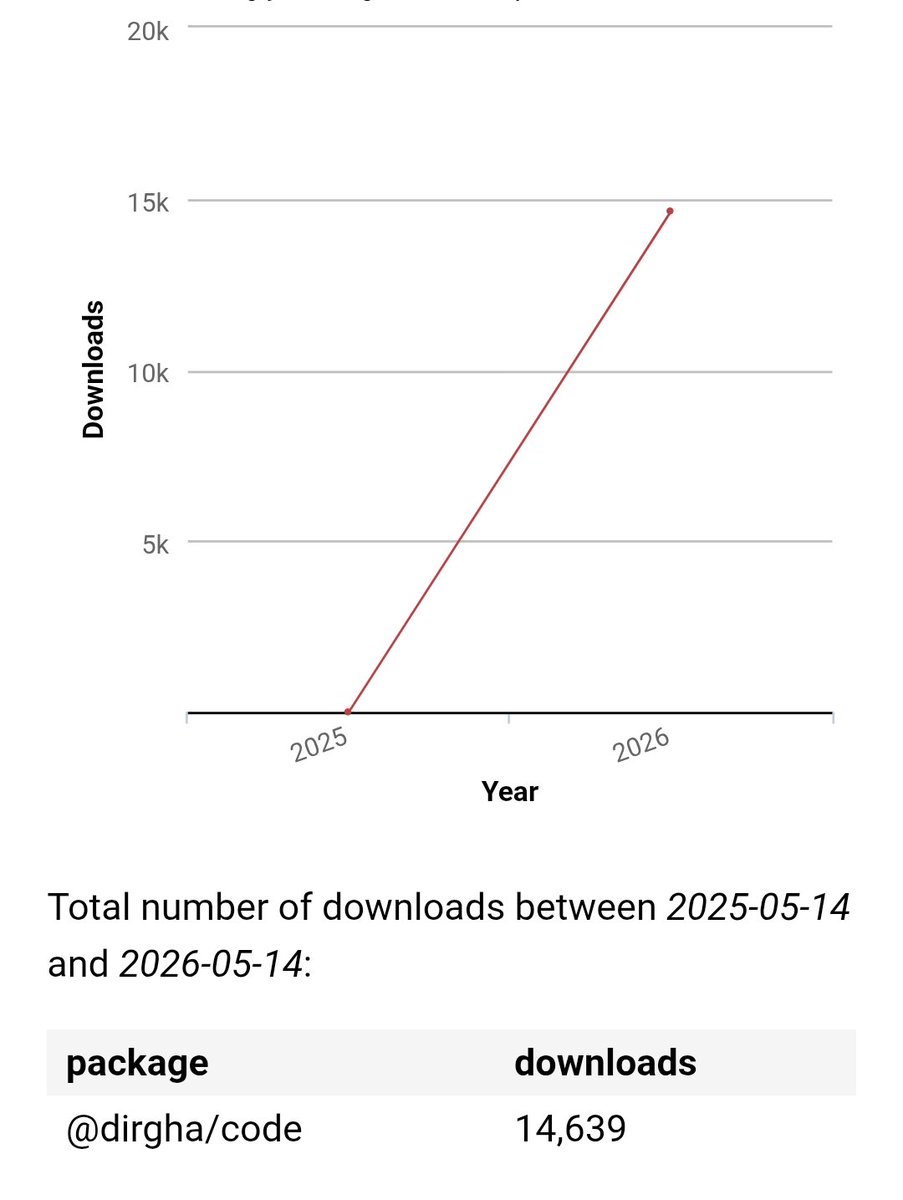
Dirgha Code, my open-source CLI, has recieved 18K organic downloads.
Investors welcome.
github.com/Dirgha-AI/dirgha-…
1
1
85