
Where the world turns to talk about science.
Joined May 2009
- Tweets 11,322
- Following 176
- Followers 9,736
- Likes 715
698 Photos and videos




Pinned Tweet

9 Oct 2025
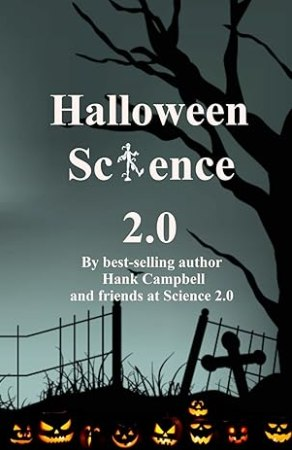
If knowledge is power, and power corrupts, become totally evil about Halloween science by reading Halloween Science 2.0, on Kindle, paperback, and hardback.
Link in comment:
4
1
302
ScienceBlogs retweeted
Someone stepped on my foot and I think they broke ...
1
45
Jun 13
Some people ridicule the term 'soccer', like it is some American invention. The "soccer" name was coined by the British, in the homeland of professional footie. To differentiate it from rugby football.
But that was then.
Are Yanks taking over the game now?
1
198
Jun 11
It was statistically impossible that Asia had 1.6 million fewer girls than they should have had in 2000. But ultrasound and desire for smaller families (and in China, government mandating one child) led to selective abortion of girls.
Now that normal sex ratio is below 200,000.
2
1
146
ScienceBlogs retweeted

Pleased to announce the first patient has been dosed in our Phase 1 clinical trial, evaluating our lead candidate for optic neuropathies. This marks a key milestone as our epigenetic restoration therapy enters the clinic for glaucoma & NAION. Read more: bit.ly/4urPcMn
10
26
146
9,615
ScienceBlogs retweeted

Every family is paying about $30k annually for healthcare they barely use, and that typically comes with a high deductible and out of pocket costs.
The median healthcare spend is $500 annually.
Now imagine an alternate version. Every American has a tax exempt HSA, but to participate, you must purchase at least a catastrophic insurance plan. If we allowed pre-ACA plans, we are looking at $6000-12000 per year. For the poor, instead of Medicaid or an ACA subsidy, the government just funds their HSA for them.
Now every family is putting $15k a year into an HSA. Most people would barely touch that. Maybe use some to pay for a DPC and the occasional lab or prescription. But by retirement, everyone would have $2-5 million saved up. That could pay for all lifetime medical expenses for 95% of Americans.
The only people who have to deal with insurance companies are those with catastrophic high cost events (trauma, cancer, etc). The only role government has is as a reinsurance to keep premiums low and help people with pre existing conditions get plans. Or for the truly destitute who burn through their HSA and cannot care for themselves (universal backstop coverage).
This would provide truly universal coverage, give money back to patients, simplify healthcare, and make every American richer.
Jun 5

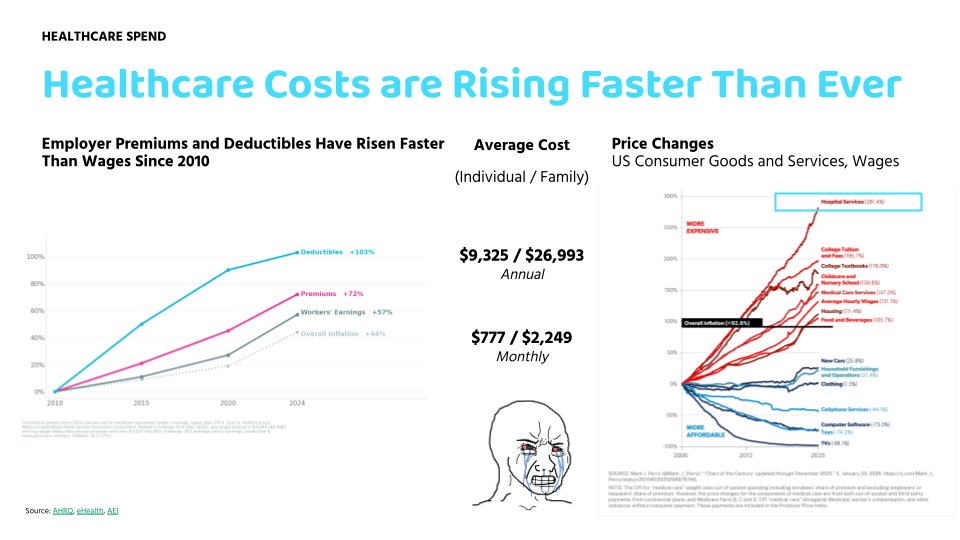
this always gives me such sticker shock - the average annual health insurance premium for families is nearly $27K now!
I updated the numbers for the upcoming Healthcare 101 course (starts July!) - one of the points I try to get across is that most people don't realize how much of their paycheck is getting eaten by healthcare. It feels indirect because
- it happens in the form of not getting wage increases
- it's deducted from your paycheck
- it happens in the form of Medicare taxes too
- Deductibles are only incurred when you actually get care, so you only "feel" that when you actually see the doctor but it is coming out of your pocket
Pretty crazy!
71
90
419
91,054
It's 100% junkification, because everything is linked to the same nonsensical selection pressure. It's humanities people who don't understand evolution.

"Why evolutionary psychology is comparatively resistant to junkification... Hypotheses must be linked to plausible selection pressures, fitness-relevant outcomes, and mechanistic pathways shaped by natural or sexual selection"
share.google/kThwSl4hZ5wCB2Z…
36
You're right about shingles and the rest is just weird alternative nonsense.

"We have a vaccine that prevents shingles, a vaccine that markedly lowers the risk of dementia, and a vaccine that might even slow aging itself. Conveniently, these three vaccines are actually just one: the shingles vaccine. But fewer than half of eligible Americans have received the vaccine." realclearscience.com/blog/20…
75
A mathematician walked by my truck and thought I was working on an equation.
1
51
May 31
In 100% of clinical trials, the only lifestyle change that works is fewer calories.
Like Einstein, energy balance has survived all challenges.
May 26

What the post also shows is that no single dietary intervention has been shown, in a long term study, to improve long term human health. Not diets that substitute polyunsaturated fats for saturated fats; not diets that replace fat with carbohydrate.
Yet I doubt there is a single faculty teaching human nutrition anywhere in the world that ever makes this point.
Probably the most important study is the LookAhead study which tested dietary fat reduction in obese type 2 diabetes. After 9.5 years it was given up as a. hopeless failure. Which of course it was not. It was only a failure for those who, filled with cognitive dissonance, have and will continue to prescribe that diet in the hope that somehow their patients will respond differently.
Yet what diet does one think is prescribed by "evidence-based" doctors and dietitians, for most of the world's persons living with that condition?
On the other hand, the one diet that has yet to be properly investigated with long term trials is the low-carbohydrate high-fat diet.
Yet the reason most usually advanced by the "evidence-based" practitioners to explain why the low-carbohydrate diet should not be prescribed is "because there are no long term studies".
So instead the diets that are prescribed (because there are long-term trials - regardless of outcomes) are exactly those which long-term studies show are either harmful or without effect.
A strange situation is it not?
@garytaubes @bigfatsurprise @lowcarbGP @BenBikmanPhD @markkaplan20 @AKoutnik @LoreofRunning1
73
May 29
60 years of selling antioxidant nonsense and the number of people helped by that supplement remains zero.
Apr 3

Big Pharma makes billions pushing statins and blood pressure meds on men.
9
ScienceBlogs retweeted

May 27
Don't tell either of them psychology isn't science and this claim proves it yet again.
May 25

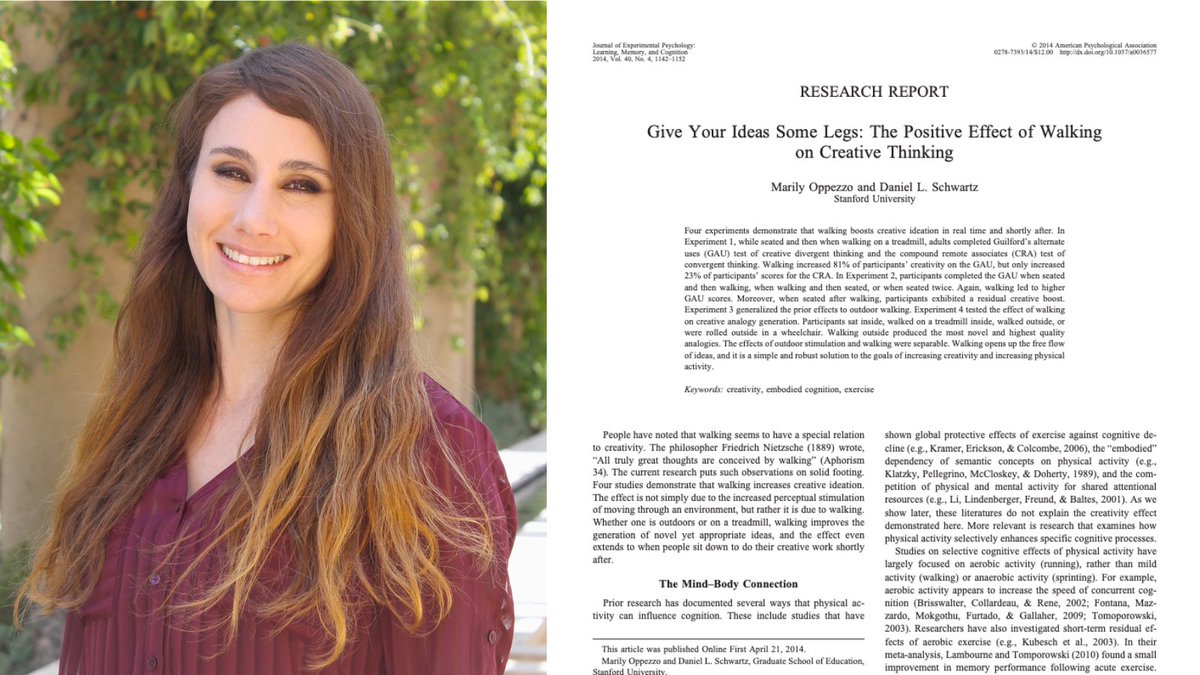
A Stanford psychologist spent 4 years proving that the simple act of walking generates 60% more creative ideas than sitting, and the experiment she designed to kill every alternative explanation is one of the most decisive findings in modern psychology.
Her name is Marily Oppezzo.
She got the idea for the study while walking with her advisor at Stanford to discuss her thesis topic, and the paper she eventually published in the Journal of Experimental Psychology in 2014 is sharp enough that it should have ended the seated meeting on the day it came out.
She ran 4 experiments on 176 people. Same person tested twice. Once sitting, once walking. The creativity tasks were the standard ones psychologists have used for decades to measure how good a brain is at generating novel useful ideas.
The result was almost too clean to publish.
81% of participants in the first experiment produced more creative ideas while walking than while sitting. In the second experiment, 88%. In the third, 100%. Every single person walked into a more creative version of themselves.
On average, people generated 60% more novel useful ideas the moment their legs started moving.
The skeptical question is the obvious one. Maybe it was the fresh air. Maybe it was the scenery passing by. Maybe it was the change of environment doing the work, not the walking itself.
Oppezzo killed every one of those explanations with one experimental decision.
She put people on a treadmill facing a blank wall. No scenery. No fresh air. No environmental change. Just legs moving in place while staring at white drywall. The 60% boost held.
Then she ran the experiment that closed the case completely. She took participants outside in two conditions. Half of them walked through a Stanford courtyard. The other half were pushed through the exact same courtyard in a wheelchair. Same outdoor stimulation. Same scenery passing at the same speed. The only difference was whether the legs were moving.
The walkers produced dramatically more novel high-quality ideas than the wheelchair group. The outdoors did almost nothing on its own. The walking did everything.
This is the part of the study that hit hardest when I read it the first time.
She also tested the opposite kind of thinking. Convergent thinking. The kind where there is one right answer and you have to narrow down to it.
Word puzzles where 3 words share a hidden fourth word that connects them. The seated participants did slightly better on these. Walkers got slightly worse.
Walking is not a general intelligence enhancer. It does one specific thing. It opens up the divergent search inside your brain. The part that generates options. The part that produces unexpected connections. The part that takes a problem and finds five ways into it instead of one.
When you need to converge on the single right answer, sit down. When you need to find the answer in the first place, get up.
The mechanism is now well understood. Walking selectively activates what neuroscientists call the default mode network, the system inside your brain that runs when you are not consciously focused on anything. The DMN is where mind-wandering happens. Where memories cross-reference each other. Where ideas that have been sitting in separate folders inside your head finally bump into each other.
When you sit at a desk and force yourself to concentrate, you suppress the DMN. When you walk at a natural pace, the executive part of your brain gets just busy enough handling the walking that the DMN comes online and starts doing the work that focus was blocking.
The most useful finding in the entire paper is the one almost nobody quotes.
The boost did not turn off the moment people stopped walking. Participants who walked first and then sat back down stayed elevated. Their next round of seated creativity work was still significantly better than people who had been sitting the whole time. The rest lingered for at least several minutes after the legs stopped moving.
You do not need to do creative work while walking. You need to walk before the creative work. The brain holds the state.
The history of this is the part that should haunt anyone who still does meetings in chairs.
Charles Darwin built a gravel loop behind his house in Kent called the Sandwalk and walked it 3 times a day for the rest of his life. The theory of evolution was developed one lap at a time on that path.
Nietzsche walked up to 10 hours a day during the years he wrote his most important books and openly said the work was conceived on his feet.
Beethoven composed for the morning and walked for 5 hours every afternoon with a pencil in his pocket for when something landed.
Kahneman said the best thinking of his Nobel Prize-winning career happened on leisurely walks with Amos Tversky. Steve Jobs refused to take important conversations sitting down. He held them on foot.
Every one of them was using the system Oppezzo would not measure until 2014. They just did not know what to call it.
The question worth sitting with is the one almost nobody asks.
Every meeting you have ever attended sitting around a table was a meeting held at a fraction of the brain power that was actually available to the people in the room. Every brainstorm that got stuck inside a conference room. Every problem you tried to solve at a desk and gave up on. Every idea you could not quite get to.
The intervention is the easiest one in modern science. No supplement. No app. No subscription. No training program. Just a pair of legs and 15 minutes.
The Stanford lab proved it. The philosophers knew it. The neuroscience explains it.
And almost everyone reading this is still trying to think their way out of problems sitting completely still.
1
102
May 28
All blood tests of the last 15 years have done a1c
May 28

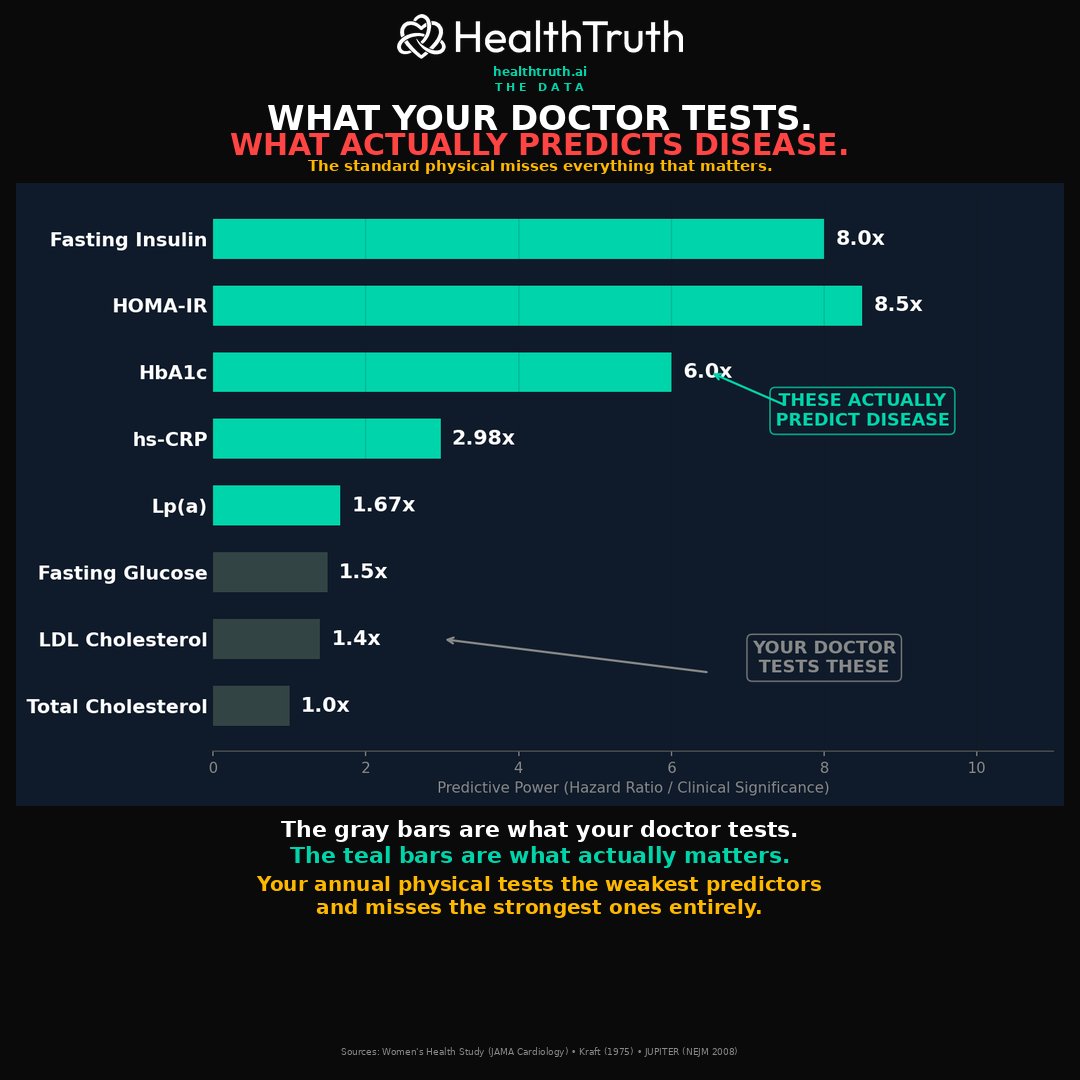
I have posted six threads in the last month. Over 400,000 views. Thousands of replies.
The same question keeps appearing. Over and over. In every thread.
"What tests should I actually get?"
Here are the five tests. Under $150. No prescription needed at most direct-access labs. Backed by studies published in the New England Journal of Medicine and JAMA Cardiology.
These five tests would have caught my heart disease years before it almost killed me at 52.
Your annual physical does not include a single one of them.
🧵
62
May 28
Places like California and Germany that subsidized and mandated solar before it is viable have seen electricity costs rise 100%, meaning now poor people can't even sleep as healthy as wealthy elites.
May 28

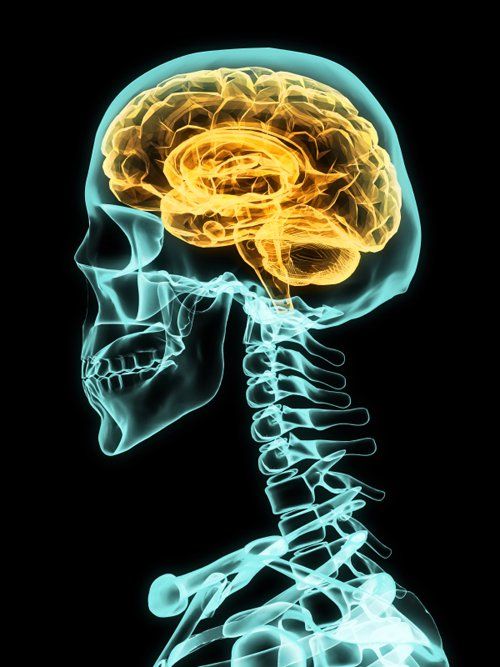
Harvard just proved bedroom temperature controls sleep quality.
Participants fell asleep in 6.2 minutes when cool vs 20 minutes when warm.
Yet most people still don't optimize this simple factor.
Here's the exact temperature range that triggers deep, restful sleep: 🧵
1
53
May 28
They are still death sentences.

Five cancers that used to be death sentences. Pancreatic. Glioblastoma. Triple-negative breast. Renal. Melanoma. The median survival for metastatic pancreatic cancer is still 6 months. Glioblastoma, 15 months.
Now personalized mRNA vaccines are producing complete remissions in some of these patients. Not responses. Remissions.
BioNTech’s pancreatic cancer vaccine has 6-year follow-up data. 8 of 16 patients who mounted an immune response are still alive. For a cancer that kills 95% of patients within 5 years, that's incredible.
Topol’s pyramid here maps the trajectory. From broad checkpoint inhibitors at the base to personalized neoantigen vaccines at the peak. The technology is climbing.
47
ScienceBlogs retweeted

To every medical resident and physician looking for a place to plant roots: New Mexico is calling. Free child care. Tuition-free college for your kids. And now up to $300,000 in student loan repayment for physicians. We’re working to make New Mexico The best place in America to practice medicine and build a life.
Applications for student loan forgiveness open June 1. Link in the first comment.
#NewMexico #Physicians #LoanForgiveness #NMHealth
362
1,599
7,833
778,129
May 28
If *how* you take the product impacts the result, the result is not a real effect, it's only epidemiology.
May 28

"Research shows that garlic affects your lipid health as well as your taste buds. But how you take it plays a big role in how well it works." via @sciencefocus realclearscience.com/2026/05…

59
May 26
Who's laughing about my degree in theoretical phys ed now???
May 26

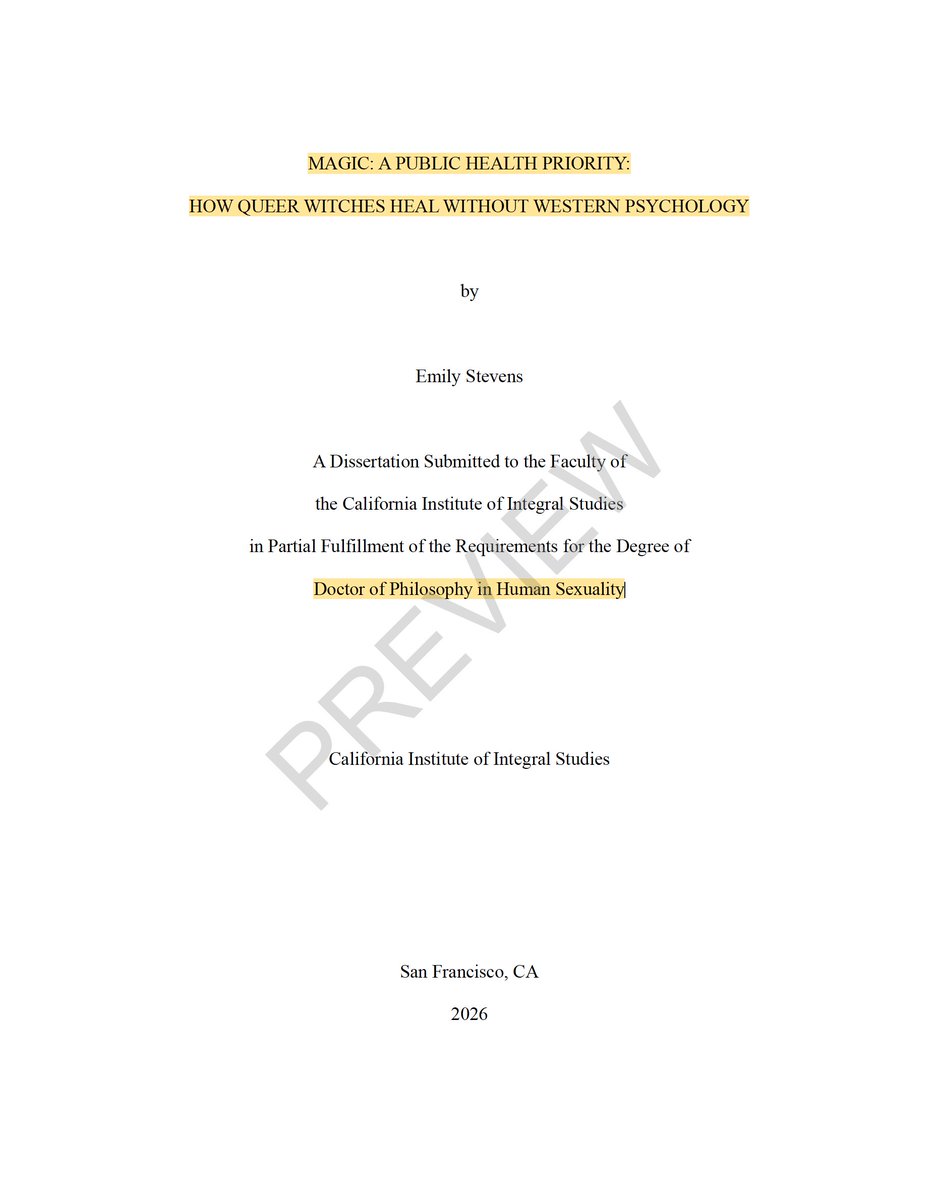
This person just got a PhD in human sexuality for a thesis about "How Queer Witches Heal Without Western Psychology" and why "magic" should be a "public health priority."
From the abstract:
"What can queer pagan liminal healing practices teach therapists and other practitioners? Investigating the dichotomies of clinical versus spiritual and history versus present, as well as the inherent liminality between queer memory and queer futurity, aid us in understanding the many subaltern patterns of queer witch healing that are created in the absence of support from mental health fields of practice."
96
May 23
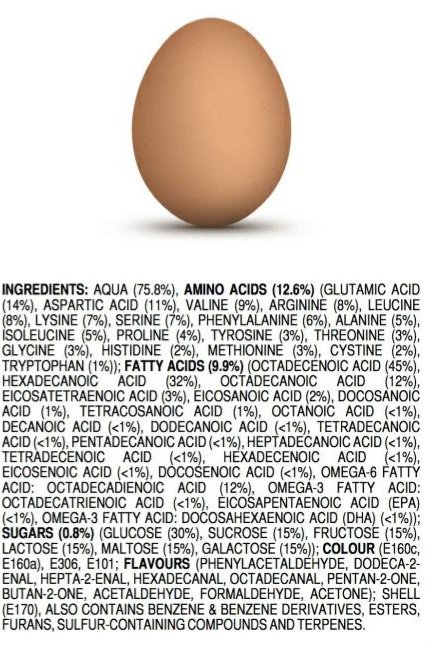
Don't tell the anti-science hippies who flipped to the Republican party that everything in the world is made of chemicals.
Here are the chemicals in a holistic, free range, certified organic egg.
Oh no, the science is killing us!
May 23

RFK Jr. reveals FDA officials admitted they literally do not know how many chemicals are in the American food supply.
“When I came in, I asked FDA, ‘How many chemicals are in our food?’”
“They said, ‘We don’t know.’”
“‘We don’t have a list of them.’”
“It’s somewhere between 4,000 and 12,000.”
“In Europe, they only have 400 chemicals in their food.”
“The 9,600 extra ones that we have are all illegal there.”
1
2
98