
Joined October 2025
- Tweets 848
- Following 82
- Followers 415
- Likes 2,080
194 Photos and videos


Jun 6
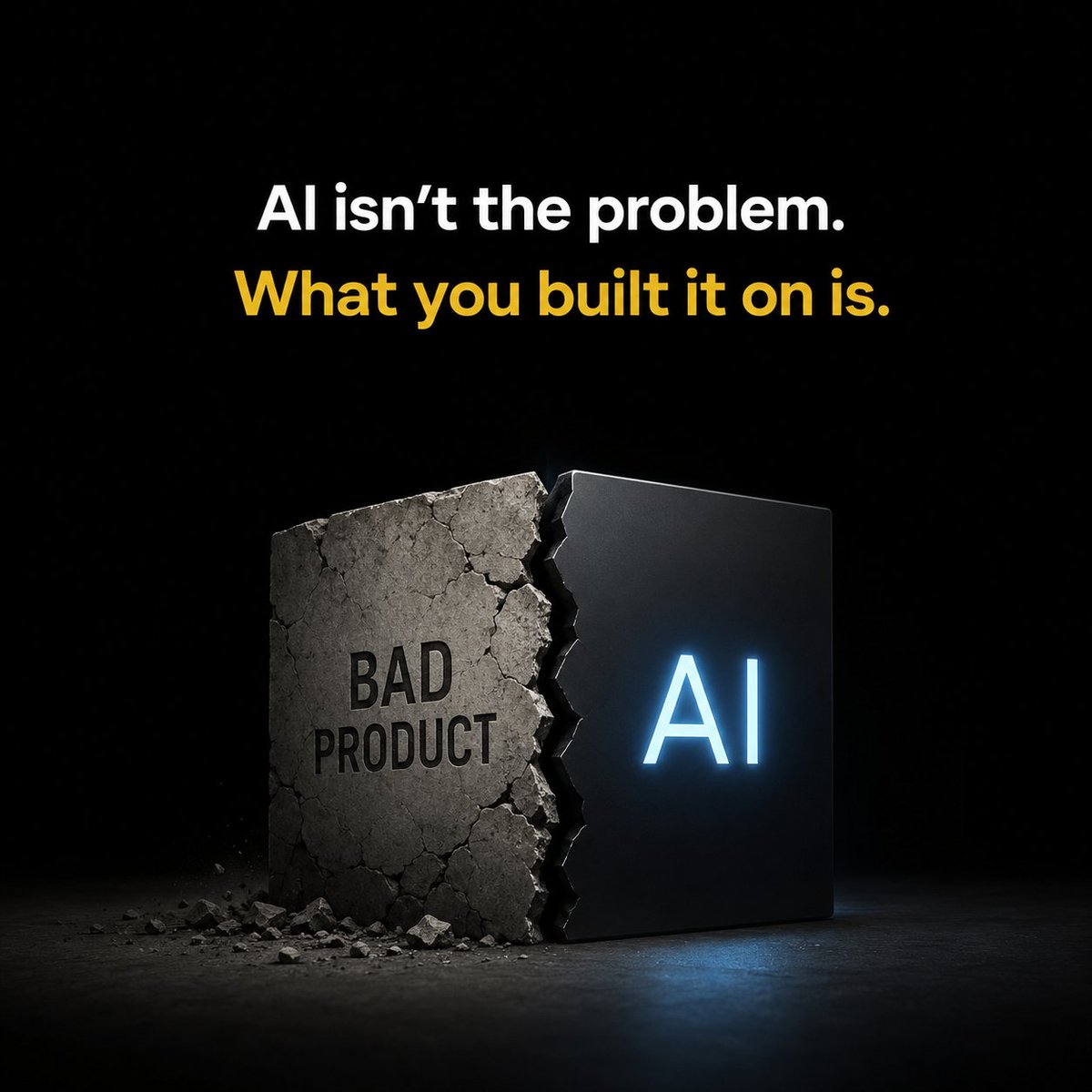
AI doesn’t save a weak product.
It only amplifies what is already there.
If the onboarding is confusing, AI won’t fix it.
If users don’t understand the value, AI won’t fix it.
If retention is weak, AI won’t magically make people come back.
In mobile apps, the foundation still matters:
clear positioning
simple UX
fast value moment
strong onboarding
clean paywall
retention loop
AI can make a good product more powerful.
But it won’t turn a broken product into a business.
Fix the core first.
Then make it intelligent.
Jun 6

DO NOT ADD NEW FEATURES BEFORE FIXING WHAT'S BROKEN AND PROVING THE CONCEPT FIRST!
Everyone's racing to add AI to their app.
But 80% of them fail because of a very simple reason:
They put AI on top of a broken product. And then the product keeps failing, just with a higher cost.
Don't forget:
- AI doesn't fix bad UX.
- AI doesn't fix confusing navigation.
- AI doesn't fix a value prop nobody gets.
7
84
Jun 5
You don’t always need a new app idea.
You need a proven demand with a sharper angle.
Check what people already download.
Check what they already pay for.
Check what they complain about.
That’s where the opportunity usually is.
The best app ideas are not always invented.
Sometimes they are discovered inside existing markets.
Jun 5
Do you really need to invent the idea to make money?
Definitely no! You just need to Christopher Columbus it.
You want to earn money.
You know the potential in the mobile app world. You just don't know what to build.
Here is the easy way:
Go to Sensor Tower. Go category by category. Check what people are downloading. What they're paying for.
That's it. That's one of the best strategies I use.
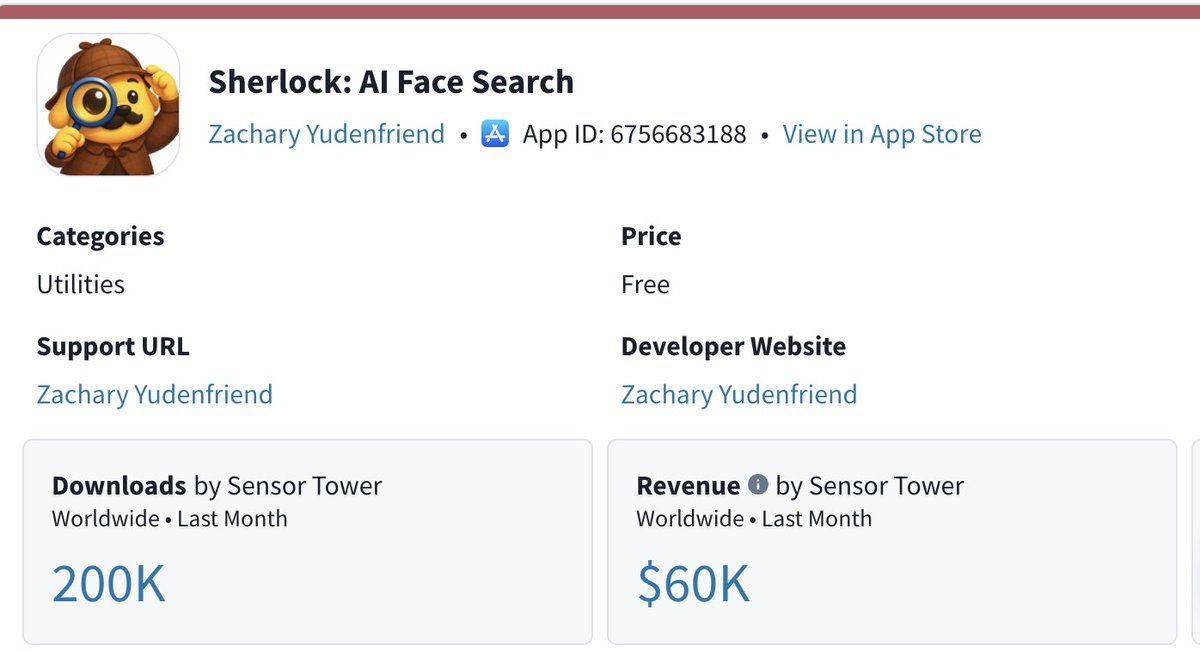
I was doing this today and saw Sherlock - an AI face search app. I don't know the founder, but if you do, you can tag him. (It would be nice to meet :))
Maybe there's some paid marketing in the app, but still - it's a great success: $60K revenue in just 6 months 🤑
Anyway, what I'm trying to say is that you can figure out what to build and where to start just by checking what's already working.
Most people are waiting for an original idea to strike - while the smart ones are already on Sensor Tower 🙃
5
74
Jun 4
Big categories don’t create big opportunities.
Clear user intent does.
"Fitness app" is too broad.
"10-minute abs at home" is clear.
"AI photo app" is too broad.
"Better LinkedIn profile photo" is clear.
The money doesn’t always go to the biggest category.
It goes to the clearest promise.
3
8
74
May 31
I wouldn’t decide only by the $5K MRR.
I’d look at the signal behind it.
Where is the growth coming from?
Is retention healthy?
Are users renewing?
Can acquisition scale?
Is the paywall converting consistently?
Is the category big enough?
A $100K offer can feel great.
But if the app has strong early signals, clear distribution, and room to compound, selling too early can be the expensive decision.
Sometimes the hardest part is not building the app.
It is knowing when not to sell.
May 30

Your app hits the App Store. First month $5K MRR. $100K offer on the table.
Take it or keep building for $1M?
4
88
May 30
Don’t panic-optimize your App Store page.
A sudden ranking drop does not always mean your product got worse.
It can be:
- algorithm shift
- category movement
- weekend traffic
- competitor spike
- keyword recalibration
- traffic quality change
Before changing screenshots, keywords, or pricing, wait for the signal to settle.
Bad timing can turn a temporary ranking change into a real conversion problem.
5
79
May 29
Last month:
$4K revenue.
This month so far:
$20K revenue.
You’d think growth makes you feel relaxed.
It doesn’t.
It makes you more obsessed with every metric:
retention
CAC
paywall CVR
refunds
renewals
LTV
The first revenue feels exciting.
Sustaining growth is where the real stress begins.
1
5
60
May 29
AI made building apps faster.
It did not make building app businesses easier.
The winning stack is still:
clear pain
simple UX
fast value moment
strong positioning
one distribution channel
clean paywall
retention loop
constant iteration
The app is not the business.
The system around the app is.

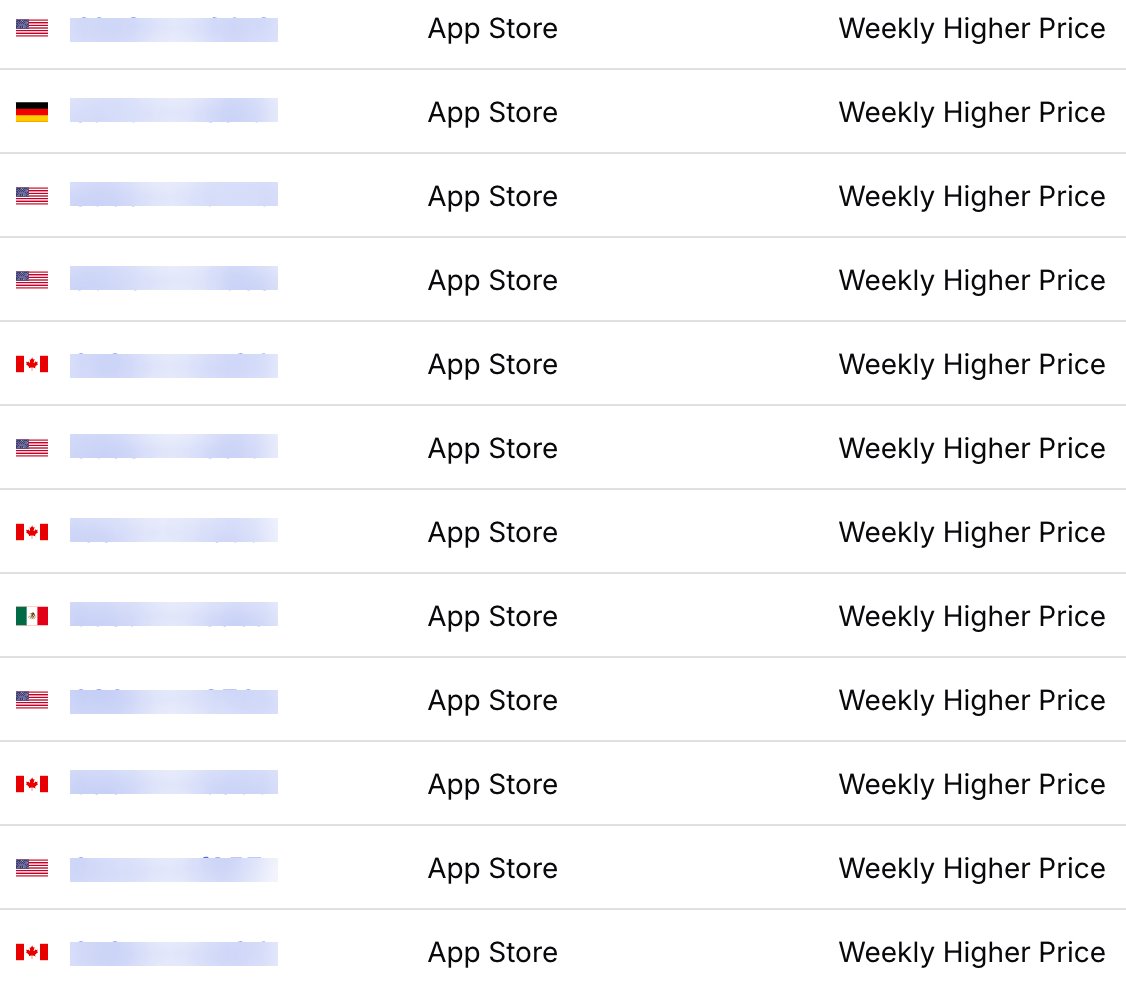
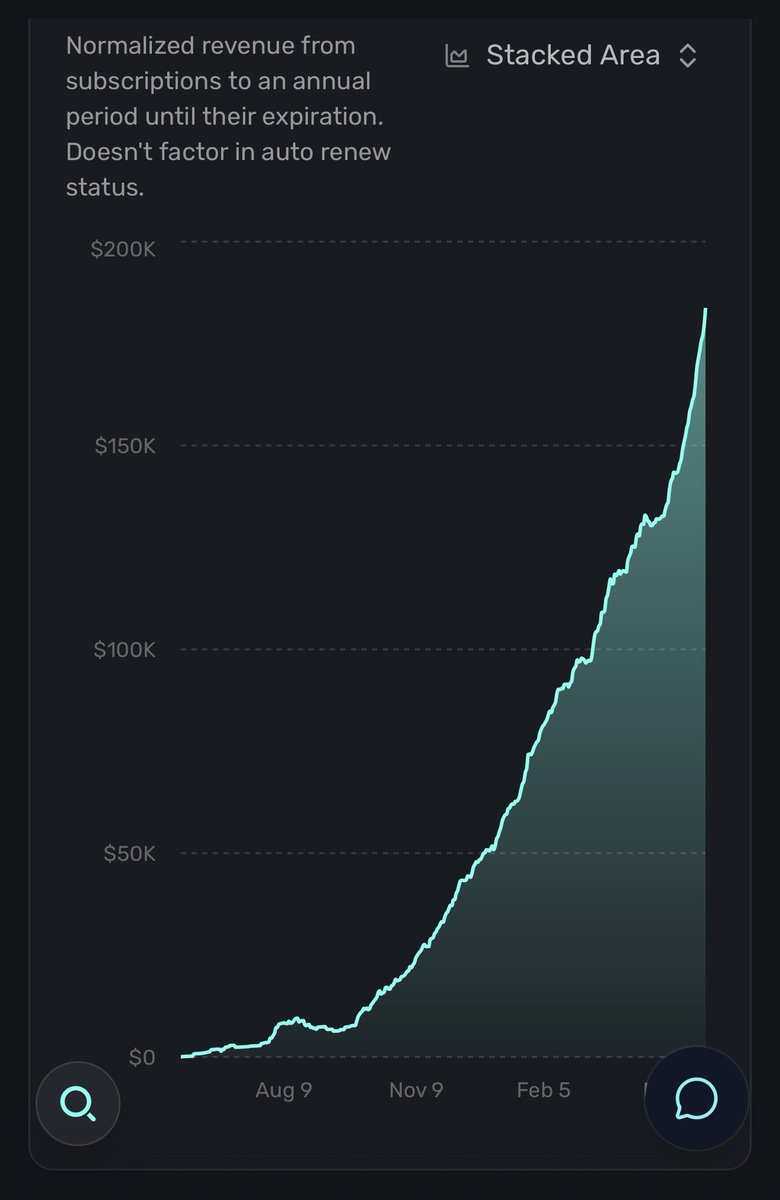
we made $50k in the last 30 days
with one single mobile app
here's how you can do the same in 3 simple steps:
1. Improve an existing app or combine two
different app concepts into a new app
2. make the app with AI in less than 2 weeks
(in reality it should be less than a week)
3. market your app with either founder led
content, influencers, UGC or paid ads
I recommend starting with founder led then
then doing UGC paid ads at the same time
it might take time, it took me 3 years to
make my first dollar online
but if you keep going you are guaranteed to win
3
51
May 26
Just when it felt like every idea was already taken,
everything changed.
We found a niche on the App Store with almost no real competition.
One month later, it reached $20K MRR.
That reminded me of something important:
There is always something to build.
You just need to stop looking for "new ideas" and start looking for overlooked demand.
Most opportunities don’t look obvious at first.
That’s why they are still opportunities.
May 25

In 2026,
• Every idea feels taken
• Every API already exists
• Every SaaS has 12 competitors
• Every startup is already on Product Hunt
So what the hell do we build now 😭
1
3
73
May 25
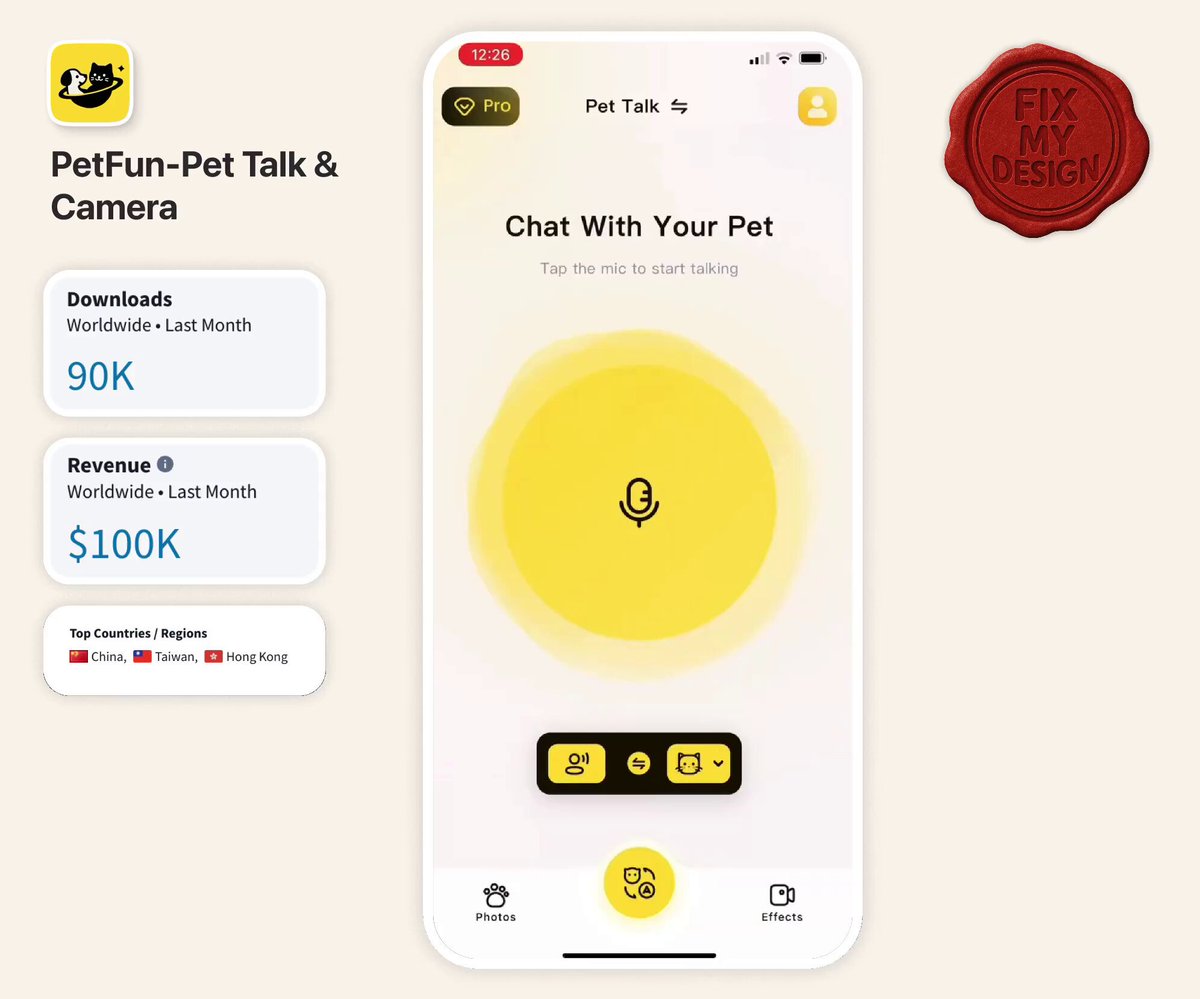
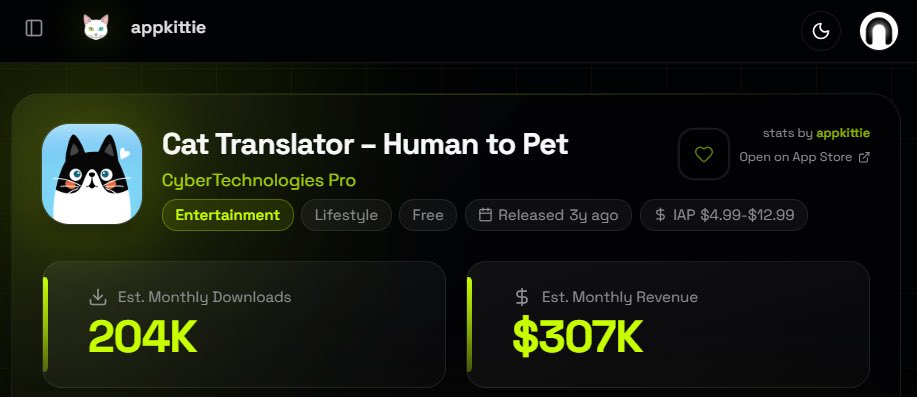
People laugh at apps like this.
But the product logic is solid.
Pet owners = emotional audience
Cat meows = curiosity trigger
Translation result = instant value
Funny output = shareable content
Paywall timing = obvious moment
It is not about building a complex product.
It is about packaging a strong emotion into a simple flow.
Silly apps can still be very serious businesses.

1
7
89
May 25
Getting more App Store reviews is not just about asking.
It is about asking at the right moment.
A lot of apps show the review prompt too early.
Before the user gets value.
Before the first win.
Before trust is built.
That usually feels annoying.
The best review moments usually come after:
- a completed task
- a good result
- a saved plan
- a successful scan
- a finished workout
- a helpful support reply
- a clear “aha” moment
Review flow = timing emotion context.
If the user just felt progress, help, or relief,
the review request feels natural.
If they didn’t feel anything yet,
it feels like interruption.
Small UX timing detail.
Big App Store impact.
May 23

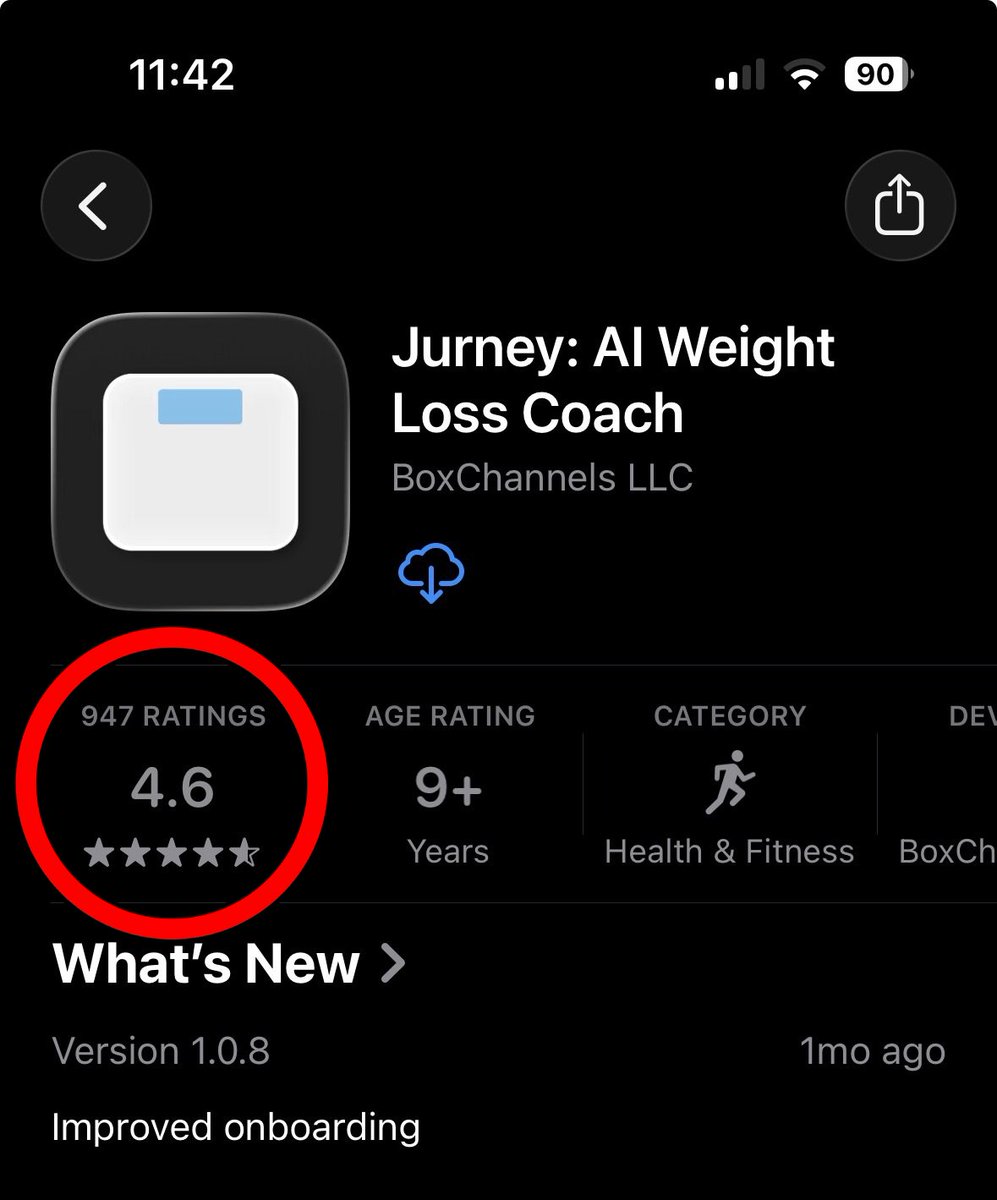
I’m almost at 1,000 reviews on my first app 🔥
Tips to get more reviews:
- In your onboarding, have a review screen that asks users for a review
- Add features in the app users enjoy so they will leave a positive review
- Always be quick to any support emails and at the end of every email chain bring up how a review would be beneficial if their problem was helped/fixed
4
115
May 24
This is my favorite part of this business.
While you’re dealing with dozens of other things, the system keeps working.
1
6
120
May 23
Web funnels can be a huge unlock,
but only if the full flow is designed properly.
The win is not just avoiding the App Store cut.
It’s also testing different hooks, landing pages, offers, pricing, and onboarding angles much faster than you can inside the app.
But the web-to-app handoff has to be clean.
If the transition feels broken, you save on fees but lose conversion.
May 22
The founder of Cal AI ($2M/mo) recommends web funnels
Not sure if they’ve implemented it yet, but the difference would be huge:
$2M/month - Apple’s 30% cut = $1.4M❌
Using web funnel = $1.9M✅
(With tools like funnelfox it can be integrated very easily btw)
4
68
May 23
Don’t build a fitness app before reading this.
The fitness category looks very attractive from the outside.
Huge audience.
Clear problem.
People want to be healthier.
Subscription model makes sense.
Content seems easy to create.
But once you get into it, you realize it is one of the hardest categories.
Because in a fitness app, your real competitor is not only other apps.
It is the user’s low motivation.
Their habit of postponing.
Their busy life.
The fact that they forget the app after the first week of excitement.
So when a user downloads the app, the problem is not solved.
Most of the time, the real problem starts there.
You can get conversion on day one.
But if you can’t move users to day 7, day 14, and day 30, the model starts to break very fast.
This is one of the biggest risks we’ve seen in this category.
Because in a fitness app, users are not just buying features.
They want to buy discipline.
They want to buy motivation.
They want to buy results.
But because the result is not visible immediately, the product needs to show small wins all the time.
A completed task today.
Weekly progress.
Streaks.
A personal plan.
An easy first action.
Realistic goals.
A reminder at the right time.
A return flow that doesn’t make the user feel guilty.
Without these, the app slowly becomes just another workout app.
Another big risk is differentiation.
Giving workout plans is not enough anymore.
If there is no AI coach, camera tracking, gamification, community, challenge, habit loop, or a very clear niche, it gets harder to stand out on the App Store.
I don’t think building a fitness app is a bad idea.
But building it with the mindset of "people already want to work out" is very risky.
In this category, looking good is not enough.
You need to build a system that brings users back even on the days they lose motivation.
5
47
May 23
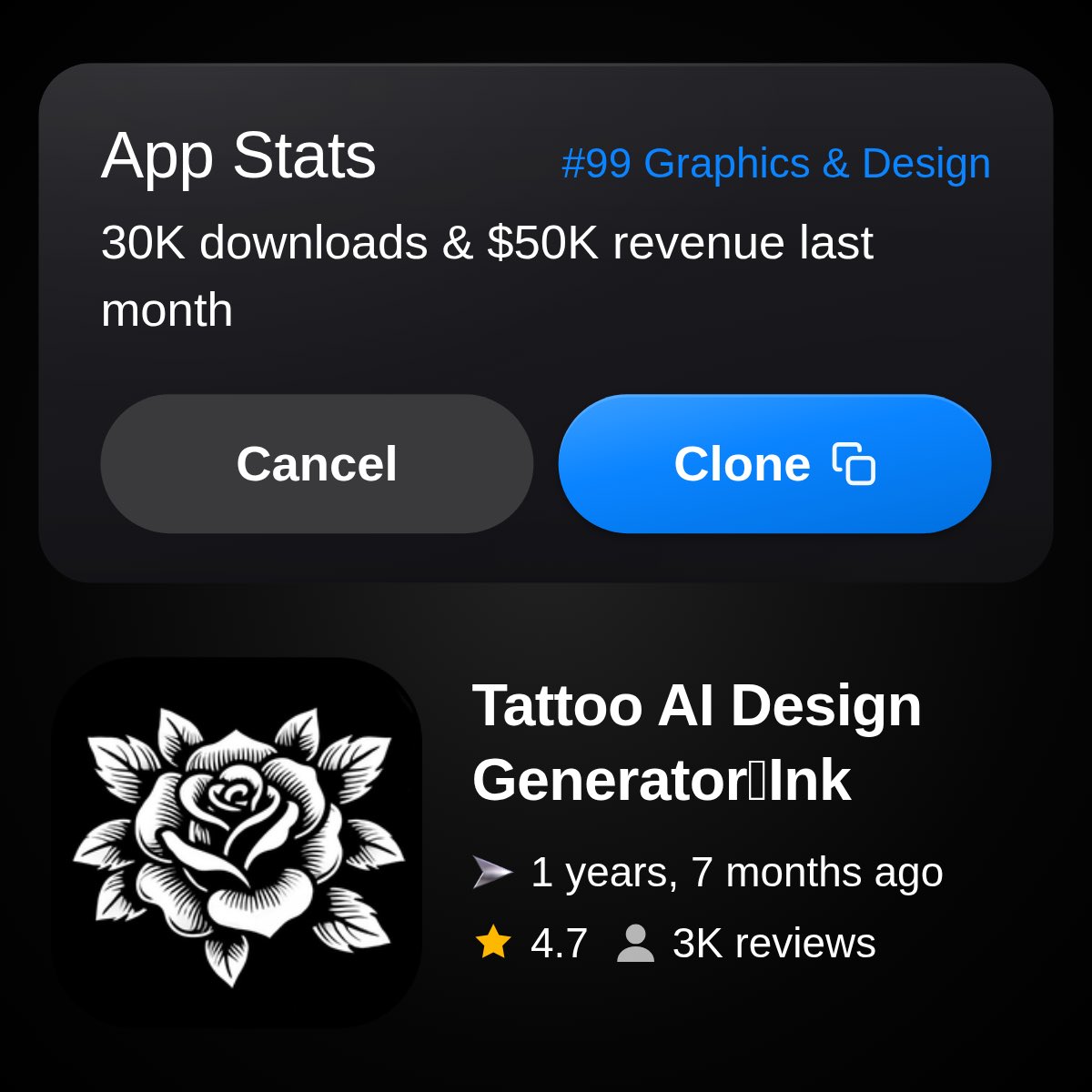
A tattoo generator app is simple.
But the intent is strong:
"I want to see this before I put it on my body."
That’s emotional.
That’s visual.
That’s shareable.
Perfect for UGC.
Simple product.
Clear niche.
Fast output.
Strong content loop.
Easy paywall moment.
Not every app needs to be complex.
Some just need to package one desire really well.
May 23

$50K/mo for a tattoo app thats literally a nano banana wrapper 😭
literally just a prompt box to describe what tattoo you want
30K people downloaded this in a month
→ hire 8 UGC creators,
60 videos/mo each
→ hook: “ pranking my religious mom that I got a tattoo”
→ spark ads on top posts
→ automate faceless accounts with open claw
→ pull 20M views a month
congratulations you now own a tattoo shop that never closes
1
6
97
May 22
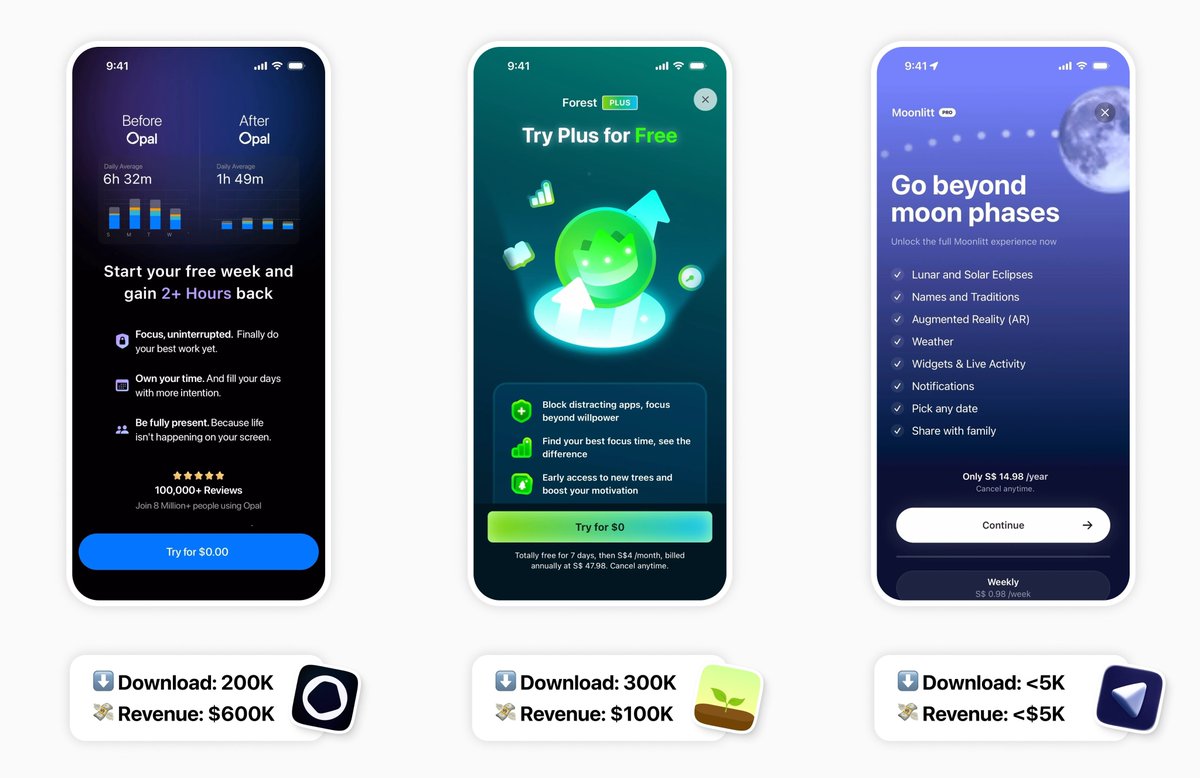
I really like weekly plans in mobile apps.
Especially when the app gives value fast.
Weekly pricing lowers the first decision.
It works best when users can quickly feel:
"I need this now."
AI tools.
Fitness apps.
Dating apps.
Photo/video apps.
Scan-based apps.
Fast value high intent weekly plan can be a very strong combo.
3
8
124
May 22
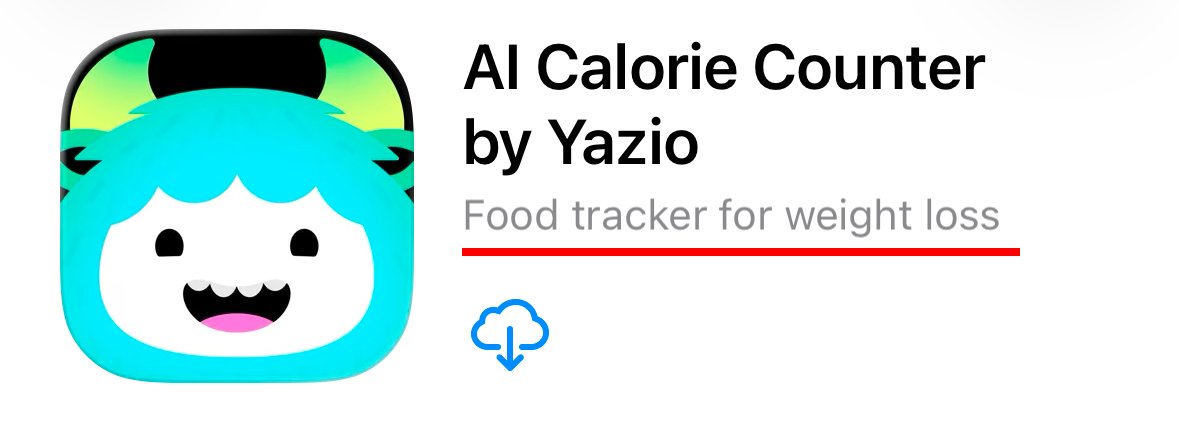
Your App Store subtitle is not a tagline.
It is a search field.
A lot of apps waste those 30 characters trying to sound clever.
But users don’t search for:
"Find your calm"
"Unlock your potential"
"Master your money"
They search for:
"Meditation"
"Workout tracker"
"Budget planner"
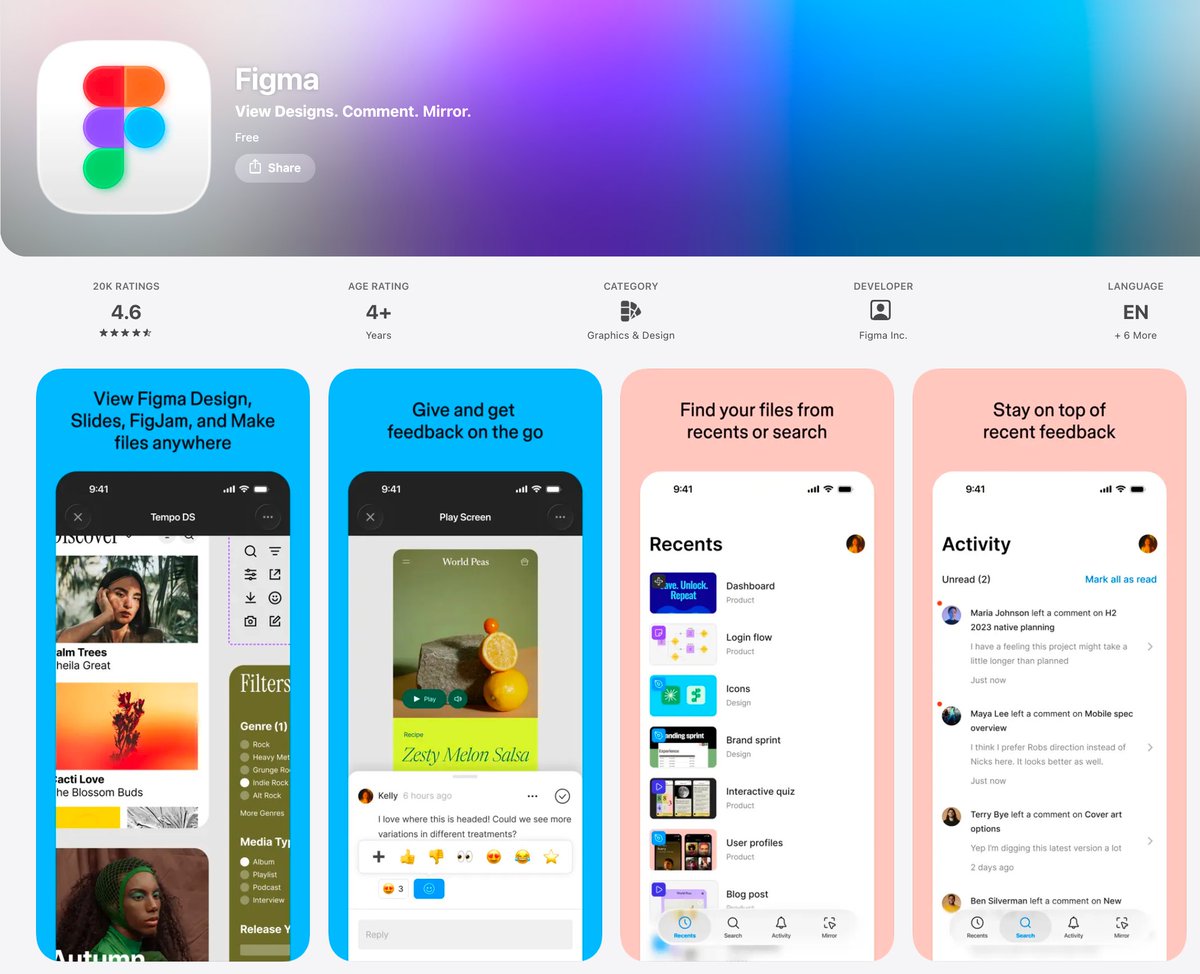
App name = brand
Subtitle = keywords
Screenshots = conversion
Simple rule:
Be clear in search.
Be persuasive in screenshots.
1
3
65
May 22
Have an app idea?
Let’s turn it into a product ready to grow🔥
Book a call
cal.com/appgco/30min
4
38
May 21
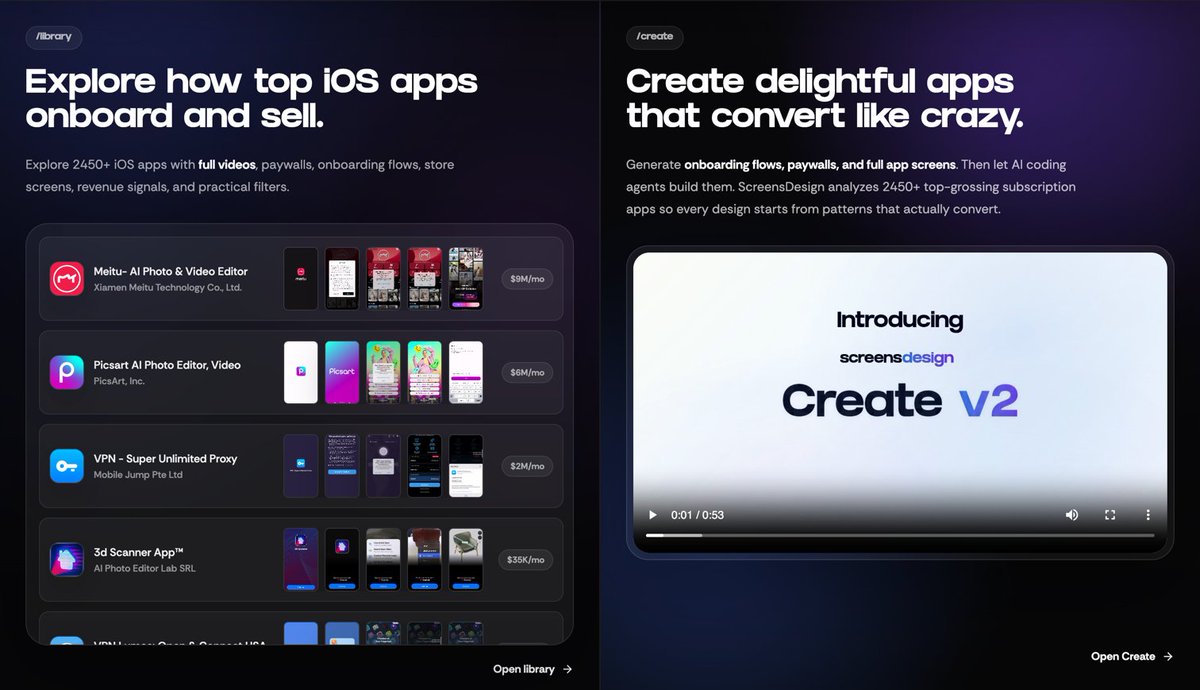
ScreensDesign V2 looks really good.
Especially for people working on mobile apps, it feels less like just an inspiration library now, and more like a useful research tool.
Some of the new things they added:
- Animation Explorer
- App Store Screenshots
- Web Onboardings
- ReadReviews to read app reviews
- Onboarding, paywall, and full app flow examples
The most valuable part for me is this:
You are not just looking at beautiful screens.
You can quickly analyze what works in real apps, how flows are structured, and what users are saying in reviews.
This can save a lot of time for anyone designing mobile apps, preparing App Store screenshots, or researching onboarding and paywall flows.

2996 customers later, it’s time to release ScreensDesign V2 !
3 months of work.
A more complete library.
A truly agentic /create.
→ Research what works in real iOS apps
→ generate onboarding, paywalls, and full app flows
→ hand it to AI coding agents
→ Make the printer go brrrr
First 200 retweets replies/DMs get free credits dm'ed ;)
screensdesign.com
3
5
175
May 21
They also created a special 50% discount code for us.
Click the link below and use the code on the Stripe checkout page.
You can get the PRO plan for $39.50 instead of $79.
Link: screensdesign.com/?ref=serha…
Code: SERHAN
#collaboration
3
59