787 Photos and videos
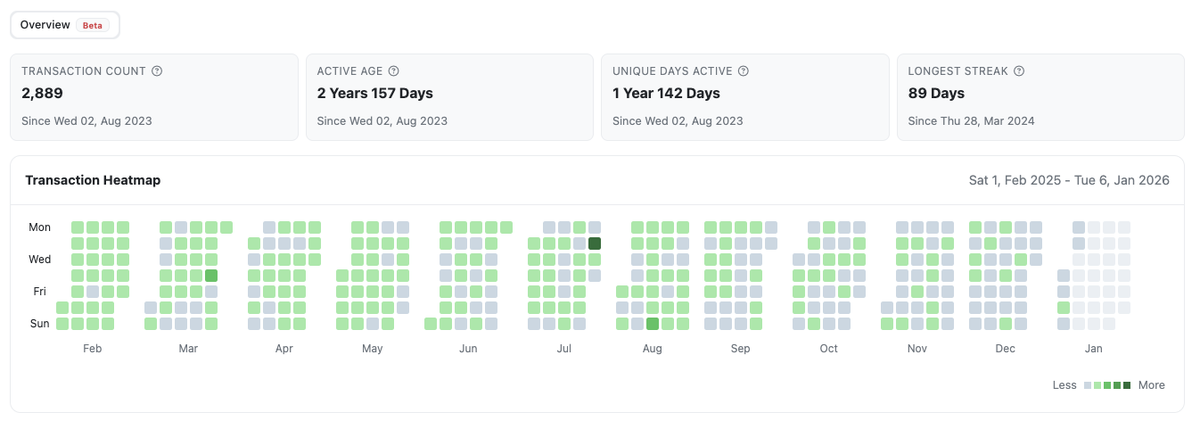
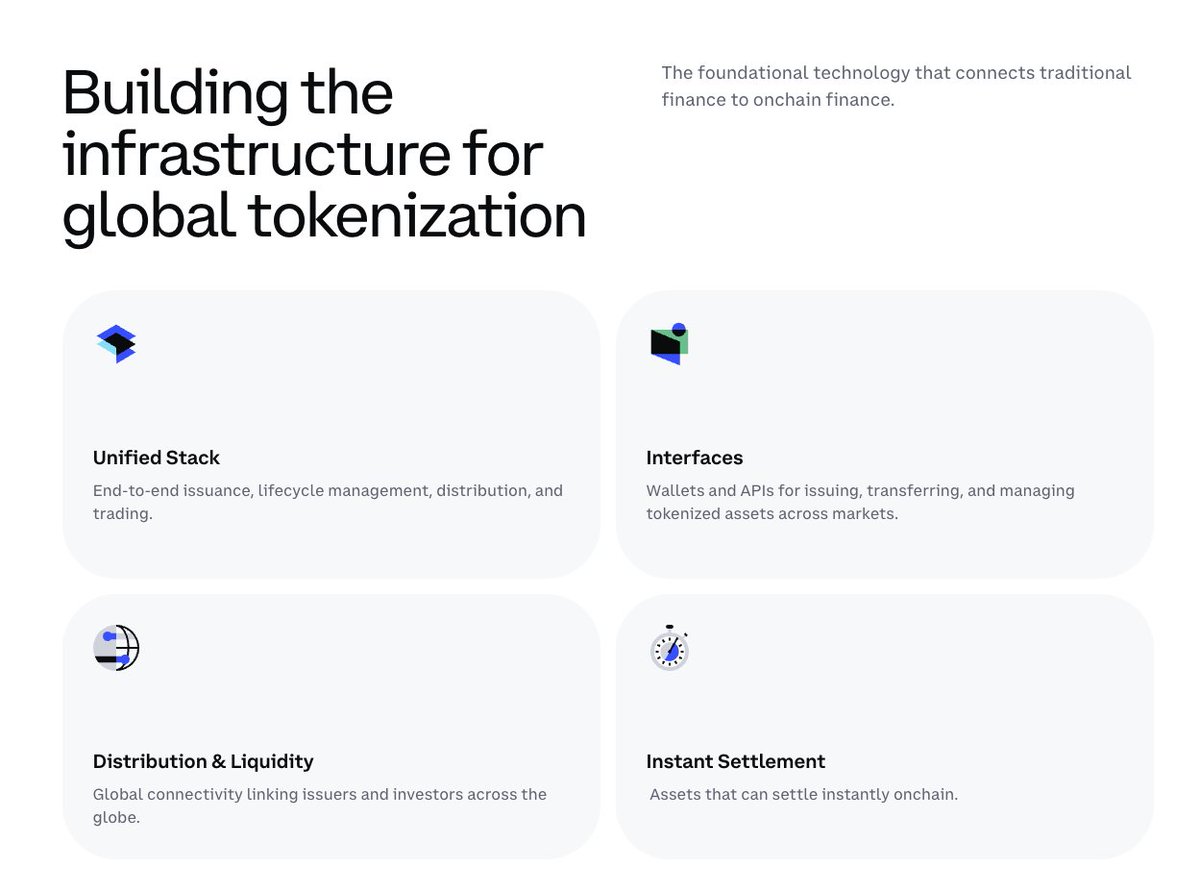


we’re excited to launch The Blue Carpet
a comprehensive suite of products and services designed to empower asset issuers
this is our way of making sure the next wave of builders have the tools and support for long-term success
hit me up to learn more
coinbase.com/blog/rolling-ou…
226
33
444
198,491
You should be pissed.
While VCs and others on the inside of these private rounds are getting rich off SpaceX, OpenAI, and Anthropic IPOs, you’ve been shut out
It’s blatantly unfair
But it doesn’t have to stay this way
Once you’re ready to admit there’s a problem and do some research into how to solve it, decentralized funding on the blockchain will be waiting. Fully functional.
3
9
539
shaaa retweeted

Jun 11
Meet Coinbase for Agents.
Give your agent its own account to:
→ Execute trades & manage your portfolio
→ Run autonomously under guardrails
→ Pay for data & research tools via x402 (coming next week)
Agentic finance is here, and it's powered by Coinbase.
225
290
1,774
306,611
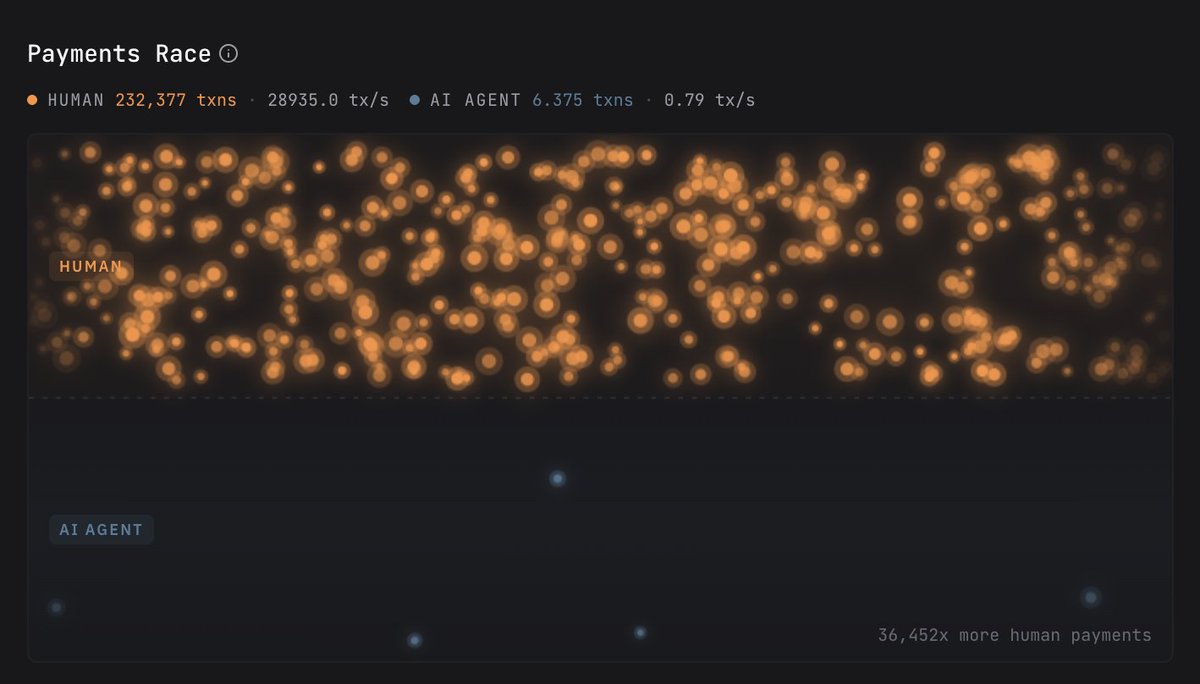
some takeaways:
- AI makes crypto flexible
- Crypto can help secure the AI supply chain
- Crypto payments are useful where decision friction is low and censorship matters
- Agents can evaluate micropayment decisions far faster than humans, so automated crypto transactions avoid the human decision overhead that killed traditional micropayments
- Blockchain payments offer "neutrality and censorship resistance"

3
2
23
3,228
another Tradfi gatekeeping and friction apparatus taken out by Coinbase and the blockchain
Jun 4

Pre-IPO perps are coming to Coinbase.
Starting today with SpaceX - now live for eligible users outside the US.
24/7 trading. USDC-settled. No expiry.
2
7
715
shaaa retweeted

Jun 3
In a few months profits will temporarily flow out of TradFi (cool off phase after IPOs).
People will want to know where to put their money because everything already went up so much.
And there Bitcoin will be, ready to begin the next four year cycle.
330
541
8,253
281,692
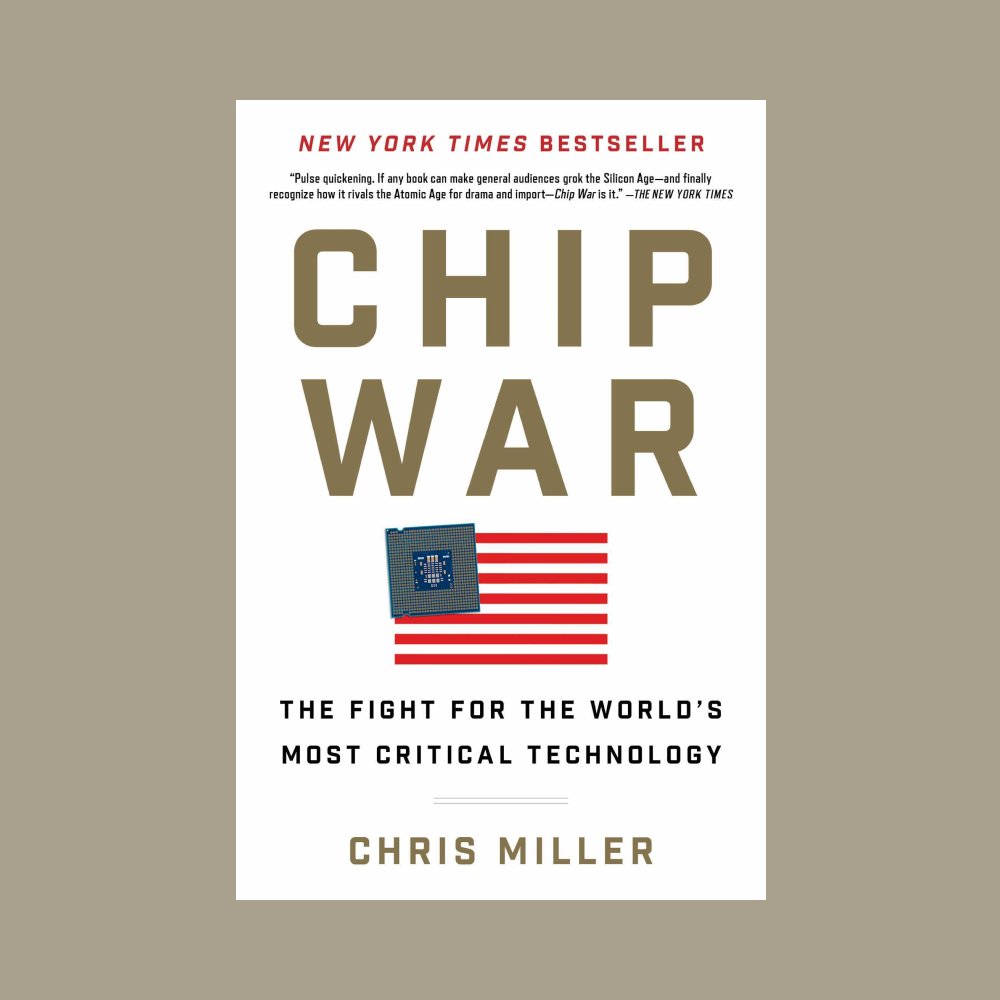
re-read the last two chapters of Chip War this week
if i had simply bought the companies featured in the last few chapters when i finished it in January 2023, i'd probably be up several hundred percent
NVDA
TSMC
ASML
AMD
Broadcom
great nonfiction often tells you where the bottlenecks of the future will be years before the market fully prices them in
well done @crmiller1
2
4
196
if you're looking for the best book about crypto

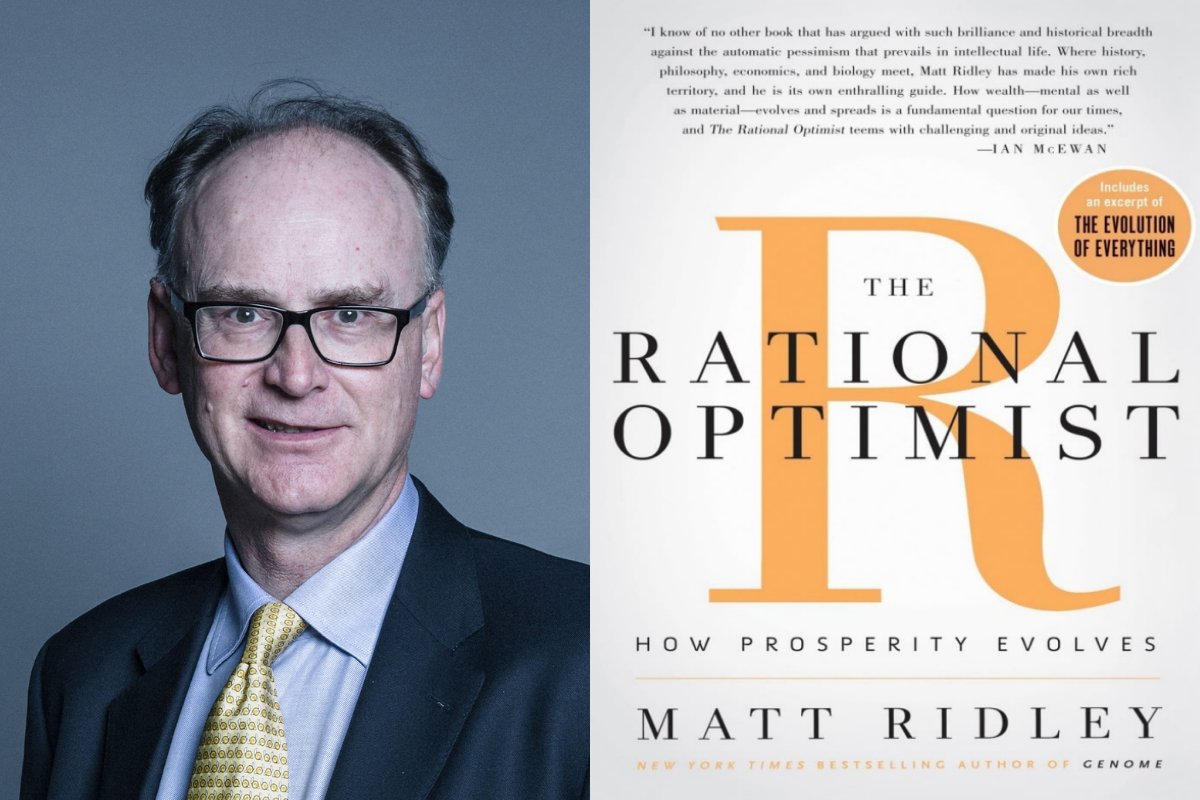
A British biologist looked at 200,000 years of human history and found that the entire reason humans broke out of poverty was not intelligence, not language, not even agriculture, but one mechanism so simple a 6-year-old could explain it.
His name is Matt Ridley.
He is a zoologist by training, an evolutionary biologist by career, and in 2010 he wrote a book called The Rational Optimist that quietly argued the most important fact about human progress had been hiding in plain sight for the entire history of economics.
Naval Ravikant has been telling people to read everything Ridley has ever written for the last 15 years. The reason is the argument inside this one book.
For 200,000 years, anatomically modern humans walked around with the same brain you have right now. Same skull size. Same neural architecture. Same raw capacity for language, planning, and abstract thought.
For roughly 190,000 of those years, almost nothing happened. Generation after generation lived and died inside the same Stone Age toolkit their great-great-grandparents had used. Then somewhere around 50,000 years ago, the line on the chart of human progress started to tick upward. Then it bent. Then it exploded.
The question Ridley spent years on was the only question that mattered. What changed.
It was not the brain. The brain had been the same for 190,000 years. It was not language, which had existed long before the takeoff. It was not even agriculture, which arrived only 10,000 years ago and was actually preceded by the upward bend, not the cause of it.
What changed was that humans started trading with strangers.
This sounds too small to be the answer. Ridley argues that it is the answer to almost everything. The moment one human exchanged a useful object with another human from a different group, something happened that no other species on earth had ever done.
Two ideas that had developed in isolation came into contact. The flint knapper learned what the spear maker had figured out. The fisherman from the coast learned what the hunter from the forest had figured out. The two pieces of knowledge fused into something neither side could have produced alone.
Ridley calls this ideas having sex. The phrase sounds frivolous and it is meant to. The point is that ideas, like genes, get better when they combine with other ideas from different lineages.
An idea sitting inside one head, no matter how brilliant the head, eventually hits a ceiling. The same idea exposed to ten thousand other ideas does something genes do under sexual reproduction. It mixes. It recombines. It produces offspring nobody planned.
The cleanest proof of this argument is the most uncomfortable case study in the book. Tasmania.
Around 10,000 years ago, rising sea levels cut Tasmania off from mainland Australia. A population of roughly 4,000 humans was now isolated on an island, with no possibility of contact with the rest of humanity. They had the same brains. The same language. The same starting toolkit as their cousins 150 kilometers north. The natural experiment was now running.
What happened next is something no economist or geneticist had ever predicted.
The mainland Australians kept inventing. Boomerangs. Spear-throwers. Fishing nets. Bone needles for sewing fitted clothes. Watercraft with paddles. Their technology compounded slowly across the centuries.
The Tasmanians went the other way. They did not just fail to invent the new tools their cousins were developing. They started losing the tools they already had. Fishing was abandoned within a few thousand years. Bone tools disappeared. Fitted clothing disappeared. They forgot how to make fire from scratch and started carrying lit firebrands from camp to camp instead, relighting their fires from a neighbor's whenever their own went out.
By the time European explorers arrived in the 17th century, the Tasmanians had the simplest toolkit of any human society ever recorded. Their material culture had gone backward for 8,000 years.
The archaeologist Rhys Jones called it a slow strangulation of the mind.
Joseph Henrich at Harvard later proved with formal mathematical models that there was nothing wrong with Tasmanian brains. There was something wrong with their network. A toolkit requires a critical mass of people exchanging skills to maintain itself.
The act of teaching a skill is imperfect. Every generation loses a small percentage of what the last generation knew. If your population is large enough and trading widely enough, those losses get caught and corrected by someone else who still remembers.
If your population shrinks below a certain threshold and stops mixing with outsiders, the small losses compound until entire technologies disappear.
This is the part that should haunt anyone reading this in 2026.
Intelligence is not a property of the individual brain. Intelligence is a property of the network the brain is connected to. A genius in isolation will produce less than a mediocre thinker inside a dense exchange of other mediocre thinkers.
The thing your ancestors needed in order to break out of 190,000 years of stagnation was not better brains. It was better connections between brains they already had.
The implication for any individual is direct and uncomfortable. If you are smart and isolated, you will be outproduced by people half as smart who are connected.
The most successful people in any field are almost never the smartest people in it. They are the ones positioned at the intersection of the most idea flows. They are reading more authors than their competitors. They are talking to more people from more disciplines. They are in the rooms where ideas from different lineages bump into each other.
Ridley ends the book on the line that sounds optimistic but is actually a warning its this "The future will be invented by people who connect ideas, not by people who guard them."
2
5
379
shaaa retweeted

May 22
Retainer vs. Options, which Market Making deal works best?
Answer is: it depends.
Let’s dive in 👇🏻
8
8
28
2,069
shaaa retweeted

Coinbase is a proud member of the Transparency Alliance. As a founding member, we support greater transparency and stronger disclosure standards for token markets. x.com/Blockworks/status/2059…
May 27

Introducing the Transparency Alliance.
An industry-led alliance establishing the Token Transparency Framework as the standard for token market disclosures.
13
9
51
15,573
Base is accelerating
TL;DR connect your Base Account to your agent and use simple prompts to swap, transfer, track your portfolio, and tap into the Base Ecosystem from chat.
Launching with skills for Morpho, Moonwell, Aerodrome, Bankr, Avantis, Virtuals, and Uniswap, with more on the way.

Introducing Base MCP
Your agent's new gateway to Base
→ Connect an agent to your Base Account
→ Enable it to swap, trade, and manage your portfolio
→ Use plugins from leading apps on Base
The next stage of the agentic onchain economy
4
1
14
560
shaaa retweeted

May 25
Crypto is a legit and indeed inevitable technology. Usually such things are net positive.
113
336
2,849
326,717
shaaa retweeted

May 24
Major areas where the financial system still needs an update:
1. Tokenization of real-world assets - Real estate, stocks, bonds, funds, etc. onchain for instant settlement, fractional ownership & massive distribution.
2. 24/7 Global trading - Pooled global liquidity, every asset, every person, with great leverage and capital efficiency.
3. Next-gen payments - Near-instant, low-cost global transfers using stablecoins, including for Agentic payments.
4. AI-powered risk, credit, compliance, and advice - Better decisions, less fraud, and broader access to capital. Everyone gets access to a great financial advisor.
5. Innovation friendly regulation - Move from one-size-fits-all to risk-based rules that encourage innovation and competition instead of stifling it.
6. Expanded access - Open protocols that reduce middlemen and self-custodial wallets to expand access to everyone with a smartphone.
7. Capital formation - Low cost and turnkey for anyone to raise money for a good idea, increasing the number of startups.
8. Sound money - A refuge from inflation, when discipline is lost in fiat money.
Jobs not done until we get these working for all.
Will require lots of tech innovation and policy work to get there.
701
733
4,622
517,426
Centaur vs Openclaw vs Hermes x.com/gakonst/status/2057495…
May 21

Open Sourcing Centaur: Multiplayer, self-hosted, secure agents for Slack.
Centaur has been transforming how @paradigm and @tempo invest, build and research.
Now you can run it yourself on infrastructure you control. Instructions below.
1
1
210
friendly reminder:
crypto is winning
- CLARITY Act moving forward
- stablecoin usage at ATHs
- polymarket becoming one of the most used apps in the world using crypto rails NFTs
- tradfi moving onchain
- perps trading globally 24/7
- tokenized equities increasingly inevitable
- AI agents starting to use stablecoins onchain payments
- blackrock tokenizing funds
- stripe, visa, paypal all embracing stablecoins
- coinbase has 12 products generating $100M in ARR
- prediction markets outcompeting traditional media during major events
the market still thinks crypto is mostly memes scams
they're wrong
3
11
226