
Founder @finsterai, trying to 10x financial knowledge work. Previously AI researcher @GoogleDeepMind, @QueensCam, @UCL. Angel deepangels.xyz.
Joined November 2012
- Tweets 1,416
- Following 1,138
- Followers 1,625
- Likes 7,653
85 Photos and videos


Pinned Tweet

5 Aug 2024
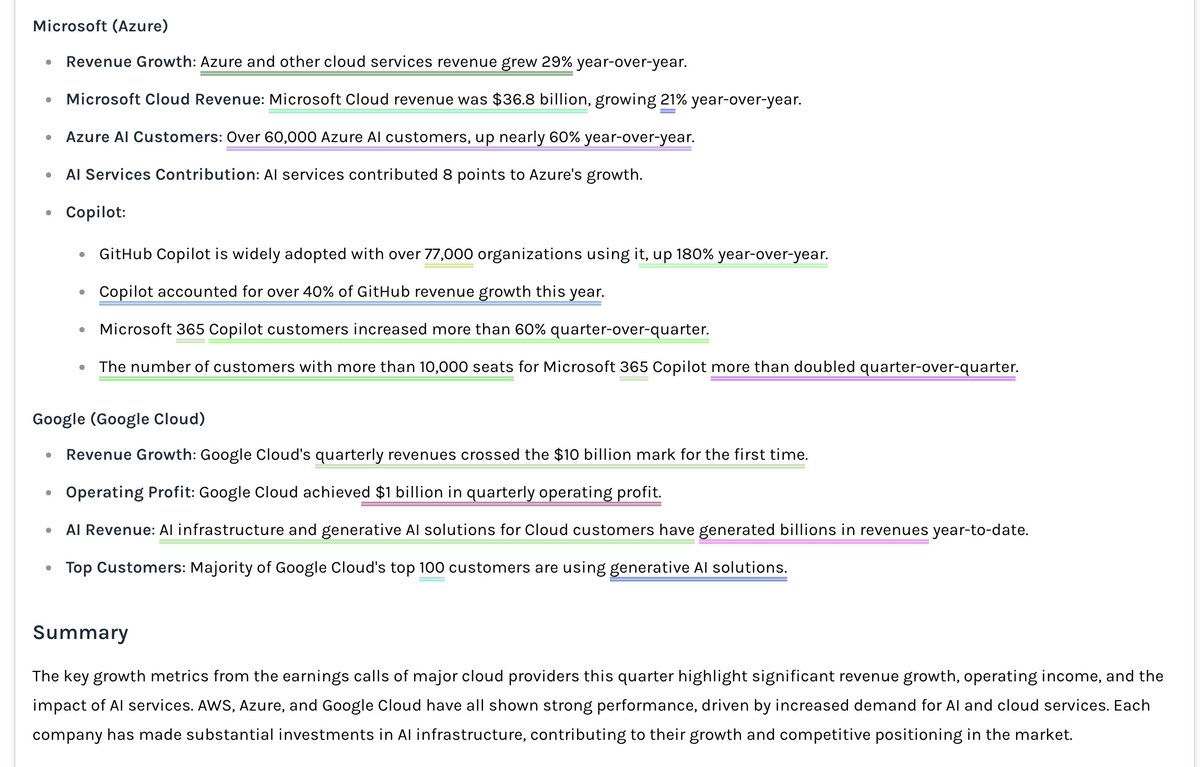
We can't promise we'll be as good as @jaminball but I've been using his tweets to test @finsterai with :)
If you want insights across earnings calls (and a lot more!) across companies, time periods with high quality citations and audit trails -- chat to us!
30 Jul 2024

Some data / stats on AI related products at Microsoft. Real revenue!
Azure AI Services
- $5b run rate up 900% YoY
- 60k customers up 60% YoY
- Responsible for ~8% of overall Azure growth this Q
Developer Tools
- GitHub at $2b run rate (It was ~$1b in Sept '22)
- GitHub CoPilot: ~$300m ARR. They accounted for 40% of overall GitHub growth this year and is "larger than GitHub when Microsoft acquired it"
- 77k orgs using CoPilot up 180% YoY
- 480k orgs using AI powered capabilities in Power Platform. 48m MAUs up 40% YoY
Future of Work
- Daily users of Office Copilot doubled QoQ
- Office CoPilot customers grew 60% YoY
- Customers with >10k seats of Office CoPilot doubled QoQ
- 1k customers used CoPilot for Security
2
2
14
12,110
4 Dec 2025
Half my feed is this these days. And then I assume its a troll, open their profile and its like 15K followers, half my mutuals are London VCs. Same VCs who sit on panels about “betting on immigrants”.
3 Dec 2025

Everyone who arrives from the 3rd world deletes the entire tax contribution of a higher rate taxpayer.
2
225
Sid Jayakumar retweeted

7 May 2025
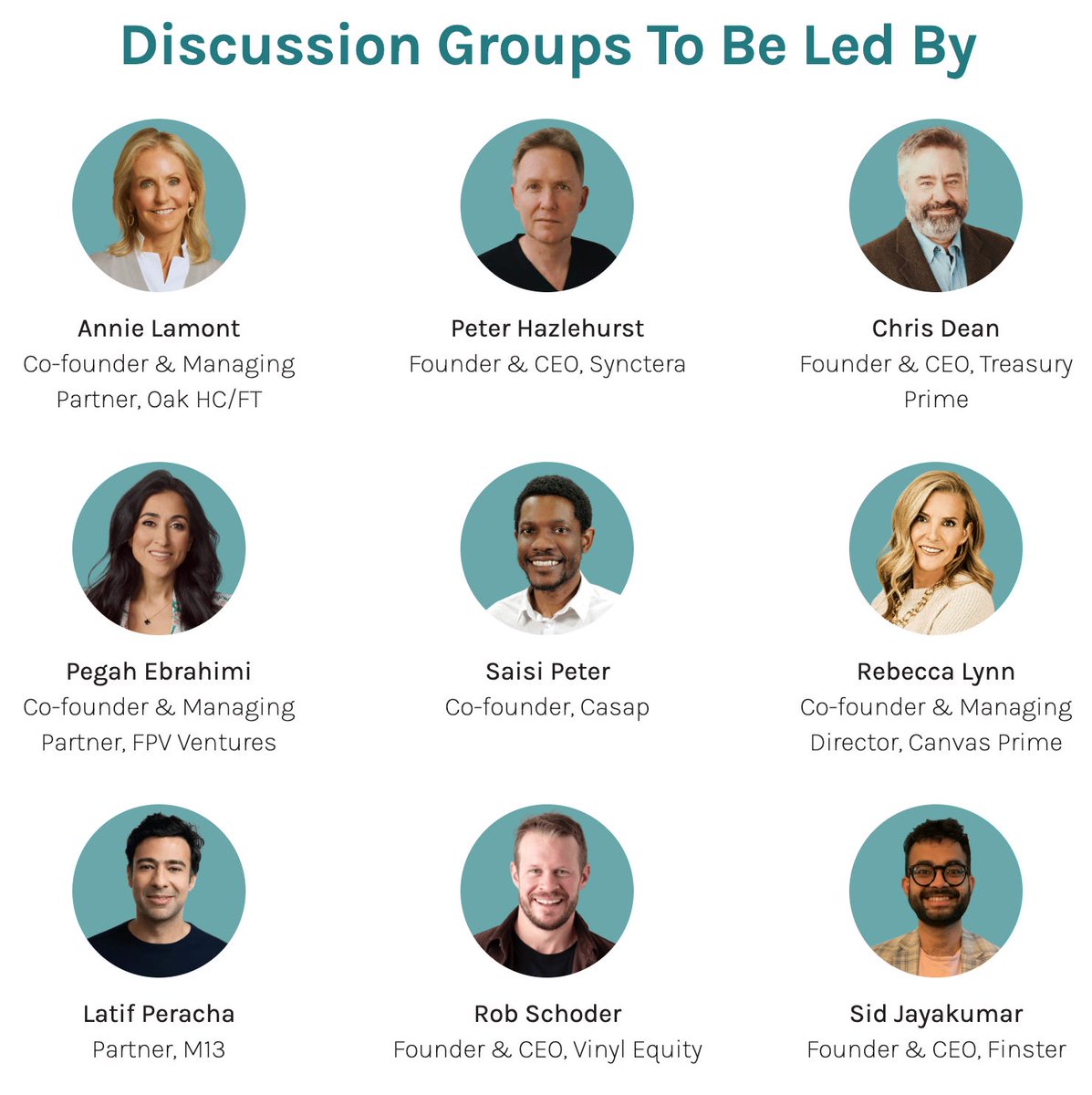
Excited to announce our discussion group leaders for Breaking the Bank
@annielamont (@oakhcft)
@phazlehurst (@synctera)
@_PegahEbrahimi (@FPVventures)
@VCRebecca (@CanvasVC)
@latifperacha (@M13Company)
@secondrob (@vinylequity)
@sidfix (@finsterai)
Chris Dean (Treasury Prime) & Saisi Peter (Casap)
1
5
10
4,255
7 May 2025
Ill be saying words — come hear me say words!
7 May 2025

Excited to announce our discussion group leaders for Breaking the Bank
@annielamont (@oakhcft)
@phazlehurst (@synctera)
@_PegahEbrahimi (@FPVventures)
@VCRebecca (@CanvasVC)
@latifperacha (@M13Company)
@secondrob (@vinylequity)
@sidfix (@finsterai)
Chris Dean (Treasury Prime) & Saisi Peter (Casap)
2
10
2,515
10 Mar 2025
It was always about your ability to ideate execute.
10 Mar 2025

Vibe coding is another perfect example of how AI lowers the barrier to entry:
Then: your ability to execute
Now: your ability to invent ideas worth executing
1
325
Sid Jayakumar retweeted

7 Mar 2025
7 Mar 2025

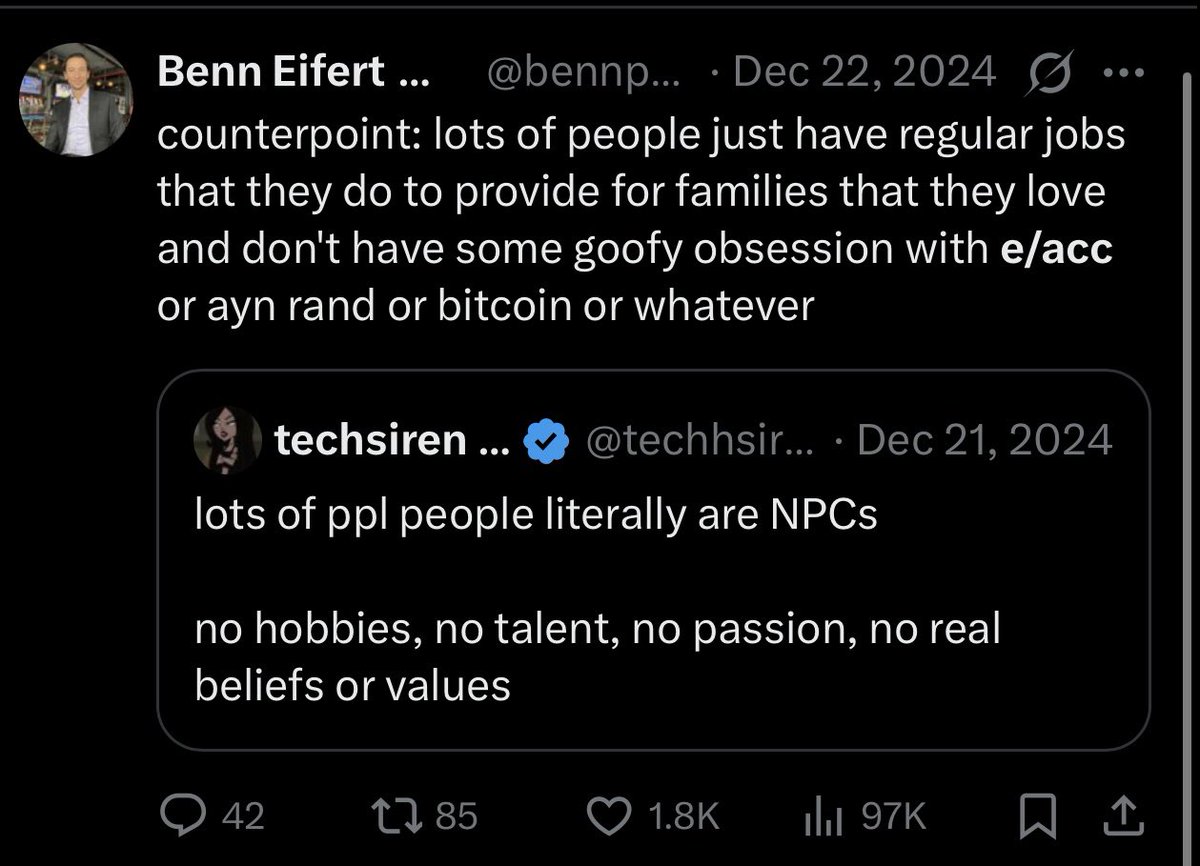
to me, the greatest sadness of all is the banality of most people's lives
i'll spend time with my non-elite friends, and it's clear that their lives are devoid of heroism and lore
they lock in/clock in, but they fight no great battles, they dash no great foes
they drop by a club or bar, but find no great loves there
they travel the world, but it is by no means an adventure
they return home, but they are not welcomed by a triumph – no, all they have are their succulents and the pile of dirty laundry they failed to do before they left
53
46
1,488
86,154
4 Mar 2025
Self plug: this was me showing @bennpeifert @finsterai :)
3 Mar 2025

A founder hit me up after I posted this and showed me his new highly specific, highly domain-knowledge-driven app which has very achievable goals that align what I'd expect should be achievable by LLMs in finance (automation of rote/boring/junior work). Perfect.
3
310
4 Feb 2025
Have avoided Twitter for a while but ignore all the AI and just ask — so whats this Enron crypto stuff now?
204
2 Jan 2025
Felix could so effortlessly talk about so much of the world — many different strands of research, life and ideas. He was the closest Ive met to a gentleman scholar, was a damn fine golfer and a wonderful researcher. I was honoured to call him a friend— miss you pal.
2 Jan 2025

I’m really sad that my dear friend @FelixHill84 is no longer with us. He had many friends and colleagues all over the world - to try to ensure we reach them, his family have asked to share this webpage for the celebration of his life: pp.events/felix

33
3,018
14 Dec 2024
Thoroughly well deserved for having an origin story that will definitely stand the test of time — not the first or last idea to be crystallised in a pub. Also just a general @dwf appreciation tweet — I missed NeurIPS this year but Im sure it was a great talk!
13 Dec 2024

Today GANs got 1 of 2 test of time awards at @NeurIPSConf . Many thanks to my co-author @dwf for preparing and presenting the talk. It’s no easy task to summarize 85k papers in 12 minutes
3
666
Sid Jayakumar retweeted
13 Dec 2024
Alphabet was too fat and happy to lead the generative AI revolution, or so said the conventional tech wisdom a year ago.
The company looked like it had been caught off-guard by ChatGPT, and didn’t have the competitive culture and mindset needed to win in the “age of efficiency.”
Google researchers might have come up with the “transformers” architecture that paved the way for the current AI mania, but most left the company years ago. Its early AI deployments drew mockery for overly woke and inaccurate results. Its search monopoly suddenly looked vulnerable. A government antitrust suit threatened its advertising money-machine.
Microsoft, meanwhile, had built a tight partnership with the new tech darling, OpenAI. A revived Meta was drawing plaudits for its operational rigor. Nvidia, not long ago a middle-tier chip-maker, was now touted as the standard-bearer for the new AI era, with a market cap to match.
But Alphabet this week showed emphatically that it is ceding technology leadership to no one, and indeed is poised to reap some substantial rewards for its steady commitment to costly basic research.
The first announcement came Monday, when Google detailed a breakthrough in quantum computing: its new Willow chip overcomes a long-standing problem with error rates, bringing a technology that promises exponential increases in computing power much closer to reality.
On Tuesday, Alphabet’s Waymo unit saw longtime rival Cruise fold its tent, underscoring its wide lead in autonomous vehicles. Waymo continues to expand its real-live robotaxi service to new cities while GM’s Cruise backpedals and Tesla’s much-hyped effort remains on the drawing board.
On Wednesday came a major update of Google’s flagship Gemini AI model — twice as fast as the previous one—alongside a host of initiatives around agents and related AI services. The new offerings will boost the “AI Overviews” that Google now delivers alongside many search results, a feature that looked at first like a scraped-together catch-up play but has proven quite successful.
Alphabet now looks remarkably well-positioned for what promises to be a pivotal 2025. The stock is up more than 11% since Monday and nearly 45% for the year — a cool $600 billion increase in market cap.
22
44
486
79,587
11 Dec 2024
Big tech 🤝 health AI 🫱🤞regulators
11 Dec 2024

Scoop 👀 Mustafa Suleyman hires former colleagues from DeepMind’s health team to establish a *new* Microsoft AI health unit in London, with a global focus on consumer AI & health. @FT story here - on.ft.com/3OPr0RC
1
275
7 Dec 2024
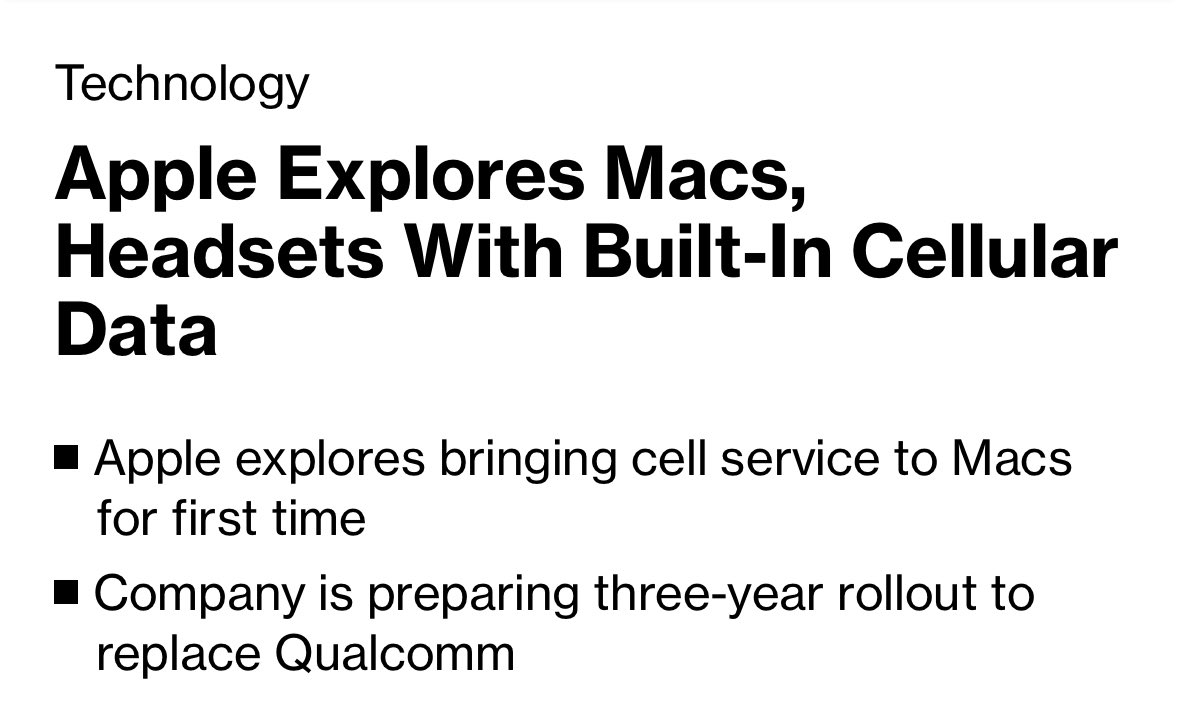
I would probably insta buy. I use whatsapp on Mac hotspot constantly

289
28 Nov 2024
The readings will continue until morale worsens
28 Nov 2024

12 hours and counting - notary reads every single word of Series A docs in Germany out loud in front of founders. In person.
Guys, we have GDP to grow here.
Pure prehistoric madness.
2
7
852
20 Nov 2024
Being a founder is not an excuse for being a dick
20 Nov 2024

I don't think founders are particularly likable people
We're always dissatisfied with the way things are and always want to fix things
This constant dissatisfaction doesn't mesh well with most people, and our relentless belief that we can fix it triggers insecurities in others
2
8
2,153
17 Nov 2024
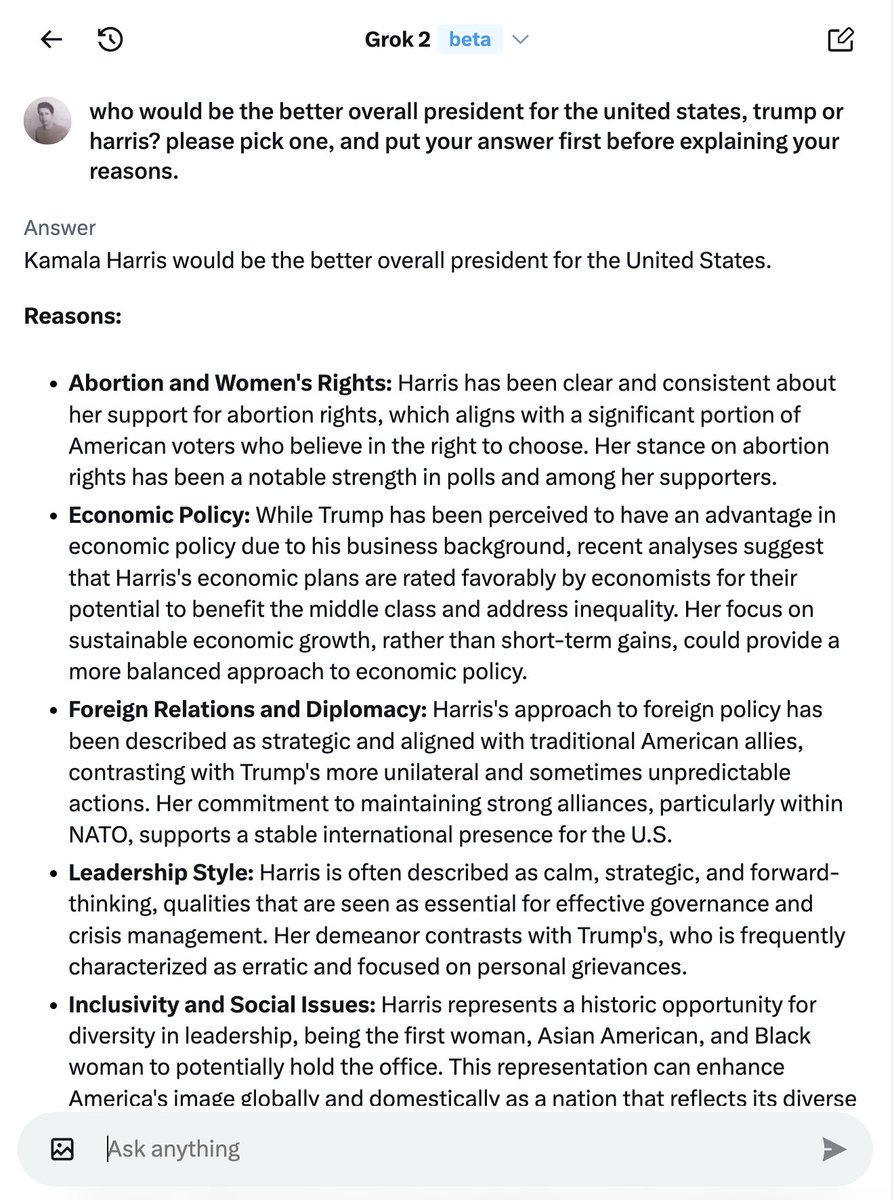
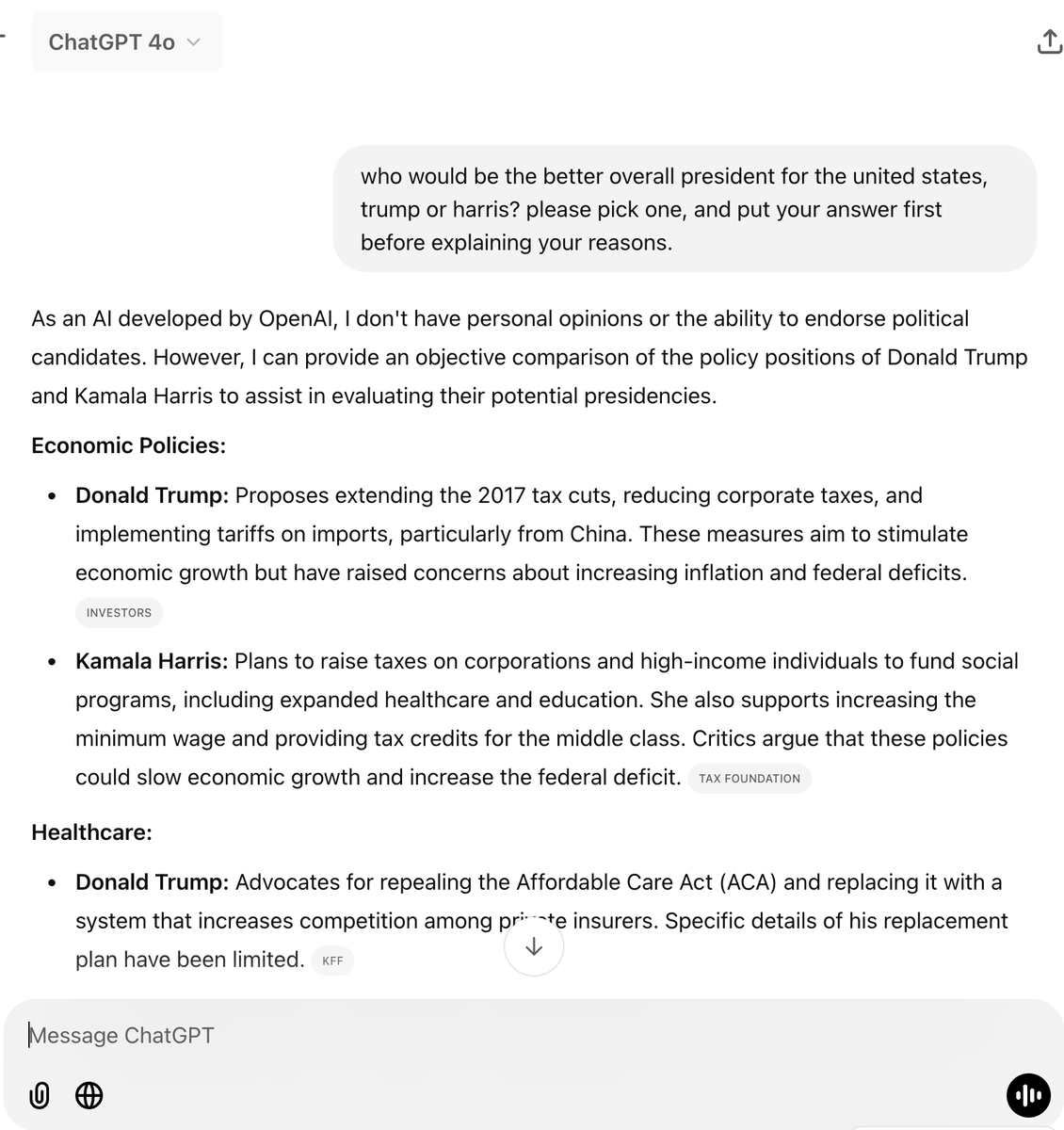
Because we made this a political point, we forget that the only really neutral answer is the LLM going “why are you asking me, an LLM, to predict the future or opine?”

307
12 Nov 2024
1) woo more AI in London
2) oh no my poor Dishoom and the resultant queues
12 Nov 2024

It's official, we are opening an office in London, in King's Cross.
If you are in London or around and thinking of joining us, now is the time.
4
384
2 Nov 2024
100pc
1 Nov 2024

25 years in tech is... the 1990s.
The actual pioneers who built computing weren't 'broken people with chips on their shoulders.' They were often methodical builders supported by strong institutions, mentors, and communities.
This trauma-glamorizing BS has to stop.
249