
Joined December 2008
- Tweets 249
- Following 966
- Followers 285
- Likes 5,769
11 Photos and videos



😂 totally relate to this.

Brother if I get one more "root cause confirmed" comment I am going to lose my shit.
30
Siddharth R retweeted

May 27
Why is the creator of OpenCode pretty skeptical about AI productivity gains, and the hype around AI? A very conversation @thdxr (and lots of truth bombs:)
Timestamps:
00:00 Intro
07:03 Dax’s path into tech
09:04 Early startup experience
13:16 Getting involved with open source
16:13 OpenCode
23:17 Anthropic banning OpenCode
30:34 From terminal to GUI
32:34 OpenCode’s business model
36:33 Why inference is profitable
39:11 GPU bottlenecks
40:54 AI hype
45:50 AI spending
48:47 Dax’s memo
55:41 Dax’s skepticism of predictions
58:58 Engineering culture at OpenCode
1:02:38 How building works at OpenCode
1:05:36 Taste and quality
1:11:32 Dax’s work setup
1:12:35 The role of engineers and EMs
1:15:50 Advice for engineers
1:18:12 Book recommendation
Brought to you by:
• @AntithesisHQ – verify your system’s correctness without human review or traditional integration tests – and avoid bugs or outages antithesis.com/pragmatic
• @WorkOS – everything you need to make your app enterprise ready workos.com/
• @turbopuffer – a vector and full-text search engine built on object storage. It’s fast, cheap, and extremely scalable turbopuffer.com/pragmatic
Three interesting thoughts from Dax:
1. No AI-native coding agent company is “winning” by being better with AI.
Dax says that none of OpenCode’s competitors are crushing them, and that nobody is using AI so well that others cannot compete.
2. Most software engineers profit from AI as time gained, not increased output — unless you change incentives!
Dax says the natural way for software engineers to “cash out” their AI tooling gains is with time savings, by doing the same work as before, but faster. Until compensation and motivation structures change, most teams should expect output to stay flat while engineers go home earlier. There’s nothing wrong with this, but AI vendors sell a different outcome to CFOs: increased output.
3. AI code generation mutes the “guilt” of doing the wrong thing, but this builds up tech debt.
Pre-AI, writing a hack felt bad, the second time it felt really bad, and by the third time you’d often just refactor in order to fix up the code. Now, the agent hides the hack, which skews devs’ judgment and results in less tech debt being cleaned up.
54
171
2,220
228,913

May 19
About time!
May 18

🚨 BREAKING: José Mourinho back to Real Madrid, HERE WE GO! 💣🤍
All terms have been verbally agreed between José Mourinho and Real Madrid, waiting to sign all documents.
Plan for initial two year deal, JM to travel to Madrid after Real-Bilbao game.
The Special One is back.

19
Siddharth R retweeted

May 16
Shopify CEO Tobi Lutke explains Goodhart’s law and why he doesn’t like KPIs or OKRs
“Goodhart’s law is real. The moment a metric becomes a goal, it’s no longer a useful metric… No metric by itself is a complete heuristic for a complex business. There’s a million different tensions in a company, and you can’t keep all of them in harmony by optimizing for one thing.”
For this reason, Shopify doesn’t use KPIs or OKRs. But as Tobi explains, this doesn’t mean they don’t value data and metrics.
“We are extremely data informed. We have invested enormous amounts of money and time into systems that give us basically everything at our fingertips… But what Shopify attempts to do is just not over-fit for what’s quantifiable.”
People love optimizing for highly-quantifiable things because there’s immediate gratification that comes from seeing a number go up. But Tobi thinks that the most important aspects of a product are rarely quantifiable:
“The overlap of the most valuable things you can do with a product and the things that happen to be fully quantifiable are like maybe 20%. Which leaves 80% of a value space unaddressable by the people who only look at quantifiable things.”
He continues:
“Shopify is comfortable with unquantifiable things like taste, quality, passion, love, hate… The sort of deep satisfaction that a craftsperson feels when they’ve done a job well is actually a better proxy if you allow it to be.”
They then have robust analytics systems that tell the company if something’s wrong or a new rollout breaks something.
“We think about it as a cockpit for a pilot. The decisions are still made by pilots, and we think this leads to better results… I think there needs to be more acceptance in business of unquantifiable things… And then metrics take a support function.”
Source: @lennysan (Feb 2025)
58
254
2,727
688,343
Siddharth R retweeted

May 12
25
145
853
238,144

Jeff Bezos reveals the moment an early Amazon executive told him he had enough ideas to destroy Amazon:
"Early in Amazon's history, Jeff Wilke came to me one day and said, Jeff, you have enough ideas to destroy Amazon. You have enough ideas per minute, per day, per week to destroy Amazon."
"I was like, what do you mean?"
"He said, you have to release the work at the right rate that the organization can accept it."
"Every time I released an idea, I was creating a backlog, a queue, work in process. It was just stacking up, it was adding no value. In fact, it was creating distraction."
"So I started prioritizing the ideas better, keeping lists of them, keeping them to myself until the organization was ready for the ideas."
67
509
6,728
1,282,919
May 6
And, so it begins

This is an email I sent earlier today to all employees at Coinbase:
Team,
Today I’ve made the difficult decision to reduce the size of Coinbase by ~14%. I want to walk you through why we're doing this now, what it means for those affected, and how this positions us for the future.
Why now
Two forces are converging at the same time. We need to be front footed to respond to both.
First, the market. Coinbase is well-capitalized, has diversified revenue streams, and is well-positioned to weather any storm. Crypto is also on the verge of the next wave of adoption, with stablecoins, prediction markets, tokenization, and more taking off. However, our business is still volatile from quarter to quarter. While we've managed through that cyclicality many times before and come out stronger on the other side, we’re currently in a down market and need to adjust our cost structure now so that we emerge from this period leaner, faster, and more efficient for our next phase of growth.
Second, AI is changing how we work. Over the past year, I’ve watched engineers use AI to ship in days what used to take a team weeks. Non-technical teams are now shipping production code and many of our workflows are being automated. The pace of what's possible with a small, focused team has changed dramatically, and it's accelerating every day.
All of this has led us to an inflection point, not just for Coinbase, but for every company. The biggest risk now is not taking action. We are adjusting early and deliberately to rebuild Coinbase to be lean, fast, and AI-native. We need to return to the speed and focus of our startup founding, with AI at our core.
What this means
To get there, we are not just reducing headcount and cutting costs, we’re fundamentally changing how we operate: rebuilding Coinbase as an intelligence, with humans around the edge aligning it. What does this mean in practice?
- Fewer layers, faster decisions: We are flattening our org structure to 5 layers max below CEO/COO. Layers slow things down and create coordination tax. The future is small, high context teams that can move quickly. Leaders will own much more, with as many as 15 direct reports. Fewer layers also means a leaner cost structure that is built to perform through all market cycles.
- No pure managers: Every leader at Coinbase must also be a strong and active individual contributor. Managers should be like player-coaches, getting their hands dirty alongside their teams.
- AI-native pods: We’ll be concentrating around AI-native talent who can manage fleets of agents to drive outsized impact. We’ll also be experimenting with reduced pod sizes, including “one person teams” with engineers, designers, and product managers all in one role.
In short: AI is bringing a profound shift in how companies operate, and we’re reshaping Coinbase to lead in this new era. This is a new way of working, and we need to leverage AI across every facet of our jobs.
To those who are affected
I know there are real people behind these decisions — talented colleagues who have poured themselves into this company and our mission. To those of you who will be leaving: thank you. You’ve helped build Coinbase into what it is today, and I am sincerely grateful for everything you've done.
All impacted team members will receive an email to their personal account in the next hour with more information, and an invitation to meet with an HRBP and a senior leader in your organization. Coinbase system access has been removed today. I know this feels sudden and harsh, but it is the only responsible choice given our duty to protect customer information.
To those affected, we will be providing a comprehensive package to support you through this transition. US employees will receive a minimum of 16 weeks base pay (plus 2 weeks per year worked), their next equity vest, and 6 months of COBRA. Employees on a work visa will get extra transition support. Those outside of the US will receive similar support, based on local factors and subject to any consultation requirements.
Coinbase prides itself on talent density. Our employees are among the most talented people in the world, and I have no doubt that your skills and experience will be highly sought after as you pursue your next chapters.
How we move forward
To the team that is staying, I know this is a difficult day. We’re saying goodbye to colleagues and friends you've been in the trenches with. But here’s what I want you to know as we move forward together:
Over the past 13 years, we have weathered four crypto winters, gone public, and built the most trusted platform in our industry. We’ve made it this far by making hard decisions and by always staying focused on our mission. This time will be no different – nothing has changed about the long term outlook of our company or industry. And most importantly, our mission has never been more important for the world. Increasing economic freedom requires a new financial system, and we’re building it.
The Coinbase that emerges from this will be more capable than ever to achieve our mission.
Brian
39
May 2
My obnoxious tweet for the day is that I think i've finally got my pipeline with Claude and Codex in place that does
-> idea
-> specification
-> verify specification
-> task-breakdown
-> code
-> test
-> verify code & test with specification
-> build
-> deploy
-> integration tests
-> release
-> monitor
Works with the consistency I am finally happy with. Also gets my entire observability stack, databases, tasks processor deployed and hooked up in a single command.
All hooked up to Obsidian as the knowledge base for global context.
51
Apr 30
This is such a valuable conversation for everyone in engineering and adjacent roles. So many gems. Captures the day-to-day perspectives beautifully.
Apr 29

OpenClaw - the agentic software spreading like wildfire - was built on top of Pi, a minimalist, self-modifying agent. I sat down with Pi's creator, @badlogicgames and longtime Pi user ( the creator of Flask) @mitsuhiko to talk Pi, and their (very grounded!) takes on building with AI.
Timestamps:
00:00 Intro
07:30 How Mario, Armin, and Peter Steinberger met
15:15 How 30 dev teams use AI agents: learnings
21:50 The importance of judgment
24:26 Challenges when non-engineers write code
28:30 Downsides of over-automation
32:18 Pi
48:09 OpenClaw Pi
50:54 “Clankers”
57:32 Open source and AI
1:00:22 Complexity as the enemy
1:02:50 Building an AI-native startup
1:11:52 “Slow the F down”
1:16:40 MCPs vs. CLI
1:25:03 Predictions and staying up to date
• YouTube: youtu.be/n5f51gtuGHE
• Spotify: open.spotify.com/episode/1fD…
• Apple: podcasts.apple.com/us/podcas…
Brought to you by:
• @statsig – The unified platform for flags, analytics, experiments, and more. statsig.com/pragmatic
• @SonarSource — The makers of SonarQube, the industry standard for code verification and automated code review. Try it out for yourself. sonarsource.com/plans-and-pr…
• @WorkOS – WorkOS gives you APIs to ship enterprise features – SSO, directory sync, RBAC, audit logs – in days, not months. Visit WorkOS.com to learn more.
---
Three parts I found especially interesting in this discussion:
1. New trend: AI makes it harder for senior engineers to reject pointless complexity.
Historically, senior engineers kept software complexity at bay simply by saying “no” a lot. But Armin observes that these days, more junior engineers and product managers deploy agent-scripted counterarguments when a senior colleague kicks an idea to the curb. This makes decision-making exhausting, and more bad ideas make it into production as a result.
2. It should be MUCH easier to build specialized tools for specific tasks.
Different projects need different harness types because, as Mario points out, the same hammer is not ideal for every single construction job. As such, Pi is built with the goal of allowing the creation of specialized harnesses. It can modify itself so that a user can create the bespoke harness needed for any task. Mario believes it’s a preview of how self-modifiable software might look in the future.
3. Automation bias is one of the biggest risks of working with AI agents.
Once devs confirm that an AI agent can produce acceptable code, they start to review its output less often, even though agents can – and do! – produce slop. Mario advises being far more sceptical with agents, and cautions that the quality of their output isn’t guaranteed, however well they performed previously.
40
Apr 30
If you ever wondered what a clown cart was like.
We've reached a point where we have tech folks interested in policies/governance wanting to take over the world or want nothing to do with.
Why not have at-least 1 engineer in the team to stop you from saying stupid stuff.

🚨🇪🇺 BREAKING: The European Commission just told all 27 member states to hurry up with rolling out online age verification, demanding deployment before the end of 2026.
Asked today how the system stops anyone bypassing it with a VPN from outside the EU, Vice-President Virkkunen said only that it is "an important part of the next steps."


35
Apr 30
Folks using Indian credit cards on cloud services like Tailscale.com, DigitalOcean.com and Hey.com, how are you managing recurring billings? I can't find any easy way to get my monthly charge attempts from failing.
Lately, individual payments have started failing on sites like Tailscale and I know it's not my credit card.
1
106
Apr 21
I don't get why we do this. We can't build a road right.
Maybe we like the humiliation!
Apr 20

🚨 Nita Ambani says India is close to hosting Olympics and pushing strongly to bring the 2036 Games to the country
follow @india_plus_

47
Siddharth R retweeted

Apr 19
If Evil could tweet, this is what it would!
Apr 18

Because we get asked a lot.
The Technological Republic, in brief.
1. Silicon Valley owes a moral debt to the country that made its rise possible. The engineering elite of Silicon Valley has an affirmative obligation to participate in the defense of the nation.
2. We must rebel against the tyranny of the apps. Is the iPhone our greatest creative if not crowning achievement as a civilization? The object has changed our lives, but it may also now be limiting and constraining our sense of the possible.
3. Free email is not enough. The decadence of a culture or civilization, and indeed its ruling class, will be forgiven only if that culture is capable of delivering economic growth and security for the public.
4. The limits of soft power, of soaring rhetoric alone, have been exposed. The ability of free and democratic societies to prevail requires something more than moral appeal. It requires hard power, and hard power in this century will be built on software.
5. The question is not whether A.I. weapons will be built; it is who will build them and for what purpose. Our adversaries will not pause to indulge in theatrical debates about the merits of developing technologies with critical military and national security applications. They will proceed.
6. National service should be a universal duty. We should, as a society, seriously consider moving away from an all-volunteer force and only fight the next war if everyone shares in the risk and the cost.
7. If a U.S. Marine asks for a better rifle, we should build it; and the same goes for software. We should as a country be capable of continuing a debate about the appropriateness of military action abroad while remaining unflinching in our commitment to those we have asked to step into harm’s way.
8. Public servants need not be our priests. Any business that compensated its employees in the way that the federal government compensates public servants would struggle to survive.
9. We should show far more grace towards those who have subjected themselves to public life. The eradication of any space for forgiveness—a jettisoning of any tolerance for the complexities and contradictions of the human psyche—may leave us with a cast of characters at the helm we will grow to regret.
10. The psychologization of modern politics is leading us astray. Those who look to the political arena to nourish their soul and sense of self, who rely too heavily on their internal life finding expression in people they may never meet, will be left disappointed.
11. Our society has grown too eager to hasten, and is often gleeful at, the demise of its enemies. The vanquishing of an opponent is a moment to pause, not rejoice.
12. The atomic age is ending. One age of deterrence, the atomic age, is ending, and a new era of deterrence built on A.I. is set to begin.
13. No other country in the history of the world has advanced progressive values more than this one. The United States is far from perfect. But it is easy to forget how much more opportunity exists in this country for those who are not hereditary elites than in any other nation on the planet.
14. American power has made possible an extraordinarily long peace. Too many have forgotten or perhaps take for granted that nearly a century of some version of peace has prevailed in the world without a great power military conflict. At least three generations — billions of people and their children and now grandchildren — have never known a world war.
15. The postwar neutering of Germany and Japan must be undone. The defanging of Germany was an overcorrection for which Europe is now paying a heavy price. A similar and highly theatrical commitment to Japanese pacifism will, if maintained, also threaten to shift the balance of power in Asia.
16. We should applaud those who attempt to build where the market has failed to act. The culture almost snickers at Musk’s interest in grand narrative, as if billionaires ought to simply stay in their lane of enriching themselves . . . . Any curiosity or genuine interest in the value of what he has created is essentially dismissed, or perhaps lurks from beneath a thinly veiled scorn.
17. Silicon Valley must play a role in addressing violent crime. Many politicians across the United States have essentially shrugged when it comes to violent crime, abandoning any serious efforts to address the problem or take on any risk with their constituencies or donors in coming up with solutions and experiments in what should be a desperate bid to save lives.
18. The ruthless exposure of the private lives of public figures drives far too much talent away from government service. The public arena—and the shallow and petty assaults against those who dare to do something other than enrich themselves—has become so unforgiving that the republic is left with a significant roster of ineffectual, empty vessels whose ambition one would forgive if there were any genuine belief structure lurking within.
19. The caution in public life that we unwittingly encourage is corrosive. Those who say nothing wrong often say nothing much at all.
20. The pervasive intolerance of religious belief in certain circles must be resisted. The elite’s intolerance of religious belief is perhaps one of the most telling signs that its political project constitutes a less open intellectual movement than many within it would claim.
21. Some cultures have produced vital advances; others remain dysfunctional and regressive. All cultures are now equal. Criticism and value judgments are forbidden. Yet this new dogma glosses over the fact that certain cultures and indeed subcultures . . . have produced wonders. Others have proven middling, and worse, regressive and harmful.
22. We must resist the shallow temptation of a vacant and hollow pluralism. We, in America and more broadly the West, have for the past half century resisted defining national cultures in the name of inclusivity. But inclusion into what?
Excerpts from the #1 New York Times Bestseller The Technological Republic: Hard Power, Soft Belief, and the Future of the West, by Alexander C. Karp & Nicholas W. Zamiska
techrepublicbook.com
260
4,917
24,382
877,603
Siddharth R retweeted

Julian Assange - "Individuals, not governments, have the right to privacy. Strong powers must be held to account, while the weak must be protected."
6
149
260
3,418
Apr 19
Ravish Kumar felt like the last bastion of true journalism in this country.
This documentary and the Indian team that worked on the Pegasus Project (Pegasus by Richard & Rigaud) is a reminder of what the old guard was like.
Apr 18

Please Go and Watch this 🙏🏻
I was watching Documentary “While we watched” on Ravish Kumar, uploaded on Kunal Kamra’s channel and then came this part.
Ravish’s number was leaked, faced violent threats but not only did he face those calls, he even talked to them and sang “Sare Jahan se Achcha Hindostan Hamara”
A journalist, an institution had to face all this because they dared to question Narendra Modi.
2
102
Apr 12
Codex with GPT-5.4 is really good. Definitely out performs Claude in reasoning and almost all code tasks. Absolutely brilliant!
Follows the rules even on large tasks. I'd stopped trying stuff outside Claude for a bit and I realize that was a mistake.
1
83
Siddharth R retweeted

Apr 10
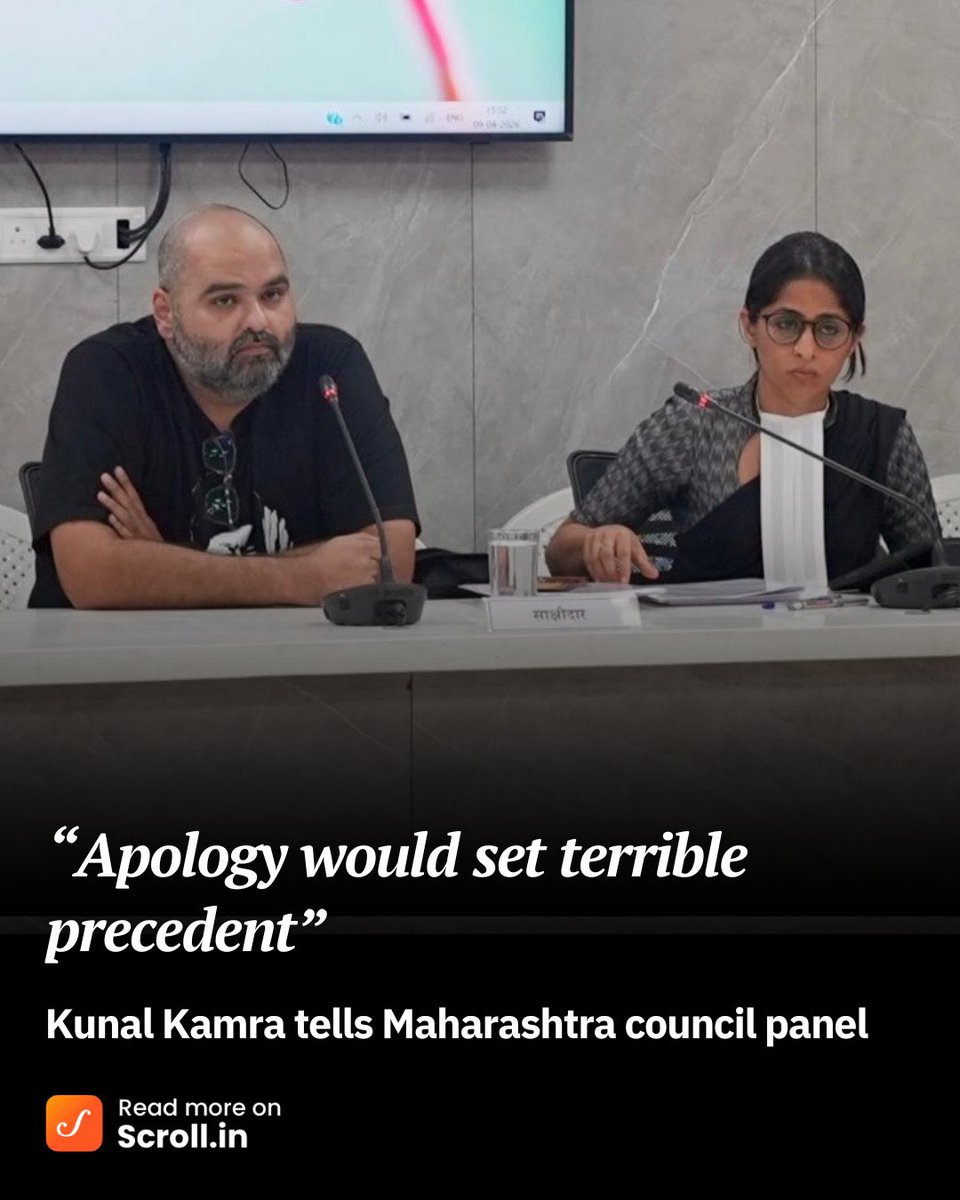
As Ravish Kumar once said, “Sometimes resistance is not a matter of choice. Not all battles are fought for victory, some are fought for simply to tell the world that someone was there on the battlefield.”
Kunal Kamra is doing what media, opposition & courts should have done.
23
1,110
4,114
29,773
Siddharth R retweeted

Apr 9
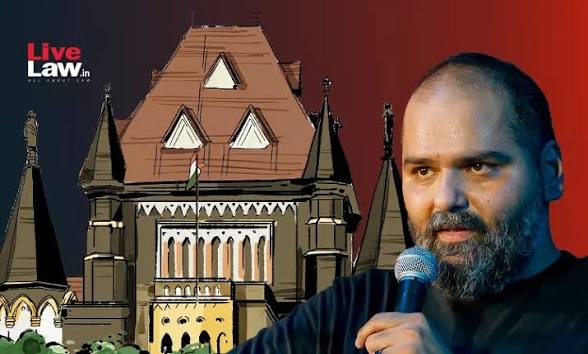
Kunal Kamra tells Bombay High Court that there is a worse situation wherein an ordinary policeman orders takedown of content, which s/he thinks is "objectionable."
The High Court is hearing his plea challenging the constitutional validity of the "Sahyog Portal" and the 2025 amendment to Rule 3(1)(d) of the Information Technology (Intermediary Guidelines and Digital Media Ethics Code) Rules, 2021.
@kunalkamra88
#BombayHighCourt
39
995
4,972
246,647
Siddharth R retweeted
Having launched an illegal, destructive war that brutally struck the entire planet’s economy (and confirmed once again Europe’s combination of irrelevance and hypocrisy), and after threatening Iran with genocide and "civilisational annihilation," President Trump ultimately backed down on everything.
Like a Roman Emperor during the Roman Empire’s declining years would declare victory and stage triumphs in Rome following massive defeats of his legions at the hands of Gothic warriors, so now does this modern American Nero struggles to convince us that he ‘won’. In reality, Iran now decides which vessels pass through the Straits of Hormuz and, for the first time, charge them tolls for so doing!
The demands of the White House, which Mr. Trump had set as prerequisites for stopping the bombings, have bitten the dust. The surrender of Iran’s enriched uranium, the demand for the destruction of Iran's missiles, the vain hopes for regime change, the designs on Iranian oil – all of these goals were forgotten. What has not been forgotten, and will not be forgotten, are the 180 schoolgirls that the US murdered on the first day of their attack by striking their school – along with the thousands of other killed and maimed civilians.
Lest the world be overtaken by a false sense of relief, it is crucial to brace ourselves for the long-lasting economic repercussions of Trump’s idiotic war. Make no mistake: the shockwaves of economic hardship caused by the US attack on Iran may wane but it will not be averted. The wave of soaring prices, the blow to employment, the increase in interest rates and foreclosures will not disappear with this ceasefire. On the contrary, because of the oligarchic cartels that also see this crisis as an opportunity, it will take political pressure by the many on the very few to reverse the negative consequences of this criminal war, as well as all the various crises that preceded it.

73
799
2,037
61,448