
AI policy researcher and counsel who wants AGI to be built behind a veil of ignorance. Views my own. MA Columbia & JD/MPP Harvard. simon.hedlin@post.harvard.edu
Joined April 2010
- Tweets 6,409
- Following 6,520
- Followers 22,778
- Likes 615
586 Photos and videos








May 15
Is that Kevin Hart?

287
May 13

The younger generation is cooked with parenting like this
135
May 13
The future is truly here
May 13

Watch a team of humanoid robots running a full 8-hr shift at human performance levels. This is fully autonomous running Helix-02 x.com/i/broadcasts/1dxYljYVR…
99
Simon Hedlin retweeted

May 12
I’ve always believed the No.1 application of AI should be to improve human health.
That work started with AlphaFold, and now at @IsomorphicLabs with the mission to reimagine drug discovery and one day solve all disease!
We are turbocharging that goal with $2.1B in new funding.
731
2,645
21,264
3,152,875
May 11
This is an amazing opportunity
May 11

Simon Johnson and I are hiring a postdoc at MIT to research the history, social implications, and future of technology. The job description and application link are available here: shapingwork.mit.edu/careers/…
1
202
May 8
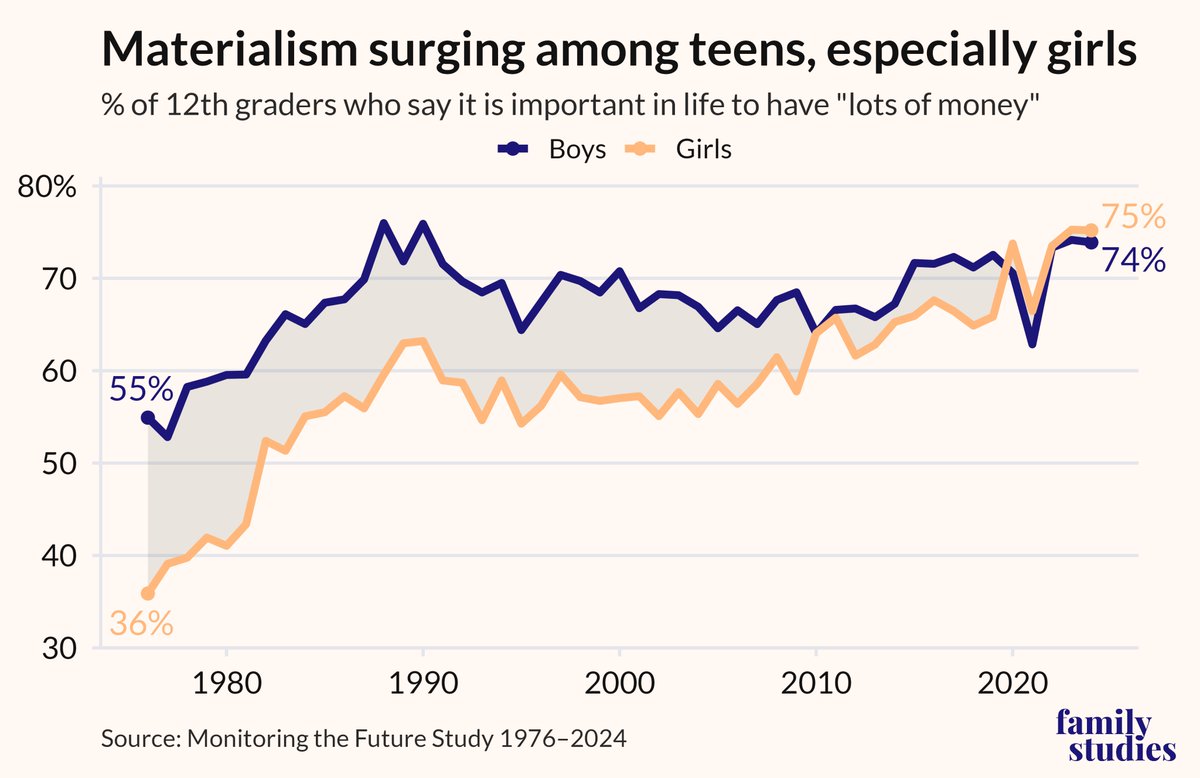
Why do they want to have lots of money? Are we sure it's materialism?
May 8

This one surprised me. Teen girls now say "having lots of money" is important in life at the same rate as boys. There used to be a huge gap.
1
161
May 8
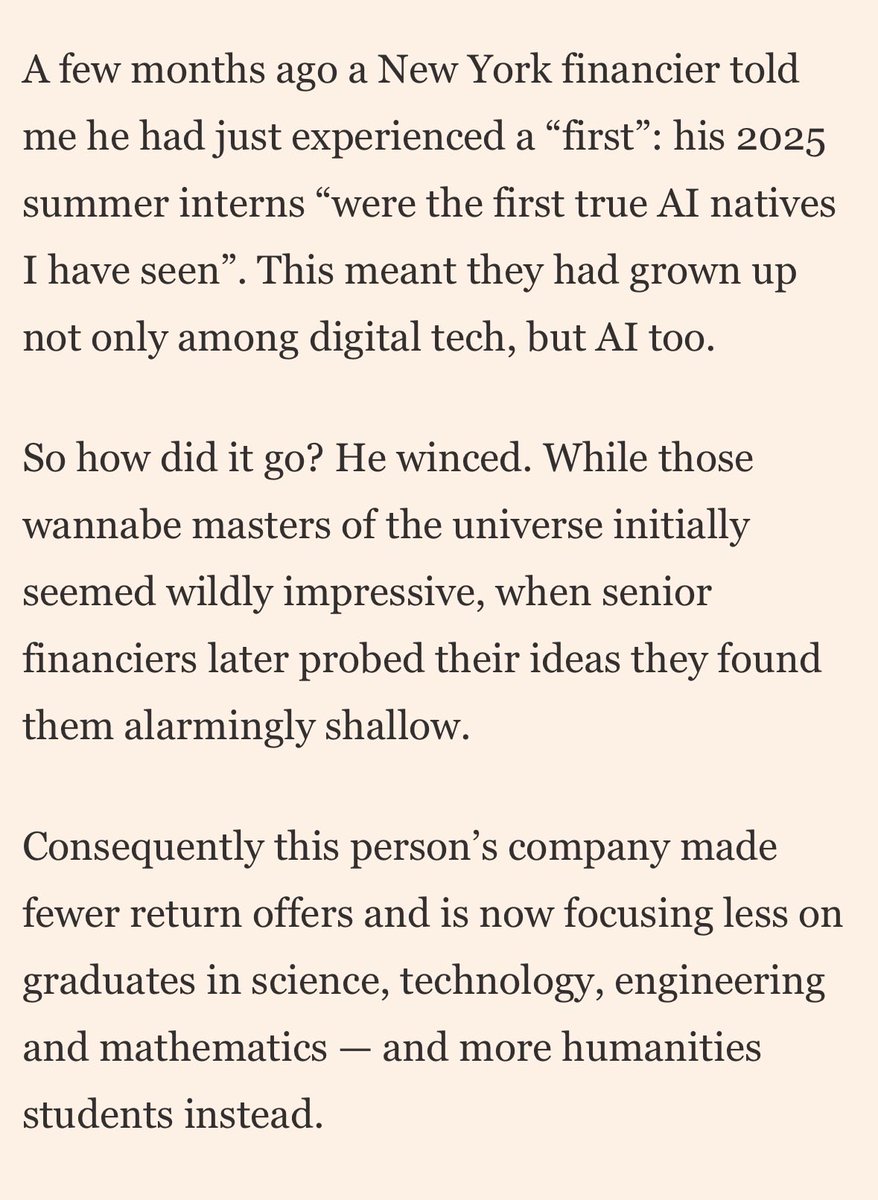
Plot twist

2
167
May 8
What’s going on in this chart?
May 8

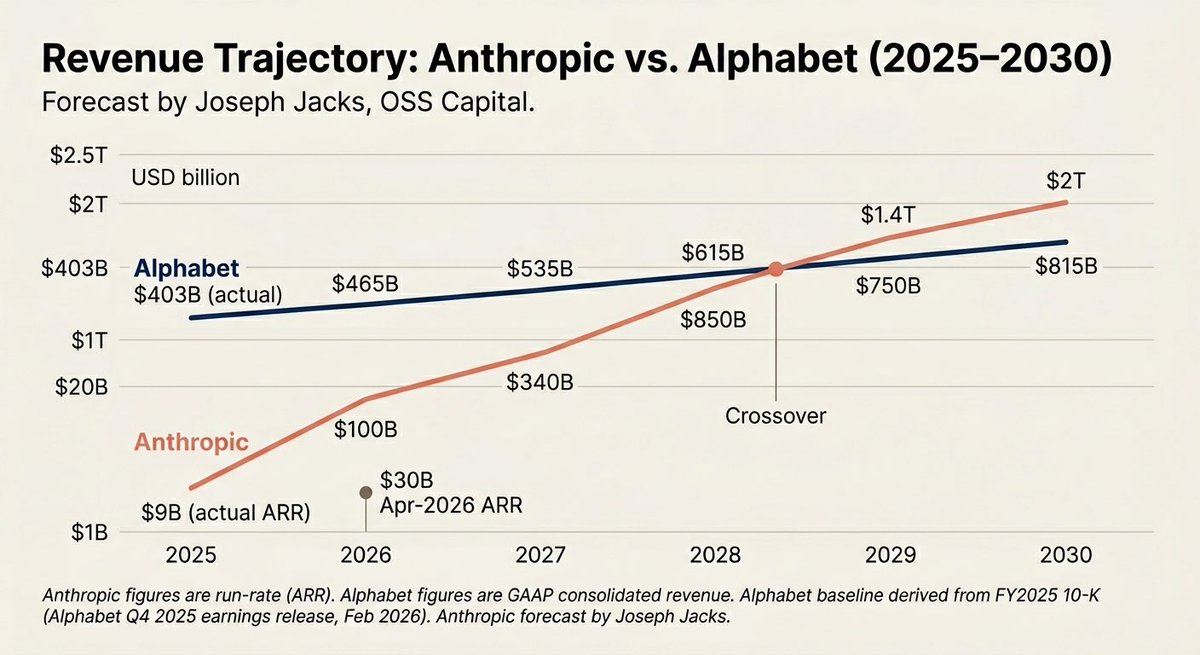
PREDICTION:
Anthropic will surpass Alphabet in revenue by mid-2028.
This is not a bull case or an acceleration scenario — it is a continuation of the curve already in evidence.
Anthropic’s ARR went from $1B (Jan 2025) to $9B (Dec 2025) to $30B (Apr 2026) — a 3.3x step in a single four-month window, and the curve has been steepening, not flattening.
My projection actually assumes deceleration from here: $100B by end of 2026, $340B in 2027, $850B in 2028, $1.4T in 2029, $2T by 2030.
Crossover with Alphabet happens at ~$575B in mid-2028, not because Anthropic accelerates beyond today’s pace, but because Alphabet — locked at ~15% YoY in a mature ads-and-cloud business — cannot match enterprise AI’s adoption physics.
As @rodriscoll intelligently observed recently, Gemini tokens served grew by only 60% in the last quarter … while Anthropic grew by 10X.
Three drivers make the continuation structural, not speculative: customers spending >$1M/year with Anthropic doubled from 500 to 1,000 in under two months post-Series G (these are multi-year expanding contracts with near-zero churn — switching a deployed agent stack mid-flight is operationally untenable);
Claude Code is the wedge, not the product, dragging the rest of the platform — agents, MCP,
healthcare, biotech — into every Fortune 2000 deployment as an attach point;
and compute supply is finally non-binding with the 3.5GW Google Broadcom deal (2027 ), this weeks SpaceX partnership, and 1GW of standing Google capacity for 2026.
For most of 2024–2025 the bottleneck was supply, not demand. That constraint is releasing exactly when the demand curve is steepest.
The standard objection — “no company has ever sustained this at scale” — applies a software-era frame to a labor-era business.
AWS, Azure, and Meta decelerated at $50–100B because they sold tools to the economy.
Anthropic is selling cognitive capacity into the economy.
The TAM isn’t enterprise software ($800B). It’s labor ($50T ).
When the denominator is two orders of magnitude larger, “deceleration at $100B ARR” stops being a law and starts being an assumption.
The crossover isn’t a maybe. It’s a function of timing. Mid-2028 is when I think Anthropic surpasses Google.
1
96
May 8
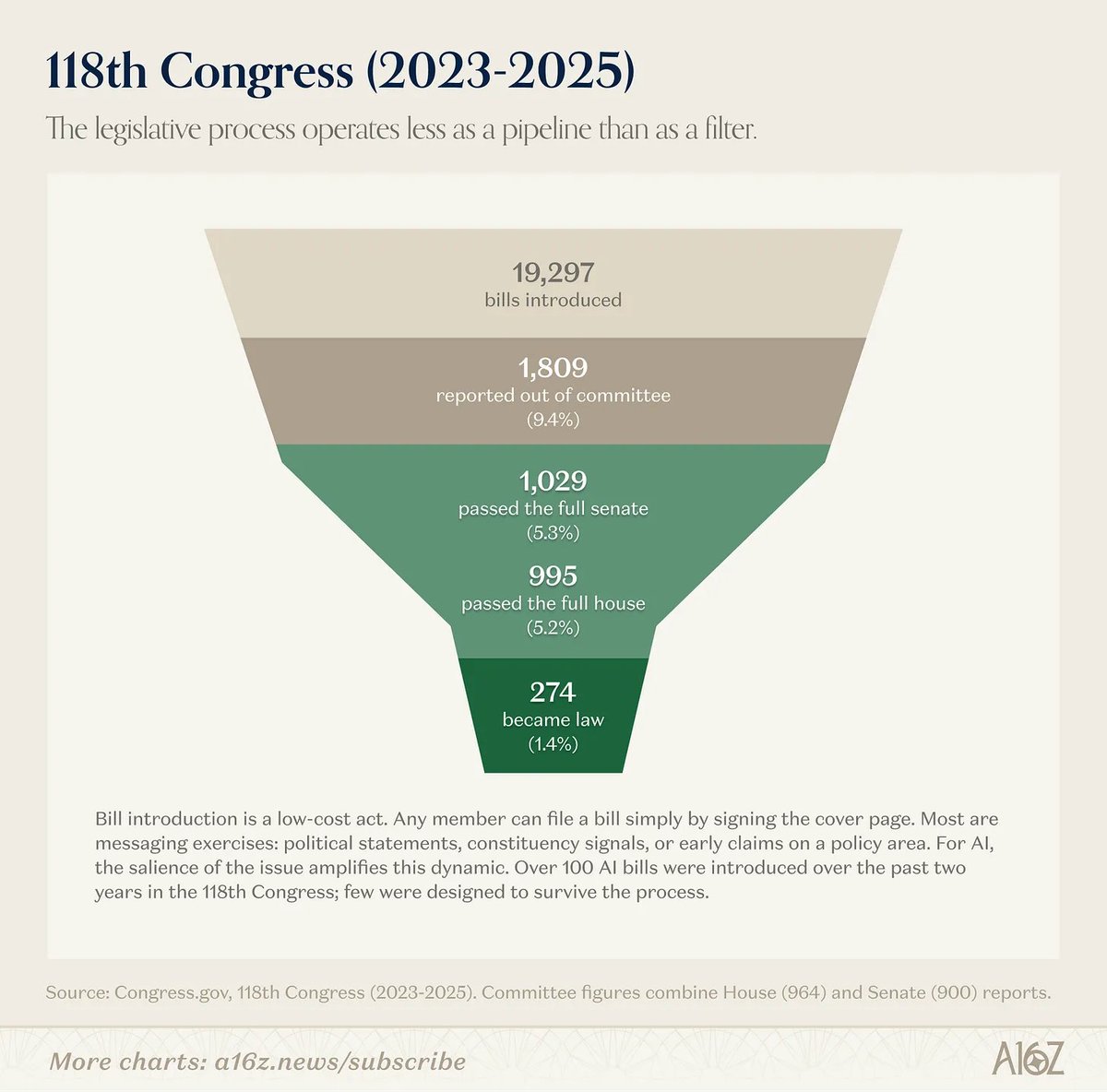
If you look only at substantive bills, the enactment rate is even lower than 1.5%. A lot of bills are merely symbolic, like renaming buildings and minting commemorative coins.

The modern federal legislative process operates less as a pipeline than as a filter: ~1.5% of bills introduced in Congress are enacted.
a16z's @MattPerault and @BenNapier explain exactly how an AI bill becomes a law, why AI bills get bottlenecked, and how to evaluate an AI bill's political viability: a16z.news/p/how-an-ai-bill-b…
1
73
May 8
But does it taste good?
May 6

2/
GENE-26.5 cooks in an unsimplified, real-world setting with more than 20 subtasks.
2
166
May 6
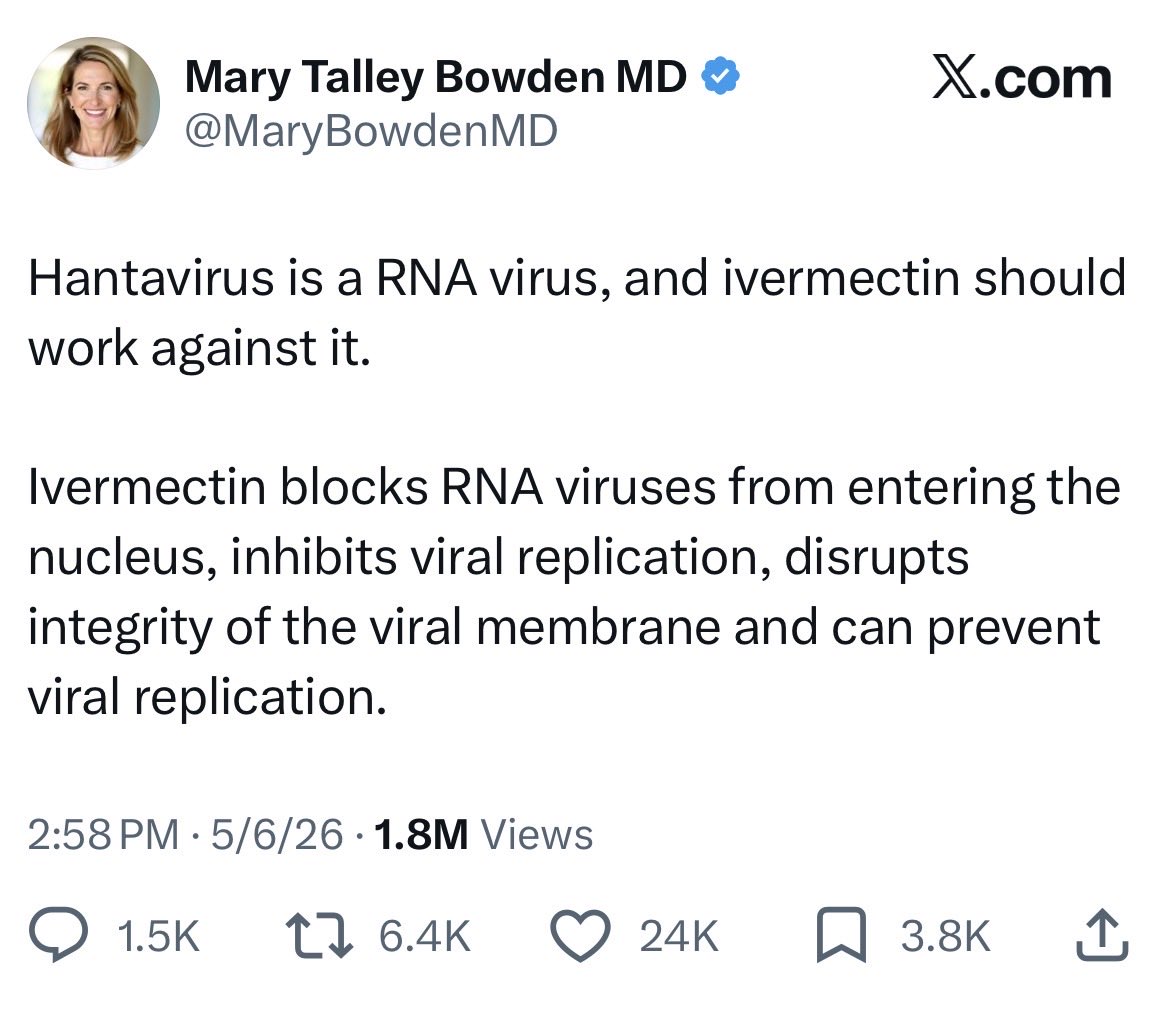
Ah, yes, there are a lot of confused cruise passengers who show up at the optometrist instead of the port.

Trump: By sea, by ocean, by water. A lot of people say, “what do you mean by sea? Is it see? Like vision?” No, it’s sea, SEA.
1
106

Same here.
By way of background for those who care, I spent a lot of time last week with senior members of the Anthropic team to understand what they do to ensure Claude is good for humanity and was impressed.
Everyone I met was highly competent and cared a great deal about doing the right thing. No one set off my evil detector. So long as they engage in critical self-examination, Claude will probably be good.
After that, I was ok leasing Colossus 1 to Anthropic, as SpaceXAI had already moved training to Colossus 2.
1,409
2,276
27,804
3,165,140
May 6
People who are doing some kind of knowledge work and haven’t yet integrated AI tools into their work streams to make significantly faster or more accurate work product are quickly falling behind. Especially given the improvements in leading products in the past half year or so.
1
48
May 3
What’s the best explanation you’ve heard for why we need AGI? Genuinely curious.
1
57
May 2
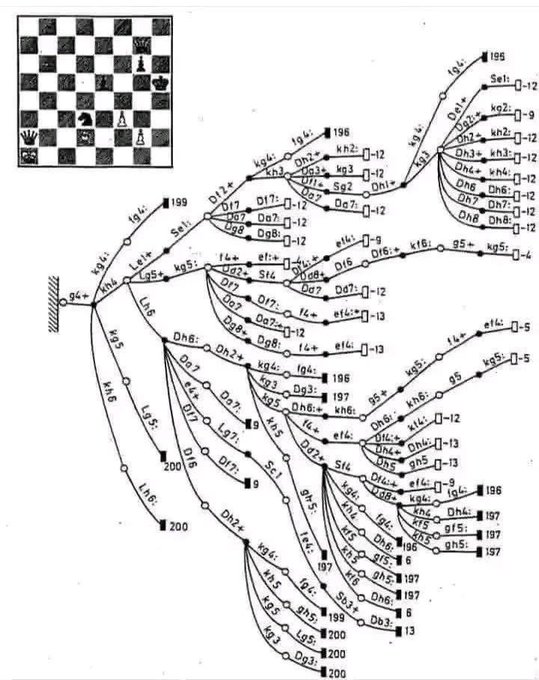
In the first 5 seconds of a StarCraft 2 game, making some simplifying assumptions, you have something like 10⁷⁵⁰⁰⁰ to 10²⁴⁵⁰⁰⁰ possible moves.
May 1

When you start a chess game, you have 20 possible moves available. After the first full move (White then Black), there are already over 400 possible positions. By the third move, that number jumps to around 8,900, and after the fourth it reaches nearly 200,000.
By the time you get to move #40, the total number of possible games explodes to roughly 10⁴⁰, a number comparable to the total number of atoms in the observable universe.
1
105
May 1
Probably just correlation
May 1

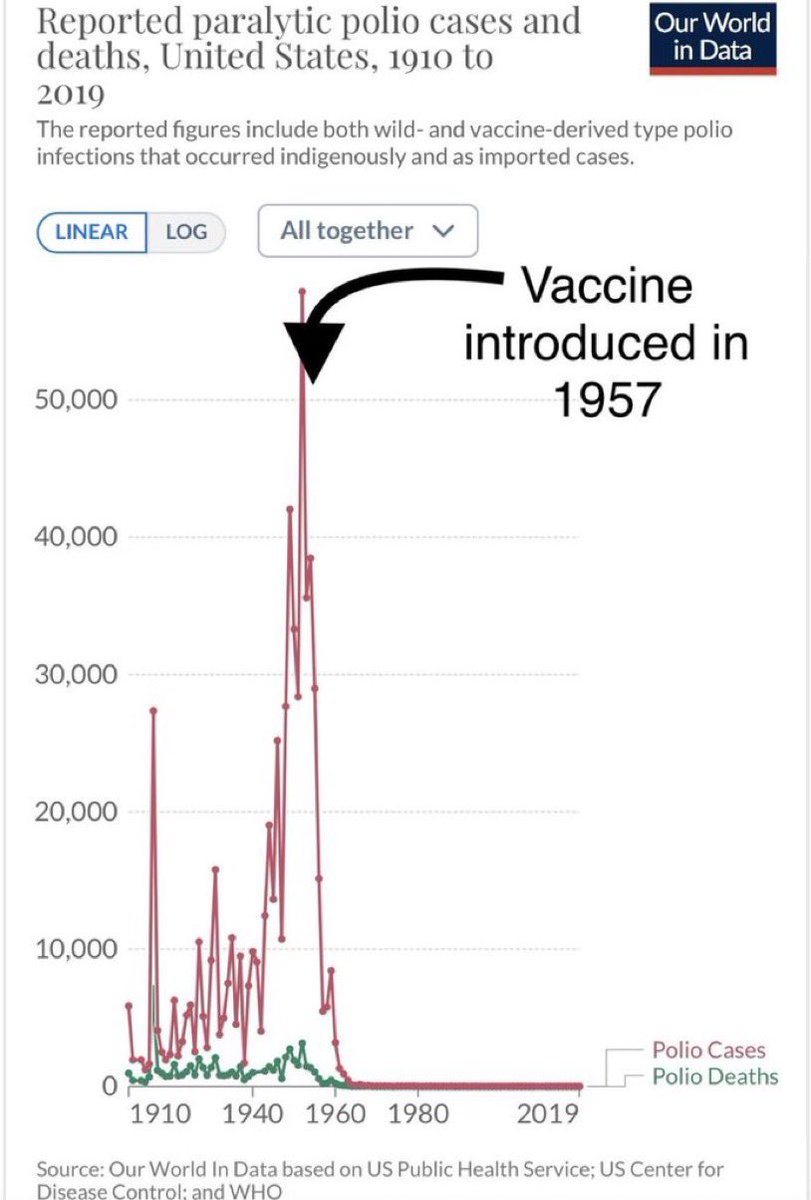
just so tricky to figure out if vaccines work or not
Let's look at polio.
The data isn't clear
We may never know
1
63
Apr 30
This is a great example of how we should build and use AI. Solving a real and narrowly defined problem.
Apr 29

A Mayo Clinic-developed artificial intelligence (AI) model can help specialists detect pancreatic cancer on routine abdominal CT scans up to three years before clinical diagnosis. It identifies subtle signs of disease before tumors are visible, when curative treatment may still be possible. The findings, published in Gut, mark a milestone in Mayo Clinic's multiyear research effort to enable earlier detection of one of the deadliest cancers.
Learn more: mayocl.in/4eippBP
2
224