
SharePoint Dev/Architect at day, Azure, F# and Node.js hacker at night.
Joined April 2009
- Tweets 8,322
- Following 386
- Followers 429
- Likes 4,979
70 Photos and videos



Jun 13
This is 100% why. If you think you are better than the US government, they will show you how to collaborate. This is a death to the IPO, so we will have Anthropic crawling back in no time
Jun 13

A short history of how we got here, because the chronology is the whole story.
January: the Pentagon demands unrestricted use of Claude for autonomous weapons and domestic surveillance. Anthropic says no.
February: the President orders every federal agency to drop Anthropic. The Defense Secretary bans Pentagon contractors from doing business with them. A rival announces its classified-network deal within hours.
March: the Pentagon designates an American company a "supply chain risk" under a statute written for foreign adversaries. A federal judge blocks it.
May: the Pentagon signs AI deals with seven companies. Anthropic is not one of them.
June 9: Anthropic releases Fable 5.
June 12: Commerce issues an export control directive over a jailbreak that, by the government's own account, was demonstrated verbally, came with no written explanation, and involves a capability you can get from other publicly available models today.
Two things are true at once.
First: Anthropic spent months marketing Mythos as too dangerous to release. Sam Altman said it was "incredible marketing to say we have built a bomb." The Commerce Department has now formally agreed it is a bomb. If you describe your product as a munition in every press release, eventually a government takes you at your word. They wrote the legal predicate themselves and called it a brand.
Second: we have run this experiment before. In the 90s the government classified encryption as a munition under ITAR. Activists defeated it by printing PGP's source code as a book, because books are protected speech and floppy disks were arms exports. A t-shirt with three lines of RSA Perl was legally a munition. The controls collapsed because math does not stop at customs.
The new wrinkle is the "deemed export" rule: showing controlled technology to a foreign national inside the US counts as exporting it abroad. Which is why Anthropic's own foreign-national employees are now locked out of the model they built. The munition is in the building and the people who made it are not allowed to look at it.
The jailbreak is the paperwork. The refusal was in January.
42
Jun 13
This is probably the most crazy AI news, in a long time. Someone is shitting their pants, both at Anthropic and inside the government for different reasons.
Jun 13

The US government, citing national security authorities, has issued an export control directive to suspend all access to Fable 5 and Mythos 5 by any foreign national, whether inside or outside the United States, including foreign national Anthropic employees.
The net effect of this order is that we must abruptly disable Fable 5 and Mythos 5 for all our customers to ensure compliance.
Access to all other Claude models is not affected.
We apologize for this disruption to our customers. We believe this is a misunderstanding and are working to restore access as soon as possible.
Read our full statement: anthropic.com/news/fable-myt…
23
Simon J.K. Pedersen retweeted

Jun 8
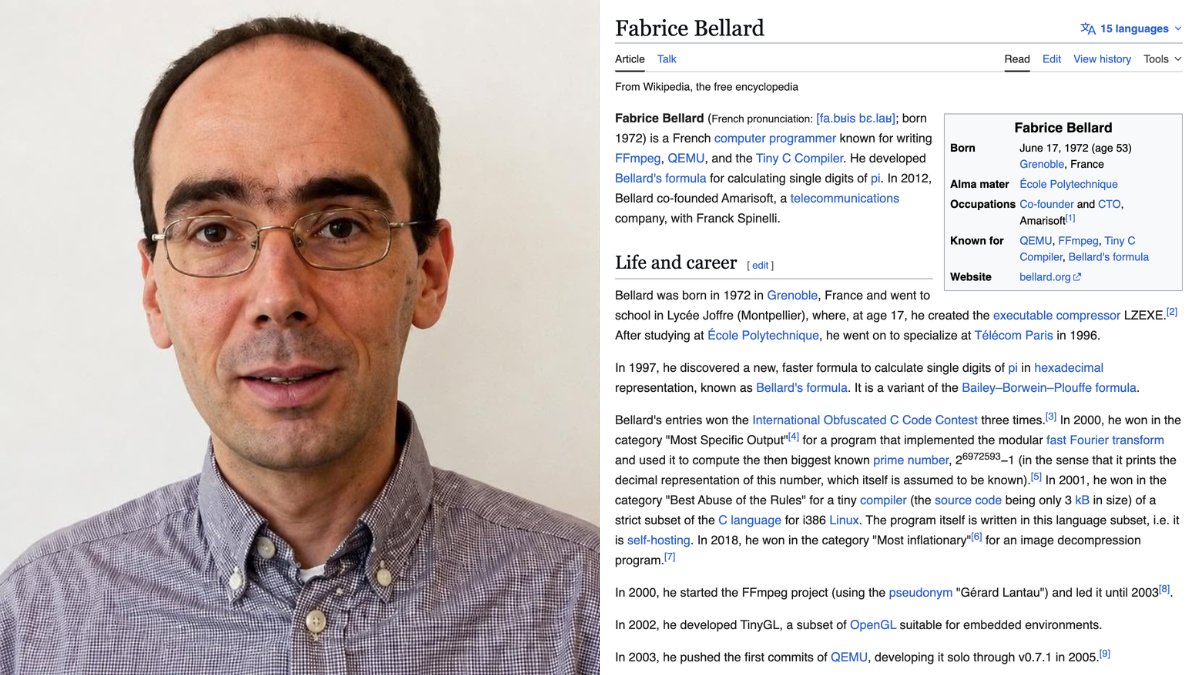
I admire Fabrice Bellard. He is almost certainly a better overall programmer than I am.
Jun 8

A French engineer who lives quietly in Paris has spent 30 years writing software that the entire internet now runs on without knowing his name.
He wrote the code that streams every YouTube video, every Netflix show, every TikTok clip. He wrote the code that runs the virtual servers underneath AWS, Google Cloud, and Microsoft Azure. He calculated more digits of pi than anyone in history. He has no Twitter. He has no marketing. He just keeps shipping.
His name is Fabrice Bellard.
Here is the story, because almost nobody outside the systems programming world knows what one man has built.
Fabrice was born in 1972 in Grenoble, France. He studied at École Polytechnique, the top French engineering school. He never went to Silicon Valley. He never built a startup empire. He just wrote code.
In 2000 he started a project called FFmpeg, an open-source multimedia framework for encoding, decoding, and streaming video. He was 28. The project did one thing nobody else had done well. It handled every video and audio format that existed, in one library, on every operating system. He led it himself for years.
Today FFmpeg is the invisible engine of the internet. YouTube uses it. Netflix uses it. VLC uses it. Chrome and Firefox use parts of it. Every Android phone, every iPhone, every smart TV, every video editing tool you have ever touched runs FFmpeg somewhere underneath. If you have watched a video on a screen in the last 20 years, Fabrice's code processed it.
He was not done.
In 2003 he started QEMU, a machine emulator and virtualizer. He wrote it solo until version 0.7.1 in 2005. QEMU lets you run any operating system on any other operating system. It became the foundation of modern virtualization. KVM, the Linux kernel hypervisor, runs on top of QEMU. Every major cloud provider, AWS, Google Cloud, Microsoft Azure, IBM Cloud, runs virtual machines on infrastructure built around it. The Quick Emulator is the most cited piece of cloud infrastructure code on Earth.
He kept going.
In 2001 he won the International Obfuscated C Code Contest with a small C compiler that grew into TCC, the Tiny C Compiler. TCC can compile and boot a Linux kernel from source in under 15 seconds. In 2004 he calculated the most digits of pi ever computed at the time, using a personal desktop computer and an algorithm he derived himself called Bellard's formula. In 2011 he wrote a complete PC emulator in pure JavaScript that runs Linux in your browser, a project called JSLinux that engineers still cannot believe is real.
In 2019 he released QuickJS, a small but complete JavaScript engine that fits where V8 cannot. In 2021 he released NNCP, a neural network based lossless data compressor that immediately took the lead on the Large Text Compression Benchmark.
Then he turned his attention to large language models. He built TextSynth Server, a web server with a REST API for running LLMs locally. He released ts_zip and ts_sms, compression utilities that use language models to compress text and short messages at ratios traditional algorithms cannot reach. He released TSAC, a very low bitrate audio compression system. In December 2025 he released Micro QuickJS, a new JavaScript engine for microcontrollers, separate from QuickJS, designed for environments with almost no memory.
Fabrice co-founded a telecom company called Amarisoft in 2012, where he serves as CTO. Amarisoft builds 4G and 5G base station software used by carriers and labs around the world. He has been running it for over a decade while continuing to ship personal projects from his own home page at bellard dot org
He has no Twitter. He has no Instagram. He gives almost no interviews. His personal website is a flat list of projects with no styling, no fonts, no marketing copy. Just titles and links.
A quiet French engineer who never moved to Silicon Valley wrote the code that quietly runs the internet.
He is still shipping.
138
666
10,180
594,477
Simon J.K. Pedersen retweeted

May 28
I've got an agent in a loop optimizing a renderer with the goal to minimize frame times (and tests to measure). It got times down from 88ms to 2ms and allocations down from ~150K to 500. Sounds good, right? Wrong. This is exactly why agent psychosis is a big fucking problem.
As an experiment, I rewrote the Ghostty core render state in Go, with access to identically laid out data structures as Ghostty and the exact same validation tests. I made a purposely naive renderer (simple, correct, but slow). 88ms per frame with 150,000 allocations (horrendous, lol)!
I then kickstarted a Ralph loop to bring the frame times down. I told it it can't modify input data structures or the public API or tests (they're correct), but it can do anything else it wants. It got to work.
It has worked for about 4 hours. I've spent around $350 on this experiment so far. The results?
88ms => 1.5ms
150K allocs => ~500 allocs
Incredible right? Nope.
My hand-written renderer I ported has frame times (same benchmark) of ~20us (0.020ms) and 0 allocations in the update path.
This is the problem with psychosis and lacking systems understanding. If you don't understand the system, you're going to accept that this is an incredible result. If you understand the system, you'll see better solutions immediately and can do roughly 75x better on throughput.
The people who blindly trust agent output are in the former camp. They're sheeple, overdrinking from a fountain of mediocrity.
Standard disclaimer: I use AI all the time. I like AI. The point I'm making is to not blindly accept results. Think. Analyze. Learn.
308
980
8,940
791,682
May 28
Love these history lessons about the awesome people involved with space travel early on. A lot more impressive than a modern day space ship unable to start outlook 😭
spacedaily.com/sd-in-april-1…
16
May 21
Threads like this is why twitter is still a great tool
May 20

At some point Anthropic talked to me informally about potentially joining their Board. I wasn’t interested and wouldn’t have been a good fit. But I did send Dario and Daniela a copy of Aristotle’s “Politics.” Unfortunately, I worry they’ve been too busy to read it.
12
Simon J.K. Pedersen retweeted

May 20
At some point Anthropic talked to me informally about potentially joining their Board. I wasn’t interested and wouldn’t have been a good fit. But I did send Dario and Daniela a copy of Aristotle’s “Politics.” Unfortunately, I worry they’ve been too busy to read it.

Dario Amodei: Ideology Won't Survive the Reality of AI
"We're going to find that ideology will not survive the nature of this technology. The things I'm talking about are gonna become bipartisan and universal because everyone will recognize the necessity of it." — @DarioAmodei
81
85
2,004
599,236
Simon J.K. Pedersen retweeted

May 15
Very true. Funny enough the opposite is also true. Complete dismissal for any use whatsoever.
May 15

I strongly believe there are entire companies right now under heavy AI psychosis and its impossible to have rational conversations about it with them. I can't name any specific people because they include personal friends I deeply respect, but I worry about how this plays out.
I lived through the great MTBF vs MTTR (mean-time-between-failure vs. mean-time-to-recovery) reckoning of infrastructure during the transition to cloud and cloud automation. All those arguments are rearing their ugly heads again but now its... the whole software development industry (maybe the whole world, really).
It's frightening, because the psychosis folks operate under an almost absolute "MTTR is all you need" mentality: "its fine to ship bugs because the agents will fix them so quickly and at a scale humans can't do!" We learned in infrastructure that MTTR is great but you can't yeet resilient systems entirely.
The main issue is I don't even know how to bring this up to people I know personally, because bringing this topic up leads to immediately dismissals like "no no, it has full test coverage" or "bug reports are going down" or something, which just don't paint the whole picture.
We already learned this lesson once in infrastructure: you can automate yourself into a very resilient catastrophe machine. Systems can appear healthy by local metrics while globally becoming incomprehensible. Bug reports can go down while latent risk explodes. Test coverage can rise while semantic understanding falls. Changes happens so fast that nobody notices the underlying architecture decaying.
I worry.
4
2
55
6,915
May 14
If you got 20 minutes, watch this video from the creator of pi (the agent) - now slow the f down :D youtube.com/watch?v=RjfbvDXp…

31
Saying Windows is dead without officially acknowledging it. Just offer all your most senior people to go away businessinsider.com/microsof…
36
Don't take part in this IPO please
Apr 29

This is the most OUTRAGEOUS deal I've seen in my 45 years on Wall Street.
SpaceX just disclosed Musk's new compensation package:
He gets up to 200 million super-voting shares if SpaceX hits a $7.5 trillion valuation, establishes a permanent human settlement of at least ONE MILLION people on Mars, and deploys roughly 100 terawatts of space-based computing power.
Let me put the 100 terawatts in perspective:
The entire electricity generation capacity of the United States is around 1.2 terawatts. The comp plan asks Musk to build more than 80x America's entire power grid... in orbit.
This is a science fiction screenplay that somehow landed in front of the SEC.
But here's why it actually matters for your portfolio...
The S-1 reportedly claims a $28.5 trillion total addressable market, with over 90 percent attributed to AI. CapeFearAdvisors flagged this one cleanly: when Palantir went public, it disclosed a $119 billion TAM and the SEC reviewed and accepted it.
SpaceX is claiming a market roughly 240x BIGGER.
Now let's talk about what is actually being sold here:
Reported 2025 revenue is approximately $15.5 billion. Starlink delivers around $11 billion of that with healthy margins, and the launch business is genuinely dominant. The problem is xAI - the AI piece doing all the heavy lifting in the trillion-dollar valuation pitch.
xAI generated just $210 million of revenue in the first 3 quarters of 2025 while burning through $9.5 billion in cash.
Ben Brey and Rupert Mitchell - a former Fidelity portfolio manager and a former head of equity capital markets at Goldman and Citi between them - ran a serious discounted cash flow on the actual operating businesses and arrived at roughly $400 billion. Lawrence Fossi covered their work recently and the math holds up.
The IPO is being marketed at $1.75 TRILLION.
The gap between what these businesses support and what Musk is asking the public to pay is roughly $1.35 trillion of pure narrative.
Then layer on what we just learned last week...
The New York Times investigation revealed Musk personally borrowed $500 million from SpaceX between 2018 and 2020 at rates as low as 1%, while bank prime rates sat around 5%. The same SpaceX has been used to bail out SolarCity, prop up Tesla during cash crunches, and absorb xAI when the AI losses became unmanageable.
This is the same playbook he's run for two decades.
Use a privately controlled entity as a personal piggy bank, and when the bills come due, find new investors to absorb the losses.
The IPO is structured to keep that game going FOREVER.
The Texas reincorporation strips away Delaware's fiduciary protections. Controlled-company status on the Nasdaq eliminates independent board requirements. And retail is being offered up to 30% of the offering (3x the normal allocation) because the institutions who actually do the math are quietly stepping away.
Here is the part that finishes the case for me:
Roughly $40 billion of the IPO proceeds are already spoken for before a single dollar reaches operations. About $23 billion retires SpaceX debt. Another $17 billion retires the high-interest debt sitting on xAI and X.
This raise is not funding the future. It's just plugging existing holes that retail investors will now own.
In my 45 years I've never seen a deal where the comp hurdle is colonizing another planet.
I've never seen a disclosed TAM that exceeds verified comparables by two orders of magnitude.
I've never seen a company asking the public to fund the retirement of debt incurred by separate private entities controlled by the same individual.
Every red flag I've watched precede a major bust over four decades is sitting in this prospectus, in plain sight.
The Tesla mispricing is being repeated on a far larger scale.
And this time the bag is being handed directly to retail.
Don't be the one holding it.
26
Apr 30
Gotta love these bugs. Who thinks it wasn't placed there by accident;)

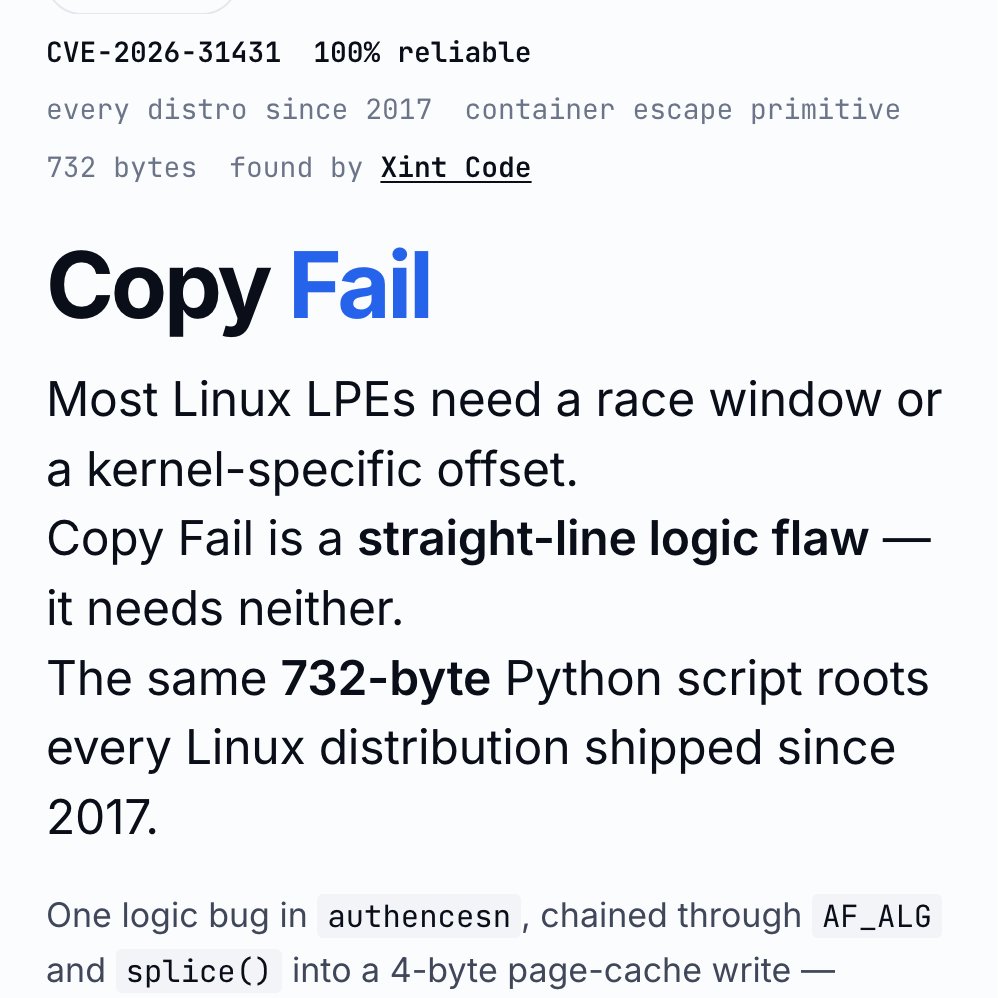
‼️🚨 BREAKING: An AI found a Linux kernel zero-day that roots every distribution since 2017. The exploit fits in 732 bytes of Python. Patch your kernel ASAP.
The vulnerability is CVE-2026-31431, nicknamed "Copy Fail," disclosed today by Theori. It has been sitting quietly in the Linux kernel for nine years.
Most Linux privilege-escalation bugs are picky. They need a precise timing window (a "race"), or specific kernel addresses leaked from somewhere, or careful tuning per distribution. Copy Fail needs none of that. It is a straight-line logic mistake that works on the first try, every time, on every mainstream Linux box.
The attacker just needs a normal user account on the machine. From there, the script asks the kernel to do some encryption work, abuses how that work is wired up, and ends up writing 4 bytes into a memory area called the "page cache" (Linux's high-speed copy of files in RAM). Those 4 bytes can be aimed at any program the system trusts, like /usr/bin/su, the shortcut to becoming root.
Result: the next time anyone runs that program, it lets the attacker in as root.
What should worry most: the corruption never touches the file on disk. It only exists in Linux's in-memory copy of that file. If you imaged the hard drive afterwards, the on-disk file would match the official package hash exactly. Reboot the machine, or just put it under memory pressure (any normal system load that needs the RAM), and the cached copy reloads fresh from disk.
Containers do not help either. The page cache is shared across the whole host, so a process inside a container can use this bug to compromise the underlying server and reach into other tenants.
The original sin was a 2017 "in-place optimization" in a kernel crypto module called algif_aead. It was meant to make encryption slightly faster. The change broke a critical safety assumption, and nobody noticed for nine years. That bug then rode every kernel update from 2017 to today.
This vulnerability affects the following:
🔴 Shared servers (dev boxes, jump hosts, build servers): any user becomes root
🔴 Kubernetes and container clusters: one compromised pod escapes to the host
🔴 CI runners (GitHub Actions, GitLab, Jenkins): a malicious pull request becomes root on the runner
🔴 Cloud platforms running user code (notebooks, agent sandboxes, serverless functions): a tenant becomes host root
Timeline:
🔴 March 23, 2026: reported to the Linux kernel security team
🔴 April 1: patch committed to mainline (commit a664bf3d603d)
🔴 April 22: CVE assigned
🔴 April 29: public disclosure
Mitigation: update your kernel to a build that includes mainline commit a664bf3d603d. If you cannot patch immediately, turn off the vulnerable module:
echo "install algif_aead /bin/false" > /etc/modprobe.d/disable-algif.conf
rmmod algif_aead 2>/dev/null || true
For environments that run untrusted code (containers, sandboxes, CI runners), block access to the kernel's AF_ALG crypto interface entirely, even after patching. Almost nothing legitimate needs it, and blocking it shuts the door on this whole class of bug...

44
Apr 30
Great take on open source
Apr 30

The Zig project's rationale for their blanket ban on AI-assisted contributions makes a lot of sense to me - for them, time spent reviewing PRs isn't about the code, it's about growing new contributors for the future of the project simonwillison.net/2026/Apr/3…
20
Apr 29
Can the bubble just pop so we can get rid of this way to conduct business.
Apr 28

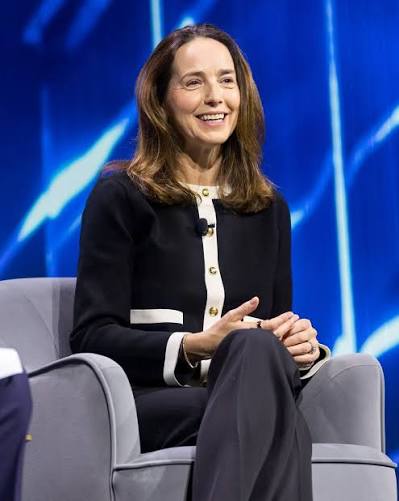
OpenAI's CFO just told her own executives the company might not be able to pay its $1.4 trillion in compute bills. OpenAI makes $20 billion a year.
That's a 70-to-1 ratio between committed spend and current revenue. To clear those obligations, OpenAI has to grow an order of magnitude in five years and hold it for a decade. Sam said last week the target is "hundreds of billions" by 2030.
Friar has said three versions of this admission in three weeks. At WSJ Tech Live, she pitched a federal "backstop" for the financing, then walked it back when the backlash hit. With Cathie Wood, she reframed it as a compute shortage, saying OpenAI is "making tough trades" and turning down projects. Now WSJ has the internal version: she's worried they can't pay the bill.
Same statement, three audiences, urgency turned up each time. The internal version is always the real one.
The math underneath. Oracle: $300 billion over five years, $60 billion annually starting 2027. Microsoft: $250 billion. Nvidia: $100 billion in chip purchases, with Nvidia simultaneously investing $100 billion back into OpenAI to fund those purchases. AMD: 6 gigawatts of capacity, up to $300 billion. Broadcom: $350 billion. AWS: $38 billion. CoreWeave: $22 billion.
Annual compute spend ramps from $6 billion this year to $173 billion in 2029 to $295 billion in 2030. Tom Tunguz modeled it straight from the public contracts.
Microsoft took a $360 billion stock wipeout last week when investors learned 45% of its $625 billion commercial backlog, roughly $250 billion, is tied to OpenAI. Oracle has already borrowed against its deal, already started building, already committed years ahead of cash flow. HSBC estimates OpenAI has a $207 billion funding gap to meet what's already signed.
The "Nvidia invests in OpenAI to buy Nvidia chips" loop is the same trade five different ways. Capital flows from one balance sheet to another and books revenue at every stop. If OpenAI's revenue ramp stalls, the loop stops, and every company holding the contract marks it down at the same time.
Friar is the only person in the building with every contract on her desk at once. When she tells the room she's worried, the other three statements were warm-ups.

16
Simon J.K. Pedersen retweeted

Apr 28
Something strange is happening in tech.
CTOs of billion dollar companies are quitting to take IC roles at Anthropic.
Workday CTO -> MTS (Mar 2026)
You[.]com CTO -> MTS (Mar 2026)
Instagram CTO -> MTS (Jan 2026)
Box CTO -> MTS (Dec 2025)
Super[.]com CTO -> MTS (July 2025)
Adept AI CTO -> MTS (Jan 2025)
The mission is that real.
247
368
5,272
2,607,720
Simon J.K. Pedersen retweeted

Apr 28
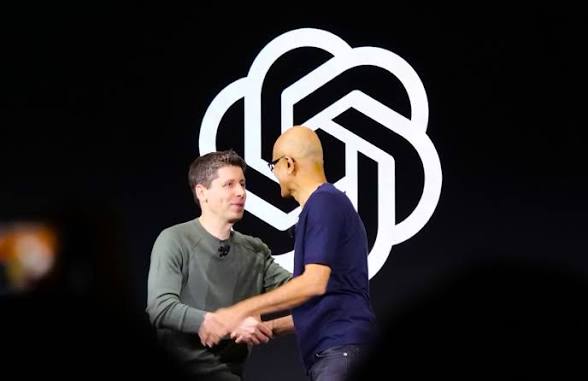
This is wild. Sam Altman deleted the AGI clause from the Microsoft contract today. The contract structure that replaced it makes any AGI announcement commercially worthless.
The AGI clause was a legal singularity. Once OpenAI's board declared AGI achieved, Microsoft's IP rights would terminate. One sentence that could vaporize a $135 billion stake.
That clause was OpenAI's only real leverage. They gave it up.
The actual trade is buried in the new terms. Microsoft no longer pays OpenAI any revenue share on Azure-hosted sales. OpenAI keeps paying Microsoft 20% of all revenue through 2030, capped, "independent of OpenAI's technology progress." That last phrase is the entire deal.
A company that thought AGI was 18 months away would never sign that. Independent of technology progress means: even if you cure cancer next quarter, you still owe us 20%. Even if you declare AGI tomorrow, the contract doesn't change. Microsoft converted AGI from a contingent event into a fixed date sunset.
Microsoft's IP license runs flat to 2032. Same rights pre-AGI as post-AGI. The "appropriate safety guardrails" language from the October 2025 amendment is also gone, because guardrails imply triggers, and there are no more triggers.
The cascade is what makes this clean. OpenAI signed $138 billion with AWS over the last six months. That alone broke Azure exclusivity. Microsoft had two choices: sue or renegotiate. They renegotiated and used the leverage to extract the AGI clause permanently. Sam and Satya did this personally over a few weeks.
Markets priced it correctly. MSFT fell 2%. AMZN rose 1%. The exclusivity loss is real. The AGI risk removal is also real. Microsoft traded distribution rights for legal certainty on a 27% stake worth $135 billion.
For OpenAI heading into IPO, the read is funny. AGI is now contractually meaningless. The board can announce it tomorrow and Microsoft still collects 20% through 2030. Declaring AGI before 2030 changes nothing in any major commercial agreement they have.
The AGI clause survived six years because both sides believed AGI was a discrete event with contractual consequences. They both signed a piece of paper saying it isn't.
16
16
105
27,002
Apr 28
Microsoft is in bigger trouble than they care to admit. This is a prime example of why. When one of our generation's most influential developers post this about your platform you are about to witness a mass exodus. This lack of attention to quality is not only affecting Github
Apr 28
Ghostty is leaving GitHub. I'm GitHub user 1299, joined Feb 2008. I've visited GitHub almost every single day for over 18 years. It's never been a question for me where I'd put my projects: always GitHub. I'm super sad to say this, but its time to go. mitchellh.com/writing/ghostt…
26
Simon J.K. Pedersen retweeted
Apr 28
Ghostty is leaving GitHub. I'm GitHub user 1299, joined Feb 2008. I've visited GitHub almost every single day for over 18 years. It's never been a question for me where I'd put my projects: always GitHub. I'm super sad to say this, but its time to go. mitchellh.com/writing/ghostt…
548
1,607
16,749
2,914,049
Simon J.K. Pedersen retweeted

Apr 22
OpenAI is shutting down text-embedding-3-small?!?
I strongly believe that if you shut down a closed-source embedding model that you should open-source. Imaging the trillions of tokens that will no longer be queryable.
cc @romainhuet

65
63
1,632
385,544
Simon J.K. Pedersen retweeted

Apr 21
OpenAI's new Euphony tool works almost exactly the same way as my Codex transcript viewer tools.simonwillison.net/code…
Apr 21

Introducing Euphony, an open-source tool for visualizing chat data and Codex session logs.
Paste in a public URL or upload a local file, and Euphony turns the raw data into an easy-to-browse view. It supports translation, filtering, editing, and more.
27
14
375
55,879