
I think about the economic infrastructure of the internet in an AI world. | fmr @Pinterest @Gitcoin | Dad x3 | trail runner
Joined December 2008
- Tweets 4,599
- Following 1,097
- Followers 1,304
- Likes 11,192
183 Photos and videos






Pinned Tweet

11 Aug 2022
i work in web3 to help build an internet where:
-we’re all owners
-we build together
-we play positive sum games
-we share the profits
-we use our💰 to regenerate the 🌎
7
7
87
Sean retweeted

Apr 26
the biggest thing that happens when people find work thats sustainably meaningful for them is that they lose judgements of others and genuinely want others to succeed. not in a transactional, i hope to gain from others success but sincere joy of seeing others win
2
4
26
1,303
Sean retweeted

Apr 19
2010: startups raised to hire devs
2016: startups raised to buy clicks
2022: startups raised to buy GPUs
2026: startups raise to buy tokens
the scarce thing shifts over time!!
82
47
600
33,953

If you are in startups or tech
It is literally cook or be cooked

83
162
2,216
504,561
Sean retweeted

Apr 11
Since founding my company in 2013, I’ve believed in one rule above all else: move fast, or the window closes. It has shaped how I build, invest, and advise founders ever since.
But I learned about Eigenzeit this week and it will not leave me alone.
In German, it translates to "proper time." Einstein used it in relativity to describe the time that belongs to a specific object. It’s why a twin traveling near the speed of light ages more slowly than the one on Earth: each moves according to their own eigenzeit.
The metaphor for company building feels almost too perfect.
Trust between a founder and their market has an eigenzeit.
A new category has an eigenzeit.
Even a team finding its rhythm has an eigenzeit.
Reputation has an eigenzeit.
996 culture can't compress these things. Capital can't rush them.
Some things move at the speed of execution.
Others move according to their own clock.
(h/t Colin Bryant, Coatue)
4
6
55
5,581
Apr 10
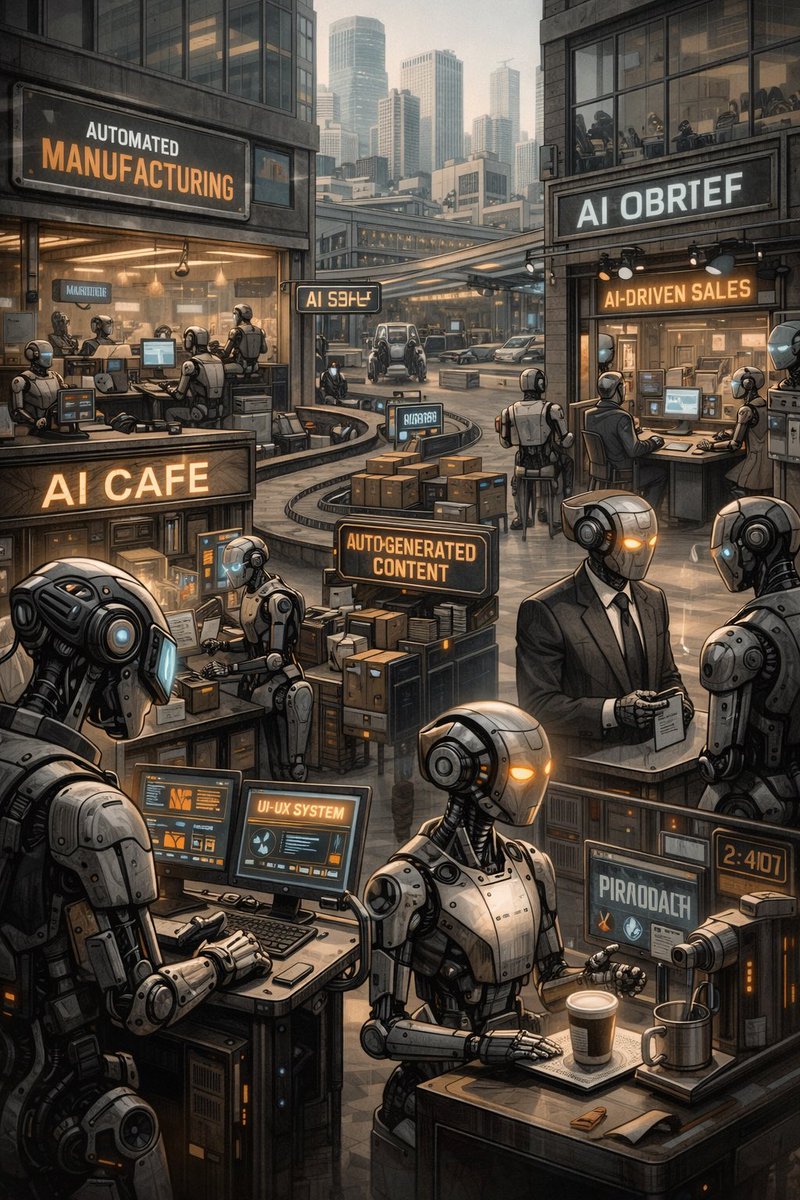
Agent-native design be like
Apr 10

Sometime in the next 2-3 years agents will be using the internet more than humans
We designed the whole thing for human eyes, human emotions, human attention spans
Agents do not have any of that
The internet as we know it was built for the wrong user
The opportunity is rebuilding everything for the new user
Agent-native search. Agent-native commerce. Agent-native discovery
Every category is open again
I can't stop thinking about it.
1
52
Sean retweeted

A loan officer at a local bank told me that anyone applying as a "CEO" is flagged for manual review
Successful small business owners don't call themselves that
68
125
6,503
412,537


enough with the emotional self-defeatist mentality in this industry
yes. there's tremendous potential left in crypto. we haven't even surfaced 1% of it
crypto is the universal API for money, markets, and capitalism
blockchains didn't even scale past steam-engine performance until 2 years ago
unstoppable private money, programmable finance, internet capital markets, perpification of all assets on earth, decentralized coordination for physical infrastructure, lightspeed planetary payments with a line of code, a sanctuary economical system for anyone who didn't luck into being born in the west, zero knowledge proofs, fully homomorphic encryption, freedom, self-custody of assets without requiring permission from suits, property rights, contract enforcement, capitalism based on cryptography instead of the crony
trillions
Apr 8

Is there anything exciting left in crypto?
57
66
554
32,653
Sean retweeted

Apr 8
if you’re freaking out about Mythos, remember:
Never make any major life decisions within 30 days of a meditation retreat, psychedelic trip, or first encounter with a frontier AI model.
105
288
4,933
147,058
Apr 9
If AI leads to this future then maybe we’ll all be OK
Apr 9

People often ask where Lovable users find time to build side projects.
What I'm seeing: people are choosing to build instead of passive consumption, like endless doom scrolling.
Creativity is reclaimed from consumption.
48
Apr 9
Vibe coding works.
Vibe coding your design? Not so much.
Met @yarik_designer through @patel0phone while working on @AtriumAcademy.
First thing I did as VP Marketing in my last role?
Hire him to build our brand foundation.
Now we’re building Tribe together.
Something we keep seeing:
Founders can ship product faster than ever.
But they’re still showing up like an MVP.
And that gap kills trust.
Not because the product is bad.
Because the presentation says “not ready.”
Most teams think design is polish.
It’s not.
It’s the difference between
“this project is interesting” and “this company gonna blow up.”
Getting v1 design done is easy now.
Building something that actually holds across product, site, and marketing is not.
2
3
74
Mar 14
Hot take from @impranavm_ at the Digital Frontier Summit at UC Berkeley:
“AI agents right now are basically toys that adults over 25 are playing with.”
He’s probably right.
But agents themselves aren’t the interesting part.
They’re the apps of the AI internet.
What matters is the infrastructure underneath. Builders today are racing to figure out:
identity
permissions
payments
guardrails
But almost no one is asking the deeper question:
Who owns the context those agents operate on?
Because once agents remember your preferences, goals, relationships, and history… they stop being tools.
They become personal intelligence.
If platforms own that context → AI becomes the strongest lock-in ever created.
If individuals own it → AI becomes open infrastructure.
That’s the real battle for the next internet. Who's working on that? DM me.
3
2
5
616
Mar 13
if AI makes context the real control layer, what has to exist so individuals retain real leverage instead of all the value compounding to platforms and employers?
1
48
Mar 13
people should not have to rebuild their digital mind every time they switch tools, jobs, or platforms
1
43
Mar 12
Right now in AI:
Platforms own your identity.
Platforms hold your memory.
Platforms run the agents.
So the intelligence acting on your behalf runs on context you don’t control.
The obvious architecture is the opposite:
Users own identity.
Users own memory.
Agents plug into that.
Maybe working in blockchain just red-pilled me. But building “personal AI” on platform-owned memory feels a lot like rebuilding the same old internet… just with better autocomplete.
3
82
Mar 12
i concur. this is a good reason.

if you ask most peeps why they want kids they’ll give you some npc answer.
the reason why i think having children would be amazing is that you get a front row seat to consciousness booting up. like watching an os that god wrote light up for the first time.
& as they grow up you get to examine the world through an innocence lens you basically shedded a long long time ago.
105
Sean retweeted

Mar 12
For essentially my entire career in tech, the most valuable person was an engineer who understood some business/GTM.
The entire economic structure of the industry was built on this.
Engineers commanded the highest salaries. The cap table was designed around equity comp because you couldn't afford them in cash. The seed round existed to buy engineering time/output. And VCs were, at their core, an arbitrage on engineering scarcity.
That scarcity is gone.
Now the most valuable person is the business/GTM person that understands some engineering.
42
23
379
34,528
Mar 12
vibe coding is how people start noticing where the control points are

With vibe coding, you accidentally learn:
- how APIs connect everything.
- why your .env file matters.
- what localhost really means.
- why deployments break but local works.
- how auth actually works.
- what really happens after npm install.
- how backend logic flows.
- how your database is structured.
- why rate limits exist.
55
Mar 12
I started my career in ad tech because I believed in the open internet.
Back then the web felt like a real market.
Publishers had supply.
Advertisers had demand.
Open exchanges connected them.
Then the internet closed.
Platforms captured identity, data, distribution, and monetization.
The market layer disappeared.
Over the past few years I’ve found myself drawn to people trying to reopen parts of the system — crypto networks, DAOs, programmable ownership, public goods funding.
Now AI is forcing the same question again.
Who controls the infrastructure of intelligence?
If models, distribution, and agents live inside a few companies, we may repeat the same story we saw with social platforms.
But there’s another path:
• open models
• local AI
• interoperable agents
• programmable ownership systems
I’m starting to spend more time talking to founders building what I’d call the economic infrastructure of the open internet.
Working on open AI, ownership systems, or coordination infrastructure? If so, I’d love to compare notes.
3
80
Sean retweeted

Mar 12
the way to build shareholder value is to build a workplace that brings out the best in people.
companies that focus excessively on might-be shareholders at the expense of their teams will bleed talent at the moment in time when talent matters the most.
it’s unfashionable to talk about culture, and near uncouth to bring up the “work environment”. while surely the cold-brew-on-tap office perks of the 2010s were useless, and stock comp may be frittered away in uneconomic ways, the returns to building camaraderie and a winning locker room have never been higher than they are today.
the best CEOs are building their companies both for their customers and for their teams. the shareholders will take care of themselves.
12
15
311
20,301