Working on African agency(ies)/positioning in international politics - focus Ethiopia, Senegal, South Africa - @scuolanormale @SantAnnaPisa
Joined January 2017
- Tweets 777
- Following 1,367
- Followers 378
- Likes 2,405
28 Photos and videos
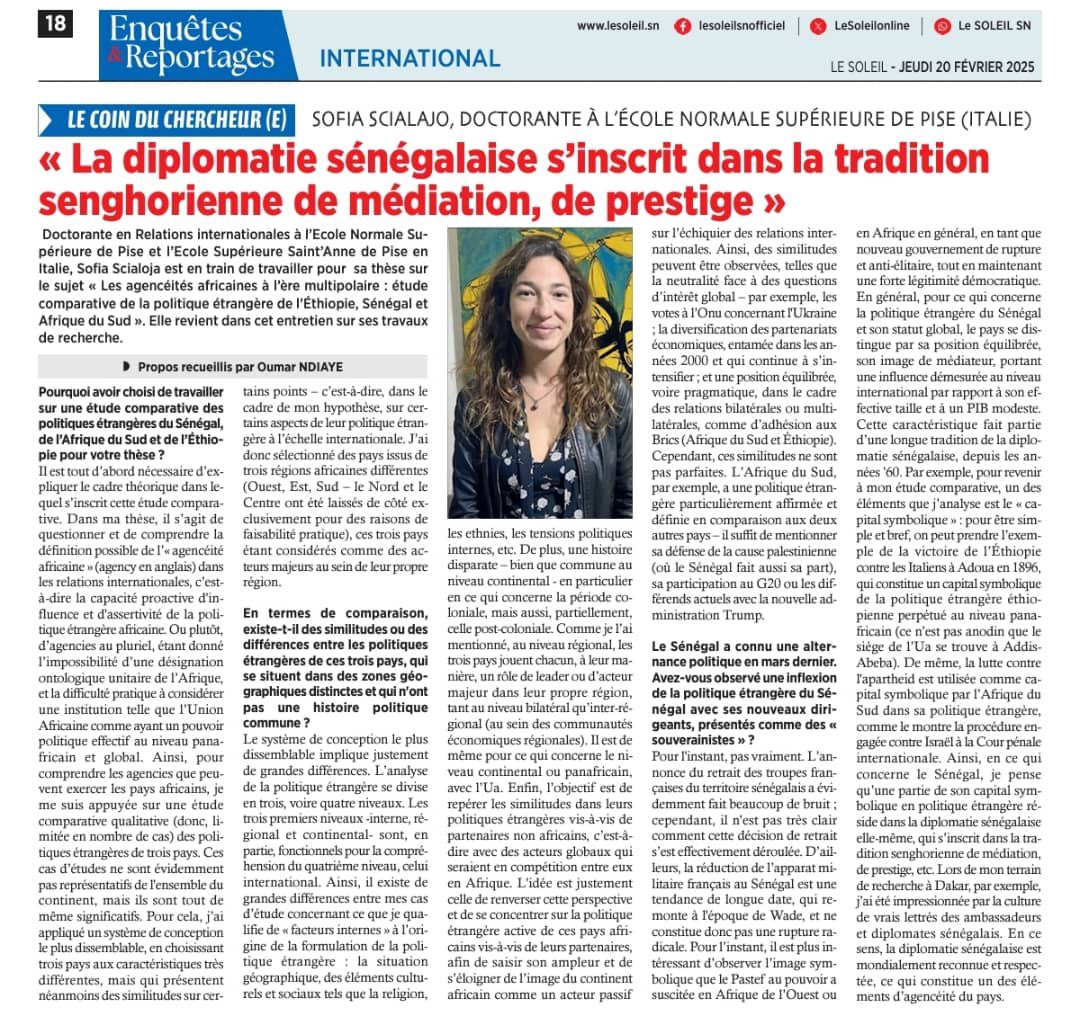

Pinned Tweet

Mar 17
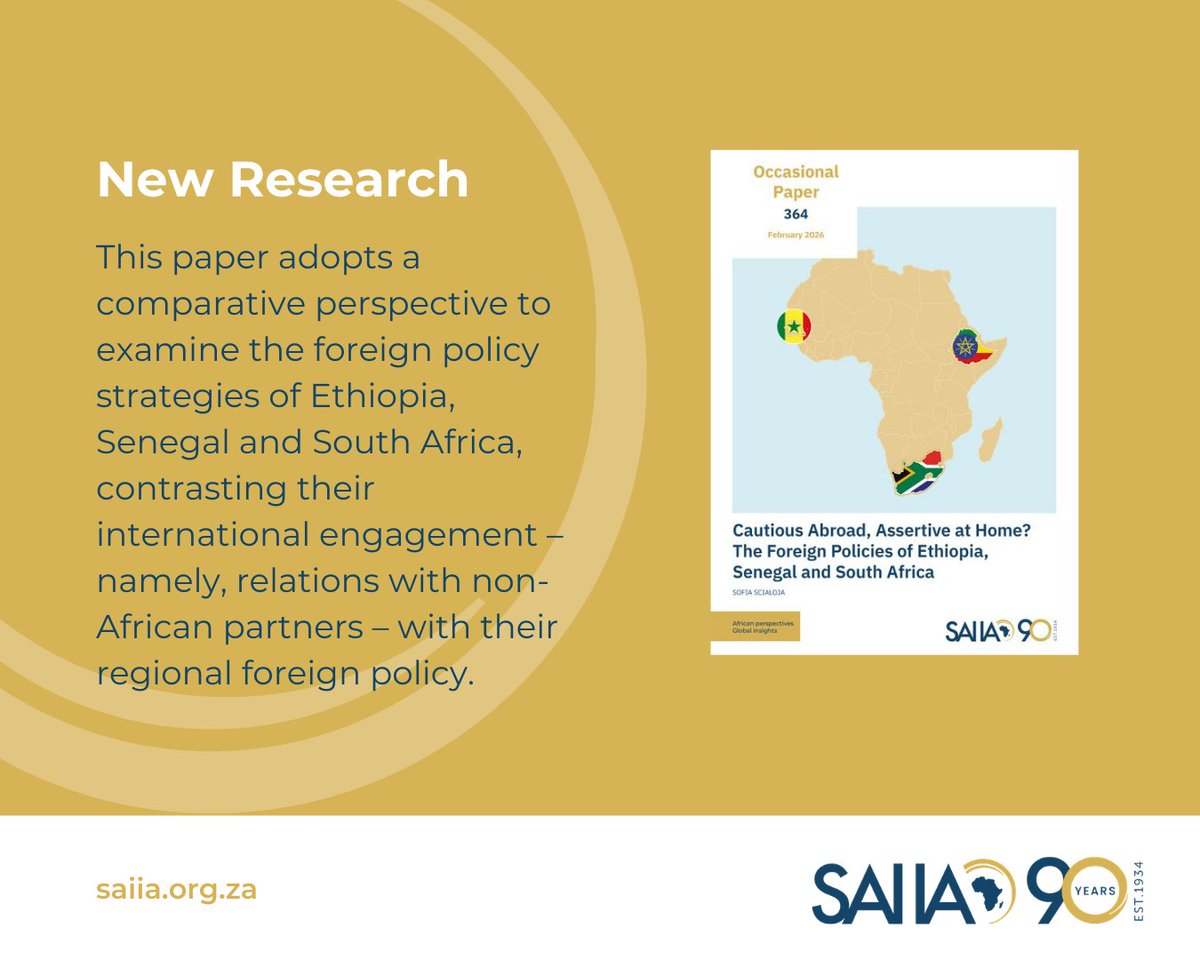
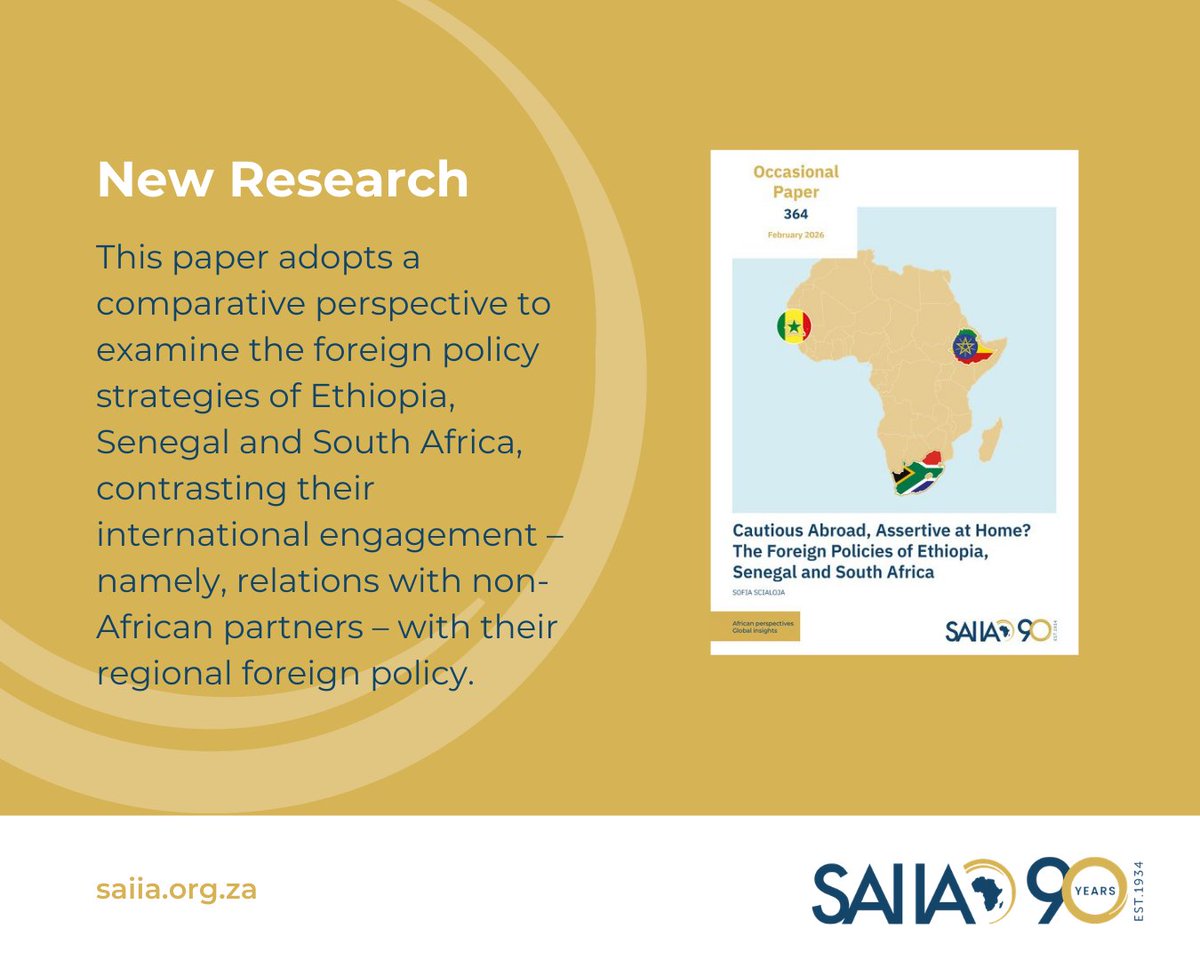
Happy to share my occasional paper for SAIIA proposing a comparative analysis of the FP of #Senegal, #Ethiopia and #SouthAfrica - in particular the differences between their fp behaviour at the regional vs international levels #AfricanAgency(ies)

📚 NEW | ‘Cautious abroad, assertive at home’: can this description be applied to the #foreignpolicy of African states, asks @sofiscialoja.
▶️ bit.ly/4uEfMmW
#ForeignPolicy #AfricanAgency #EconomicGrowth #Multipolarity #Nonalignment #Multilateralism #ECOWAS #SADC
1
1
214
May 24
Per @ilmanifesto , un breve articolo sulla saga politica interna senegalese con la (prevedibile) implosione del tandem ai vertici Diomaye/Sonko 🇸🇳
ilmanifesto.it/diomaye-e-son…
24
Sofia Scialoja retweeted

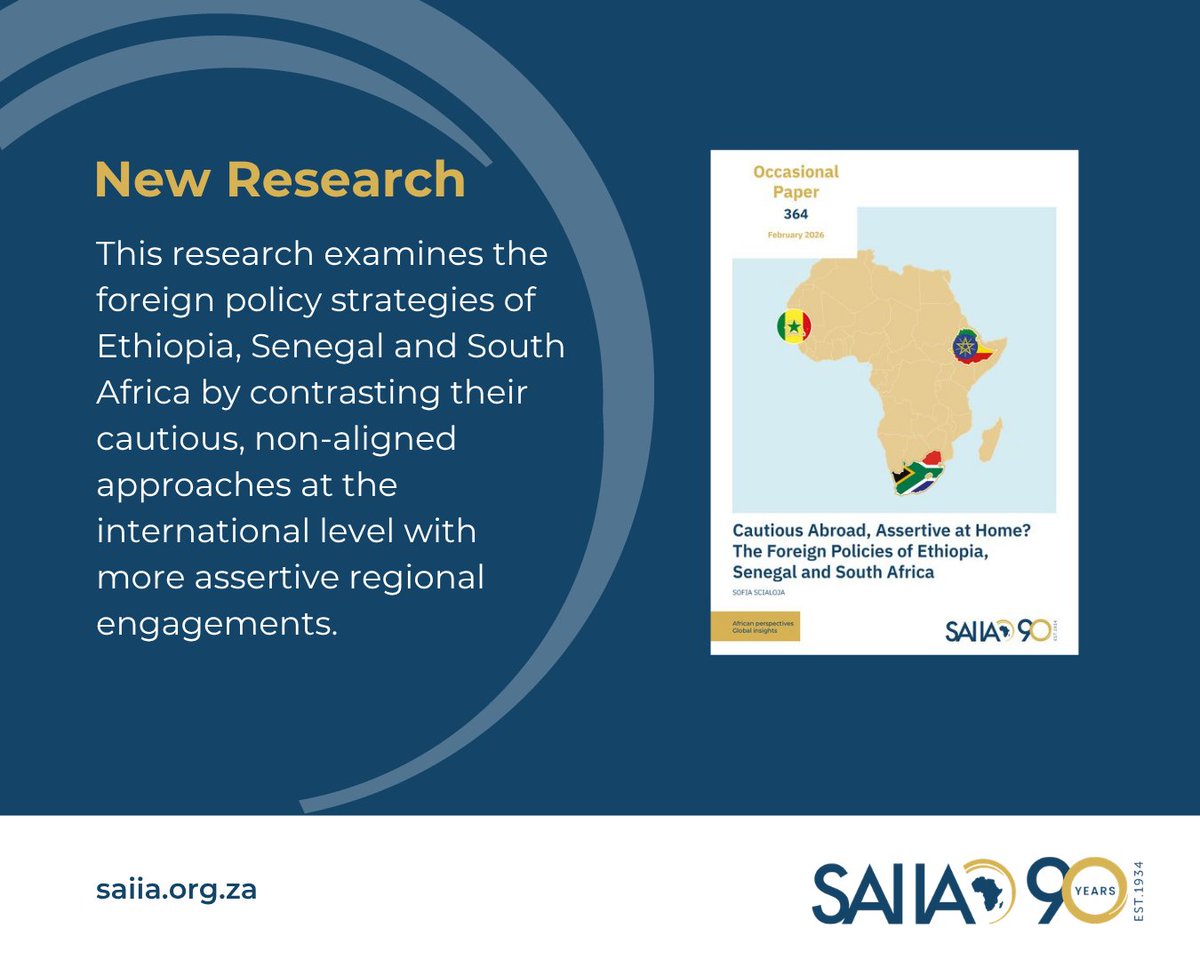
📚 African states champion #PanAfricanism but guard their sovereignty.
@sofiscialoja shows how Ethiopia, Senegal and South Africa balance cautious global diplomacy with assertive regional action to secure strategic autonomy.
Read more ➡️ bit.ly/4uEfMmW
4
6
376
Sofia Scialoja retweeted

Apr 7
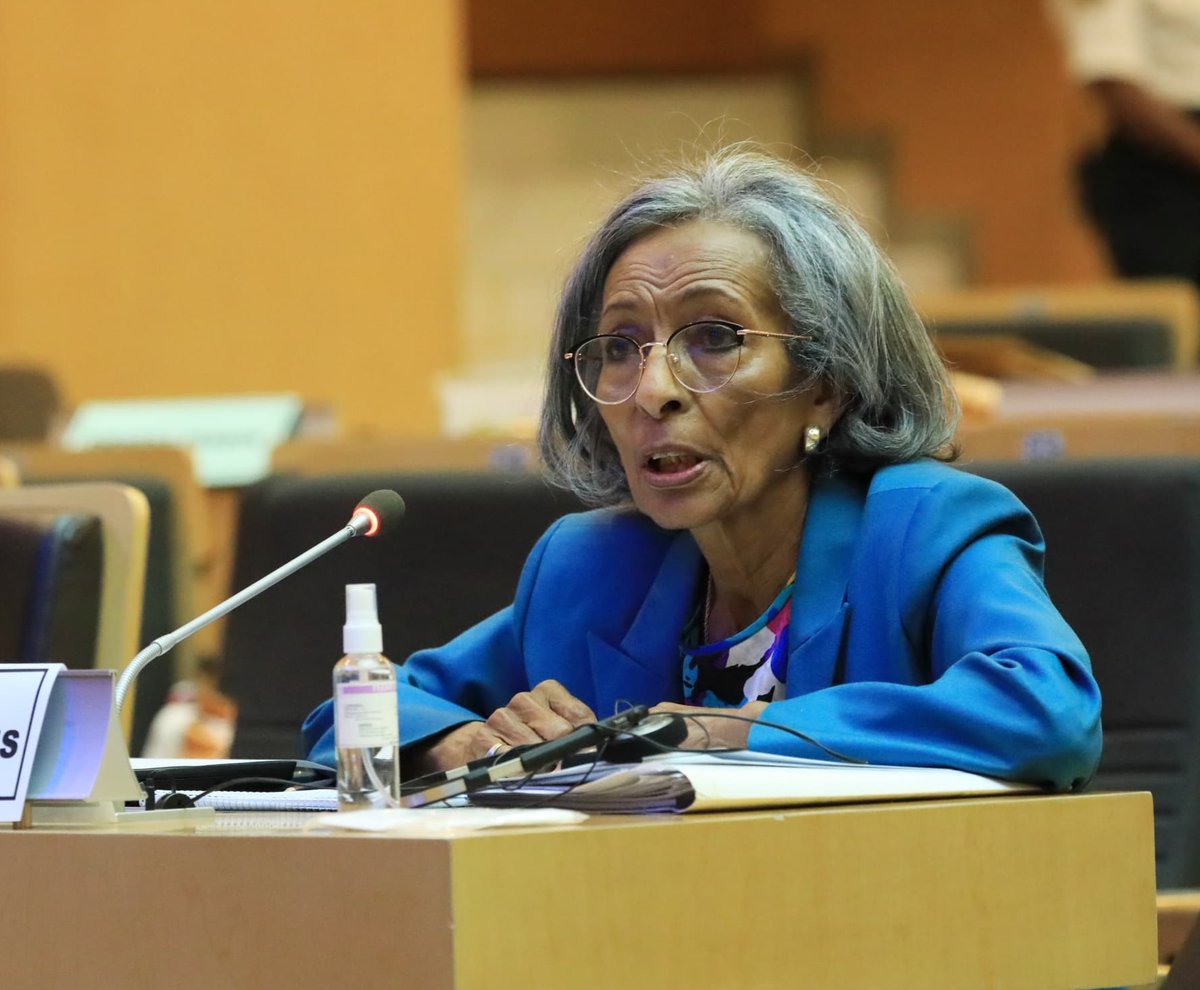
Statement by the Chairperson of the African Union Commission on the Passing of Ambassador Konjit Sinegiorgis of #Ethiopia.
The Chairperson of the African Union Commission, H.E. Mahmoud Ali Youssouf, has received with profound sorrow the news of the passing of Ambassador Konjit Sinegiorgis, a distinguished diplomat, a pioneering figure in Ethiopia’s foreign service, and a steadfast Pan-Africanist who dedicated her life to the service of her country and the continent.
Ambassador Konjit Sinegiorgis built an exemplary career that spanned several decades. As one of Ethiopia’s earliest female ambassadors, she helped pave the way for generations of African women in diplomacy. Her service reflected her unwavering commitment to advancing Africa's interests and strengthening international cooperation, where she played a vital role in promoting the continent’s collective priorities. The Chairperson noted, “Ambassador Konjit Sinegiorgis embodied the highest ideals of African diplomacy, marked by integrity, excellence, and an unyielding commitment to our shared future.” He further emphasised that “her legacy will continue to inspire generations of African diplomats, particularly women, to serve with courage, distinction, and purpose.”
On behalf of the African Union Commission, the Chairperson @ymahmoudali extends his deepest condolences to the family of Ambassador Konjit Sinegiorgis, to the Government and people of the Federal Democratic Republic of Ethiopia, and to all Africans who mourn this great loss.
May her soul rest in eternal peace.
Read @ au.int/en/pressreleases/2026…
@MFAEthiopia @PMEthiopia @AbiyAhmedAli
9
88
239
17,873
Sofia Scialoja retweeted

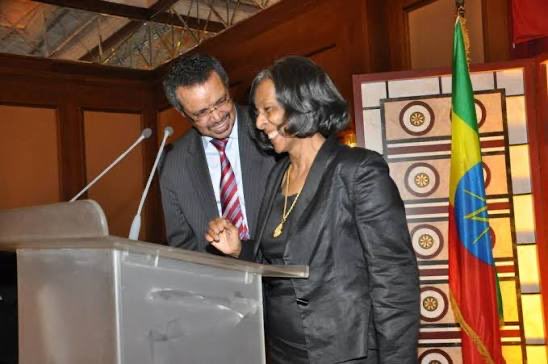
My heart is heavy with the passing of Ambassador Konjit Sinegiorgis, my former colleague and dear friend.
Farewell to a titan of diplomacy. Ambassador Konjit Sinegiorgis entered the foreign service in 1962, one year before the founding of the Organisation of African Unity. From her earliest days as a diplomat, she devoted herself to the cause of decolonization. She later served as Ethiopia's Permanent Representative to the African Union, where she continued to shape the continent's destiny with wisdom, grace, and unwavering commitment.
Throughout her remarkable career, she broke barriers and opened doors for so many who followed. She was a true pioneer, not only in her achievements but in the quiet dignity and strength with which she carried herself. Her legacy of service is unmatched, and her absence leaves a void that cannot be filled.
Rest in peace, dear Konjit. You will be deeply missed, but never forgotten.
11
59
436
24,481
Sofia Scialoja retweeted
📚 What shapes how African states engage the world and their own regions?
Sofia Scialoja takes a comparative look at the #foreignpolicy strategies of Ethiopia, Senegal and South Africa.
▶️ Read more: bit.ly/4uEfMmW
1
7
450


Sofia Scialoja retweeted
In memory of Steven Gruzd: To honour his professional legacy and the lives he touched at the Institute and beyond, we have created a space for colleagues, peers and the wider SAIIA community to share their messages and tributes. Please visit the link below. saiia.org.za/in-memory-of-st…
2
25
55
5,972
Mar 29
You will be forever and deeply missed, Steve @rhymeswbruised . Exceptional, irreplaceable, wonderful person. May you rest in peace. Shalom
It is with great sorrow that we announce the untimely passing of Steven Gruzd, Head of the African Governance and Diplomacy Programme at SAIIA.
An integral part of the Institute, Steve was known for his unwavering dedication to his work and his commitment to the policy community in Africa. We will miss his brilliant mind, his deep camaraderie and his gentle spirit. His absence leaves a significant void at SAIIA and across the continent he served so passionately. Our thoughts and deepest sympathies are with Steve’s family, friends and all those who had the pleasure of working alongside him. May his soul rest in peace. 🕊️
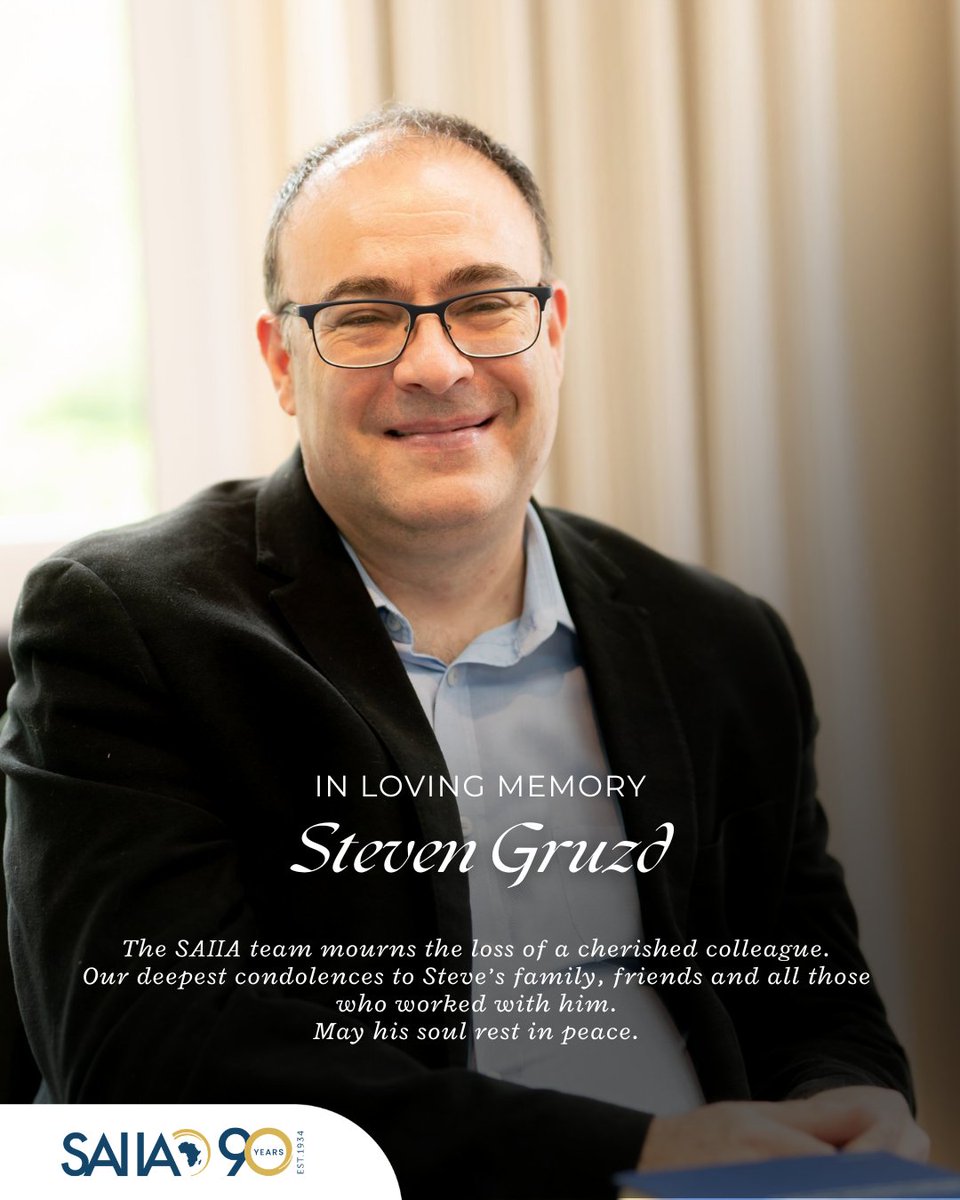
ALT In loving memory of Steven Gruzd
95
Sofia Scialoja retweeted
It is with great sorrow that we announce the untimely passing of Steven Gruzd, Head of the African Governance and Diplomacy Programme at SAIIA.
An integral part of the Institute, Steve was known for his unwavering dedication to his work and his commitment to the policy community in Africa. We will miss his brilliant mind, his deep camaraderie and his gentle spirit. His absence leaves a significant void at SAIIA and across the continent he served so passionately. Our thoughts and deepest sympathies are with Steve’s family, friends and all those who had the pleasure of working alongside him. May his soul rest in peace. 🕊️
ALT In loving memory of Steven Gruzd
66
94
213
130,233
Sofia Scialoja retweeted

Interesting piece by @sofiscialoja, discussing the foreign policies of #Senegal, #Ethiopia and #SouthAfrica - quite cautious on the international stage but very active regionally... (South Africa being something of an outlier there). saiia.org.za/wp-content/uplo…
2
5
499
Mar 10
Per il @ilmanifesto un mio articolo sull #Etiopia : escalation in #Tigray con ridisegno delle alleanze locali; politica di accesso al mare di Abyi; rapporti tra i paesi del Corno e quelli mediorientali in guerra
ilmanifesto.it/etiopia-sulla…
65
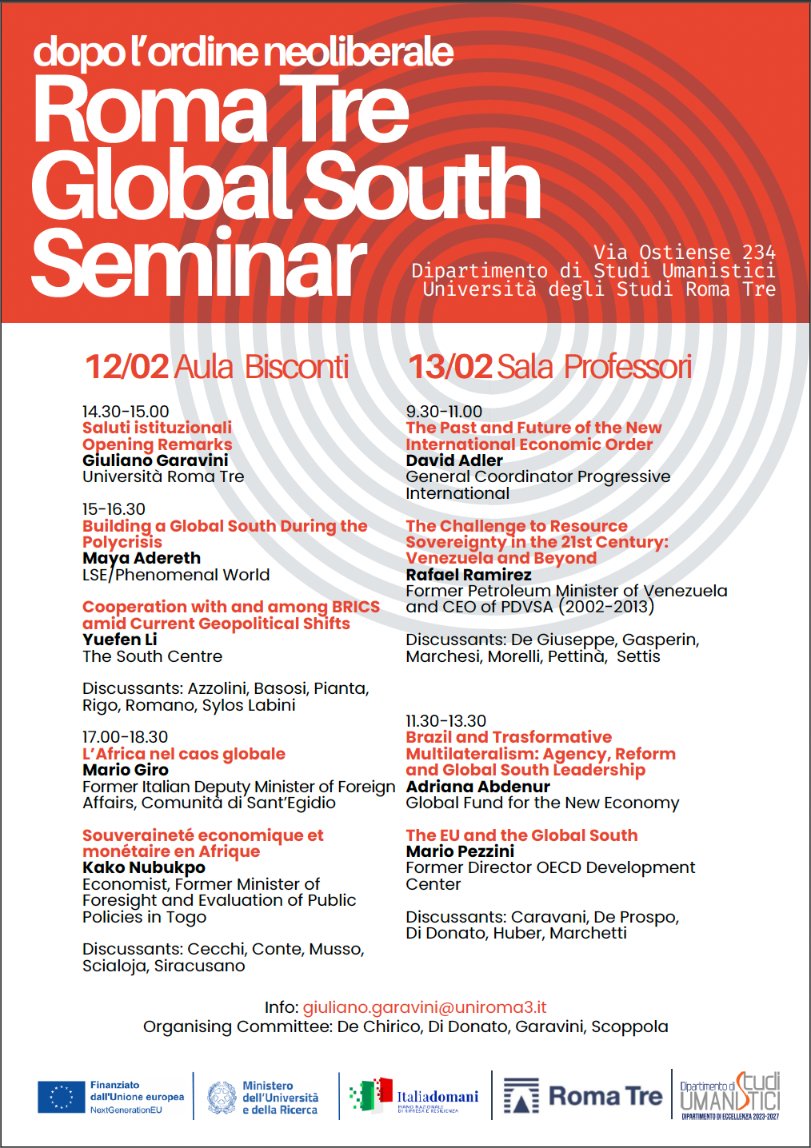
Rome, 12 and 13 feb, addressing the notion of Global South - come!

Happy to host in Rome this seminar with, among others @AAbdenur @davidrkadler @kakonubukpo @RRamirezVE
Engaging with the Global South - and understanding its contradictions - is the perfect antidote against a militarized West.
uniroma3.it/articoli/roma-tr…
1
1
134
31 Oct 2025
Per @ilmanifesto da Dakar: visita di Tajani, scandalo del “debito nascosto”, tensioni intestine tra Sonko e Macky Sall, gelo sugli investimenti esteri, discussioni con l’IMF e un’opinione pubblica che aspetta di vedere i primi risultati del gov Pastef
ilmanifesto.it/business-e-co…
53
Sofia Scialoja retweeted

27 Mar 2025
L'esigenza di un rapporto stretto fra #Ue e #Afriche è evidente da anni. Lo è diventato ancora di più nella nuova era di Trump, ma serve un cambio di rotta sostanziale nell'approccio di Bruxelles. Il commento sul @sole24ore
2
5
427
18 Mar 2025
Per @ilmanifesto da Pretoria, un articolo sui rapporti sempre meno diplomatici tra Sudafrica 🇿🇦 e Stati Uniti 🇺🇸, escalation di tensioni culminata venerdì scorso con l’espulsione dell’ambasciatore Rasool da parte di Rubio
ilmanifesto.it/cacciata-dell…
2
80
Sofia Scialoja retweeted

15 Mar 2025
Flooding the Zone with Shit: it was time for SA
After two weeks of intense discussions in the U.S. on South Africa’s relations with Washington, I thought I’d have one last quiet evening to reflect. Instead, as I prepared to head back to Joburg/Pretoria from NY, the news broke—Marco Rubio had declared South African Ambassador Ebrahim Rasool persona non grata, calling him a "race-baiting politician who hates America."
After days of conversations filled with concern, confusion, and even quiet apologies—“Sorry we/they’re putting you through this”—seeing it unfold in real time was surreal. Not because it was unexpected, but because it confirmed what I had heard repeatedly: this isn’t just about race or South Africa’s ICJ case against Israel. It’s about punishing any dissent and rejecting international mechanisms that challenge U.S. interests. The U.S. no longer seeks global legitimacy—it believes it can battle the world on all fronts. Expelling Rasool isn’t just erratic—it’s part of an order-transforming process.
For decades, the U.S. was both architect and enforcer of the international system, balancing its role as guarantor, enforcer, and disruptor. But when it abandons the very institutions it once led, this isn’t just a shift. The mask hasn’t slipped—it’s been ripped off by the US itself.
It would be easy to dismiss Rasool’s expulsion as another tense moment in U.S.-South Africa relations. But the real issue is precedent. No Global South country can be allowed to successfully use international law against a U.S. ally, especially being one of the few left. This isn’t about Pretoria. It’s about who might be next.
The irony is glaring. Washington’s accusations of “race-baiting” against South Africa feel like projection. This isn’t about racial division—it’s about burying the ICJ case in controversy. The strategy is clear: distract, discredit, and divert. But the bluntness exposes its weakness.
Over the past two weeks, I’ve spoken to diplomats, policymakers, and academics. Many are disillusioned. Some joke about quitting international affairs altogether, retreating to the private sector. Others are anxious, wondering if they’ll be next. The frustration is real, but exhaustion runs deeper—watching institutions they believed in be hollowed out by power politics.
The real question isn’t about multipolarity or U.S. decline. It’s about power. The U.S. still dominates financially, militarily, culturally. But now, it is throwing away the ressemblance of legitimacy that once made its dominance tolerable. Abandoning the structures that gave you influence doesn’t just erode control—it creates a void.
And voids don’t stay empty for long.
This isn’t just a policy shift. It’s a strategy—one built on disruption, making global governance impossible. Steve Bannon called it “flooding the zone with shit”—overwhelming the system with chaos so no one can process what’s happening. That’s no longer just a domestic tactic. It’s defining international relations.
So where does that leave us? At a crossroads. The U.S. is walking away from the system it built. The message is clear: “Deal with your own mess.” Maybe it’s time we do just that. Not through bureaucratic tweaks, but by redefining global governance itself. The longer we wait, the harder the hit will be.
Rasool’s expulsion might seem minor in global politics. But small moments add up. And sometimes, they trigger something bigger. This feels like one of those moments. The rules we thought governed international relations? They were never absolute, we knew it. Now, we have to decide what comes next.
179
949
1,831
343,253
5 Mar 2025
Interview with @kakonubukpo round 2, focusing on the conceptualisation of sovereignty, strategic autonomy, #AfCFTA and the #CFA franc monetary system
🙏@AdeleMoltedo @Raineri_Lu Chiara Loschi
5 Mar 2025

New post on Security Praxis.🆕🆕🆕
Second part of the interview with Prof. Kako Nabukpo, University of Lomé (Togo), Former WAEMU Commissioner in charge of Agriculture, Water Resources and Environment, and IFAD
By @sofiscialoja
securitypraxis.eu/interview-…
1
148
3 Mar 2025
Per @ilmanifesto , intervista con @kakonubukpo, su protezionismo ecologico e beni comuni, democrazia endogena, approccio da adottare sulle politiche anti-migratorie europee, sostituzione del franco cfa…
ilmanifesto.it/beni-comuni-e…
1
1
209
26 Feb 2025
First part of the interview with @kakonubukpo, addressing some issues raised in his book “L’Afrique et le reste du monde”, such as the question of post-coloniality, the differences between Francophone and non-Francophone African countries’ political debates, panafricanism…
26 Feb 2025
New post on Security Praxis
Interview with Prof. Kako Nabukpo, University of Lomé (Togo), Former WAEMU Commissioner in charge of Agriculture, Water Resources and Environment, and IFAD
By @sofiscialoja
securitypraxis.eu/interview-…
1
1
1
264