
Joined October 2024
- Tweets 2,216
- Following 3
- Followers 64
- Likes 498
1,755 Photos and videos


Jun 9
📝 Effective Note - Making : The Hidden Advantage in UPSC Preparation
Good notes are not just a record of what you study - they are a tool for faster revision, stronger retention & better answer writing.
👉🏻Focus on concepts, keywords and linkages
👉🏻Keep notes concise and revision-friendly
👉🏻Integrate static content with current affairs
👉🏻Continuously refine and update your notes
👉🏻Design notes for multiple revisions
The ultimate goal is simple: turn information into easily retrievable knowledge.
In UPSC, clarity, structure and revision efficiency often make the difference.
#UPSC #CivilServices #UPSCPreparation #IAS #NoteMaking #RevisionStrategy #Learning #Productivity
youtu.be/Ph8ZS-Sy3oU?si=IP0y…
30
Jun 6
The Youths Are the Roots of the Nation !!
The quality of water, nutrients, care and environment provided to the roots determines the flowers and fruits that a tree eventually bears.
Similarly, the education system we build, the values we impart, the freedom we provide, the responsibilities we encourage & the opportunities we create for our young people determine the future contribution they make to society & the nation.
In a democracy this responsibility becomes even more significant. Young people must be given the opportunity to learn, experiment, innovate, compete & prove themselves.
We must continue to strengthen our institutions, trust our processes and uphold democratic values that enable every individual to realise his or her potential.
People may succeed or fail but the system, the process & the democratic spirit must continue to create opportunities for generations to come.
When a nation invests in its roots, it does not merely prepare for the future - it creates it.
#YouthOfIndia #NationBuilding #Democracy #Leadership #Education #Opportunity #YoungIndia #India #YouthEmpowerment #PublicPolicy
9
Jun 2
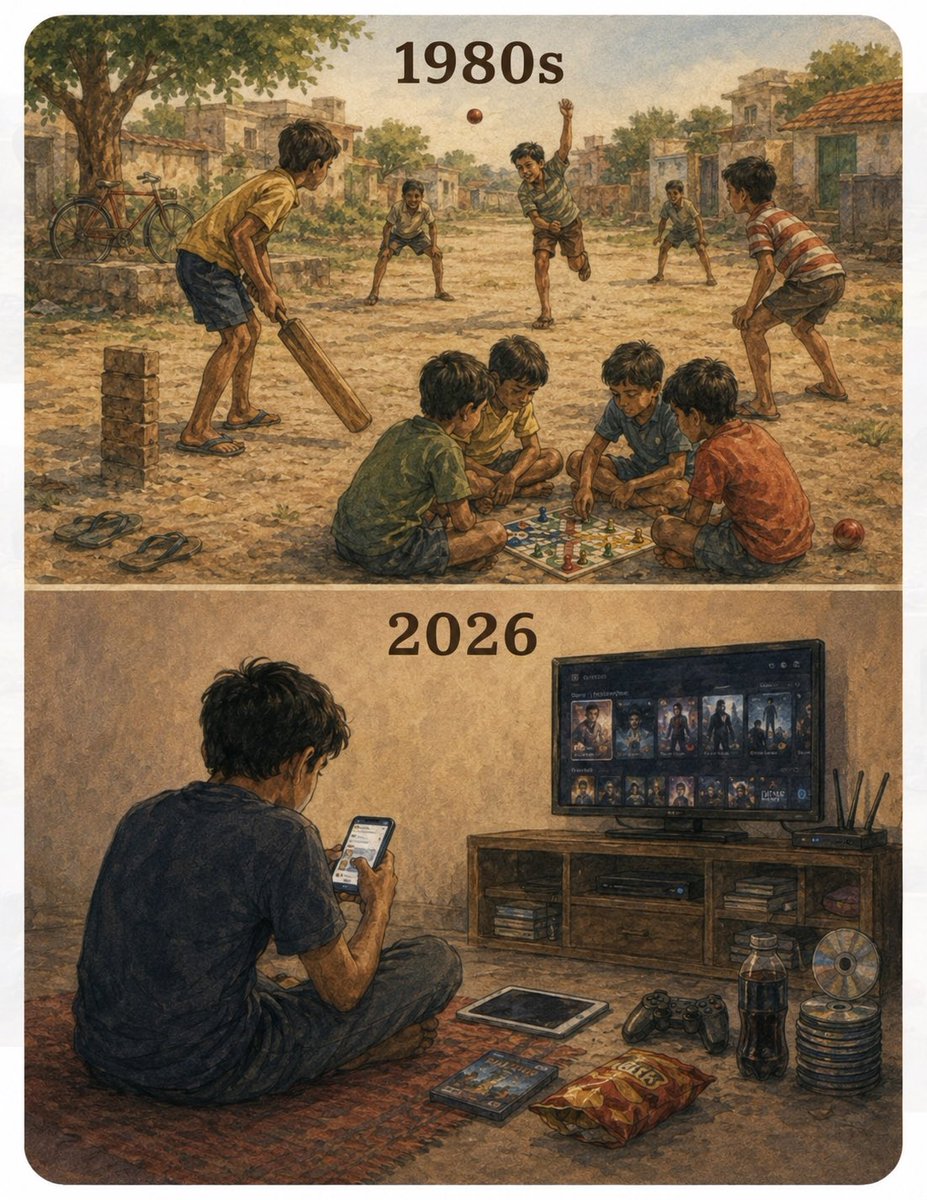
If You Were Born in the 80s, This Might Feel Personal : How did we get here !!
Every day there is something new.
A controversy.A heated debate.A paper leak. An election result.A tragic incident. Thousands of opinions.Millions of reactions.
Sometimes it feels as if everyone is speaking, but very few are listening. And then my mind quietly travelled back to another India.
The India many of us born in the 80s grew up in. An India where Sunday meant waking up early for Jungle Book.Where the entire family adjusted the television antenna on the terrace so that Doordarshan would come clearly.
Where "network issue" meant the neighbour's kite had got stuck in the TV antenna. Where summer vacations were not planned on apps but happened naturally in the gullies.
Ludo on the floor. Carrom in the veranda. Gully cricket until somebody's window glass broke. Hide-and-seek behind trees that looked enormous to our little eyes.
Back then, we did not carry mobile phones. But somehow, everyone knew where everyone was. We had fewer ways to connect, yet relationships felt more connected.
We celebrated Diwali, Eid, Holi, Christmas, Baisakhi, Onam and countless local festivals not because social media reminded us, but because somebody would knock on the door with sweets.
Festivals were less about posts and more about people. Years passed. Cities grew. Technology evolved. Opportunities expanded.And that change brought many good things.
But somewhere between Doordarshan and digital screens, between handwritten letters and instant messages, between neighbourhood conversations and algorithm-driven feeds, something else changed too.
Our attention became shorter. Our patience became thinner. Our opinions became faster And sometimes, our understanding of each other became weaker.
The trees behind which we played hide-and-seek became concrete towers. The playgrounds became parking spaces.
The evening conversations became notifications. Perhaps this is the journey of every generation. Perhaps our parents felt the same when they looked at our world.
But I think many people born in the 80s will understand this feeling. It is not nostalgia. It is not resistance to change. It is simply a quiet reflection.
A reflection on how quickly a country, a society and a generation can transform within one lifetime.
And a hope that while we continue to progress, we do not lose the warmth of human connection, the joy of shared celebrations, the respect for different viewpoints and the sense of community that once came so naturally.
Because technology can make life faster. But only people can make life meaningful. If you were born in the 80s, you probably know exactly what I mean.
#80sKids #GrowingUpInIndia #IndianChildhood #Nostalgia #DoordarshanDays #GullyCricket #JungleBookGeneration #IndiaThenAndNow #LifeReflections #HumanConnections #SocialChange #DigitalAge #CommunityMatters #IndianCulture #FestivalsOfIndia #GenerationalPerspective #LinkedInIndia #MemoriesThatMatter
17
May 27
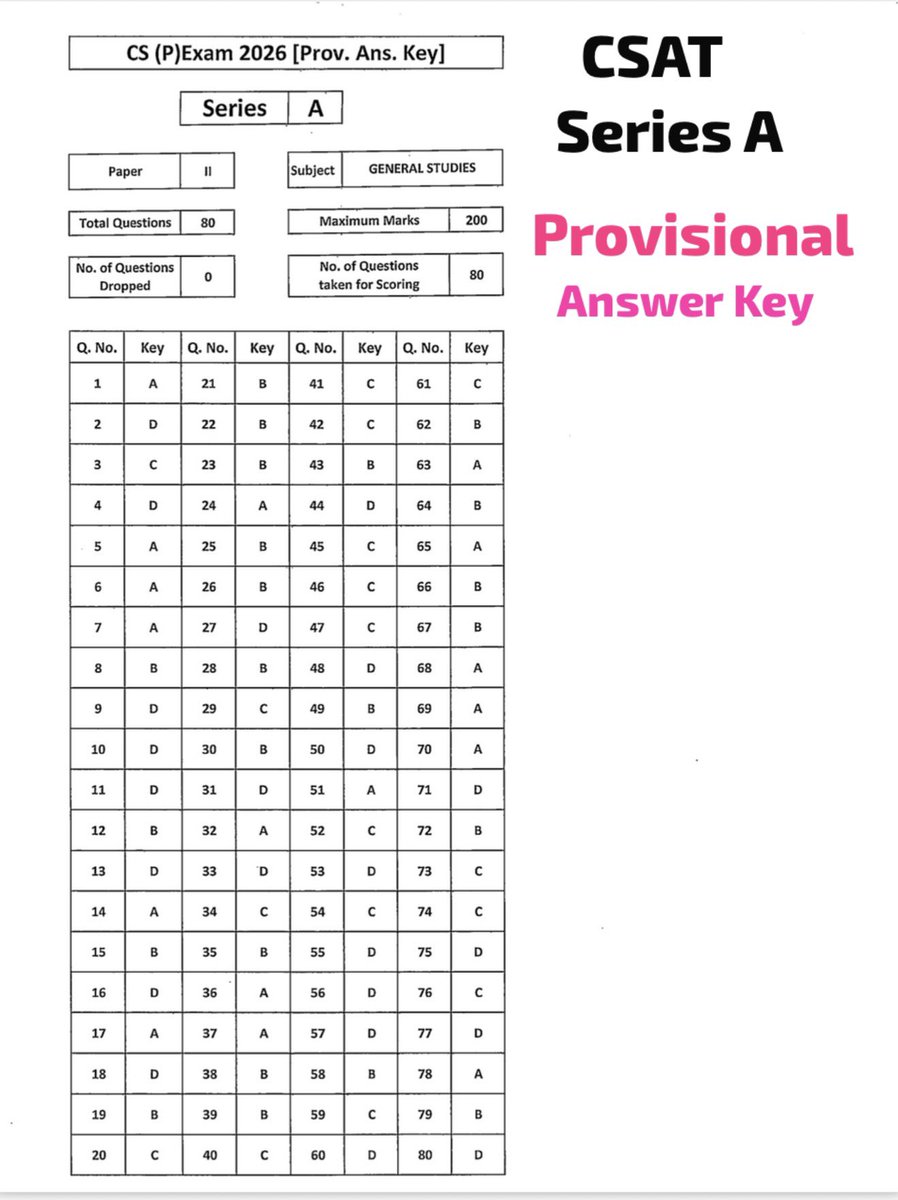
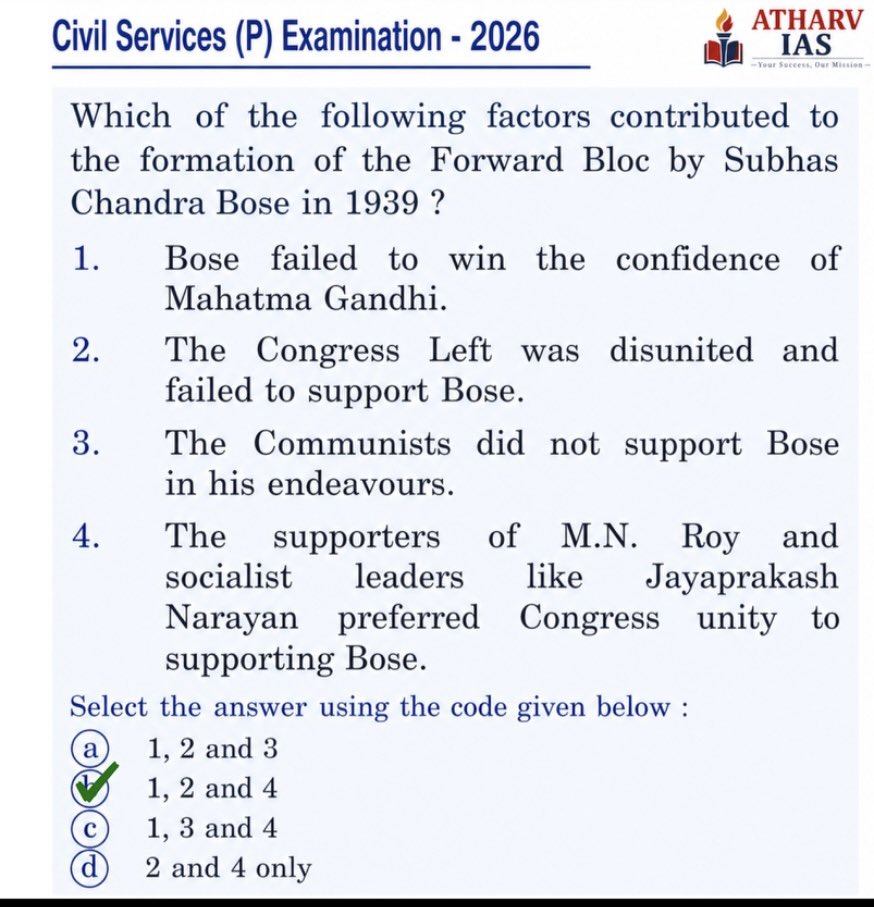
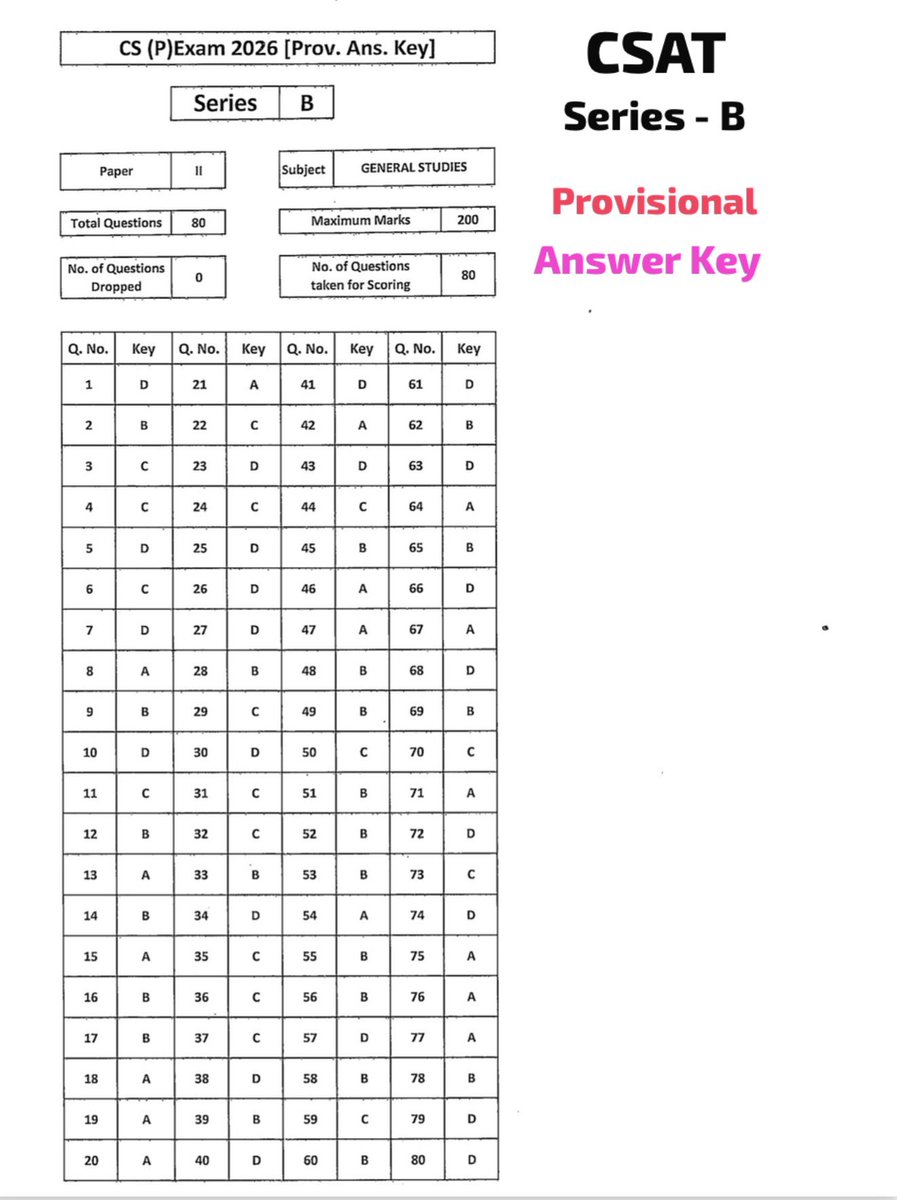
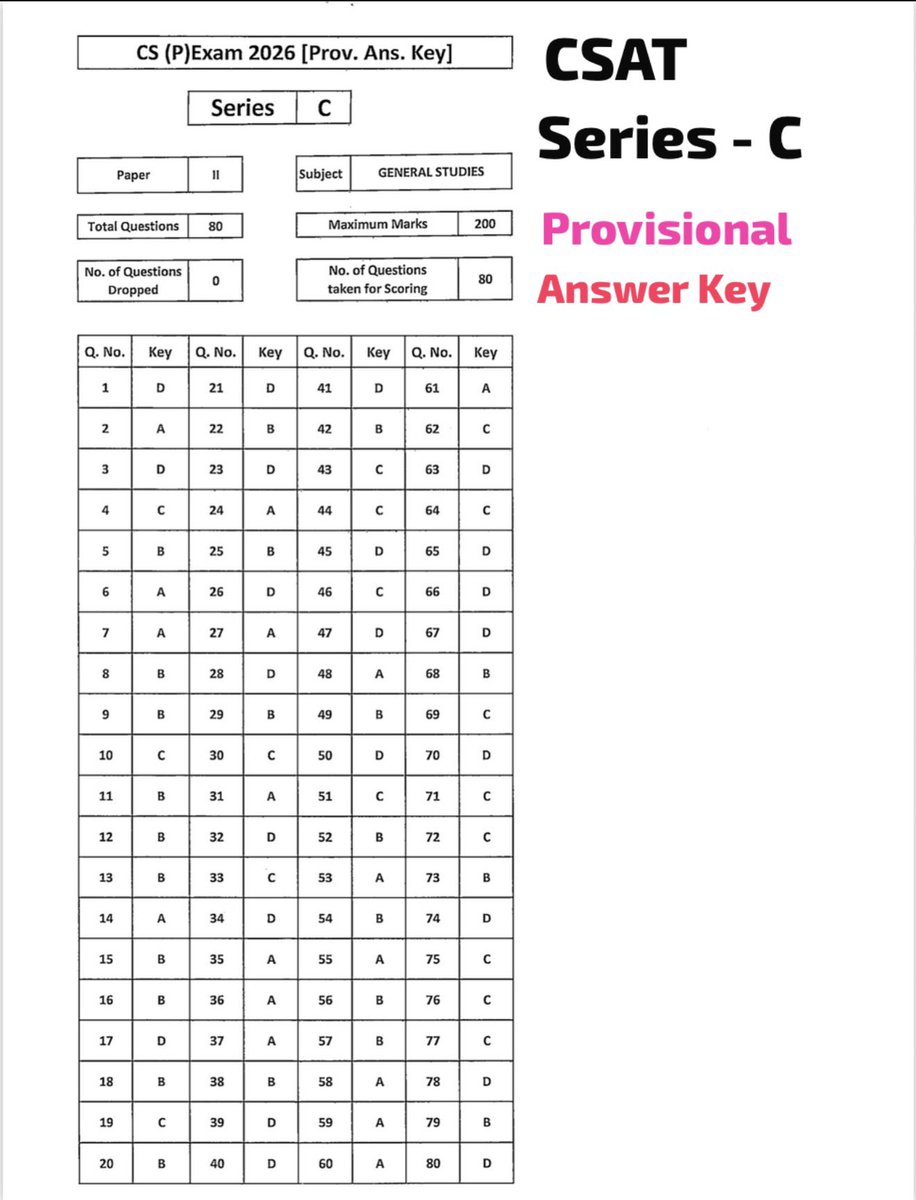
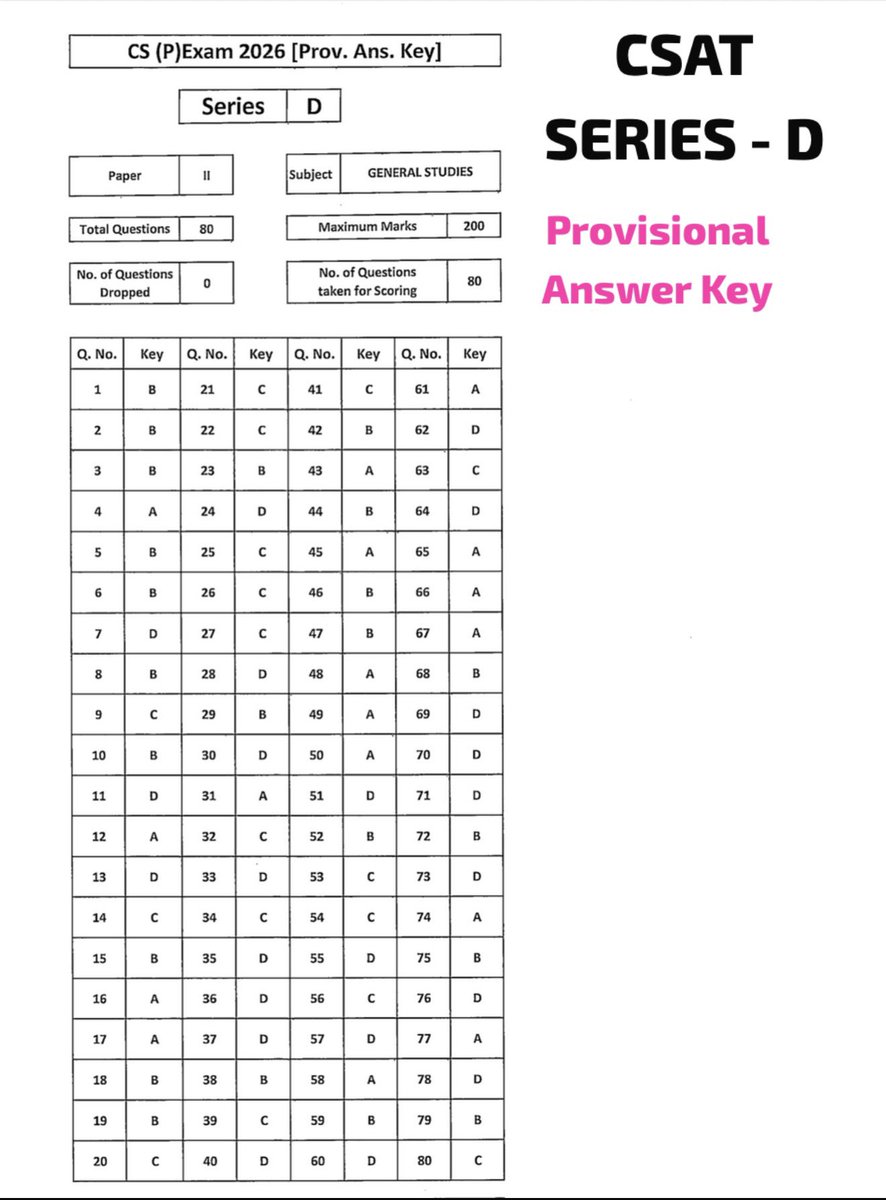
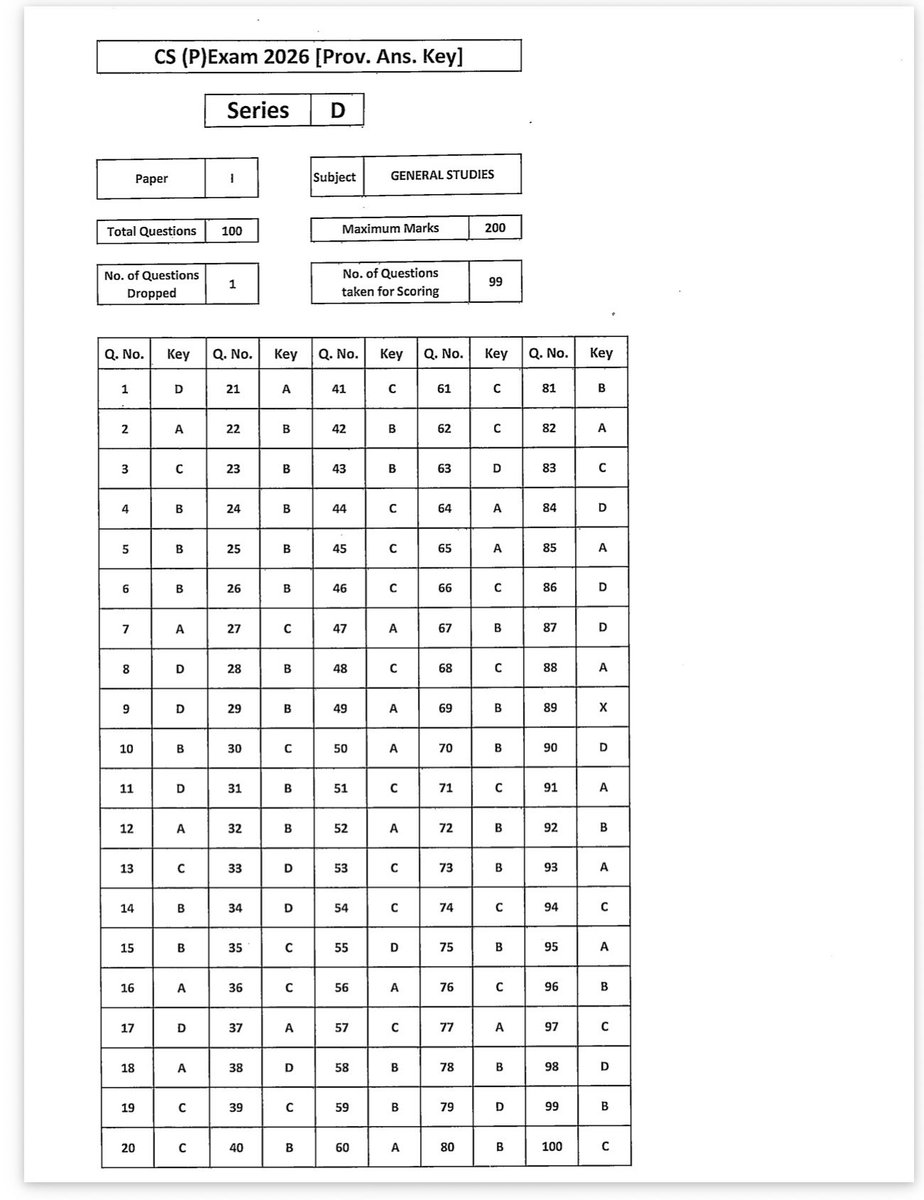
UPSC has released the Provisional Answer Key for Civil Services Prelims 2026.
GS PAPER - 2 (CSAT)
Now candidates can match their responses and estimate their probable score.
upsc.gov.in/whats-new/Civil%…
#UPSC #UPSCPrelims2026 #UPSCAnswerKey #Prelims2026 #UPSCPrelims #CivilServicesExam #UPSC2026 #UPSCGS1 #AnswerKey2026 #UPSCUpdates #IASExam #UPSCPreparation #UPSCNews #GS1 #UPSCCSE #IASPreparation #PrelimsAnswerKey #UPSCStudents #UPSCExam #CSE2026
329
May 27
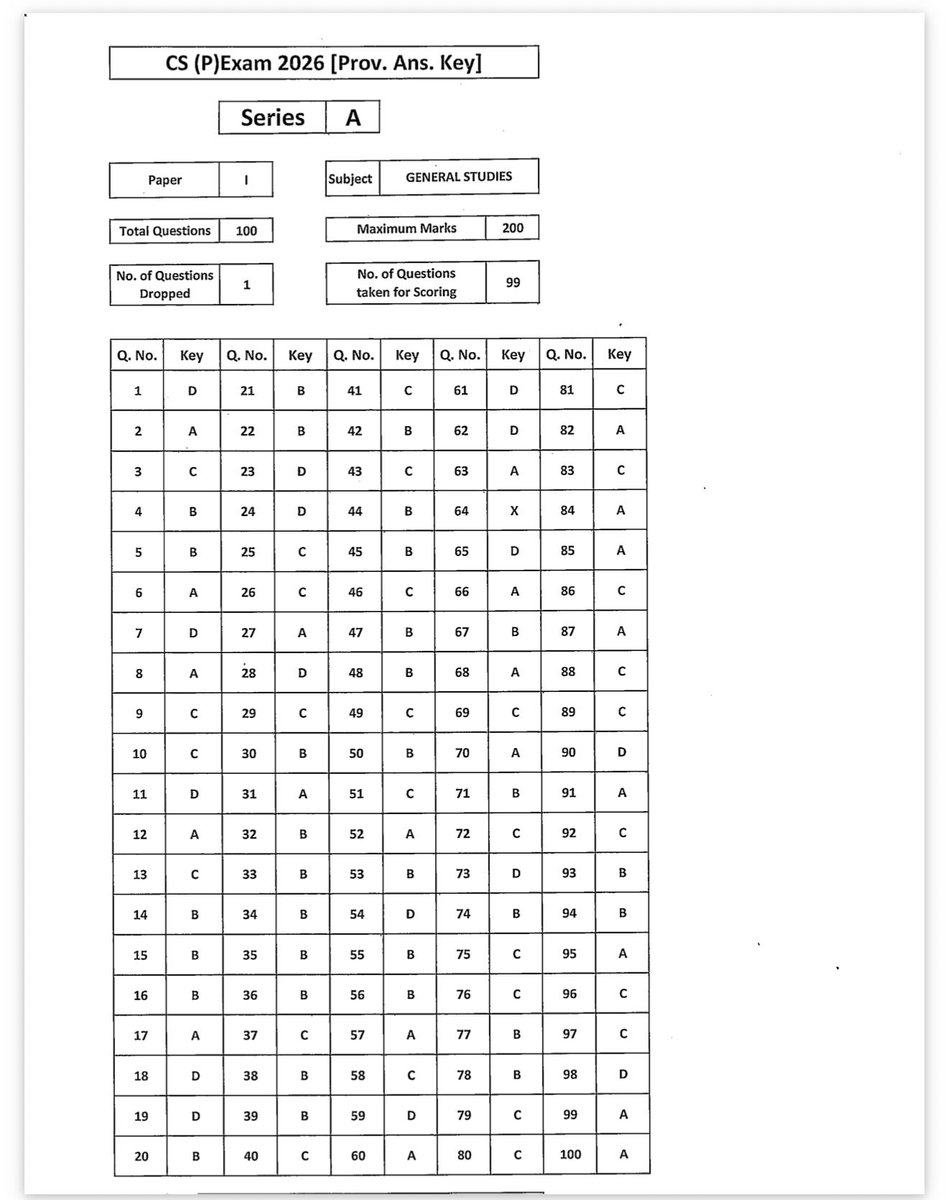
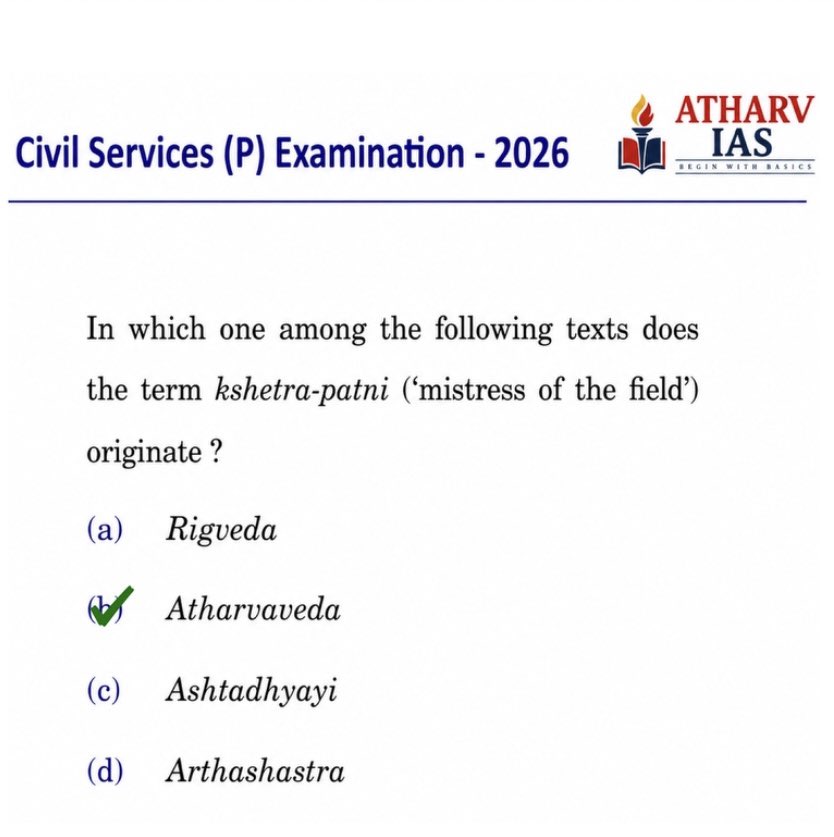
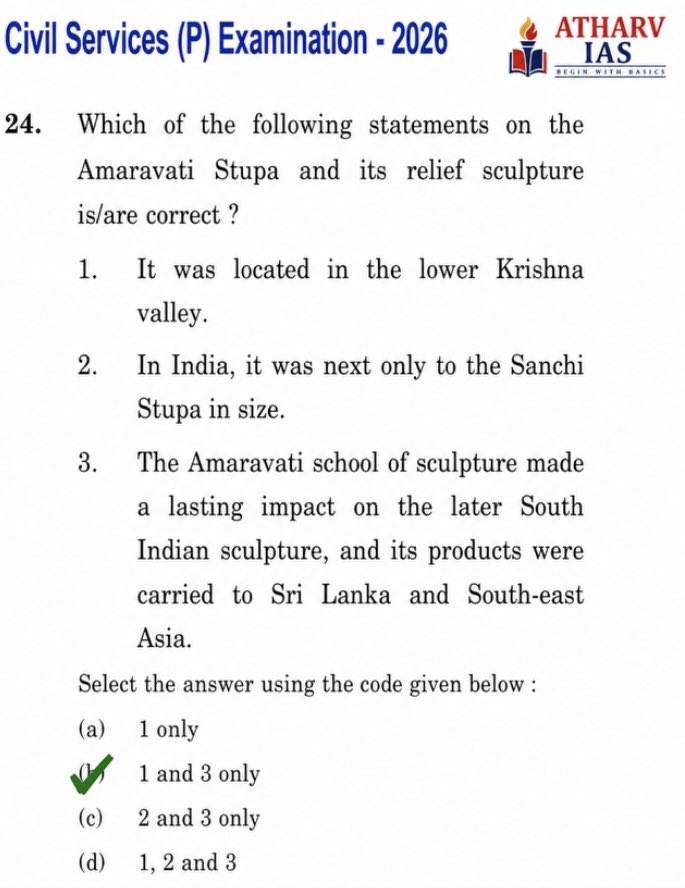
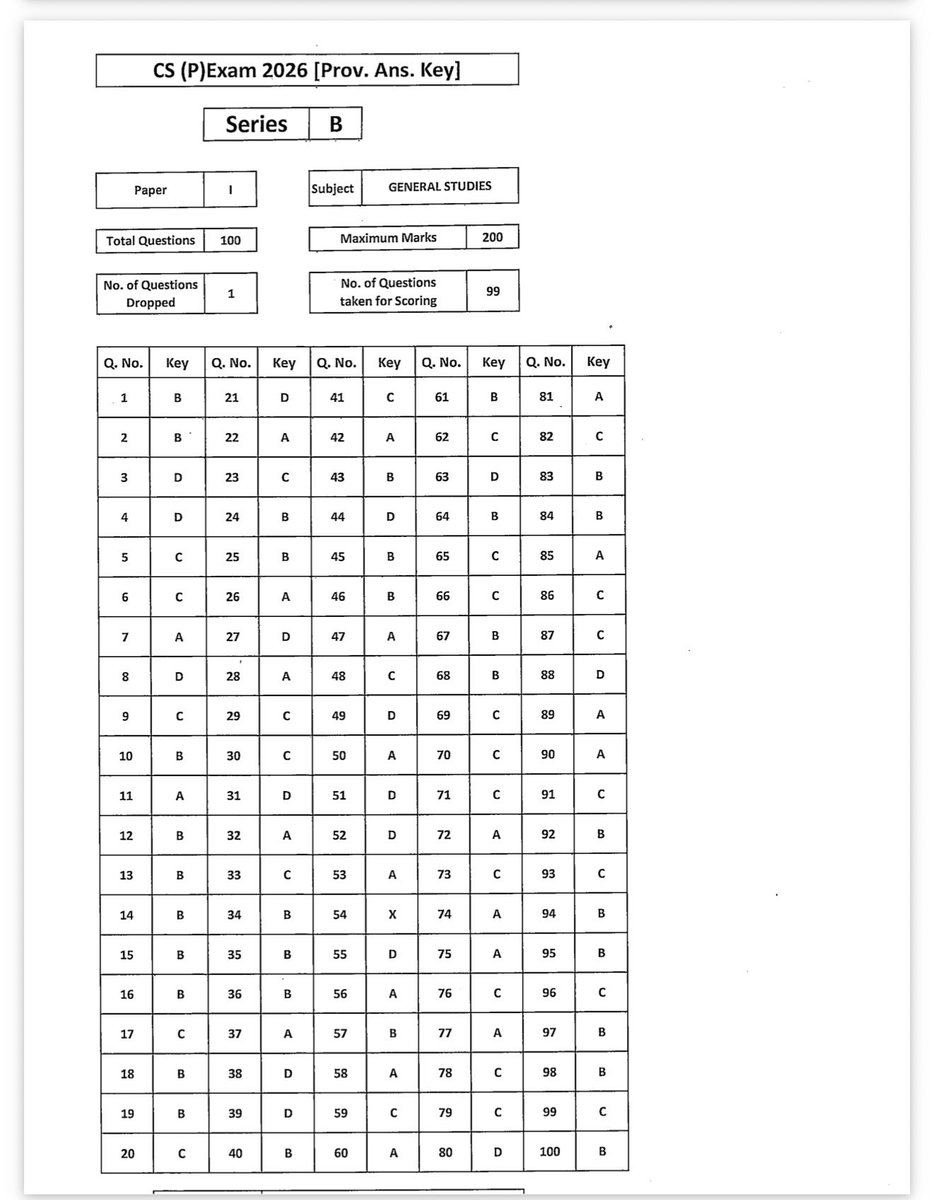
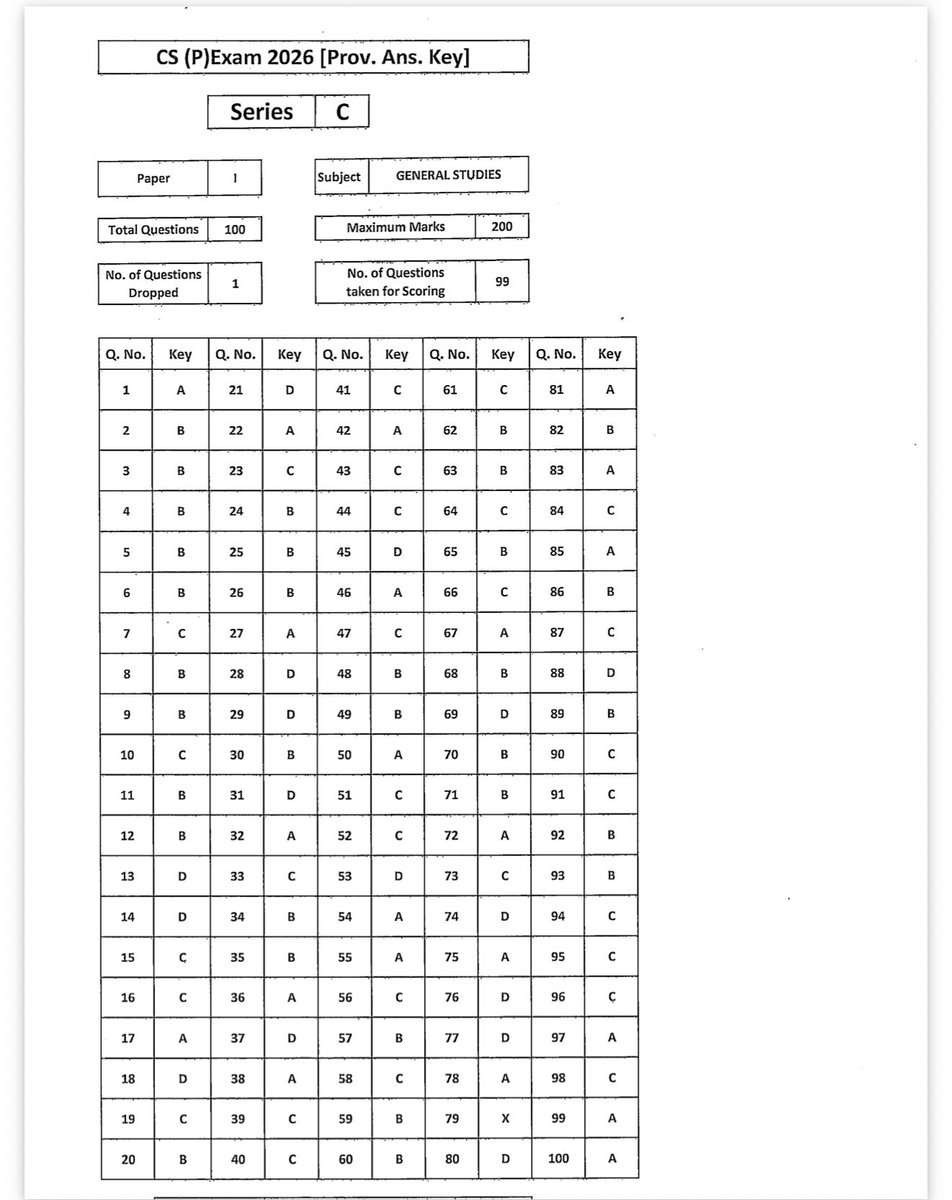
UPSC has released the Provisional Answer Key for Civil Services Prelims 2026.
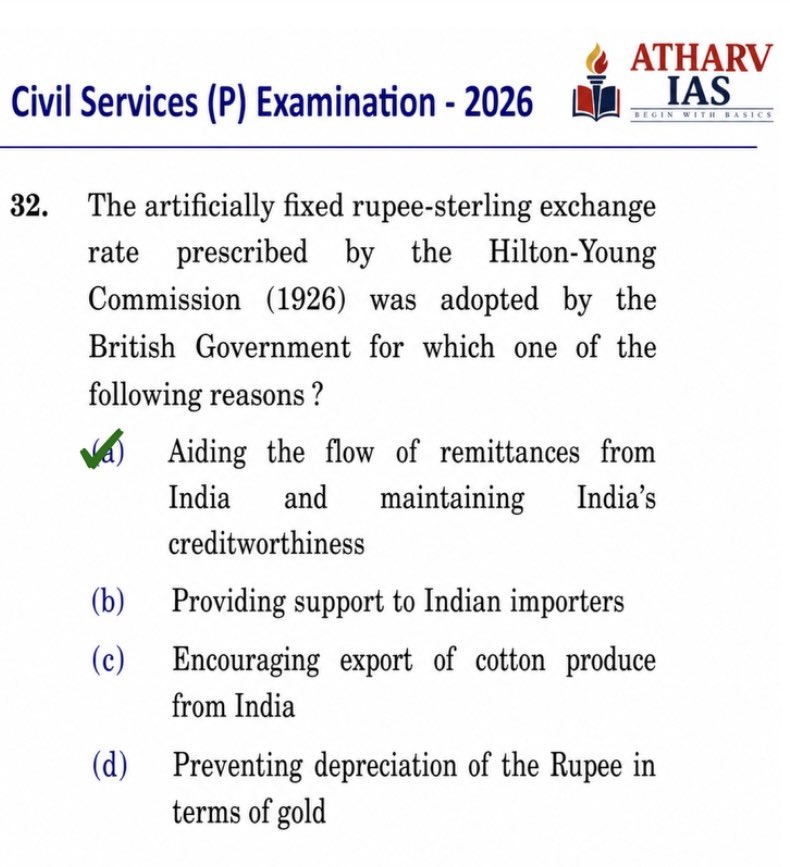
In GS Paper 1 mein one question has also been dropped.
Now candidates can match their responses and estimate their probable score.
upsc.gov.in/whats-new/Civil%…
#UPSC #UPSCPrelims2026 #UPSCAnswerKey #Prelims2026 #UPSCPrelims #CivilServicesExam #UPSC2026 #UPSCGS1 #AnswerKey2026 #UPSCUpdates #IASExam #UPSCPreparation #UPSCNews #GS1 #UPSCCSE #IASPreparation #PrelimsAnswerKey #UPSCStudents #UPSCExam #CSE2026
248
May 27
91
May 26
106
May 25
96
May 25
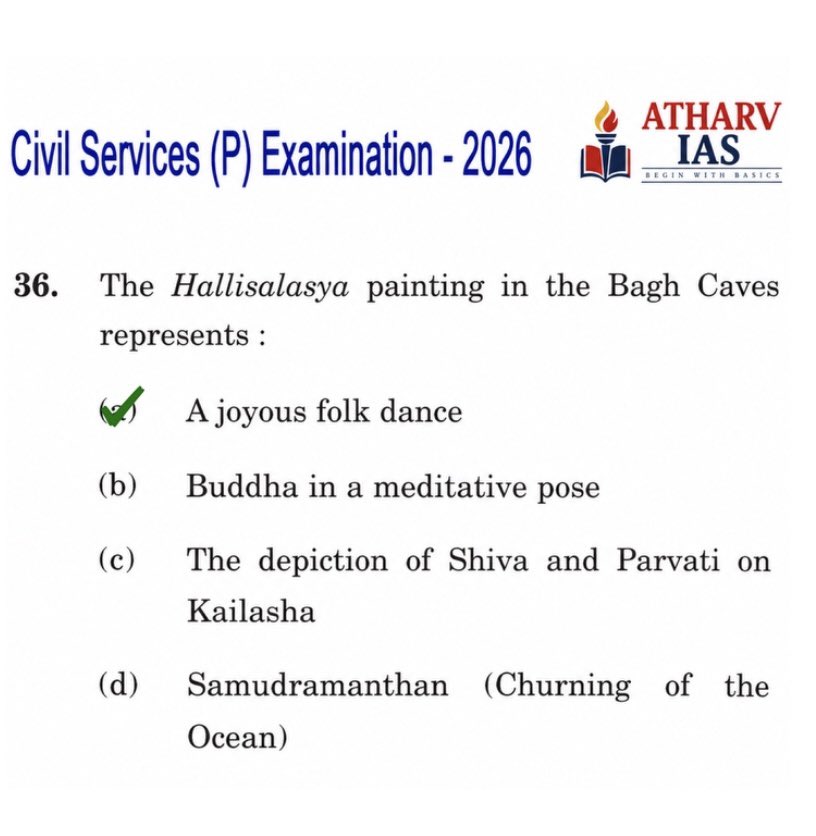
Bagh Cave 4 Details of Painting, Hallisalasya dance mural, depicts a folk dance of central India
#upsc #prelims2026 #upscprelims2026 #gspaper1 #answerkey
152
May 24
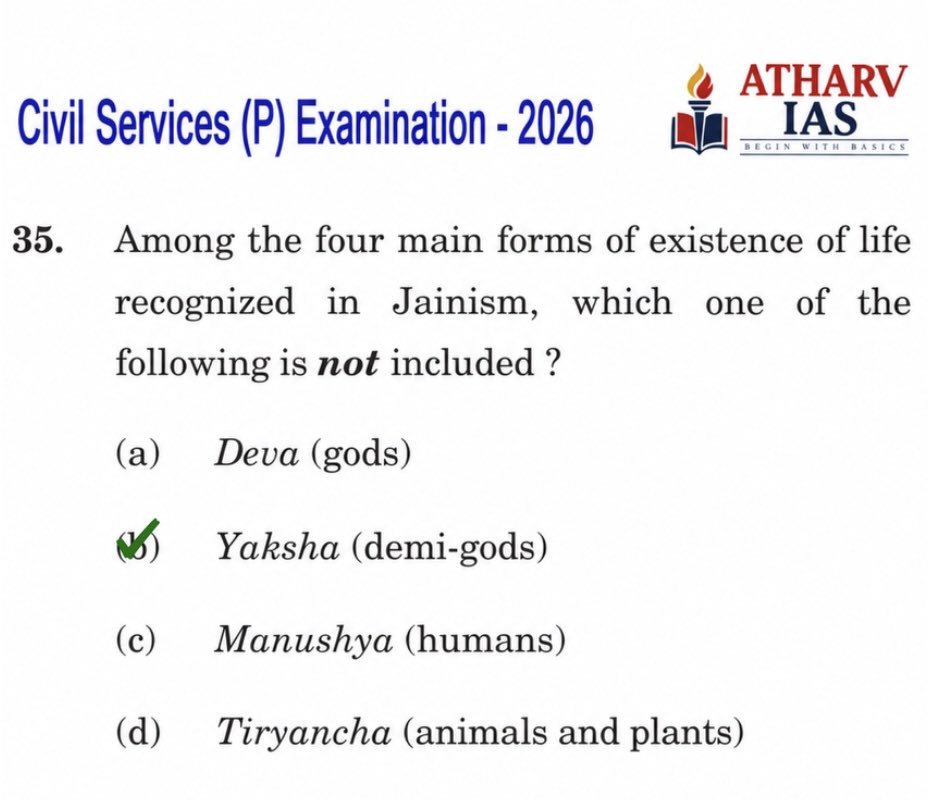
When a living being dies, it can be reborn into one of the four Gatis (destinies). These four destinies are as follows :-
Manushya (Human) beings.
Dev (Heavenly) beings.
Tiryancha (Animal, birds, insects, vegetations) beings.
Näraki (Hell or Infernal) beings.
#upsc #gspaper1 #prelims2026 #upscprelims2026 #answerkey #upscprelims
129
May 24
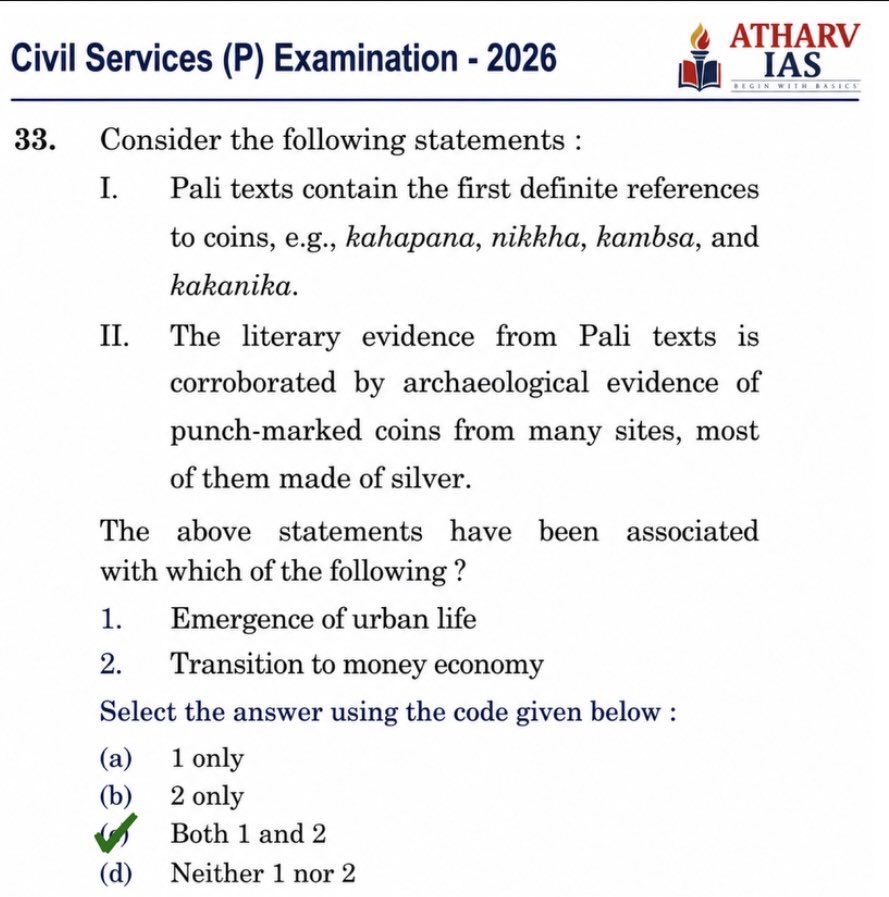
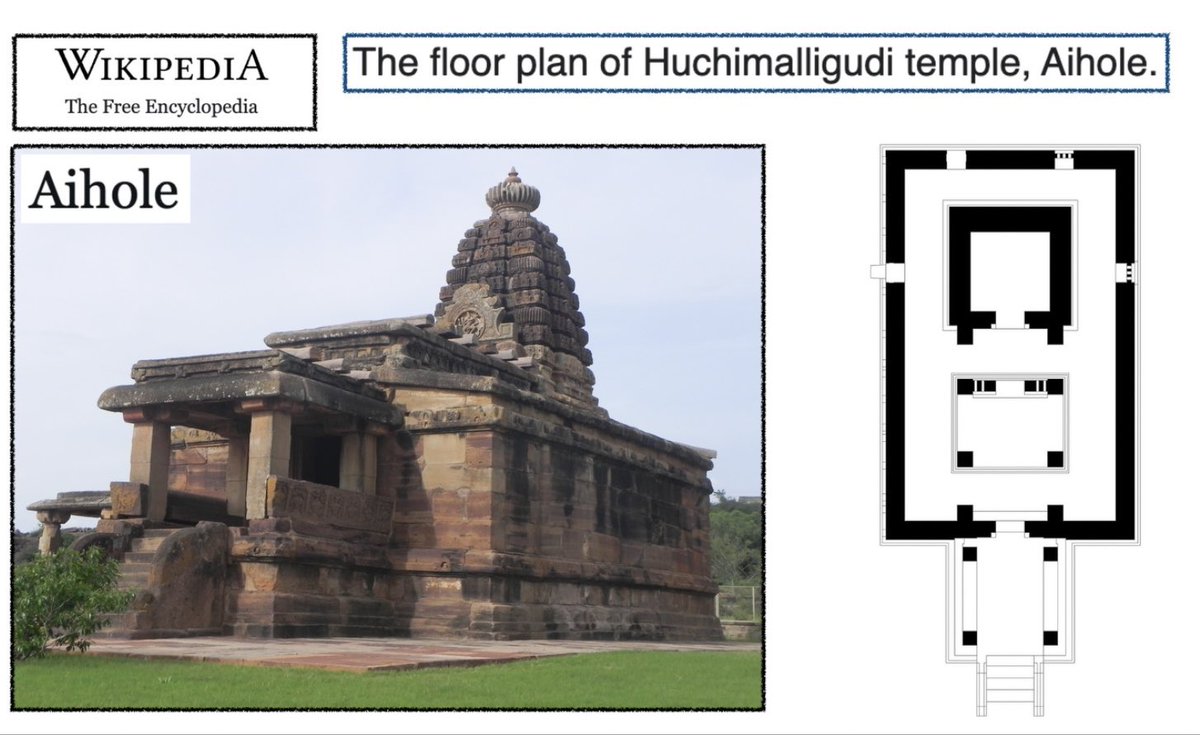
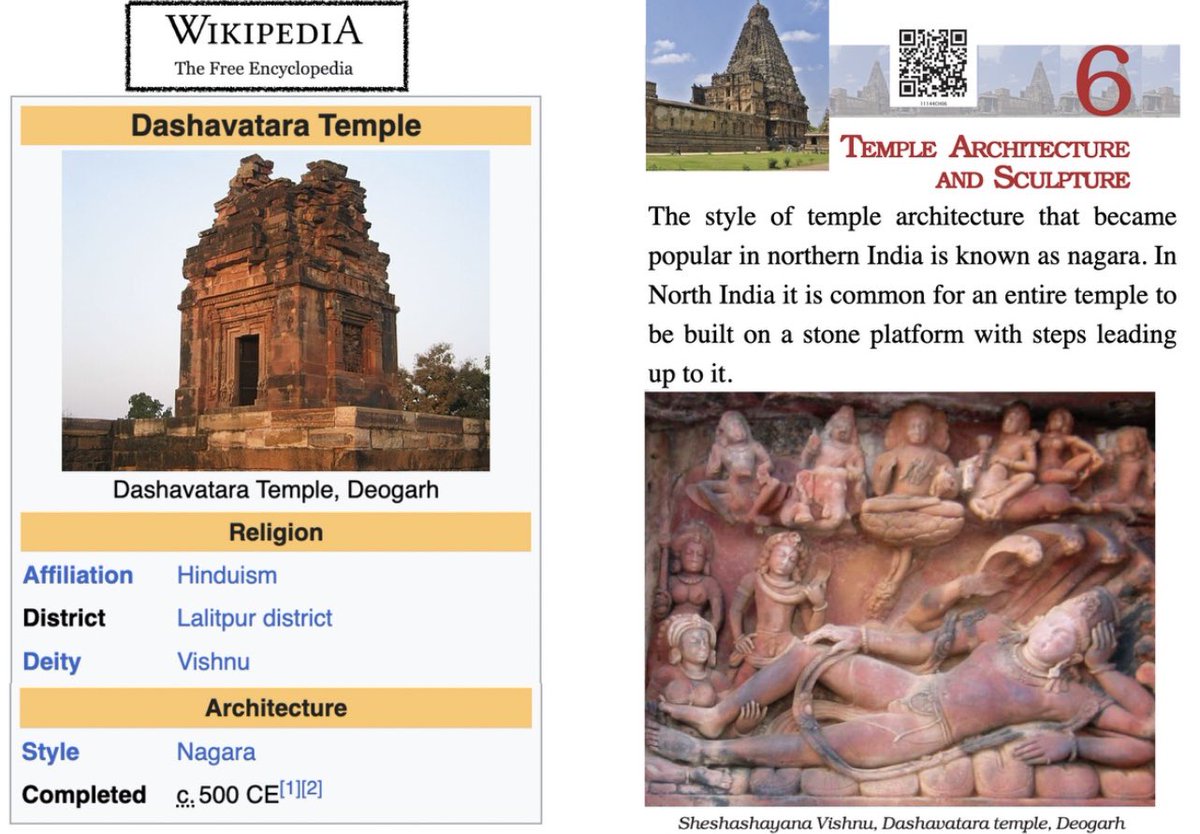
The Buddhist texts use the term Kahāpana (Kārshāpana) for a coin. They are familiar with its varieties called Nikkha (Niṣka) and Suvarṇa of gold, silver, bronze and copper pieces called Kāmsa, Pāda, Māsaka, Kākanika, Kārshāpana, etc. But their value varied with time and place.
One of the most remarkable features of the period is the introduction of a regular system of coinage in business transactions. Inspite of the fact that the age-old system of barter had not altogether passed away but gradually coins were introduced as media of exchange. Moreover, the gold and silver dust were also used.
Large number of coins in gold, silver, copper and in other metals have been found from different parts of India. They are the most important source so far as the economic history of India is concerned.
The period from sixth century B.C. to fourth century A.D. represents a crucial phase in Indian history. It is in this period that the impact of ‘second urbanisation’ was felt in India. This period witnessed the rise of Buddhism and Jainism, formation of early states, emergence of an imperial system, development of caste and class distinctions, intensification of inland and overseas trade, emergence of numerous urban centres and expansion of agriculture with the effective use of iron technology and the adoption of Brahmi script.
#upsc #gspaper1 #prelims2026 #upscprelims2026 #answerkey
37
May 24
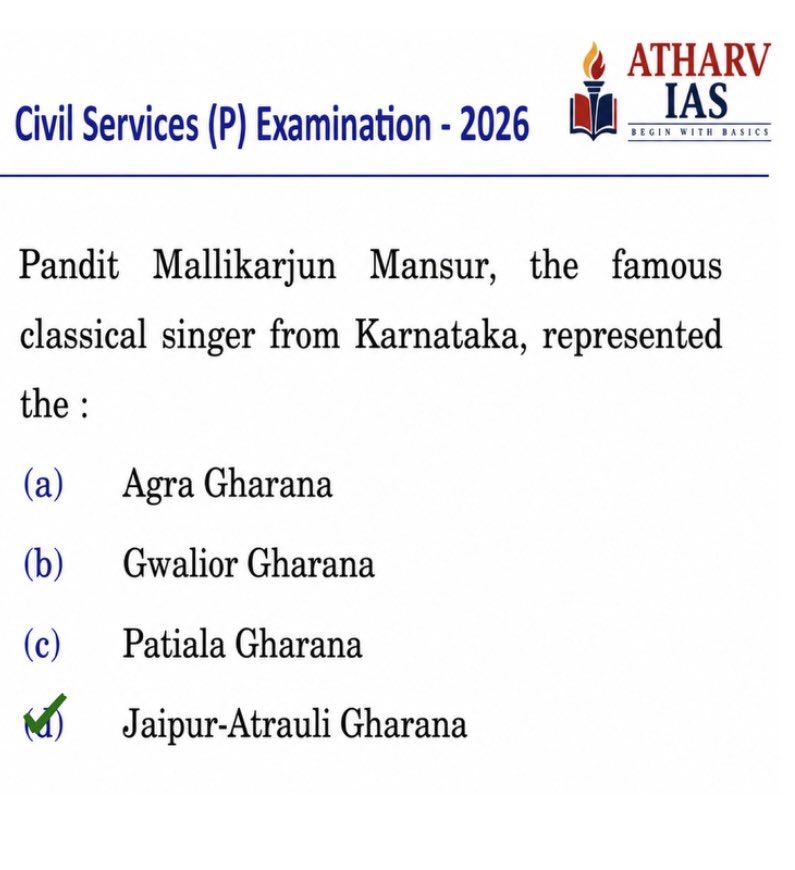
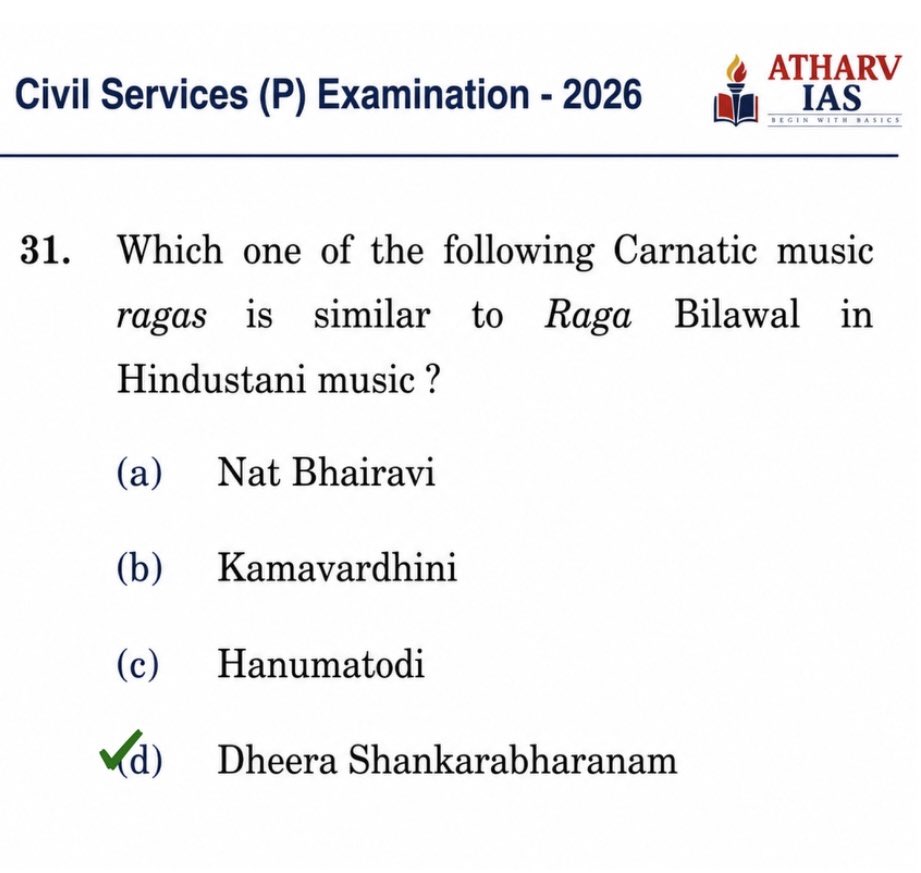
Bilaval or Bilawal is a raga and the basis for the eponymous thaat (musical mode) in Hindustani classical music. Raga Bilaval is named after Veraval, Gujarat.
The Bilaval is equivalent to the Carnatic raga melakarta, Sankarabharanam, as well as the Western Ionian mode (major scale), and contains the notes S R G M P D N S’.
Bilaval is a morning raga that is intended to be sung with a feeling of deep devotion and repose and is often performed during the hot months
Dheera Shankarabharanam, commonly known as Sankarabharanam, is a rāga in Carnatic music.
#upsc #upscprelims #answerkey #gspaper1 #prelims2026
46
May 24
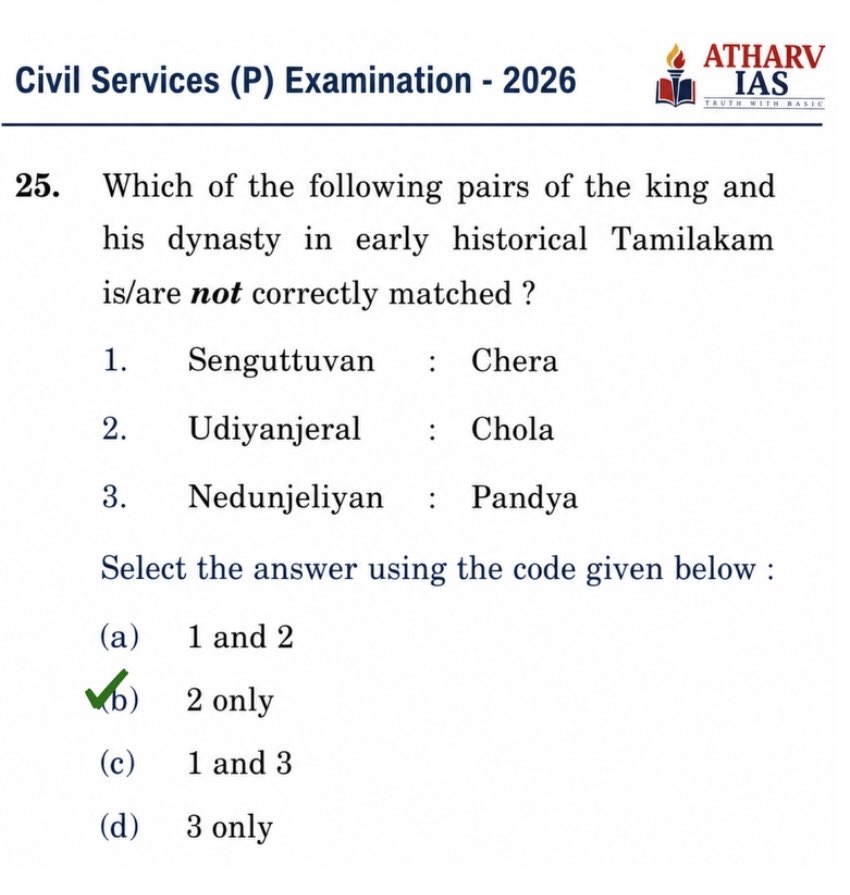
Chenkuttuvan literally “the Righteous Kuttuvan”, also known by the title Kadal Pirakottiya, was the most celebrated Chera ruler of early historic South India. He is also mentioned in Silappadikaram, the Tamil epic traditionally attributed to the Chera prince Ilango Adigal.
Uthiyan Cheralathan is the earliest known Chera Ruler of early historic South India (c. 1st – 4th century CE), as attested by extant Tamil literary sources (the Sangam Literature).
Nedunjeliyan was an Early Pandyan King during the Sangam era. He is known for defeating a confederacy of Cholas and Cheras at Thalayamangalam, near Tiruvarur, conquering most of the Tamil region, and contributing to Pandyan astrology. His deeds have been described in detail in the Madurai text.
#prelims #prelims2026 #answerkey #gspaper1 #upsc
26
May 24
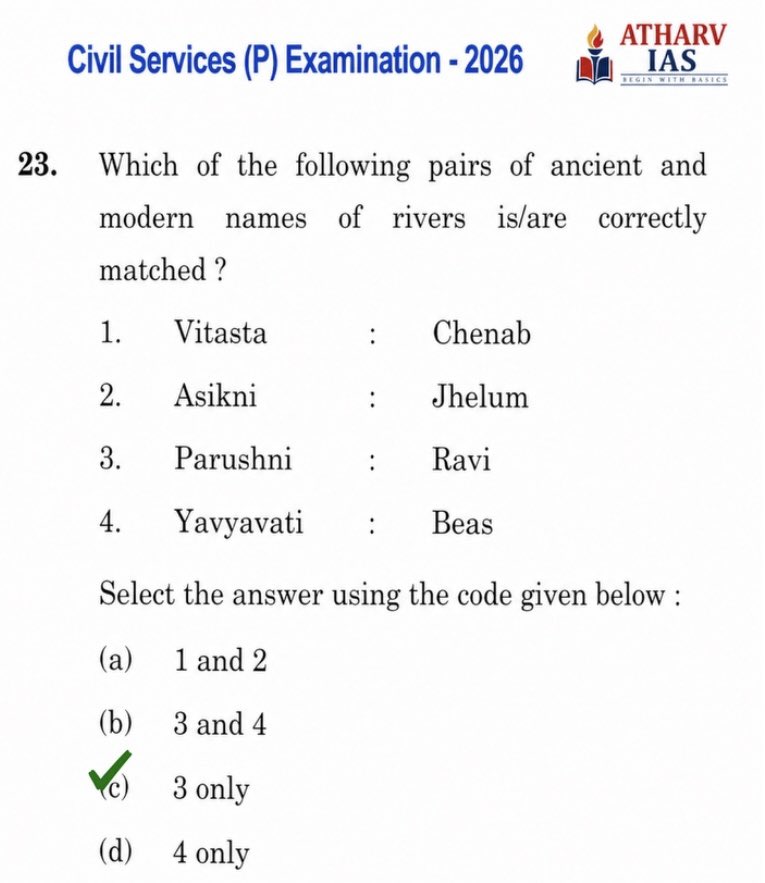
Jhelum River : The Sanskrit name for the river is Vitasta, derived from an apocryphal legend regarding the origin of the river in the Nilamata Purana.
Chenab River was called Asikni (Sanskrit: असिक्नी) in the Rigveda. The name meant that it was seen to have dark-coloured waters.
According to ancient history traced to the Vedas, the Ravi River was known as Irawati (Sanskrit: इरावती).The Ravi was known as Purushni or Irawati to Indians in Vedic times
Beas River : Rig-veda calls the river VIPAS, which means unfettered,in later Sanskrit texts it's been called Vipāśā विपाशा.
The identification of Yavyavati with the Zhob River stems from the linguistic and regional clues provided in the Rigvedic river hymns.
#prelims #upsc #gspaper1 #prelims2026 #answerkey
42
May 24
Symbols of worship
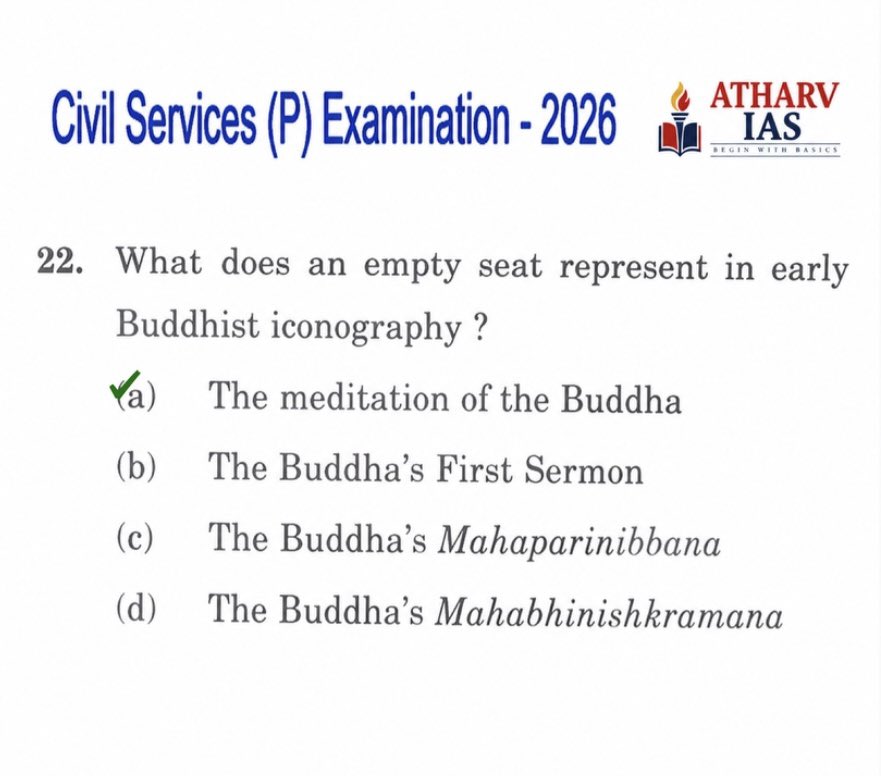
Art historians had to acquire familiarity with hagiographies of the Buddha in order to understand Buddhist sculpture. According to hagiographies, the Buddha attained enlightenment while meditating under a tree. Many early sculptors did not show the Buddha in human form – instead, they showed his presence through symbols.
The empty seat was meant to indicate the meditation of the Buddha, and the stupa was meant to represent the mahaparinibbana. Another frequently used symbol was the wheel.
This stood for the first sermon of the Buddha, delivered at Sarnath. As is obvious, such sculptures cannot be understood literally – for instance, the tree does not stand for a tree simply.
This particular text has been taken from Themes in Indian History Part I, Chapter 4: Thinkers, Beliefs and Buildings, Section 9.2 – Symbols of Worship.
#prelims2026 #answerkey #gspaper1 #upsc #answerkey
25
May 24
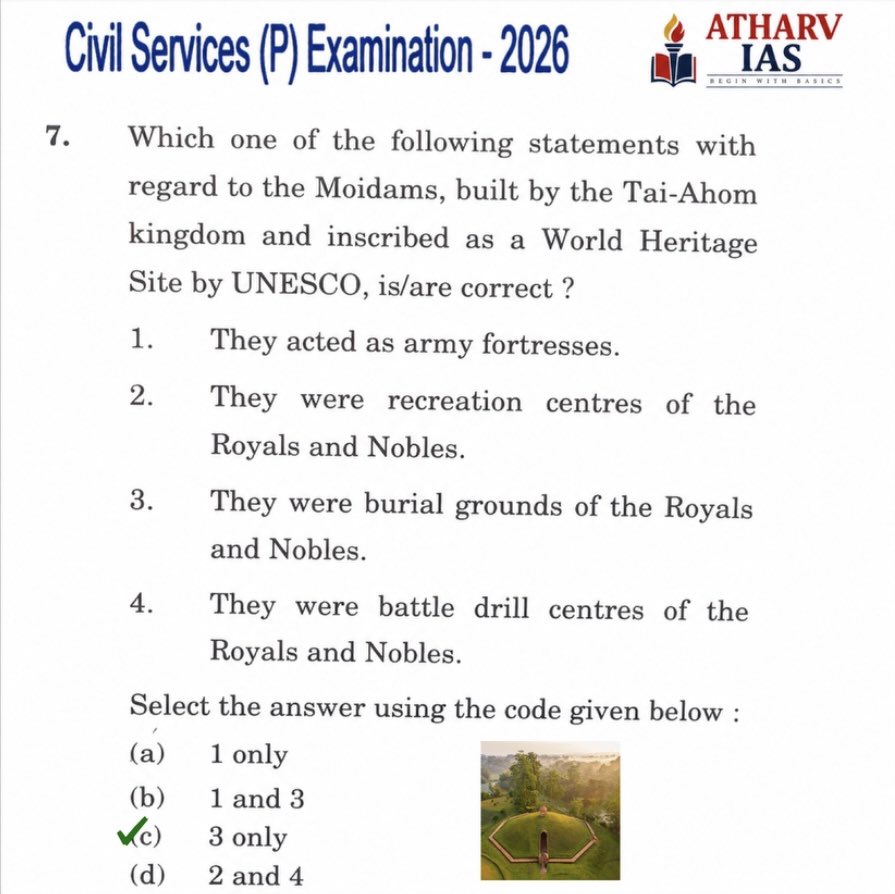
Moidams – the Mound-Burial System of the Ahom Dynasty
Frang-Mai-Dam or Moidam for short (Ahom )meaning : Burial of the dead is a traditional tumulus of the Ahom religion.The royal maidams of Charaideo are listed as UNESCO world heritage site.
Set in the foothills of the Patkai Ranges in eastern Assam, the property contains the royal necropolis of the Tai-Ahom.
For 600 years, the Tai-Ahom created moidams (burial mounds) accentuating the natural topography of hills, forests and water, thus forming a sacred geography. Banyan trees and the trees used for coffins and bark manuscripts were planted and water bodies created. Ninety moidams – hollow vaults built of brick, stone or earth – of different sizes are found within the site.
They contain the remains of kings and other royals together with grave goods such as food, horses and elephants and sometimes queens and servants. The Tai-Ahom rituals of “Me-Dam-Me-Phi” and “Tarpan” are practiced at the Charaideo necropolis.
#prelims2026 #answerkey #upsc #gspaper1
41