
Mostly harmless pure-blood rebel living outside the matrix. Banned multiple times and heavily suppressed.
Joined October 2010
- Tweets 38,889
- Following 1,205
- Followers 1,273
- Likes 53,017
8,960 Photos and videos









Sovereign Path retweeted

Jun 13
Society has punished the average good guy for approaching women
69
110
1,678
76,403
Sovereign Path retweeted

Jun 13
Those Iranians are seriously smart people...
132
1,613
5,990
202,196
Sovereign Path retweeted

Jun 12
This clip has been deleted for the third time after reaching one million views, but I will post it again. No matter how much it is tried to be stopped, the truth cannot be silenced. Iran has carried out multiple strikes on Tel Aviv, and the situation in the region continues to evolve rapidly. We stand by our position and will keep sharing our voice with the world.
132
2,528
4,998
109,260
Sovereign Path retweeted

Jun 12
Thats cause he cant grow a real one. Can you imagine telling that to this man. I swear this looksmaxxing is turning into pansymaxxing.
4
2
50
10,468
Sovereign Path retweeted

Jun 12
I cancelled my $10/mo Calendly subscription and vibe coded my own with Fable for $12,000
469
619
19,294
973,392
Sovereign Path retweeted

Jun 12
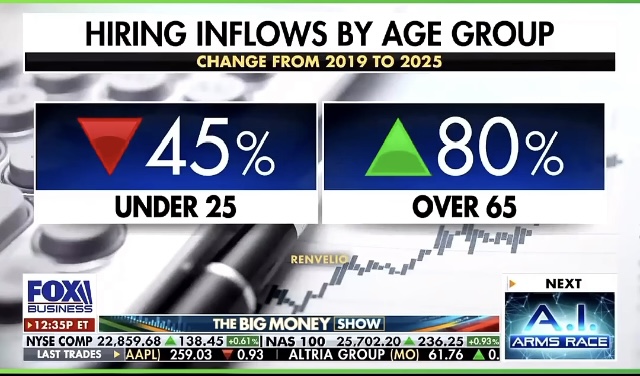
Hiring for workers under 25 is reportedly down 45% since 2019, while hiring for workers over 65 is up 80%
Is there any logical explanation for this?
325
148
1,221
141,784

Jun 12
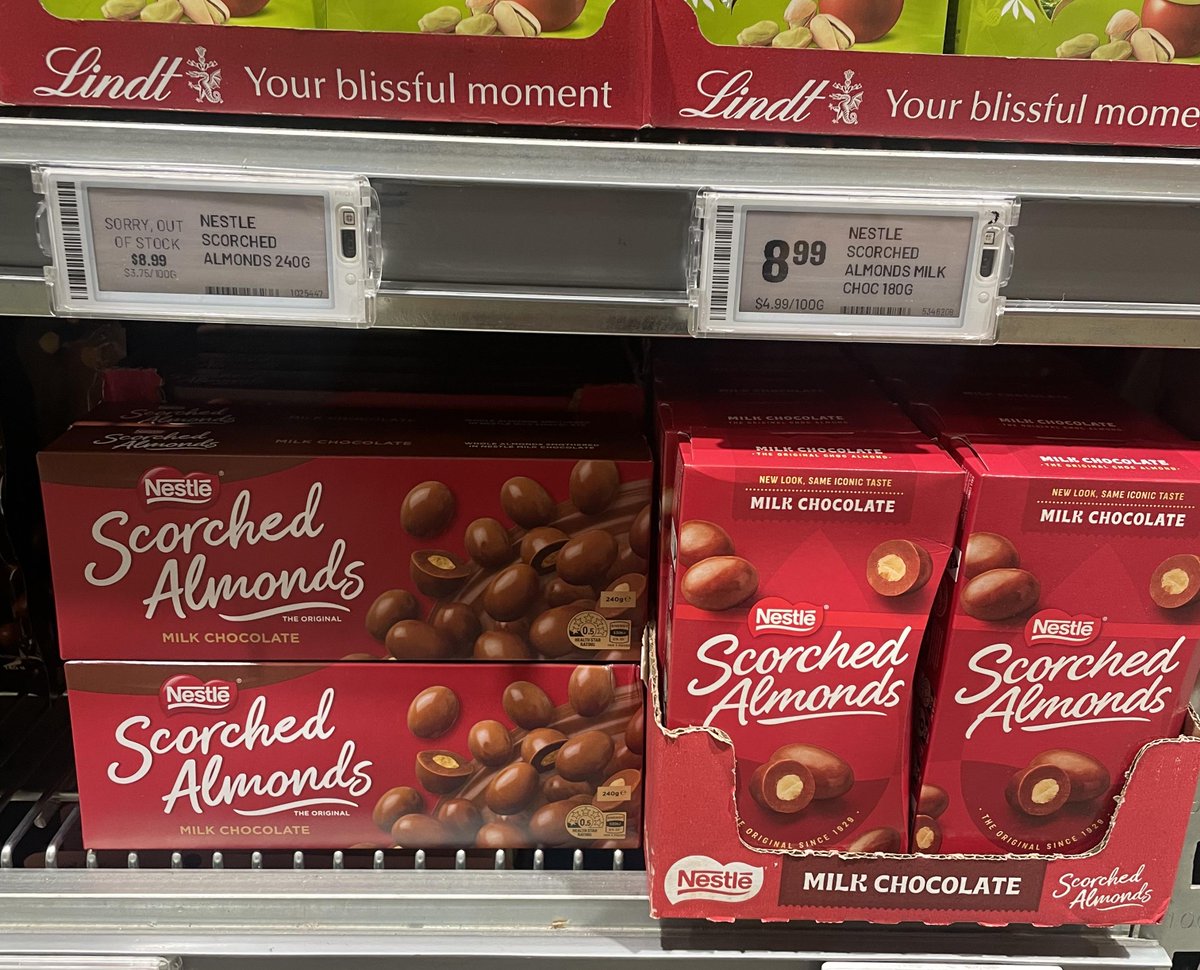
They just shrank the product by 60g and proclaimed "New Look". Of course the price won't change.
Shysters.
18

AI is 'absorbing antisemitism from humans' — new Israeli study
Research warns centuries-old antisemitic stereotypes being inherited from training data
'Jewish characters portrayed as more intelligent, but less likable'
'I'm sorry, Dave. I'm afraid I can't stop stereotyping'
131
110
609
58,265

Sovereign Path retweeted

Jun 11
One of the biggest cultural shifts of the last decade:
Everyone went from wanting to climb the corporate ladder to wanting to disappear from it entirely.
33
133
2,286
41,723
Sovereign Path retweeted

Jun 11
“Do not judge me by my success, judge me by how many times I fell down and got back up again.”
— Nelson Mandela
28
158
1,226
28,420


Sovereign Path retweeted

Jun 12
I highly recommend ending pointless friendships and relationships. It's also personal hygiene.
75
262
1,258
28,965
Sovereign Path retweeted
Jun 11
Discipline is boring.
Hard work is boring.
Studying is boring.
Doing the same thing every day is boring.
Dear son, if you want to go far in life, learn to be bored, silent, and alone.
66
303
1,689
32,633


Sovereign Path retweeted

Jun 11
The dating market is brutal.
Elizabeth Bruch, a professor of sociology at the University of Michigan analysed data from online dating.
Here are some things she discovered…
-Men’s desirability peaks at ages 40-50. But women’s desirability starts highest at age 18 and falls throughout their lifespan.
-Both men and women pursue partners who are on average about 25% more desirable than themselves.
-Women’s prospects dim as they achieve the highest level of education.
-Almost no one messages users less desirable than they are. Everyone’s understanding of their place in the hierarchy is very accurate.
-Men experience lower reply rates when they write more positively worded messages.
504
479
8,155
1,940,661
Sovereign Path retweeted

Which movie comes to mind when you think of Arnold Schwarzenegger?

160
8
89
472,292
Sovereign Path retweeted

Jun 12
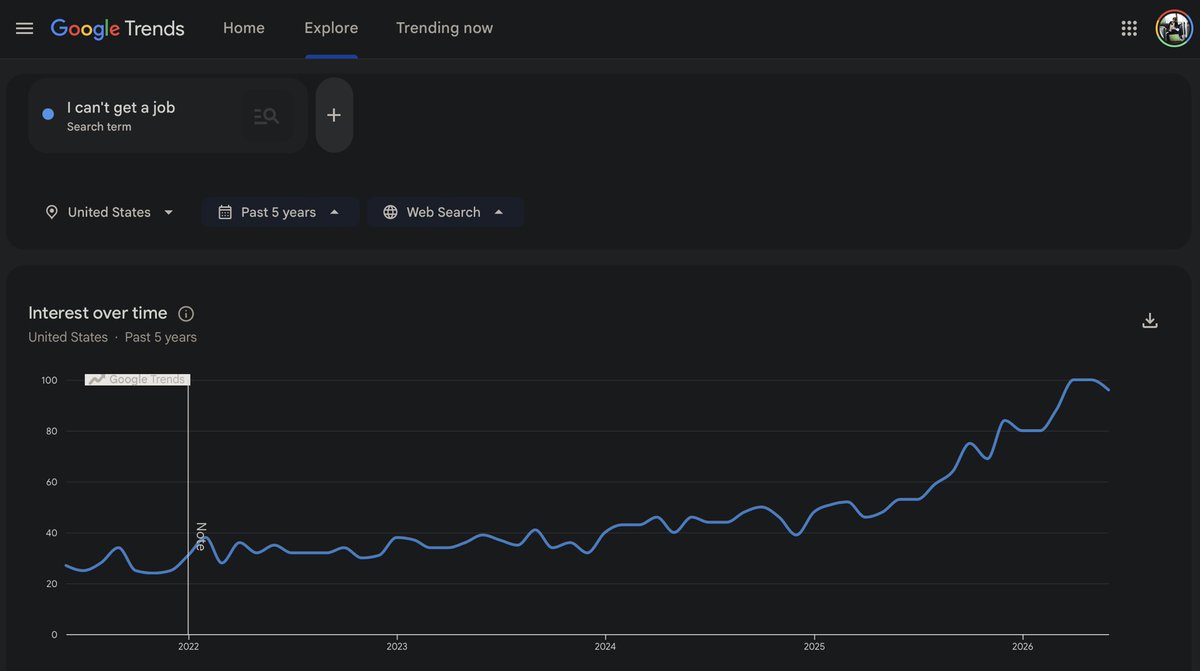
The Rise of Google Searches for “I Can’t Get a Job” – A Symptom of the Abundance Interregnum
In recent years, and accelerating into 2025–2026, Google searches for phrases like “I can’t get a job,” “I can’t find a job,” and related terms have spiked amid widespread anxiety.
While official unemployment hovers around 4.3–4.6%, the lived experience for many especially recent graduates, mid-career switchers, and white-collar workers tells a different story.
Why the Surge?
- AI Disruption in Entry-Level and Routine Roles: Generative AI has automated tasks in writing, coding, analysis, design, and administration. Entry-level white-collar postings have dropped significantly (e.g., ~35% decline in some reports since 2023), as companies use AI for screening, content, and basic workflows. New grads face higher unemployment rates (around 5–6% or more in affected fields), creating the classic catch-22: “I can’t get a job without experience, and I can’t get experience without a job.”
- Mismatch and Ghost Jobs: Job postings often inflate requirements (e.g., demanding 5 years for “entry-level” roles), include ghost listings that aren’t truly open, or use AI filters that reject strong but non-perfect matches. Applications per opening have risen sharply, with some reports citing 1,500 applications needed for one offer.
- Economic Caution and Structural Shifts: Slower hiring in tech/retail, layoffs (tens of thousands AI-related), reduced job postings, and broader uncertainty (recession fears, policy impacts) amplify the pain. Young people and certain demographics report feeling locked out despite qualifications.
- **Psychological and Visibility Effect**: Social media amplifies stories of rejection, “doomjobbing” (endless scrolling/applications), and frustration. This drives more people to Google their despair, creating a feedback loop visible in trends.
This isn’t just a temporary dip. It’s part of the Abundance Interregnum that ~13.7-year bridge from scarcity-era forced labor to an age where AI/robots handle survival work, freeing humans for voluntary creation.
Official stats mask the transition: productivity rises, GDP grows modestly, but labor markets lag with displacement before new opportunities scale.
Nuances and Edge Cases
- Not Universal: Roles requiring human judgment, physical presence, trades, care work, or high-stakes creativity often fare better. AI also *creates* jobs in implementation, oversight, ethics, and novel fields.
- Demographic Variations: New grads, older workers, and those in oversupplied fields (certain tech, admin) struggle more. Networking, referrals, and skills in AI-adjacent areas help disproportionately.
- Regional/Global Differences: US data shows softening; other economies vary. Remote/hybrid shifts and visa dynamics add layers.
- Positive Signals: Business startups surge (many solo/AI-leveraged), and long-term, AI lowers barriers to micro-factories, artisan work, and distributed agents aligning with Zero-Human @ Home visions.
This pain is real the grief of de-skilling, identity tied to traditional jobs, dark night of the soul. But it’s also the call to adventure.
History shows productivity leaps (like past tech waves) eventually raise living standards, though transitions are uneven. The key: inner work practical adaptation.
What to Do:
Read the 5000 Days series at ReadMultiplex.com.
- Skill up in complementary areas: AI tools, human-centric skills, trades, or entrepreneurship.
- Consider local/distributed models: Garage labs, agents as “employees,” community guilds.
- Preserve sanity: Limit doomjobbing; track real metrics over volume.
We’re in the trials phase, abundance, meaning through chosen work requires agency now.
Those who experiment with local AI, robotics integrations (like OpenClaw evolutions), and first-principles thinking will lead.
The search spike is a signal, not the end.
15
22
115
9,468