
Joined April 2022
- Tweets 87
- Following 186
- Followers 203
- Likes 164
11 Photos and videos

Emily Cheng retweeted

We're hiring at Apple MLR in Barcelona 🦎
Work on cutting-edge problems in robustness, interpretability, and next-gen archs. Publish at top venues. Contribute to open-source and push the field forward.
Apply: jobs.apple.com/en-us/details…
Or meet us at our booth at ICML 2026🇰🇷
1
6
115
10,044
Emily Cheng retweeted

Jun 1
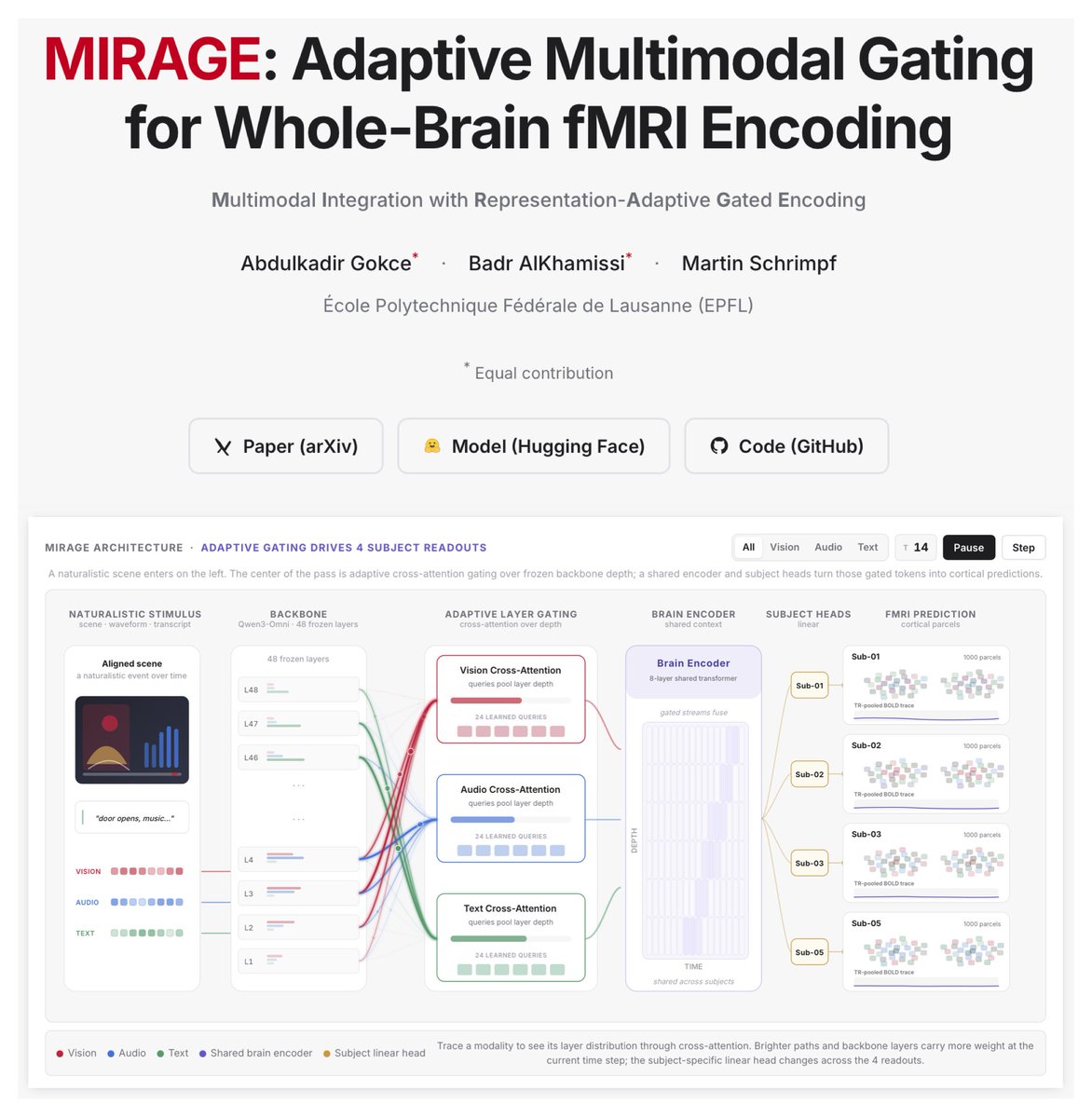
🧠 When you watch a movie, your brain blends sight, sound, and speech into a single experience.
Should models of the brain blend them too, or keep the senses separate until the very end?
We built MIRAGE to find out. Sets a new SOTA for predicting whole-brain fMRI from movies 🧵
1
15
43
6,831
Emily Cheng retweeted

May 28
1/ We’re so glad to share this new study 💫
Does the brain learn like a Deep Net? 🧠⚙️
- 📄Misalignment Between Backpropagation and the Hierarchy of Brain Responses to Images
- 🔗arxiv.org/abs/2605.28693
Thread below 🧵
4
42
176
24,955

📢 Call for Program Committee members!
We’re excited to announce plans for a new edition of the UniReps Workshop on Unifying Representations in Neural Models at NeurIPS 2026 🔵🔴
We’re looking for interested researchers to join the Program Committee and participate in the workshop.
Interested? Fill out the form docs.google.com/forms/d/e/1F…
3
6
1,038
Emily Cheng retweeted

🎨Activation steering can reliably push a text-to-image generator toward a visual concept, but at a cost: each concept needs its own estimation.
⚡HyperTransport (HT) predicts the intervention directly, matching per-concept SOTA at 3–4 orders of magnitude less cost.
[1/6]
3
18
50
4,473
Emily Cheng retweeted

May 12
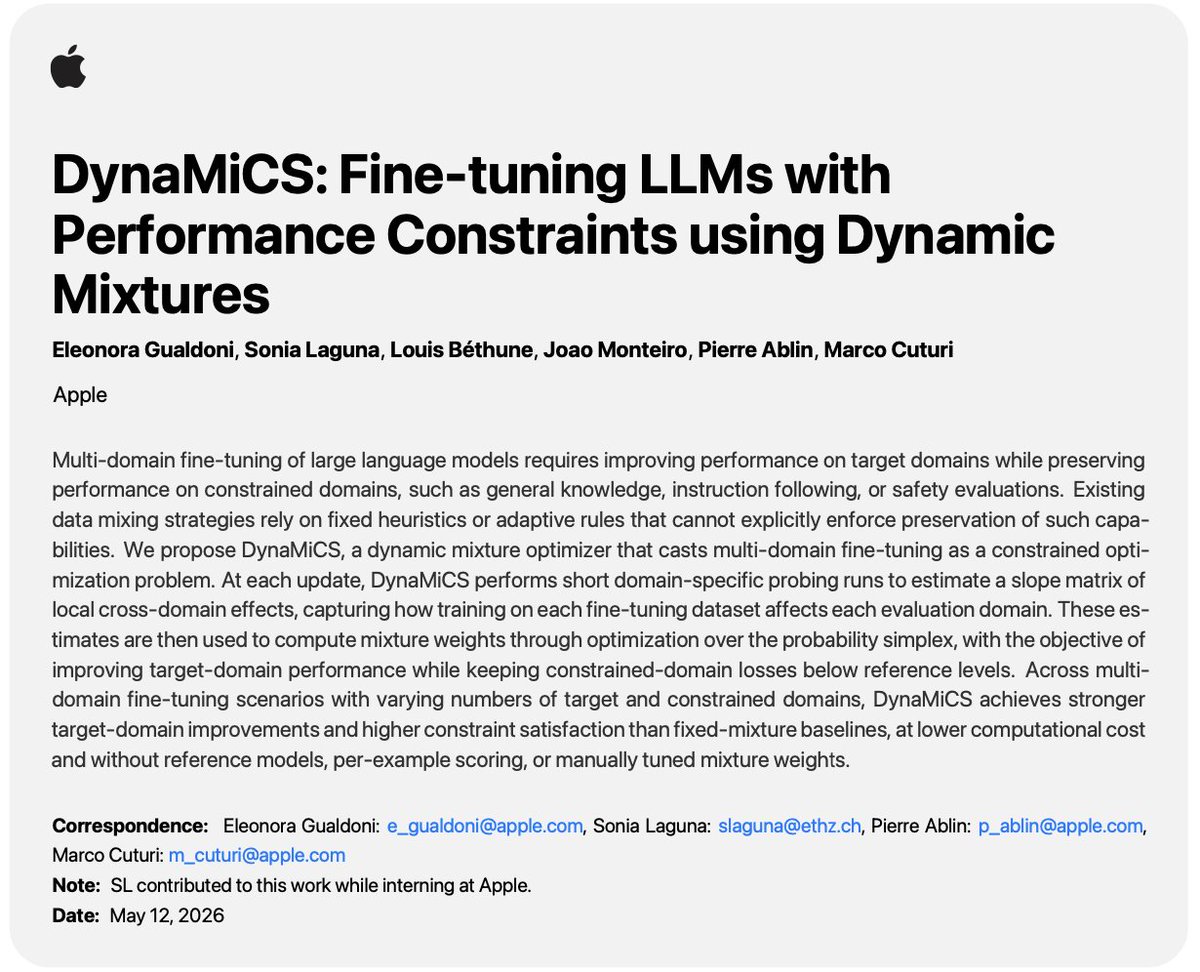
1/ How do you fine-tune an LLM without breaking what already works? 🤯
In our new paper, we study how to improve model performance on target domains while preserving key capabilities like general knowledge, instruction following, and safety 📚
2
2
7
426
Emily Cheng retweeted

May 6
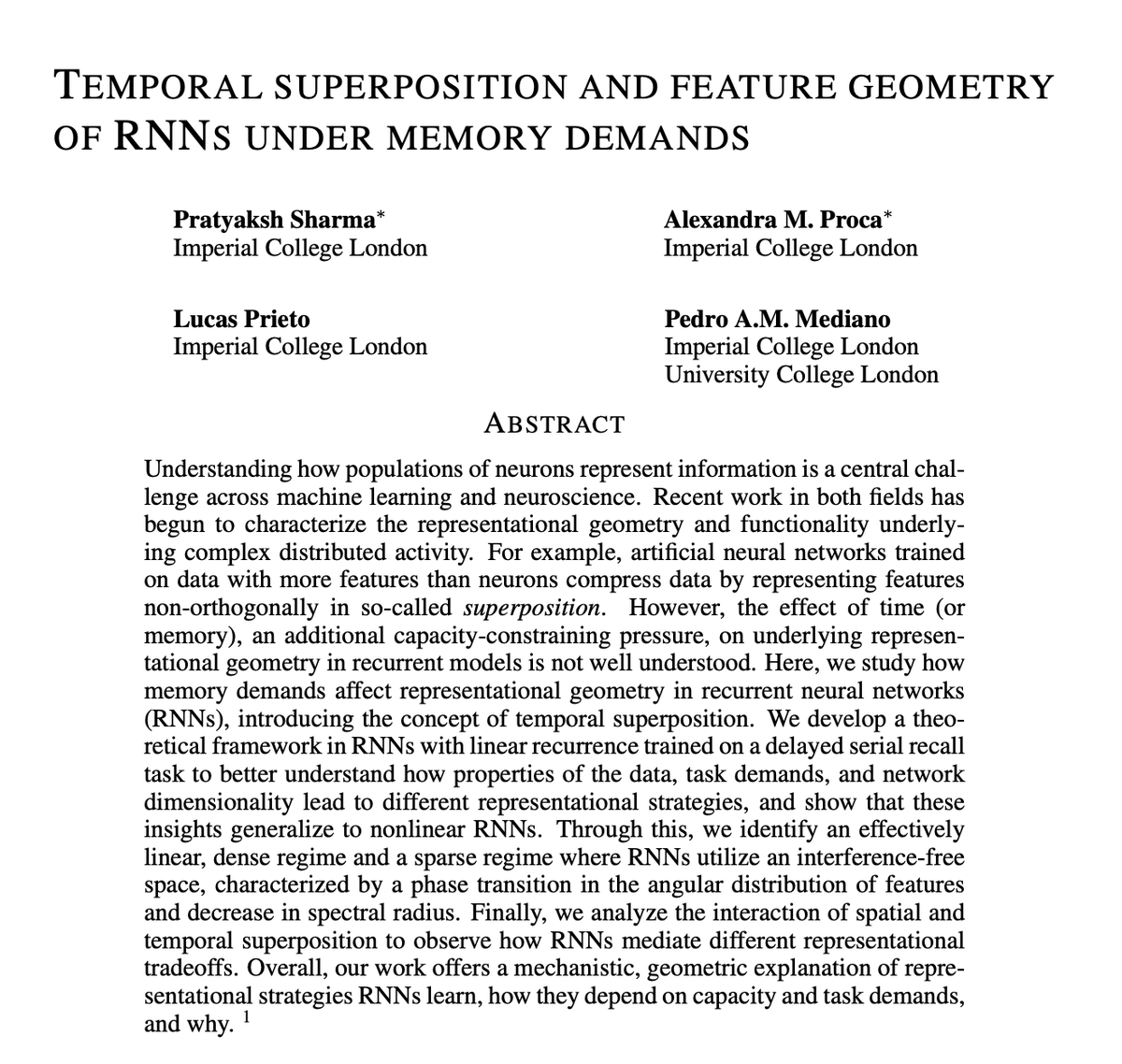
Excited to share our ICLR Oral paper, co-lead with Pratyaksh Sharma, and with @lucas_prie @PedroMediano!
We study how feature geometry is shaped by memory demands in RNNs, introducing the concept of temporal superposition.
openreview.net/forum?id=7cMz…
4
14
55
4,033

Presenting this @icmlconf with @NeuroRJ & @_avaidya✨
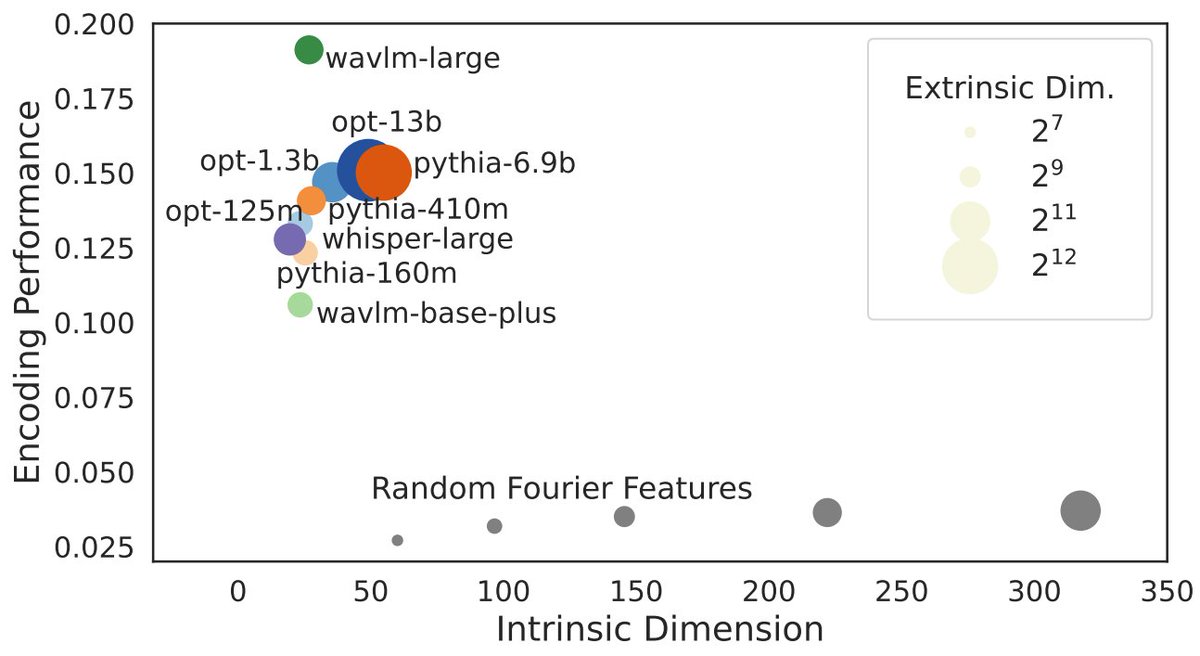
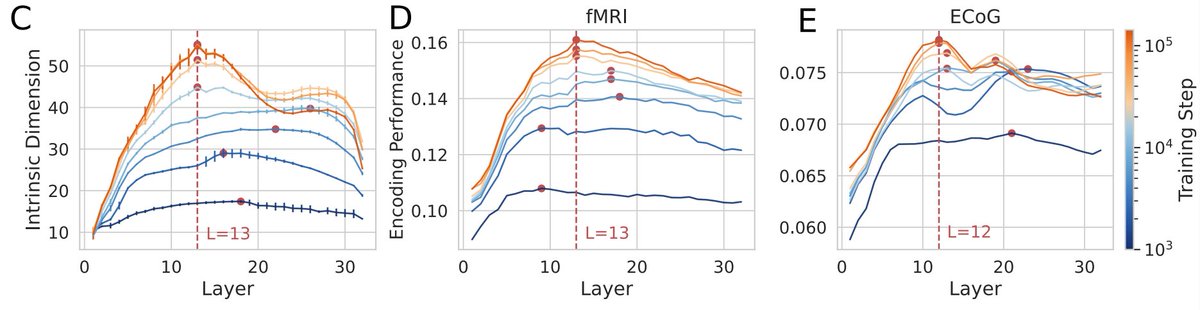
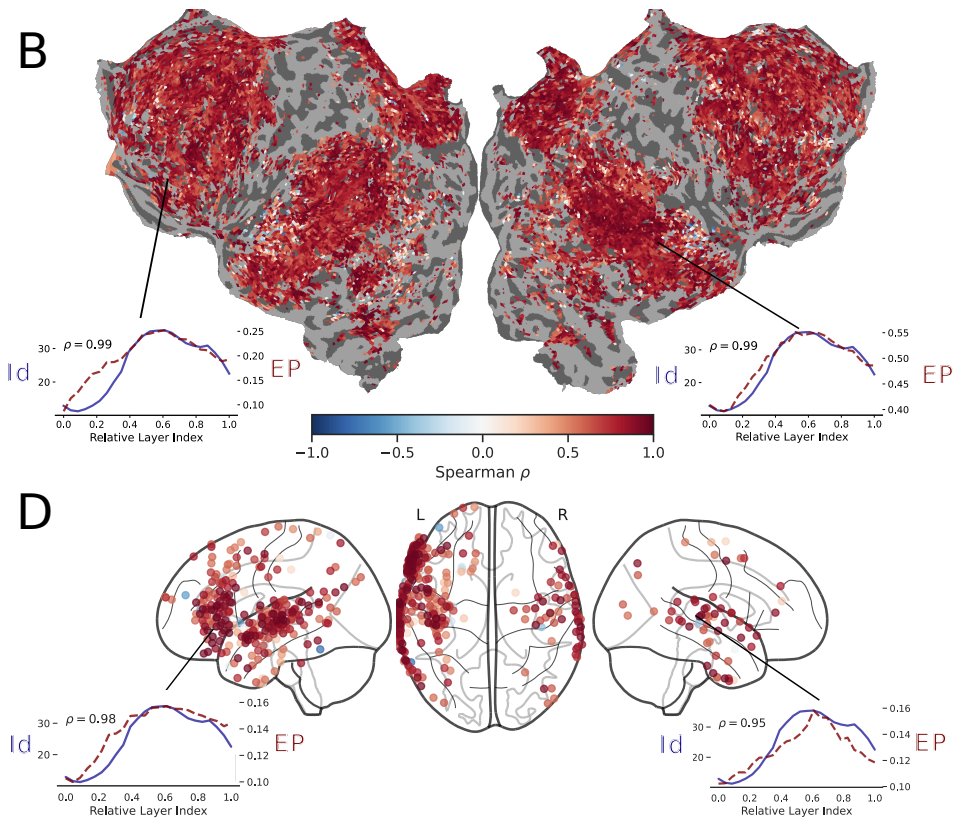
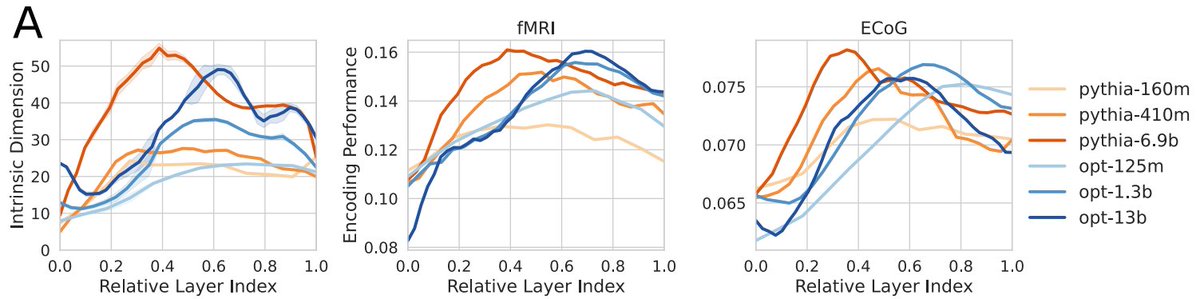
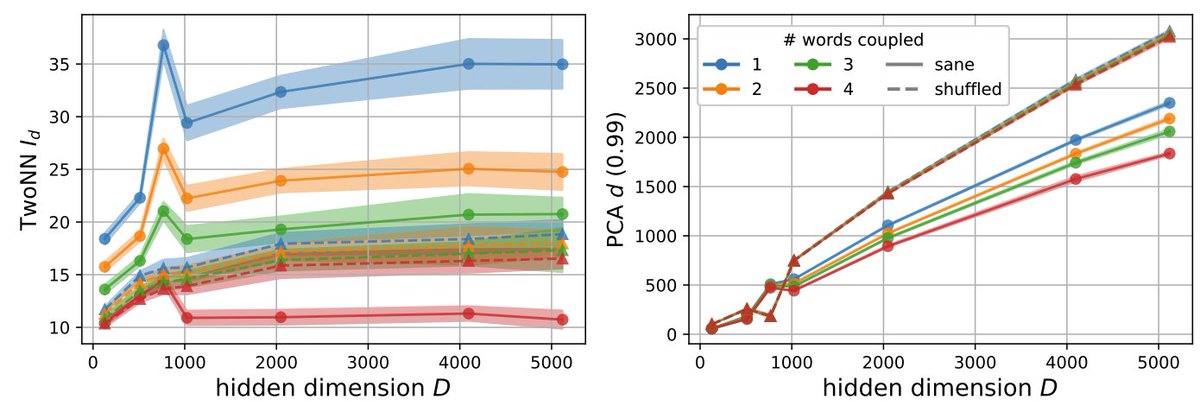
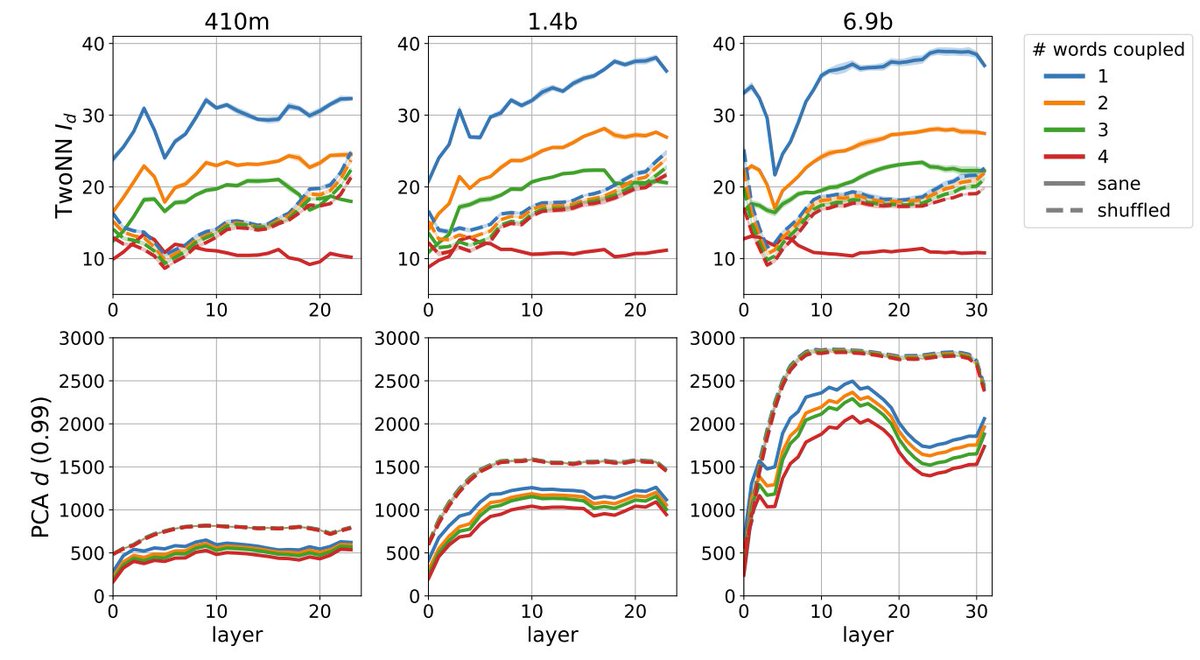
Why do 𝙢𝙞𝙙𝙙𝙡𝙚 layers in LLMs and speech-audio models best predict brain responses to language?
We show a peak in the dimensionality of🤖activations (left) to track high🧠predictivity (right)
🧵
13 Sep 2024

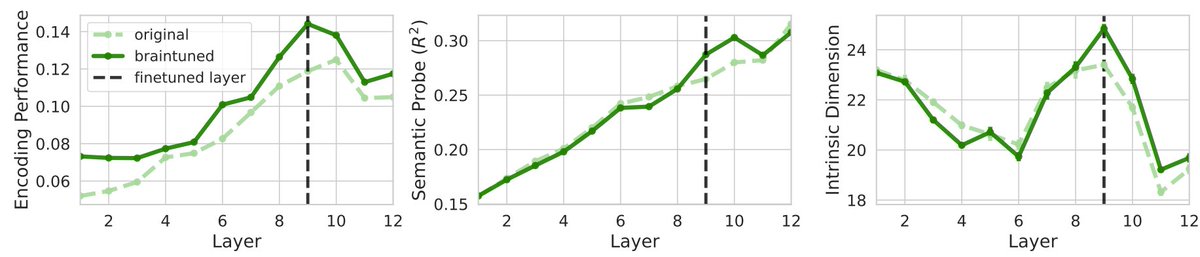
We know that middle layers from LLMs best predict brain responses to natural language. But why? In our new short paper (arxiv.org/abs/2409.05771), we show that this prediction performance closely aligns with a peak in the ✨intrinsic dimensionality✨of the LLM's layers. (1/6)
2
6
41
10,127
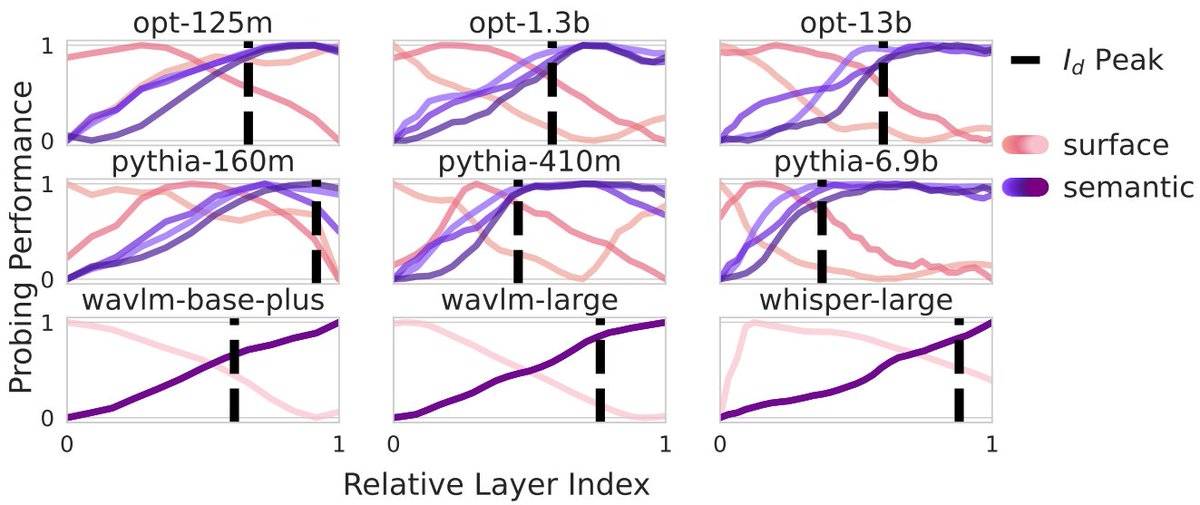
Dimensionality (proxying linguistic abstraction) explains away surprisal’s effect on brain-likeness. This suggests that representing complex linguistic features drives brain-model similarity. Next-token prediction is just one task among possibly many that elicits this ability.
1
1
3
247
See arxiv.org/abs/2602.04081 for the preprint
Extended now across speech-audio models, more fMRI subjects, and ECoG.
1
8
238
Emily Cheng retweeted

Apr 27
New peer-reviewed paper w/ @m_heilb , @jkbszwczk & Floris de Lange!
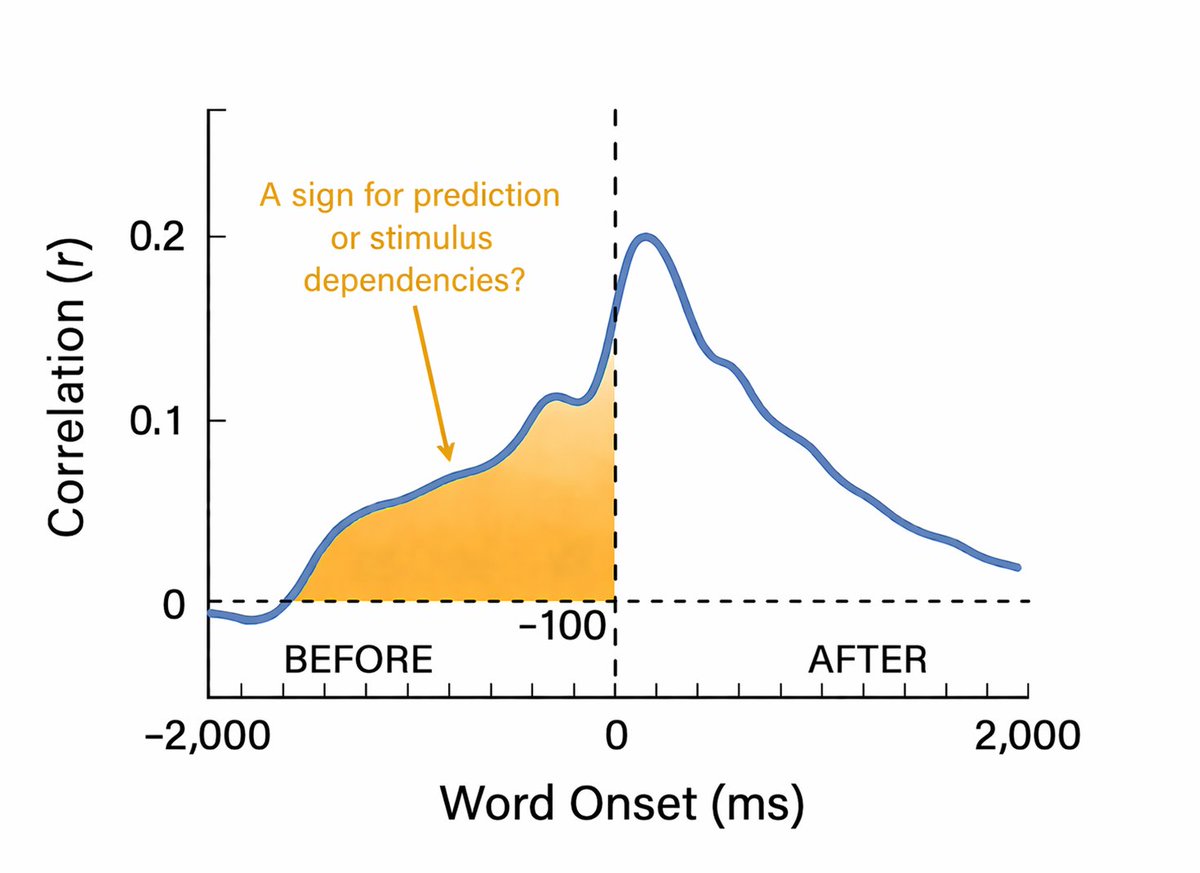
Pre-onset brain encoding has been taken as evidence that brains–like LLMs–predict upcoming words. We show that the same signatures arise in systems that cannot predict. (elifesciences.org) (1/8)
2
30
103
12,064
Emily Cheng retweeted
Apr 24
We’re thrilled to share DinoBrain at @iclr_conf:
Can AI help us understand how the brain learns to see? 🧠
📍Poster P3 #1610 | 3:15pm
- DINOv3’s training mirrors some striking aspects of brain development, especially when trained on human-centric data.
- Reproduced on 8 models.
1 Sep 2025

Can AI help understand how the brain learns to see the world?
Our latest study, led by @JRaugel from FAIR at @AIatMeta and @ENS_ULM, is now out!
📄 arxiv.org/pdf/2508.18226
🧵 A thread:
39
244
20,018
Emily Cheng retweeted
Apr 22
Excited to be in Rio for #ICLR2026 🇧🇷
I'll be presenting our work, Mixture of Cognitive Reasoners (aka MiCRo), on Friday at Pavilion 3, 10:30 AM (#1610). Come say hi :D
Happy to chat about NeuroAI, representational & cultural alignment, and/or test-time learning 🧠
1
4
31
1,642