
Postdoc in the Mesgarani Lab at Columbia University. Studying how the brain processes language by using LLMs. (Formerly @HuthLab at UT Austin)
Joined May 2020
- Tweets 252
- Following 242
- Followers 435
- Likes 486
12 Photos and videos

Richard Antonello retweeted

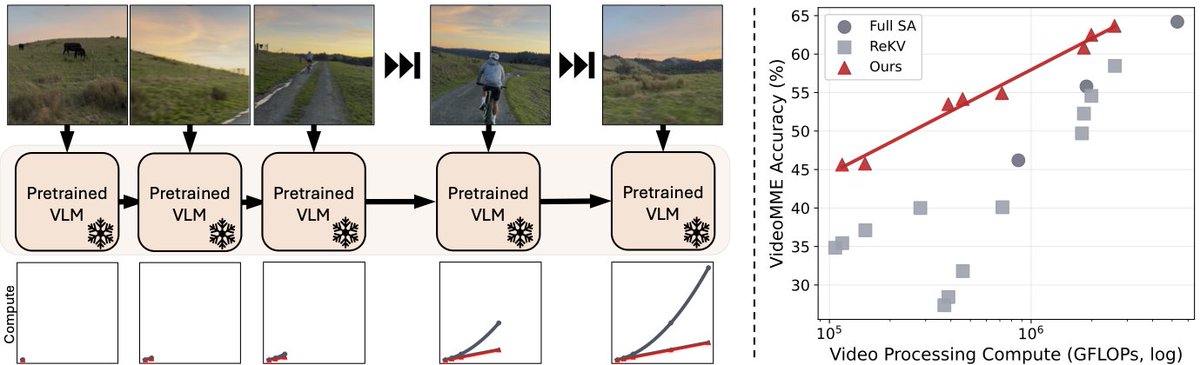
1/ The biggest problem in video understanding today isn't the models. It's that we can barely run them.
Introducing StateKV: an inference-time method that makes pretrained video VLMs scale linearly with video length.🧵
🔗 ceyzaguirre4.github.io/State…
4
18
69
12,217
Richard Antonello retweeted

May 29
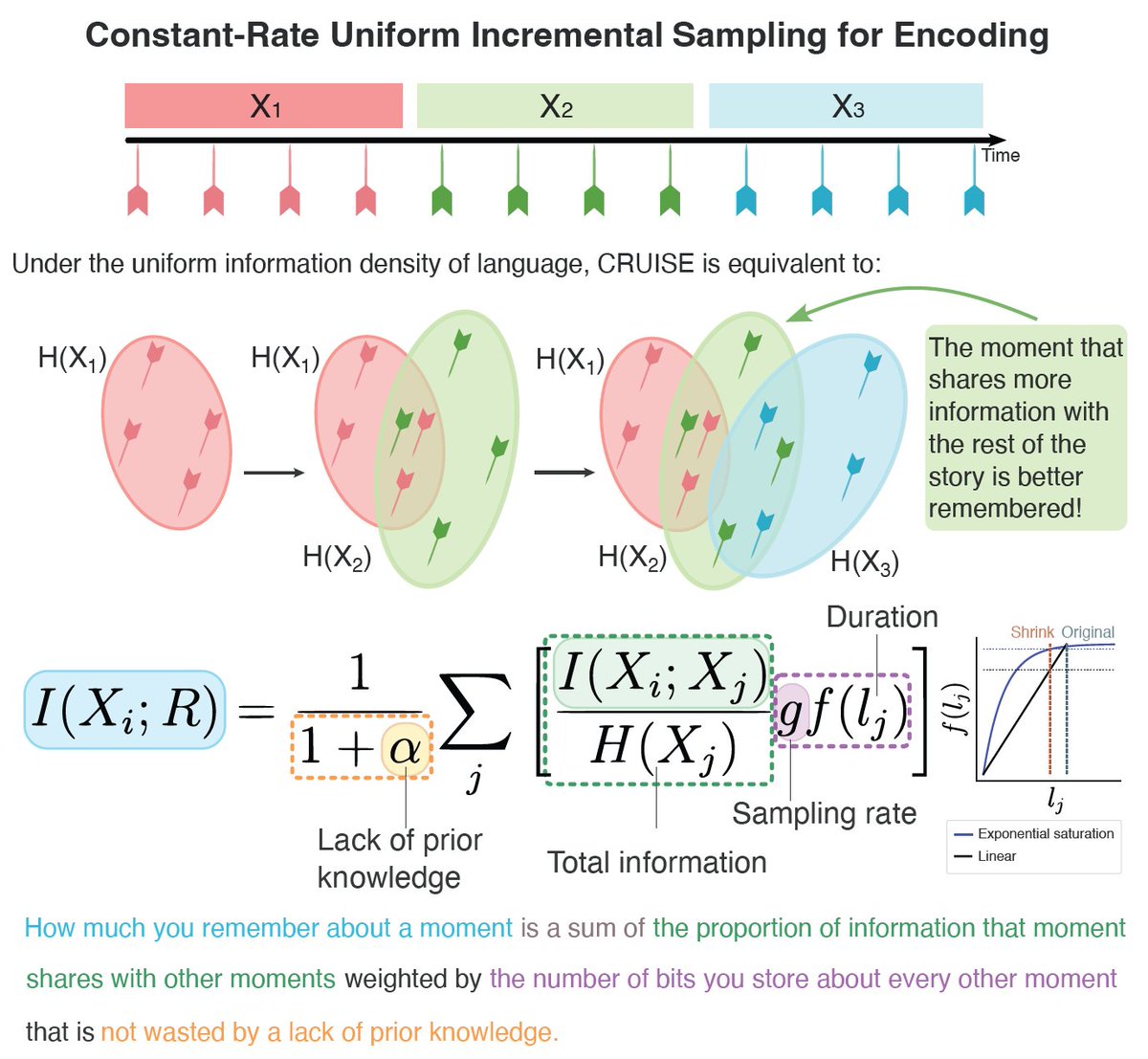
Proud mentor moment! My student @mujn1461 (co-supervised w/ @huthlab) presents at #CEMS2026 at Penn today. Her work challenges the idea that event boundaries are remembered because they're surprising. What predicts memory is how much a moment shares with the rest of the story.
2
10
329
Richard Antonello retweeted

May 27
Our fast language localizer paper is published! tinyurl.com/2rwf4yx8
In brief: You can identify fronto-temporal language regions using just a few minutes of fMRI scanning with speeded reading.
Findings code in thread below!
With @elizj_lee* and @aloxatel @ev_fedorenko
3 Jul 2024

1/
New work! Localizing the human language network in ~3.5 minutes using speeded reading.
Co-led with @elizj_lee, and with @aloxatel @ev_fedorenko
Paper: biorxiv.org/content/10.1101/…
Code: rb.gy/x2rjzj
2
8
35
5,710
Richard Antonello retweeted

May 18
Excited to share that our paper: ‘Precision fMRI reveals that the language network exhibits adult-like left-hemispheric lateralization by 4 years of age’ is finally published!
mcgovern.mit.edu/2026/05/17/…
nature.com/articles/s41467-0…
@Amanda_M_OBrien @ev_fedorenko
16 May 2024

A developmental “truth” is that the language system starts bilateral and left-lateralizes w/ age. @Amanda_M_OBrien & I co-led a large-scale 🧠study tinyurl.com/LangNetDevPrep & found lateralization is already adult-like by age 4! w/ @ev_fedorenko, @gabrieli_john, @rebecca_saxe🧵 1/n
16
28
9,187
Richard Antonello retweeted

May 18
1.
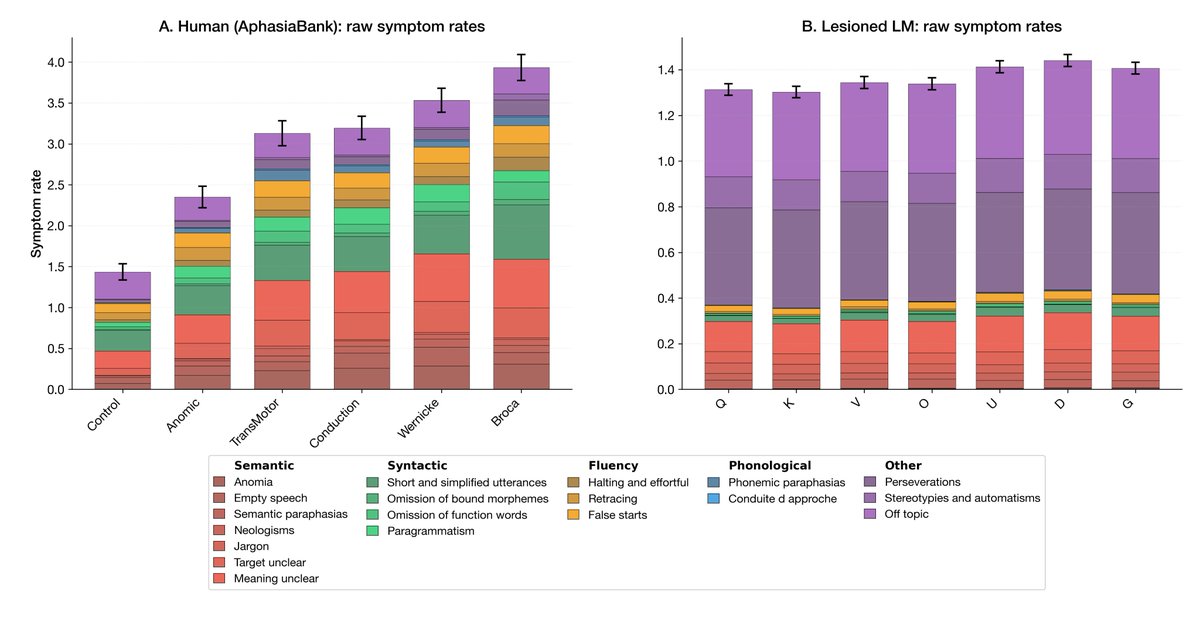
we gave AI models “brain damage” to learn how they process language (so you don't have to!)
it turns out they produce the same symptoms as humans with aphasia, but in distinct distributions...
(joint with @coryshain, Jill Kries, and @GwilliamsL )
6
27
124
16,476
Richard Antonello retweeted

What if a hearing device could identify who you want to listen to, directly from your brain signals?
Today in Nature Neuroscience, we demonstrate real-time brain-controlled hearing that improves speech perception in noisy settings.
Paper, Demos and Code: vishalchoudhari.com/real-tim…
1
2
9
460
Richard Antonello retweeted

How is uncertainty in LLMs output reflected in internal representations?
In our new work (to appear at ICML 2026), we show that the shape of internal token trajectories provides a direct geometric link to behavioral uncertainty (output entropy). 🧵(1/n)
4
32
209
16,170
Richard Antonello retweeted

May 7
2 emerging interpretability trends I'm excited about from this paper: (1) agent-facing interp & (2) interp objectives for autoresearch 🧵

NEW paper from Microsoft Research.
(bookmark it)
The entire interpretability literature is built around human readers. As more analysis gets delegated to agents, the right target of interpretability shifts. This paper is a recipe for designing tools that agents can actually reason about.
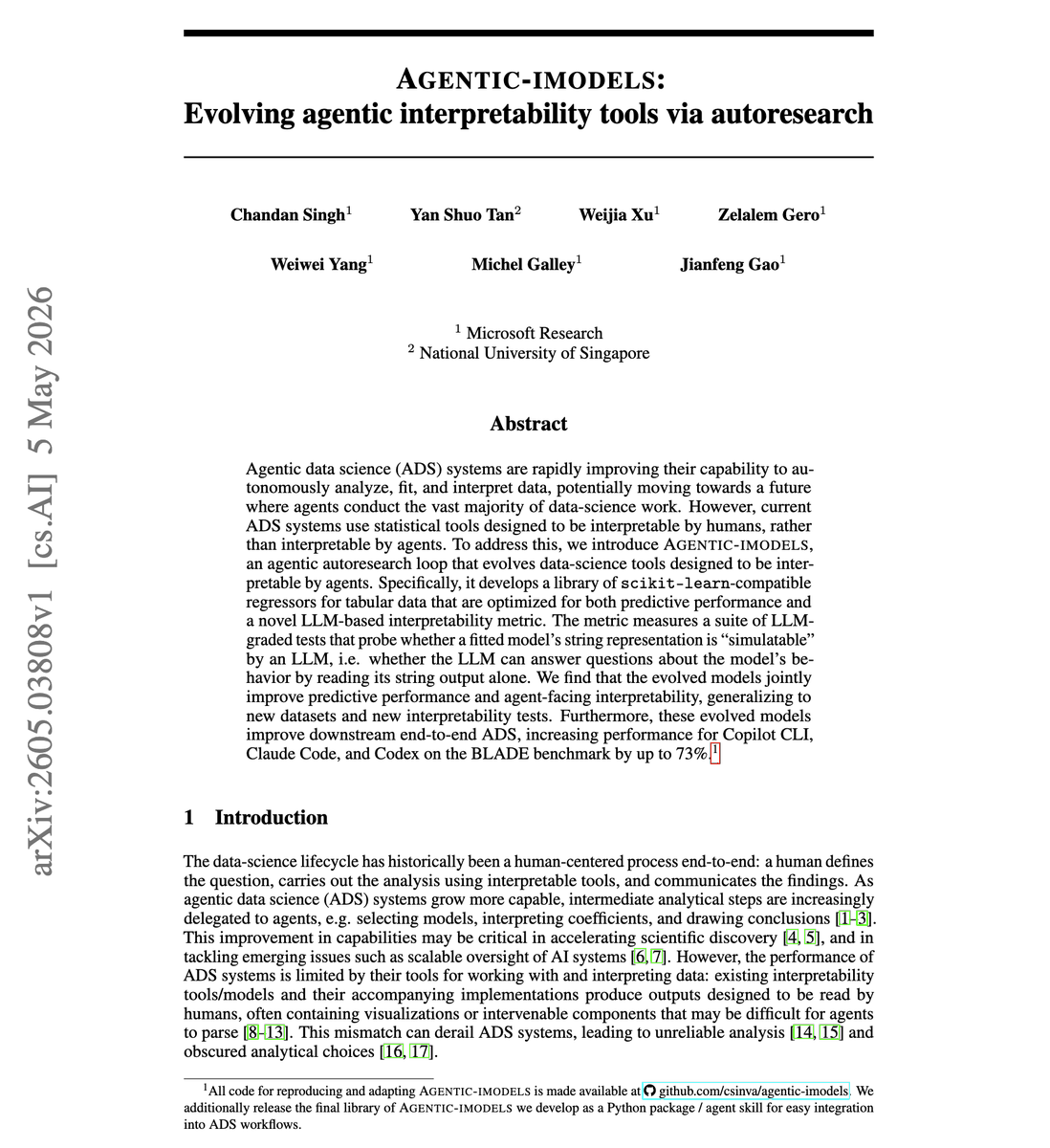
They introduce Agentic-imodels, an autoresearch loop where a coding agent (Claude Code, Codex) iteratively evolves scikit-learn-compatible regressors that are simultaneously accurate AND readable by other LLMs.
Interpretability is measured by whether a small LLM can simulate the fitted model's behavior just by reading its string representation. Predictions, feature effects, counterfactuals, all from the __str__ output alone.
Run on 65 tabular datasets, the discovered models push the Pareto frontier past every classical interpretable baseline (decision trees, GAMs, sparse linear), and improve four downstream agentic data science systems on the BLADE benchmark by 8% to 73%.
Paper: arxiv.org/abs/2605.03808
Learn to build effective AI agents in our academy: academy.dair.ai/
1
13
69
8,300
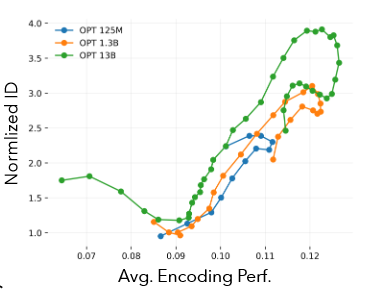
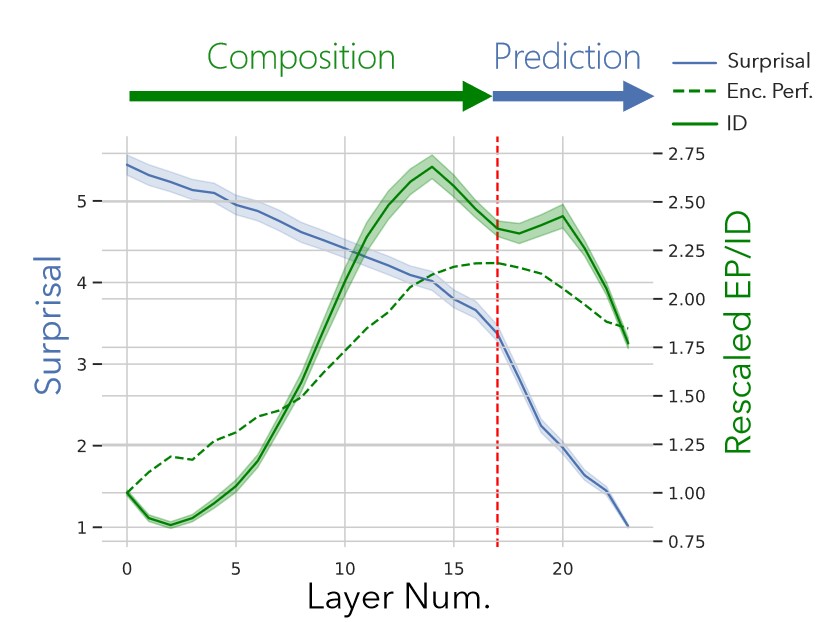
How can manifold theory help us understand why representations learned by AI models🤖 are aligned to the brain🧠? We expanded our UniReps Best Short Paper on this topic into a full paper at @icmlconf! Now extended to ECoG and with new brain-tuning results! Check it out👇

Presenting this @icmlconf with @NeuroRJ & @_avaidya✨
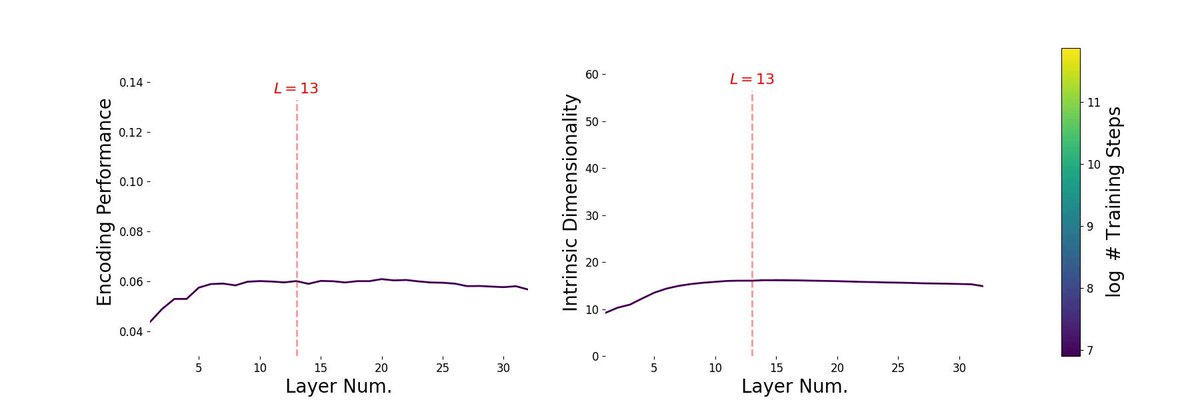
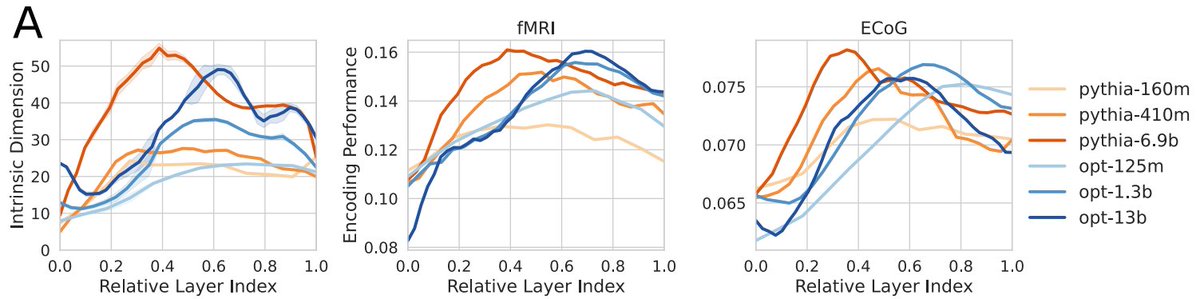
Why do 𝙢𝙞𝙙𝙙𝙡𝙚 layers in LLMs and speech-audio models best predict brain responses to language?
We show a peak in the dimensionality of🤖activations (left) to track high🧠predictivity (right)
🧵
1
7
52
6,834
Richard Antonello retweeted

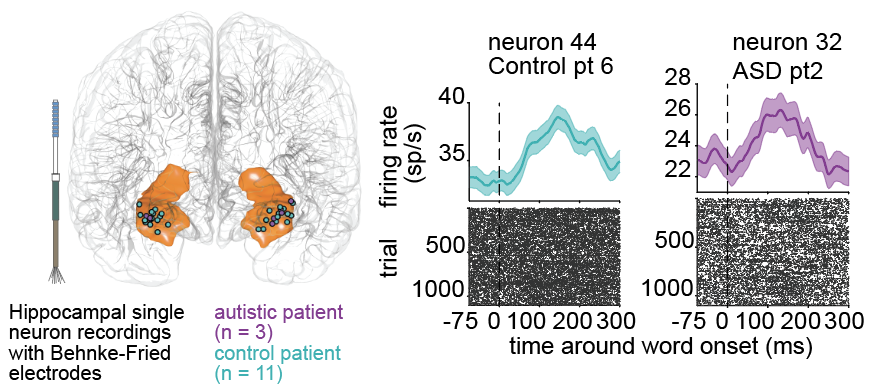
I’m excited to share my newest work with the Hayden lab, and the work I’m most proud of to date, on characterizing semantic coding in single-neuron hippocampal activity in patients with autism during natural language comprehension!
biorxiv.org/content/10.64898…
3
20
101
6,015
Richard Antonello retweeted

Mar 17
Language, Intelligence & Thought lab is looking for a lab manager! This is a 2-year postbac position that will allow you to gain experience in human neuroscience, cognitive science, and AI research prior to applying to PhD programs.
Express interest here: forms.gle/289sLgZdJ2bQr1Y48
1
27
58
9,099
Richard Antonello retweeted

3 Nov 2025
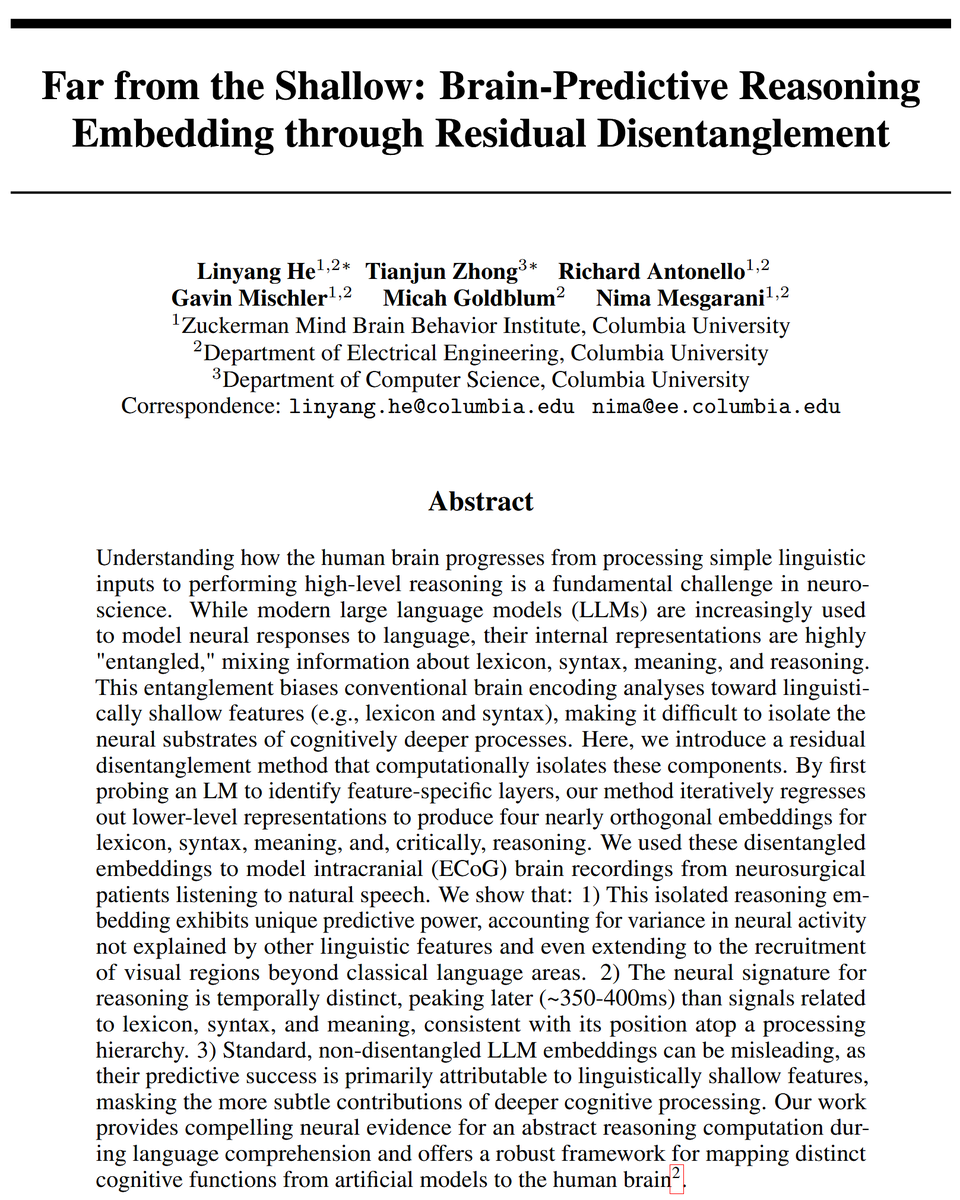
🧠New at #neurips2025!
TL;DR: We introduce the first "reasoning embedding" and uncover its unique spatio-temporal pattern in the brain.
🔗arxiv.org/abs/2510.228...
2
5
10
881
Richard Antonello retweeted
29 Sep 2025
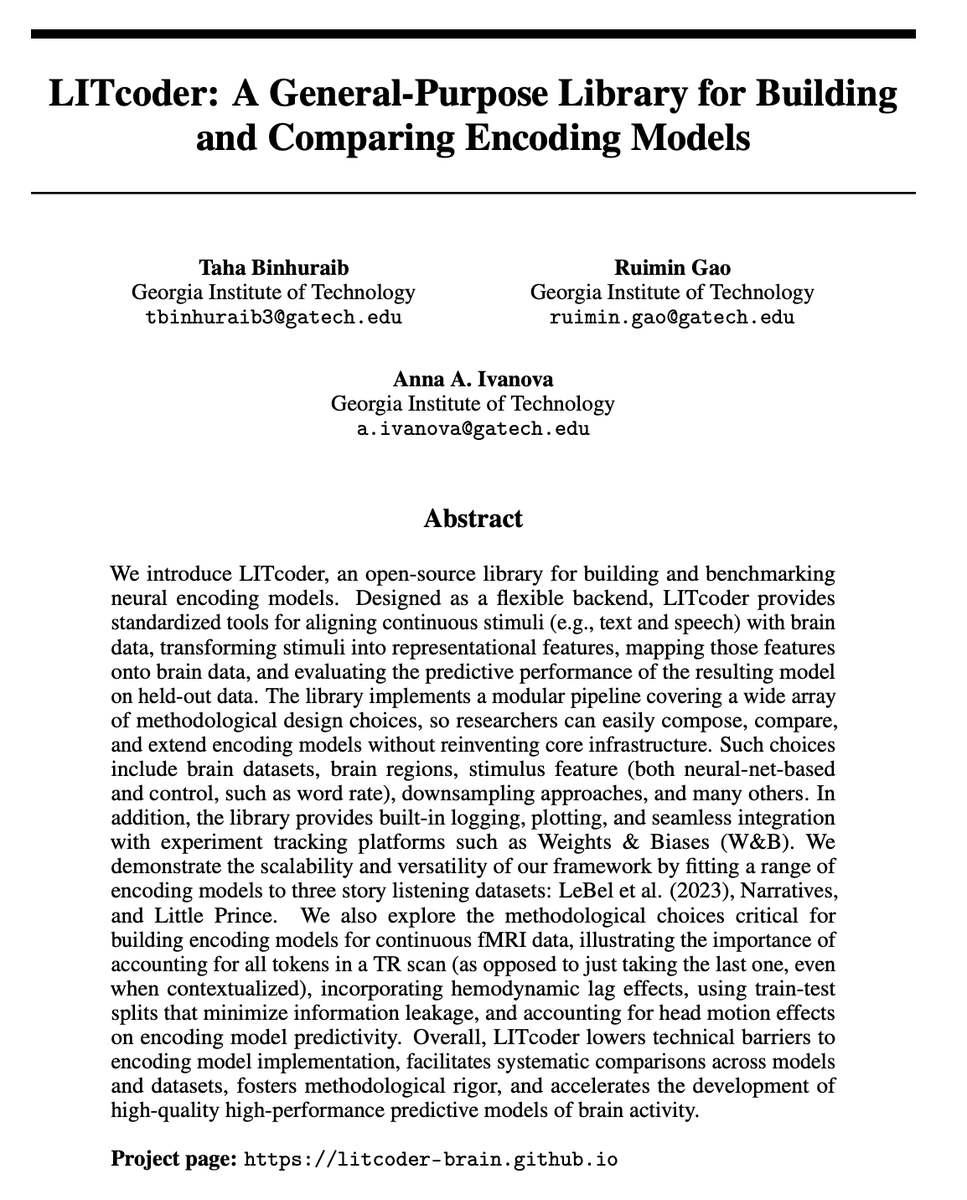
As our lab started to build encoding 🧠 models, we were trying to figure out best practices in the field. So @NeuroTaha built a library to easily compare design choices & model features across datasets!
We hope it will be useful to the community & plan to keep expanding it!
1/
29 Sep 2025

🚨 Paper alert:
To appear in the DBM Neurips Workshop
LITcoder: A General-Purpose Library for Building and Comparing Encoding Models
📄 arxiv: arxiv.org/abs/2509.09152v1
🔗 project: litcoder-brain.github.io/
1
7
39
5,095
Richard Antonello retweeted

19 Sep 2025
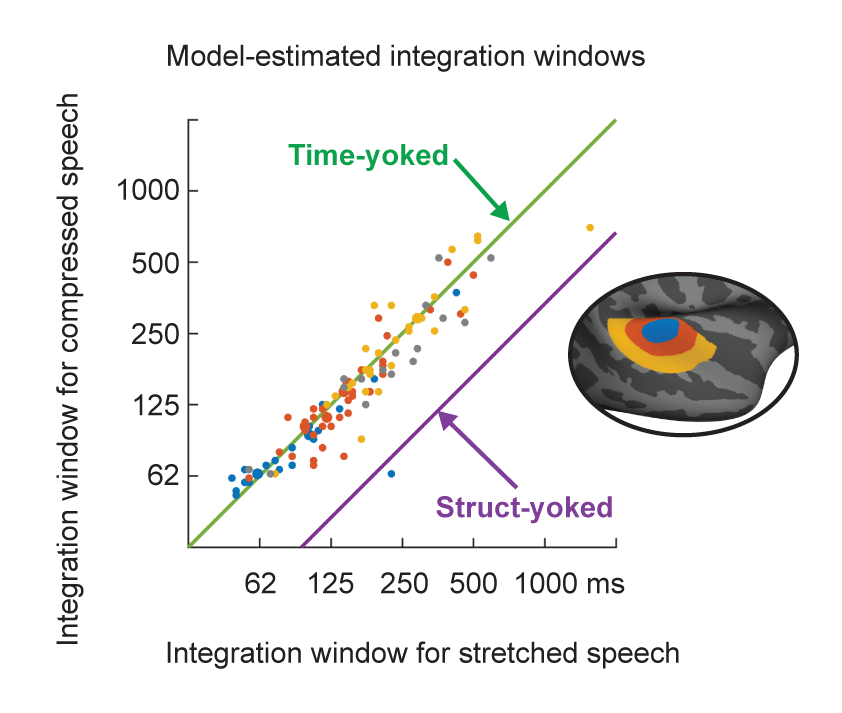
Human auditory cortex integrates information in speech across absolute time (e.g., 200 ms), not phonemes, syllables, words, or any other time-varying speech structure: nature.com/articles/s41593-0…
4
18
59
7,342
Richard Antonello retweeted

13 Sep 2025
If you're at #SNL2025 and curious about speech and music perception or its representation in developing brains, stop by my poster in Session C – #77! :)
11 Sep 2025

The #SNL2025 Annual Meeting Program Booklet and Abstract book are now available for download in PDF format. See: 2025.neurolang.org/2025-prog…
1
3
326
Richard Antonello retweeted

2 Sep 2025
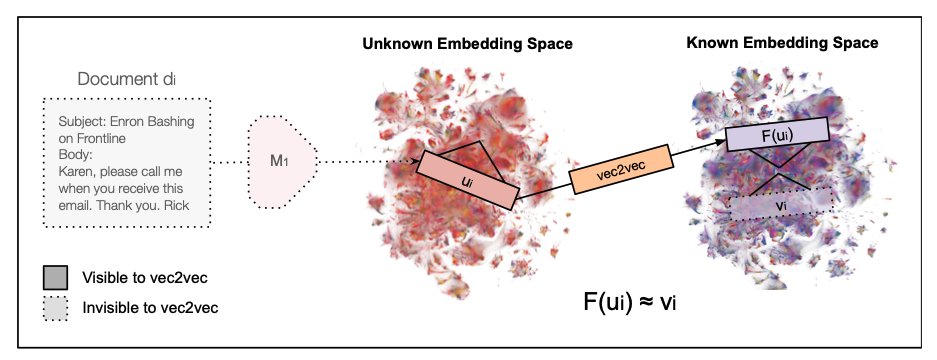
*Harnessing the Universal Geometry of Embeddings*
by @rishi_d_jha @jxmnop @shmatikov
With the proper set of losses, text embeddings from different models can be aligned with no paired data (what they call the "strong" Platonic hypothesis).
arxiv.org/abs/2505.12540
1
60
370
19,788
Richard Antonello retweeted

19 Aug 2025
Very cool video. I created an infographic to try to visualize the full study in more depth studyvisuals.com/artificial-…
1
3
220

18 Aug 2025
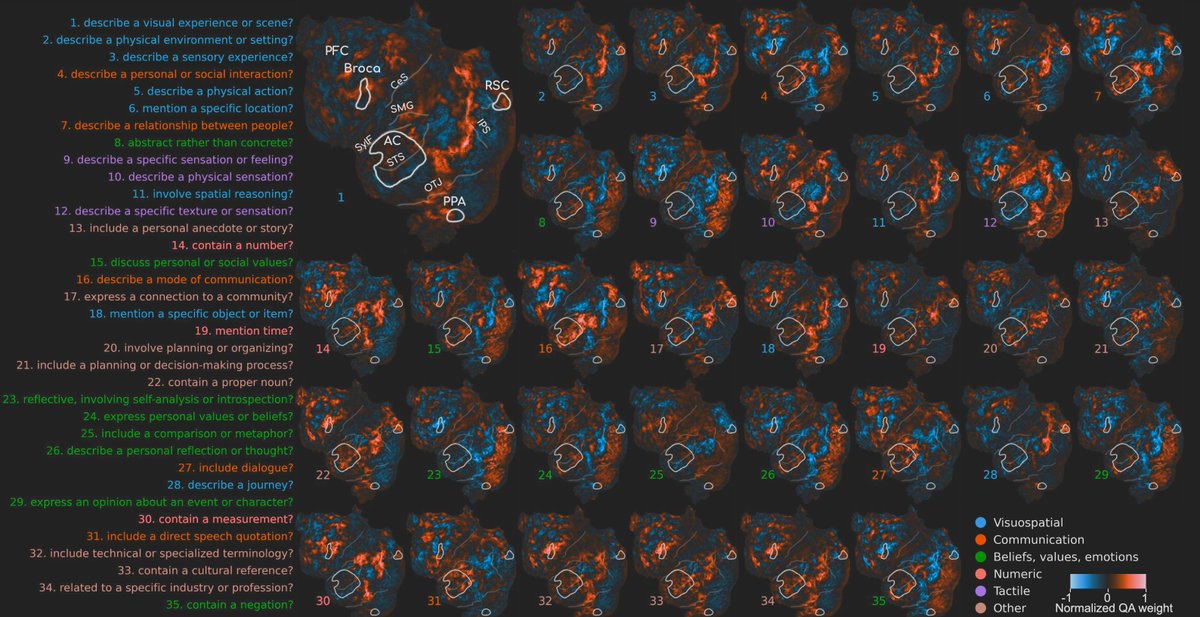
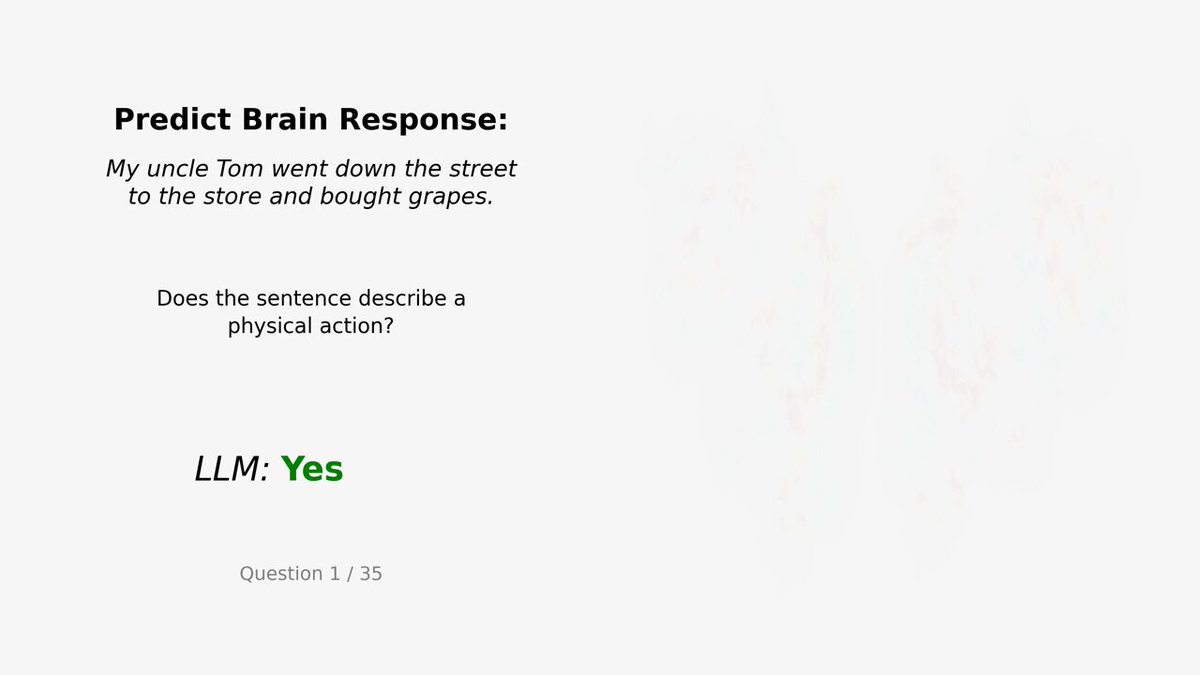
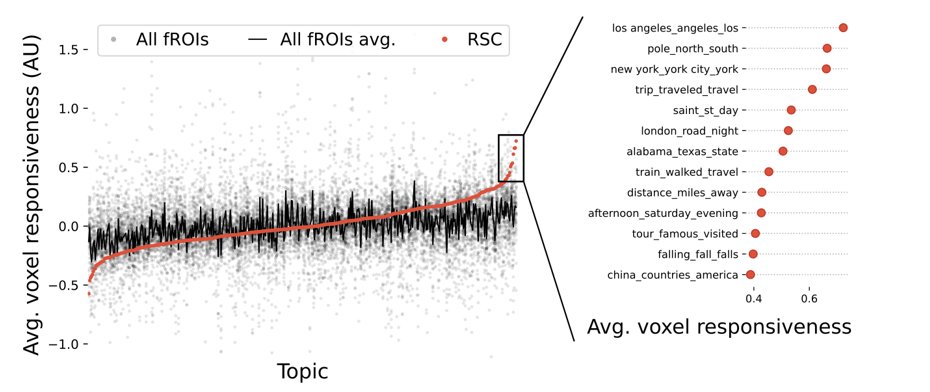
In our new paper, we explore how we can build encoding models that are both powerful and understandable. Our model uses an LLM to answer 35 questions about a sentence's content. The answers linearly contribute to our prediction of how the brain will respond to that sentence. 1/6
5
20
112
10,188
18 Aug 2025
We think these QA models are an important step in bridging the gap between data-driven models of the brain and the easy-to-understand, but hard-to-encode, qualitative theories that guide our intuitions as neuroscientists. 5/6
1
4
474
18 Aug 2025
A big effort on the part of all the authors (@csinva (co-first) @SunaGuo, Gavin Mishcler, @JianfengGao0217, @NimaMesgarani, @alex_ander) Check out the preprint on bioRXiv here! biorxiv.org/content/10.1101/…
8
456