Operator → VC. Investing in mission-driven tech. Speaking on disciplined scaling, capital strategy, and building companies that last.
Joined December 2008
- Tweets 725
- Following 1,484
- Followers 674
- Likes 1,478
71 Photos and videos





Richard Stroupe retweeted

“He's at least ten years ahead of everyone else as far as making satellites, as far as making rockets, as far as building networks,” says @RonBaronAnalyst of @elonmusk following the $SPCX IPO. “They have opportunities that are changing lives.” cnb.cx/3Qirmom
18
25
146
15,906
Interesting
Jun 13

I’ve had a number of conversations with folks inside and outside government about the current situation with Anthropic, and here is what I believe to be true:
— As we know, Anthropic publicly released its Mythos class models earlier this week under the commercial name Fable.
— Fable is Mythos with guardrails. But if those guardrails fail, then you’ve exposed Mythos and its advanced cyber capabilities to people who shouldn’t have them. (Keep in mind that Anthropic itself widely promoted the idea that Mythos was a cyberweapon and needed to be regulated as such. They asked for government regulation of Mythos and championed the guardrails on Fable. If there is a vulnerability — big or small — it is Anthropic’s responsibility to patch.)
— A highly credible trusted partner of both Anthropic and the USG who was testing Fable came forward with a jailbreak of those guardrails. The Admin asked Dario to fix the jailbreak or de-deploy the model. Dario refused.
— In their blog post, Anthropic defended its decision by saying the jailbreak isn’t serious. That is not what the trusted partner and the USG believe; nor is that kind of minimizing language consistent with Anthropic’s brand as the AI safety company. It’s difficult to fathom how they could claim a jailbreak allowing operability of a cyber weapon could be defined as not “serious.”
— In the past, Anthropic has always said that safety must be top priority and taken super seriously. In this case, Anthropic prioritized the continued offering of the consumer model over safety.
— In reaction, the Admin issued the export control. The Admin did this reluctantly. It’s been very surprised that Anthropic hasn’t wanted to cooperate with a reasonable safety request (ie fixing the jailbreak issue). Anthropic’s reaction is very much at odds with their branding and ethos as a safe AI research community.
— The Admin’s hope now is that Anthropic remediates the safety issue, the export control is lifted, and Fable goes back into general release. The Admin wants all of this to happen as soon as possible. It is frankly bewildered that Anthropic hasn’t wanted to comply with safety requests that it previously said were its highest priority.
— Those trying to misdirect and tie this action to the prior DoW/Anthropic issues are wrong. The Admin values Anthropic’s technical capabilities and feels that this issue, while serious, should be easily resolved. The ball is in Anthropic’s court.
18
Richard Stroupe retweeted

Jun 13
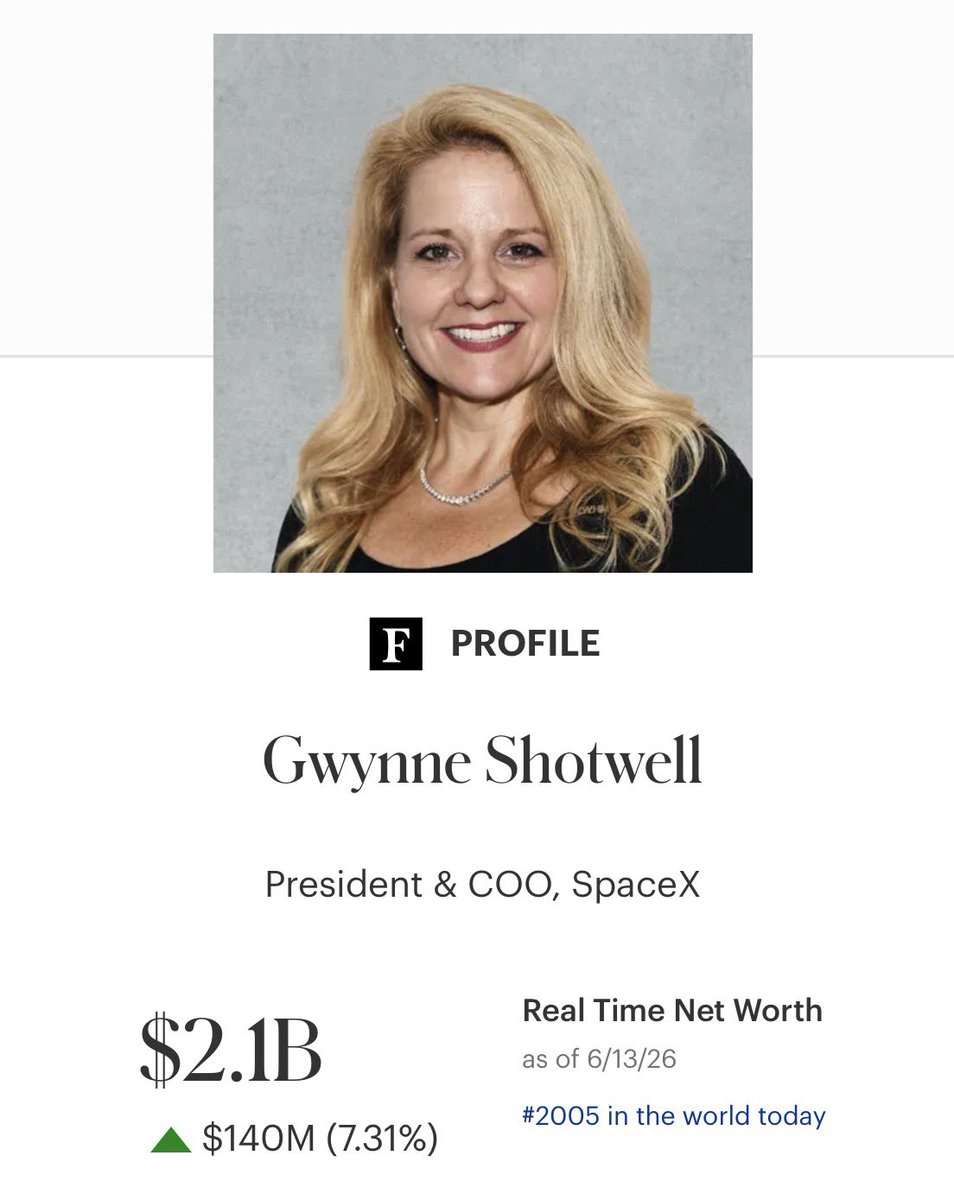
If she wasn’t working for Elon Gwynne Shotwell would be hailed as an incredible success story and the most powerful woman in aerospace.
Instead it’s radio silence from the media
494
2,702
23,194
774,566


SpaceX is building the infrastructure of the future
1,213
4,092
30,627
43,975,005

Jun 11
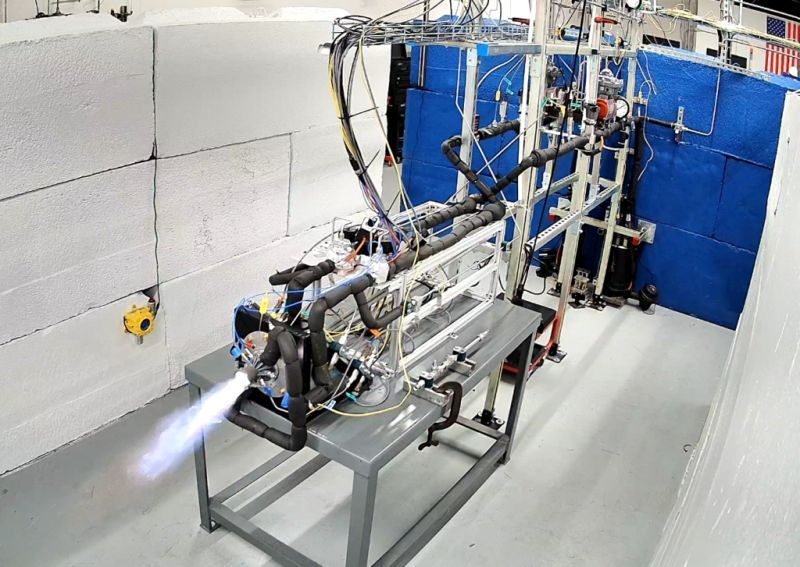
Congratulations to the team at Juno Propulsion on closing their $1.4 million pre-seed round.
We backed them because most rocket engines still run on propulsion physics from the 1940s, and whoever fixes that resets the economics of everything above it
Juno is fixing it, with the talent to pull it off.
Their rotating detonation combustion engine gets more out of every pound of fuel than a conventional burn. And it runs on cheaper, safer propellant than the hydrazine most spacecraft depend on.
No engine like it has ever powered a spacecraft in orbit.
Juno's Project IRIS is built to be the first, launching in early 2027.
NASA also backed the work with a $500,000 TechLeap award, and the team just cleared its last major build milestone before flight.
Congratulations to founders Alexis Harroun and Ari Martinez and the whole Juno Propulsion team
Better engines are a major key to unlocking everything else in space.
1
15
2,442
Jun 11
As a proud alumnus, it’s especially rewarding to see more breakthrough innovation emerge from @LifeAtPurdue, the "Cradle of Astronauts"
It has an amazing history of producing boundary-pushing engineers, founders, and explorers.
Story in Payload: payloadspace.com/juno-propul…
1
57

Exclusive: Elon Musk's SpaceX has drawn more than $250 billion of investor demand for what stands to be the largest-ever IPO, said people familiar with the matter, dwarfing the $75 billion the firm is seeking to raise reut.rs/4xkonfw
49
111
571
140,139
Jun 5
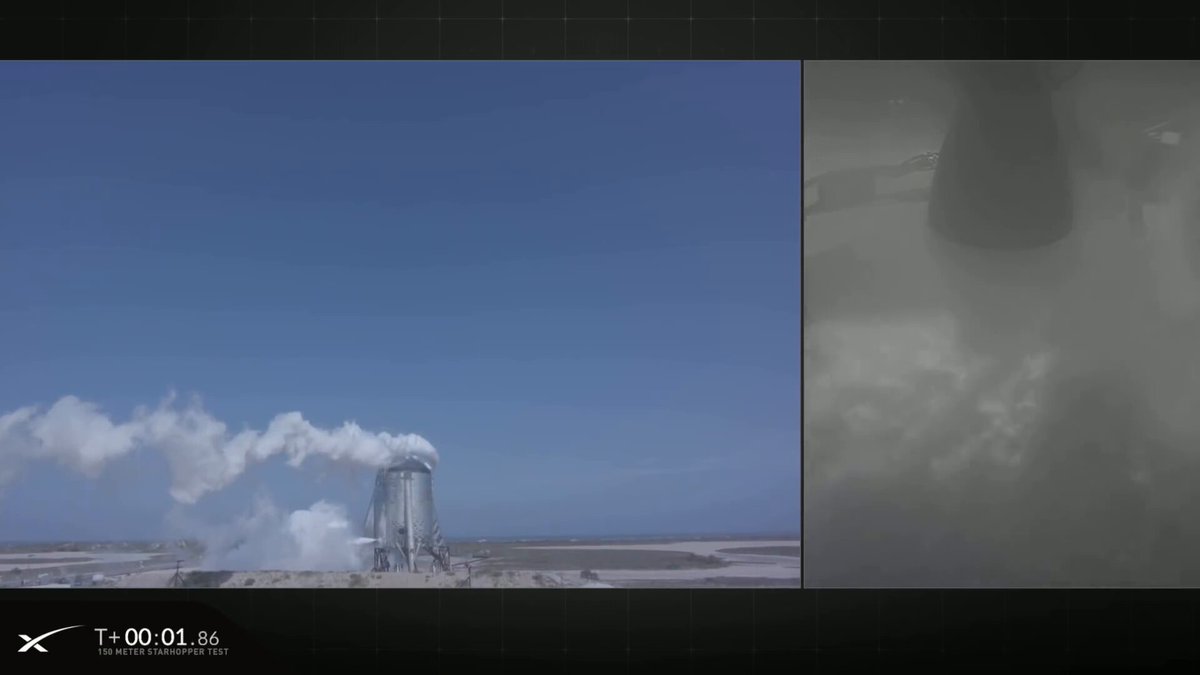
In 2019, I invested in SpaceX.
Starship was a stainless-steel 'starhopper' prototype doing 150 meter jumps in the Texas desert.
Starlink had just launched its first 60 test satellites and had zero paying customers.
SpaceX completed only 13 launches total that year.
Reusability was still extremely early. Crew Dragon had not yet carried a single astronaut.
1,874 days later, SpaceX caught the Super Heavy Booster in the arms of Mechazilla on the first attempt. And landed Starship in the Indian Ocean.
The rate of progress has been phenomenal
1
5
525
Richard Stroupe retweeted

Apr 8
41
76
508
370,707

Elon Musk hasn't sold a Tesla share in years and lives off $1 billion in personal loans
His Tesla stock keeps appreciating
The loans charge him 2-3% interest
The IRS never sees a single dollar of capital gains tax
This is exactly how the wealthiest people in America accumulate wealth without paying taxes and it's available to anyone with $100K in assets
The strategy is called "borrow against appreciated assets" or sometimes "buy borrow die." It's the single most powerful tax-minimization strategy used by ultra-wealthy individuals in America
Mechanics:
When you SELL an asset that has appreciated, you owe capital gains tax. Federal long-term capital gains rates: 0%, 15%, or 20% depending on income. Plus state capital gains in most states (CA: 13.3%; NY: 8.82%). Plus net investment income tax of 3.8% for higher earners (IRC Section 1411)
For someone like Elon Musk selling $1B in Tesla stock, the total tax bill would be approximately:
Federal capital gains at 20%: $200M
Net investment income tax at 3.8%: $38M
Texas state tax: $0 (Texas has no state income tax, this is why Elon moved there)
Total tax bill on selling $1B: $238M
When you BORROW against appreciated assets, you owe ZERO tax. Loan proceeds are not income under IRC Section 61. They never appear on your tax return. They never trigger a tax event
For Elon to access $1B in cash for spending purposes, the math is:
Sell $1B in Tesla stock: $762M in net proceeds after tax
OR
Borrow $1B against $1B in Tesla collateral at 2-3% interest: $1B in net proceeds tax-free
Selling costs him $238M in taxes
Borrowing costs him $20-30M/year in interest (or roughly $200-300M over a decade if held that long)
But the borrowing strategy has additional benefits:
Tesla stock continues to appreciate. Over 10 years, $1B in Tesla stock has historically appreciated to multiples of that. Selling locks in the gain at today's value. Borrowing keeps the upside
The interest paid on the loan is potentially tax-deductible if structured as an investment loan (IRC Section 163(d)). Effective after-tax cost can be reduced to 1-2%
The loan never has to be repaid during his lifetime. He can refinance it indefinitely. When he dies, his heirs inherit the stock at a "stepped-up basis" (IRC Section 1014). The accumulated capital gains die with him. The heirs sell the stock at the stepped-up basis, pay off the loan, and keep the entire upside tax-free
The wealth transfers from Elon to his heirs entirely tax-free if structured correctly. Estate tax is a separate question but is largely avoidable through proper trust structures
The ultra-wealthy version of this strategy:
Borrow against appreciated stock
Use the loan proceeds for consumption (homes, cars, art, business operations)
Never sell the underlying stock
Refinance the loan at maturity to extract more cash if the underlying has appreciated
Pass everything to heirs at death with stepped-up basis
Heirs sell with $0 in accumulated capital gains tax owed
This strategy is sometimes called "buy, borrow, die" by tax planners. It's the foundation of how billionaire wealth perpetuates across generations without significant taxation
Available products for this strategy:
Pledged Asset Line (Schwab): borrow up to 50-70% of portfolio value at SOFR 1-2%
Securities Backed Line of Credit (Morgan Stanley, Goldman): similar terms, $1M minimum
Custom Lending Solutions (private banking): for $10M portfolios, rates can drop to 1-2%
The accessibility tier:
If you have $100K in investment assets at Schwab/Fidelity/Vanguard, you can open a Pledged Asset Line. Typical terms: borrow up to 50% of your portfolio value at SOFR 1.5-3% (current rates roughly 6-8% all-in). No fixed monthly principal payments. Interest only or pay nothing as long as the loan stays below the maintenance threshold
For someone with $200K in stocks/ETFs:
Borrow $100K at 6.5%
Use the $100K for any purpose (real estate down payment, business operations, etc.)
Annual interest cost: $6,500
Tax savings vs selling stocks: roughly $20,000-$30,000 in deferred capital gains
Net benefit: $13,500-$23,500/year in tax savings during the borrowing period
For someone with $1M in stocks/ETFs:
Borrow $500K at 6.5%
Use the $500K for real estate purchases, business equity, etc
Annual interest cost: $32,500
Tax savings vs selling stocks: roughly $100,000-$150,000 in deferred capital gains
Net benefit: $67,500-$117,500/year
Comparison to the alternative:
If you sell $500K in long-term appreciated stock to access cash:
Federal capital gains at 15%: $75,000 owed
State capital gains (varies): $20,000-$40,000 owed
Net cash to you: $385,000-$405,000
If you borrow $500K against the same stock:
Net cash to you: $500,000
Tax owed: $0
Annual interest cost: $32,500
Even paying $32,500/year in interest, you're $90K-$110K ahead in year 1 and the gap grows because your stock keeps appreciating while you hold it
The compounding effect over 20 years:
Person A sells $100K of Tesla stock at 15% capital gains, takes $85K. Spends it
Person B borrows $100K against $100K of Tesla stock, takes $100K, spends it. Stock keeps growing at historical rate (let's say 20%/yr conservatively)
20 years later:
Person A: stock is gone. Whatever they bought with $85K is whatever it is
Person B: still owns the original $100K in Tesla, now worth $3.8M. Refinanced the loan multiple times. Currently owes maybe $200K against $3.8M in collateral. Net wealth on this position: $3.6M
Same starting position. Different decision. $3.5M difference in 20 years
Important caveats:
The strategy works only when underlying asset is appreciating
Margin call risk if asset value drops below maintenance threshold
Interest costs accumulate over time and eventually reduce the net benefit if rates rise enough
Some borrowing limits apply (typically max 50-70% of portfolio value)
The strategy is most powerful for:
Concentrated stock holdings in publicly traded companies (especially employee stock from tech companies, founder stock, ESOP grants)
Large diversified portfolios held in taxable brokerage accounts
Real estate equity (similar strategy via cash-out refinances)
Business equity (some forms of borrowing available against ownership stakes)
The strategy is least useful for:
Small portfolios under $50K (interest costs eat any benefit)
Retirement accounts (can't borrow against IRAs/401(k)s; some 401(k)s allow loans but limited to $50K)
Assets without an established lending market (collectibles, private real estate that's hard to finance)
The reason this isn't standard financial advice:
Most financial advisors are compensated based on assets under management. They make more money when you keep assets invested. They don't necessarily make money when you optimize for cash extraction. The strategy is genuinely good for sophisticated clients but doesn't fit the standard advisor compensation model
Banks DO know about this strategy. They actively market it to wealthy clients. The Pledged Asset Line and securities-backed line of credit products are billion-dollar businesses at every major brokerage. They're just not marketed to ordinary retail clients because the minimums and complexity make them inappropriate for mass market
The threshold for accessing this strategy:
$100K in liquid investment assets = entry-level access via Schwab/Fidelity
$1M = full access to most products and competitive rates
$10M = access to private banking rates of 1-2%
$100M = Elon-level rates of essentially 0% real cost after tax deduction and stock appreciation
At each tier, the math becomes more favorable. The richest Americans access this strategy at rates that mean borrowing $1B is essentially free relative to their portfolio appreciation
Most middle-class Americans never use this strategy because:
They don't know it exists
They don't have $100K in taxable investment accounts
They follow standard advice that says "live within your means and don't borrow"
The wealthiest Americans use it constantly because:
They have the assets
They understand the math
They follow advice from advisors who are sophisticated about tax optimization
The gap between the two groups isn't talent. It's understanding that the tax code is written to reward holding assets indefinitely and penalize selling them. Selling = taxable event. Holding borrowing = no taxable event. The system rewards never realizing gains
Elon never sells Tesla. He never pays capital gains tax. The IRS doesn't collect a dollar from his accumulated wealth. The strategy is legal. It's mathematically optimal. And it's been written into the tax code since before any of us were born
You don't need to be Elon to use this strategy. You need $100K and a Schwab account
(we get business owners up to 250k in 0% interest business funding, link in bio)
156
408
2,515
392,122
May 24
Agreed
May 24

The benefits of a merger between Tesla and SpaceX are many in fact, there are even more than the 21 points listed below.
There are not only benefits for the two companies but also benefits for Elon himself, and that is precisely why I am convinced that this merger will happen.
These benefits and synergies will lead to an increase in shareholder value and all who oppose a merger today will later wonder why.
68
Richard Stroupe retweeted

May 24
The benefits of a merger between Tesla and SpaceX are many in fact, there are even more than the 21 points listed below.
There are not only benefits for the two companies but also benefits for Elon himself, and that is precisely why I am convinced that this merger will happen.
These benefits and synergies will lead to an increase in shareholder value and all who oppose a merger today will later wonder why.

4
25
163
9,944

Richard Stroupe retweeted

May 22
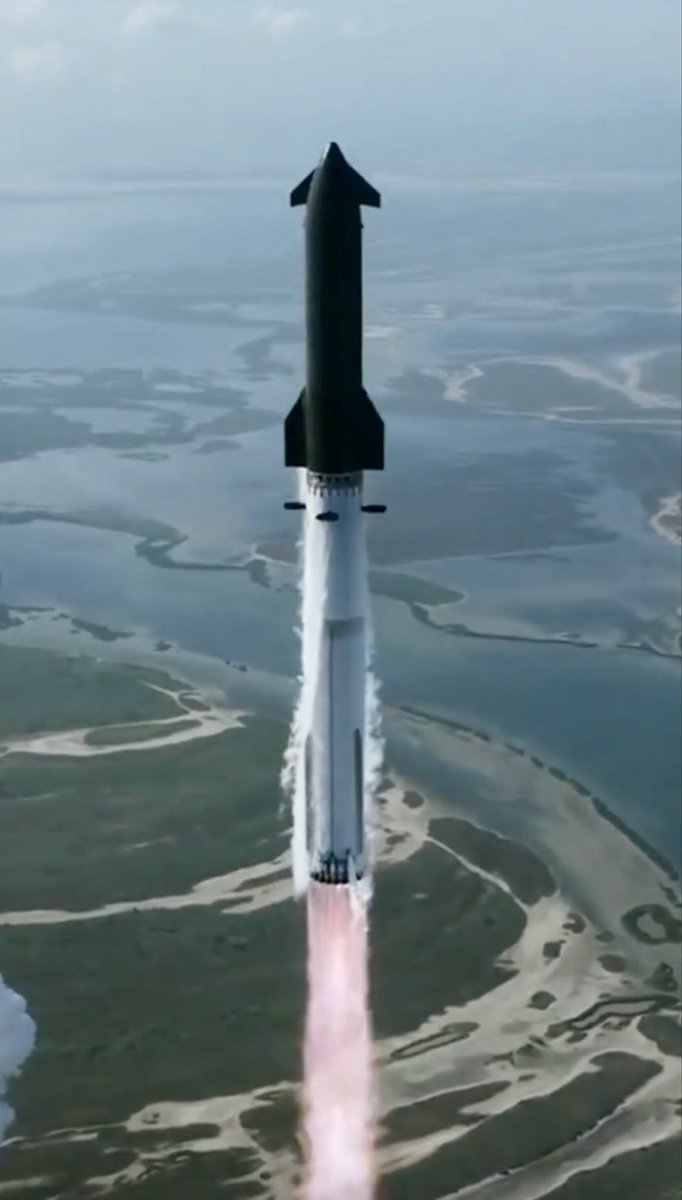
SpaceX’s first Starship V3 rocket has just successfully lifted off!
This is the first test flight of Starship version 3, which features thousands of upgrades from V2. With this launch, SpaceX is debuting a new launch pad, booster, ship, engines and much more.
111
515
5,046
240,170
Richard Stroupe retweeted

Apr 30
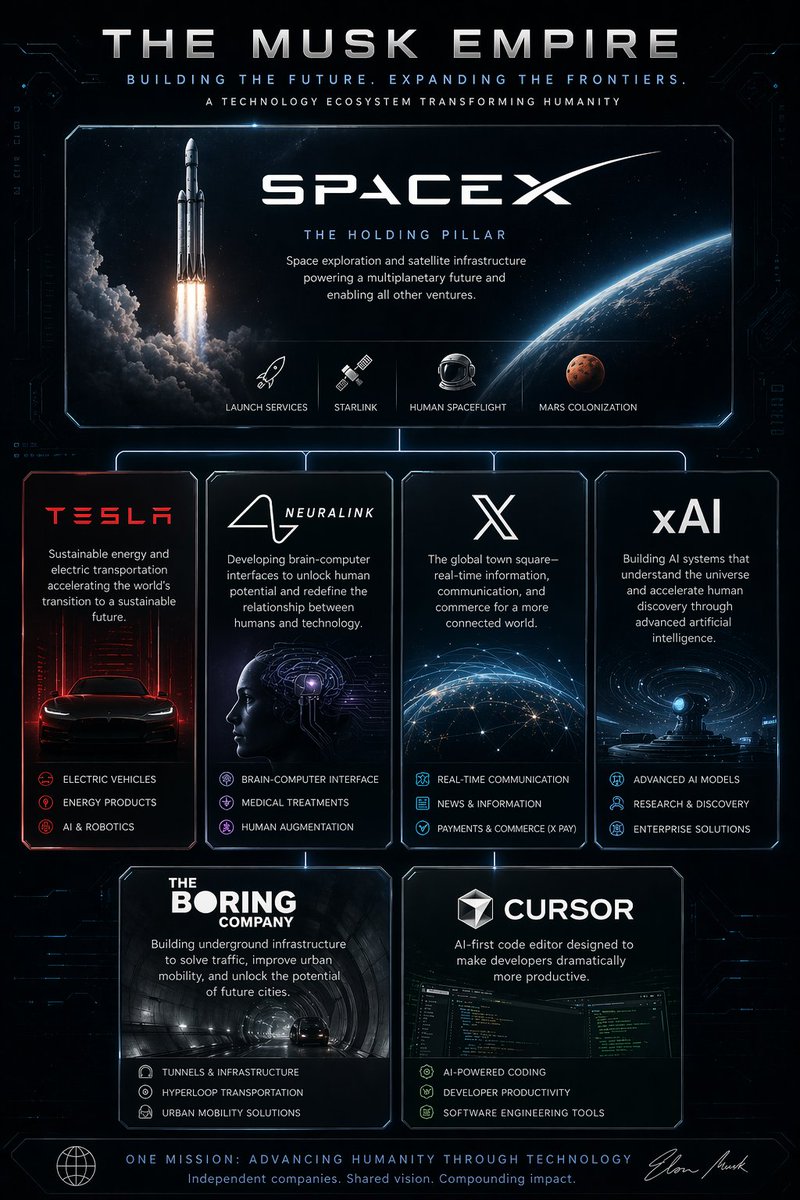
Championed by Warren Buffet. Advanced by Alphabet. Accelerated by @elonmusk.
@SpaceX is the new holding company of the modern tech era. The company is loudly building out Berkshire Hathaway 2.0. The difference? This conglomerate is composed of frontier, deep, and defense tech. AI, autonomy, aerospace, life sciences, energy, manufacturing, industrials, etc. If executed correctly, SpaceX should be America's most valuable company by 2050. But, will it work?
Unlike Berkshire Hathaway and Alphabet, SpaceX isn't profitable. Similarly, although the current and future SpaceX portfolio generates impressive cash flow, the company incurs significant losses. AI, space, tunneling, etc. are excessively expensive industries. And while more entrants, suppliers, and technological advances should bend the cost curve, much of this remains speculative and unknown.
I'm skeptical given the sheer magnitude of required capital. I'm also unsure @Tesla shareholders will go along with this plan. But I also think it's foolish to bet against Musk.
Three things are true in life: 1) death, 2) taxes, and 3) never be on the opposing end of an Elon Musk bet.
2
6
21
1,556
Richard Stroupe retweeted

Apr 25
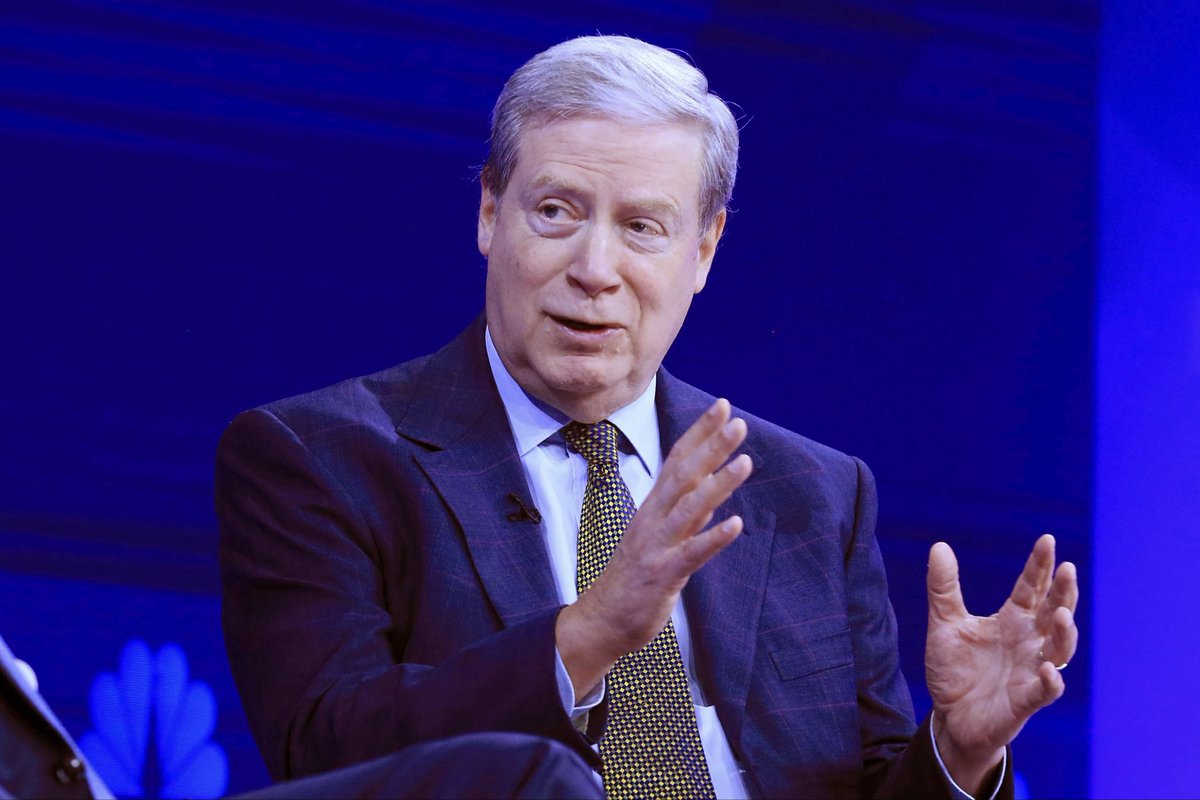
"You don’t get rich by diversifying into 50 mediocre assets. You get rich by finding 2 or 3 asymmetric home runs."
— Stanley Druckenmiller
174
1,077
8,564
984,753
Richard Stroupe retweeted

Apr 13
⚡️The American university system is the largest wealth transfer from the young to the old in human history and nobody frames it that way because the people who benefit from it control the framing.
Eighteen year olds who can’t legally buy a beer are signing six figure debt obligations to institutions that face zero accountability for outcomes. The loan is non-dischargeable in bankruptcy. The university gets paid regardless of whether the student gets a job. The incentive structure is pure extraction. Get them in. Get the money. What happens after is their problem.
43% underemployment isn’t a failure of the students. These kids did exactly what they were told. Study hard. Get good grades. Go to college. Get the degree. They followed the script perfectly and the script was a lie. Not a lie that anyone intended maliciously at first. But a lie that became profitable enough that nobody corrected it even after the data made it obvious.
The people who designed this system, the administrators pulling $500k salaries, the tenured professors teaching subjects with zero market application, the loan servicers collecting interest on degrees in fields that haven’t produced a living wage in twenty years. None of them are underemployed. They’re doing fine. The 43% is subsidizing their comfort.
Now add AI. The entry level professional jobs that justified the debt are the first ones being compressed. Not blue collar work. Not trades. The exact white collar knowledge work positions that the degree was supposed to unlock. Legal research. Financial analysis. Consulting grunt work. Content production. The 43% who are already underemployed are about to be joined by a significant chunk of the 57% who thought they made it.
The people who will come through this are the ones who figured out early that the credential was a trap. The ones who built skills instead of collecting letters after their name. The ones who found asymmetric paths. The ones who created value directly instead of waiting for an institution to certify them as valuable.
The university system had a real function once. It produced genuine education and genuine opportunity. That function has been hollowed out by decades of misaligned incentives until what remains is mostly a financing operation that happens to have classrooms attached.
And 43% of its recent customers just confirmed with their own lives that the product doesn’t work.
Apr 13

43% of young US grads are underemployed, per Bloomberg.
131
518
2,346
656,754
Richard Stroupe retweeted

Mar 7
🚨 Stop scrolling. This is important.
In the last 24 hours:
> ChatGPT pretended to be a lawyer and destroyed a woman's legal case.
> Anthropic hired a therapist for their AI's anxiety
> OpenAI's head of Robotics quit because they're building autonomous kill systems with no human oversight
> Replit's CEO said being brainrotted is now a job qualification
> Scientists brought dead brain cells back to life in a petri dish and taught them to play DOOM
This isnt even the future, This is TODAY. One single day.
We're giving therapy to code, weapons to chatbots, law degrees to hallucinations, job offers to doomscrollers, and video games to the dead.
2026 is not real.
359
4,104
21,023
715,541