
SpaceTime with Stuart Gary astronomy & space sciences radio show (formerly ABC StarStuff) by award winning journalist, broadcaster and science writer Astronomy
Joined March 2010
- Tweets 313,117
- Following 887
- Followers 11,514
- Likes 135,773
1,731 Photos and videos










Pinned Tweet

17 Nov 2023
SpaceTime Series 26 Episode 137 - available wherever you get your podcasts or our website... spacetimewithstuartgary.com - enjoy and learn! #astronomy #space
3
8
27
4,857
SpaceTime retweeted

HiPOD: Gullies and Boulder Tracks
This image features shallow gully channels with debris aprons emanating from a buried layer on the interior of a crater wall. Also visible are many boulders of varying sizes along the wall.
uahirise.org/ESP_075413_1505
#Mars #science #NASA

5
12
732
SpaceTime retweeted

BREAKING:
A large swarm of Ukrainian long-range drones struck the strategic oil depot of Russia’s Federal Agency for State Reserves in the Yaroslavl Region this morning
It serves as a key logistics hub supplying Russian military units & has over 60 storage tanks. Massive fires
69
461
2,537
71,569
SpaceTime retweeted

16h
A faint radio “laser” from more than 8 billion light-years away surfaced in just five hours of telescope time, hinting at a far more crowded early universe. @ConversationEDU phys.org/news/2026-06-south-…
1
15
40
3,376
SpaceTime retweeted

🚨 NASA’S X-59 JUST BROKE THE SOUND BARRIER AND IT DID IT QUIETLY.
For decades, supersonic flight over land has been banned in most countries because of the loud sonic boom it creates. NASA’s experimental X-59 is trying to change that.
The aircraft, developed with Lockheed Martin, is shaped in a very specific way to reshape the shockwaves that form during supersonic flight. Instead of a loud, window-rattling boom, it’s designed to produce a much softer “thump” that reaches the ground.
In its first supersonic flight, the X-59 reached Mach 1.1 while testing this quiet sonic boom technology.
Why this matters:
• If successful, it could reopen the possibility of supersonic passenger flights over populated areas
• Current supersonic jets (like the retired Concorde) were too loud for overland routes
• The X-59 doesn’t carry passengers — it’s a flying testbed for the technology
• Quieter supersonic flight could dramatically cut long-distance travel times in the future
The deeper implication:
This isn’t just about going faster. It’s about removing one of the biggest barriers that has kept supersonic travel from becoming practical for regular people. For over 50 years, the sonic boom has been the main reason we’ve been stuck flying at subsonic speeds on most routes.
If NASA and its partners can prove that a shaped aircraft can turn a loud boom into a gentle thump, it could fundamentally change how we think about long-distance air travel in the coming decades.
We may be watching the return of supersonic flight just much quieter this time.
Do you think quiet supersonic passenger planes will become a reality in your lifetime?
Follow for more frontier aerospace and aviation technology.
28
148
662
58,411

SpaceTime retweeted

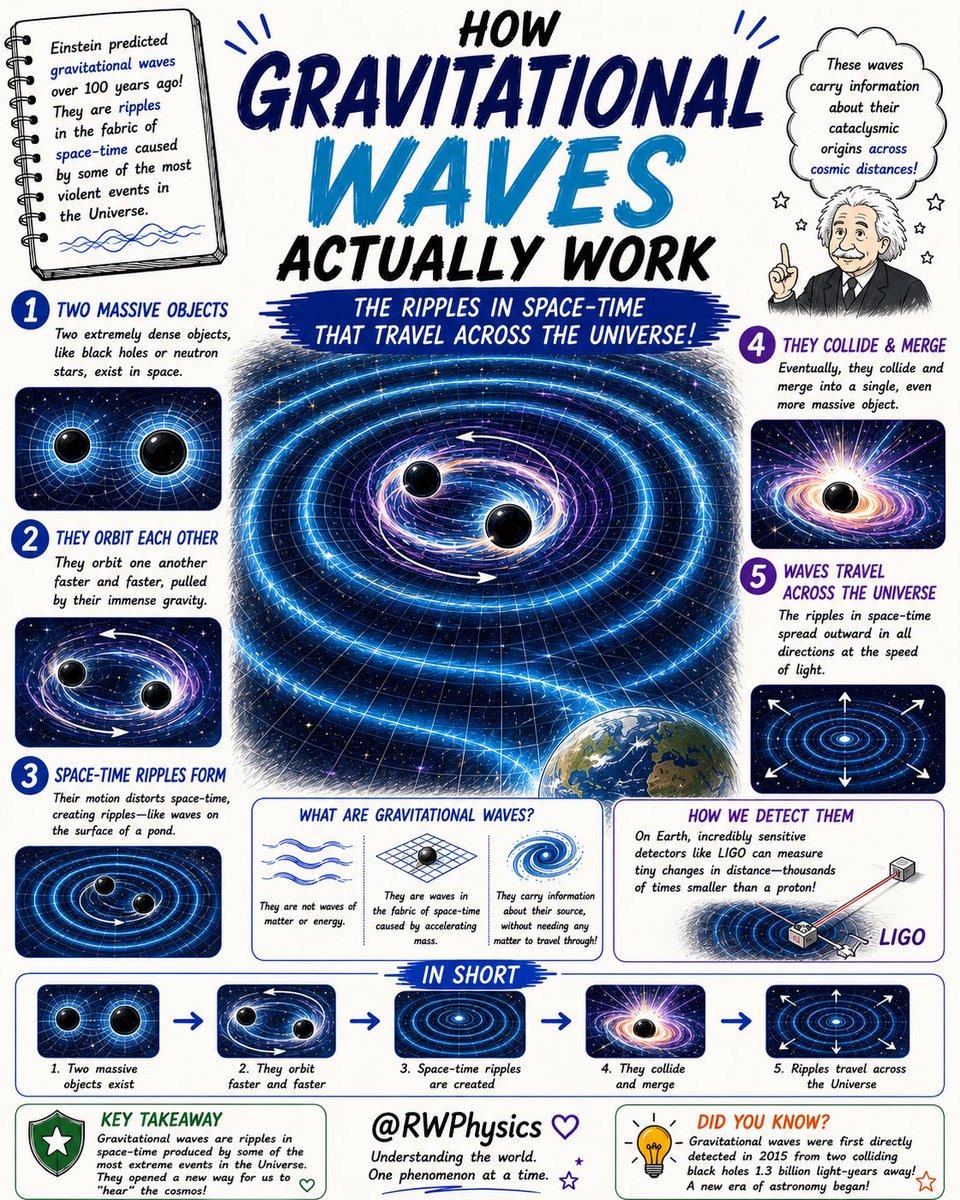
Behold🚨: This is the largest, sharpest 3D map of the universe Yet😱


51
146
1,372
34,826
SpaceTime retweeted

Join me in once again calling for the resignation of @TheLancet editor Richard Horton.
Publishing a petition calling for the boycott of the Israeli Medical Association is an absolute disgrace. Medicine should bring physicians together in service of patients, not weaponize professional organizations for political campaigns.
Just as it failed the public on the #COVID19 origins debate, The Lancet is again positioning itself as a political actor rather than a medical journal.

236
773
2,670
53,813
I will no longer cover any research reported in the Lancet.

Join me in once again calling for the resignation of @TheLancet editor Richard Horton.
Publishing a petition calling for the boycott of the Israeli Medical Association is an absolute disgrace. Medicine should bring physicians together in service of patients, not weaponize professional organizations for political campaigns.
Just as it failed the public on the #COVID19 origins debate, The Lancet is again positioning itself as a political actor rather than a medical journal.
1
15


SpaceTime retweeted

Zealandia: Earth's hidden continent

10
24
549
44,215
SpaceTime retweeted
🚨 SCIENTISTS MAY HAVE FINALLY SOLVED ONE OF THE BIGGEST UNSOLVED PROBLEMS IN BLACK HOLE PHYSICS.
For years, astrophysicists have struggled with the “final parsec problem”: even after two supermassive black holes get relatively close, they struggle to shed enough angular momentum to merge within the age of the universe.
New 3D simulations reveal that magnetic fields in the gas disk surrounding a binary system can solve this. The fields trigger powerful outflows and jets that efficiently carry away angular momentum, allowing the two objects to spiral much closer together.
The same mechanism also explains how some binary stars end up in extremely tight orbits. In the simulations, binaries without magnetic fields actually moved farther apart. With magnetic fields present, they rapidly lost angular momentum and migrated inward.
Why this matters:
• It provides a physically motivated solution to one of the biggest open problems in black hole astrophysics
• Magnetic fields appear to be far more effective at removing angular momentum than previously modeled effects
• The mechanism works for both star formation and black hole mergers
• It shows that the environment around binaries (not just the objects themselves) plays a decisive role in their evolution
The deeper implication:
We often think of black holes and stars as isolated objects governed purely by gravity.
But these simulations show that the magnetic fields threading the gas around them can fundamentally change their fate. By removing angular momentum through jets and outflows, magnetic fields act like a cosmic brake, allowing binaries to reach the tight configurations we observe.
This doesn’t just help explain star formation it may finally tell us how the universe’s most massive black holes manage to merge and create the gravitational wave signals we’re now detecting.
Sometimes the key to cosmic mergers isn’t gravity alone. It’s magnetism.
How important do you think magnetic fields are in shaping the final stages of black hole mergers and binary star evolution?
Follow for more frontier astrophysics and the hidden forces that govern the universe.
10
37
134
9,141
SpaceTime retweeted

Muslims were welcomed into Lebanon when it had a Christian majority. The moment they had enough power, they turned against the Christians.
Listen to this fearless survivor of the Lebanese civil war expose Islam’s goal to take over the world.
41
1,276
2,902
24,748
SpaceTime retweeted

Sky Today: June 14
Asteroid Irene is nearly at opposition and high in the south late tonight and overnight, near the center of the Milky Way.
Image credit: Stellarium
Read more:
vist.ly/57prj
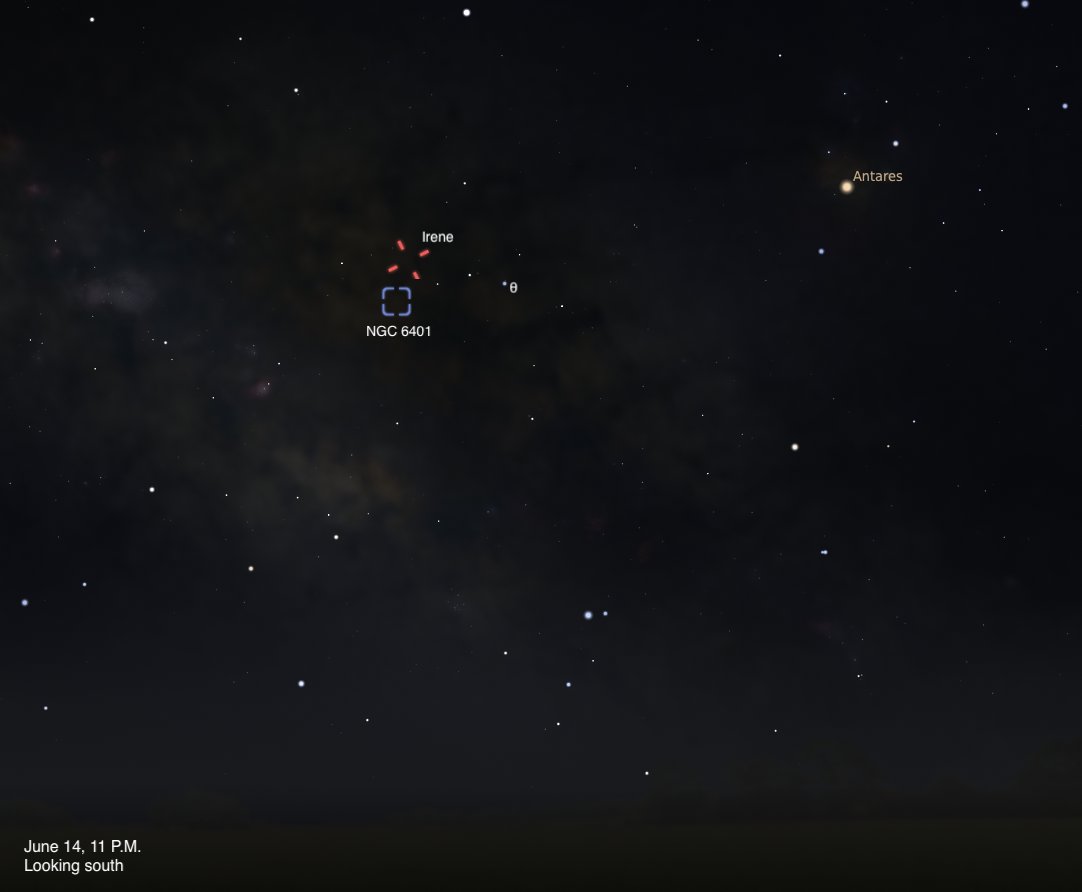
ALT A detailed view of the night sky featuring the star Antares and NGC 6401. Constellations are visible with text annotations marking celestial objects. The scene captures the serene beauty of the cosmos.
7
35
1,439
SpaceTime retweeted

Blue Origin Shifts Focus to Human Moon Landings 🚀 Blue Origin has announced a temporary pause in New Shepard operations for at least the next two years as the company redirects resources toward advancing its human lunar exploration efforts. 🥶
3
12
171
25,067
1