
Smalltalkのファン。パーソナルコンピューティングの歴史や未来に興味を持つ。Smalltalkはアラン・ケイらが理想のPC向け暫定的OSとして70年代に試作し以降、GUIやIDE、OOPやデザパタ、開発手法等を創出。模倣されることでそれらは世に広まった。古典である一方で、pharo.org 等で今なお活発に進化中
Joined August 2007
- Tweets 23,799
- Following 2,088
- Followers 2,541
- Likes 49,384
2,287 Photos and videos

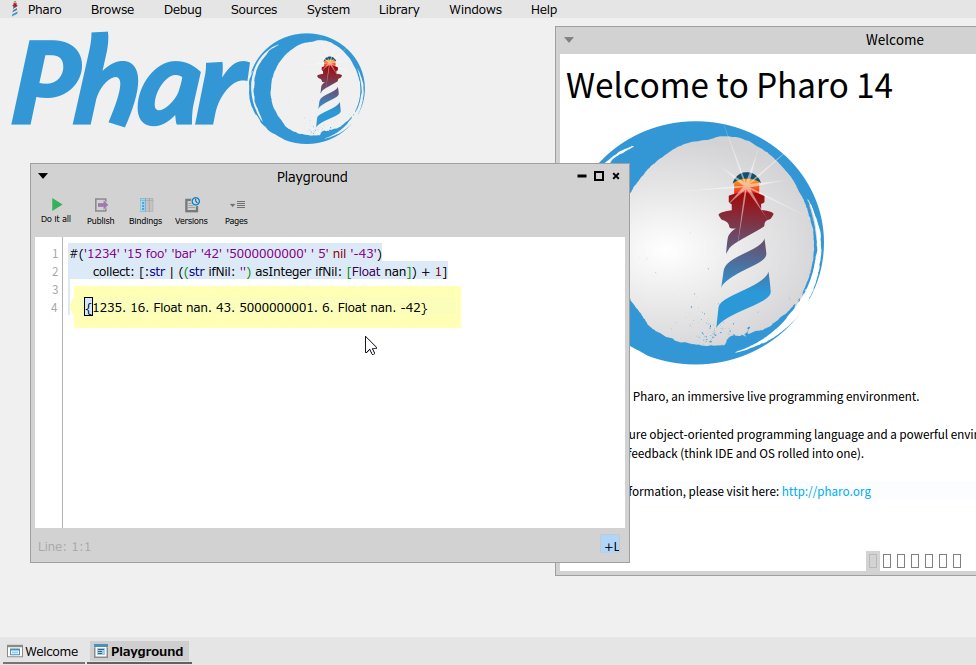
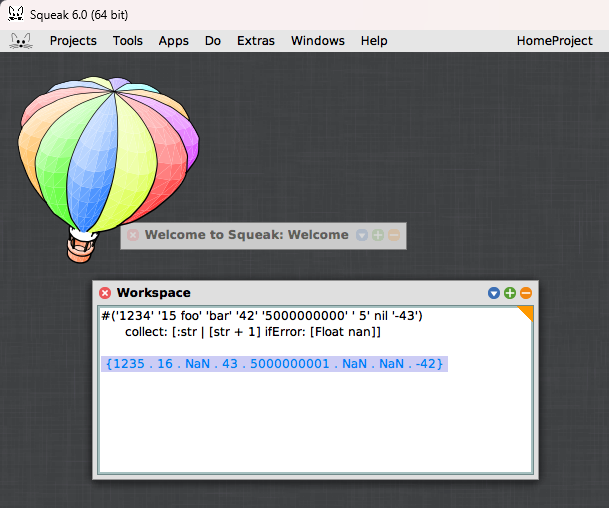
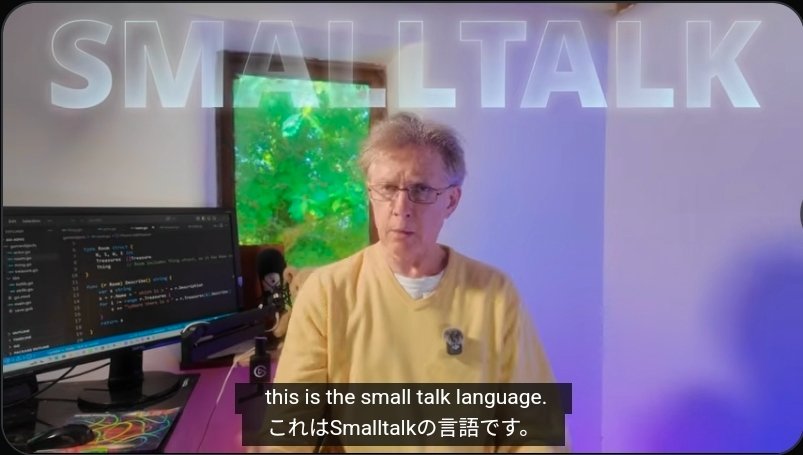
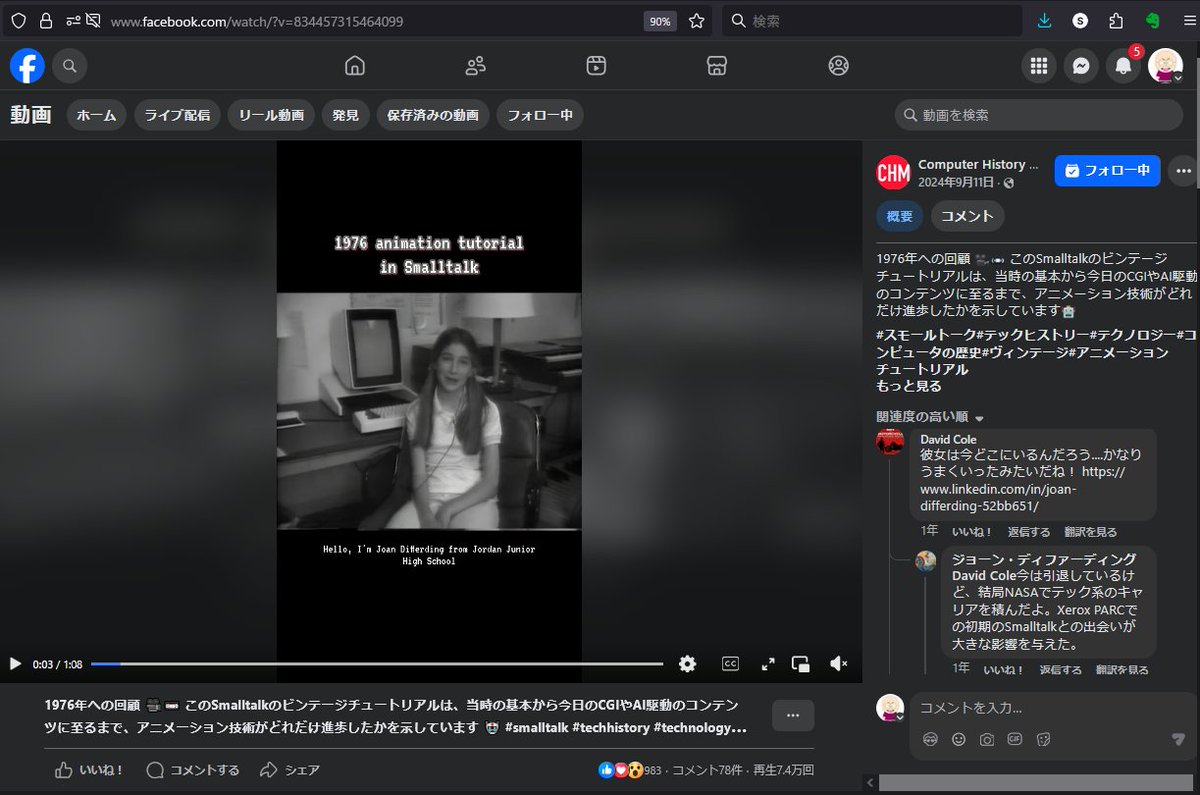
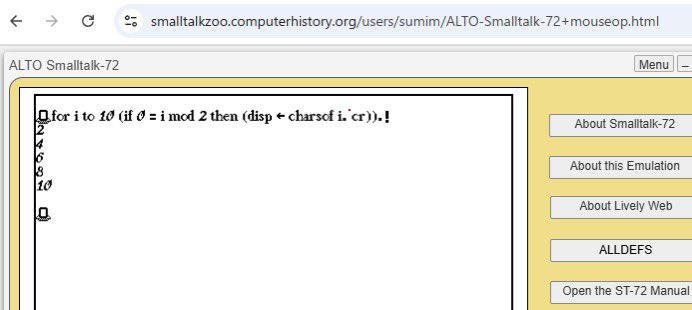


今どきのSmalltalkなら pharo.org がお薦めです。
レトロなのがお好みでしたらWebブラウザで気軽に動かせるMini Squeak 2.2 squeak.js.org/demo/simple.ht… があります。
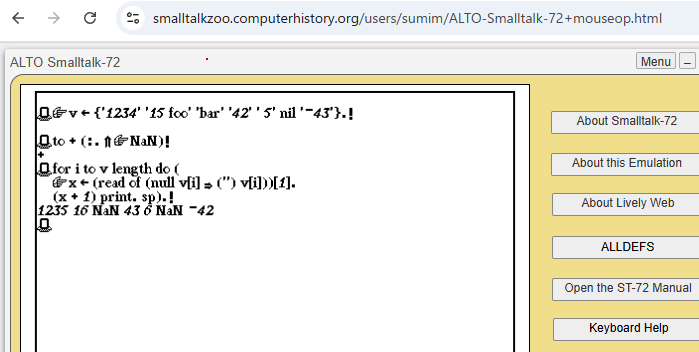
メッセージングのOOPは、着想を比較的素直に実装したSmalltalk-72 で遊ぶと理解が深まります!qiita.com/advent-calendar/20…
22
95
アラン・ケイが夢見た未来 ~iPadとLLMに足りないもの~ youtube.com/watch?v=U6df7TmG…
「あらゆる年齢の『子供たち』のためのパーソナルコンピュータ」に加えて、ケイの考え方を反映した活動や発言に関する新旧多岐に渡る資料をChatGPTにぶっこんで整理させたまとめの、NotebookLMによる音声解説です
2
5
478
後の訴訟に備えて、法務・知財チームがクレンジングした可能性はありますね^^;
“しかしStarの登場を見た後、LisaチームはFilerを再設計し、デスクトップ・メタファーとアイコンを重視するようにした。そしてLisaのビットマップ・グラフィックスを活用して、彼らが求めていた直接性と視覚性を実現した”

WWDC26: フィロソフィーとしてのHIG
clickandmagic.com/notes/wwdc…
1
173
sumim retweeted

Jun 14
からの発想だったと思うんですが。1962年のLISP 1.5 manualに既に出てきます。
このへんの事情はn月間ラムダノートvol1(2)をお持ちなら『LISP1.5の風景』で説明しています。英語版は github.com/shirok/Gauche-lis…
2
3
10
827
sumim retweeted

Link: Lisp’s Influence on Ruby. Once I wrote users.select { |u|… | by Ian Johnson | Jun, 2026 | Medium : blog.tacoda.dev/lisps-influe…
10
48
6,081

¿Cómo cazar bugs en la VM de Pharo? Guillermo Polito explica técnicas de Fuzzing y bisección para resolver fallos de memoria complejos.
youtu.be/q9AjBSiSrgA
#Pharo #Smalltalk
2
3
325
sumim retweeted

Jun 13
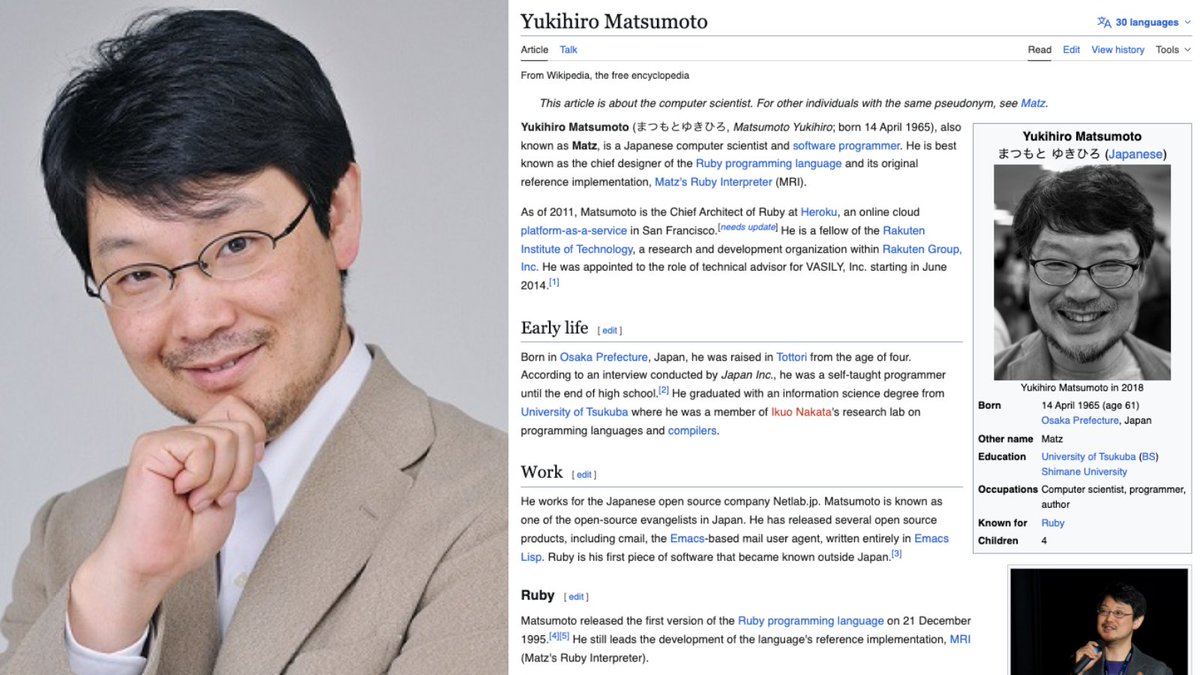
A Japanese programmer looked at every existing programming language in 1993, decided none of them made him happy, and spent two years building his own the language he built became the foundation GitHub, Shopify, Airbnb, and Coinbase were all built on.
His name is Yukihiro Matsumoto.
Everyone in the programming world calls him Matz. He was born in 1965, studied information science at the University of Tsukuba, and graduated in 1990 with a head full of ideas about what programming languages could be and a quiet frustration with what they actually were.
He knew Perl. He did not like it. He said it had the smell of a toy language. He knew Python. He did not like it either, because he felt its object-oriented features were add-ons bolted onto a language that was not designed around them from the start. He wanted something that was genuinely, completely object-oriented, easy to use, and built for the person writing the code rather than the machine running it.
He looked for that language. He could not find it.
So on February 24, 1993, he opened a chat window with his colleague Keiju Ishitsuka and typed: "Let us decide the codename now."
They wanted to name it after a gemstone, inspired by Perl. Ishitsuka suggested Coral. Matsumoto suggested Ruby. Ruby was shorter by one letter. Ruby won.
He spent the next two years building it alone, working through the architecture piece by piece. The object system. The string class. The IO streams. He later said he talked through specific features while speaking to his baby daughter, using her as a sounding board the way programmers use rubber ducks. In August 1993, he finally wrote the line of code that produced "Hello, world." on the screen.
The first public version, Ruby 0.95, was released to Japanese domestic newsgroups on December 21, 1995. No press release. No launch event. Just a quiet post to a mailing list.
The design principle underneath everything was the one nobody else had ever made primary. Matsumoto called it programmer happiness. He believed programming languages should be built for the joy and productivity of the person writing the code, not optimized purely for machine efficiency. Every decision in Ruby's design ran through that filter. If it made the programmer's life harder, it was wrong.
That philosophy attracted a small but devoted following in Japan through the late 1990s. Then in 2003, a Danish programmer named David Heinemeier Hansson discovered Ruby and used it to build an internal project management tool for his company. He called the tool Basecamp. He extracted the framework underneath it and released it publicly in 2004.
He called it Ruby on Rails.
Within a year of that release, the framework had changed how web applications were built. Rails introduced the principle of convention over configuration, meaning developers could make decisions about structure quickly because the framework had already made sensible defaults. What used to take weeks of setup took days. What used to take days took hours.
Shopify started on Rails in 2005. GitHub built on Rails a couple of years later. Airbnb, Twitch, Coinbase, SoundCloud, and Zendesk all followed. The first generation of consumer internet companies that defined how people think about software products were largely built by small teams moving fast on a framework that traced directly back to one Japanese programmer who was dissatisfied with his tools in 1993.
Shopify now processes over $200 billion in annual commerce volume. It still runs on Rails. GitHub became the largest code hosting platform on earth and was acquired by Microsoft for $7.5 billion in 2018. It started on Rails.
Matsumoto has said many times that he created Ruby for selfish reasons. He was so underwhelmed by every available option that he built something that would make himself happy. The programmer happiness he was chasing was his own.
The community that grew around Ruby adopted a motto that says everything about who he is. Matz is nice and so we are nice. They abbreviated it MINASWAN. It spread because it was true. He answered emails from strangers. He engaged with the community with patience. He treated the language as a gift, not a product.
He is still the chief designer of Ruby today. The language is 31 years old. It is still being improved.
The last stable release was Ruby 4.0.4, shipped on May 11, 2026.
One programmer, unhappy with his tools, built something better in the evenings in 1993. The companies you use to buy things, to store code, to book travel, and to watch streams were built on top of what he made.
He just wanted to be happy while he worked.
Did you know Ruby was behind the tools you use every day?
40
716
3,699
360,499
sumim retweeted

Jun 9
どうがんばってもSNSを作れなかったGoogle、どうがんばってもスマホを作れなかったMicrosoft、どうがんばってもAIを作れなかったApple。いとおかし
86
1,642
13,379
1,345,533
sumim retweeted
Jun 10
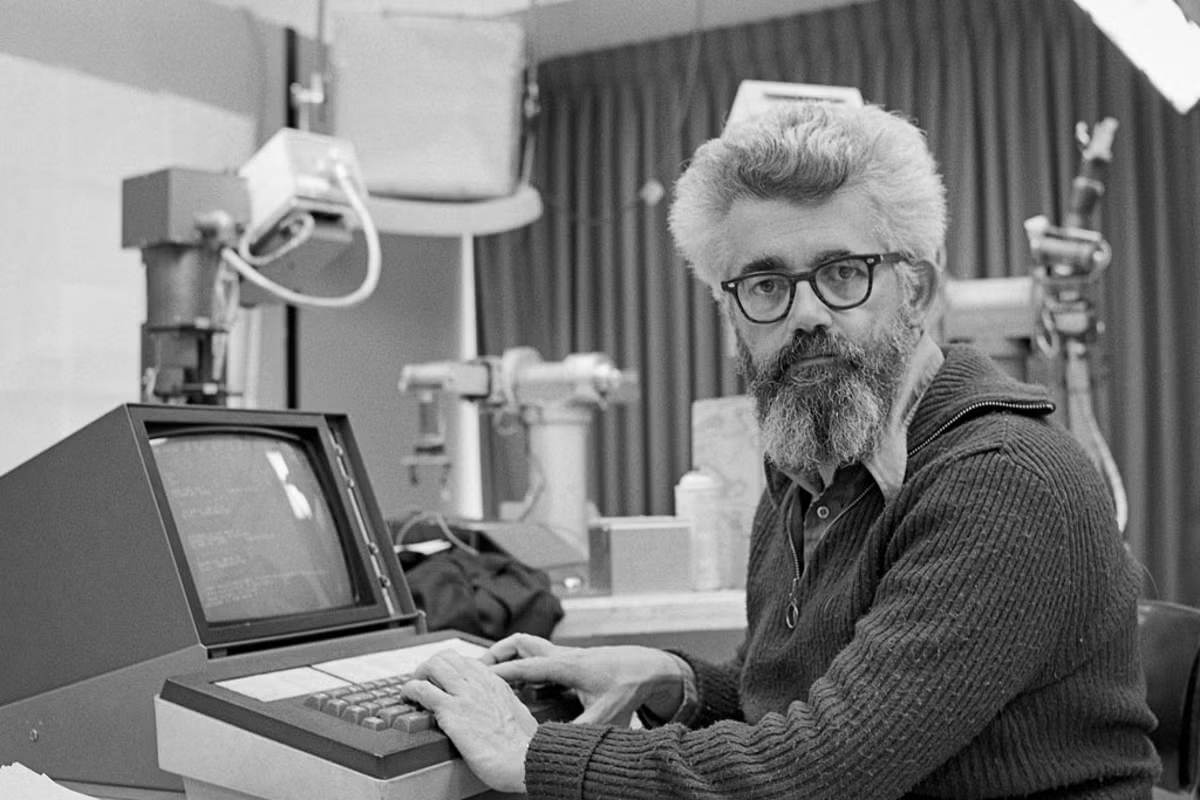
A mathematician coined the term "artificial intelligence" in 1955, built the language that dominated AI research for 30 years, and predicted cloud computing 40 years before AWS existed and almost nobody outside the field knows his name.
His name was John McCarthy.
He was born in Boston in 1927, earned his PhD in mathematics from Princeton in 1951, and spent the next 55 years working on a single question that most of his peers considered either impossible or insane.
Can a machine think?
In the summer of 1955, McCarthy sat down and wrote a two-page proposal for a workshop at Dartmouth College. The proposal opened with one sentence that changed everything: "every aspect of learning or any other feature of intelligence can in principle be so precisely described that a machine can be made to simulate it."
He needed a name for the field he was proposing. He chose "artificial intelligence." Before that document, no such field existed. After it, every researcher working on thinking machines had a name for what they were doing, a home discipline to publish in, and a founding document to point to. McCarthy did not just contribute to AI. He created the container it lives in.
The Dartmouth Conference ran for eight weeks in the summer of 1956. It was the moment AI became a real scientific discipline.
McCarthy kept building.
In 1958 he invented LISP, the second oldest high-level programming language still in use today, older only than FORTRAN by one year. LISP was designed for a specific purpose: symbolic reasoning. It could manipulate ideas, not just numbers.
It became the language every serious AI researcher wrote in for the next three decades. From 1958 through the late 1980s, if you were working on AI, you were almost certainly working in LISP.
Inside LISP he invented garbage collection in 1959, the technique that automatically frees up memory a program no longer needs. Java uses it. Python uses it. JavaScript uses it. Every modern language that manages memory automatically is using the idea McCarthy worked out while building LISP.
In 1961 he stood at a centennial celebration at MIT and said something that everyone in the room thought was science fiction. He proposed that computing would one day be delivered as a public utility, the same way electricity or water is delivered to a home. You would not own the computer. You would pay for access to it over a network.
AWS launched in 2006. Azure launched in 2010. Google Cloud launched in 2011. What McCarthy described in 1961 is now a trillion-dollar industry. He was 45 years early.
In 1962 he founded the Stanford Artificial Intelligence Laboratory, SAIL, which became one of the most important research centers in the history of the field. The researchers who trained there shaped the next 40 years of AI.
He won the Turing Award in 1971. The National Medal of Science in 1990. The Benjamin Franklin Medal in 2003.
He retired from Stanford in 2000. He died on October 24, 2011, at his home in Stanford, California. He was 84.
The researchers at OpenAI, Google DeepMind, and Anthropic building the models you use today are working in a field McCarthy named in 1955, using memory management he invented in 1959, inside an industry structure he predicted in 1961, toward a goal he spent his entire career insisting was not only possible but inevitable.
He was right about all of it.
He just did not live to see the part where the rest of the world finally believed him.
23
198
585
28,850
sumim retweeted

Jun 10
ゆるコンピュータ科学ラジオではラムダノートの本を取り上げていただいていて、『ピアリング戦記』なんですが、さすがだと思いました。 youtube.com/watch?v=uFdqLBku…
1
10
27
7,168
sumim retweeted

Jun 10
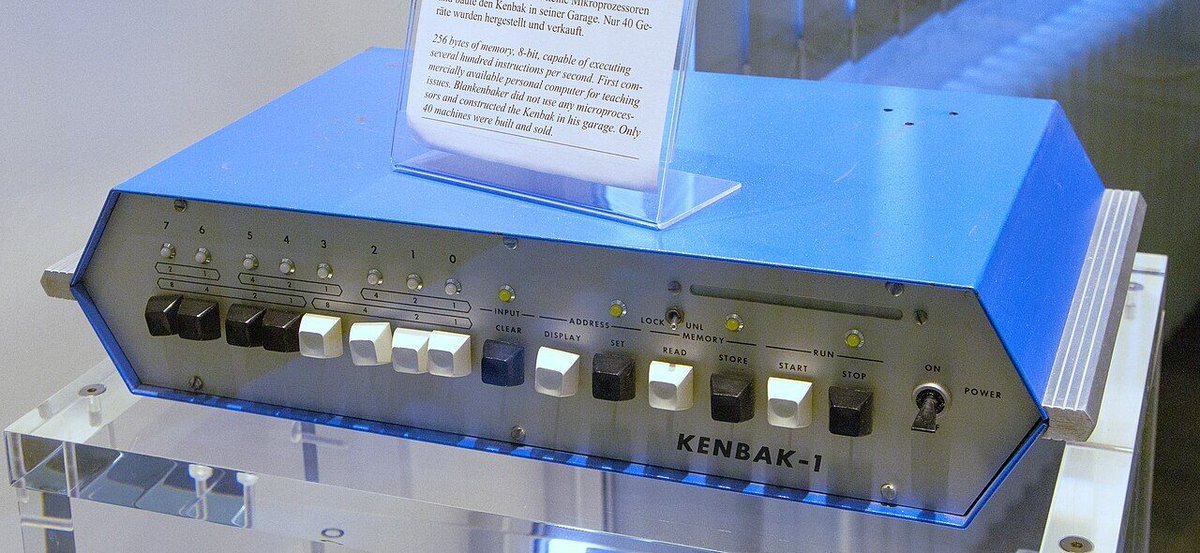
This little guy is the Kenbak-1 personal computer. Released in 1971 by John Blankenbaker of Kenbak Corporation, it is widely considered by historians and institutions like the Computer History Museum to be the first personal computer. Built before microprocessors were available, it used 7400-series TTL logic chips instead of a one-chip CPU.
Fun Fact: The name "Kenbak" is simply a clever substring of its inventor's last name, John Blankenbaker! He felt his full surname was a bit too long to be catchy and marketable, so he got a little creative.
kenbak.com/kenbak-1-home
history-computer.com/inventi…
en.wikipedia.org/wiki/Kenbak…
#RetroTech #RetroComputing #ComputerHistory
9
26
167
6,751
アラン・ケイの視点:旧来の改良物、新しいものの前触れ、そして本当に新しいもの youtube.com/watch?v=v5UMFbtb…
1
2
293
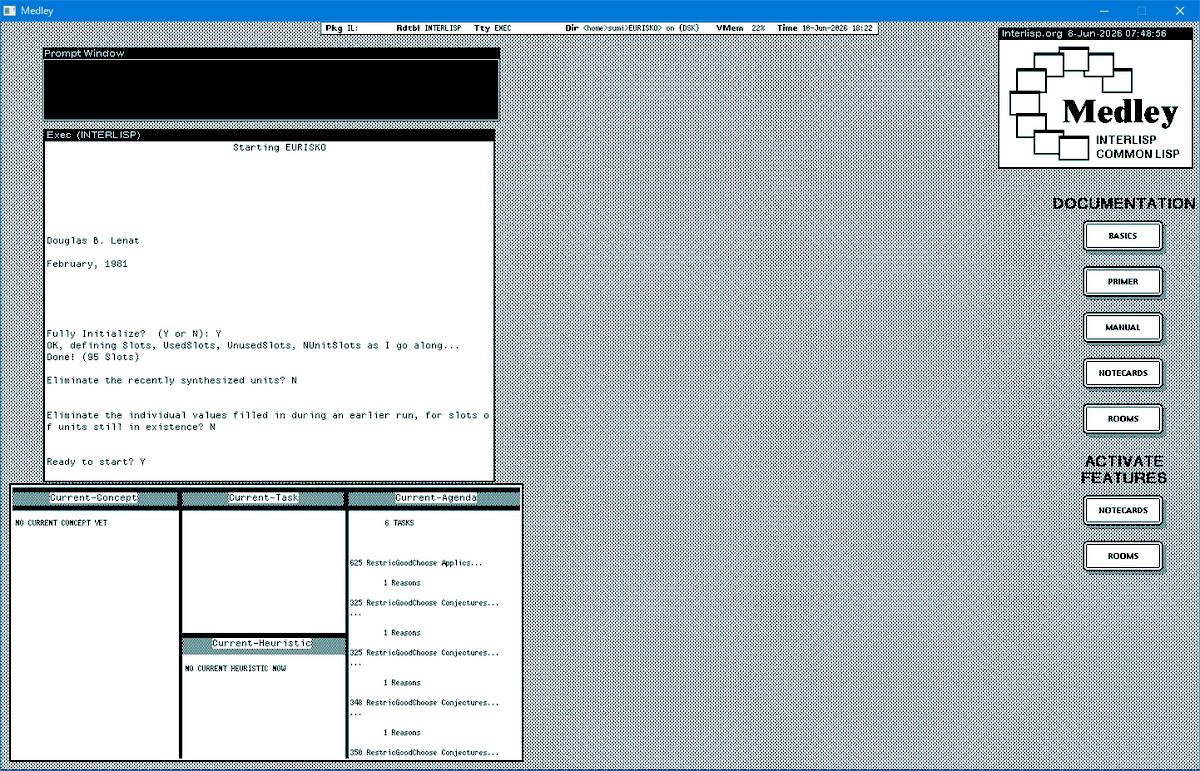
アラン・ケイが言うところの Almost a New Thing な Eurisko github.com/seveno4/EURISKO を Medley Interlisp-D interlisp.org/software/insta… で動かしているナウ
1
4
320
¡El ecosistema ba-st en acción! Descubrí cómo simplificar el desarrollo diario en #Smalltalk con herramientas open-source probadas en producción.
youtu.be/qilfQ7zthdg?si=XF_c…
#FAST #OOP #OpenSource
1
3
265
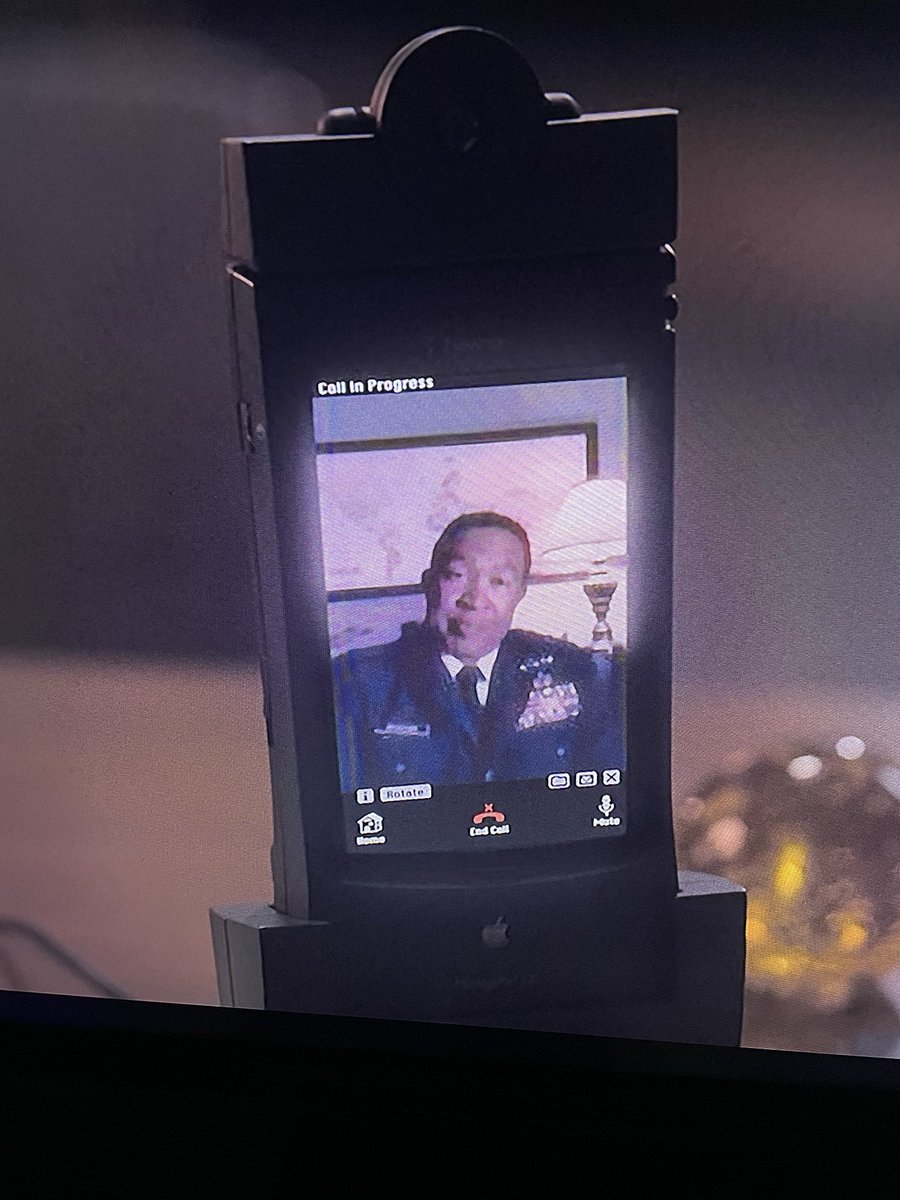
“映画やテレビでのApple製品の使用は以前から話題になってきた─だが「For All Mankind」はまったく別の問いを投げかける:登場人物たちは、20年前に中止された完全に忘れ去られたApple製品(=Newtonデバイス)を使えるのか?”

How 'For All Mankind' Works With Apple to Revive and Upgrade the Forgotten Newton as Its Alt-History iPhone variety.com/2026/tv/news/for…
3
196
sumim retweeted

Jun 7
I absolutely love the apple newton as videocalling device 😍 #forallmankind #lovefordetail
1
3
196

sumim retweeted

Repairs are done on 1983 Sony WM-10. This was Sony showing off - the size of a tape case & must be expanded to play. Runs off 1 AA batt. The engineering that went into this is crazy.
#Walkman #Sony #Cassettes #Tapes #WM10
85
349
2,869
232,708
sumim retweeted

Jun 9
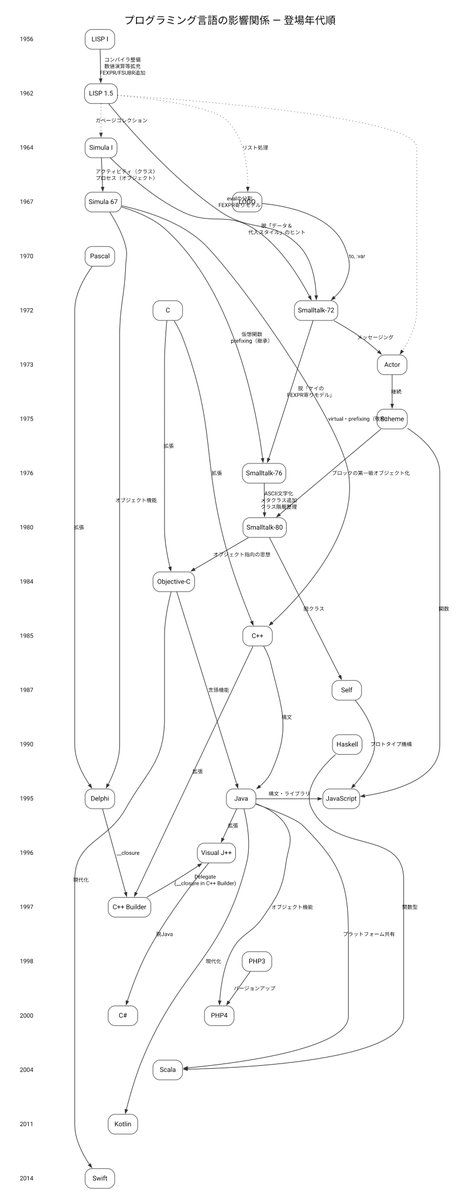
やってみました
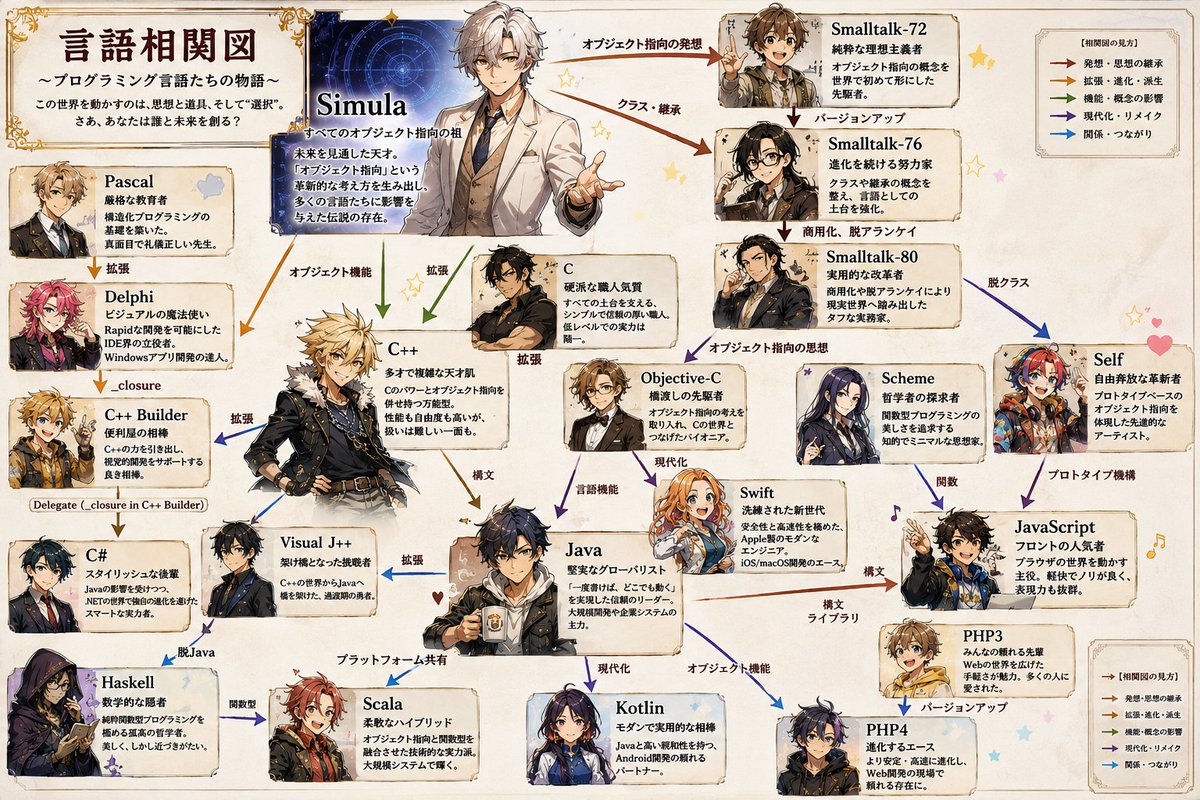

「この言語が足りない」「ここに線を」と思ったら、みんなも「オレの考えた最強の言語相関」を書こう!
画像をChatGPTあたりにわたして「パワポにして」とかいうとやってくれるんじゃないかな
2
11
45
11,820