
Senior Architect @Salesforce #Trailblazer 21x #Certified 4x #Ranger. I care about #ClimateChange #DigitalTransformation #Innovation #Equality and of course #AI
Joined December 2019
- Tweets 17,264
- Following 450
- Followers 336
- Likes 490
561 Photos and videos


Ambar Verma retweeted

Jun 13
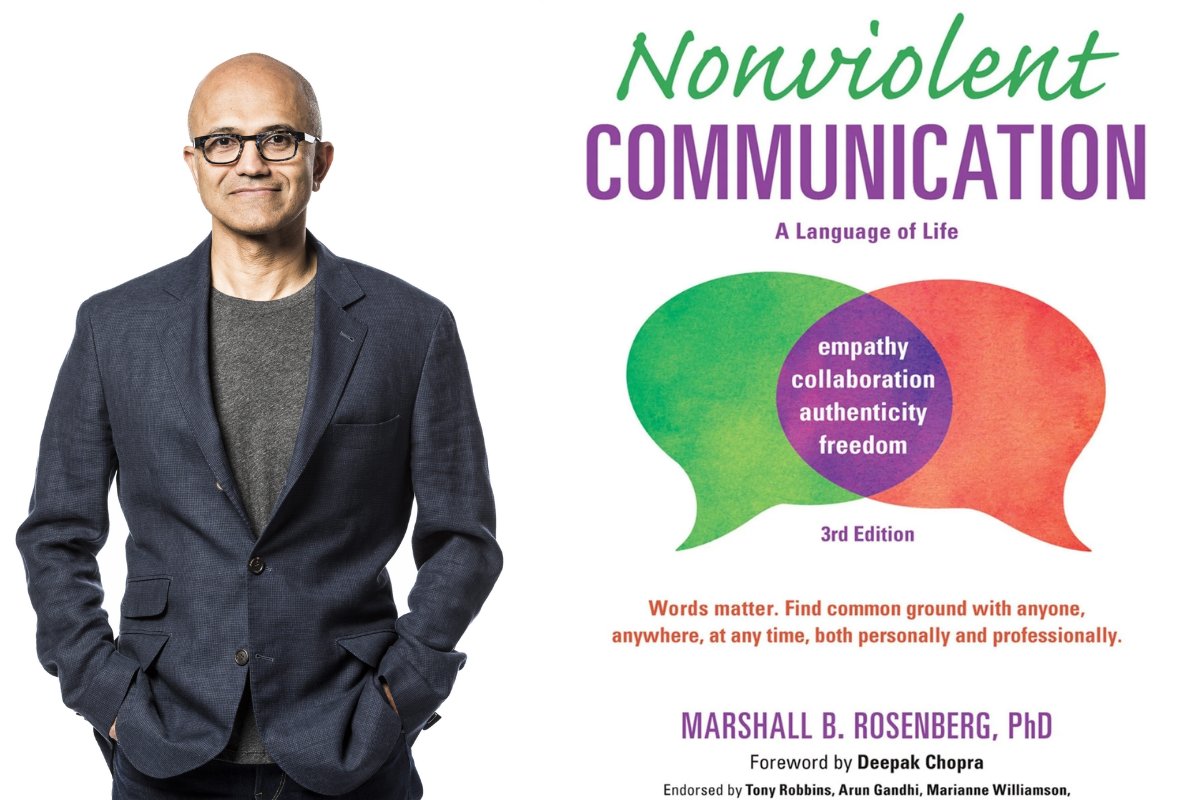
On his first day as CEO of Microsoft, Satya Nadella walked into a meeting with his senior executives and handed each of them the same book, and that single decision turned out to be worth more than 2 trillion dollars over the next decade.
The book was called Nonviolent Communication.
It was written in 2003 by a clinical psychologist named Marshall Rosenberg, who had spent 40 years mediating between gangs, prisons, divorcing couples, and warring tribes in active conflict zones. It had nothing to do with business. It was not on any Harvard MBA reading list.
It was the book Nadella's wife Anu had given him years earlier, and Nadella believed it so completely that he made it the first message he sent to the most senior people in the company.
Microsoft in February 2014 was a wounded giant.
It had missed mobile entirely. It was the punchline of every tech joke. Internally, the culture had rotted into something almost unfixable.
The previous CEO Steve Ballmer had institutionalized a system called stack ranking, where every team was forced to grade a fixed percentage of its members as underperformers, which meant that on every team in the company, the smartest engineers were quietly competing against each other instead of against the actual problems. Meetings were combative. Email threads were brutal. Talented people were leaving for Google and Apple every week.
Microsoft's market cap was roughly 300 billion dollars. It is over 3 trillion today.
The reason Nadella picked Rosenberg's book is that he had diagnosed the real problem correctly. Microsoft did not have a strategy problem. It had a communication problem. The executives were not stupid. They were not lazy. They were just talking to each other in a language that produced defensiveness instead of cooperation, and a decade of that had turned the company into an organism that could not think clearly anymore.
Rosenberg's book teaches one tool. It has four steps.
Observe what is actually happening, without judgment. Not "you are always late," but "the meeting started ten minutes ago."
State the feeling that the observation produces. Not "you are disrespectful," but "I feel frustrated."
Identify the need underneath the feeling. Not "you need to change," but "I need to know I can rely on the team's timing."
Make a specific request. Not "do better," but "would you be willing to text me if you are going to be late?"
The whole book is essentially that four-step model applied to every possible kind of human conflict.
It sounds almost too simple to be useful. The reason it works is that almost nobody does it naturally. Most professional communication, especially under pressure, skips straight to evaluation. "You missed the deadline." "Your design is bad." "The team is failing." Every one of those sentences sounds like a fact and is actually a judgment, and the brain on the receiving end goes into defense mode the moment it hears one, which means nothing useful gets discussed for the rest of the conversation.
Rosenberg's argument is that almost every conflict in the world, from a couple arguing about dishes to two countries arguing about borders, follows the same pattern. Both sides have legitimate underlying needs. Neither side is articulating them. They are firing judgments at each other and getting judgments back. The book is a manual for stepping out of that loop.
Nadella's bet was that if his executives could learn to do this in their own meetings, the entire company would unlock.
He was right.
Within five years, Microsoft had launched Azure into the cloud business, acquired LinkedIn and GitHub, partnered with OpenAI, and become one of the most respected companies in technology again. The culture had inverted. The same building that had run on internal warfare for 15 years was now running on what Nadella publicly called a growth mindset, which was just NVC translated into corporate language.
By 2024 the company was worth more than 10 times what it was the day Nadella started.
You do not need to be running a 200,000-person company to use the book.
You need to be in any relationship where the other person stops listening the moment you start talking.
That is most of the relationships you have.
The fix is 320 pages long. The book costs less than dinner.
Nadella read it because his wife handed it to him.
And one of the largest companies on earth was rebuilt on its margins.
14
67
248
16,518
Ambar Verma retweeted

Jun 12
A 25-year-old housewife in Chennai earns ₹250/hour ($3) just by doing her normal housework.
She wears a phone on her head and records herself making coffee, cutting fruit, folding laundry.
These first-person videos get sent to AI companies training humanoid robots to handle real-world tasks. She shoots 90 clips a day.
Her quote: "Who else will pay you ₹250/hour ($3) an hour just for doing housework?"
She's part of a growing gig economy in India where thousands are doing the same thing, filming everyday life to train the robots of tomorrow.
402
1,729
7,757
2,687,115

May 20
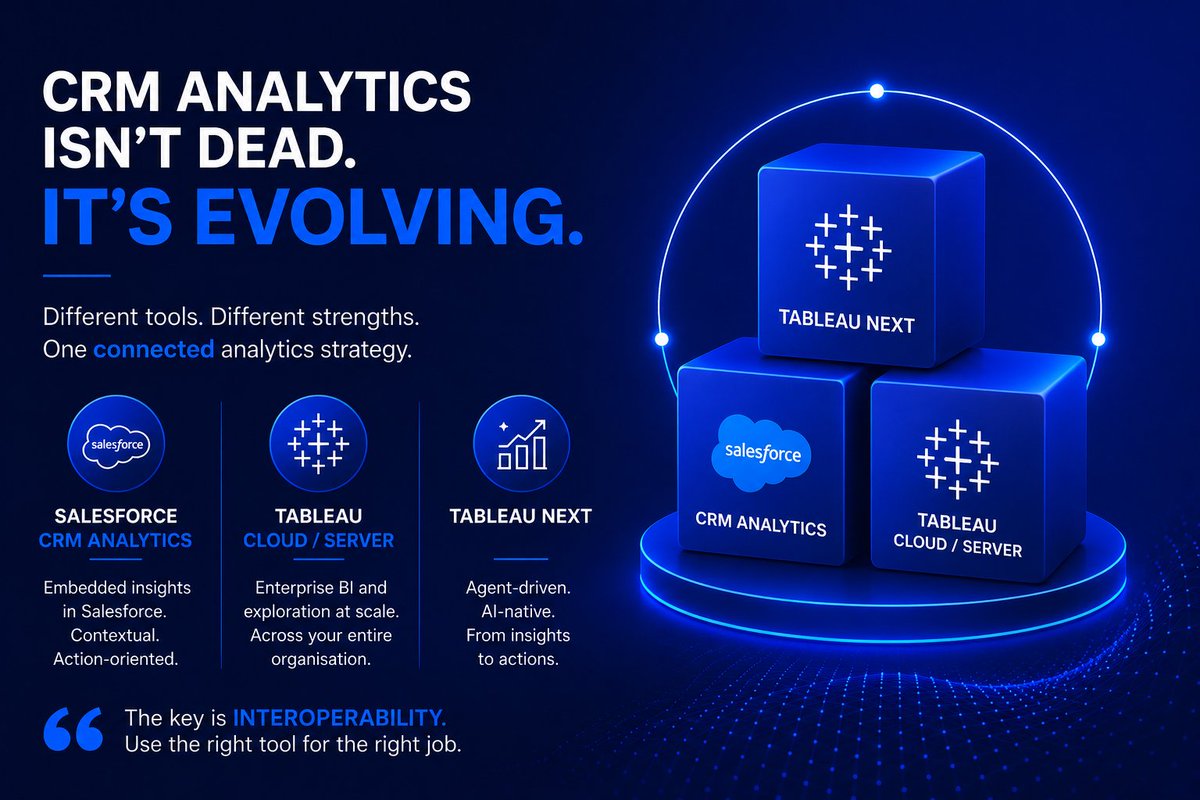
Is #CRM Analytics dead? No, it’s just evolving.
Stop thinking migration; think layered architecture:
• #CRMA: Embedded CRM insights
• #Tableau: Enterprise BI
• Tableau Next: #AgenticAI action
We're moving from "What happened?" to "Let the system act."
#Salesforce
22
May 20
What's the difference between an organization that struggles with AI and one that scales it? The people. Check out our Emerging Talent Playbook — your guide to building an AI-native workforce and a new Builder role, where the next generation can start their career at Salesforce.
15

May 13
Sir #DavidAttenborough turns 100.
For decades, he made the #planet feel personal to all of us.
What stands out to me is not the scale of his work, but the consistency .A lifetime documenting, educating, and pushing the #world to care more.
#ClimateChange #FutureGenerations
8
May 5
Strong point from Jensen Huang @nvidia.
Productivity doesn’t create free time. It creates more opportunity.
AI speeds up tasks, thus purpose scales.
That’s why teams will be busier, not idle.
#AI #FutureOfWork #AgenticAI
May 3

Jensen Huang on why AI won't give workers more free time but will make them busier than ever:
He explains it by separating two ideas most people conflate: task versus purpose.
He starts by drawing a critical distinction:
"The purpose versus the task of a job has to be separated. The task of a radiologist includes studying scans, but the purpose of the job is to work with clinicians and doctors and patients to help diagnose disease."
When AI handles tasks faster, the purpose expands to fill the new capacity.
Jensen uses radiologists as a real-world example:
"The fact that these radiologists can now study scans so fast, they order more scans from more modalities. As a result, they're able to onboard patients a lot more quickly. The number of patients in a hospital can go up. The hospital is making more money taking care of more patients. Radiologists busier than ever."
He sees the exact same pattern playing out with his own engineering team:
"Our company 100% of software engineers are now supported by agents. They're busier than ever because their experimentation is coming back a lot more quickly. Every single idea expressed in the code instantaneously."
The result is greater ambition rather than less work:
"We're exploring more ideas, more software engineers are working with each other, coming up with new ideas, new problems that we never even think of solving before because we just didn't have the time to do before."
His conclusion challenges the popular narrative around AI and free time:
"I think most people have this wrong. I think that the fact that we're now so productive, we can experiment, iterate so fast, we're going to be busier than ever."
17

Eric Schmidt (ex-Google CEO): “if you really want to make money, it’s actually easy. found an agentic AI company.”
If I had only 30 days to do that , I'd begin here and save this:
Agent Architecture
langchain.com/blog?category_…
Claude Code 101:
anthropic.skilljar.com/claud…
Claude Code in Action:
anthropic.skilljar.com/claud…
Prompt engineering (official):
docs.claude.com/en/docs/buil…
Interactive prompt tutorial (hands-on):
github.com/anthropics/prompt…
CLAUDE.md & how to give Claude memory:
code.claude.com/docs/en/clau…
Skills, teach Claude reusable workflows:
code.claude.com/docs/en/skil…
MCP, time connect Claude to Slack, GitHub, Drive:
code.claude.com/docs/en/mcp
Routines (automate tasks 24/7):
code.claude.com/docs/en/rout…
Claude Code Ultimate Guide (community):
github.com/FlorianBruniaux/c…
Awesome Claude Code (skills, hooks, plugins):
github.com/hesreallyhim/awes…
All 13 Anthropic Academy courses (free certs):
anthropic.skilljar.com
Claude Code full docs:
code.claude.com/docs/en/over…
All of this is for free at $0/month
Then read this guide by this builder

40
151
839
208,338
May 1
If your platform still depends on logins, it’s still human-first.
The real shift is systems that can be
invoked, orchestrated, and executed by agents.
#Headless360 #Salesforce #Agentforce
Apr 30

Software was always created by humans, for humans.
Now it's created by humans and agents.
For humans and agents.
And you may never have to log in to use it.
Not even Salesforce—which is now open to every human, agent, and platform with Headless 360.
101
May 1
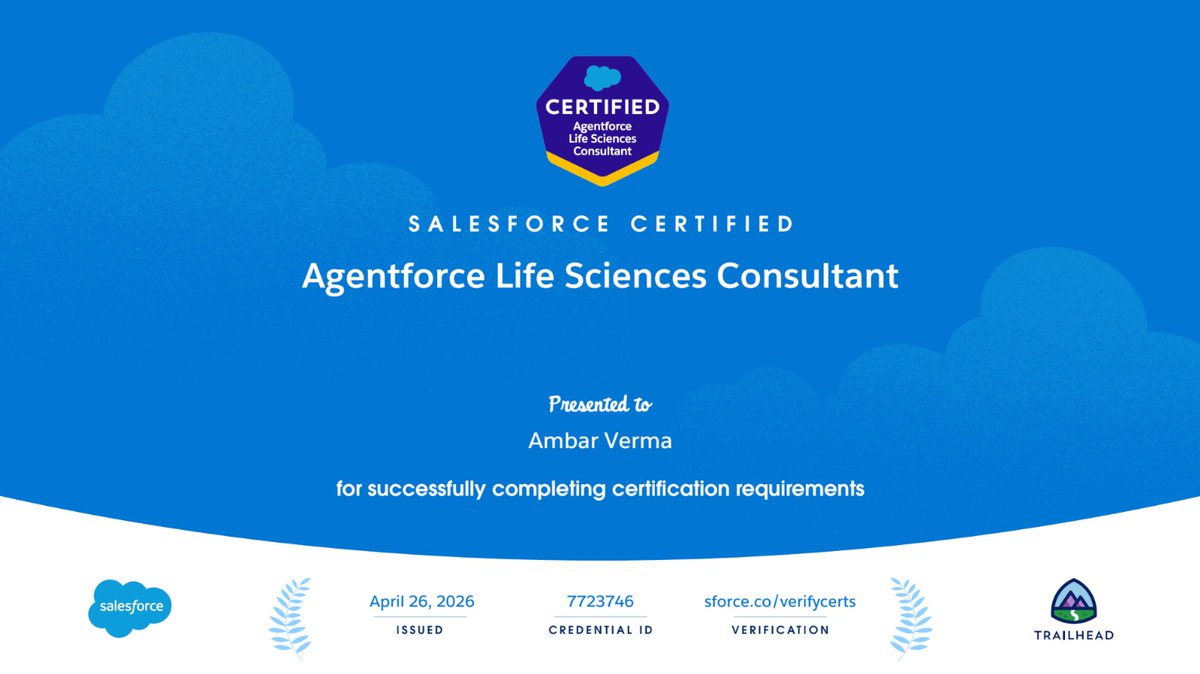
Completed the Agentforce Life Sciences Consultant certification from @salesforce.
Onwards to building Agentic architectures in Life Sciences.
#Agentforce #Trailhead #LifeSciences
14
Apr 16
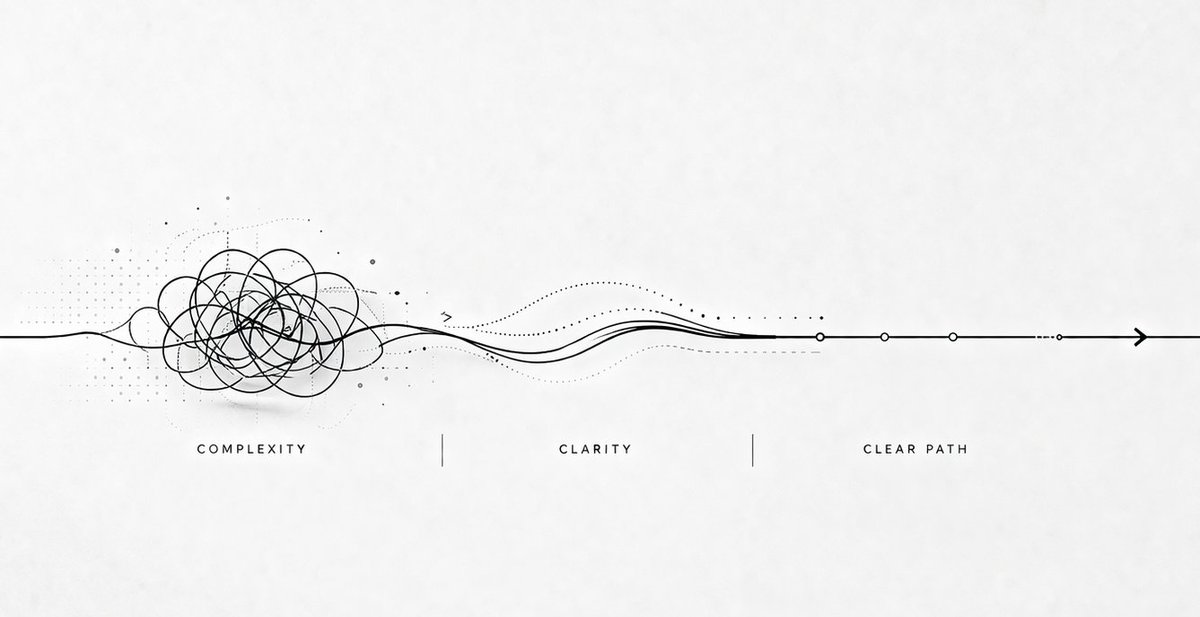
Leadership isn’t about managing scale.
It’s about managing complexity.
And most complexity?
It comes from delayed decisions, not systems.
Great leaders simplify. They don’t wait for perfect answers.
#Leaders #Architecture #DecisionMaking
4
Apr 6
Hot take: Most products don’t fail because of bad technology.
They fail because no one really understands why people would care.
This lecture by #SteveJobs at @MIT explains that gap better than most modern content fluently.
#Product #Technology
Apr 5

🚨 In 1992, a MIT lecture quietly revealed more about product and sales than most 2-year MBAs ever will.
Most people have never seen it.
It came from Steve Jobs and instead of teaching theory, he broke down how great products actually win.
Watching it today feels unreal.
He explained that people don’t buy products they buy meaning. The best products aren’t just functional, they connect with how people see themselves. That’s why some ideas spread effortlessly while others die, even if they’re technically better.
He also made it clear that marketing isn’t about features. It’s about clarity. If you can’t explain why your product matters in simple terms, it won’t matter at all. Complexity doesn’t impress it confuses.
And his biggest edge? Obsession with experience. Not just what the product does, but how it feels. The small details, the simplicity, the story that’s what separates good from unforgettable.
That’s why this MIT lecture still hits hard.
Because while most people are building products…
Very few understand why people actually buy them.
12
Apr 6
The real edge in AI isn’t tools.
It is depth of understanding.
Apr 4

This 2 hour Stanford lecture on AI careers will teach you more about winning in the AI race than every piece of AI content you have scrolled past this year.
Bookmark this & give it 2 hours, no matter what. It'll be the most productive thing you could do this weekend.
9
Mar 22
“Unknown error” is usually just “unknown context.”
The real shift is moving from static docs → contextual #AIassistance.
#Salesforce #Slack #Slackbot
Feb 26
Unknown error code ≠ unsolvable problem.
It just means you haven't asked Slackbot yet: sforce.co/4aCj81N
30
Mar 21
#AI is clearly accelerating discovery cycles in #healthcare.
From protein structures to personalised therapies, the possibilities have become real. But the gap between experimentation and safe, scalable clinical deployment is where the real work begins.
#HealthTech
Mar 15

🇦🇺An Australian tech founder with zero biology background sequenced his dog’s tumor DNA, then used ChatGPT and AlphaFold to design a custom mRNA cancer vaccine.
A month later, the tumors shrank by half.
And this is just the start of AI medicine.
1
19
Mar 21

Holy smokes... Google Drive's doc scanner is wild.
> multi-page real-time scanning
> auto/continuous capture
> duplicate page detection
> redesigned beta UI
Doc scanning will never be the same... 🤯
26
Mar 20
Came across this on @BBCFutureMedia — #AI decoding inner speech through #BCI.
But it also raises a bigger question: Who protects our cognitive privacy as this scales?
Innovation is exciting — but governance must keep pace.
Read full: shorturl.at/SLxes
#Neurotech #Future
16
Mar 19
Skip a movie today. #Build something instead.
@claudeai is quickly becoming a serious tool for #automation — worth understanding early.
#AI #Learning
Mar 15

Instead of watching a 2-hour movie, watch this Claude FULL COURSE (Build & Automate Anything):
2
21
Ambar Verma retweeted

Mar 18
AI agents handle prospecting, meeting prep, and CRM updates.
You handle the close.
3
16
32
17,075