Reindigenizing My Life One Day At A Time | IG: @ t3ckn0saurus #Decolonize #LandBack #Gaza #FreePalestine #Love 🤎☯️🌴🪶✊🏾
Joined October 2018
- Tweets 3,751
- Following 209
- Followers 250
- Likes 7,487
315 Photos and videos


Pinned Tweet

Jun 9
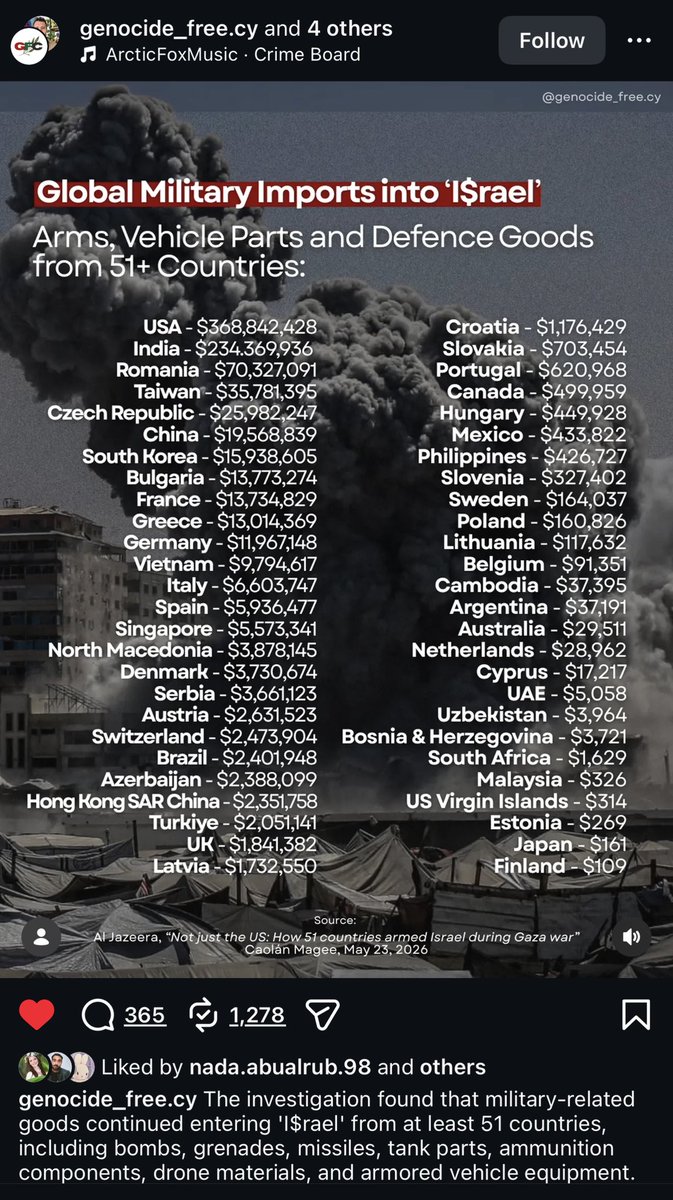
Not just the US: India to Brazil, 51 nations armed Israel amid Gaza war aje.news/2f90pn via @AJEnglish
11
D@n retweeted

Jun 9
The genocide isn’t over. In addition to the killings, Palestinian journalist Muhammad Shehada reports that Israel is “weaponizing mountains of garbage in Gaza against the population”, blocking access to Gaza’s landfill and preventing the entry of trucks. The result is rats, insects, scorpions, snakes, and the spread of disease. According to the UN, clearing these piles would take 180 days if 50 trucks were used every single day.
■ On June 6, Palestinian resistance factions began a new round of talks in Cairo led by Khalil al-Hayya, with Egyptian, Qatari, and Turkish mediators.
5
12
226
D@n retweeted

Jun 9
Israel’s Use Of White Phosphorus Munitions On Civilian Areas Confirmed By The NYT
Reports of Israel’s use of the incendiary weapon on civilian areas, a war crime, has now been confirmed by the New York Times. However, this is far from the first time that it has been used in Lebanon. White Phosphorus has long been used by the Israeli military, including throughout the Gaza Strip.
10
188
219
3,487
D@n retweeted

Jun 5
Democrats don’t exist to defeat Republicans, they exist to block progressive movements from access to political power. Ignore the “workers rights” window dressing. Their primary commitment is to protect capital accumulation.
Dividing the country into liberals and conservatives is the ultimate distraction from the real divide: top to bottom. The parasite ruling class stoked the culture wars while pillaging our wages, jacking up prices, and doing irreparable harm to the world we live in.
So yeah, this isn’t democrats vs. republicans, it’s billionaires vs. everyone else.
If you’re tired of getting screwed by the system, please support our campaign. Let’s get Greg Stoker elected to TX-31.
Election Day: Nov 3rd with early voting Oct 19-30
#stokedforstoker #universalhealthcare #centraltexas
82
1,346
4,573
83,641
D@n retweeted

Blonde-haired, blue-eyed white people from Ukraine were celebrated for making home-made Molotov cocktails to defend their land, but the brown Arab Muslim, the Iranian, the Afghan, is far too “uncivilised” to have the right to resist. Their resistance is “barbaric” because it comes from an inherently “violent” culture.
The selective application of international law and one’s right to defend themselves from illegal occupation and colonial violence has been revealed to be a complete contradiction in the west, and is no doubt infuriating.
But we need to also understand how these “resistance” narratives are processed in communities.
These narratives do not stay on our screens. They shape how entire communities see themselves.
When Indigenous, Black, and other racialised peoples repeatedly see their histories, struggles, cultures, and resistance framed as dangerous, irrational, or inherently violent, many begin to internalise those messages.
Some distance themselves from their own identities in search of safety, acceptance, or legitimacy.
Others carry a deep, unspoken rage born from exclusion, dispossession, and the constant demand to prove their humanity.
When people are disconnected from their roots, denied dignity, and taught to be ashamed of where they come from, they will still search for belonging. It’s a basic human need to feel a sense of community.
The question is whether we create spaces that nurture healing, identity, and justice, or leave them vulnerable to finding belonging in places that exploit their pain.
198
2,965
7,945
149,272
Jun 3
Hypocrisy Worldwide:
Israel would not exist without transnational capitalism. Don’t blame isNotReal alone: The Zionist neonazi regime could have been dismantled decades ago…
instagram.com/p/DY2wgYbCWrQ/…
20
D@n retweeted

May 29
The #GazaGenocide could have been stopped within a week had there been the will to do so in the US. Despite all the rhetoric and bravado, Israel was then and remains today fully dependent on US support.
(Accountability for failing to prevent and for complicity will be key, too.)
1
3
8
666
D@n retweeted

May 22
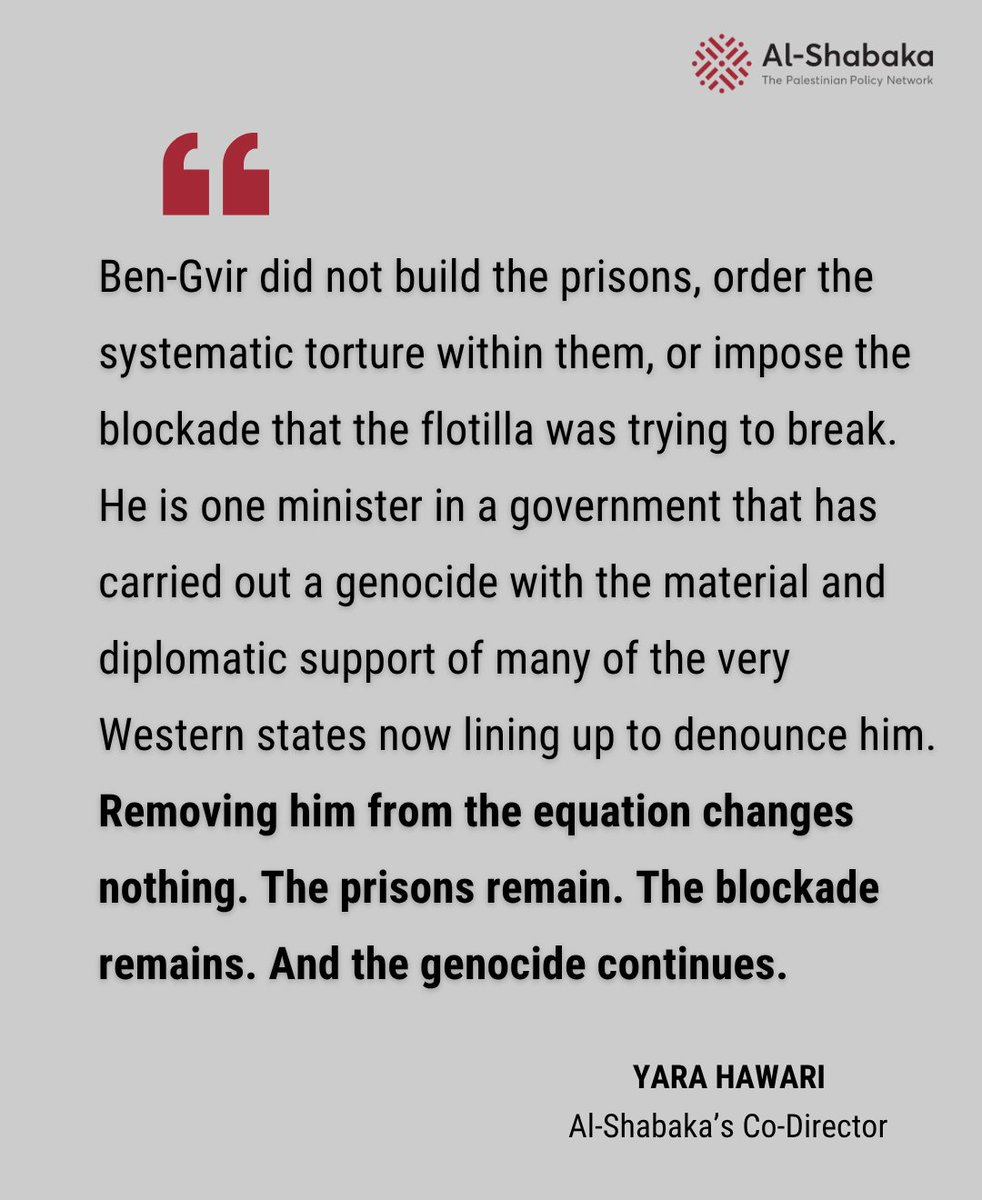
"More than 9,600 Palestinians are currently held in the Israeli regime’s detention facilities. Of these, more than 3,500 are held under administrative detention, imprisoned indefinitely without charge or trial."
✍️ @YaraHawari in @AJEnglish ow.ly/ScUX50Z35Bb
17
237
369
13,119
D@n retweeted

Iranians are holding their ground up until now. What is remarkable is that Iran has been quick to reject Trump’s claims so that his claims do not end up affecting the international oil market. A clever new strategy. #trump #iran
youtu.be/-46mI6yvABc
5
9
696
D@n retweeted

May 30
Hurry up! we're waiting L.O.S.E.R


BREAKING: The proposed US-Iran peace deal includes a $300 billion reconstruction fund for Iran, per NYT.
The program is being called an international "investment fund," which the US would facilitate in the final deal.
This comes as Iran demands "reparations" to end the war.
58
866
4,566
105,594
D@n retweeted

May 30
"Highest-ranking officer taken off the battlefield by Hizballah in this war, leaving on a stretcher because of the effectiveness, accuracy and quantity of Hizballah's strikes," @JonElmer reports on the injury of an officer in the 401st Armored Brigade, which killed Hind Rajab.
Watch the full resistance report here:
youtu.be/2Xtlt_uAdYI
61
464
2,159
30,861
D@n retweeted
May 27
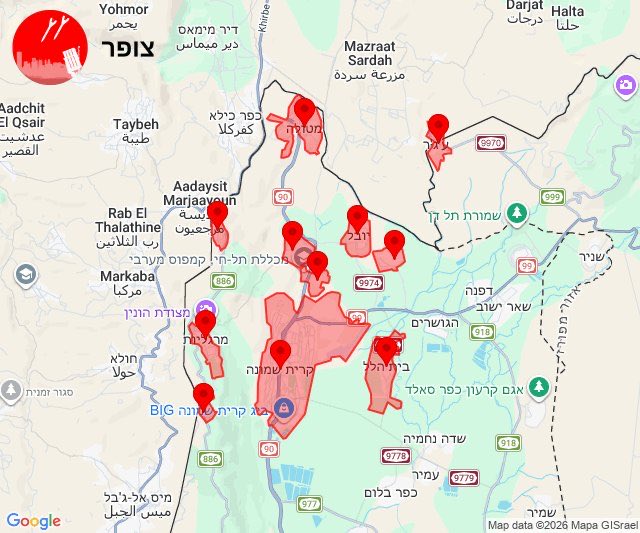
🚨BREAKING: Hezbollah Launch Rockets Towards Israeli Northern Settlements
Sirens blare in Kiryat Shmona & beyond.
2
92
350
4,492
May 27
See this Instagram post by @save_gaza_1312_ instagram.com/reel/DY0nYtVhY…
#Palestinians #FREEPALESTİNE
21
D@n retweeted

Mar 2
BREAKING:
Spain’s MEP Irene Montero:
“Because no one stopped the genocide in Gaza, the United States and Israel are now targeting Venezuela and Iran.”
“We must isolate the U.S. and Israel now, so they can no longer spread terror across the globe.”
🇪🇸 🇮🇷

5,056
36,881
141,045
2,681,483
D@n retweeted

Jan 16
MINNEAPOLIS, MINNESOTA: Oglála Lakhóta Oyáte Delegation & Sacred Eagle Flyover at site of ICE resistance January 15, 2026. 🦅
Colonial pigs: "CLEAR THE PROPERTY NOW!"
Our Relatives, "F*** NO!!"
We love our siblings!!!!
#abyayala #turtleisland #landback #native #indigenous
2
5
587
May 26
Deja vu as Galveston nonprofit grabs 200 acres of coastal wetlands chron.com/gulf-coast/article… via @chron
#Houston #Galveston #turtle #turtles #TurtleIsland #news #GalvestonIsland #island #preserve #wildlife #wildlifepreserve #beach #Beachwear #decolonize #LandBack #FREEPALESTİNE
87
D@n retweeted

May 24
Precision strikes on CHILDREN by the Epstein Class with YOUR tax dollars.
547
10,406
29,361
428,893
D@n retweeted

May 25
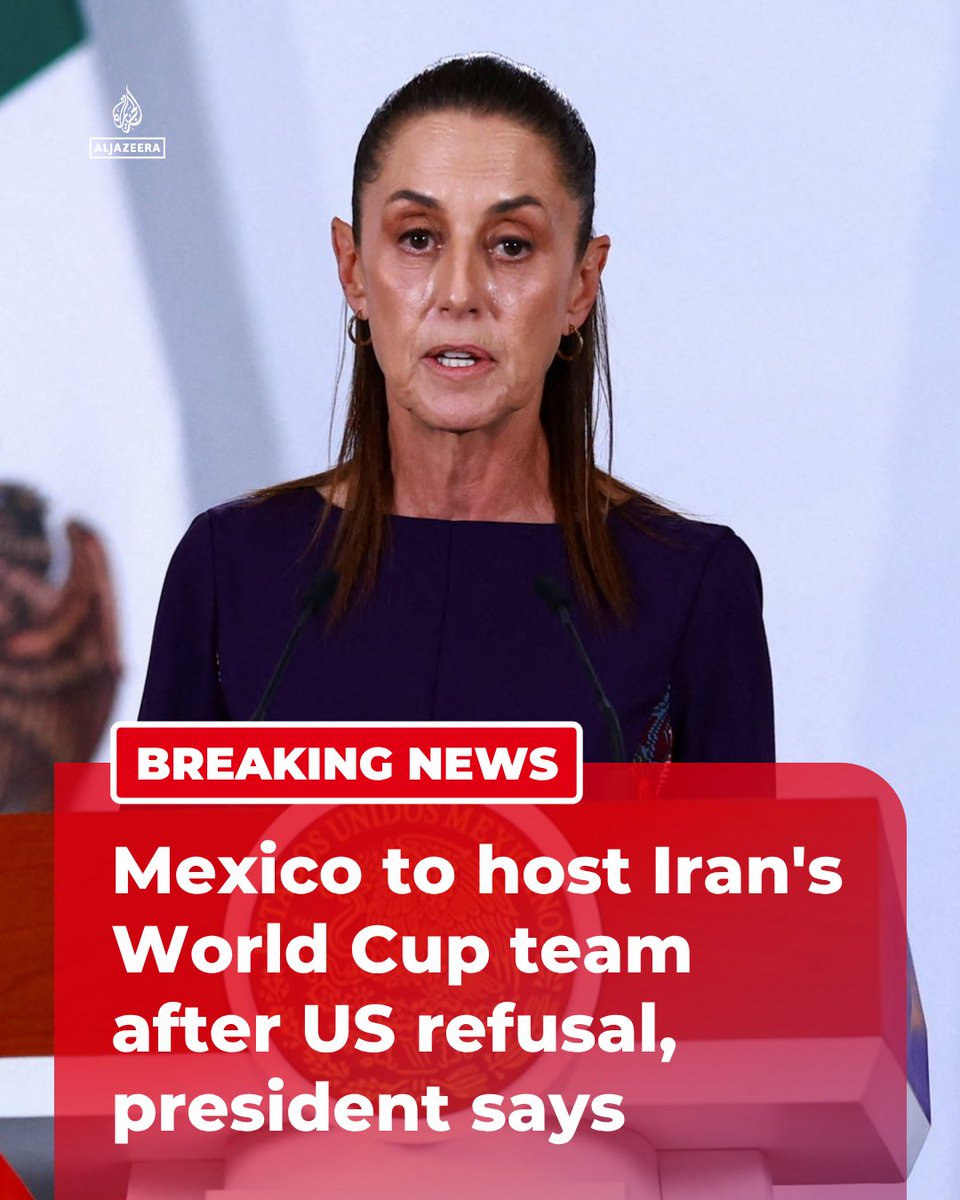
BREAKING: President Claudia Sheinbaum says Mexico has agreed to host Iran’s national football team during the World Cup after the US declined to do so, Reuters reports.
🔴 More on Aljazeera.com
896
10,043
40,352
4,018,610
D@n retweeted

May 25
⚡️JUST IN
Iran's Foreign Ministry confirms that an environmental tax will be charged on ships:
"There is no toll; people should use the correct terminology
Iran and Oman are currently drafting a new protocol
Under this new system, maritime services will be provided to protect the environment of the Strait of Hormuz, the Persian Gulf, and the Sea of Oman, which requires the collection of an Environmental Tax
We hope to reach a final agreement with Oman on this matter soon"
872
2,484
10,947
1,394,653