
Ex-AARP movie/TV/music editor,Hollywood Reporter,EW,TheNation,got Bezos to buy IMDb. Last human Amazon homepage editor.
Joined December 2008
- Tweets 29,789
- Following 2,120
- Followers 2,144
- Likes 16,501
145 Photos and videos
timappelo retweeted

Jun 4
A pretty amazing interactive project on Epstein's last months by @cnn cnn.com/interactive/2026/06/…
13
456
896
34,047

Jun 4
Russell Vought: Public Enemy Number One?
Jun 4

It’s true that Marco Rubio provided over 1 million unnecessary deaths, half of them children. But there is probably no one more dangerous to the lives and limbs of Americans and others than Russell Vought.
47
timappelo retweeted

Jun 3
Katie Phang on the murder of 60 Minutes: "What the Ellisons have done to CBS has now transcended just being a red flag — it is a huge honking warning sign of what is to come to CNN. And look, you may not be a fan of CNN, but we should always be rooting for the independence of our media. And yet we've seen time and time again, mainstream legacy media bending the knee and capitulating to the demands of a fucking toddler in the White House."
81
1,516
5,442
107,729
timappelo retweeted

Jun 2
“Our conclusion: the Iran War is worse than a failure. It's a strategic calamity with no notable achievements and potentially trillions in direct and indirect costs to the US and global economy.”

Earlier this week, Will Smith and I released a new Stimson Center report on the war in Iran as part of the "Is War Worth It?" project.
We examined the stated US objectives, whether the US achieved them, and the costs (direct and indirect) of the conflict.
Our conclusion: the Iran War is worse than a failure. It's a strategic calamity with no notable achievements and potentially trillions in direct and indirect costs to the US and global economy.
Iran’s nuclear capacity is broadly unchanged, its missile force largely intact, its hard-liners empowered, its leverage over the Strait of Hormuz enhanced, and U.S. munitions stockpiles depleted.
How did we come to that conclusion?
We actually took into account how the Trump administration publicly tried to justify the war -- and then took a deep dive look at the costs of the war. stimson.org/2026/is-the-iran…
56
1,083
3,140
143,912
timappelo retweeted

Jun 3
Yes - this is our constitutional crisis in a nutshell. Mullin says he will pick and choose which court orders to follow based on whether he likes them or not.
That's a reciple for the total destruction of our democracy. That's totalitarianism.
Jun 2

Watch this absolutely insane back-and-forth in which @SecMullinDHS tells @ChrisMurphyCT that he has no obligation to follow court orders and defends ICE's noncompliance with "more court orders than some agencies violated in their entire history."
312
1,585
3,481
85,102
timappelo retweeted

Jun 3
🚨🚨🚨
Bill Pulte was picked to join Blanche, Patel, Hegseth, and Mullin to be ready to help Trump stay in power no matter what. Do congressional Democrats appreciate that their #1 task is to confront this threat?
open.substack.com/pub/thebul…
65
850
2,067
29,934
timappelo retweeted

Jun 3
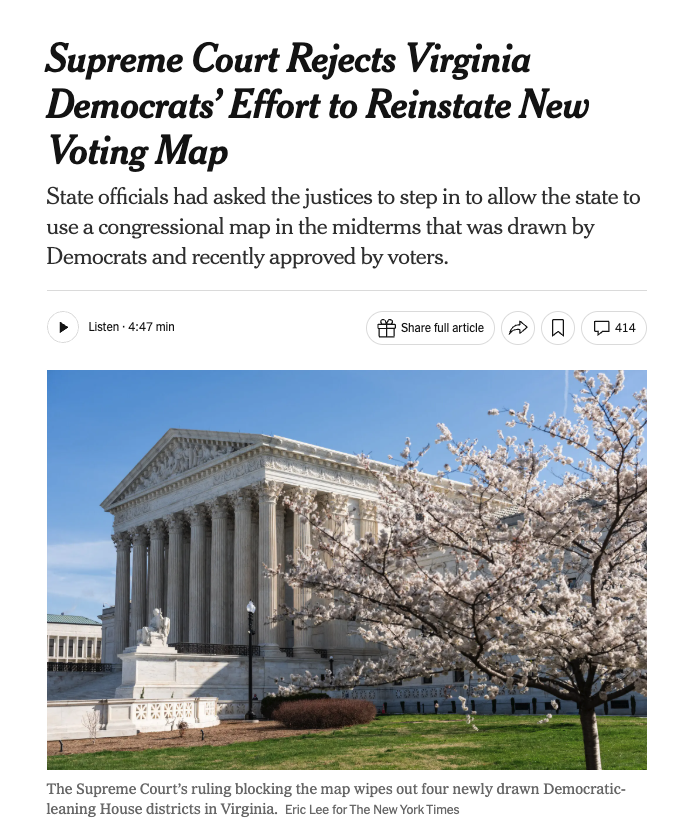
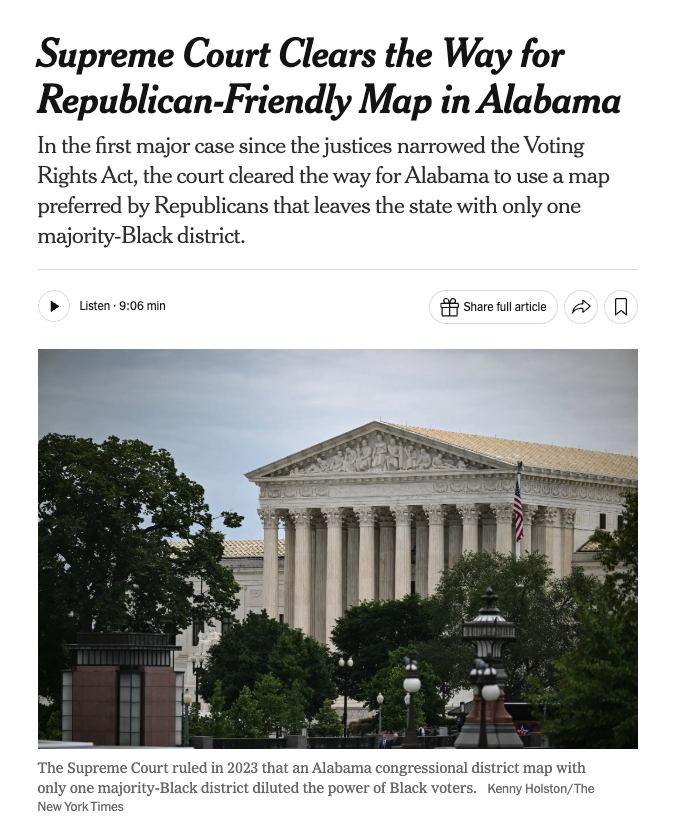
It seems there is an entirely different set of rules for Republicans and Democrats.
4,055
6,869
19,710
862,516
timappelo retweeted

Jun 3
Another softball interview, another series of obvious lies from the president.
Here's a fact check of a whole bunch of false claims Trump made in a New York Post podcast interview released this morning – all of them, of course, unchallenged:
cnn.com/2026/06/03/politics/…
22
699
1,749
51,118
timappelo retweeted

I worked at CBS News for almost 6 years. It was a place that frequently drove me crazy bc of how resistant it was to change. How difficult it was to get things done bc you had to fight so many people and their “Cronkite and Murrow would roll over in their graves if they saw” mentality.
For those who think Scott Pelley was part of the problem, you are wrong. Yes he could be rigid and a stickler for certain traditions. But I will tell you now the Gen Z people I worked w all loved him. Like me, they forgave a lot of his boomer ways bc we were in awe of investigations he did using hidden cameras exposing snake oil salesmen hurting Americans; showing us how Assad was using chemical weapons on his own people; the pain of rural Americans waiting for half a day to get affordable healthcare in a parking lot of a mobile clinic; his searing interviews w survivors of mass shootings.
Yeah he was old fashioned in some ways. I used to tease him bc he always had trouble pronouncing Beyoncé’s name.
But he was willing to be pushed. He was open to new ideas. The fact that someone like me and someone like him got along so well is proof of that. The guy made me a better thinker and a better journalist.
167
827
6,498
264,456
timappelo retweeted

Jun 3
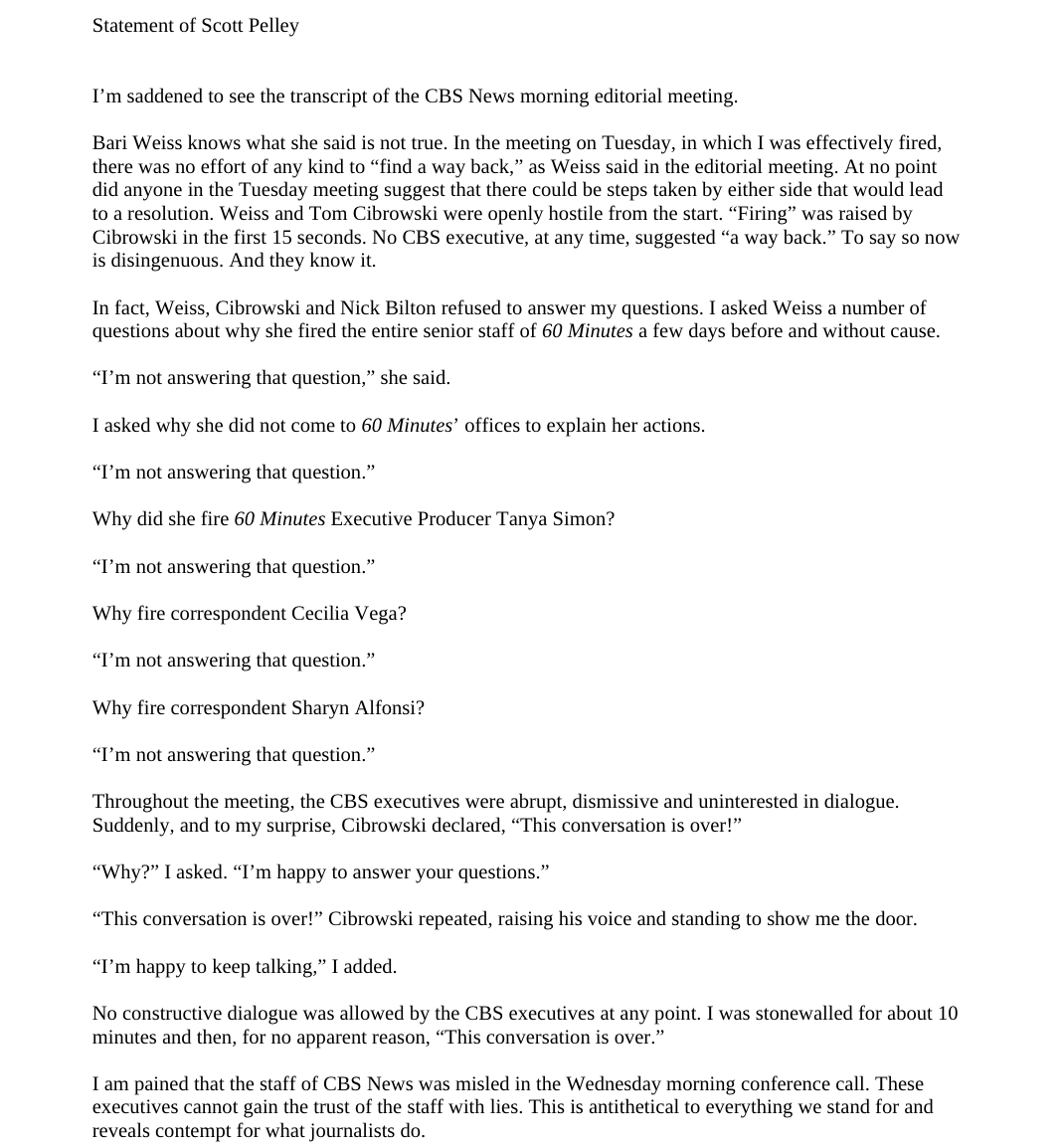
Scott Pelley just issued a statement on Bari's remarks this morning:
Jun 3

Bari Weiss Speaks on Scott Pelley’s Firing: ‘That’s the Path That He Chose.’ New, with @grynbaum
nytimes.com/2026/06/03/busin…
1,181
4,062
15,247
1,789,800
Jun 4
As Shakespeare would say of Bessent's smugly perma-grin, "One may smile, and smile, and be a villain."
Jun 3

Secretary Bessent won't admit that it's a conflict of interest for President Trump to trade stocks at the same time he makes decisions affecting those stocks.
He knows better.
53
timappelo retweeted

Jun 3
The government's proposed NDA cites criminal penalties for violations. The only statute it references covers destruction or theft of government material. Not leaks. Not unauthorized disclosures. Theft.
A national security attorney called that "ridiculous on its face" and said it had "no obvious relevance" to what the NDA actually purports to restrict. The administration either doesn't know the law it is citing or it is betting that federal workers won't look it up.
The post-employment provision - binding workers to silence even after they leave government service - is, in the words of the same attorney, "unequivocally unlawful." The First Amendment limits what the government can make former employees sign away. This is settled law. Courts have ruled on it repeatedly, including against Trump's own campaign NDAs, which a federal judge in 2021 found so broad they were legally void.
Trump's White House lawyers explained during his first term that the NDAs he wanted aides to sign were unenforceable. He signed them anyway. When Mary Trump's NDA failed in court, she described his strategy plainly: use money, lawyers, and position to run out the clock and outspend people who can't afford to fight.
Now he is applying that same logic to two million federal employees. The NDA will probably not survive court challenge. That is not the point. The point is the FEMA whistleblower calculating whether to call their congressman. The EPA scientist deciding whether to talk to a reporter. The DOJ attorney who saw something wrong wondering if the risk is worth it.
The chill does not require a conviction. It just requires the threat to feel real enough to work.
Jun 1

A proposal to push federal workers to sign nondisclosure agreements is part of a bigger effort to hide government secrets—and “the message from Trump to federal workers is clear: Shut up, or else,” Quinta Jurecic argues: theatlantic.com/ideas/2026/0…
30
30
1,687
timappelo retweeted

Fascism.
Jun 2

The heart of our constitutional crisis in one exchange between me and Sec. Mullin. When asked a simple question - if he will obey court orders - he says he will not because some court orders are "politicized".
That's not how democracy works. And that's why we are in a crisis.
1
3
21
2,163
timappelo retweeted

Jun 3
Obviously, she should sue and get a ton of money, which of course comes from all of us taxpayers. But it is incumbent upon Maryland to charge every officer who ignored her evidence and put her in detention with kidnapping.
Jun 2

Just some brief questioning about immigration status, as Kavanaugh would put it: “The Maryland woman arrested by Immigration and Customs Enforcement agents in December and held for 25 days despite offering proof of citizenship has been issued a U.S. passport and removal proceedings against her in immigration court have been halted, her lawyers said in a statement Monday.”
washingtonpost.com/dc-md-va/…
5
60
218
15,972
timappelo retweeted

At least 40 minors gave sworn statements to the FBI that Jeffrey Epstein raped and trafficked them. The line prosecutor wrote an 82-page memo recommending charges.
Alex Acosta declined and signed a non-prosecution deal.
He was later confirmed as Labor Secretary.
408
15,138
29,780
400,631
timappelo retweeted

Jun 2
Sen. Kaine: "We're 92 days into a war against Iran, and the administration will not let Congress look at the OLC legal opinion justifying the war…By not sharing the legal opinion with the Article I oversight branch, you give us the opinion that there's something in there you don't want us to see."
Rubio: "I can certainly inquire as to why it has not been available."
9
247
690
22,525
timappelo retweeted

Jun 3
They have something to hide. We need to find out what it is.

Wow, Republicans try to end Rep. Dean’s time 3 minutes early while she is asking Blanche about Epstein.
133
4,494
12,458
181,707
timappelo retweeted

Jun 3
Sotomayor dissent is 🔥
Decision “debases the democratic process by upending AL’s entire election in name of permitting AL to discriminate against Black Alabamians & corrodes rule of law by rewarding AL’s gamesmanship & outright defiance of court orders.” al.com/news/mobile/2026/06/r…
15
47
128
2,542
timappelo retweeted

Jun 3
Scott Pelley told the truth. So CBS News fired him.
3,763
3,804
13,563
292,734

of all the pernicious things that have happened over the past few years I think the effective rebranding of January 6 into an event in which the rioters were the ones who were wronged may best symbolize how bad our politics have become.
87
584
2,982
45,332